
In 2015, the World Bank announced it would phase out the term “developing countries.” Major international NGOs, as well as researchers and journalists in many countries, have also voiced criticism of its use. In recent years the appropriateness of this expression has increasingly been questioned, for a range of reasons.
And yet the expression “developing countries” continues to be persistently used in mainstream contexts to indicate countries with low incomes and limited industrialization. Many media outlets, governments, international organizations, and even some academic literature still apply this label to the majority of the world’s nations.
At GNV we have a policy of not using the expression “developing countries.” Instead, we often use the term “low-income countries.” We have briefly touched on the reasons for this editorial stance in past articles and podcasts, but it merits a deeper dive.
This article explores several problems with the term “developing countries.” Beyond the fact that it does not accurately reflect the economic situations of many countries, we focus on the historical issues behind the term, the structural inequalities that persist today, and the worldview it promotes that obscures different pathways of development.
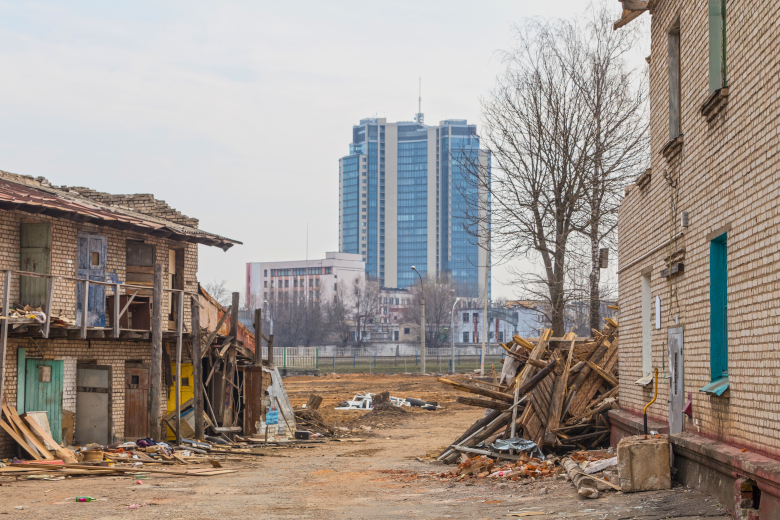
Inequality seen in Belarus (Photo: KPad / Shutterstock.com)
目次
An upward path?
The term “developing countries” came into use after World War II, and began to spread in various contexts from the 1950s to the 1960s. This was also a time of decolonization and the establishment of new international institutions. A field known as “development theory” emerged, and research on economic development and political institutions advanced mainly in the United States and other Western European countries. In this work it was common to view low-income countries as being in a temporary transition stage, eventually moving toward the economically affluent status known as “developed.” The term “developing countries” carried an optimistic assumption modeled on the path of Western industrial nations—namely, that countries move in a straight line from poverty to prosperity.
While the term originated in English (developing countries; ※1), the Japanese expression is also worth noting. Literally meaning “in the midst of development,” it strongly implies positive progression and forward movement. Dictionary definitions indicate that “development” means “to expand and flourish,” while “on the way” implies “en route to a destination” or “advancing toward a goal.” Looking up “in the course of development” yields “poised to prosper from here on, or currently gaining momentum.”
In other words, the label “developing country” curiously reflects an assumption about the direction a country is headed rather than its present condition. That assumption itself needs to be questioned. Does such an expression actually capture the trajectory of each country’s economic situation?
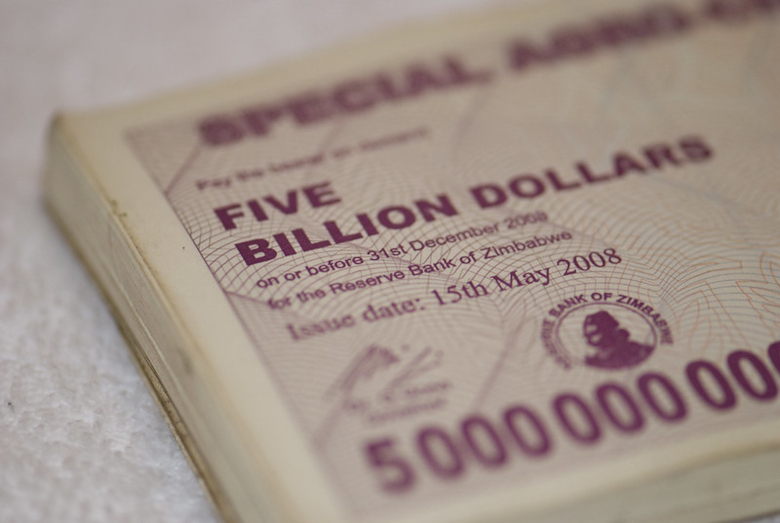
A stack of five-billion-dollar notes. Zimbabwe amid hyperinflation, 2008 (Photo: Mark Auer / Flickr[CC BY-NC 2.0])
In reality there are many countries labeled “developing” that have not followed a stable upward course. On the contrary, not a few have experienced major economic and political reversals. For example, from the mid-1970s to the 1990s, Sub-Saharan Africa as a region had negative growth rates. At the country level, some experienced prolonged and severe reversals due to political repression, economic mismanagement, and social unrest; Venezuela, Zimbabwe, and Haiti are cases in point. Armed conflict and military rule have also impeded growth. Countries that have endured large-scale armed conflict—such as the Democratic Republic of the Congo, Syria, Yemen, Palestine, and Myanmar—symbolize situations in which instability and violence halted or reversed economic growth. This reality runs directly counter to the premise that all countries labeled “developing” are headed in the same “development” direction.
Moreover, the term “developing countries” implies that there is a target state and these countries are merely “lagging behind” in getting there—in other words, that they are expected eventually to reach a “developed” state. But evidence that low-income countries are indeed moving toward such a goal is weak. Economic gaps between high- and low-income countries continue in many cases and, depending on how they are measured, may even be widening. For example, comparing long-term per capita GDP growth rates shows that while low-income countries do grow, the pace of growth tends to be faster in high-income countries, on average. In other words, viewed in aggregate, it is hard to say low-income countries are catching up with high-income ones.
Ultimately, the expression “developing countries” not only misrepresents economic realities, it also contains an emotionally appealing narrative of “hope” for “progress.” This narrative assumes a single path toward “development,” suggesting low-income countries are merely behind schedule and will eventually arrive at the same goal. But this is closer to wishful thinking than an objective analysis of present conditions. In practice there are realities of stagnation and reversal, entrenched inequalities, and structural factors that impede sustained growth and industrialization. In short, “developing countries” is not a neutral term; it functions more as a kind of consolation.
Structural background
As we have seen, the term “developing countries” is out of step with real-world conditions. Why, then, is it still used so widely? One reason is that it serves the interests of those who benefit most from the status quo. The term frames global inequality as temporary, something that will resolve itself if we simply stay the course. It thus provides a comforting story: “The current global system is functioning normally,” and “the economic growth of poor countries is merely delayed—they will catch up eventually.” Such optimism is convenient for those profiting from the status quo, as it allows them to avoid confronting the root causes of inequality.
Whether intentionally or not, continuing to use this term diverts attention from the structural mechanisms that reinforce global disparities. The expression “developing countries” implies that low-income countries need internal reforms or better governance, but it does not call to mind the more fundamental problems that hinder their progress: international systems and power relations between states.
In fact, much of global inequality is rooted in structural problems embedded in the world economy. At the center are unfair trade relations (unfair trade) that lock low-income countries—with their natural resources and cheap labor—into export-oriented economic structures that benefit high-income countries. Imbalances of power between buyers and sellers mean that prices for agricultural products and raw materials are often set by buyers rather than by the low-income countries that sell them in many cases. As a result, global value chains are structured so that those at the top capture the most gains; those who trade and retail the goods often reap larger profits than those who perform the labor of actually producing them.
Furthermore, large-scale tax avoidance and evasion by multinationals and the ultra-wealthy deal significant damage to public finances in low-income countries. Such practices are facilitated by tax havens through which much of world trade flows.
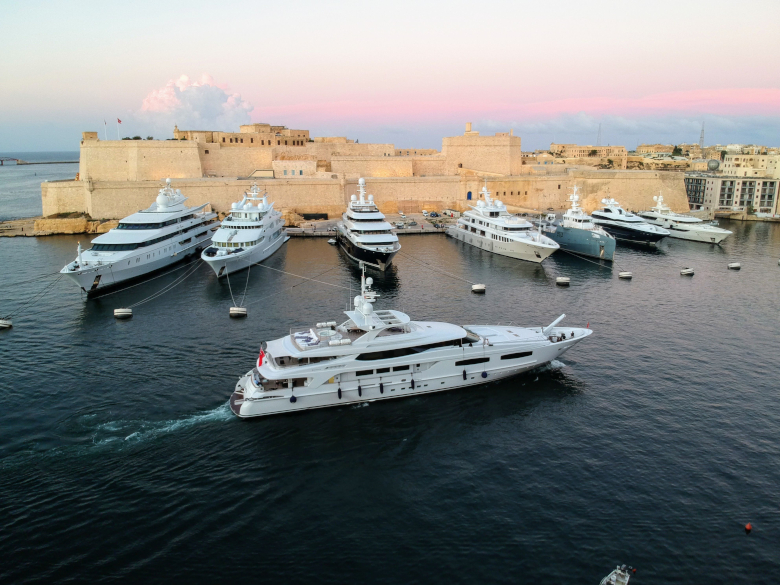
Luxury yachts in Malta functioning as a tax haven (Photo: Maltese Robinson Robinson / Shutterstock.com)
Many low-income countries, in the course of trying to stay afloat economically and reduce poverty, end up taking on substantial debt. But the consequences of taking on debt are not always positive. Institutions such as the World Bank and the International Monetary Fund (IMF), which are heavily influenced by high-income countries, often require austerity (spending cuts) as loan conditions. The result is constrained public investment in crucial sectors such as health and education.
These structures are by no means new; they are rooted in a long history of exploitation that reaches back to the eras of the slave trade and colonial rule. During colonial times, vast wealth was systematically extracted from colonies and transferred to the metropoles. Even after formal colonial rule ended, exploitative relations did not disappear. For instance, in many West and Central African countries, economic structures remained after independence that kept monetary policy under French influence, undermining monetary sovereignty and economic self-reliance.
Thus the gaps between powerful economies and marginalized ones are not spontaneously occurring “stage differences in development,” nor are they solely due to internal governance or policy failures. They are formed and maintained by external economic, political, and historical forces. These are not merely “slow” or “undeveloped” countries. Some researchers instead describe them as countries “intentionally underdeveloped” (underdeveloped) or “overexploited” (overexploited). This perspective fundamentally challenges the core premise embedded in the term “developing countries”—that inequality is temporary and accidental and will eventually dissipate, an overly optimistic narrative.
Moreover, this distorted reality is reinforced by the excessive focus on Official Development Assistance (ODA) as the solution to poverty. While aid can play a role in addressing specific issues, it represents only a small part of the overall flows of funds across countries. In reality, far larger sums move from low-income to high-income countries in the form of debt repayments, profit shifting by multinationals, tax avoidance, and illicit financial outflows by comparison. Even so, discourse on “development” focuses disproportionately on aid and overlooks the power structures and institutional inequalities that generate poverty and inequality. This one-sided view casts donor countries as “benevolent helpers,” while obscuring the possibility that they are themselves causes of the problem or beneficiaries of the status quo.
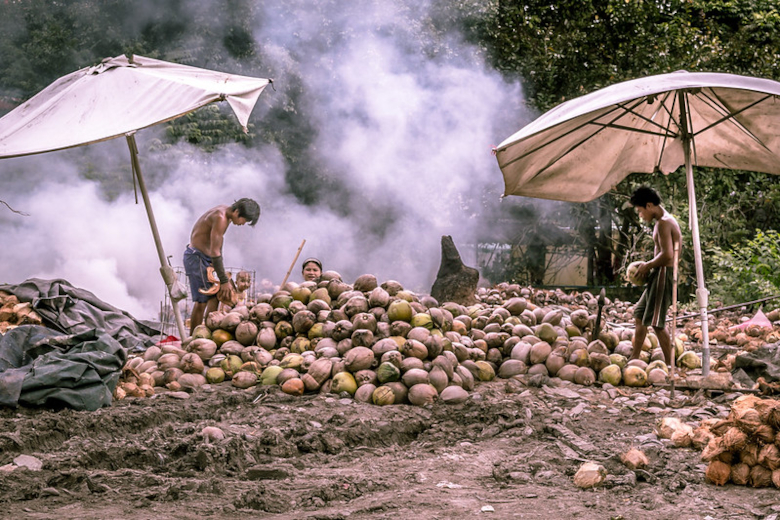
Coconut plantation, Thailand (Photo: Chris Bird / Flickr[CC BY-NC-SA 2.0])
A single path to “development”?
Another problem with terms like “developing” and “developed” is that they equate economic growth with development. An approach that tries to measure development solely by economic indicators such as per capita GDP or Gross National Income (GNI) cannot capture the multifaceted nature of human well-being and happiness. In such a narrow view, “progress” is merely a rise in monetary figures, and the political, social, environmental, and cultural factors that shape people’s lives are sidelined. Development is reduced to economic data such as income levels, market integration, and output, while crucial elements like health, education, political participation, and environmental sustainability are overlooked.
In contrast, alternative frameworks like the United Nations Development Programme’s Human Development Index (HDI) offer a more holistic understanding. The HDI uses indicators such as life expectancy, educational attainment, and standard of living, showing that “development” cannot be measured by economic growth alone.
The term “developing countries” also carries the idea that all countries should follow the same path as Western industrial states. In reality, the paths taken and the policies pursued by different governments reveal that countries are exploring diverse routes under different priorities, values, and constraints. For example, Cuba, despite severe economic constraints stemming from U.S. sanctions and domestic political and economic policies, has maintained outcomes in life expectancy and health care close to those of many high-income countries. During the COVID-19 pandemic, Cuba strengthened its public health system and successfully developed several vaccines domestically. Cuba’s case shows that alternative development models that prioritize social services over market growth can be effective for human well-being.
Bhutan offers another contrast. Although its economy is small, Bhutan has adopted a development model based not on GDP but on Gross National Happiness (GNH), which emphasizes psychological well-being, environmental sustainability, and cultural preservation. Bhutan’s policies reflect a clear choice to prioritize human and ecological health over rapid industrialization and integration into global markets. These examples illustrate that development is not a single, common route, but varies greatly according to each country’s historical, political, and cultural context.
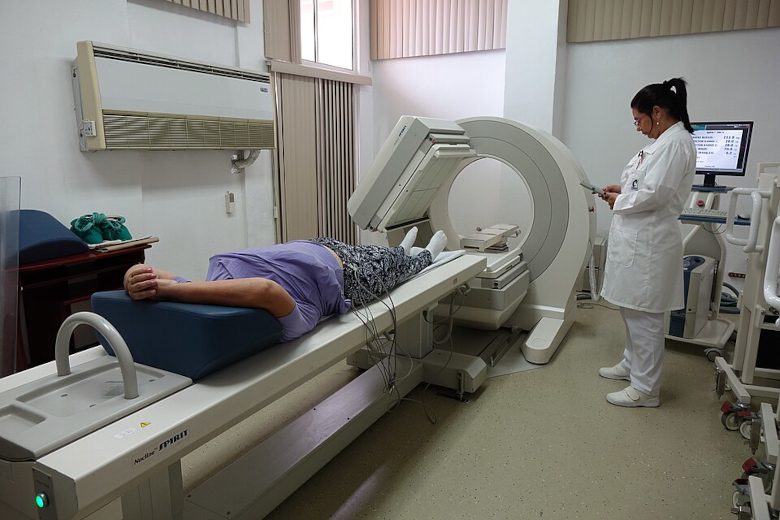
Inside a hospital in Cuba (Photo: IAEA Imagebank / Wikimedia Commons[CC BY 2.0])
Furthermore, the very notion that all countries should aim for a “high-income, high-consumption society” is unrealistic and environmentally unsustainable. If every country were to target the living standards and consumption patterns of today’s wealthiest nations, the environmental burden would be catastrophic. Earth’s ecosystems cannot withstand replicating the consumption of high-income countries at a global scale. According to the Global Footprint Network, humanity already consumes more resources each year than the planet can regenerate, and this “overshoot” is occurring earlier each year. The date known as Earth Overshoot Day visualizes this overuse of resources. The primary responsibility for this excessive consumption lies with high-income countries that use far more energy and resources than necessary.
If we continue to define “development” as tracing the path of the most industrialized and resource-intensive countries, the world will transgress sustainability limits even more than it already has.
Alternatives to “developing countries”
As we have seen, terms such as “developing” and “developed” carry numerous problems. Yet given the vast inequalities that exist in the world, we still need language to describe those realities.
At GNV we use expressions like “low-income countries” instead of “developing countries,” and “high-income countries” instead of “developed countries.” These terms aim to describe economic conditions, without implying a one-way, hope-laden journey of “development.”
That said, these terms also have limitations. A simple binary between “low-income” and “high-income” is closer to reality than “developing/developed,” but it still simplifies a complex, diverse world. A common critique of “developing/developed” is that the world cannot be neatly split into two. Among “low-income countries,” there are large differences in per capita GNI, infrastructure, political systems, public health standards, and levels of inequality. Conversely, many “high-income countries” still grapple with poverty and inequality at home. This is why we must be cautious about lumping together countries in very different contexts.
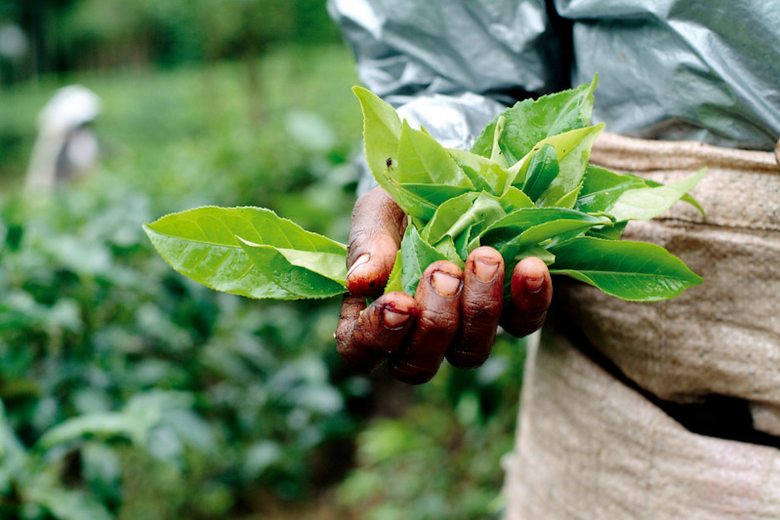
Tea leaf harvester, Sri Lanka (Photo: Knut-Erik Helle / Flickr[CC BY-NC 2.0])
To address this, there are attempts to introduce finer-grained classifications. The World Bank, for example, divides countries into four tiers based on GNI: “low income,” “lower middle income,” “upper middle income,” and “high income.” In theory, such graduated categories should better capture economic diversity. In practice, however, this approach also has issues. Because the thresholds are set low, there is criticism that real deprivation and hardship are obscured. In fact, many so-called “middle-income” countries still have large populations living in poverty and lacking access to basic services.
Some also argue that the overly low thresholds help downplay the reality that most global wealth is concentrated in high-income countries. While some countries have achieved rapid growth in recent years—as in China’s case—there remains an enormous gap between high- and low-income countries, and in practice there are not many countries in the middle. Indeed, it is said that nearly half the world’s population lives below what is called the “ethical poverty line” (※2).
There are also terms like the “Global North” and “Global South.” These do not necessarily rely solely on economic indicators; more broadly, they refer to geopolitical and historical divisions rooted in colonialism, power structures, and the architecture of the international economy. The “Global North” includes Europe, North America, and parts of East Asia, while the “Global South” includes much of Africa, Latin America, the Middle East, and Asia. Of course, these expressions are also simplifications, and not every country fits neatly. Still, such terms can be useful for emphasizing historical context and structural power relations—issues that economic measures of “development” and “growth” alone cannot capture.
Conclusion
In today’s world, a large share of wealth is concentrated in the hands of a very few, while poverty affects the vast majority of the global population. The same pattern holds at the national level. It is admittedly difficult to find language that accurately conveys these realities. But we must challenge words that hinder our understanding of how the world works. It is time to set aside the term “developing countries” and seek expressions that more accurately capture reality.
※1 Because this term originated in English, not all of the issues identified there necessarily apply in Japanese. In English, “developing” can include meanings of “human development” or “maturation,” which can evoke a child–adult relationship; “developing countries” can thus carry a nuance of “immature countries,” making them feel patronized.
In Japanese, there are distinct terms for “development in progress” and “undergoing development,” and their meanings are differentiated, so the same nuance does not always carry over. However, the expression “developing countries” still tends to convey a top-down, condescending impression in common with English.
Similarly, in the English-speaking world, high-income countries are often called “developed countries.” This phrasing also draws criticism because “developed” suggests these countries have already completed development and reached a final stage. In reality, these countries also face serious inequality, poverty, and many other social problems. Language that ignores these realities is problematic.
※2 The World Bank’s extreme poverty line is defined as living on USD 2.15 per day. However, this threshold is set excessively low. As an alternative, the “ethical poverty line,” set at USD 7.4 per day and based on the relationship between poverty and life expectancy as evidence, has been proposed.
Writer: Virgil Hawkins
Graphics: Yow Shuning





_(42623325854).jpg)
「発展途上国」「先進国」という言葉に以前から違和感を持ってきました。ここで語られているように、複雑な状況を無理矢理一つの型に押し込めることがもう限界を迎えているのでしょう。多様な国々に合わせたそれぞれの指標で考えていく時代が来ているのかもしれません。
Can you be more specific about the content of your article? After reading it, I still have some doubts. Hope you can help me.
Can you be more specific about the content of your article? After reading it, I still have some doubts. Hope you can help me. https://www.binance.info/register?ref=IHJUI7TF