
Around the world today, many people continue to face health and healthcare challenges. Many of these are serious, life-threatening problems, and the issues people face differ greatly by region and income level. Looking specifically, a 2019 survey by the World Health Organization (WHO) reported that the top three causes of death in high-income countries were heart disease, Alzheimer’s disease and other dementias, and stroke. By contrast, in low-income countries the top three were neonatal conditions, lower respiratory infections such as pneumonia, and heart disease, with the three major infectious diseases—tuberculosis, HIV/AIDS, and malaria—also appearing among the top ten. Underlying these causes of death are issues such as air pollution and diarrhoeal diseases.
Thus, especially in low-income countries, many leading causes of death are conditions that could be prevented with appropriate action. These are not problems a single country can solve; prevention and treatment require coordinated measures at the global level. Enormous funding is needed for research on diseases, development of vaccines and medicines, and the people, supplies, and infrastructure for health care and living environments that are necessary to address them. Because such funding is allocated at the policy level, attracting global interest and attention is essential to mobilize it. In other words, the media play a major role as actors that shape interest and attention.
So, are these issues getting attention in Japan? This article outlines the global challenges in health and medicine and examines how much they are reported in Japan.
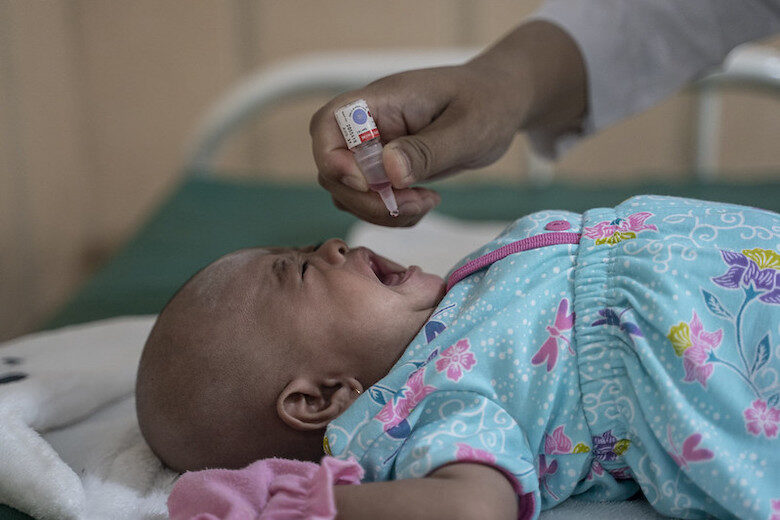
An infant receiving a vaccine (Indonesia) (Photo: USAID Indonesia / Flickr [United States government work])
目次
The current state of health care and media coverage
As noted above, the world faces many health and medical problems. Which issues does the world especially focus on? For this, we refer to the targets under the Sustainable Development Goals (SDGs). The SDGs, adopted at the United Nations in 2015, set 17 goals to be achieved by 2030 for urgent, critical challenges. With respect to health and medical issues, the SDGs’ Goal 3 is “Good Health and Well-Being” for all. Specifically, there are 13 targets (※1), setting objectives across nine areas: maternal health, child health, infectious diseases, mental health, alcohol and drugs, road traffic injuries, sexual and reproductive health, access to medicines, and air pollution.
In this article, we focus on four of these targets—“maternal health,” “child health,” “the three major infectious diseases,” and “alcohol and drugs”—to explore the global state of health and medical issues from these perspectives.
We also analyzed how much these four aspects of health and medical issues are reported in Japan. We examined international coverage by the three newspapers Asahi Shimbun, Mainichi Shimbun, and Yomiuri Shimbun over the 8 years from 2015, when the SDGs began, through 2022 (※2).
What threatens maternal health
Maternal health refers to the health of women during pregnancy, childbirth, and the postpartum period. Over the past 20 years, maternal health has improved in all regions of the world. However, many mothers still die around the time of childbirth; specifically, in 2020 the global maternal mortality ratio was 223 per 100,000 live births. Most maternal deaths occur in low-income countries, with about 87% in sub-Saharan Africa and South Asia.
Causes of maternal death include postpartum haemorrhage, hypertensive disorders of pregnancy, and unsafe abortion. Beyond these direct causes, indirect causes such as malaria and heart disease also contribute to deaths. Many maternal deaths can be prevented when skilled health personnel are present. In other words, maternal deaths are especially problematic where there is a shortage of health workers and medical facilities such as hospitals.
Reducing maternal mortality also requires preventing unintended pregnancies, which is considered crucial. Yet relatively few women make their own decisions regarding reproduction; one survey finds only 57% do.
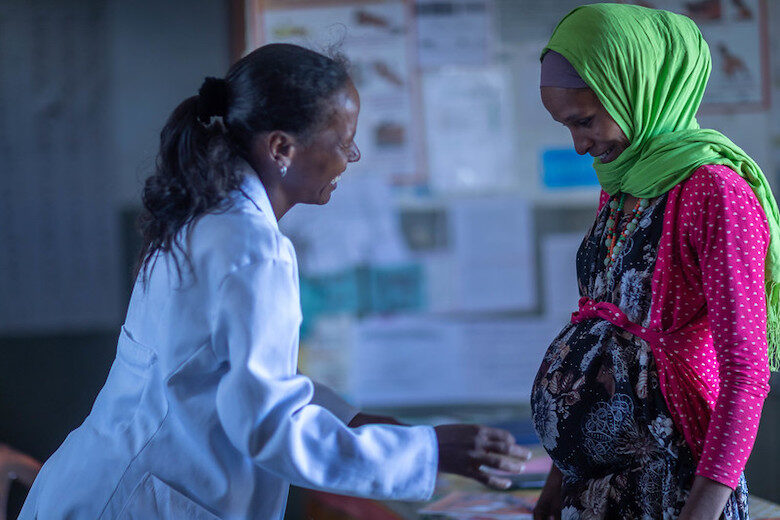
A pregnant woman receiving a checkup (Ethiopia) (Photo: UNICEF Ethiopia / Flickr [CC BY-NC-ND 2.0])
Next, we look at international coverage in Japan on maternal health (※3). Over the 8 years since 2015, there were only a total of 10 international-section articles across Asahi, Mainichi, and Yomiuri that took this issue as their main subject. Many articles, such as the November 22, 2015 Mainichi piece “Syria: Maternal mortality worsening; NGO calls for support,” discussed the relationship between deteriorating security in specific countries and maternal health conditions. By contrast, there were few articles taking a macro, global view of maternal health—only one, the December 4, 2015 Mainichi article “State of World Population: ‘Reproductive health is key’—Preventing maternal deaths and unintended pregnancies.”
Although not included in our tally, some articles with different main topics also mentioned maternal health. For example, the Asahi article of July 8, 2015, “Poverty: 800 million left behind—Concentrated in sub-Saharan Africa and South Asia; ‘Halving target achieved,’ UN report,” discussed poverty and raised related issues. There were also articles that introduced Japan’s strong maternal and child welfare abroad and mentioned maternal health. For instance, the November 8, 2016 Yomiuri article “Yomiuri International Cooperation Prize: Public Interest Incorporated Foundation JOICFP—Safe childbirth in developing countries = Special feature” referred to maternal mortality while describing the overseas rollout of maternal and child health handbooks and the work of Japanese organizations.
What threatens child health
Over the past decades, children’s health worldwide has improved and mortality has declined. Still, reducing child mortality remains an important challenge. In 2021, 5 million children under five died, of whom 2.3 million—46%—died within the first 28 days of life. Sub-Saharan Africa is the region with the highest mortality: under-five mortality is 73 per 1,000 live births, and neonatal mortality is 27 per 1,000 live births.
The main causes of child deaths include pneumonia, diarrhoeal diseases, and infections. Major underlying factors include poverty-driven lack of access to safe water and air and adequate food. With access to health care and improvements in living conditions, many of these illnesses are easily preventable, and even when children become ill, they can often be treated; it is estimated that more than half of child deaths are preventable.
Protecting child health is not just about lowering mortality. Conditions such as malnutrition and malaria often affect children’s subsequent development. Addressing issues such as water and food security and infectious diseases appropriately also creates an environment for healthy growth.
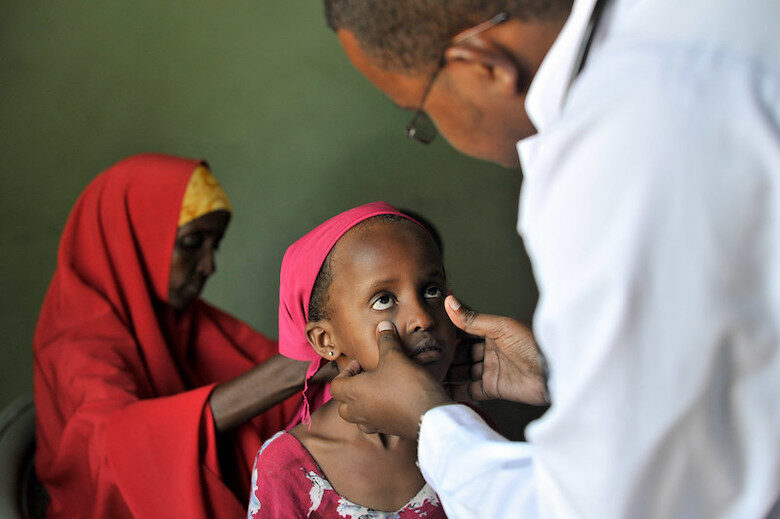
A child undergoing an eye exam (Somalia) (Photo: AMISOM Public Information / Flickr [CC0 1.0])
We now look at international coverage in Japan on child health (※4). As noted at the outset, neonatal conditions are the leading cause of death in low-income countries, and urgent efforts are needed to improve children’s health. However, this topic received little attention in Japanese reporting: across the three papers there were only 12 articles over 8 years. For example, the August 20, 2015 Mainichi article “Palestine: Infant mortality rises in Gaza—Stress from ‘blockade and war’” discussed changes in child health in a specific region, while the March 9, 2017 Yomiuri article “About 25% of child deaths due to environmental factors—WHO report” addressed the global situation.
Among the articles included in our tally was coverage of efforts in high-income countries by well-known companies to improve child health, such as the February 16, 2018 Mainichi piece “McDonald’s in the U.S.: Health-conscious Happy Meal—Revamping kids’ menu.” However, this can also be seen as being used more as corporate marketing than focusing on the problem itself.
The three major infectious diseases
Alongside outbreaks that draw temporary attention, such as COVID-19 and Middle East respiratory syndrome (MERS) (※5), there are infectious diseases that have long claimed many lives. In particular, tuberculosis, HIV/AIDS, and malaria are known as the three major infectious diseases. Although effective treatments now exist for these diseases, mortality remains high. They are especially widespread in low-income countries, particularly in Africa. Below we look at each of the three.
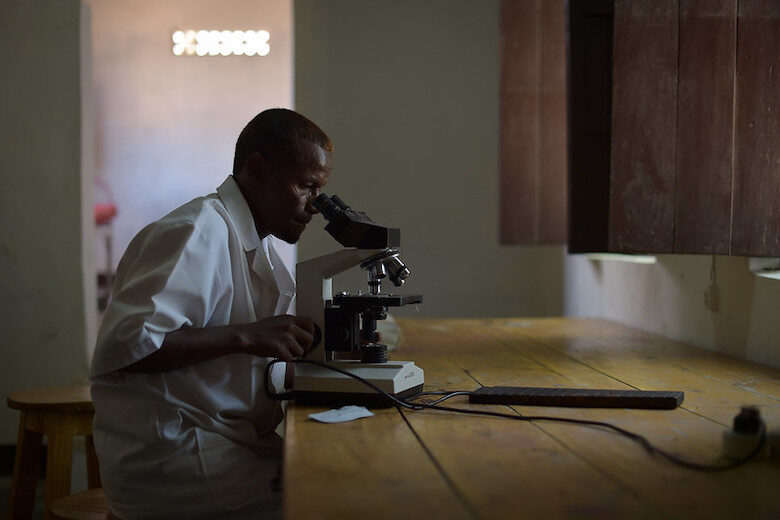
A lab technician examining a blood sample (Somalia) (Photo: AMISOM Public Information / Flickr [CC0 1.0])
First, tuberculosis. Tuberculosis is an infectious disease caused by bacteria and spreads through the air, most commonly affecting the lungs. An estimated one quarter of the world’s population has been infected with Mycobacterium tuberculosis; while infections are very common, most people do not develop disease after infection. Babies and children and people with weakened immune systems, however, are at higher risk of developing active TB. Malnutrition and HIV/AIDS—which weakens the immune system—are closely linked to TB; the TB incidence among people living with HIV is 16 times that of those without HIV.
Tuberculosis is both preventable and treatable. Nevertheless, in 2021 an estimated 10.6 million people fell ill with TB worldwide, and 1.6 million people died from it.
Next, HIV/AIDS. HIV (human immunodeficiency virus) is a virus that attacks the body’s immune cells. People infected with it have weakened immunity and become more susceptible to infections and illnesses they would not ordinarily contract. HIV spreads through contact with certain body fluids of a person with HIV. Without treatment, AIDS (acquired immunodeficiency syndrome) is likely to develop. There is currently no effective cure for HIV, but with appropriate treatment one can not only suppress progression to AIDS but also prevent onward transmission.
Even so, HIV/AIDS remains a disease that affects many worldwide. As of the end of 2022, there were 39 million people living with HIV. In 2022 alone, 630,000 people died from AIDS-related illnesses.
Finally, malaria. Malaria is an infectious disease transmitted by Anopheles mosquitoes that carry parasites called Plasmodium, and it is seen mainly in tropical countries. It is not known to spread directly from person to person.
Malaria is preventable. Specifically, it can be prevented through measures such as receiving a vaccine, sleeping under bed nets to avoid bites from nocturnally active Anopheles mosquitoes, and taking antimalarial drugs. If infection does occur, prompt treatment can prevent severe disease and achieve cure. Yet as of 2021, people in 87 countries still face the threat of malaria. Specifically, the number of malaria cases worldwide in 2021 was 2億4,700万人, and the number of deaths was 61万9,000人. About 95% of all cases and deaths occurred in Africa.
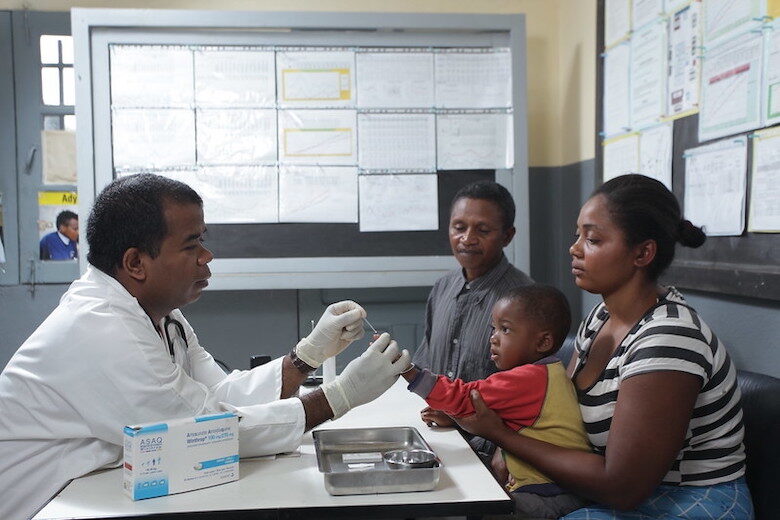
A child being tested for malaria (Madagascar) (Photo: USAID in Africa / Flickr [United States government work])
We now examine international coverage in Japan on the three major infectious diseases—tuberculosis, HIV/AIDS, and malaria (※6). Articles addressing these issues numbered 29 over eight years across the three papers, more than for the two topics above. Some took a macro, global view, such as the December 8, 2021 Yomiuri article “Malaria deaths: 627,000 people; up by 6.9万人 last year—Countermeasures delayed by COVID,” while others discussed country-level issues from a micro perspective, such as the January 12, 2022 Mainichi article “Kenya: TB raging in Nairobi’s slums—Crowding; 140,000 infected the year before last.”
However, relative to the number of people affected, coverage is limited. For a concrete comparison with reporting on COVID-19: the average annual number of deaths over the three years 2020 to 2022 was 2.24 million, which is less than the combined deaths from the three major infectious diseases in 2021. Yet looking at the volume of coverage (※7), in the international section of Asahi Shimbun alone there were 1,703 articles over the three years from 2020. At the outset of the pandemic, there was even a period when roughly 80% of international reporting focused on it.
Health harm from alcohol and drugs
Alcohol and drugs are harmful and addictive and damage physical and mental health. They also have major negative effects on society, not just on individuals. What specific problems do they cause?
First, effects on the body: use of alcohol and drugs adversely affects the brain, and by stimulating or calming the mind it dulls judgment and alters behaviour. In some cases it can cause acute intoxication, with a risk of coma or death. Because many substances are addictive, long-term health damage is also a concern. Social impacts include traffic accidents arising from impaired judgment, violence and other crime, and economic decline.

Bottles of alcoholic beverages lined up (Photo: Tim / Flickr [CC BY-NC-ND 2.0])
Thus alcohol and drugs are harmful by nature and cause a wide range of problems. In fact, alcohol is a cause of more than 200 diseases, injuries, and other health conditions, and 3 million people worldwide die each year due to alcohol—about 5.3% of all deaths. Globally, drug use is on the rise: in 2021 there were 39.5 million people with drug use disorders, a 45% increase in ten years. Despite the fact that without treatment drug use increases the risk of death, many still cannot access appropriate care, as drug use is often treated as a matter for criminal punishment rather than treatment. As a result, only one in 5 people affected by drugs receives treatment.
We now explore how much each of these problems is reported in Japan. Looking first at international coverage on alcohol-related health harms (※8), there were only about 20 articles over eight years across the three papers. For example, the January 19, 2018 Mainichi article “Excessive drinking: a cause of cancer—For men, five cans of beer in two hours counts as ‘heavy drinking’; U.S. society” discussed health risks from alcohol and links to other diseases.
By contrast, most articles about alcohol did not address health issues. Including pieces not focused on health harms, there were 170 alcohol-related articles across the three papers. Many were about the alcohol industry or conveyed positive impressions of alcohol, including serial features about the world’s drinks such as Mainichi’s November 27, 2018 “Cheers! Somewhere in the World: A pride born of war—Taiwan’s Kinmen kaoliang liquor.”
Next, international coverage on health harms from drugs (※9). Only 11 articles across the three papers addressed this issue. For instance, the December 26, 2017 Mainichi piece “United States: Average life expectancy falls for two consecutive years—Abuse of prescription opioids a factor?” discussed drug use and associated health harms. Some articles also addressed links between drug use and social issues, such as the December 18, 2018 Yomiuri article “‘Happy country’ tainted by drugs—Bhutan: rising unemployment fuels anxiety among youth.”
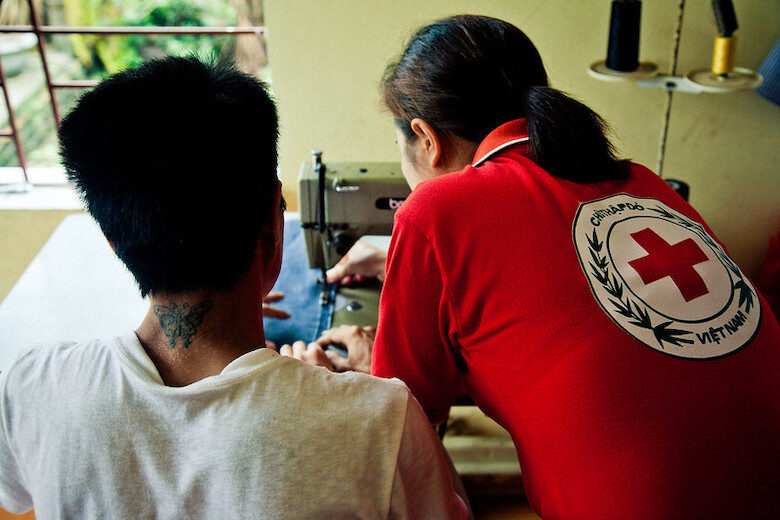
Former drug users receiving vocational training (Vietnam) (Photo: International Federation of Red Cross and Red Crescent Societies / Flickr [CC BY-NC-ND 2.0])
However, only a small share of articles mentioning drugs discussed impacts on individuals or society in this way. In fact, including pieces not focused on health harms, the three papers carried 169 drug-related articles. Many discussed movements of national governments and criminal measures related to drug trafficking and use, such as the December 9, 2016 Yomiuri article “Mr. Trump supports the Philippines’ anti-drug measures; Mr. Duterte: ‘I feel like a saint.’”
Questioning coverage of health and medical issues
As we have seen, despite the very large number of people affected by health and medical issues that the world must address, media attention to the current state of these problems is extremely limited across all four perspectives—maternal health, child health, the three major infectious diseases, and alcohol and drugs.
Why are such serious issues underreported in Japan? Several reasons can be cited. One is that Japan suffers little direct impact from many of these problems, which are concentrated in low-income countries. Indeed, previous GNV research has shown that countries with higher poverty rates receive less coverage. Another factor is that these are not “new” issues. News values tend to emphasize the suddenness and freshness of information, but many of the issues discussed here have affected the world for years, making them less likely to be covered as news.

A press conference about COVID-19 (Scotland) (Photo: Scottish Government / Flickr [CC BY 2.0])
The health and medical issues discussed here claim more lives on an ongoing basis than COVID-19 and similar outbreaks. Yet because the latter arise suddenly and have a major impact on high-income countries, whereas the former have long been prevalent mainly in low-income countries, there is a large disparity in coverage.
However, media attention is necessary to solve these problems. As noted above, health and medical issues are rooted in a wide range of factors—inequality and poverty, shortages of food and infrastructure, limited access to health facilities and medicines, and shortages of health workers. Without addressing these, there can be no fundamental solution. Solving these underlying problems requires major policy shifts and significant financial and human resources. Media attention is essential to catalyze such action. Paying attention to global issues also helps us prepare for similar new health and medical challenges in the future.
Another major issue is that although the term “SDGs” is heavily reported in Japan, there is relatively little focus on the actual goals and the essence of the SDGs themselves. The SDGs are comprehensive, global objectives that aim to “leave no one behind.” If that is the aim, then those in low-income countries and people living in poverty—who face the most urgent problems—surely need to be at the center of countermeasures.
To achieve solutions to health and medical issues worldwide, media attention—which influences governments and public opinion—is indispensable. Will the day come when Japanese media also turn their gaze to these grave challenges facing the world?
※1 In the targets, there are 9 outcome targets and 4 means-of-implementation targets.
Targets for achievement
(1)2030年までに、世界の妊産婦死亡率を出生10万人あたり70人までに減らす。
(2) By 2030, in every country reduce neonatal mortality to 12 or fewer per 1,000 live births and under‑five mortality to 25 or fewer per 1,000 live births, and end preventable deaths of newborns and children under five.
(3)2030年までに、エイズ、結核、マラリアやこれまで見過ごされてきた熱帯病などの感染病を絶やし、肝炎や汚染水を原因とする病気、その他感染症の対策を進める。
(4)2030年までに、予防と治療とメンタルヘルスと福祉の推進を通して、感染症以外で平均寿命より前に死亡する割合を3分の1まで減らす。
(5) Strengthen prevention and treatment of substance abuse, including narcotic drug abuse and harmful use of alcohol.
(6)2020年までに、世界で起こる交通事故による死亡と怪我を半分まで減らす。
(7)2030年までに、すべての人が、家族計画や情報、教育を含む性や生殖に関する保健サービスを利用できるようにする。また、これらを国家戦略に入れ込む。
(8) Achieve universal health coverage so that everyone can receive essential health services without financial hardship, and access safe, effective, affordable essential medicines and vaccines.
(9)2030年までに、有害な化学物質や、大気・水・土壌の汚染を原因とする死亡や病気を大幅に減らす。
Means of implementation
(a) Strengthen, as appropriate, the implementation of the WHO Framework Convention on Tobacco Control.
(b)TRIPSAgreement and the Doha Declaration on the TRIPS Agreement and Public Health: support research and development of vaccines and medicines for diseases with major impacts particularly in developing countries, and provide access to affordable essential medicines and vaccines.
(c) Substantially increase health financing, expand the health workforce, and promote training in developing countries, particularly least developed countries and small island states.
(d) Strengthen the capacity of all countries, in particular developing countries, for early warning, risk reduction, and management of national and global health risks.
※2 We used the databases of the three papers (Asahi Shimbun: “Asahi Shimbun Cross-Search,” Mainichi Shimbun: “Maisaku,” Yomiuri Shimbun: “Yomidas Rekishikan”). The search covered both morning and evening editions of the Tokyo head-office paper and the Tokyo regional edition. For Asahi Shimbun Cross-Search, the target publications were limited to “Asahi Shimbun” (excluding Asahi Shimbun Digital, Aera, and Weekly Asahi).
※3 In each database of Mainichi, Yomiuri, and Asahi, we searched for “(妊婦 OR 妊産婦 OR 出産 OR お産 OR 帝王切開 ) AND (死 OR 亡 OR 健康 OR 病気 OR 感染 OR 検診 OR 病院 OR 医)” (period: January 1, 2015 to December 31, 2022). Section: international. Search target: headlines. We counted articles that took maternal health as the main subject; mere mentions were not counted.
※4 In each database of Mainichi, Yomiuri, and Asahi, we searched for “(乳幼児 OR 子供 OR 子ども OR 乳児 OR 新生児) AND (死 OR 亡 OR 健康 OR 病気 OR 感染 OR 検診 OR 病院 OR 医)” (period: January 1, 2015 to December 31, 2022). Section: international. Search target: headlines. We counted articles that took child health as the main subject; mere mentions were not counted.
※5 Middle East respiratory syndrome: a disease caused by the MERS coronavirus. Transmission occurs through contact with dromedary camels carrying the virus. Main symptoms include sudden pneumonia and other respiratory symptoms.
※6 In each database of Mainichi, Yomiuri, and Asahi, we searched for “結核 OR マラリア OR (HIV OR AIDS OR エイズ)” (period: January 1, 2015 to December 31, 2022). Search target: headlines and full text. We counted international articles that took child health as the main subject; mere mentions were not counted.
※7 In Asahi’s database we searched for “新型肺炎 OR コロナ” (period: January 1, 2015 to December 31, 2022). Section: international. Search target: headlines.
※8 In each database of Mainichi, Yomiuri, and Asahi, we searched for “アルコール OR 酒 OR ビール OR ワイン” (period: January 1, 2015 to December 31, 2022). Search target: headlines. We counted international articles that took alcohol-related health problems as the main subject; mere mentions were not counted.
※9 In each database of Mainichi, Yomiuri, and Asahi, we searched for “麻薬 OR 薬物 OR ドラッグ OR 覚醒剤 OR 大麻 OR マリファナ OR モルヒネ OR コカイン OR MDMA” (period: January 1, 2015 to December 31, 2022). Search target: headlines. We counted international articles that took drug-related health problems as the main subject; mere mentions were not counted.
Writer: Yuna Nakahigashi















こういう分野の問題は特に、メディア側だけではなく私たち受け手の資質も重要になってくる問題であるように感じます。
「他人事」が「他人事」でないようになるためには、どのようなアプローチが重要になってくるのでしょうか。
アメリカ、ヨーロッパ等の国ではそもそも麻薬などのドラッグが合法な場合も多いです。そうすると深刻な健康被害を及ぼすにしても、その国の社会で問題になってないために、日本のメディアで報道されないのかもしれません。
それにしてもアフリカの保健医療への注目度の低さは問題ですね、