
At the end of May 2022, Turkey’s President Recep Tayyip Erdoğan announced a new military operation against Syria under the pretext of clearing Kurdish armed groups from areas near the border. Since 2016, Turkey has conducted three cross-border attacks into Syria. To force armed groups to withdraw, it seeks to occupy northern Syria and establish a 30-kilometer-wide buffer zone near the Turkish border, called a “safe zone.” Turkey’s military actions have been condemned by various countries and human rights organizations.
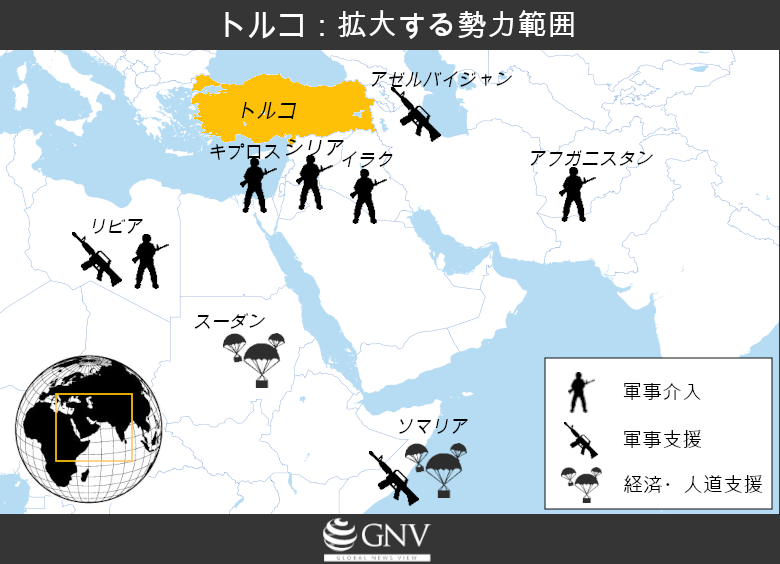
Surrounded by Europe, Asia, the Black Sea, and the Mediterranean, Turkey has leveraged its geography to carry out military interventions in several neighboring states, including Syria. Not only nearby countries but also distant ones have been targets. In addition, it provides military and economic assistance, projecting a tough stance toward other countries. This article takes a closer look at the assertive foreign policy Turkey is currently pursuing.
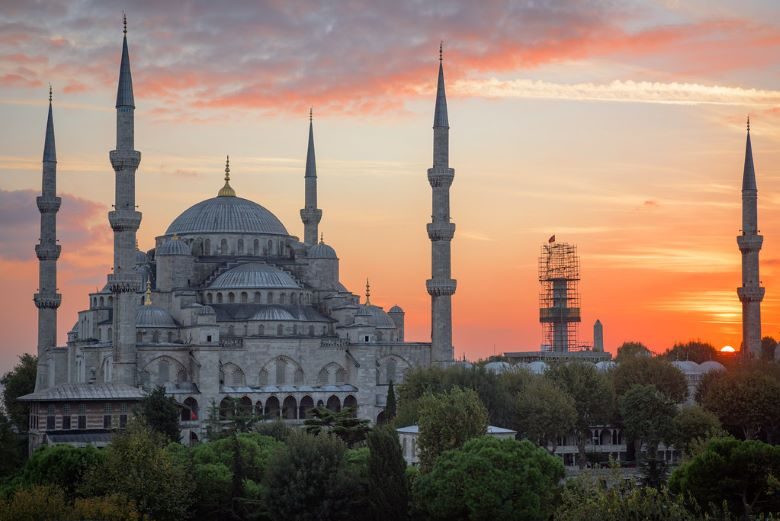
A mosque in Istanbul in the architectural style of the Ottoman Empire (Photo: www/bhattacherjee.com / Flickr [CC BY-NC-ND 2.0])
目次
Turkey’s past and present
The Anatolian Peninsula, which makes up most of present-day Turkey, has seen the rise and fall of many empires since antiquity, including the Roman and Byzantine Empires. In 1299, inhabitants of Anatolia founded the Ottoman Empire, which in 1453 destroyed the Byzantine Empire and advanced the Islamization of its domains. The Ottoman Empire expanded rapidly until the end of the 16th century and, at its height, possessed vast territories stretching north to present-day Hungary, west to Algeria in North Africa, south to Egypt and Yemen, and east to the Persian Gulf, becoming a great empire in history. However, after the crushing defeat in the 1683 Second Siege of Vienna—an expedition against the Holy Roman Empire—its decline began, and by the late 19th century it had become considerably weakened.
In World War I, the Ottoman Empire was defeated by the Allied Powers—Britain, France, and Russia—and faced the threat of occupation and dismemberment by the Western great powers. But under the leadership of military commander Mustafa Kemal Atatürk, a movement resisting the partition of territory by the Allies gained momentum. When the Ottoman sultan fled into exile in 1922, marking the end of the empire, the Republic of Turkey was established in 1923. Atatürk was elected president and carried out reforms toward modernization. Turkey joined the United Nations in 1945 and the North Atlantic Treaty Organization (NATO) in 1952.
Erdoğan, the current president, was the head of the Justice and Development Party (AKP) that came to power in 2003 on a platform of conservative Islamism and populism, and he served as prime minister for 11 years until 2014 (※1). In the first half of his premiership, the improvement in living standards accompanying high economic growth and Turkey’s increased clout abroad led to a favorable view of Erdoğan. He subsequently ran for and won the presidency, leading Turkey as president from 2014 to the present. With the abolition of the prime minister’s post in 2018 and the transition to a presidential system, his tendencies toward authoritarianism and one-man rule have accelerated.
A distinctive feature of his policy is an assertive diplomatic strategy. As an emerging country and a regional power, Turkey has sought to strengthen its influence and expand its sphere of influence through means such as military intervention, a calculation apparent throughout its actions. Despite the issues discussed below, Ankara has not eased its interventions. First, regarding Turkey’s identity, the long-standing Kurdish issue stands out. Turkey seeks to contain Kurds who aim to build an independent state, which has contributed to its increasing offensives in Iraq and Syria. Historically, the genocide against Armenians is another key issue; the rift remains deep-rooted, and problems with neighboring countries remain unresolved. In the Eastern Mediterranean, territorial and energy issues are closely intertwined, and Turkey has adversarial relations with Greece and Cyprus, engaging in disputes with historical overtones. Furthermore, it has a rivalry with Saudi Arabia and the United Arab Emirates (UAE) on various fronts, and that competition plays out in places such as the Middle East and Africa.
Seeking to act as a strong and dignified country, Turkey is said to have shifted toward policies that employ military force. Below, we will unpack these issues and Turkey’s ambitions.
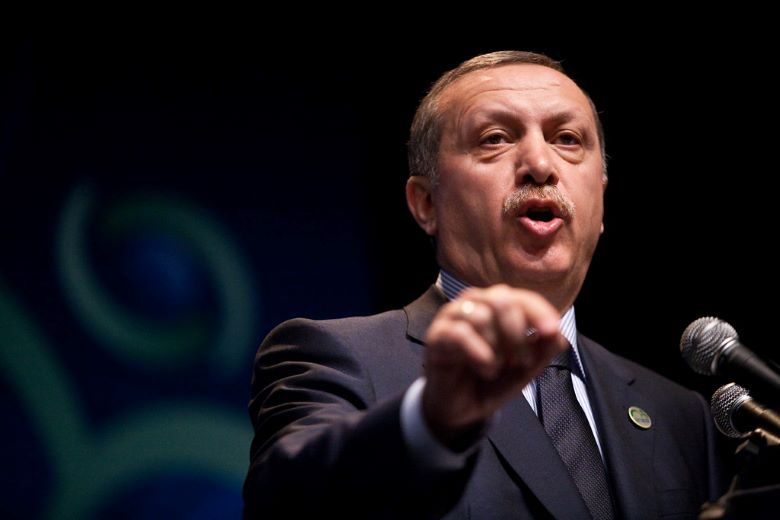
Turkey’s President Erdoğan (Photo: unaoc / Flickr [CC BY-NC-ND 2.0])
The Kurdish question and maneuvering in the Middle East
One cannot ignore Turkey’s relationship with those who identify as Kurds when looking at the country’s circumstances. The Kurds, who live across areas that straddle the borders of Turkey, Syria, Iraq, Iran, and Armenia, are said to number around 30 million, making them the fourth largest ethnic group in the Middle East. However, they are minorities in each state, have never had a lasting nation-state of their own, and have been subject to discrimination and repression.
When the Ottoman Empire was defeated in World War I, the Sykes-Picot Agreement was concluded as a secret pact among the victorious Britain, France, and Russia to divide the Middle East after the war. Based on this, arbitrary borders were drawn through Kurdish-inhabited regions. The partitioned Kurds rebelled, and calls for the creation of a Kurdish state grew from this time. The Treaty of Sèvres, signed in 1920 between the Ottoman Empire and the Allies, recognized Kurdish autonomy for the first time, but it was tantamount to the empire’s dissolution. Atatürk and others opposed this; when the Republic of Turkey was established in 1923, the Treaty of Lausanne was concluded as a new peace treaty, reversing movement toward Kurdish independence.
With the rise of nationalism after the founding of the Republic, efforts were made to protect a Turkish ideology by physically or identity-wise excluding non-Turkic Kurds and Armenians. The use of Kurdish in schools and elsewhere was banned, and Kurdish politicians who held gatherings for Kurds were arrested, among other strict measures. In the 1980s, the Kurdistan Workers’ Party (PKK), a movement seeking to build an independent state, launched an armed struggle in Turkey, and Ankara came to regard the PKK as a “terrorist group.”
Moves toward Kurdish autonomy and independence were not limited to Turkey. In the 1980s, an independence movement arose in Iraq but was harshly suppressed by Saddam Hussein’s dictatorship. The PKK also expanded its presence in northern Iraq and has been targeted by Turkey. Exploiting rivalries among Kurdish factions inside Iraq, Turkey has repeatedly crossed into northern Iraq to expand its influence. In 2017, a referendum on independence was held in Iraq’s Kurdish autonomous region, and it won overwhelming approval, but Iraq and Turkey did not recognize the vote itself. Although peace talks with the PKK had been progressing in recent years, in April 2022 the Turkish military again entered northern Iraq and launched an operation. Turkey’s intervention in Iraq over the Kurdish issue remains an active conflict.
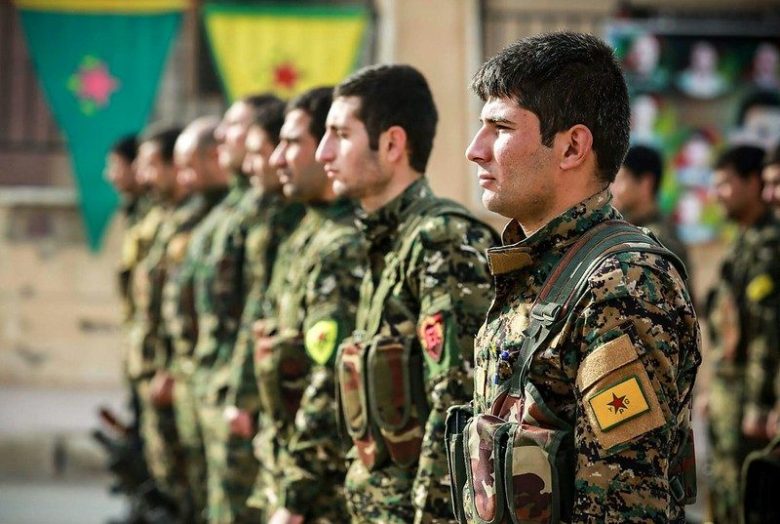
Fighters of the People’s Protection Units (YPG) (Photo: Kurdishstruggle / Flickr [CC BY 2.0])
Turkey’s relationship with the Kurds is also highly significant in the ongoing Syrian conflict. In Syria, sparked by the phenomenon known as the “Arab Spring” in 2011, fierce fighting broke out between anti-government forces, extremist armed groups, and the Syrian government. As the conflict grew more complex, the Islamic State (IS) emerged in 2014 and rapidly expanded to control much of Syria. The Bashar al-Assad government sought to jointly defeat IS with Kurdish armed groups in Syria capable of fighting effectively; the Kurdish People’s Protection Units (YPG), which effectively controlled northern Syria, played a major role in clearing IS. In return for their role in the fighting, the YPG sought autonomy in northern Syria and demanded it from the Assad regime, but Turkey invaded the area to suppress this. As of the time of writing, Ankara is preparing for another intervention.
Turkey fears that if Kurdish forces achieve independence elsewhere, its own Kurds will likewise step up demands for autonomy, and it has not softened its hard line toward them. In this way, the Kurdish issue, entangled with territorial questions involving Syria and Iraq, remains far from resolution.
Issues with other neighboring countries
Turkey has advanced military interventions beyond the Kurdish issue. First, among struggles for hegemony in the Eastern Mediterranean, we consider the issue of Cyprus. Cyprus was ruled by Crusader states in the 12th–13th centuries, and Greeks settled there. Conquered by the Ottoman Empire in the 16th century, Islamization advanced, and Greek and Turkish communities came to coexist. Later under British imperial rule, Cyprus became independent in 1960 as the Republic of Cyprus. However, amid continued tension between Greek and Turkish Cypriots, Greek Cypriots staged a coup in 1974. Turkey responded with a military intervention under the pretext of protecting Turkish Cypriots, resulting in the island’s division into north and south (for details, see here).
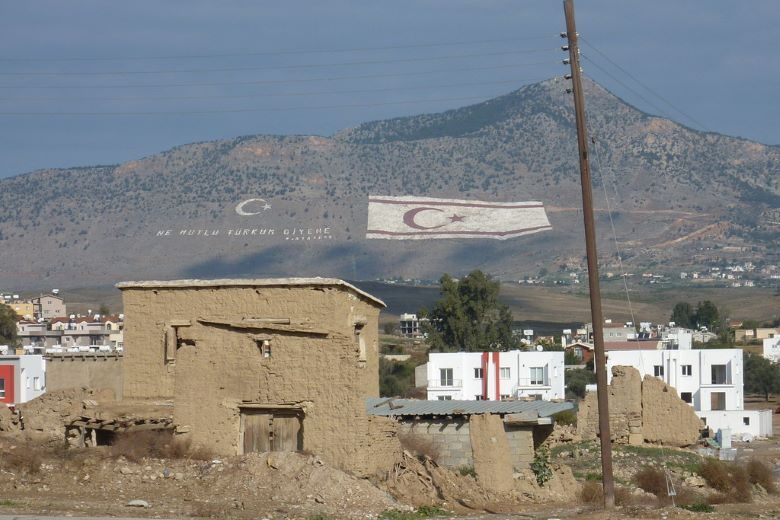
Today, a struggle for hegemony over energy resources is unfolding around Cyprus among Cyprus, Greece, and Turkey. Rapid population growth and economic expansion in Turkey have sharply increased energy demand and dependence on imports of oil and natural gas. Seeking to reduce this dependence while stabilizing supply, Ankara had been eyeing opportunities to acquire new offshore resources when, in 2018, a massive natural gas field was discovered off Cyprus in the Eastern Mediterranean. Turkey has asserted maritime jurisdiction to secure these resources, but its claims conflict with those of Cyprus and Greece. Thus, Turkey has long had adversarial relations with Cyprus and Greece in the Eastern Mediterranean, and is now locked in a power struggle over energy resources there (for more, see here).
Turkey has also intervened militarily in Afghanistan to raise its profile and position itself as a leading regional power. Since 2001, NATO countries led by the United States have intervened militarily, and Afghanistan has remained in an unstable state. As a NATO member where Muslims form a majority, Turkey has been a respected Islamic country from Afghanistan’s perspective. From 2003, Turkey deployed troops to Afghanistan, serving as part of the security force in Kabul and conducting military training. However, when NATO countries announced their forces would withdraw by September 2021, Turkey also pulled out its troops. Just before that, in August, the Taliban returned to power. Turkey’s moves were seen as an attempt to gain international trust by contributing to Afghanistan’s stabilization.
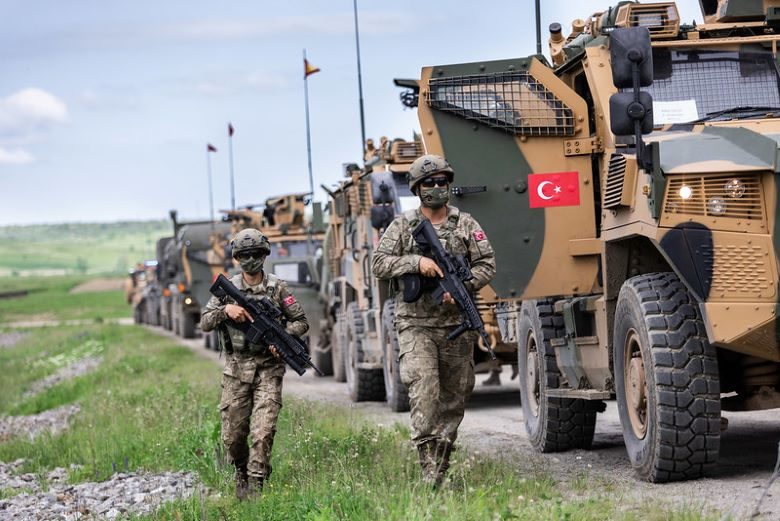
Turkish soldiers training as part of a NATO unit (Photo: NATO North Atlantic Treaty Organization / Flickr [CC BY-NC-ND 2.0])
Furthermore, Turkey is involved in the conflict between Azerbaijan and Armenia. Armenia, which borders Turkey to the east, bears the history of the Armenian genocide committed by the Ottoman Empire during World War I, has closed its border with Turkey, and has no diplomatic relations with it. Azerbaijan, located further east of Armenia, has strong historical, linguistic, and cultural ties with Turkey and maintains friendly relations. Within Azerbaijan lies the region of Nagorno-Karabakh; disputes over its status escalated into conflict between ethnic Armenians and Azerbaijanis in the 1990s. Backed by Armenia, Nagorno-Karabakh declared independence from Azerbaijan and occupied Azerbaijani territory (for details, see here). Sporadic clashes continued after the 1994 ceasefire, and full-scale fighting broke out again in July and September 2020. To support Azerbaijan, Turkey stationed several fighter jets in October 2020 and supplied Turkish-made drones. As a result, Azerbaijan effectively won and recaptured most of Nagorno-Karabakh’s territory.
Thus, Turkey projects influence not only in the Middle East but also in the Eastern Mediterranean and Central Asia, boosting its prestige in the region.
Assertive policy toward Africa
Turkey has also conducted military interventions in Africa. Beyond military and economic support for Somalia and Sudan, it has intervened in Libya, seeking to strengthen its influence.
Somalia, in northeastern Africa, has long faced conflict and the absence of an effective central government, leaving it in a highly unstable state. A severe famine hit in July 2011, in which about 250,000 people are said to have died. Seizing on this crisis, Turkey moved quickly with large-scale humanitarian assistance such as investments in education and health facilities, winning high praise from Somalis. In 2017, Turkey also opened its largest overseas military base in Somalia and, under the banner of rebuilding a devastated country, has been training Somali troops. In 2020, it was announced that Turkey would cooperate with the Somali government on oil development at Mogadishu’s request.
Although Turkey appears to have been welcomed in Somalia, there is also criticism that it has abetted exploitation and corruption. Some view its involvement under the banner of development assistance as a predatory bargain that exploits Somalia’s fragile political system. Saudi Arabia and the UAE are also seeking influence in Somalia, giving the situation an aspect of a struggle for spheres of influence, and the rivalry between Turkey and Saudi Arabia/UAE has arguably affected the country.
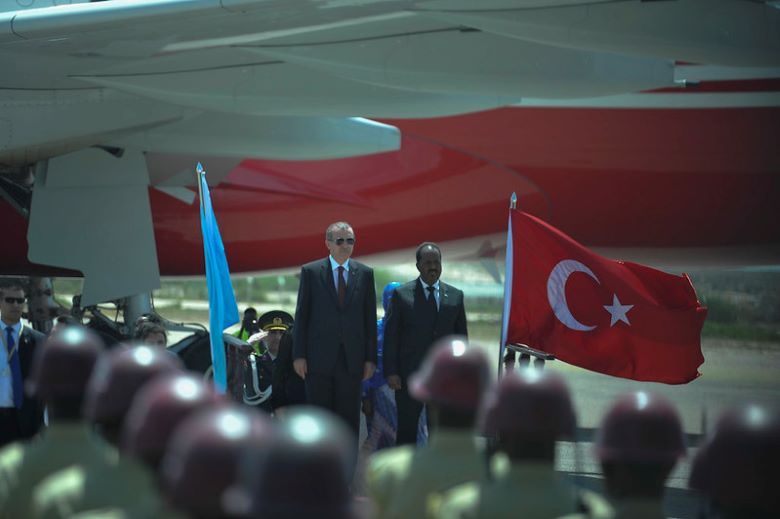
President Erdoğan visiting Somalia and Somalia’s President Hassan Sheikh Mohamud (Photo: AMISOM Public Information / Flickr [CC0 1.0])
Turkey is also seeking to increase its presence in Sudan, likewise in the northeast. After South Sudan separated and became independent in 2011, northern Sudan lost oil resources that had been a major product of the south. From around the time it sought to attract foreign investment, Turkey’s advance into Sudan intensified. In a deal signed in December 2017 on trade and security cooperation, Sudan agreed to lease Suakin Island to Turkey for 99 years and to redevelop it. Suakin Island sits in a geopolitically important position facing Saudi Arabia across the Red Sea, with Egypt to the north, and Turkey’s move has been viewed with suspicion by both countries. Concerns have been raised that obtaining redevelopment rights on Suakin is part of a broader drive to expand military power there. Some also argue that Turkey may set up military facilities in Sudan and see this as a springboard for access to the Red Sea.
In 2020, Turkey finally intervened militarily in Libya in North Africa. In Libya, the long-standing dictatorship collapsed in the wake of the 2011 Arab Spring, but no new central government was established, plunging the country into chaos (for details, see here). Among the factions that arose, the Government of National Accord (GNA) was formed and gained international recognition. In response, the Libyan National Army (LNA) launched an offensive to seize Tripoli, the capital and GNA stronghold. Turkey intervened on the GNA’s side, deploying troops to Libya in January 2020. This pitted Turkey indirectly against Russia, the UAE, and Egypt, which supported the LNA. Natural gas lies beneath the waters between Turkey and Libya, and Turkey’s military intervention is seen as aimed at securing access to these resources. Turkey’s involvement allowed the GNA to survive, and a ceasefire with the LNA was later reached, but the situation remains unstable.
Outlook
As we have seen, Turkey has established footholds not only in neighboring regions such as the Middle East and the Eastern Mediterranean, but across a wide area including Central Asia and Africa, extending from economic and military aid to direct military intervention. In some cases, Turkey’s interventions are viewed as aimed at supporting internationally recognized authorities; in others, they are seen as aimed at invading and occupying parts of other countries. Whether for national security or to expand its own interests, the fact remains that Ankara is intervening in multiple countries and regions with unstable situations. Some view President Erdoğan as seeking to play a stabilizing role in conflicts and to rise as a regional power among emerging countries—a plan he has in mind. How far will this assertive interventionist policy go? We will continue to watch developments closely.
※1 Before Erdoğan’s victory in the 2014 presidential election, Turkey’s political system was a parliamentary cabinet system centered on the prime minister. The president was the head of state, but under the constitution did not exercise executive power, leaving substantial discretion to the prime minister. A constitutional referendum in April 2017 barely passed, abolishing the post of prime minister. Erdoğan’s reelection in June 2018 completed the transition to a presidential system, giving him immense influence over the legislature and judiciary as well.
Writer: Manami Hasegawa
Graphic: Haruka Gonno





トルコについて、こんなにもごたごたしてるなんて知りませんでした。トルコに限らず、ロシアの影でいろいろやってる国がありそうだと思いました。