
The world still faces major challenges in health care and people’s health. Among the Sustainable Development Goals (SDGs), Goal 3 gives this issue high priority, aiming to address global maternal mortality and under‑five mortality, infectious diseases such as AIDS, tuberculosis, and malaria, alcohol and drug abuse, and reproductive health. It also seeks to achieve universal health coverage so that everyone can access care. However, progress toward these targets has significantly stalled; a recent assessment states that “major challenges remain,” and predicts the goals will not be achieved by 2030.
In this article, we look back at past GNV coverage to explore several of the key issues surrounding global health.
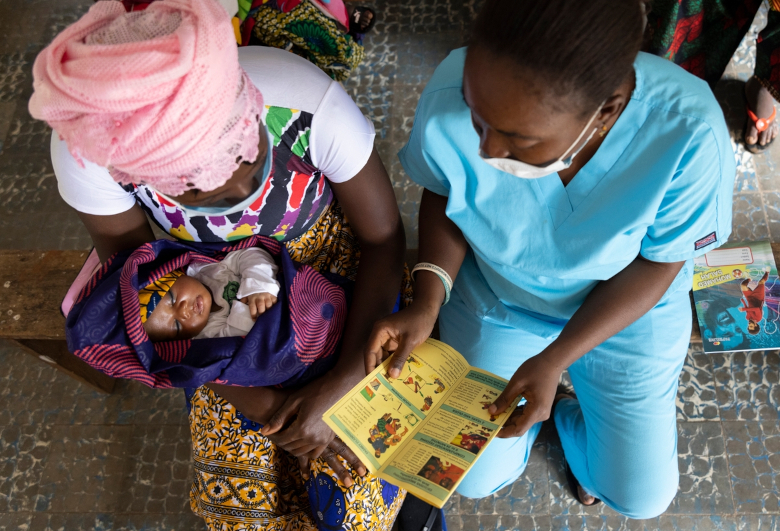
A nurse handing educational materials for malaria prevention to a mother, Sierra Leone (Photo: Unknown / Rawpixel [CC0 1.0] )
目次
Maternal and child health
Childbirth carries significant risks. Yet despite the fact that suitable, high‑quality medical care can greatly reduce those risks, many women—especially in low‑income countries—still die from causes related to pregnancy and childbirth. While there has been major progress over the past few decades, it remains a serious problem.
Worldwide, one woman every two minutes dies from causes related to pregnancy and childbirth. Most of these deaths are preventable with appropriate, high‑quality care. However, large disparities in living conditions, governance, and health systems mean that the risks of becoming a mother remain high in many regions.
There has been significant improvement over the past few decades. In 2000, the global maternal mortality ratio was about 328 per 100,000 live births, but by 2023 it had fallen to around 197—a 40% decrease. This is a major achievement, driven by expanded access to skilled birth attendants, improvements in emergency obstetric care, and the spread of simple yet effective tools such as medicines to prevent hemorrhage and clean birth kits.
Since 2015, however, this downward trend has stalled. Cuts in funding allocated to health care, the destruction of facilities and services in conflict zones, and the diversion of resources due to the COVID‑19 pandemic that erupted in 2020 all lie behind this.
“Maternal health and global inequalities” August 28, 2025
There are also very large regional disparities. Middle‑income countries such as Peru, Brazil, and India have seen major improvements, though challenges remain. In contrast, in sub‑Saharan Africa the risks associated with childbirth are extremely high, as evidenced by maternal mortality rates far exceeding those in other regions.
In these countries, prolonged political instability and armed conflict have severely disrupted health systems, caused widespread damage to infrastructure, and led to a mass exodus of skilled health workers. Beyond conflict‑related factors, a pervasive lack of financial resources also makes it difficult to provide maternal health services, especially in remote areas. Due to chronic shortages of stable funding and human resources, even when pregnant women deliver in health facilities they often cannot receive effective treatment because equipment is inadequate and medicines are in short supply.
“Maternal health and global inequalities” August 28, 2025
Large health disparities also exist for children after birth. Although there has been improvement, the problem remains substantial: in 2021 alone, five million children under five died. Sub‑Saharan Africa is particularly severe, with 73 out of every 1,000 children dying before age five—and many of these deaths are from preventable causes.
The leading causes of child deaths include pneumonia, diarrheal diseases, and infections. Major drivers of these illnesses include poverty, which limits access to safe water, clean air, and adequate food. With better access to health care and improved living conditions, many illnesses can not only be easily prevented but, even when children fall ill, are often treatable—so it is estimated that more than half of child deaths are preventable.
“The state of underreported global health and medical issues” July 27, 2023
The world’s three major infectious diseases
Behind high‑profile outbreaks like COVID‑19 and Ebola are infectious diseases that have been claiming many lives for years. Here we look at the three major infectious diseases—AIDS, tuberculosis, and malaria.
AIDS, or acquired immunodeficiency syndrome (AIDS), is caused by HIV (human immunodeficiency virus). By the end of 2022 there were 39 million people living with HIV, and in 2022 alone 630,000 people died of AIDS‑related illnesses. Even so, the situation has improved greatly in recent years. Advances in drug development are a major factor, and the availability of generic medicines—which has substantially reduced costs for patients—has also contributed significantly to the decline in deaths.
Early access to treatment not only reduces mortality from HIV/AIDS but also lowers the infectiousness among people living with HIV. As infections surged in the 1990s, treatments were developed, but the companies that created them set extremely high prices and refused to license patents to allow other firms to produce generics. At a time when average per‑capita income in many African countries was below US$800 per year, treatment could cost about US$36,000 annually. As a result, while treatments spread in high‑income countries, people living with HIV in low‑income countries such as those in Africa had very limited access to medicines. Following advocacy from low‑income countries, it was only in the 2000s that treatment finally began to spread in Africa.
“The evolution of HIV/AIDS responses in Africa” September 8, 2022
As drug development has advanced, patients need fewer doses, effectiveness has improved, and treatment costs have fallen. For example, an injectable option has recently been developed.
Lenacapavir requires just one injection every six months. This overcomes various barriers to prevention such as the burden of daily dosing, missed pills, and frequent clinic visits, and because of its very high preventive efficacy it has been hailed as a breakthrough. As of 2023, the number of people living with HIV worldwide was estimated at 39.9 million, with 1.3 million new infections. Approval in the United States is expected to spur global authorization by the World Health Organization (WHO), raising hopes for progress from the current situation.
“Hopes for approval of a new HIV drug and concerns over supply disparities” June 22, 2025
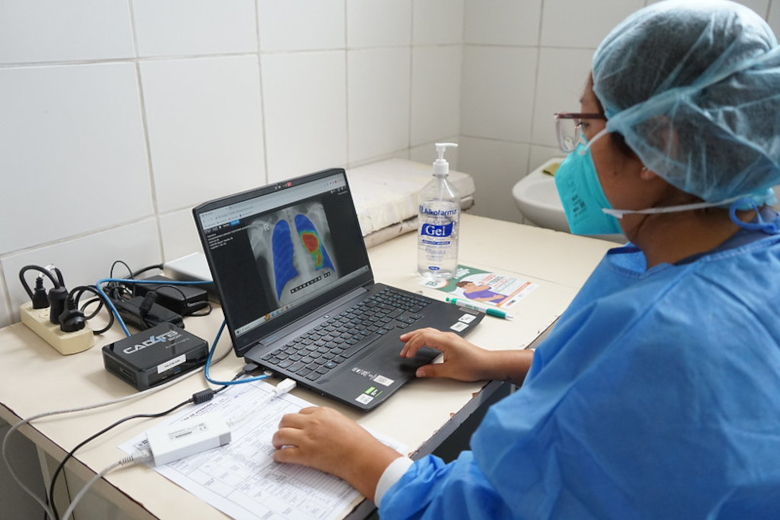
Medical image of tuberculosis detected in a patient, Peru (Photo: Pan American Health Organization / Flickr [CC BY-NC-ND 2.0] )
Tuberculosis is a treatable bacterial infection that primarily affects the lungs. Even so, more than one million people die from it every year.
Looking at 2021, when COVID‑19 raged, this was the infectious disease that killed the most people. Over a longer horizon, it is thought that no infectious disease has claimed more lives than tuberculosis. While TB deaths are on a downward trend, more than one million people still die from it every year worldwide, the vast majority in Asia and Africa.
According to a report published by the World Health Organization (WHO) in 2024, tuberculosis was the top infectious disease killer in 2023. In that year, approximately 10.8 million people were estimated to have developed TB, about 8.2 million were diagnosed, and 1.25 million died from the disease.
“Tuberculosis: the world’s deadliest infectious disease” May 8, 2025
The TB vaccine currently in use was developed more than 100 years ago. Only recently has the development of new vaccines begun to move closer to reality.
Even if it takes another three years before a new TB vaccine gains broad regulatory approval, there is much the scientific community can do now to be ready to deploy it as soon as it becomes available—and to provide information that helps the public accept a new vaccine.
Developing a TB vaccine is extremely difficult. The pathogen is complex and adept at evading the human immune system. We still do not fully understand how best to target the bacterium or which immune responses are needed to elicit protection. Nonetheless, several interesting approaches are underway, and promising data are emerging from clinical trials that offer valuable clues.
“Tuberculosis: the world’s deadliest infectious disease” May 8, 2025
Malaria is a parasitic disease transmitted by Anopheles mosquitoes that remains deadly, killing about 600,000 people each year. Most infections and deaths occur in sub‑Saharan Africa.
As of 2019, about half of the world’s population was at risk of malaria, with an estimated 229 million cases annually. Annual deaths numbered 409,000, of which 274,000 (67%) were children under five. That works out to nearly 750 children dying every day.
By region, Africa accounts for 93% of global malaria cases, and 94% of all cases and deaths worldwide. More specifically, about half of global deaths occur in just 6 African countries: Nigeria 23%, the Democratic Republic of the Congo 11%, the United Republic of Tanzania 5%, and Burkina Faso, Mozambique, and Niger 4% each. Children are especially at risk of dying: in sub‑Saharan Africa, malaria is the 4th leading cause of death among children. Globally, outside Africa, Papua New Guinea, the Solomon Islands, Venezuela, Yemen, and Guyana also have a high share of malaria cases.
“Malaria: Will the gains achieved in Africa be lost?” September 16, 2021
Progress toward elimination and reduction is slow, but each year several countries have succeeded in eliminating the disease, as has been announced.
Other causes of health problems
The maternal and child health issues and infectious diseases discussed above remain serious problems, especially in low‑income countries. However, many other health problems affect large numbers of people worldwide, driven by environmental and lifestyle factors.
For example, air pollution, which primarily affects the respiratory system, is considered one of the world’s leading causes of death. Outdoor pollution from industrial activities and wildfire smoke, as well as indoor pollution from cooking and heating, are all serious challenges.
The impact of air pollution is staggering, causing an estimated 6.67 million deaths. Looking at deaths by region, 1st: East Asia & Pacific 2.49 million; 2nd: South Asia 2.17 million; 3rd: sub‑Saharan Africa 0.93 million. Next, by country, 1st: China 1.85 million; 2nd: India 1.67 million; 3rd: Pakistan 0.24 million; 4th: Nigeria 0.20 million; 5th: Indonesia 0.19 million. These 3 regions dominate the top, and more than half of global air‑pollution deaths are concentrated in China and India. It also suggests that, within these regions, it is low‑ and middle‑income countries rather than high‑income ones that rank highly; in fact, over 90% of pollution‑related deaths occur in low‑ and middle‑income countries.
“Air pollution: the world’s largest cause of death?” August 11, 2022
Alcohol consumption causes many deaths across much of the world. This includes not only its direct health effects (short‑ and long‑term) but also social harms such as accidents and violence.
The number of deaths attributable to alcohol is about 3 million worldwide each year. Death and disability attributable to alcohol account for 1 in 20 of the combined total. This is roughly the same as for tobacco‑attributable death and disability, and 5 times that from illicit drug abuse. A study in the UK that assessed alcohol and both legal and illegal drugs for the physical and social harm to users and non‑users found alcohol ranked 1st, ahead of heroin, cocaine, tobacco, cannabis, and others.
“Why isn’t alcohol regulated?” November 24, 2022
Tobacco continues to cause major harm to smokers’ health and adversely affects those around them, primarily through cancer.
Tobacco remains a leading cause of diseases such as heart disease, stroke, and cancer. As of 2023, more than 8 million people die each year worldwide from tobacco‑related health harms. Furthermore, the economic cost of smoking, including treatment for these diseases, is estimated at 1.8% of global annual GDP. Smoking also imposes environmental burdens, with an estimated 4.5 trillion cigarette butts discarded each year.
“Twenty years since the Framework Convention on Tobacco Control entered into force” March 2, 2025

(Photo: Angel Garrett / Wikimedia Commons [CC BY 2.0] )
Conclusion
As we have seen, the world still faces many major health challenges. Unfortunately, it is predicted that the SDG health targets will not be achieved by 2030.
Nevertheless, funding available for health care appears to be shrinking. A 2024 study found that public funds allocated by countries to health care declined for the first time since 2000. At the same time, foreign assistance available to improve global health has also been sharply reduced.
We can only hope these trends reverse and the world makes great strides toward ensuring health and well‑being for all.
Writers: Virgil Hawkins, Seita Morimoto















[4195]Cow88 Casino: The Premier Online Casino Philippines for the Best Online Slots and Seamless GCash Casino PH Access. Cow88 Casino is the premier Online Casino Philippines, offering the Best Online Slots Philippines and seamless GCash Casino PH access. Secure your Cow88 Login today! visit: cow88
I’ve been playing royally rummy on royallyrummybet and I am really glad to have come across it at all. Checkout more: royally rummy
Yo, just snagged the yolo 247 apk. Installation was smooth as butter. Let’s see if it’s as lucky as they say. Feels good to game on the go! Check it out here: yolo 247 apk
Looking to score the Betsul app download? Found it super easy and quick. Now I can bet on the go. Check it out here betsul baixar
[2317]TG7771 Casino Philippines: Top Online Slot Games. Easy TG7771 Login, Register, and App Download. Experience the best online gaming at TG7771 Casino Philippines! Enjoy top tg7771 slot games. Easy tg7771 login, register, and tg7771 download for mobile. Join the premier TG7771 casino for big wins today! visit: tg7771
[5452]747live Online Casino Philippines: Secure 747live Login, Fast Register & App Download for the Best 747live Slot Games. Experience 747live Online Casino Philippines! Enjoy a secure 747live login, fast register, and 747live app download. Play the best 747live slot games and win today. visit: 747live
[4983]ta777 Official Site: Best Online Slot Casino in the Philippines. Easy ta777 Login, Fast Register, and Secure App Download. Experience the ta777 official site, the top online slot casino in the Philippines. Enjoy easy ta777 login, fast ta777 register, and secure ta777 app download. Play premium ta777 slot games and start winning big today! visit: ta777
[3656]Pesomax Online Casino Philippines: Top Slot Games, Easy Register, Login & App Download. Experience Pesomax Online Casino Philippines! Enjoy top-rated Pesomax slot games with a quick Pesomax register and login process. Secure your Pesomax app download today for the best mobile gaming experience. Join the #1 online casino in the Philippines and start winning now! visit: pesomax
[1176]th777 Online Casino Philippines: Easy Login, Register & Top Slots. Get the th777 App Download Today! Experience the best at th777 online casino Philippines! Enjoy fast th777 login and register access to play top th777 slots. Get the th777 app download today and start winning! visit: th777
[3739]fb7777: The Best Legit Online Casino Philippines for GCash Slots & Sports Betting Join fb7777, the best online casino Philippines GCash users trust for legit online gambling. Register via fb7777 login registration for top slots and sports betting today! visit: fb7777
[3838]Panaloko Online Casino: Best Philippines slots and gaming. Easy Panaloko login, register, and official app download for an elite experience. Join Panaloko Online Casino, the Philippines’ top destination for elite slots. Easy Panaloko login, quick Panaloko register, and official Panaloko app download for a premium gaming experience. Play the best Panaloko online casino games today! visit: panaloko
[4032]jljl22 slots|jljl22 giris|jljl22 download|jljl22 app|jljl22 login Experience the ultimate online gaming at jljl22, the Philippines’ premier casino platform. Secure your jljl22 login today to explore a massive variety of jljl22 slots and enjoy fast jljl22 giris access. For the best mobile experience, jljl22 download the official jljl22 app and start winning anytime, anywhere! visit: jljl22
[2841]Aceph Official Site: Top Slots, Easy Login, Register & App Download for Philippines Players Join Aceph Official Site for the best gaming in the Philippines. Experience fast aceph login, easy aceph register, and top-tier aceph slots. Get the aceph app download today to start winning! visit: aceph
[1543]Bingo777 Online Casino Philippines: Login, Slots & App Download Experience Bingo777 Online Casino Philippines! Get secure login access, play premium slots, and enjoy our fast app download. Join the best PH betting site for big wins today. visit: bingo777
Checking out 80jili net. The website looks nice and clean. Hopefully the games are just as good! Decide for yourself here: 80jili net
Si prefieres el casino, Codere Casino tiene una buena selección de juegos. Desde tragamonedas hasta ruleta, hay algo para todos. Dense una vuelta por casino codere, ¡ a ver si la suerte está de su lado!
The MNL63 app is pretty decent, I must say. Runs smoothly, haven’t encountered any glitches yet. Thumbs up! Get it here: mnl63 app
Thanks for sharing. I read many of your blog posts, cool, your blog is very good. https://accounts.binance.com/es-MX/register-person?ref=GJY4VW8W
Thanks for sharing. I read many of your blog posts, cool, your blog is very good. https://accounts.binance.com/register-person?ref=IHJUI7TF
6nn7hp
Your point of view caught my eye and was very interesting. Thanks. I have a question for you. https://www.binance.com/register?ref=IXBIAFVY