
Now, around the world, killings of people involved in protecting the natural environment and wildlife—so-called environmental defenders—continue to rise, reaching record numbers. In 2020, 227 people were killed worldwide because of their environmental protection activities (Note 1). Moreover, about three-quarters of those cases occurred in Latin America. What has brought about such a situation? This article explores in detail the causes, the background in each country, and measures to protect them.
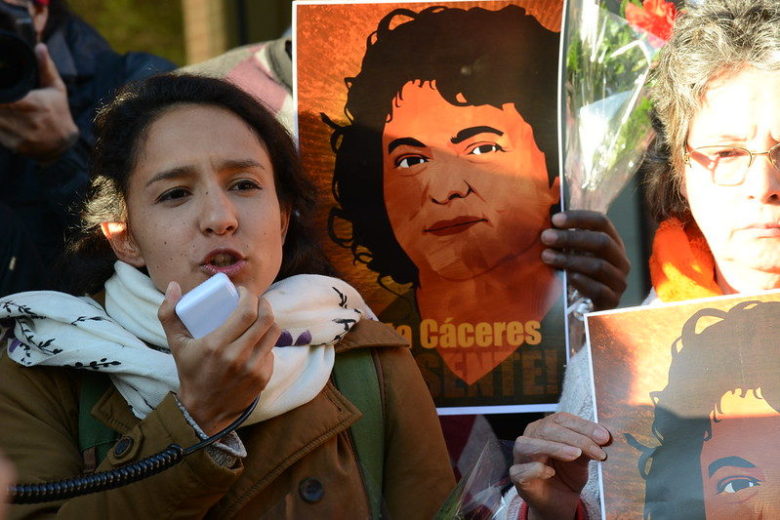
Environmental defenders hold a photo of Berta Cáceres, the environmental activist murdered in Honduras in 2016, calling for their rights (Photo: Comisión Interamericana de Derechos Humanos / Flickr [CC BY 2.0])
目次
Rising murders of environmental defenders worldwide
Every year, human rights defenders who advocate for environmental protection, Indigenous rights, and human rights related to race and gender are killed. In 2020, as many as 331 people were murdered in 25 countries, and about three-quarters of them were environmental defenders. Here, “environmental defenders” refers to residents whose lives are rooted in the natural environment; civil society groups and individuals whose activities center on the environment; forest rangers; biologists; and others who strive to protect rivers, lakes, forests, and the species that inhabit them from damage and destruction. These killings have been increasing year by year, and the current number of incidents is about twice that of 2013.
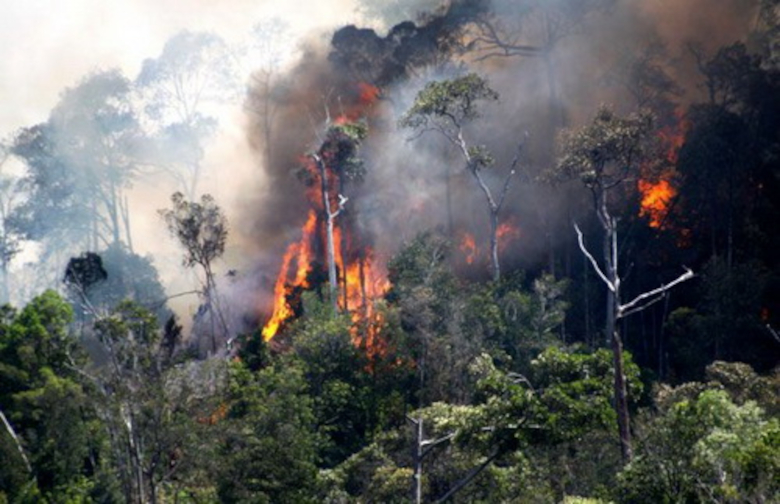
Why are such murders occurring around the world and continuing to increase? One major reason is the clashes between environmental defenders and various companies, organizations, or individuals pushing resource development. Across the globe, land development and resource extraction for poaching, agriculture, forestry, mining, and hydropower are advancing, often targeting areas rich in nature. Amid these conflicts of interest, environmental defenders become targets of violent repression and suffer harm.
There is another major factor: in many cases the killers are not apprehended and go unpunished. Contributing factors include collusion between governments and companies seeking to exploit nature. It is also often difficult to identify the masterminds. For example, there are cases in which companies or landowners order killings that are then carried out by hired assassins or crime syndicates. Furthermore, under fragile state systems or in conflict settings, police, soldiers, gangs, or armed groups may be involved in murders. As a result, details remain unclear and murdered environmental defenders may be treated merely as victims of conflict rather than as cases for the justice system.
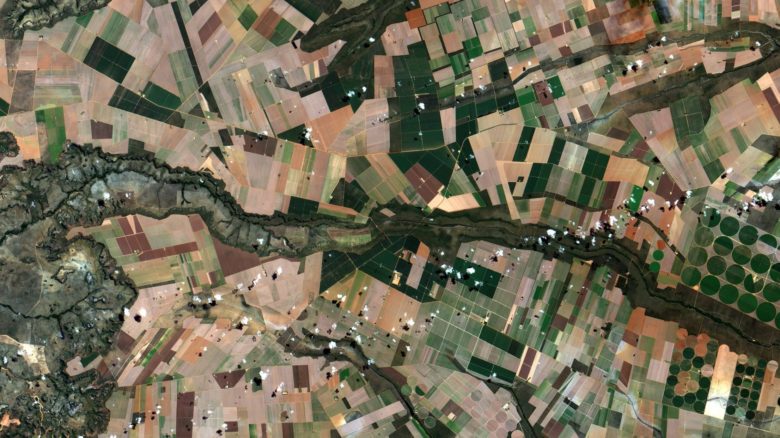
Ongoing land development in Brazil (Photo: Coordenação-Geral de Observação da Terra / Flickr [CC BY-SA 2.0])
The background in Latin America
As noted above, the rising killings of environmental defenders are especially frequent in Latin America. Of the 10 countries with the worst records, 7 are concentrated in the region, with a total of 165 murders recorded in 2020. That year, Colombia had the most with 65 cases, followed by 30 in Mexico and 20 in Brazil. Many killings also occurred elsewhere: 17 in Honduras, 13 in Guatemala, 12 in Nicaragua, and 6 in Peru. Why are these concentrated in Latin America? Let us look to the region’s historical background for answers.
Humans are said to have reached Latin America more than 12,000 years ago, likely from Asia. Various empires and other political systems were established, and the Aztec Empire (in present-day Mexico) and the Inca Empire (in present-day Peru, Bolivia, Ecuador, and Chile) became particularly influential. However, following Spanish and Portuguese invasions, the region came under prolonged colonial rule from the 16th century onward. Indigenous peoples were dispossessed of their land and forced to work under landowners and small elites. Even after many countries gained independence from their metropoles in the 19th century, Indigenous peoples continued to be subordinate to small ruling classes in each country. Settlers unwilling to see changes to the power structure suppressed and sought to eliminate Indigenous peoples. From the 1900s onward, domestic and foreign companies and landowners moved in to exploit the region’s abundant resources, making the position of Indigenous peoples seeking to reclaim land rights ever more precarious.
In land management, Latin American countries have seen collusion among large multinational companies, wealthy elites, and governments, police, and the media. Protected areas considering Indigenous land rights have sometimes been established, but it is hard to say that countries are able to govern their lands fairly. For example, about 31% of Amazonian land in Peru is managed by the government for oil and gas concessions.
In areas with poor security due to armed conflict, the killing of environmental defenders is further facilitated. In Latin America, Cold War rivalry between the United States and the Soviet Union led to the escalation of conflicts in many places. Colombia, Bolivia, and Peru are production sites for narcotics, which are smuggled to North America via Central America and Mexico; the power of related gangs and criminal organizations has worsened public security. The weak position of Indigenous peoples across the region, fragile governments, and insecurity are among the factors thought to be driving the rise in killings in Latin America.
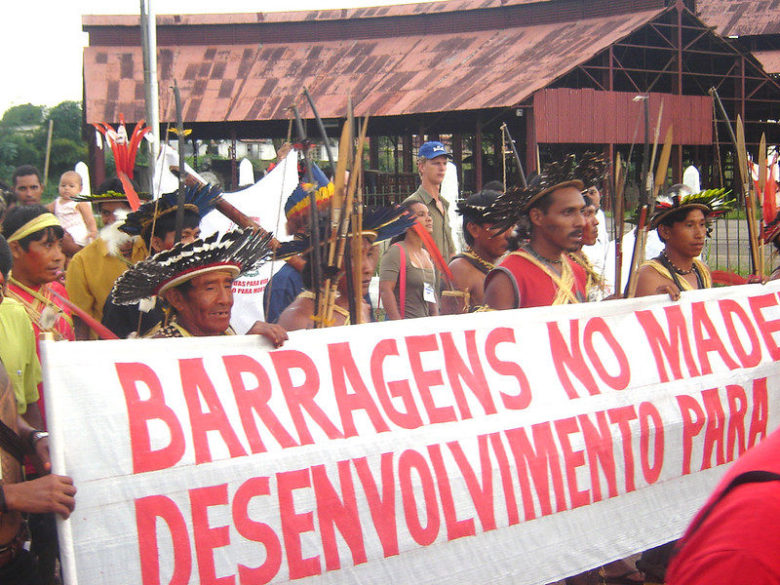
Indigenous people protest dam development in Brazil (Photo: Friends of the Earth International / Flickr [CC BY-NC-ND 2.0])
The situation in specific countries
What factors lie behind the increase in killings of environmental defenders? Let us examine the countries with especially high numbers—Colombia, Brazil, Mexico, and Honduras—in turn.
Colombia has the highest rate of killings of environmental defenders. The country experienced armed conflict for many years and was dangerous for environmental defenders. After the peace agreement between the government and the FARC guerrillas in 2016, the number of killings fell for a time, but the situation has since deteriorated again. According to Indepaz, a Bogotá-based Colombian peacebuilding NGO, 65 environmental defenders were killed in Colombia in 2020. That accounts for about one-third of the global total that year.
The prevalence of killings in Colombia is closely tied to history. From colonial times through independence, vast tracts of land passed to landowners and domestic and foreign companies, widening the gap between peasants and landowners. To redress these inequalities, peasants and those working the land formed the FARC, which remained in conflict with the government for 52 years. During the conflict, criminal organizations involved in cocaine production and trafficking and other resource extractors aligned with government actors and belligerents to gain land rights and push development. The 2016 peace agreement left governance vacuums in areas where the FARC disarmed and withdrew. In that space, criminal groups and extractive operators grew more active, and environmental defenders were increasingly targeted by these groups. Another factor is the COVID-19 pandemic: under the guise of pandemic measures, these criminal and armed groups set up their own checkpoints, making it easier to harm environmental defenders who opposed them.
In Brazil, 57 environmental defenders were killed in 2017, the highest number in the world that year. The country encompasses the vast Amazon, home to about 800,000 Indigenous people and protected areas that cover about 12% of the national territory. Residents seeking to protect the environment have long faced incursions by companies and individuals who view the region as a resource frontier. Since Jair Bolsonaro took office as president in 2019, the trend of persecution of environmental defenders has intensified. His administration has backed those seeking to exploit resources there and promoted development plans for agriculture, forestry, and mining. It has even drafted a bill to grant impunity to illegal invaders of Indigenous lands. With the president himself encouraging unlawful acts, persecution and violence against environmental defenders by those seeking to use the land have increased.
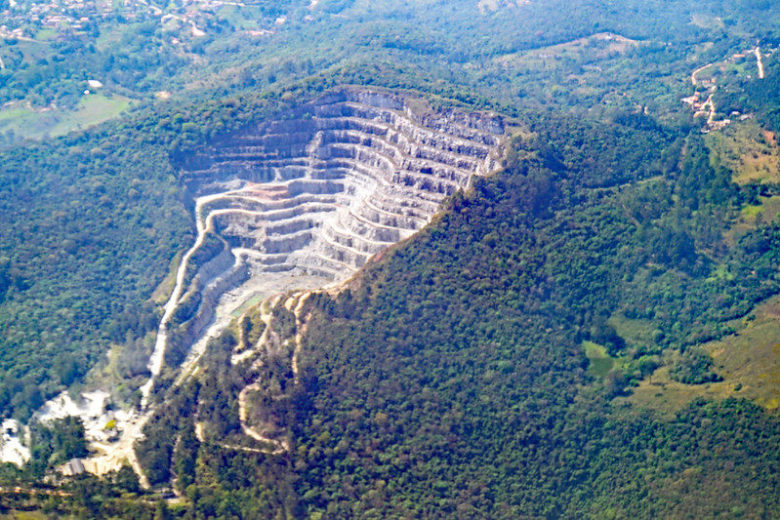
A mine being developed in Brazil’s forests (Photo: Dennis Jarvis / Flickr [CC BY-SA 2.0])
Next, Mexico. At least 83 environmental defenders were killed between 2012 and 2019. One factor behind the increase in killings was the energy reform of 2014, which liberalized an energy sector that had been closed to private investment. As a result, numerous energy projects went ahead in rural and Indigenous communities without adequate consultation or compensation. The reform is therefore seen as a major driver of the rise in killings, with about one-third of the 83 deaths linked to it.
Another notable point in Mexico is the high number of killings linked to criminal organizations. Mexico is a transit point for cocaine smuggled from South America to the United States. As conflicts between criminal groups involved in this trafficking intensified, the government launched military measures in 2006, escalating into armed conflict. At the same time, corruption within the government, military, and police worsened, and collaboration with criminal organizations has been observed. It is suspected that activities such as logging and mining—possibly backed by criminal groups and by the government—also lie behind some killings.
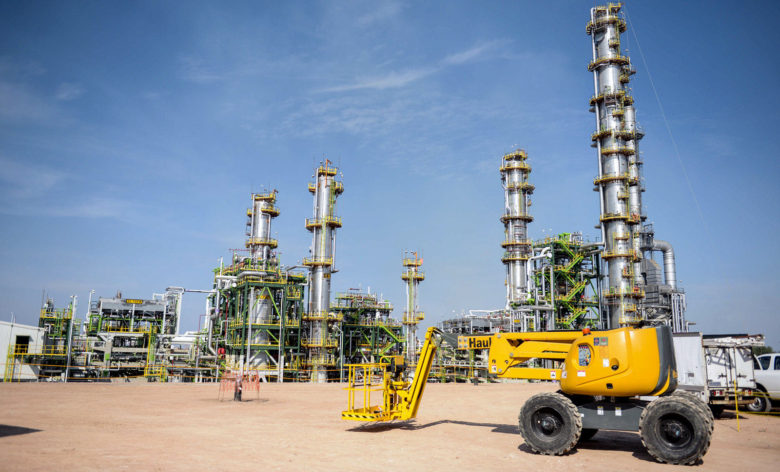
A view of oil-related facilities in Mexico (Photo: Presidencia de la República Mexicana / Flickr [CC BY 2.0])
In Honduras, more than 120 environmental defenders were killed over roughly seven years from 2010. Since the late 19th century, large plantations run by U.S. corporations were established, many people labored under poor conditions, wealth was monopolized by small elites and landowners, and dictatorship persisted. In the latter half of the 20th century, armed conflicts fueled by the Cold War broke out, sending public security into steady decline. Although the conflicts ended with the end of the Cold War, Honduras, like Mexico, became a transit point for the drug trade, and criminal organizations and gangs became powerful actors. Collusion between the government and landowners or companies is also notable, and crimes linked to resource development are not being properly addressed. For example, environmental defenders who opposed hydropower dam construction and those who opposed mines have been murdered. Many killings remain unsolved, perpetuating conditions conducive to violence.
Efforts to protect the environment and environmental defenders
So what measures are being taken against threats and violence targeting environmental defenders?
In countries and regions around the world, environmental defenders have formed civil society organizations through which they protest to companies, governments, and other countries and demand countermeasures against threats and violence. These groups also join forces with one another.
A prominent example is the alliance of civil society groups known as COICA (Note 2). Established by representatives of Indigenous peoples across borders to protect the Amazon environment, it has continued to grow; its affiliate organizations defend the interests of Indigenous organizations at regional and international levels and support their political activities. COICA highlights the still-weak position of Indigenous peoples and environmental defenders and calls on Latin American countries to adopt policies to protect environmental defenders and to halt development projects where killings could occur. It also carries out various awareness-raising activities, such as releasing videos to the world explaining the current killings of environmental defenders and the importance of protecting them to stop environmental destruction.
In addition, COICA has urged nine South American countries to declare four-fifths of the Amazon Basin a protected area by 2025, and in 2021 this proposal was adopted with overwhelming support by the International Union for Conservation of Nature (IUCN) (Note 3), which influences global environmental protection efforts. Designating land as protected areas will likely help safeguard the lives of Indigenous peoples and the activities of environmental defenders who live there.
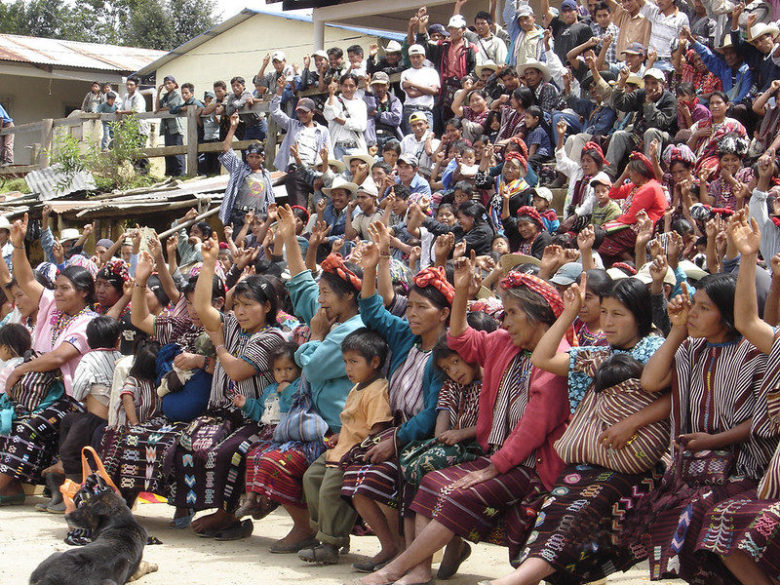
A meeting on mining held by Indigenous people in Guatemala (Photo: Friends of the Earth International / Flickr [CC BY-NC-ND 2.0])
Non-governmental organizations (NGOs) are also working to protect environmental defenders. For many years, the international NGO Global Witness has built relationships with environmental defenders worldwide and worked to eliminate threats against them. To further amplify their voices on this issue, it launched the Strategic Awareness Raising Programme (SARP) in 2020. Through collaboration, and by using social media and other tools, they aim to bring to light the underreported problems environmental defenders face, draw global attention, and deter killings.
As a partnership between international and local NGOs, the “Alliance for Land, Indigenous and Environmental Defenders” (ALLIED) can be cited. Through ALLIED, activities include appeals to governments and companies to protect environmental defenders, and information sharing for self-protection by defenders themselves. It also advocates to countries about the importance of protecting environmental defenders.
In recent years, efforts involving cooperation among governments have finally begun. In 2012, 10 countries declared the Latin America and Caribbean regional environmental agreement known as LAC P10. The agreement aims to protect people engaged in environmental protection, expand opportunities for public participation in environmental decision-making that affects their lives, and improve public access to environmental information on development such as water pollution, mining, and deforestation. This means that the will of environmental defenders can be reflected in development projects that had previously been decided without them. As a result, conflicts may be reduced and the number of killings of environmental defenders is expected to decline.
Building on this, in 2018 the Escazú Agreement was adopted to protect environmental defenders in Latin America. It is the first treaty in the world to explicitly provide for the protection of environmental defenders. In response to the spate of killings in Latin America, it stipulates protecting them from violence and taking sufficient legal action against perpetrators. In 2021, the treaty entered into force with signatures from 24 Latin American countries, and 12 countries have ratified it.
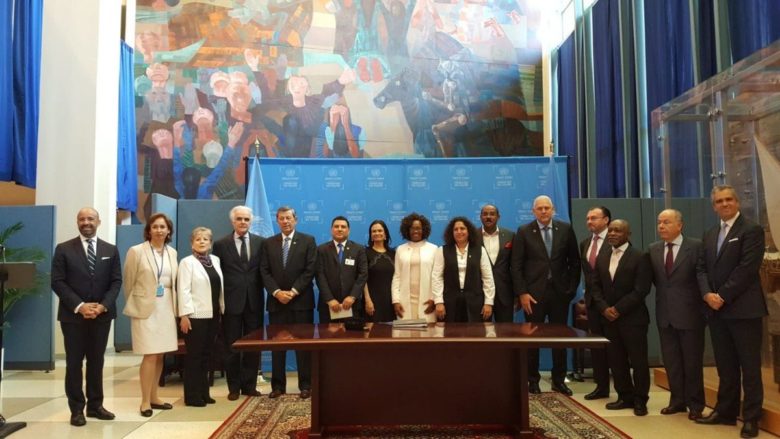
Signing of the Escazú Agreement (Photo: Cancillería Argentina / Wikimedia [CC BY 2.0])
Conclusion
Because land development involves great wealth and entrenched interests, environmental protection activities are extremely difficult and dangerous. Yet recent research shows that in 11% of conflicts related to environmental issues, environmental defenders helped halt environmentally destructive projects. Protecting their activities therefore contributes not only to Indigenous rights but also to safeguarding the planet’s environment.
The resources involved in such cases continue to be exported from Latin American countries to destinations around the world. In other words, rising global demand for these resources is connected to this problem. At the same time, as we have seen, various countermeasures are being taken. We hope this momentum will continue and that efforts related to environmental protection will persist.
Note 1: This figure includes only those cases that were publicly reported and confirmed to be linked to environmental protection activities; the actual number is believed to be higher. Reasons for underreporting include government suppression of information and inequities in the justice system that prevent cases from being treated as crimes, as well as language barriers that hinder verification and a lack of coverage by mainstream media that makes it difficult for outside groups to detect cases.
Note 2: An abbreviation of Coordinadoradelas Organizaciones Indígenasdela Cuenca Amazónica (Coordinator of Indigenous Organizations of the Amazon Basin). Established in Lima, the capital of Peru, in 1984 by representatives of five Amazonian Indigenous organizations from Peru, Brazil, Ecuador, Bolivia, and Colombia, it is an umbrella organization for Indigenous groups of the Amazon Basin. Since its founding, it has advocated for Indigenous rights.
Note 3: A national nature conservation organization headquartered in Switzerland. States, governments, and NGOs are members. It has supported the formulation of UN and national treaties on nature conservation.
Writer: Hikaru Kato








環境保護者が殺害されているという事実は全く知らなかったので、驚きました。殺害の原因と人数を公表することは国や政府にとっても、マイナスになることが多いのかな、、と推測したので、実際の殺害者数はもっと多いのではないかと思いました。
環境保護を訴える活動家や条約が採択された一方で、環境保護より経済を優先する政治家や犯罪組織が存在するので、難しい問題だと感じました。環境保護と経済が両立することは可能なのか気になりました。