
Japan is losing out. News media are indispensable sources for grasping the world, but the current scarcity and bias of international reporting are hindering Japan’s public interest.
Ordinarily, GNV would not examine issues framed in this way. GNV prioritizes a comprehensive and objective understanding of the world and seeks to view global events from as many angles as possible, not from the standpoint of any particular country’s position or interests. If we are to take any ideological position, it is to prioritize amplifying conditions in places where humanity’s most serious challenges are concentrated, and where the economic “have-nots,” who constitute the majority of the world’s population, live—not the wealthy, powerful economic powers like Japan. We strive to communicate with a “human-first” approach as much as possible.
However, many people try to see the world with their “own country,” the one they belong to by nationality, at the center. Among them are those who, in their country’s engagement with the world, prioritize making their own nation richer, safer, and stronger. This might seem an opposing philosophy to GNV, but in fact there is common ground. In a world as globalized as ours, the current lack and skew of international reporting do not serve the world—or Japan.
In other words, even if you hold a “country-first” view, you may still relate to the problems caused by international reporting. In this article, we therefore deliberately examine the importance of comprehensive, objective, and robust international coverage from the perspective of Japan’s national interest.
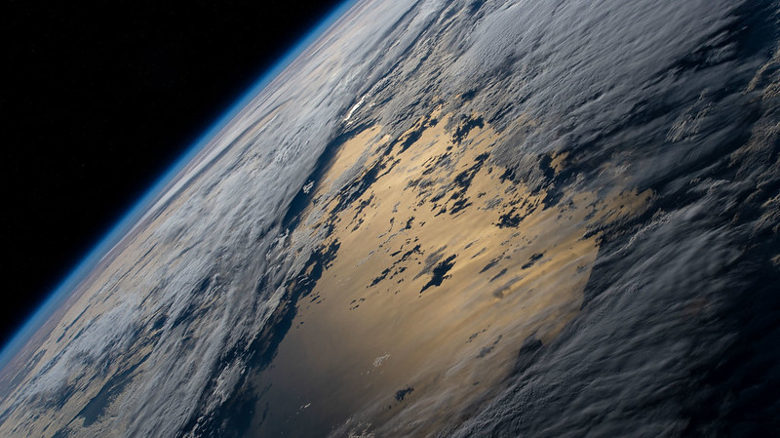
Pacific Ocean near Chile (Photo: NASA Johnson / Flickr [CC BY-NC-ND 2.0])
目次
The current state of international reporting and its problems
GNV has analyzed and published on the quantity and quality challenges in Japan’s international reporting from various angles. Our slogan is “There is a world that isn’t reported,” but it would hardly be an exaggeration to say that, conversely, the “world that is reported” is narrow. Given that the amount of reporting allocated to world affairs is small (about 10% of all coverage), and that this is less than half of sports coverage, the limits of how much of the world can be conveyed become clear. Even within that small share, the distribution of covered regions is highly skewed. Current coverage is heavily concentrated on the United States, China, the Korean Peninsula, and Western Europe, while reporting on other countries and regions is remarkably sparse. Coverage of the African continent and Latin America combined accounts for only about 5% of all international reporting, and regions such as South Asia, Southeast Asia, Central Asia, Eastern Europe, and the Middle East are handled only fragmentarily. As these regions suggest, the lack of reporting on lower-income countries stands out in particular. This tendency is found not only in the three so-called major dailies—Asahi Shimbun, Mainichi Shimbun, and Yomiuri Shimbun—but also in the Nihon Keizai Shimbun, and the skew of news on social media, which is increasingly entertainment-driven, is even more pronounced.
There are various factors behind biased international coverage, but one major determinant of what places and topics are covered is their relation to one’s own country. Events directly involving Japan’s government, companies, or people account for about 10% of international coverage in newspapers. There is also a tendency to highlight the achievements of Japanese individuals, and in variety programs to praise them. Conversely, there is little reporting on scandals and wrongdoing by Japanese companies overseas.
In international reporting not directly tied to Japan, countries deemed to have very deep trade or security ties tend to monopolize coverage. Regarding global problems, there is also a tendency not for news organizations to take the initiative, but to follow the lead after the Japanese government takes up an issue. Reporting on the UN’s Sustainable Development Goals (SDGs), climate change, and the plastic waste problem are examples. Furthermore, one can infer that Japan’s reporting is influenced by interests in the United States, the country that receives the most coverage in every media outlet.
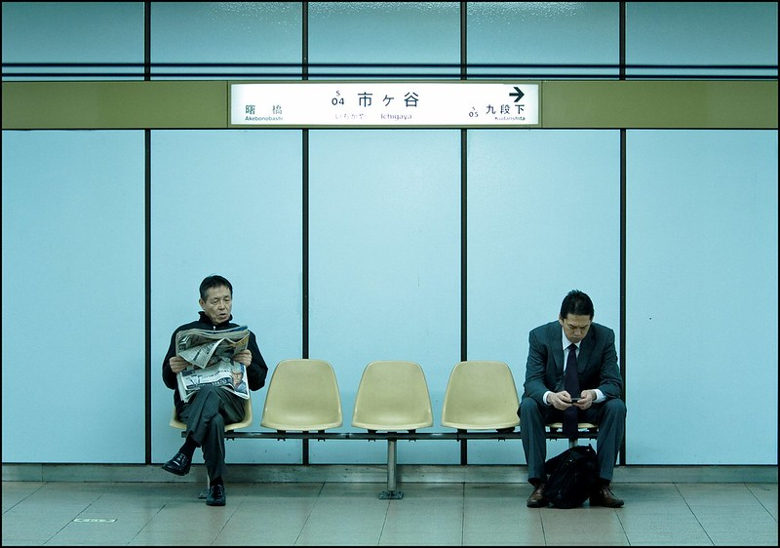
On the Tokyo subway (Photo: Elvin / Flickr [CC BY-NC 2.0])
At first glance, some may think these coverage tendencies reflect Japan’s national interest and audience interests, and are thus reasonable. Unfortunately, neither world affairs nor national interest—nor even audience interests—are that simple. The things Japan’s economy and society need in order to function are sourced from across the globe, and events that threaten Japan’s security do not occur only around its borders. Japan’s standing in the world is also tied to its interests. Below, we consider the importance of understanding the world from three perspectives: logistics, security, and reputation.
Logistics and manufacturing
Looking at trade shares with Japan, the presence of China and the United States is certainly large. Imports from these two countries account for a little over 30% of the total. But the remaining sixty-some percent is obviously important too. For Japan’s economy to grow and society to function, many imports from regions that are usually not covered in the news are indispensable.
For example, with a calorie-based food self-sufficiency rate of only 38%, food is the first thing that comes to mind regarding Japan’s ties to the world. Looking at various foods Japan imports, Latin America stands out for chicken (Brazil ranks first by import share), coffee (Brazil 1st, Colombia 2nd), soybeans (Brazil 2nd), seafood (Chile 2nd), salt (Mexico 2nd), and avocados (Mexico 1st with a share exceeding 90%). From Africa come cocoa (Ghana 1st, Côte d’Ivoire 4th), octopus (Mauritania 1st, Morocco/Western Sahara 3rd), and vanilla (Madagascar 1st), each accounting for over 60% of import share. In Southeast Asia, Japan’s dependence on various agri-fishery products is even higher; yet compared with the major countries that do get reported on in Latin America and Africa, coverage does not increase that much.
Of course, imports are not limited to food. Textile products such as clothing (Southeast Asia accounts for about 30% of total imports) and other daily necessities are also brought in from around the world. The presence of oil—used as fuel indispensable to life and transportation, and in the production of plastics used in many products and their packaging—is also enormous. More than 75% of the crude oil Japan imports comes from Saudi Arabia, the United Arab Emirates, Qatar, and Kuwait—countries that are unlikely to be featured in reporting.
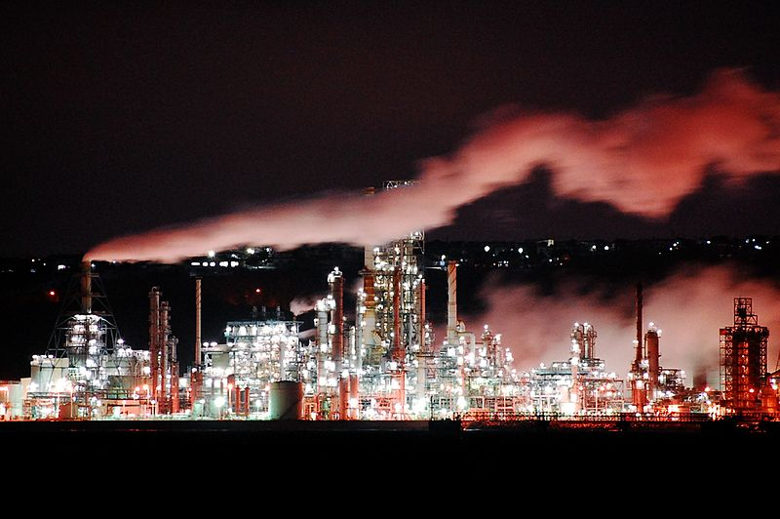
Refinery, Muroran, Japan (Photo: こまっちゃん / Wikimedia [CC BY 3.0])
Japan also exports many manufactured goods. Japanese automobiles and electronics are sold in large volumes worldwide. Beyond oil, various mineral resources are necessary for this manufacturing and export. Many of them are reserved in Africa and South America. For example, cobalt—needed for batteries in mobile phones, computers, and hybrid/electric vehicles—has 49% of global reserves in the Democratic Republic of the Congo (1st). Lithium reserves are 58% in Chile (1st) and 14% in Argentina (3rd). Among others, 91% of platinum group metals used across industries are in South Africa (1st), and 21% of copper ore in Chile (1st) and 10% in Peru (3rd).
Of course, not everything Japan needs comes directly from where it is harvested, produced, or reserved. Much of the cotton in Japanese clothing is harvested in India, the world’s largest producer, and imported via China and Southeast Asia. Cobalt mined in the Democratic Republic of the Congo is mainly imported via China. Manufacturing itself is also globalized. For example, Japanese automakers have factories on every continent, and many hard drives and their components for PCs are manufactured in Thai factories. These parts and raw materials are likewise brought in from around the world. Even waste has globalized: Japan exports large volumes of shipbreaking, plastic waste, and electronic waste. Global logistics and manufacturing are intertwined at many levels.
The more deeply we understand global conditions and trends, the better we may be able to prevent such risks in advance or respond efficiently. It’s not only about risks. These regions may also hold opportunities we have missed. With a wider view of the world, we may be able to procure higher-quality goods on better terms, and to pursue trade more efficiently and sustainably. Depending on the case, an accurate grasp of the situation may even lead to the development of sought-after substitutes for the world.
Possible threats to this deeply interlinked logistics and manufacturing ecosystem are many: global shifts in supply and demand, natural disasters, human-caused disasters, domestic and international political frictions, armed conflicts, and the introduction or change of treaties and domestic policies. For example, the war in Yemen affects oil supplies from Saudi Arabia; conflict in the Democratic Republic of the Congo affects various mineral resources; and political instability in Chile affects access to copper. For agricultural products, conflict in Côte d’Ivoire and policy changes in Ghana affect cocoa; the actions of criminal organizations in Mexico affect avocados; and Morocco’s occupation of Western Sahara affects the octopus trade. There was also a time when flooding in Thailand dealt a major blow to PC manufacturing.
Trade routes—the backbone of logistics—also deserve attention. The Strait of Hormuz is well known for its strategic importance to oil imports, but for trade between Japan and Europe, the Bab el-Mandeb Strait, the Red Sea, and the Suez Canal are also crucial. These areas have been threatened by Somali piracy and the war in Yemen. Yet, as noted, these regions are rarely covered in the news.
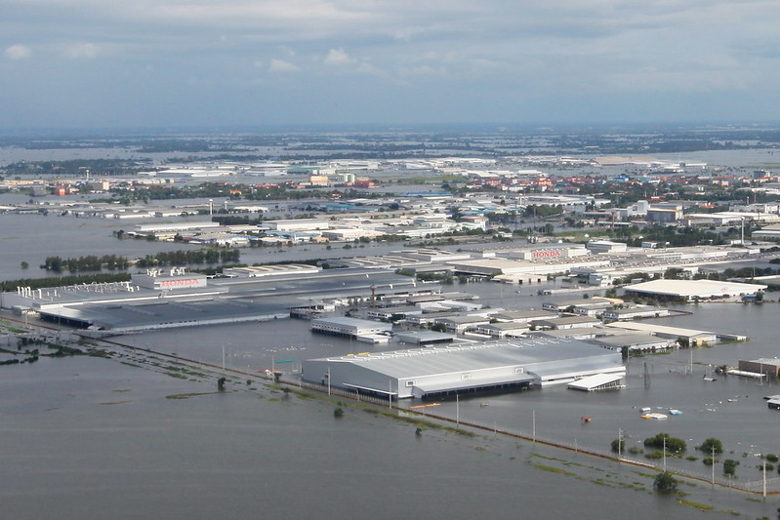
Flooded Honda factory, Thailand (Photo: Water Alternatives / Flickr [CC BY-NC 2.0])
The deeper the understanding of world affairs and trends, the more likely we can prevent such risks or respond efficiently. It’s not only about risks: these regions may also harbor opportunities we have been missing. With a broad view of the world, we may be able to procure higher-quality goods on better terms, and advance trade more efficiently and sustainably. In some cases, accurate situational awareness could even lead to the development of substitutes sought by the world.
Security
As globalization advances, the security risks Japan must consider are geographically broader and more diverse in nature. Armed risks are important, but environmental issues and infectious diseases can also cause major damage to human security.
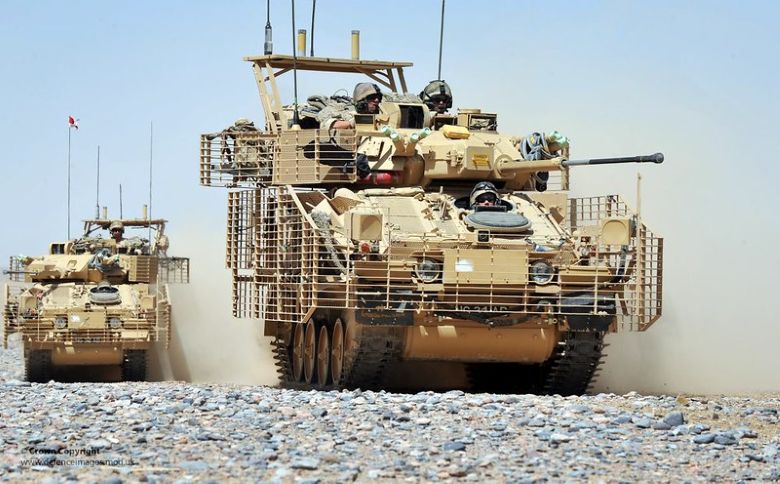
When considering armed risks, it is of course crucial to think about how the safety of residents within Japan will be protected. But Japan’s risks are not confined to the archipelago; conditions far away are also security concerns Japan cannot ignore. The Self-Defense Forces have a history of supporting the U.S. military through refueling operations in the Indian Ocean during the Afghanistan and Iraq wars. The Maritime Self-Defense Force has been dispatched near Somalia for anti-piracy operations, and Japan currently maintains a base in Djibouti, which faces the Bab el-Mandeb Strait. Japan has also dispatched its Self-Defense Forces to UN peacekeeping operations (PKO). In recent years, the dispatch to South Sudan drew attention, and the illegality of continuing deployment to a country in conflict sparked controversy. In the same conflict, Japan even helped block the adoption of an arms embargo resolution in the UN Security Council.
Moreover, staff of Japanese government-related agencies, companies, NGOs, media organizations, travelers, and Japanese residents abroad also face risks in many parts of the world. In recent years, Japanese nationals have lost their lives after being caught up in conflicts or terrorist incidents in Algeria, Bangladesh, Syria, and elsewhere.
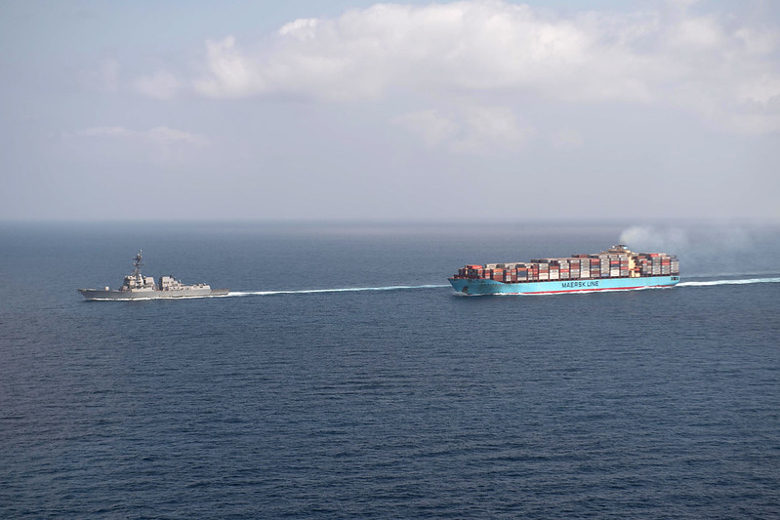
A U.S. Navy destroyer escorting a container ship, Gulf of Aden (Photo: Official U.S. Navy Page / Flickr [CC BY 2.0])
Global environmental problems are also undermining Japan’s security. Climate change, driven by the massive greenhouse gas emissions released to date, is a prime example. Heat-related illnesses associated with rising temperatures have shown a recent upward trend and are projected to increase further. Abnormal weather events such as typhoons and heavy rains, which are growing in both destructive power and frequency, and resultant landslides and flooding, threaten lives and infrastructure. Unlike lower-income countries, the victims of so-called “climate apartheid,” Japan currently has the fiscal capacity to absorb some damage from climate change. But the damage will continue to grow, increasing the economic burden as well as the human toll. Beyond climate change, no country can escape global air pollution and plastic waste problems.
Threats to human safety don’t stop there. As the COVID-19 pandemic shows, infectious diseases can inflict great harm on Japan. Regardless of where an outbreak originates or how it spreads, in a world this interconnected, infectious diseases anywhere can become threats to Japan. At present, there is a tendency for governments to scramble for measures only once a problem becomes big, but the danger of pandemics like COVID-19 has long been known, and many researchers and journalists have long sounded the alarm. Had awareness and a sense of urgency about the threat of new infectious diseases been widespread among the public, it might have been possible to push for preventive policies before a major pandemic unfolded.
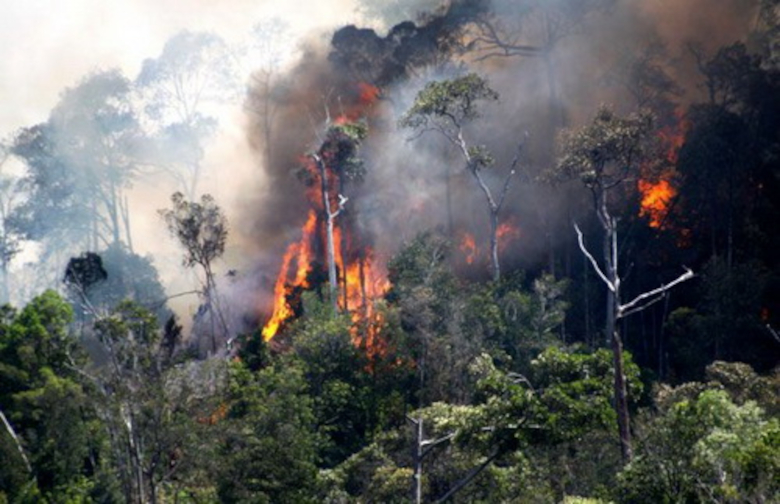
Outbreaks of infectious diseases and environmental problems are inseparable. New zoonotic diseases often arise from humans pushing into the natural world, and the link between deforestation and the emergence of new infectious diseases has been demonstrated by multiple studies. Moreover, the raw materials for drugs used to treat various illnesses—not just infectious diseases—are derived from the natural world, which is being destroyed, and the loss of global biodiversity affects infectious disease control and more.
When the state of the world is not visible, delays in responding to infectious diseases and other issues occur in myriad ways. For example, dengue fever, which had had little impact on Japan, is now surging globally and has reached Japan. The crisis of antimicrobial resistance—where antibiotics are becoming ineffective—is also being flagged, and the development of new drugs is urgent.
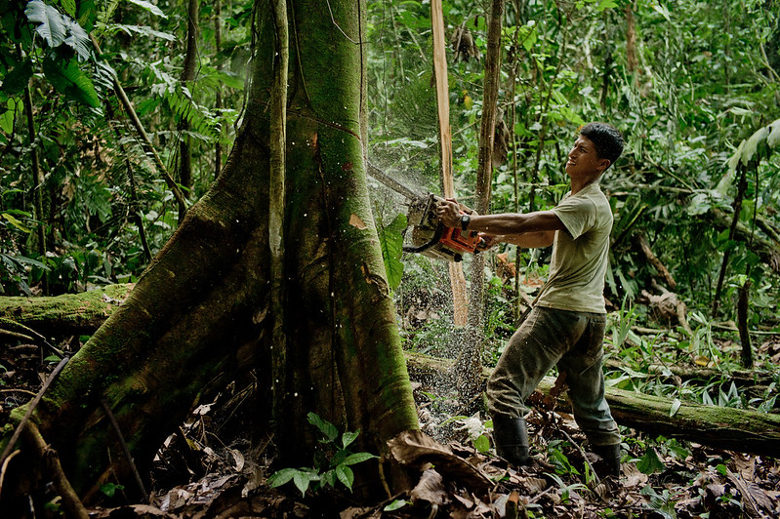
Farmer felling trees, Ecuador (Photo: CIFOR / Flickr [CC BY-NC-ND 2.0])
Whether the issue is armed conflict, the environment, or infectious disease, averting one’s eyes from the world’s problems and focusing only on border controls is not a wise strategy. Climate change and air and water pollution spread regardless of borders. As long as Japan’s economy depends on engagement with the outside world, shutting down entry is neither an effective nor realistic infectious disease measure. Even if Japan were to eradicate COVID-19 domestically and vaccinate its entire population, experts predict that as long as the virus remains somewhere in the world, variants that evade vaccines will emerge. Rather than trying to stop the world’s problems at the border, prevention at a global level and measures to keep threats from spreading from their source would better serve Japan.
Reputation
National interest cannot be captured only in terms of physical “threats.” Whether a country is “liked” is seen as part of its soft power, and this appears to be something the Japanese government values. The term “pro-Japanese” is now used in many contexts to describe people and countries. Reporting and variety shows also emphasize claims that Japan is viewed favorably around the world—no doubt in part to please audiences, the media’s customers. But there are of course events that hurt Japan’s reputation, and without a more comprehensive and objective gaze at reality, countermeasures can’t be taken.
Corporate behavior around the world is one example. Going back decades, to secure resources in apartheid South Africa, Japan effectively condoned domestic discrimination in South Africa; as a result, Japanese people were treated as “honorary whites,” and that legacy remained a negative inheritance after apartheid collapsed. There have also been cases where Japanese companies cooperated with oppressive dictatorships or rebel groups to secure resources such as Middle Eastern oil and Liberian rubber, and some such relationships persist even today. Japanese companies have also been criticized for contributing to deforestation and environmental destruction in Southeast Asia.
In recent years, corruption cases and inappropriate conduct by Japanese firms in South Africa, Southeast Asia, and elsewhere have become topics abroad. Even when companies are not necessarily at fault, large-scale economic activity can make them targets of criticism. For instance, conflict in the Democratic Republic of the Congo was once dubbed the “PlayStation War.” In the background, the market price of tantalum—a mineral needed for electronics—spiked in 2000, and tantalum became a conflict resource in the DRC. It was also reported that Sony struggled to secure tantalum for the PlayStation 2, released at the same time, linking that product to the conflict.
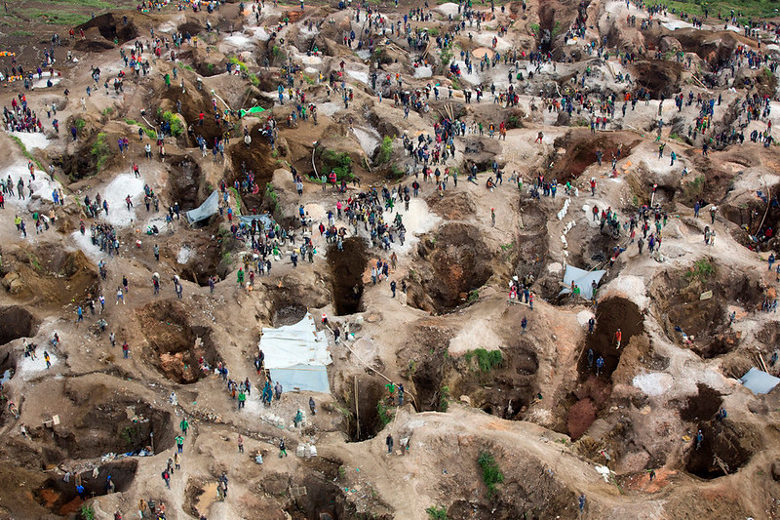
Coltan (tantalum) mine, Democratic Republic of the Congo (Photo: MONUSCO / Flickr [CC BY-SA 2.0])
Reputation, however, is not only about specific incidents or bilateral ties. The overall structure of international relations can also be a problem, and Japanese government policy can be a target of criticism. Japan is seen as taking a backward-looking stance toward the current trade environment rife with unfair trade in need of reform, and toward issues such as tax havens. The Japanese government’s reluctance to accept refugees is also criticized. Even in official development assistance (ODA), depending on how it is carried out, Japan can provoke strong backlash.
A country’s reputation is affected not only by backward-looking actions but also by forward-looking ones. Demonstrating leadership in the world is one key to enhancing and maintaining presence and reputation. But despite being an economic power, how strong is Japan’s image as a “leader”? One could say Japan’s presence on the international stage is thin. Although Japan is currently the world’s third-largest economy, a study of international coverage in the New York Times, a major U.S. paper, ranked Japan 21st among covered countries, at less than 1% of total coverage. A survey of government officials in countries that receive ODA found Japan ranked 25th out of 35 countries/agencies in influence through ODA and 23rd in helpfulness. Looking at specific regions, Japan is one of the major donors in terms of ODA disbursements to African countries and has hosted large conferences bringing together African leaders since the 1990s. Yet in news articles and research introducing countries exerting influence in Africa, Japan is seldom mentioned.
To play a leading role on the global stage, one must clarify the problems other countries and institutions face in diplomatic forums, set agendas, and propose solutions. For that, it is crucial to cultivate a broad range of people capable of analyzing the world across fields. Robust international reporting should greatly contribute to that development.
What international reporting can do
From the perspective of Japan’s national interest, prioritizing countries with which Japan has very deep ties, such as the United States and China, is reasonable. But at present, the total volume of international reporting is far too small, and the balance is far too skewed. For most of the world, only fragments are shown, centered on topics that can be directly linked back to Japan. This is far too myopic—and it does not serve Japan.

(Photo: Tony Webster / Flickr [CC BY 2.0])
Most news organizations are businesses and must consider profits. They therefore need to consider audience interests. But it is not a simple mechanism of “we don’t report because there is no interest”; news organizations often actively create interest in topics they deem important. Moreover, before being businesses, news organizations occupy a special role as institutions that prioritize the public good. It is not easy, but if audiences demand more comprehensive international reporting, news organizations should be able to change the status quo.
The world is vast and complex. Not everyone can always grasp and understand every global event and challenge. But this is not a world where everything can be left to those who directly engage abroad—diplomats, trading houses, and the like. In that sense, robust international reporting benefits people in many roles: politicians, central and local governments, companies of all types, educational and research institutions, medical facilities, and NGOs. Information about the world has the potential to reduce risks and increase opportunities for all actors. The problems faced by people and organizations living on the other side of the world—and the successes and failures of their countermeasures—also offer lessons for people living in Japan. In some cases, one might find commonalities with their own problems or emulate solutions. Or, broader perspectives may spark unexpected innovations. Even without delving deeply into analysis, simply having more chances to encounter information about the world makes a big difference.
How are we going to live on this planet, and how are we going to relate to it? Perhaps it’s time to ask ourselves again.
Writer: Virgil Hawkins






自国ファーストの報道が、結果的に自国の首を絞めることになるというのが大変興味深かった。改めて偏った報道はすべきでないと感じたし、世界を包括的に理解することが問題解決や改善につながるのだと思った。
グローバル化に伴って他人事とみなせる問題や事象がなくなってきていることを改めて認識できました。報道側が関心を「作っていく」立場となって情報を発信していってほしいと感じました。
10%は少ないだの偏ってるだのと文句垂れる事は誰でも出来る。では何%なら君は満足するのか。NYTを例に出したが、そのNYTは何ページを国際面に当てているのか。
“そういった意味でも国際報道の充実は、政治家、各省庁や地方自治体、各種の企業、教育研究機関、医療機関、NGOなど様々な立場の人たちに裨益する。”
日本人の精神が内向きになっている。テレビ局に聞いてみればいい。テレビの視聴率は1分単位で出る。海外ニュースになれば、視聴率はどうなるのか。それを知った時、はたしてそんなきれい事が言えるかな?フフフ♡✧。(⋈◍>◡<◍)。✧♡
もちろんどうやって興味を引かせるかという視点もあるだろうが、そもそも新聞の購読者数は減り続けているわけでね。もっとも少子化で内需が崩壊して外需に頼らざるを得なくなるんだから新聞読んどけよ、という話なら理解する。
報道が抱える問題に対して関心がない人に関心を抱いてもらうには、「関心を持つことは日本や自分にとってもメリットがあることなんだよ」と言うことは非常に有効だと思います。むしろ、正義を説いても有効ではないでしょう。
国際報道の少なさ、アンバランスさは情報を受け取る側の私たちに対して不利益があるように感じました。そしてそれを理解したうえで、私たちも情報を受け取る必要があると思いました。
世界を知ることは、日本を知ることだと感じました。よく言われる、日本人の”平和ボケ”にも繋がっているのだと思います。
日本の国際面は米中に偏っていると筆者は批判しています。そして、それは日本の国際的な影響力を下げている。ニューヨークタイムズの国際面において日本は1%しか割かれていない。では米国は日本に対して影響力を持っていないのだろうか。なぜニューヨークタイムズは偏りがあってもよく、日本紙は駄目なのだろう。
このように1つ1つの主張・事実を読むと、矛盾や疑問に気づく事はたやすい。しかし文章にした途端、それが分かりにくくなってしまう。それを補うのは、英語……ではなく、読解力であります。なぜ筆者がこの記事を書いたのか。それは日本を下げるため?それともマスメディアに対してマウントをとるため?
他にも指摘したい点は多数ありますが、長くなるためここまでとします。なぜ日本の国際的な影響力は小さいのか。それは日本の外交はなぜうまくいかないのか、と言い換える事も出来ます。それは当然ながら国主である私に責任があるわけですが、外交官の問題を指摘させてもらえば、明らかに読解力が足りないからでしょう。読解力があれば、この矛盾や論点の本質に気づき、そして筆者の意図の邪推まで出来るわけです。先述の通り、新聞のせいではありません。情報量0のコメントをしている諸君も反省すべきです。この論点の本質を突く私の論法は、日本の主食から名を取り、「ご飯論法(rice logic)」と呼ばれています。みなさまも本質を見抜き、はぐらかさずに生きましょう。
※第一段落はwhataboutismにはあたらない事を明記しておきます。