
On June 20, 2025, Armenian Prime Minister Nikol Pashinyan visited Turkey. This was not a routine state visit. It was the first official visit to Turkey by an Armenian leader in more than 30 years, a rare moment in a relationship marked by over a century of tension. The tension stems from the mass killings and deportations of Armenians by the Ottoman Empire during World War I. Armenia and many countries recognize this as genocide, but Turkey rejects that characterization. The two countries have never established formal diplomatic relations, and the land border has remained closed since 1993.
This visit seemed like a step forward. But questions remain. Will it become a genuine step toward normalizing Armenia–Turkey relations, or will it ultimately stall without tangible results?
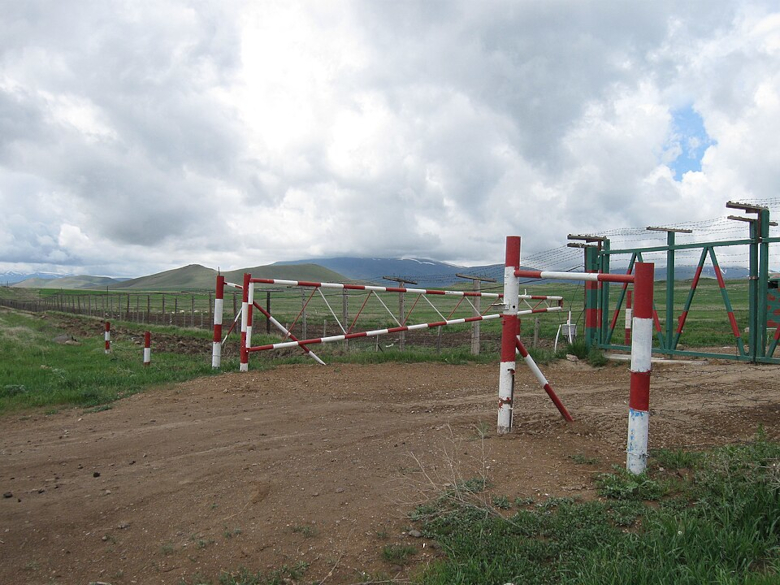
The closed Armenia–Turkey border (Photo: Vallen 1988 / Wikimedia Commons[CC BY-SA 4.0])
目次
A divided history
To understand this development, we need to go back to 1915. Before World War I, many Armenians lived in the eastern Anatolia region under Ottoman rule. In the latter half of the 19th century, the empire continued to decline, losing vast territories as nationalist movements grew at home. The Ottoman leadership feared that Armenians living in Anatolia would seek independence or align with Russia, the empire’s rival in the Caucasus. In 1914, the Ottoman Empire entered the war on the side of the Central Powers but suffered defeats against Russia and the Persian Empire, deepening its anxieties.
In 1915, Ottoman authorities ordered the relocation of Armenians from eastern Anatolia to areas corresponding to present-day Syria. Under harsh conditions, many perished from starvation, disease, and other causes; some estimates put the toll as high as 1.5 million. Armenia and many countries describe these events as “genocide.” The Turkish government, however, rejects that term and argues that the deaths occurred amid the chaos of war rather than as part of a deliberate plan to exterminate a particular ethnic group. This historical dispute remains unresolved and continues to shape political relations between the two countries, including their approaches to dialogue and normalization.
This is not merely a historical issue. For Turkey, recognizing genocide would fundamentally undermine the official narrative of state formation. The narrative the Turkish government presents portrays a political and military struggle led by Mustafa Kemal Atatürk to resist the partition of the Ottoman Empire after its defeat in World War I. Following that victory, the Republic of Turkey was officially founded on October 29, 1923.
This narrative has been used to promote national unity and emphasize state legitimacy. The notion of genocide against peoples under Ottoman rule contradicts it. The view that the events do not amount to genocide enjoys broad support among the Turkish public and is reflected in education, politics, and foreign policy. When foreign leaders or international institutions use the word “genocide,” Turkey has often responded with strong diplomatic protests.
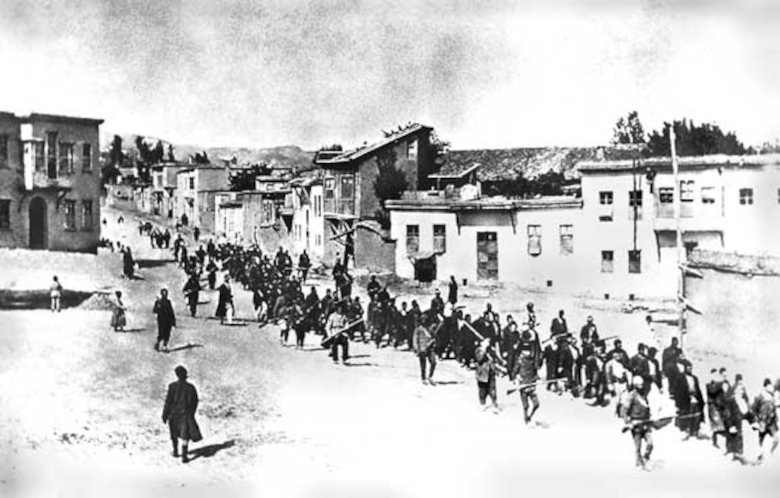
Armenians being marched by Ottoman soldiers, 1915 (Photo: Armin T. Wegner / Wikimedia Commons[Public domain])
After World War I, the Ottoman Empire was defeated and weakened. At the same time, the October Revolution of 1917 caused the collapse of the Russian Empire, creating a power vacuum in the South Caucasus region between the Black Sea and the Caspian Sea (now including Armenia, Azerbaijan, and Georgia). In April 1918, Georgia, Armenia, and Azerbaijan jointly established the Transcaucasian Democratic Federative Republic, which dissolved the following month. In 1920, the Allies concluded the Treaty of Sèvres with the weakened Ottoman Empire, allocating Ottoman-ruled Western Armenian territories to the Republic of Armenia. However, the newly formed Turkish government rejected the treaty and sent troops to seize the territories allocated to Armenia.
Meanwhile, the Soviet Red Army advanced into the South Caucasus and entered Armenia in December 1920. In 1921, Turkey and the Soviet republics (Armenia, Azerbaijan, and Georgia) concluded the Treaty of Kars in Yerevan, fixing the current border between Turkey and Armenia. From March 1922, Armenia became part of the Transcaucasian Socialist Federative Soviet Republic within the USSR (becoming the Armenian Soviet Socialist Republic in 1936), a status that continued until the final phase of the Soviet collapse, after which it again moved toward independence.
Border closure and frozen diplomacy
After the Soviet Union collapsed in 1991, Armenia became an independent state, but hopes for improved ties with Turkey did not last. Turkey was among the first countries to recognize Armenia’s independence in December 1991, but language in Armenia’s declaration of independence was problematic for Ankara. The declaration referred to eastern Anatolia as “Western Armenia,” which Turkey interpreted as an indirect territorial claim, and it also contained references to “genocide.” These provisions and disputes over other bilateral treaties were among the main reasons Turkey did not establish formal diplomatic relations with Armenia. Even so, in August 1992 Ankara invited Armenia to join as a founding member of the Istanbul-based Black Sea Economic Cooperation (BSEC). This indicated Turkey’s early willingness to maintain economic dialogue despite a troubled history.
The situation changed with the outbreak in 1992 of armed conflict between Armenia and Azerbaijan over Nagorno-Karabakh. Nagorno-Karabakh is a mountainous area of about 4,400 square kilometers in the South Caucasus, internationally recognized as part of Azerbaijan but historically inhabited mainly by people with an Armenian identity. In 1988, Armenians in the region petitioned Soviet authorities to transfer Nagorno-Karabakh from Azerbaijan to Armenia, but Azerbaijan and the Soviet authorities rejected the request. Interethnic clashes, mutual expulsions, and rising nationalism on both sides followed, escalating into a large-scale conflict.
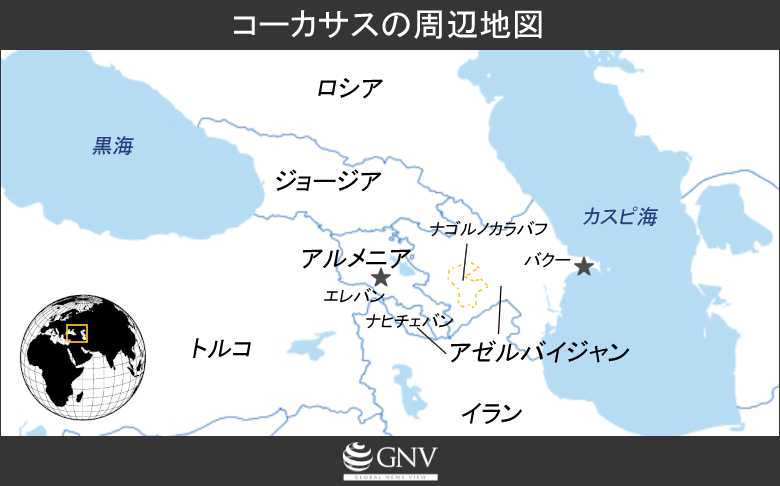
During the war, Turkey acted as a strong political, cultural, and economic ally of Azerbaijan, providing diplomatic support and opposing advances by Armenian forces. In April 1993, after Armenian troops captured Azerbaijan’s Kalbajar district outside Nagorno-Karabakh, relations between Turkey and Armenia deteriorated sharply. The offensive triggered a humanitarian crisis, forcing about 39,000 civilians to flee the area.
In solidarity with Azerbaijan, Turkish Prime Minister Süleyman Demirel in 1993 announced the closure of Turkey’s only land border with Armenia and said Ankara would not establish diplomatic relations unless Armenian forces withdrew from occupied Azerbaijani territories. Azerbaijan welcomed the closure, which effectively halted direct trade and transport between Turkey and Armenia, forcing all economic exchanges to go via Georgia or Iran instead. While the Nagorno-Karabakh conflict never spilled over onto Turkish soil, it impeded normalization between Turkey and Armenia.
In May 1994, Armenia and Azerbaijan agreed to a ceasefire brokered by Kyrgyzstan. The conflict was frozen, but no political settlement was reached. For Turkey and Armenia, the war left not only contested borders but also a new diplomatic impasse.
Steps toward reconciliation
After the 1994 ceasefire, there were intermittent moves toward engagement. In 1995, Turkey opened an air corridor to Yerevan for the first time. Relations soon cooled again. In 1998, Robert Kocharyan was elected president of Armenia and made international recognition of the genocide a centerpiece of foreign policy. In 2000, the U.S. House introduced a resolution urging then-President Bill Clinton to use the word “genocide” in a commemorative statement, raising tensions. Clinton blocked the resolution, citing the potential damage to U.S.–Turkey relations. Turkey protested Armenia’s stance on the term and temporarily tightened visa requirements for Armenian visitors.
Subsequent initiatives created openings for dialogue. In 2001, a series of meetings among former diplomats and civil society representatives in Vienna led to the establishment of the Turkish-Armenian Reconciliation Commission (TARC), aimed at promoting dialogue, and several bilateral civil society initiatives began to take root. In 2004, Turkey announced its “zero problems with neighbors” foreign policy, signaling an intent to improve relations across the region.
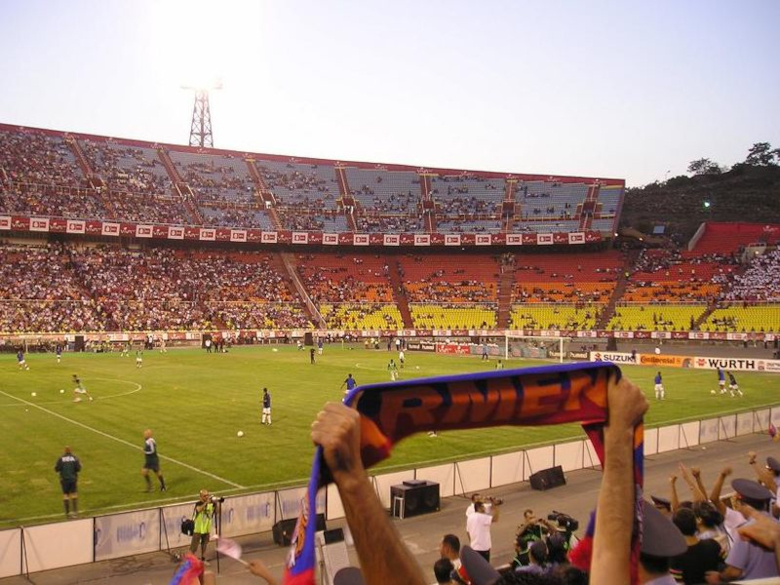
Armenia vs. Turkey soccer match (2008) (Photo: Avdav (talk) / Wikimedia Commons[CC BY-SA 3.0])
In August 2008, the brief war between Georgia and Russia heightened concerns in Turkey about stability in the South Caucasus, particularly regarding Russia’s influence and the security of energy transit routes in the background. The following month, Turkish President Abdullah Gül, at the invitation of Armenian President Serzh Sargsyan, visited Yerevan to attend a World Cup qualifier. The visit later became known as “soccer diplomacy,” a symbolic step toward dialogue.
Meanwhile, talks between Turkey and Armenia had been taking place in Switzerland since 2007, making some progress. In 2009, the two countries signed the Zurich Protocols aimed at reopening the border and establishing normal diplomatic relations. But momentum soon stalled.
Border issues and the collapse of the Zurich Protocols
The land border between Turkey and Armenia was defined by the Treaty of Kars signed in 1921 between Turkey and the Soviet republics (Armenia, Azerbaijan, and Georgia). Turkey regards this treaty as the final and binding settlement of the border, but Armenia has not ratified it. In January 2010, Armenia’s Constitutional Court ruled that signing the Zurich Protocols did not mean abandoning efforts for international recognition of the Armenian Genocide, nor did it constitute formal recognition of the borders set by the Treaty of Kars ruling.
Turkey viewed this interpretation as undermining the spirit of the agreement. The Constitutional Court’s decision triggered an immediate and strong reaction from Ankara. Turkey’s Foreign Ministry issued a statement condemning the ruling as including “preconditions and restrictive provisions that impair the letter and spirit of the protocols,” and asserting that it “also damages the very reason and purpose for negotiating these protocols.”
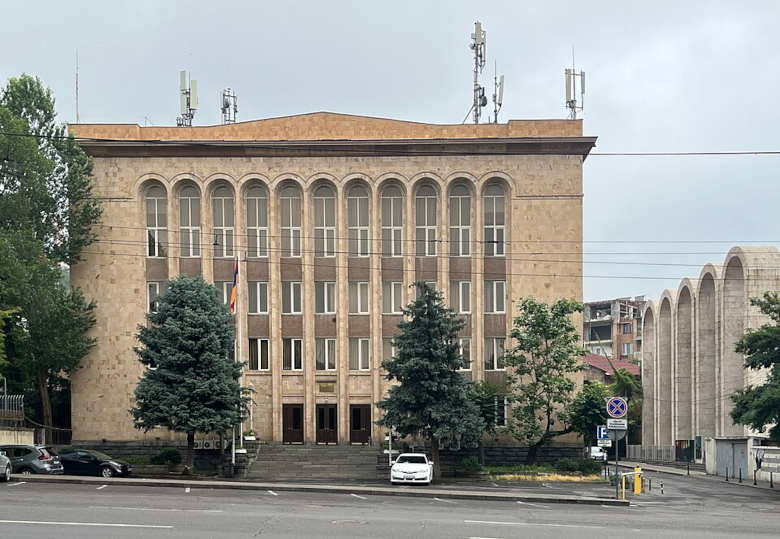
Constitutional Court of Armenia (Photo: Benoit Prieur / Wikimedia Commons[CC0 1.0])
Turkey further made clear its position that it would not move to reopen the border or ratify the protocols unless Armenia withdrew from Azerbaijani territories occupied during the Nagorno-Karabakh conflict. This stance reflected four UN Security Council resolutions adopted in 1993 calling for the immediate withdrawal of occupying forces from specific Azerbaijani regions beyond Nagorno-Karabakh.
With neither side willing to compromise, the normalization process stalled. In March 2018, Armenia formally annulled the protocols, bringing this attempt at rapprochement to an end. The collapse of the Zurich Protocols in 2010 put Turkey–Armenia relations back into deep freeze.
Continuing disputes over history
In the years after the signing of the Zurich Protocols, the historical dispute over the events of 1915 again drew international attention. Several countries, including France (2012), Germany (2016), and Canada (2019), officially recognized the Armenian Genocide. In 2021, U.S. President Joseph Biden became the first American president to use the term “genocide” officially.
For decades, many governments—especially NATO members—avoided such recognition for fear of damaging strategic, military, and economic ties with Turkey. Turkey’s geography, control of key transit routes, and military role in the Middle East and the Black Sea made it a partner too important to alienate. In the 2010s, however, the political calculus began to change. The Armenian diaspora intensified lobbying, international human rights discourse gained attention, and tensions between Turkey and Western countries over the Syria conflict, migration via the Eastern Mediterranean, and domestic human rights issues eroded prior reluctance. The 2015 centennial further amplified political momentum.
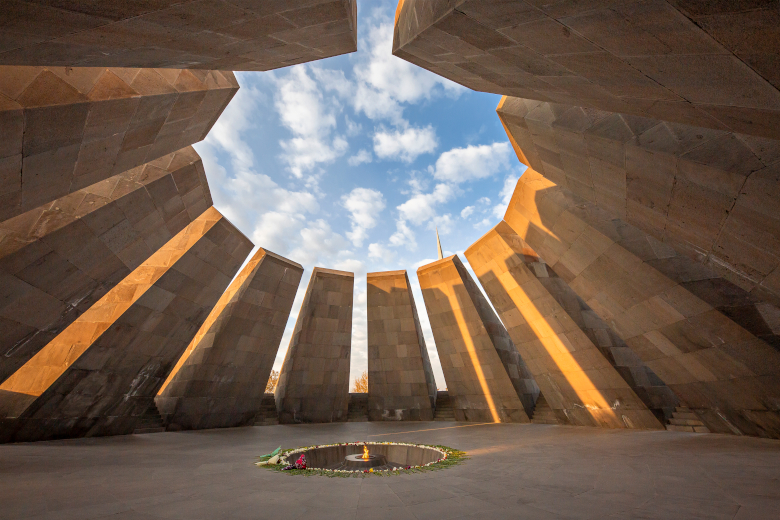
Memorial to the victims of the Armenian massacres, Armenia (Photo: MehmetO / Shutterstock.com)
For Armenia, these statements were seen as long-sought historical recognition and acknowledgment of ancestral suffering, conferring international legitimacy after decades of activism. Turkey, for its part, considers that the events of 1915 do not meet the legal definition of genocide under the 1948 UN Convention and thus found such statements unacceptable. International shifts in recognition provoked strong diplomatic protests from Turkey, including recalling ambassadors and suspending high-level contacts with relevant governments.
Within Turkey, some voices in civil society and academia began to question the official narrative promoted by the government, although public debate remained limited.
Renewed fighting in Nagorno-Karabakh
The biggest recent shift has come from renewed fighting in Nagorno-Karabakh. Decades after the 1994 ceasefire, frustration grew in Azerbaijan that Armenia continued to control territories internationally recognized as Azerbaijani. The peace talks led by the OSCE Minsk Group—established in 1992 and co-chaired by the United States, France, and Russia—had stalled for years. Regional dynamics also played a role: Azerbaijan rapidly increased military spending, strengthened its strategic partnership with Turkey, and perceived Russia’s capacity and willingness to act as Armenia’s security guarantor as diminishing.
In September 2020, Azerbaijan launched a large-scale offensive, recapturing much of Nagorno-Karabakh and surrounding areas. Turkey openly supported Azerbaijan, providing military equipment—including drones—intelligence, and training support. President Recep Tayyip Erdoğan, in speeches at the UN and other international forums, framed the Turkey–Azerbaijan alliance culturally and ethnically as “one nation, two states,” and reinforced political and military support on that basis.
The fighting lasted about six weeks, causing thousands of casualties on both sides. In November 2020, after Azerbaijani forces captured the strategically important city of Shusha, Armenian Prime Minister Nikol Pashinyan—who came to power through the peaceful “Velvet Revolution” protests in 2018—announced he had agreed to a Russia-brokered peace deal with Azerbaijan. Pashinyan acknowledged the deal was “painful” for Armenians but said it was necessary given the state of the war and Armenia’s forces.
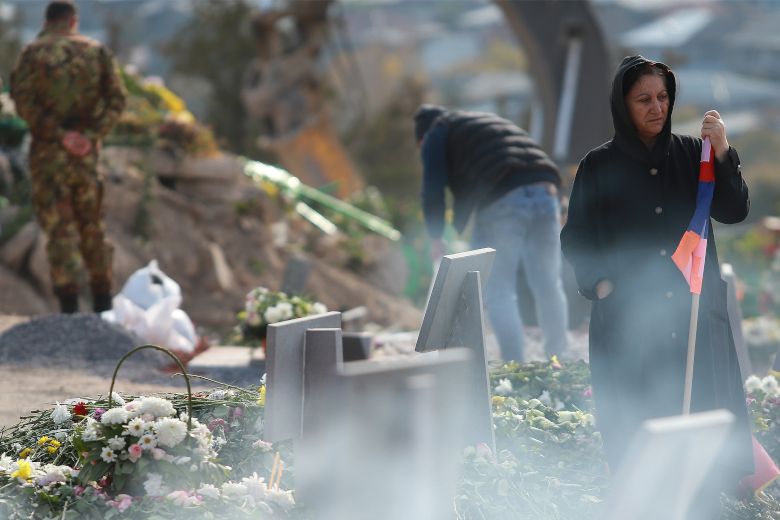
Burial of soldiers killed in the Armenia–Azerbaijan conflict, Armenia (2020) (Photo: Gevorg Ghazaryan / Shutterstock.com)
Under the terms of the agreement, Armenia withdrew from the districts of Aghdam, Kalbajar, and Lachin on a set schedule, while Azerbaijan consolidated control over several other districts captured during the war. This reshaped the South Caucasus strategic map for the first time in 28 years. The war ended with a Russia-brokered ceasefire in November 2020, and Russian peacekeepers were deployed.
In September 2023, tensions over Nagorno-Karabakh flared again. Citing security threats and the need to “restore constitutional order,” Azerbaijan launched a brief but decisive military operation justified in those terms. Within 24 hours, Azerbaijani forces took full control of Nagorno-Karabakh, and local Armenian authorities agreed to disarm and dissolve their forces. Azerbaijani President Ilham Aliyev, in power since 2003, declared the operation a success and a step toward restoring Azerbaijan’s territorial integrity.
The offensive triggered a mass exodus of Armenians from Nagorno-Karabakh; within weeks, more than 100,000 fled to Armenia. Prime Minister Pashinyan accused Azerbaijan of carrying out “ethnic cleansing,” which Baku denied. Russia, which had deployed peacekeepers after the 2020 war, played only a limited role in mediating the crisis, as its influence in the South Caucasus waned amid the war in Ukraine.
For Turkey, the operation was welcomed as a strategic victory for its ally Azerbaijan, reinforcing Erdoğan’s “one nation, two states” narrative. It cemented Turkey’s role as Azerbaijan’s principal regional supporter and, in the short term, further complicated prospects for reconciliation with Armenia.
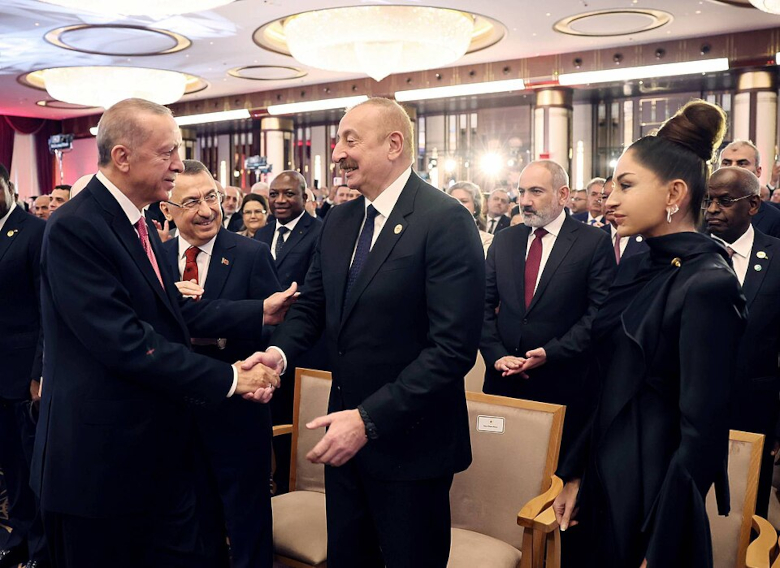
Turkish President Erdoğan and Azerbaijani President Aliyev shake hands (Photo: Press Service of the President of the Republic of Azerbaijan / Wikimedia Commons[CC BY 4.0])
Armenia was forced to reassess its strategy. Long reliant on Russia as its main ally, Armenia found itself exposed as Moscow’s position weakened in the region due to the war in Ukraine. It began seeking new partnerships and a revised strategy. In March 2025, Prime Minister Pashinyan said in an interview with Turkish media, “In our official view, international recognition of the Armenian Genocide is not currently a priority of our foreign policy” statement. This does not deny historical facts, but reflects a strategic recalibration that takes into account Armenia’s security concerns and diplomacy.
A turning point: the corridor and a peace accord
A turning point in the normalization process emerged through major transport projects in the South Caucasus. During Soviet times, Azerbaijan used regional rail and highway networks to access Nakhchivan—its territory separated by Armenian land. But the First Nagorno-Karabakh War in the early 1990s severed those routes, isolating the Nakhchivan exclave. Since then, Azerbaijanis could reach Nakhchivan only by air or overland via Iran. Restoring this land connection would establish a continuous route for logistics and people movement linking Azerbaijan, Turkey, and ultimately Europe and Asia.
The concept of a “Zangezur Corridor” linking these areas was first clearly proposed after the 2020 Nagorno-Karabakh war. The Russia-brokered trilateral ceasefire agreement of November 2020 included provisions not only on ceasefire and withdrawals but also on restoring transport infrastructure in the South Caucasus.
The planned corridor would be about 43 kilometers long, situated in Armenia’s southernmost Syunik province—a strategically important area. If completed, it would not only directly connect Azerbaijan proper and Nakhchivan but also link Turkey overland to the Turkic states of Central Asia, creating a transit route across the South Caucasus that connects Europe and Asia. Azerbaijan emphasizes that the project would bolster regional trade and cultural exchange.
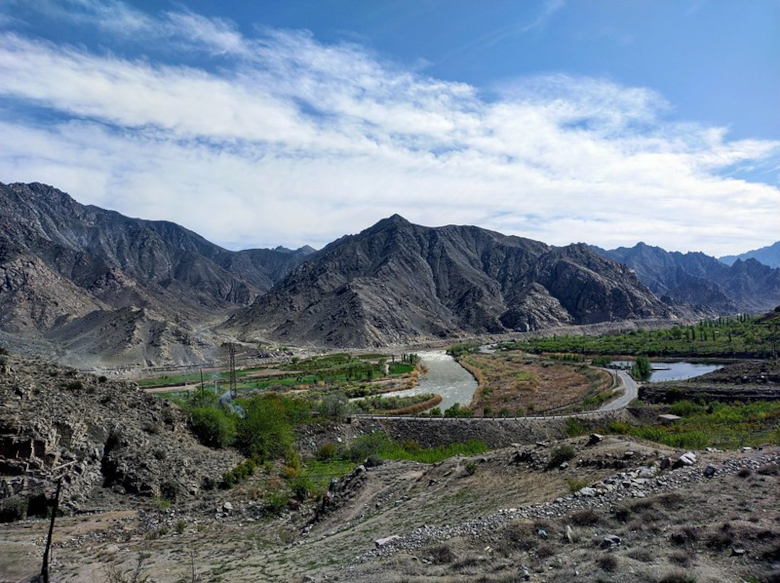
Near the Armenia–Iran border, where the Zangezur Corridor is planned (Photo: Jelger Groeneveld / Flickr[CC BY 4.0])
In April 2021, Azerbaijan’s President Aliyev said at a virtual summit of the Turkic Council (now the Organization of Turkic States) that Zangezur is “ancient Azerbaijani land,” and building the corridor would “unite the entire Turkic world” remarks. He also said the project would create new opportunities for other countries, including Armenia. His statements echoed Turkey’s regional connectivity vision, emphasizing Ankara’s central role in the project.
In July 2025, the U.S. administration under Donald Trump proposed leasing the corridor within Armenian territory for 100 years and outsourcing Armenia’s border control and customs operations related to travel to and from Nakhchivan to American companies. Armenian Foreign Minister Mnatsakan Safaryan said Yerevan was, in principle, prepared to discuss such an arrangement comment. However, the prime minister’s spokesperson denied that there were any talks to outsource the administration of sovereign territory. The Armenian government also appeared concerned that the project could strengthen the Turkey–Azerbaijan axis, deepen Armenia’s geopolitical isolation, and lack sufficient guarantees for its territorial integrity. Iran has firmly opposed any extraterritorial corridor and has repeatedly warned against the involvement of “external” powers in the South Caucasus.
Behind-the-scenes diplomacy intensified. U.S. mediators held separate and joint meetings with Armenian and Azerbaijani officials to bridge gaps over the corridor’s legal status and security guarantees. In August 2025, under U.S. mediation, Armenia and Azerbaijan signed a peace accord at the White House. The agreement included a transport route named the “Trump Route for International Peace and Prosperity (TRIPP)” running through Armenia, with exclusive development and operating rights granted to the United States.
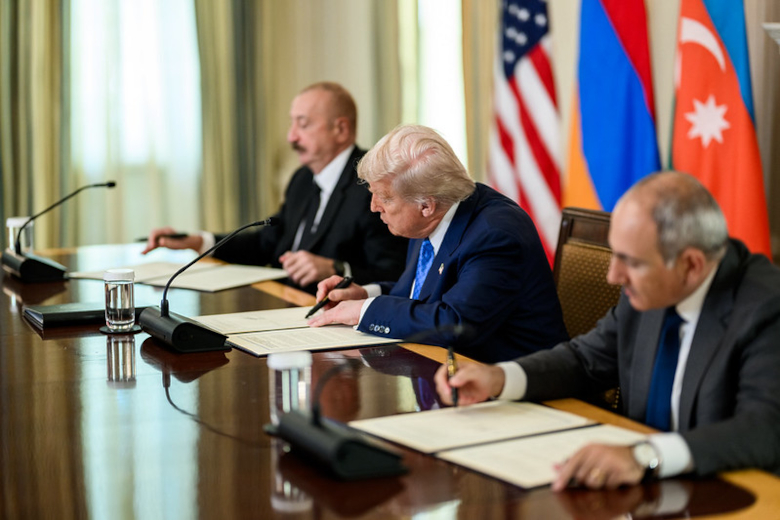
Leaders of Azerbaijan, the United States, and Armenia sign the peace accord (Photo: White House / Flickr[Public domain])
Turkey welcomed the agreement, saying the project would facilitate energy and trade flows in the South Caucasus statement. Ankara also reiterated that it would fully restore diplomatic relations with Armenia once a final peace agreement between Armenia and Azerbaijan was in place.
Iran welcomed the peace accord itself but opposed the transit corridor project. Tehran warned it would block construction, arguing the corridor’s development could alter the current Armenia–Iran border situation and affect their overland connection.
For Turkey, the TRIPP corridor could be more than just a new trade route. By physically linking Azerbaijan and Turkey through Armenian territory, it could create both motivation and a practical means for improving relations with Armenia. Turkish authorities have long supported regional connectivity projects aligned with the “Middle Corridor” linking Europe and Asia. If implemented smoothly, TRIPP has the potential to ease political tensions by generating shared economic interests.
The Armenia–Azerbaijan peace accord marks a major milestone in the South Caucasus. It could open the way to broader regional integration, including the long-awaited normalization of Turkey–Armenia relations. If the border reopens, routes like the Gyumri railway—built in 1889 and closed in 1993 with the outbreak of the Nagorno-Karabakh conflict—that connects eastern Turkey and northern Armenia might be revived. If it resumes operations, Armenia would gain direct rail access to Turkish ports, while Turkey would secure a new overland route into the South Caucasus.
Turkey has yet to take formal steps toward reconciliation, but some observers note small shifts in the tone of certain politicians’ remarks and more tolerance than before for public discussion about 1915.
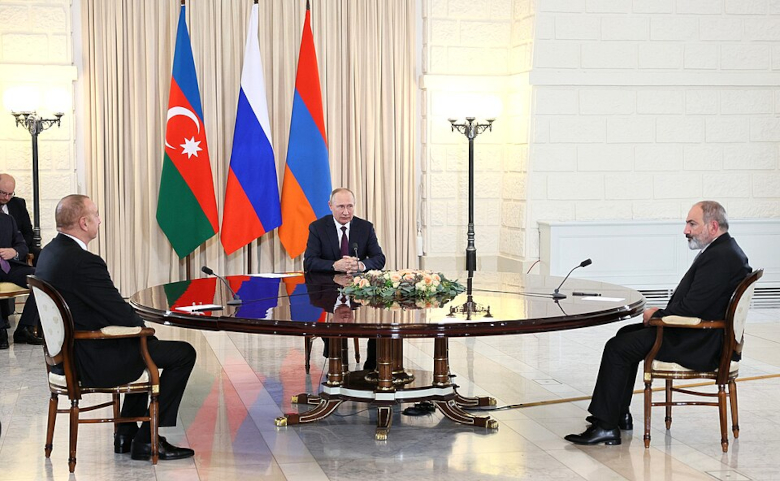
Trilateral talks among the leaders of Azerbaijan, Russia, and Armenia (2022) (Photo: Presidential Executive Office of Russia / Wikimedia Commons[CC BY 4.0])
Outlook and potential challenges
In South Caucasus relations, the Armenia–Azerbaijan accord has raised hopes for progress in the Turkey–Armenia normalization process as well. Armenian Prime Minister Pashinyan’s visit to Istanbul in 2025 came just weeks before Armenia and Azerbaijan signed their peace agreement in Washington.
If the accord is implemented successfully, transport routes sealed for more than 30 years could be restored, eventually including those linking Armenia and Turkey. This would open a rare opportunity for Ankara and Yerevan to translate political gestures into practical cooperation.
That said, historical and political issues will not disappear overnight. Deep mistrust remains, and regional dynamics are growing more complex. Russia—often described as a “wildcard”—historically benefited from Armenia’s isolation but shifted its posture after Azerbaijan’s military victory in 2023 and the withdrawal of Russian forces. As Moscow seeks closer ties with Baku, it has less incentive to actively support Turkey–Armenia normalization. Even so, recent statements suggest cautious support, reflecting an interest in connectivity projects shaped by the Armenia–Azerbaijan accord.
Iran is another key player. It borders Armenia and opposes proposals for the “Zangezur Corridor,” chiefly because it could reduce Iran’s role as a regional transit route. For these reasons, Iran has maintained close ties with Armenia. For Armenia, with limited geopolitical options, Iran appears to be an important partner to counter external pressure.
Still, the possibility of change is higher than it has been in decades. If Turkish trucks transit Armenia and Armenian goods reach global markets via Turkish ports, the border may be seen less as a fault line and more as a bridge. In the coming months, it will become clear whether this period marks a turning point—or another missed opportunity.
Writer: Guan Zhaoshen
Graphics: A. Ishida









.jpg)
Overall, a great article. The relationship between Turkey and Armenia is complicated due to past atrocities committed by Turkey against the Armenian people. How to resolve these historical issues remains to be seen.
Thanks for the comment!
Yes, the historical issues are indeed central to the relationship. I tried to show how these unresolved memories still shape the present diplomacy. Hopefully, the ongoing talks can create some space for practical cooperation, even if history remains contested.
国と国との間には永遠の憎しみはなく、あるのは永遠の利益だけだ。
[8974]NicePH Online Casino: Your Premier PH Destination for Slot Games. Register, Login, and Get the NicePH App Download Today for the Ultimate Gaming Experience! Experience the ultimate thrill at NicePH Online Casino, the premier PH destination for top niceph slot games. Complete your niceph register and login to start winning today. Get the niceph app download for a seamless mobile gaming experience anytime, anywhere! visit: niceph
[8891]Poneclub Philippines: Best Online Casino & Slots – Easy Login, Register, and App Download. Join Poneclub Philippines, the best online casino for top Poneclub slots. Fast Poneclub login & register. Secure Poneclub app download for gaming on the go. Play and win today! visit: poneclub
[7348]fbmgaming Online Casino Philippines: Easy Login, Fast Register, and App Download for the Best Slot Games. Experience the ultimate thrill at fbmgaming Online Casino Philippines. Enjoy a seamless fbmgaming login, fast register, and easy fbmgaming download to play the best fbmgaming slot games. Join the top-rated online casino in the PH today and start winning! visit: fbmgaming
[7405]phwin99 Online Casino Philippines: Fast phwin99 Login, Register, & App Download. Experience the Best phwin99 Slot Games Today! Join phwin99 online casino, the premier gaming destination in the Philippines. Enjoy fast phwin99 login, easy phwin99 register, and phwin99 app download. Play the best phwin99 slot games and win big today! visit: phwin99
[4945]Peraplay: Best Online Casino in the Philippines. Easy Login, Register & App Download for Premium Slot Games. Join Peraplay, the Philippines’ best online casino! Enjoy easy peraplay login, register, and peraplay app download. Play premium peraplay slot games and win big at the top peraplay casino online today. visit: peraplay
[3782]a777 Online Casino Philippines: The Best Legit Slots for Real Money and Easy GCash Payouts. Experience the ultimate gaming thrill at a777 Online Casino Philippines, the top destination for the best online slots PH. Secure your a777 legit casino login today to play exciting games for real money and enjoy the fastest online gambling GCash Philippines payouts. Join a777 casino real money for a safe, legit, and rewarding experience tailored for Filipino players. visit: a777
[1918]SG8Casino Philippines: Best Online Casino. Quick SG8Casino Login, Register, & App Download for Premium Slot Games and the Ultimate Gaming Experience. Experience SG8Casino: The Philippines’ best online casino. Fast sg8casino login, easy register, and app download for premium sg8casino slot games. Join today! visit: sg8casino
[5599]100jili Casino: Secure 100jili Login & Register. Play Premium 100jili Slots and Get the Official App Download for the Best Philippines Gaming Experience. Experience 100jili Casino, the top choice for Philippines players. Secure 100jili login & register to play premium 100jili slot games. Get the 100jili app download today! visit: 100jili
[2408]Phtaya16 Online Casino Philippines: Secure Login, Easy Register, and App Download for the Best Phtaya16 Slot Games and Big Wins! Join Phtaya16 Online Casino Philippines for the best gaming experience! Secure phtaya16 login, easy phtaya16 register, and phtaya16 app download for mobile play. Enjoy top-rated phtaya16 slot games and start winning big today! visit: phtaya16
[350]Winph8 Online Casino Philippines: Secure Winph8 Login, Fast Register & App Download for Premium Slot Games. Join Winph8 Online Casino Philippines for premium Winph8 slot games. Enjoy a secure Winph8 login, fast Winph8 register, and easy Winph8 app download. Experience the ultimate gaming platform and start winning today! visit: winph8
Your point of view caught my eye and was very interesting. Thanks. I have a question for you. https://accounts.binance.com/uk-UA/register-person?ref=XZNNWTW7
Ph33 login was a breeze! Got straight in and started playing my favorite slots. No hassle just pure uninterrupted fun. Get the app and see it yourself: ph33 login!
V9betxa is solid. Loads of sports betting options, live scores updating in real-time, what more could you want? Check it out if you’re serious about your bets. Find out at v9betxa!
Vswina1 offers pretty good quality for its selection of games. Nice graphics, simple interface, and you can win some real cash It’s worth giving a try. So give it a look: vswina1!