
On October 2, 2018, journalist Jamal Khashoggi was killed at the Saudi Consulate in Istanbul, Turkey. His body is said to have been dismembered inside the consulate. Khashoggi had been involved in reporting in Saudi Arabia through newspapers and television, but fearing for his safety, he went into exile in the United States in 2017. He subsequently wrote columns for the Washington Post and other outlets, frequently commenting on Saudi Arabia. The extreme brutality and shock of this incident, along with its being close to American media circles, has led to extensive coverage across the world’s media, including in Japan.
Japan and Saudi Arabia have a deep relationship. In recent years, major Japanese companies in telecommunications, finance, and other sectors have entered the Saudi market, and above all, Japan relies heavily on Saudi oil. So how has this incident been reflected in Japanese media? The trend in Japan’s international reporting has been that countries with close ties to Japan are often given prominent coverage, and even for countries like Saudi Arabia that are not usually reported on much, there is a strong tendency to emphasize their relationship with Japan. However, with regard to this incident that is deeply entangled with the wider world, what fails to appear in Japanese coverage is precisely that crucial “Japanese” standpoint. This article explores coverage of Saudi Arabia from that perspective.
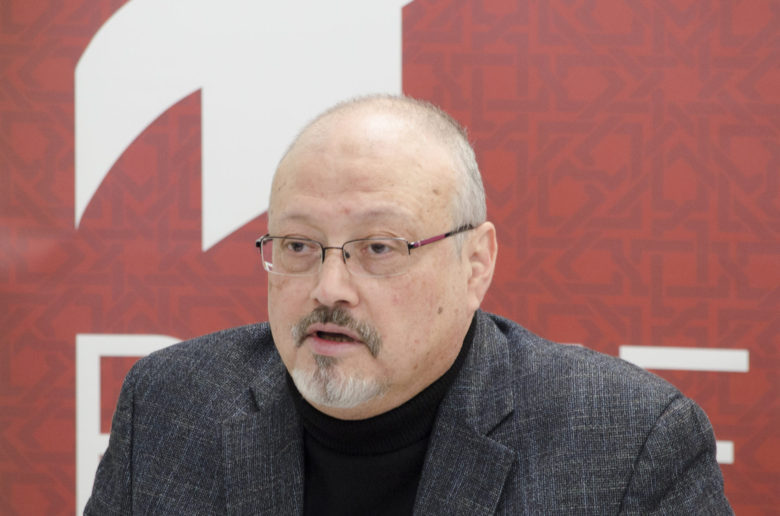
Jamal Khashoggi, March 2018 (Photo: POMED [CC BY 2.0])
The Japan–Saudi relationship that doesn’t come through in the coverage
Japan’s relationship with Saudi Arabia cannot be discussed without oil, which is essential to the Japanese economy. Saudi Arabia is Japan’s largest supplier of crude oil, accounting for 40.1% in 2017. Its significance to Japan is overwhelming. In addition, as Saudi Arabia seeks to reduce its dependence on crude oil, there have been major moves by Japanese companies outside the oil sector as well. The most notable among them is SoftBank. SoftBank established a massive investment fund in Saudi Arabia, and the total invested for the development of one of the world’s largest solar power facilities is said to be on the order of 21 trillion yen. As of June 2018, 94 Japan-affiliated companies had entered the Saudi market.
Since 2017, Saudi Arabia has hosted the Future Investment Initiative (FII), the so-called “Davos in the Desert,” and SoftBank Chairman and CEO Masayoshi Son serves as a member of the event’s advisory board. At the 2017 FII, in addition to Son, representatives of the Japan Bank for International Cooperation and Mizuho Financial Group also participated as speakers. For the October 2018 FII, Son and a representative from Mitsubishi UFJ Financial Group were scheduled to participate as speakers when this incident occurred.
In response to the incident, representatives of governments such as the World Bank and the International Monetary Fund, the U.S. Treasury Secretary, and numerous media and corporate figures who had planned to attend successively announced they would withdraw. No withdrawals by Japanese participants were reported until just before the event, but in Europe and the United States it was widely reported that SoftBank’s share price fell by 7% due to concerns stemming from the incident.
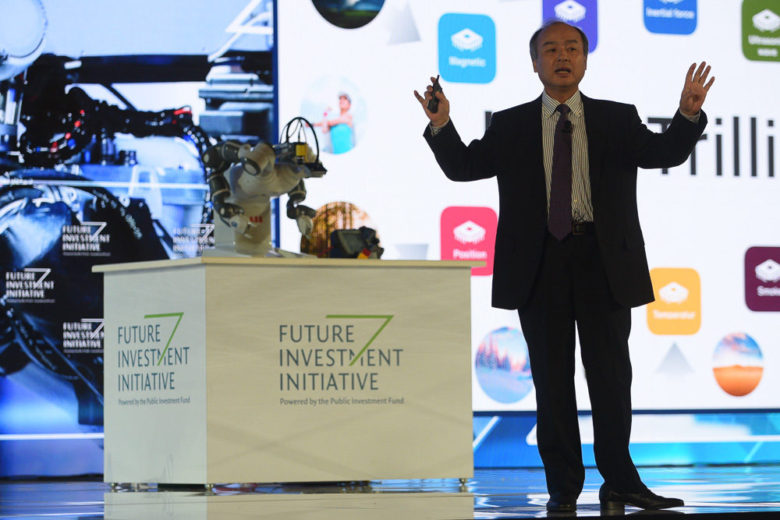
SoftBank Chairman and CEO Masayoshi Son speaking at the 2017 Future Investment Initiative in Saudi Arabia (Photo: BreakingTravelNews [CC BY-ND 2.0 ])
So how was the Khashoggi incident covered in Japan? We analyzed reporting by the Mainichi Shimbun (Note 1). First, coverage was slow to begin; the first report appeared about a week after the incident. Full-fledged coverage began when U.S. President Donald Trump commented on it. Over the subsequent 15 days, the volume of reporting related to Saudi Arabia reached about 30,000 characters, nearly matching the total volume of all Mainichi coverage of Saudi Arabia during the year prior to the incident (Note 2). The high level of attention to this incident and the fact that Saudi Arabia is not usually a subject of coverage are clear.
However, among the 28 Mainichi articles on this incident, only one touched on content related to Japan. On October 22 there was only a brief mention that the head of MUFG Bank had canceled attendance at the FII. There was no mention whatsoever of oil supplies. Nor was there any sign that reactions or comments were sought from government figures such as Japan’s prime minister, chief cabinet secretary, or foreign minister.
Similar tendencies can be seen in other newspapers and television. For example, during the same period the Yomiuri Shimbun did not address content related to Japan. On October 20, the day after Saudi Arabia acknowledged Khashoggi’s death, TV Asahi’s Saturday Station treated the incident as its top story and took up Japan-related content. But strangely, this was limited to noting that Crown Prince Mohammed bin Salman is “a big fan of Japan,” and expressing concern over whether the incident might affect a joint animation production Japan has been pursuing with Saudi Arabia, without touching the essence of the problem. On the following day’s TBS program Sunday Morning, it was again the top story; while the overview of Saudi Arabia mentioned that Japan imports oil, it did not address the implications of this incident for Japan’s relationship going forward (Note 3).
On NHK, concern was expressed over whether there would be an impact on oil prices, and the Asahi Shimbun and Nikkei briefly touched on how SoftBank’s investment fund might be affected, but there was neither questioning of how the Japanese government is responding (or should respond) nor any forum for discussing how Japanese companies ought to engage with Saudi Arabia in the future.
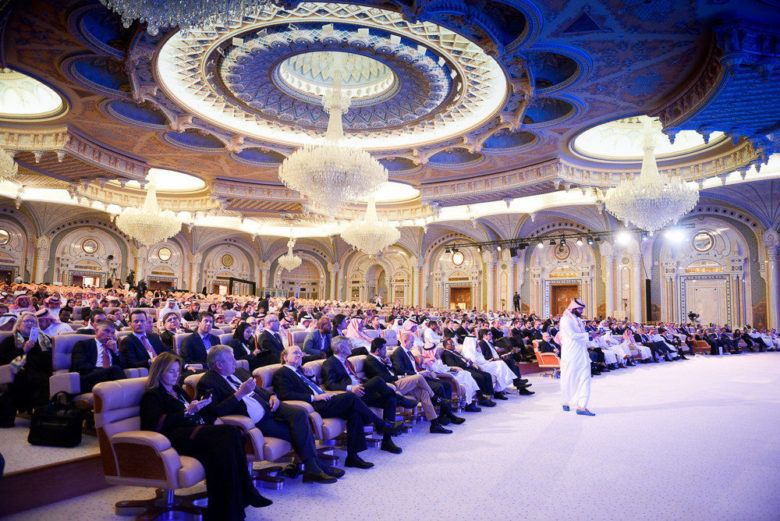
Future Investment Initiative held in Saudi Arabia in 2017 (Photo: BreakingTravelNews [CC BY-ND 2.0 ])
By contrast, overseas media are focusing on the posture of Japanese companies. In European and American newspapers, television, and magazines, the reactions of SoftBank and the major banks to the incident were raised at an early stage. Addressing this issue, the UK’s Sky News pointed out a “cultural” element, saying that “Japanese companies are subject to less pressure from consumers and shareholders than Western companies.” But even before getting to the matter of “culture,” because there is little reporting on points of contact between Japan and Saudi Arabia, it is only natural that no pressure arises: viewers have no opportunity to know of, or be conscious of, the connections.
Saudi Arabia seen only through an American lens
Japanese media have little to say about the responses of the Japanese government or companies to the incident, yet they seem greatly interested in overseas—particularly American—reactions. There is abundant reporting on how international organizations, Western government officials, companies, and news organizations are responding. For example, during the 15 days after reporting began, 89% (25 out of 28) of Mainichi articles mentioned reactions by U.S. government officials or companies. In addition, 68% (19 articles) carried the byline of a reporter from the Washington bureau in the United States. It is clear the incident is being viewed from an American perspective. A similar tendency can be inferred from the content of the articles—namely, their sources. During the same period, 86% (24 articles) quoted major U.S. media or President Trump’s tweets and press briefings.
It is not only the Mainichi. For example, an editorial in the Asahi Shimbun said of the United States: “Even if it is the biggest customer for U.S. arms sales, it must not help draw a curtain over this.” The same tendency can be seen in the TV news programs above. On the October 20 “Saturday Station,” the MC’s closing words were, “We want to keep an eye on President Trump’s stance.” On the October 21 “Sunday Morning,” in an explanation about Saudi Arabia it was said that because it supplies oil, the United States “has looked the other way on human rights abuses.” In addition, a caption reading “Trump’s reaction?” appeared on screen several times.
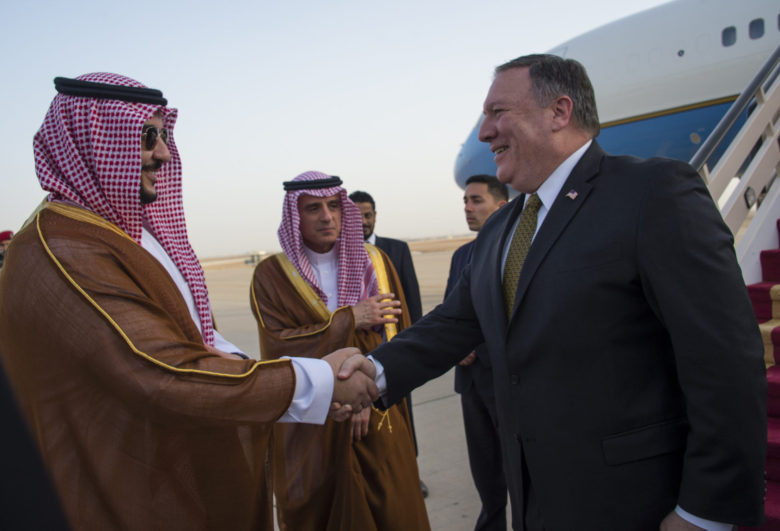
U.S. Secretary of State Pompeo visiting Saudi Arabia (Photo: US Department of State)
Thus, curiously, while Japanese media do not direct at Japan the charge that “because Saudi Arabia is Japan’s largest oil supplier, it has turned a blind eye to human rights abuses,” they level it repeatedly at the United States—even as they neither seek nor show interest in responses from the Japanese government or companies.
A suddenly discovered moral compass?
Questions also remain about the high level of attention to this incident. Saudi Arabia has committed large-scale and grave human rights violations before, so why is only this incident being covered so extensively? In this case it is portrayed as “unforgivable,” and ethical arguments stand out. This perspective is a new one not seen in the past.
By any measure, Saudi Arabia ranks among the worst in the world on human rights violations. For example, it repeatedly carries out public executions by beheading, labeling human rights activists who criticize the government as “terrorists,” and if the target is abroad it may also abduct them. Even though women are allowed to drive, the women who rose up to win that right remain in prison.
Its foreign policy has also created many problems. Support for terrorist organizations has been alleged, and in 2017 there is a strong possibility it abducted Lebanon’s prime minister for a time. Above all, Saudi Arabia’s intervention in the Yemen conflict is causing grave problems. In coalition with the United Arab Emirates and others, years of air strikes and ground intervention have killed large numbers of civilians. The United Nations has announced there is a strong possibility this constitutes war crimes. At the same time, Saudi Arabia has imposed land, sea, and air blockades on Yemen, which has been a major cause of famine, leaving three-quarters of the entire population (22 million people) in need of aid.
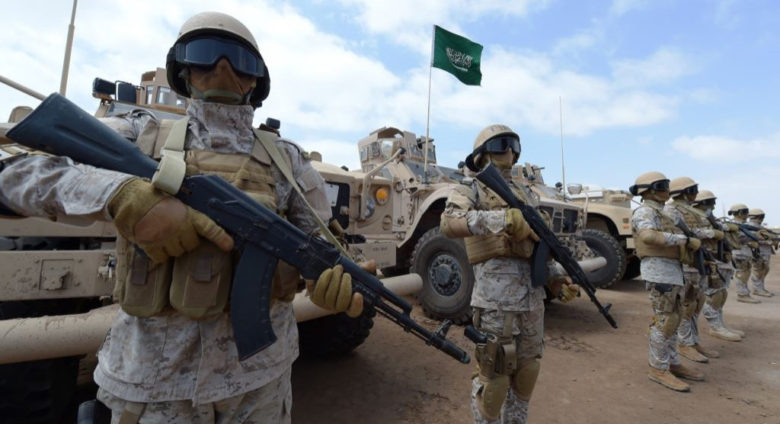
Saudi forces intervening in Yemen (Photo: Ahmed Farwan [CC BY-SA 2.0 ])
The weapons Saudi Arabia uses are purchased from U.S. arms manufacturers, and there is a track record of institutions such as Mitsubishi UFJ Financial Group and Sumitomo Mitsui Financial Group financing those manufacturers. Furthermore, the Japanese government is considering exporting Kawasaki Heavy Industries’ C-2 transport aircraft to Gulf Arab states such as the United Arab Emirates that are participating in the Yemen conflict.
However, it is clear that Japanese news outlets show little interest in such human rights violations. An analysis using the Yomiuri Shimbun found that three years’ worth of coverage of the Yemen conflict amounted to less than half the coverage devoted to the single day of terrorist attacks in Paris. The graph below shows one year of Mainichi coverage of Saudi Arabia prior to Khashoggi’s killing, and it appears that reporting on Saudi Arabia’s matches at the World Cup in Russia was given more importance than the Yemen conflict.

Loading…
Where is the watchdog role of the press?
Judging from Japanese coverage of Saudi Arabia’s killing of Khashoggi, in Japan–Saudi relations the Japanese government and corporations appear to be mere bystanders—actors that may be affected but seem to have no role, responsibility, or voice as influencers. Needless to say, the reality is far from that image. Among the few reports pointing out connections between this incident and Japan, an article in Asahi Shimbun GLOBE+ sounded a warning: “If Japan proceeds as if nothing had happened and continues its economic relationship with Saudi Arabia, the stern gaze of the international community will turn on Japan as well.”
When a close trading or investment partner in international relations engages in ongoing, grave human rights violations, how should one react? As taxpayers, consumers, and viewers in Japan, what sort of relationship should we demand of the government and companies that represent us? If the victims are people in Saudi Arabia or Yemen, some may prioritize national interests over human lives. But once the reality is known, others may come to demand some kind of change from the Japanese government or companies. In any case, with today’s Japan-free coverage, we cannot find the answer.
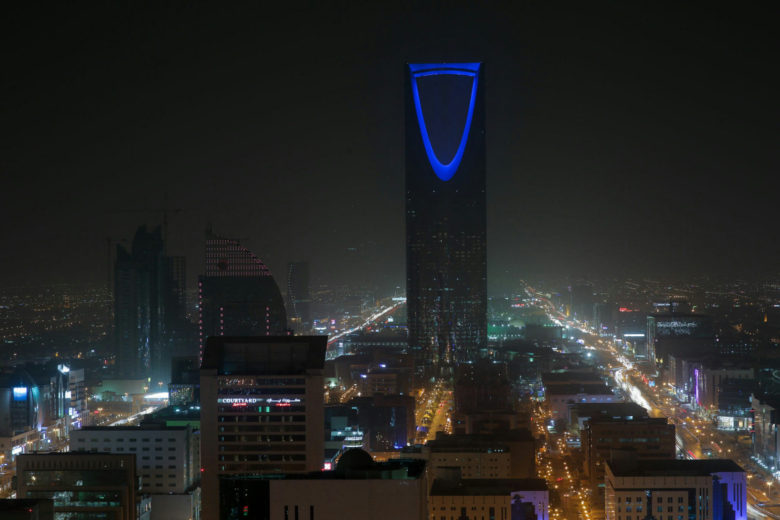
Riyadh, the capital of Saudi Arabia (Photo: United Nations Information Centre [CC BY-NC-SA 2.0 ])
Writer: Virgil Hawkins
Note 1: This is based on a search in the Mainichi Shimbun’s Maisaku database for articles in the Tokyo morning and evening editions that include “Saudi” in the headline.
Note 2: Reporting volume from October 8–22, 2018 was 29,245 characters; from October 3, 2017 to October 2, 2018 it was 30,990 characters (excluding sports coverage).
Note 3: Around this top story, commercials ran from Mitsubishi UFJ Trust and Banking and Hitachi Building Systems, and both have related companies that have entered the Saudi market in earnest. This is not to say these companies directly pressured the program. However, not limited to this program, media are generally grounded in a self-centered national perspective and are in many situations in relationships of mutual dependence with Japanese companies operating overseas. Therefore, it can be said there is a tendency to view the world from the standpoint of Japanese corporations, and the possibility that they are being given deference so as not to put them at a disadvantage cannot be denied.


サウジが人権侵害を行っており、日本も間接的に加担しているにもかかわらず、日本は他人事としてしか見ておらずその真相が報道されないという現状。もっと日本の報道のおかしさに警鐘を鳴らすべきだと思いました。
興味深く拝読しました。この事件では記事中でも指摘されている通り、「日本」が国としてどう捉えているのかが全く見えてこない上にメディアも追求しない。全く人ごとのように報道する。グローバル化が進んでもメディアはまだまだですね。報道もそうですが企業に対してもこれからはお得だからではなくいかに行動するかが問われる時代になっていくのかと思います。
日本のこの対応が世界からどう見られているのかが気になる。Softbankの株価についてなどは報道されているが、政府はどう思われているのだろうか。
Softbankや三菱UFJについては国外のメディアで本格的に報道されていますが、日本政府に言及している記事は一度も見ていません。印象としては、北朝鮮・中国以外の世界情勢において、海外のメディアにおいても日本政府は存在感が非常に薄い。ほぼ不在です。「政府はどう思われているのか」というか、「思われていない」というところだと思います。
読み応えのある記事をありがとうございます。
日本の外交といえば、アメリカと中朝がメインだと考える日本人が多いと思います。
私自身も恥ずかしながらサウジアラビアとの関係はあまり認識しておりませんでした。
日本が他にどんな国とリアルに関わっているのか、知りたいです。
日本や世界の本当の相関図や相関関係を暴くような記事を読みたいです。