
Starting in early 2023, the term “Global South,” used as a catch-all for low- and middle-income countries, suddenly began appearing in Japanese news coverage (for the background, see here). Even after entering 2024, Japan’s major newspapers have continued to show a certain degree of interest in the grouping of countries called the “Global South,” and we also see arguments about the importance of relations with the Global South. For example, in an editorial (May 24, 2024), the Mainichi Shimbun argued that for Japan, “strengthening ties with the Global South is indispensable to enhancing our voice in the international community. It will also lead to stable procurement of resources, food, and energy.” In addition, the Asahi Shimbun, asserting that the “presence” of Global South countries is growing, co-hosted an international symposium on the Global South.
In reality, however, looking at the content of the coverage raises doubts about how much the media is actually trying to pay attention to the Global South. For instance, on August 17, 2024, India hosted the 3rd “Voice of Global South Summit,” with 123 countries participating, including 21 heads of state and 34 foreign ministers. While it is part of India’s foreign policy, the fact that so many countries regularly take part in this meeting and that it serves as a venue to share issues faced by Global South countries should merit a certain degree of attention. Yet the Japanese media hardly covered it. The Asahi Shimbun carried one short article in print, but the Mainichi Shimbun and the Yomiuri Shimbun did not even mention that the meeting had been held.
Let us once again examine how the “Global South” is being covered by Japanese news organizations.
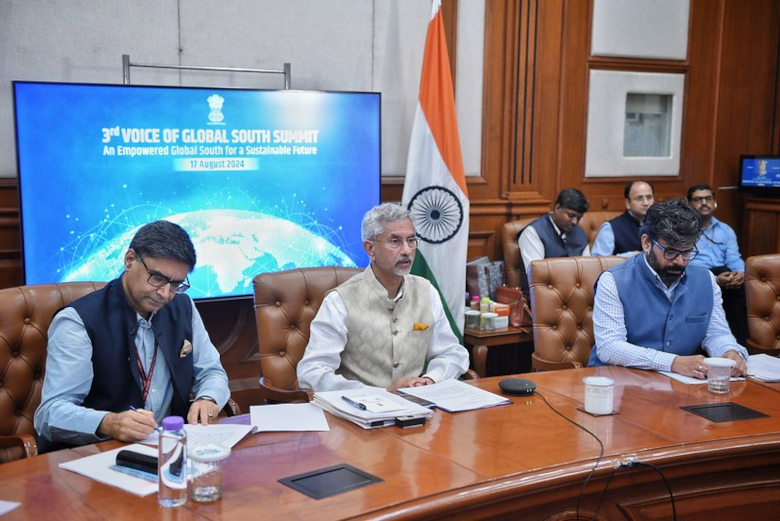
India’s Minister of External Affairs speaks at the 3rd “Voice of Global South Summit” (Photo: MEAphotogallery / Flickr [CC BY-NC-ND 2.0])
目次
Declining number of references to the “Global South”
The Global South is a term that has been widely used around the world since 1969. Beyond a simple grouping of low-income countries facing issues such as poverty, it has also become a concept expressing a shared condition regarding the negative legacies of colonialism and the problems of an unfair trade system that persists today.
So how has the Global South been covered in Japan up to now? As we saw in GNV’s previous analysis, in Japan’s major newspapers the term “Global South” appeared only a handful of times over the decades up to 2023. However, beginning in October 2022, in step with the Japanese government starting to use the term, Japanese news outlets also began to adopt the expression. The motive behind the Japanese government’s references to the Global South at that time can be understood not as attention to the Global South countries themselves or the issues they face, but as directed toward Russia, which invaded Ukraine in 2022, in the run-up to the G7 summit held in Hiroshima in May 2023. In other words, behind the references to the Global South was a major aim of securing cooperation to increase support for Ukraine among these countries and to ramp up pressure on Russia. Japan’s media also took positions aligning themselves with the government’s policies and intentions.
The trend in the volume of coverage by Japan’s major newspapers at the time reflects these political calculations. In line with the government’s interest, the number of articles containing the keyword “Global South” surged starting in January 2023 and peaked in May, when the G7 summit was held. More than a year after that G7 summit, how has the frequency of the Global South’s appearance in print shifted? In this survey, in addition to our earlier analysis of the volume of coverage in the Asahi Shimbun, Mainichi Shimbun, and Yomiuri Shimbun, we measured one additional year’s worth of coverage (Aug. 2023–Jul. 2024) (※1).
As the graph shows, in all three papers, the number of articles containing the term “Global South” has been trending downward since the May 2023 peak. Overall, interest in the Global South appears to be waning, but after August 2024 there were two instances of increased coverage. The first increase was in September 2023. Behind the rise in mentions of the Global South were the G20 summit and the UN General Assembly, both held in September. In these meetings, the Global South was referred to primarily in contexts such as the positions of regional powers within the Global South regarding the confrontation between the G7 and China/Russia, and their stances on the Russia–Ukraine war.
The second spike occurred in June 2024. Mentions of the Global South increased because attention focused on the positions of Global South countries toward the G7 summit held in Italy in June and the so-called “peace summit” in Switzerland, where many countries gathered as part of support for Ukraine. As with the surge in mentions in September 2023, rather than focusing on developments within the Global South, coverage presented the topic in the context of relations with major Global North countries and the Russia–Ukraine war.
Content of coverage
Up to this point, our analysis targeted articles that contained the term “Global South.” However, in most of those articles, the Global South and its countries were not the primary theme. Rather, the Global South was mentioned only briefly within articles about other topics (such as the Russia–Ukraine war). So how many articles in which the Global South received more substantial attention were carried by the major papers over the course of a year? First, we examined articles whose headlines included “Global South” from August 2023 to July 2024. Over the year, there were 11 such articles in the Asahi Shimbun, 9 in the Mainichi Shimbun, and 6 in the Yomiuri Shimbun—by no means a large number (※2).
So what was in those articles? In the Mainichi Shimbun and Yomiuri Shimbun, most instances in which the Global South was highlighted were prompted by Japanese government policies or statements. For example, the Mainichi published a long article analyzing the prime minister’s Global South policy and an editorial. It also reported government statements and claims such as Prime Minister Fumio Kishida “emphasized ‘human dignity,’ which easily resonates with Global South countries, and also set out a stance of cooperating to overcome challenges such as climate change and poverty.” The Yomiuri likewise ran articles focusing on statements by Prime Minister Kishida and Foreign Minister Yoshimasa Hayashi calling for the need to work with the Global South. In all of the papers, such articles accounted for two-thirds of the Global South–related pieces (6 of 9 in the Mainichi; 4 of 6 in the Yomiuri).
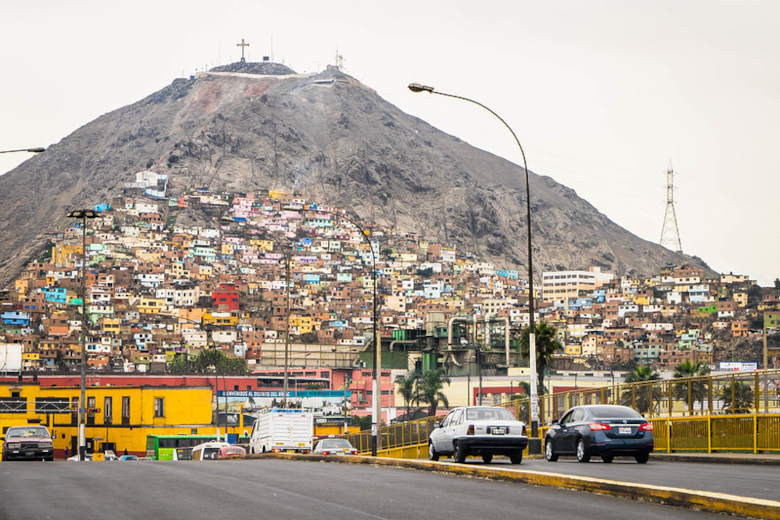
Low-income residential area, Lima, Peru (Photo: Xavi / Flickr [CC BY-NC-ND 2.0])
Compared with these two papers, the Asahi Shimbun carried fewer articles focusing on the Japanese government’s stance. Instead, it stood out for articles focusing on the Chinese government’s Global South–related policies and on relations with the West in the context of the Russia–Ukraine war.
In all of the newspapers, while asserting that the Global South’s “presence” is growing, their greatest concern lay in positioning and coordination vis-à-vis Japan, China, the West, the G20, and so on; the Global South itself and the problems it faces were reported on very little. For example, in this survey there was not a single article addressing the poverty issue—which ranks extremely high among priorities for the Global South—among those whose headlines contained “Global South.” Even the word “poverty” appeared only three times across the three papers, remaining mere verbal nods despite being cited as a challenge (※3). In addition, regarding the 2nd “Voice of Global South Summit” hosted by India on November 17, 2023, the Mainichi Shimbun and the Yomiuri Shimbun (※4) ran brief items, but the Asahi Shimbun did not cover it.
Is attention to Global South countries decreasing?
Judging from the above data, the major Japanese newspapers have basically taken greater interest in the Global South within the contexts of the G7 countries, China, Russia, and Ukraine, and compared with the previous year, that interest decreased in 2024. However, our analysis so far has only covered articles in which the word “Global South” appears. It cannot be ruled out on these data alone that attention to individual countries or regions that fall within the Global South may be increasing even if the term “Global South” is not used. We need to check against other data.
First, let’s look at country-by-country coverage. We examined how reporting (Asahi Shimbun, Mainichi Shimbun) on the ten countries with the largest populations among those classified as the Global South changed over the past decade (2014–2023) (※5). These ten countries include states from each of the Global South’s regions, such as South Asia, Southeast Asia, South America, and Africa. The graph below totals the number of articles whose headlines included the name of any of the ten countries. As the results show, compared with the 2010s, in the 2020s the volume of reporting that mentions these ten Global South countries declined markedly. Coverage in 2014 was particularly high because that year the FIFA World Cup was held in Brazil, and sports reporting overwhelmingly outstripped other international coverage. Even excluding 2014, however, there is a downward trend such that in some years in the 2020s the volume of reporting on the ten Global South countries has halved compared with 2015 or 2016.
This decline is thought to be influenced not only by the Global South but also by a decrease in the total amount of international reporting. In recent years, the volume of international news in Japanese newspapers has been decreasing, and it continued to decline during the period covered by this survey. However, the decrease in reporting on the ten most populous Global South countries was larger than the decline in the total volume of international reporting (※6). In other words, even in relative terms, attention to these countries is decreasing.
That said, while the Global South includes some very populous countries, it encompasses over 120 countries when those with smaller populations are included. For example, more than 50 countries on the African continent are classified as the Global South. So let’s look at the volume of reporting on Africa. The graph below shows changes (2014–2023) in the number of articles (Asahi Shimbun, Mainichi Shimbun, Yomiuri Shimbun) that include the keyword “Africa.” This dataset is not about articles on individual African countries, but simply the number of articles mentioning “Africa”; nonetheless, a declining trend is evident (with 2019 being an exceptional increase) (※7).
In both coverage of the top ten Global South countries by population and coverage related to Africa, there was a drop around 2020, and it is hard to say that the volume has recovered significantly since. The COVID-19 pandemic played a major role in this decline. The pandemic dominated international reporting in 2020 for a prolonged period, and within that coverage, the situation in high-income countries received particular attention. In the same year, many severe developments unrelated to the pandemic occurred in Global South countries, but reporting on them was extremely limited. Moreover, poverty and inequality surged as a result of the pandemic, with an overwhelming impact on Global South countries, yet this too was hardly reported in Japan.
The overwhelming media focus on Russia’s invasion of Ukraine in 2022 also led to a reduction in attention to Global South countries. As GNV’s earlier survey of the first half of 2022 on the three major dailies revealed, the spike in Russia–Ukraine war coverage reduced the already scant reporting on Africa and Latin America to less than half of usual levels. Each of the two regions fell to under 1% of total international reporting. Although the word “Global South” spread somewhat among Japanese media in the context of responding to this war, it is hard to say that media interest in Global South countries actually increased in substantive terms simply because the number of references to the term grew.
How can we deepen understanding of the Global South?
There are various calculations behind the posture of Japanese media that treat the Global South as important. Some argue that securing the Global South’s “cooperation is indispensable” to “forcing Russia to withdraw” from Ukraine, while, as noted at the outset, others claim it is necessary to “enhance Japan’s voice” in the world and to ensure “stable procurement” of resources, and so on.
It is easy to understand the desire to strengthen ties with Global South countries in order to expand Japan’s national interests, but there are also views that “cooperation with the Global South, whose presence in the international community is growing, is essential to maintaining and strengthening the existing international order based on freedom, democracy, and the rule of law.” Setting aside the questionable claim that freedom, democracy, and the rule of law reflect the “existing international order,” or that many Global South countries lack freedom, democracy, and the rule of law, one cannot ignore the fact that it is precisely Global South countries that are placed at a disadvantage under the existing “international order.”
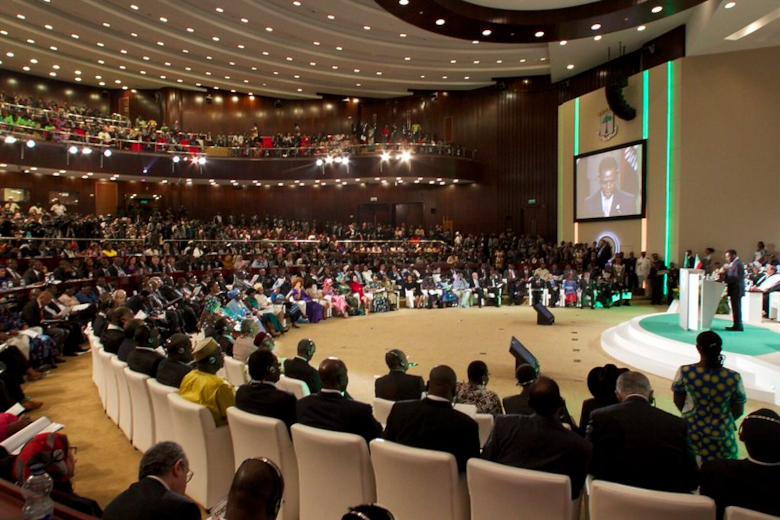
African Union summit, Equatorial Guinea, 2011 (Photo: Embassy of Equatorial Guinea / Flickr [CC BY-ND 2.0])
To what extent do countries of the Global South feel that countries of the Global North are cooperating to address the many problems they face at home? It is clear that in conflict response and humanitarian aid, issues in the Global North—such as Ukraine—are prioritized (※8). In climate change as well, the damage arising from problems the Global North has accumulated to date is borne primarily by Global South countries. And in the world’s financial and trade systems, as seen in the pervasive unfair-trade problems, the “international order” overwhelmingly favors the Global North.
Unless we deepen understanding of this reality and achieve concrete improvements, simply emphasizing “human dignity” in statements as part of outreach to the Global South, or calling for “partnership,” will offer little prospect of progress toward cooperative relationships based on mutual understanding.
From a reporting standpoint as well, merely parroting one’s own government’s statements without scrutinizing them, while failing to look squarely at the serious challenges facing the Global South and its countries and at the problems in the systems that drive the world, will not help to find a way forward either.
※1 Conducted keyword searches in the national editions of the three papers’ databases (Asahi Shimbun CrossSearch, Mainichi Shimbun Maisaku, Yomiuri Shimbun Yomidas).
※2 Omitted the symposium notice that appeared in the Asahi Shimbun database (Asahi Shimbun CrossSearch). Also omitted five brief explanatory notes that, although treated as “articles” in the Yomiuri database (Yomidas), were only a few lines accompanying other pieces in the newspaper (e.g., “〈Explainer〉Global South”).
※3 “(The Global South Now: 3) Maintaining ‘Non-alignment’ Is Brazil’s Best Option — Oliver Stuenkel,” Asahi Shimbun, September 7, 2023; “Global South Throws a Stone into the World: International Symposium,” Asahi Shimbun, March 21, 2024; “Editorial: Global South Diplomacy Needs a Clear Philosophy and Strategy,” Mainichi Shimbun, May 24, 2024.
※4 “Summarizing challenges of developing countries,” Yomiuri Shimbun, November 18, 2023 (113 characters).
※5 The target countries were those with the largest populations as of 2024 (India, Indonesia, Pakistan, Nigeria, Brazil, Bangladesh, Ethiopia, Mexico, Egypt, the Philippines). China is often classified as part of the Global South, but it was omitted because it is routinely covered far more than others. Articles were counted if the country name appeared in the headline. Because the Yomiuri database (Yomidas) does not allow “headline-only” searches, only the Asahi Shimbun and Mainichi Shimbun (national editions) were included.
※6 For example, compared with the total number of articles carried by the three papers over 2015–2017, the total for 2021–2023 fell by about 28%, but the total number of articles on the ten most populous Global South countries fell by about 47% over the same period.
※7 Compared with the number of articles containing “Africa” carried by the three papers over 2015–2017, the number for 2021–2023 decreased by about 27%, which can be explained by the decline in the total volume of international reporting (see ※6).
※8 For example, looking at the Japanese government’s emergency and humanitarian assistance provided worldwide through the United Nations in 2023 by recipient country, the largest recipient was Ukraine, accounting for 12.3% of the total assistance—more than double the amount received by the second-largest recipient.
Writer:Virgil Hawkins
Graphics:Virgil Hawkins







日本において国際報道、とりわけグローバルサウスについての関心が低いことがわかった。グローバルサウスという文脈においてもその国が面している問題に焦点を当てるよりかは、グローバルノースの利益のためにどうサウスを関わらせるかという意味合いの記事が多いんだと知った。試しに日経新聞でも調べてみたが、他の新聞と比べてグローバルサウスの話題で特異だったのは日系企業の海外事業についての話ぐらいで、グローバルサウスについての言及や記事は他新聞に比べて多いものの、国の中身についてしっかりと書いているものはなかった。
dhrvhm
この報道量の不平等は、グローバルノウスだけの問題ではなく、サウスの問題でもあると私は考えている。サウスもノウスも含めて世界が一丸となって考える必要がある問題がこの世にはたくさんあり、単なる供給者と受益者の関係になってはいけないと感じる。グローバルサウルの報道の問題は、世界の分断を感じさせる問題である。
分かりやすく新聞記事の分析がされていて、難しい話題のはずなのに頭に良く入ってきました。報道量の不平等について個人にできることもあるのでしょうか・・・。
Thanks for sharing. I read many of your blog posts, cool, your blog is very good.
Thank you for your sharing. I am worried that I lack creative ideas. It is your article that makes me full of hope. Thank you. But, I have a question, can you help me? https://www.binance.com/es-MX/register?ref=GJY4VW8W