
In 2023 as well, there was a large gap between topics the media focused on and those it did not. Around the world, many events that had major impacts on many people, countries, and even the world as a whole went largely unreported—or not reported at all—by Japanese media.
Regarding armed conflicts, the stories that dominated coverage in 2023 were the Russia–Ukraine conflict continuing since 2022 and the Israel–Palestine conflict. Meanwhile, multiple conflicts were unfolding in regions like Africa and Asia that received little attention in reporting. For example, in the Democratic Republic of the Congo, despite the long-running conflict producing a record high of 6.9 million internally displaced people, there was no coverage at all in Japan’s major newspapers in 2023. And while the sinking of a submersible carrying five wealthy passengers on a tour of the Titanic drew attention in Japan, there was hardly any reporting on the 600 people who died the same week among refugees and migrants aboard a ship that sank in the Mediterranean. In addition, the symbolic coronation of King Charles of the United Kingdom received significant coverage in Japan, even as political developments affecting the lives of many people occurred around the world without drawing much attention.
Therefore, at GNV, following on from 2018 to 2022 (continued), we independently selected events in 2023 that affected many people, countries, or the world as a whole but did not receive commensurate coverage, and compiled them into a top 10 ranking.
Below, we present in order the 10 events selected by GNV. The detailed criteria used to determine the order (※1) and how coverage volume was measured (※2) are listed in the footnotes. Now, let’s look at the top 10 hidden stories of 2023, starting from No. 1.
目次
No. 1: Fossil fuel subsidies in G20 countries quadrupled
According to a 2023 study by the International Institute for Sustainable Development (IISD), in 2022 G20 countries provided over 1 trillion US dollars in subsidies for fossil fuels. This is approximately 4 times the level of 2021. There are two main types of subsidies—consumer and producer—but the recent surge was in consumer subsidies. The purpose of the subsidies was to maintain retail prices amid the spike in fossil fuel prices caused by Russia’s invasion of Ukraine and subsequent economic sanctions against Russia. However, this approach has been criticized as running counter to the G20’s 2009 commitment to phase out fossil fuel subsidies. While some argue these subsidies are needed to support people affected by price increases, they are also said to create incentives to continue using fossil fuels. Furthermore, at the 28th Conference of the Parties to the UN Framework Convention on Climate Change (COP28) held in the United Arab Emirates (UAE) in 2023, countries agreed to transition away from fossil fuels, but fossil fuel subsidies hinder that transition. Also at COP28, the meeting was chaired by Sultan Al Jaber, CEO of the UAE’s state oil company, and there were suspicions the conference was used to promote deals for the state oil and gas company. In addition, at least 2,456 people fossil fuel lobbyists reportedly attended COP28, the highest number ever.
Coverage
Asahi Shimbun: 0 articles/0 characters
Mainichi Shimbun: 1 article/1,183 characters
Yomiuri Shimbun: 0 articles/0 characters
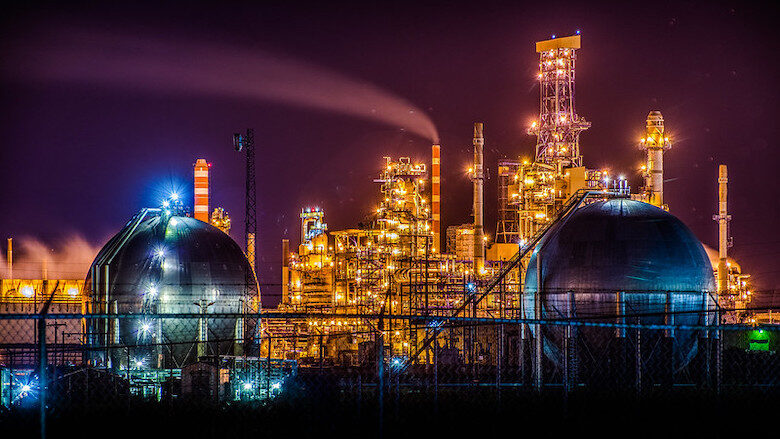
An oil refinery in Canada (Photo: Kurayba / Flickr [CC BY-SA 2.0])
No. 2: Mass killings of migrants by Saudi border guards; hundreds of victims
A Human Rights Watch investigation revealed that Saudi Arabian border guards have been indiscriminately shooting and killing groups of Ethiopian migrants and refugees attempting to cross the Yemen–Saudi border. The number of deaths is estimated at least 665 and possibly several thousand between March 2022 and June 2023. The location where the killings reportedly occurred lies along a corridor commonly known as the Eastern Route—a route from the Horn of Africa (including Ethiopia and Somalia), across the sea to Yemen, and onward to Saudi Arabia—which is the world’s busiest maritime migration corridor. Reasons for migrants’ and refugees’ movement include poverty, drought, armed conflict, and political instability. Saudi Arabia also has an aspect of relying heavily on migrant labor, and migrants head there seeking job opportunities. However, in Yemen—which lies along the route—a devastating conflict has continued since 2015, exacerbated by military intervention by Saudi Arabia and others, making it life-threatening for migrants even to land in and pass through Yemen. Saudi Arabia has denied the killings, but Ethiopia and Saudi Arabia are set to begin a joint investigation.
Coverage
Asahi Shimbun: 0 articles/0 characters
Mainichi Shimbun: 1 article/621 characters
Yomiuri Shimbun: 0 articles/0 characters
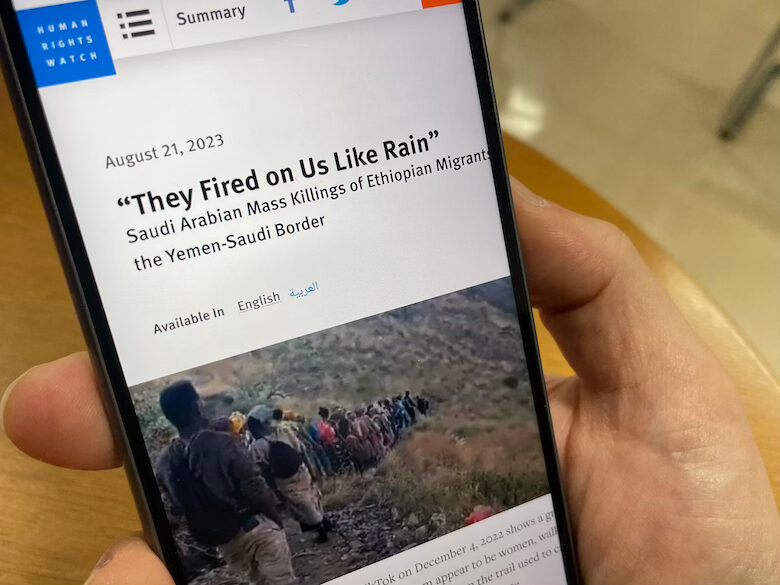
A Human Rights Watch article about the mass killings by Saudi Arabia. Photo taken December 20, 2023 (Photo: Yuna Nakahigashi)
No. 3: Global teacher shortage reaches 44 million
It is estimated that there are 84 million children worldwide who are not attending school. The causes vary—prolonged conflicts, poverty, lack of infrastructure, etc.—and among the associated factors is a shortage of teachers. In October 2023, the UN Educational, Scientific and Cultural Organization (UNESCO) announced that the world is short of 44 million teachers. While this is an improvement from 69 million in 2016, the shortage remains substantial. The causes are complex and differ greatly by region. For example, in Sub-Saharan Africa, where shortages are most severe, inadequate budgeting for education is considered the main cause. In Europe and North America, high attrition due to dissatisfaction with working conditions and pay is one of the main causes. Under these circumstances, achieving Sustainable Development Goal (SDGs) Goal 4—“Quality Education”—is seen as impossible. That is because to achieve Target 1 (see ※3)—i.e., to ensure that all children complete secondary education by 2030—children would have needed to enter primary school by 2021.
Coverage
Asahi Shimbun: 0 articles/0 characters
Mainichi Shimbun: 0 articles/0 characters
Yomiuri Shimbun: 0 articles/0 characters
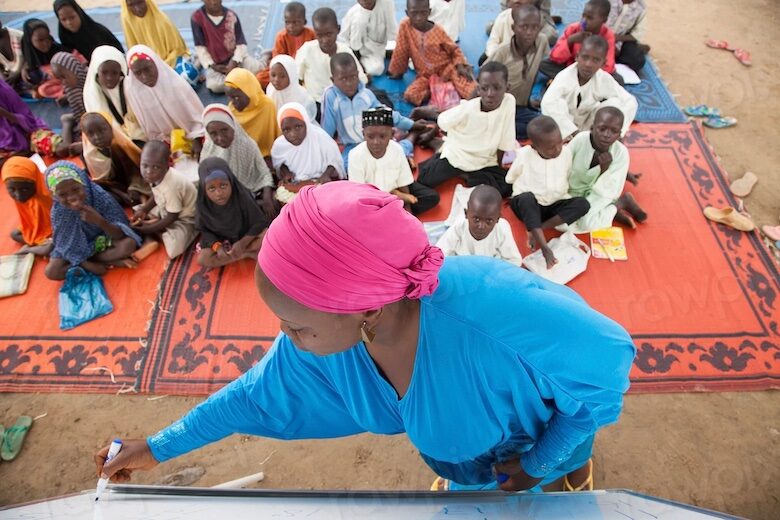
A teacher and children having class under a tree (Nigeria) (Photo: USAID in Africa / Flickr [United States government work])
No. 4: Iraq faces worst water shortage in 100 years
Iraq is experiencing its worst water shortage in 100 years. It is said to affect about 60% of farmers, specifically through large reductions in cultivated land and losses such as livestock and fish dying. The causes of this severe scarcity are varied, including drought related to climate change, the expansion of the oil industry which uses large amounts of water in extraction, and prolonged conflicts. These include the Gulf War of the 1990s and subsequent economic sanctions against the Saddam Hussein regime, the 2003 U.S. invasion, and the rise of the Islamic State in 2014. Conflict-related damage to infrastructure, political instability, and entrenched corruption have also affected water governance. In addition, rapid population growth is cited as one cause in the Kurdistan Region (see ※4). Relations with upstream countries also have a major impact on scarcity. Turkey and Iran, which lie along the upper courses and tributaries of the Tigris and Euphrates rivers that flow into Iraq, have been building new dams. In fact, compared to 1975, water inflow from Turkey into Iraq has decreased by about 80%.
Coverage
Asahi Shimbun: 0 articles/0 characters
Mainichi Shimbun: 0 articles/0 characters
Yomiuri Shimbun: 0 articles/0 characters
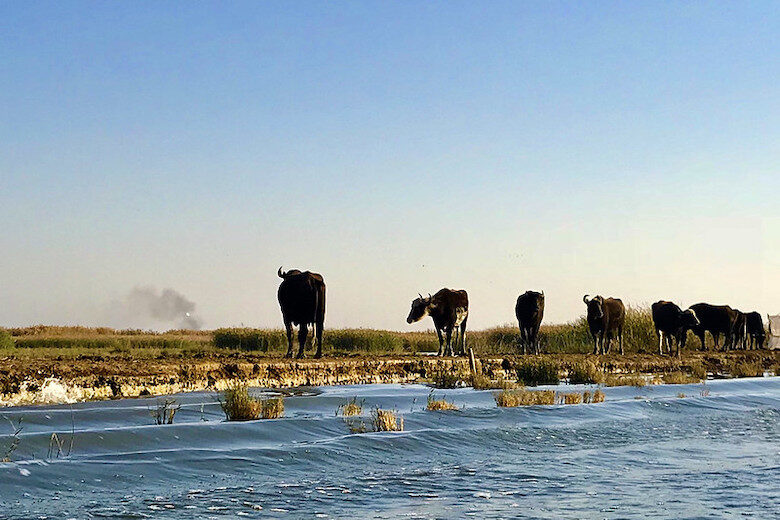
Water buffalo, a vital asset for farmers (Iraq) (Photo: Peter Chou Kee Liu / Flickr [CC BY-NC-ND 2.0])
No. 5: Generic production of TB drug made possible
In September 2023, it became possible to produce generic versions of the TB drug bedaquiline used for multidrug-resistant tuberculosis in 134 countries across low- and middle-income countries. The world’s largest pharmaceutical company, Johnson & Johnson (J&J), waived its patent on bedaquiline. Tuberculosis is one of the world’s three major infectious diseases caused by bacteria and spread through the air, and even in 2022 it claimed 1.3 million lives globally. TB is treatable with antibiotics. The move to generics is projected to affect 450,000 people, equivalent to three out of four patients with drug-resistant TB. The shift was prompted by India’s Intellectual Property Appellate Board rejecting in March 2023 J&J’s bid to extend its patent on bedaquiline. Following calls from groups including Médecins Sans Frontières for J&J to withdraw patent extension applications, J&J announced it would waive extended patents in low- and middle-income countries. Until recently, the price of a six-month course of bedaquiline was 400 US dollars, which dropped to US$130 in August 2023, and is expected to fall further to US$80–102 with the patent waiver. Meanwhile, Japanese pharmaceutical company Otsuka Pharmaceutical still holds a patent on another TB treatment and is being asked to waive it.
Coverage
Asahi Shimbun: 0 articles/0 characters
Mainichi Shimbun: 0 articles/0 characters
Yomiuri Shimbun: 0 articles/0 characters

Johnson & Johnson offices in North America (Photo: Open Grid Scheduler / Grid Engine / Flickr [CC0 1.0])
No. 6: Africa’s first climate summit held
In September 2023, the first-ever Africa Climate Summit was held. Behind it are the growing impacts of climate change year by year. Africa accounts for only 3.8% of cumulative global carbon emissions to date, yet has suffered significant damage from climate change. Examples include worsening drought in East Africa, cyclones striking southeastern Africa, and massive floods in Libya—making 2023 one of the years with the highest disaster death tolls across the continent. The summit had two main goals: first, to establish new financing mechanisms to compensate for loss and damage (see ※5) and to fund future climate action; second, to clarify the path for building out renewable energy infrastructure. As an outcome, the “Nairobi Declaration” was adopted to present a unified African position to the world. It proposed introducing carbon taxes so high-emitting countries would bear responsibility toward low-income countries, and reforming the multilateral financial system for global green investment—i.e., increasing concessional finance for low-income countries. Through the Nairobi Declaration, African priorities were reflected in several declarations at COP28.
Coverage
Asahi Shimbun: 0 articles/0 characters
Mainichi Shimbun: 1 article/709 characters
Yomiuri Shimbun: 1 article/479 characters
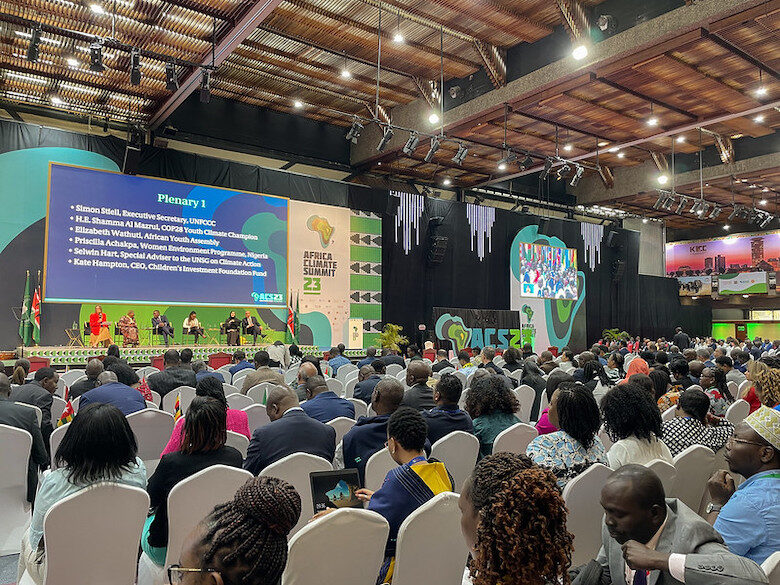
The first Africa Climate Summit held in Nairobi, Kenya (Photo: Climate Centre / Flickr [CC BY-NC 2.0])
No. 7: EU agrees to ban exports of plastic waste to non-OECD countries
On November 17, 2023, the European Union (EU) Parliament updated its Waste Shipment Regulation and agreed to a provisional deal to ban exports of non-hazardous plastic waste to countries outside the Organisation for Economic Co-operation and Development (OECD). Europe generates about 26 million tons of plastic waste each year, but less than 30% is recycled. And half of exported waste goes to non-EU countries. In 2022, plastic waste exports to non-EU countries—mainly Turkey, Malaysia, and Indonesia, where disposal can be done at lower cost—exceeded 1.1 million tons. However, there is an issue in that Turkey, which accounts for half of the EU’s waste export destinations, is not restricted: while not an EU member, Turkey is an OECD country and thus exempt from this rule. In Turkey, plastic waste is not necessarily processed in environmentally sound ways, raising concerns that environmental damage and adverse impacts on communities near disposal sites will continue.
Coverage
Asahi Shimbun: 0 articles/0 characters
Mainichi Shimbun: 0 articles/0 characters
Yomiuri Shimbun: 0 articles/0 characters
Bottled water, which often becomes plastic waste after a single use (Photo: Steven Depolo / Flickr [CC BY 2.0])
No. 8: Conflict and terrorism escalate in Burkina Faso
In Burkina Faso, the armed conflict ongoing since 2015 has intensified. The conflict began when armed groups infiltrated from neighboring Mali, and over 17,000 people have died, with deaths surging since 2022. Specifically, an estimated 8,600 people were killed in 2023. In 2022, the country ranked second on the Global Terrorism Index after Afghanistan, highlighting the severity of the situation. Displacement has increased: 2.1 million people—one in ten citizens—have been forced from their homes, and a quarter of the population needs humanitarian assistance. In education, a quarter of schools are closed, affecting 1 million students. The crisis is not confined to one country; it is closely linked to Mali and Niger. There has also been a shift in interstate relations. Under the post-coup government following two coups in 2022, French forces withdrew and Burkina Faso left the G5 Sahel (see ※6), which had been led by France. Meanwhile, the three countries of Burkina Faso, Mali, and Niger established the “Alliance of Sahel States,” a mutual defense pact.
Coverage
Asahi Shimbun: 0 articles/0 characters
Mainichi Shimbun: 1 article/279 characters
Yomiuri Shimbun: 1 article/415 characters
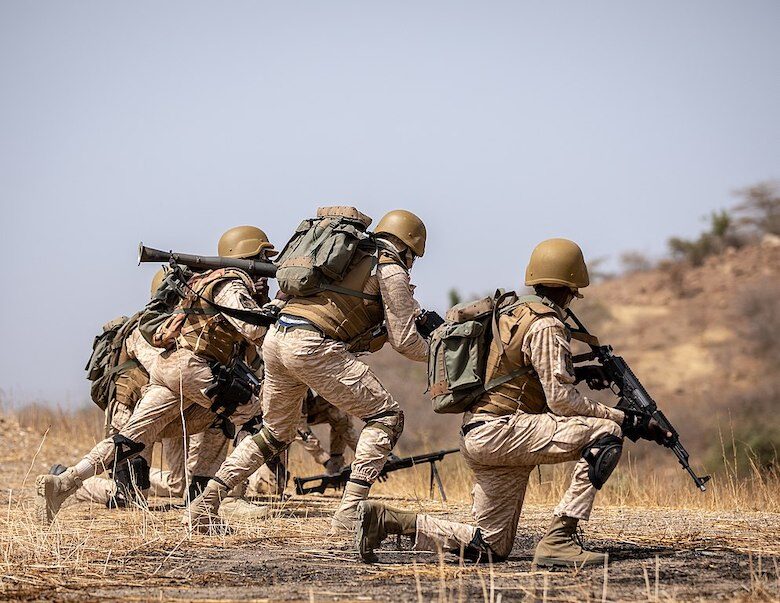
Burkinabe soldiers conduct a patrol exercise (Photo: US Africa Command / Flickr [CC BY 2.0])
No. 9: UN World Food Programme (WFP) food assistance declines
In September 2023, the WFP announced that due to funding shortfalls, its global food assistance was rapidly decreasing and the number of people falling into emergency levels of hunger could increase by 50% over the next 12 months. Currently, 40 million people face emergency levels of hunger, and the WFP estimates a further 24 million could face the same by September 2024. The reasons for this worsening situation include not only conflict and climate change affecting food supplies, but also the prolonged COVID-19 pandemic and the surge in food prices due to the Russia–Ukraine war. Inflation and supply chain disruptions have also increased the WFP’s own costs for food assistance. However, as many countries’ aid budgets are being diverted to support Ukraine, it has become more difficult to raise funds for the WFP, with knock-on effects visible in many countries. In the Democratic Republic of the Congo, about 26 million people face severe food insecurity, but a funding shortfall of US$774 million has forced reductions in assistance. In Afghanistan, about 15.3 million people face severe food insecurity, yet due to funding shortages the number of people receiving assistance is expected to be reduced to 10 million. Similar trends are seen in Syria, Mali, and Yemen.
Coverage
Asahi Shimbun: 2 articles/1,144 characters
Mainichi Shimbun: 1 article/2,079 characters
Yomiuri Shimbun: 0 articles/0 characters
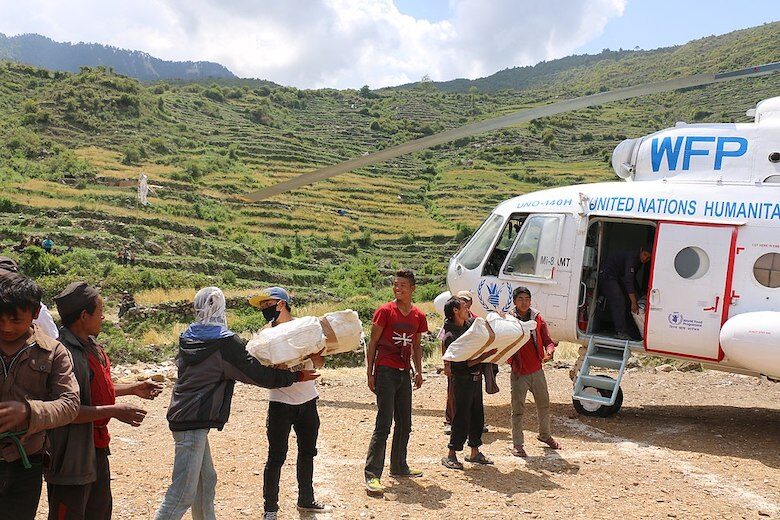
UN WFP delivering food assistance (Nepal) (Photo: WFP.Aviation / Wikimedia Commons [CC BY-SA 4.0])
No. 10: Opium poppy cultivation in Afghanistan drops 95%
In 2023, opium poppy cultivation in Afghanistan—used to produce opioid drugs such as heroin and opium—declined by 95%. The reason is that after retaking power in 2021, the Taliban banned poppy cultivation in April 2022 and enforced the ban. As Afghanistan accounted for 80% of global opium supply, there are projections that trafficking and use of heroin and other opioids will decrease globally. On the other hand, there is a noted risk that substitutes such as synthetic opioids like fentanyl will spread rapidly. In the “Golden Triangle” of Thailand, Laos, and Myanmar, poppy cultivation is soaring as a replacement for Afghanistan—particularly in Myanmar, where cultivation rose by 33% in 2022. Farmers who relied on poppy for their livelihoods have fallen into hardship after losing their income. In fact, the income lost due to the ban amounts to over US$1 billion, far beyond what can be made up by alternative wheat cultivation. Meanwhile, in Afghanistan, where poppy cultivation was banned, production of methamphetamine has surged.
Coverage
Asahi Shimbun: 0 articles/0 characters
Mainichi Shimbun: 1 article/852 characters
Yomiuri Shimbun: 0 articles/0 characters
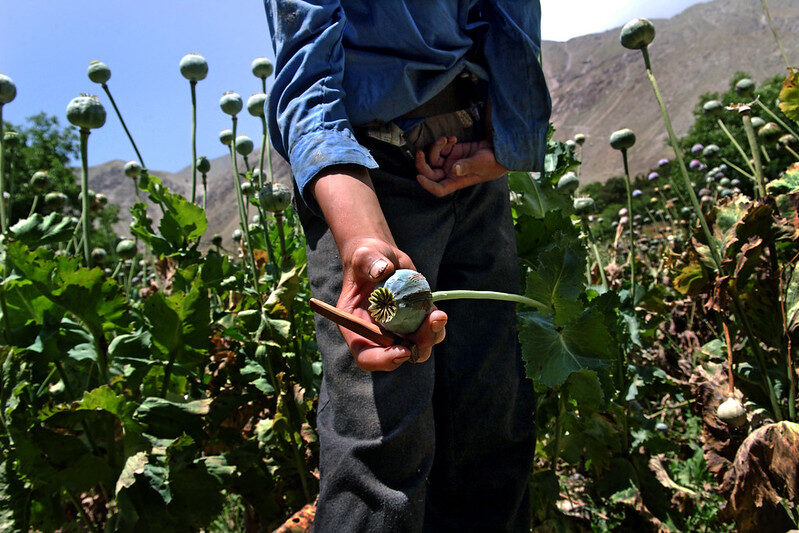
Poppy fields in Afghanistan (Photo: United Nations Photo /Flickr [CC BY-NC-ND 2.0])
Looking back at the top 10 stories of 2023, many relate to environmental issues such as climate change, and humanitarian crises such as water and food shortages and armed conflicts. Each is a major event affecting many people, yet they received little coverage in Japanese media.
Even among those that were candidates but did not make the top 10, climate change and food issues appear particularly severe. For instance, regarding climate change, we also noted the decline in Antarctic sea ice and the sharp loss of glaciers in Switzerland. On drug-related issues, besides the changes in Afghanistan’s poppy cultivation, we saw increasing coca cultivation in Colombia and the growing distribution of Captagon (stimulant) in the Middle East and Africa. As for gender issues that have seen little improvement for years, an alarming report found that 90% of people worldwide hold gender biases against women, and South Asia has the highest number of child marriages involving girls in the world.
GNV will continue in 2024 to focus on major events around the world that are “unreported” and bring them to our readers.
※1 In selecting the rankings, we evaluated multiple criteria including coverage volume, the magnitude of impact, and the scale of changes in 2023. Even for events or phenomena continuing from before 2023, if new facts became clear in 2023, they were ranked as news occurring in 2023.
The specific process was as follows. We divided the world into six regions (1) East, South, and Central Asia; (2) Southeast Asia, the Pacific, and the Indian Ocean; (3) the Middle East and North Africa; (4) Sub-Saharan Africa; (5) Europe; and (6) the Americas, and picked 4 events/phenomena in each region deemed significant but with low coverage in Japan, plus 6 global (non-region-specific) events/phenomena, for a total of 30 candidates.
For each event/phenomenon, we scored five criteria on a three-point scale: (1) lack of coverage; (2) the number of people affected and severity of impact; (3) degree of impact on systems such as politics, economy, society, and security; (4) cross-border nature; and (5) freshness. Because this ranking emphasizes underreported matters, we doubled the weight of (1) lack of coverage. Based on the results, we narrowed down the 30 candidates to 10 and determined the order through editorial discussion. Coverage volume was tallied for the period from January 1, 2023 to December 15, 2022.
※2 To assess coverage volume, we used the online databases of three newspapers: Asahi Shimbun (Asahi Shimbun Cross-Search), Mainichi Shimbun (Mai-Saku), and Yomiuri Shimbun (Yomidas Rekishikan). We targeted the national edition and Tokyo regional edition, morning and evening papers, and examined not only headlines but also full text.
※3 Targets specify concrete objectives under each Goal. Target 1: “By 2030, ensure that all girls and boys complete free, equitable, and quality primary and secondary education leading to relevant and effective learning outcomes.”
※4 The Kurdistan Region is an autonomous region in northern Iraq centered on Kurdish residents.
※5 Loss and damage refers to the impacts of climate change that cannot be avoided. It is broadly divided into “economic loss and damage,” which can be quantified (e.g., damage to infrastructure or reduced crop yields), and “non-economic loss and damage,” whose scale is harder to measure (e.g., loss of culture or ways of life), with the latter particularly likely to be irreversible.
※6 The G5 Sahel was a security arrangement formed in 2014 by five countries—Mali, Burkina Faso, Niger, Chad, and Mauritania—to maintain security in the Sahel region. However, following Mali’s departure in 2022 and the withdrawal of Burkina Faso and Niger in 2023, the G5 is considering dissolution.
(Correction: The title of No. 1 was changed from “ G20: Fossil fuel subsidies quadrupled” to “Fossil fuel subsidies in G20 countries quadrupled.” (December 28, 2023))
Writer: Yuna Nakahigashi

https://twitter.com/GNV_tweets?ref_src=twsrc%5Etfw







日テレより:
https://news.ntv.co.jp/category/international/0bb8233180054717b51023c2118a36de
「第3位 世界の教師不足が4,400万人に」がまず目に留まった。国内での教員不足が叫ばれて久しいが、原因は地域によって異なることはいえ、世界でも同様の問題があるとは知らなかった。またあえてポジティブサイドに目をやると、2016年からの数年間で教員が2500万人増加している。これにも地域差があるのか、そこではどういった背景で教師が増えているのか、国内にその構造から転用できる部分が無いかなど気になる点がある。
今年で大学を卒業するが、社会人になっても毎年この記事を読みたいと思った。
日テレ以外の各社もこれを取り上げるべきだと思いました。
こんな感じで順位がついているのは見やすいですね。上位にランクインしているニュースでさえ全く聞いたことがなかったです。なぜ報道されないのでしょうか、、、
全く聞いたことのない記事が多くあり勉強になりました!報道されていない割に世界に影響を大きく与えるニュースばかりで驚きです。もっとたくさんの人が知ってほしいことだと思いました。
日本の大手メディアはこれだけ重要な世界の出来事をここまで無視するとは・・・
本当にひどい話です。
世界がほとんど見えていませんね。
こういう記事を読むと、独立系メディアの役割はとても重要だと確信しますし、大手メディアに見習ってほしいです。
頑張ってください!
聞いたことの無いニュースが沢山ありました。
世界に大きく影響を与える出来事ばかりなのに、なぜ今まで注目されていなかったのでしょうか?不思議でなりません。
サウジアラビアのニュース、怖すぎる。
こんなのはなんで報道されない?
日本がサウジの石油に頼ってるから?
イスラエル・ガザへの過熱した報道は、世界へのゆがんだ理解を生みかねませんね。
本当に伝えるべきニュースは何なのか、テレビ・新聞はじめ各報道機関に知ってもらいたい
リソース不足は言い訳に出来ないはずです
毎年楽しみにしてるランキングです。
これからも頑張って下さい!
大塚製薬もひどいね。報道しないと国民が知ることもないね。製薬会社がマスコミのスポンサーになってるから報道しないのか。
読売新聞もLINE NEWSも「海外」の10大ニュースに「チャールズ英国王戴冠式」が入っていました。
また、読売新聞にはラブビーW杯、LINE NEWSにはハリウッドのストライキもランクインしました。
エンタメも重大ニュースのようですね。
アフガニスタンでケシ栽培が減ったのはすごいことだと思う
なぜメディアはタリバン政権のこういった面を取り上げないのか