
Disinformation (Note 1) is by no means new, but in recent years it has drawn growing attention from governments and the media around the world. Behind this are the development and social penetration of communication tools such as social media and the increased volume of information in cyberspace. Triggers for the surge in attention in the past few years include the U.S. presidential elections (since 2016), the COVID-19 pandemic (since 2020), and the Russia-Ukraine war (2022).
Amid the recent focus on disinformation, it is often portrayed—particularly regarding electoral systems—that the U.S. government and others are victims of foreign disinformation, and that countering malicious disinformation is tantamount to defending democracy. Far less attention is paid to the United States as an actor conducting information warfare, including the dissemination of disinformation. Japanese media, which closely follow U.S. affairs even in peacetime, raise the question: how have they understood the relationship between the United States and disinformation? This article examines the realities and problems of disinformation disseminated by governments to other countries.
Person looking at news on a smartphone (Photo: thomas vanhaecht / Pexels [Legal Simplicity])
目次
Disinformation to justify war
The spread of disinformation is particularly inseparable from war. This is not limited to one side in a given conflict; regardless of the war or the parties involved, the incentives to distort the truth or fabricate and spread baseless rumors and falsehoods are extremely strong. On the battlefield, alongside physical combat involving violence, information warfare is also waged.
In the more than 30 years since the end of the Cold War, arguably no country has waged more wars than the United States. The number of military interventions the United States conducted in other countries from 1991 to 2022 is said to be 251. These include multiple large-scale airstrikes, invasions, and occupations against Iraq, the former Yugoslavia, Afghanistan, Libya, and others. It has often been confirmed that in the initial stages of wars, disinformation was disseminated to appeal to domestic and foreign audiences for the necessity and legitimacy of intervention. Japanese media also reported information disseminated by the U.S. government without questioning whether it was disinformation.
Consider the Vietnam War as one example. In 1964, the U.S. government announced that a U.S. vessel stationed in the Gulf of Tonkin off the coast of North Vietnam had been attacked by North Vietnamese torpedo boats on August 4, and used this as the reason to escalate military intervention in Vietnam. In reality, no such attack occurred. At the time, Japanese media gave wide coverage to the “Gulf of Tonkin incident,” including the U.S. government’s claims. An example is the Yomiuri Shimbun article “Countering a second torpedo attack: Presidential statement” (Note 2).
Another example is the Gulf War. After Iraq invaded and occupied Kuwait in 1990, a U.S.-led coalition intervened the following year to expel Iraq. Following Iraq’s invasion, the exiled Kuwaiti government sought to stoke willingness to join the war in the United States and elsewhere, including by hiring a PR consulting firm. That firm fabricated an “incident” alleging that Iraqi soldiers in a Kuwaiti hospital had taken many infants out of incubators and left them to die. This disinformation was presented as testimony in the U.S. Congress and became one factor in the U.S. decision to join the war. At the time, Japanese media reported this falsehood. For example, the Asahi Shimbun wrote in an article, quoting an exile’s “testimony,” that “babies in incubators and critically ill patients in intensive care were taken out into the corridors, and many died” (Note 3).
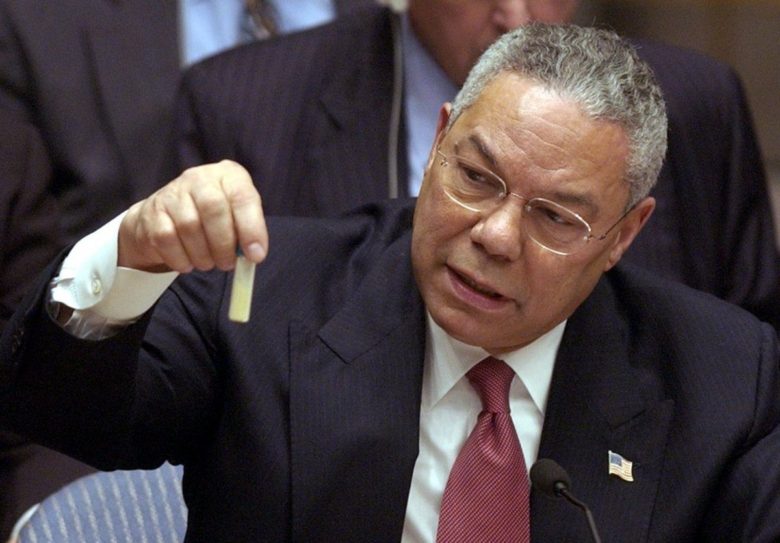
Former U.S. Secretary of State Colin Powell presenting disinformation about Iraq at the UN Security Council, 2003 (Photo: United States Government / Wikimedia [public domain])
Also noteworthy are the 2001 terrorist attacks and the subsequent Iraq War. In 2003, the United States invaded and occupied Iraq, and the U.S. government’s use of disinformation escalated further in order to gain domestic and international support for the war. For example, U.S. officials claimed that the Iraqi government possessed large stockpiles of biological and chemical weapons, that it was rapidly advancing preparations to complete nuclear weapons, and that it had a close relationship with al-Qaeda, an extremist group. None of these claims had a basis, and key figures in the administration, including the president, as well as the CIA, deliberately fabricated “evidence.” Some journalists later described this state of multiple officials issuing large volumes of disinformation as a “lie factory.” Over two years, false statements by eight key government officials, including the president, were recorded 935 times.
At the time, Japanese media widely reported the claims of U.S. officials without questioning them, even though they knew these allegations had not been substantiated. For example, a Mainichi Shimbun article (Note 4) detailed the unilateral claims by the U.S. Secretary of Defense at the time regarding Iraqi weapons of mass destruction and ties with al-Qaeda, and concluded by stating that the U.S. government “seems to expect that if it can provide a certain degree of proof of ties between Iraq and al-Qaeda, international public opinion cautious about an attack on Iraq may shift toward the U.S.” Even after it became clear that these allegations were false, Japanese media continued to report the U.S. government’s narrative—for instance, that disinformation regarding nuclear weapons development was based on “assumptions” the CIA had received from others, and that the president’s use of such disinformation in the State of the Union Address was a “simple mistake” (Note 5)—and there was almost no reporting that suggested “intentional disinformation by the U.S. government.” Even 20 years after the 2001 terrorist attacks, Japanese newspapers have still published articles attempting to link that attack to Iraq.
U.S. military intervention in Libya is another case. In 2011, the United States led NATO in conducting large-scale airstrikes on Libya over an extended period. Beforehand, to justify the intervention, the U.S. government emphasized human rights abuses by the Libyan government. As part of that, the U.S. claimed that the Libyan government had ordered systematic rape of women on a wide scale, but even after the fall of Muammar Gaddafi’s regime, no such evidence was found. Nonetheless, outlets such as the Asahi Shimbun reported these alleged human rights abuses (Note 6).
Meanwhile in Syria, the U.S. carried out airstrikes in 2018 on the grounds that the Syrian government had used chemical weapons in areas held by opposition forces. The Organisation for the Prohibition of Chemical Weapons (OPCW) concluded that chemical weapons had been used, but some experts who took part in the investigation argued there was a high possibility that chemical weapons were not actually used in that incident. Whistleblowers have also claimed that the OPCW’s conclusion was the result of pressure from the United States on the organization. Yet on this issue as well, Japanese media reported only the claims of the OPCW and the U.S. government (Note 7).
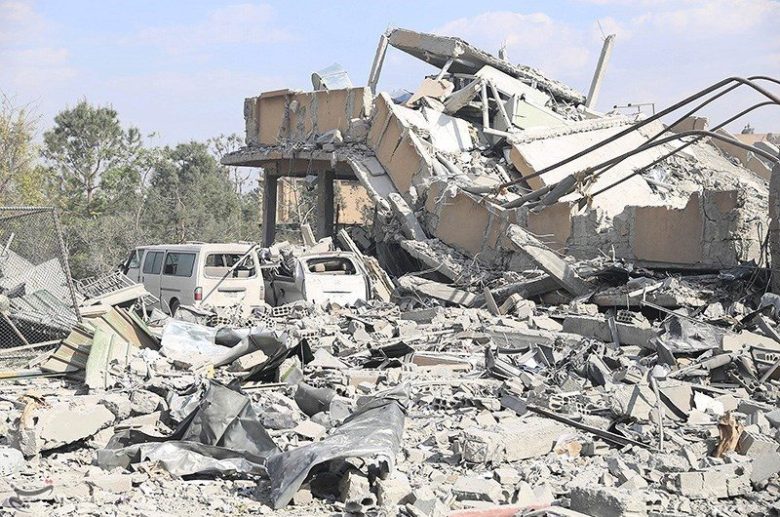
Ruins of buildings from U.S. missile strikes, Syria (Photo: Fathi Nizam / Wikimedia Commons [CC BY 4.0])
Disinformation during war
Disinformation is used not only at the outset of wars but also during ongoing conflicts, to rally support for continuing the war, to highlight the righteousness or bravery of one’s own side or allies, or to further diminish favorability and trust toward the enemy.
For example, from 2012 to 2022, the U.S. government is said to have conducted influence operations targeting the Middle East and Central Asia by creating numerous fake accounts on social platforms such as Twitter and Facebook and disseminating disinformation. These included claims that U.S. drone strikes in Yemen did not kill any civilians and allegations that countries such as Iran and Russia were committing atrocities as well. Although such operations generally violate Twitter’s policies, it later emerged that Twitter cooperated with the U.S. government and actively amplified these messages. Japan’s three major dailies did not report this influence operation at all.
The Afghanistan War also provides an example. In 2020, multiple U.S. media outlets reported, based on information from U.S. intelligence agencies, that the Russian government had offered bounties to Taliban forces for killing U.S. troops. Major Japanese media reported this multiple times, based on U.S. media reports (Note 8), but later the U.S. Department of Defense acknowledged that there was no evidence for the allegation. Some journalists argued that this may have been internal disinformation intended to prevent the planned U.S. withdrawal from Afghanistan.
Disinformation is used not only in wars the United States fights directly. The U.S. is also said to have disseminated disinformation when it becomes a party to a “proxy war” (Note 9). For instance, regarding the Russia-Ukraine war, in March 2022 the U.S. government announced there was a high likelihood that Russia was preparing to use chemical weapons. Major Japanese media widely reported this, largely following U.S. media. The Mainichi Shimbun took up the topic in an editorial, expressing strong concern and stating such use would not be tolerated (Note 10). In fact, there was no evidence that Russia was preparing chemical weapons, and it later emerged that this information was part of a U.S. “information war” against Russia.
Disinformation about “disinformation”
As noted above, Japanese media have recently shown heightened interest in and wariness of disinformation. As the graph below shows, the number of international reports in the Asahi Shimbun, Mainichi Shimbun, and Yomiuri Shimbun that included the term “disinformation” soared around 2017 (Note 11). Russia lies behind this trend. Across the five years from 2018 to 2022, 60% of articles mentioning “disinformation” in the three papers also contained the word “Russia.” References to “China” were about half as frequent as “Russia.” Mentions of “Russia” mainly fell into two contexts: alleged Russian disinformation targeting the United States and alleged Russian disinformation spreading around the invasion of Ukraine. Below, we analyze the disinformation allegations advanced by the U.S. and Russia.
It is certain that Russia conducts influence operations including the spread of disinformation. Disinformation disseminated by the Russian government and related organizations has been identified during the 2016 U.S. presidential election and around the invasion of Ukraine as well, which in turn heightened the perceived Russian threat in the U.S. and other Western countries. However, the actual influence of Russian operations, including disinformation, has not been accurately assessed. In fact, relative to the overall volume of information in the information space, the number of times Russia’s government-related bodies used disinformation against the U.S. was not necessarily large, and it is hard to say that Russia’s disinformation affected the politics or society of the target country.
For example, during the 2016 U.S. presidential election, it was reported that content, including disinformation, disseminated by Russian government-related organizations may have been seen 126 million times by Facebook users, and Japanese media also reported this figure (Note 12). But the reliability of this statistic itself is low, and only 11% of the content disseminated was election-related. Based on the content and patterns of the posts, some have suggested that the purpose may have been part of a money-making marketing strategy rather than political impact. Moreover, it is estimated that U.S. users saw 33 trillion news items on Facebook over the same period, suggesting that the scale of Russian output was relatively small within the U.S. information environment as a whole. Furthermore, a study on the extent to which Russian content influenced recipients found no effect on voting behavior or opinions.
An analysis of Twitter in the two weeks after Russia began its invasion of Ukraine found that about 90% of English-language tweets by automated accounts (bots) were pro-Ukraine. In other words, in the early phase of the war—when the course of the conflict could be greatly affected—at least in the English-language space on mainstream social media, the environment was already one in which Russia’s narratives were unlikely to spread, regardless of the scale of Russian disinformation efforts.
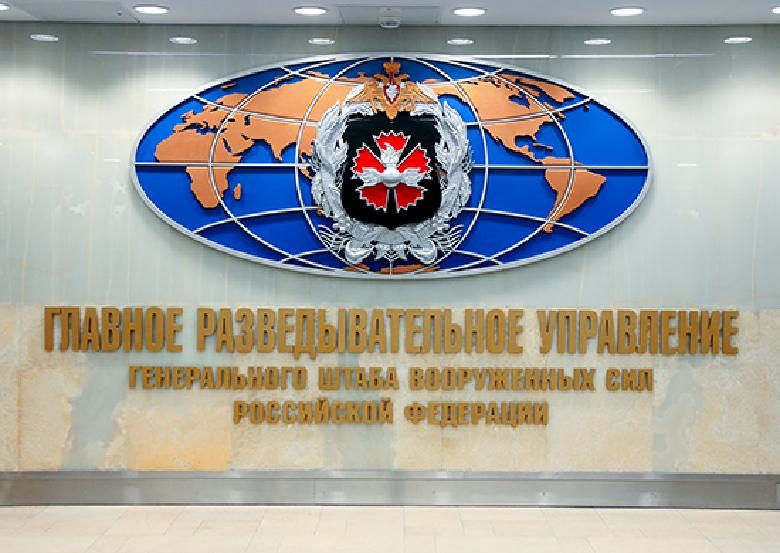
Main Directorate of the General Staff of the Armed Forces of the Russian Federation (GRU) (Photo: Mil.ru / Wikimedia Commons [CC BY 4.0])
In addition, there have been cases where the U.S. government and related parties claimed that “Russian disinformation” caused particular events, but these were later found to be unrelated to Russia. In other words, the very “Russian disinformation allegations” were themselves disinformation.
For years in the U.S., the media widely reported claims that Russia-linked automated Twitter accounts disseminated disinformation to sow social division around issues such as mass shootings and local elections. When a mass shooting occurred in 2018, the Asahi Shimbun also reported—based on U.S. media reports—that “Russian disinformation” had been detected (Note 13). Many outlets, including the original Wired article on which that Asahi piece was based, relied on a website called “Hamilton 68,” created mainly by former FBI and intelligence officials, as a primary source. The site’s methodology was questioned, and it was later revealed to be disinformation.
When, ahead of the 2020 U.S. presidential election, emails emerged from a laptop belonging to Hunter Biden, son of then-candidate Joe Biden (later president), raising suspicions of influence peddling that exploited family ties between politics and business, the possibility of Russian involvement was raised. Immediately after the story broke, 51 former intelligence officials signed a letter stating that the emails bore the hallmarks of Russian disinformation. Since the FBI had already seized the laptop, it likely knew the data were not disinformation. However, concerned that leaked data before the election might affect Biden’s campaign, the FBI notified social media platforms and major media outlets that there was a high possibility of disinformation related to Hunter Biden. The FBI even conducted tabletop exercises with social media and media representatives to prepare for handling such disinformation. As a result, most U.S. media deemed the allegations insufficiently substantiated, and Twitter and Facebook actively blocked access to related information.
The “Twitter Files,” internal documents leaked from Twitter in 2022–2023, exposed disinformation about “Russian disinformation.” They contain detailed revelations of how Twitter cooperated with U.S. government disinformation in the Russia allegations as well as U.S. actions in the Middle East and Central Asia. Japan’s major media have not mentioned the contents of the Twitter Files—or even their existence.
Meanwhile, Japanese media repeatedly reported allegations that Russia disseminated disinformation, often without solid corroboration. In the five years from 2017 to 2021, the Mainichi Shimbun ran 31 articles on Russia and disinformation. These used language emphasizing suspicion without presenting evidence, such as “appears to be seeking to collect information on election officials and spread disinformation by impersonating officials,” and “allegations that Russia interfered in the 2016 U.S. presidential election by flooding social media with disinformation” (Note 14).
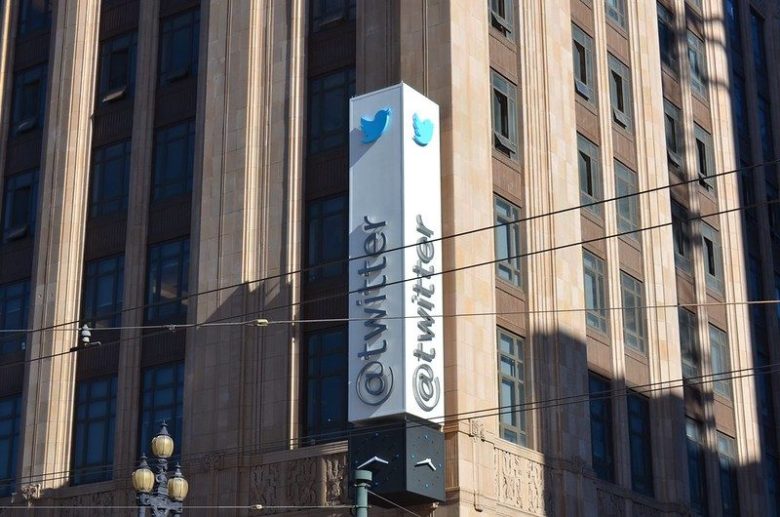
Twitter headquarters, United States (Photo: Steve Rhodes / Flickr [CC BY-NC-ND 2.0])
What lies behind the problem?
As we have seen, despite the fact that disinformation disseminated by the U.S. government has been used to justify wars involving the lives and deaths of millions, it has received little attention—unlike Russia’s information warfare. Meanwhile, Russian disinformation has drawn great attention, and its scale and effects have been overestimated and presented as a major threat to democracy. What explains this difference?
First, there is the flow of reporting in Japanese media that has helped propagate U.S. propaganda. In international reporting, Japanese media tend to align with the perspectives and policies of their own government and the U.S. government, conveying information from those authorities without skepticism. This is a convenient reporting method for the media—simple and safe—and suits nationalism as well (see here for details).
In issues involving disinformation, too, Japanese media often echo U.S. media. For example, in coverage by Japan’s three major dailies regarding the bounty allegation in Afghanistan, there was no reporting based on local reporting from Afghanistan, while most articles came from the Washington bureau stating “multiple U.S. media reported” (Note 15). In other words, at the time Japanese reporting simply relayed U.S. media without fact-checking. In the Russian disinformation allegations about sowing division in U.S. society, many articles likewise relied on U.S. media (Note 16).
But it is not only a matter of reporting practices. Historically, the U.S. government has actively disseminated and spread disinformation through domestic and international media. It has, for example, built global media networks to broadcast U.S. government information worldwide. From the 1940s onward it set up an organization dubbed the “Propaganda Assets Inventory,” and the CIA covertly owned or subsidized media in countries around the world. Today, the U.S. government openly manages six media outlets under the U.S. Agency for Global Media (USAGM).
In addition, intelligence agencies such as the CIA have infiltrated major media at home and abroad. During the Cold War, the CIA ran a program called “Operation Mockingbird,” dispatching CIA personnel as reporters to major media and paying existing reporters to disseminate CIA information. The number of journalists involved is said to be at least 3,000. Beyond organized arrangements, there are also reports of the CIA using the media as sources to feed disinformation, with detailed testimony left by former operatives regarding their methods.
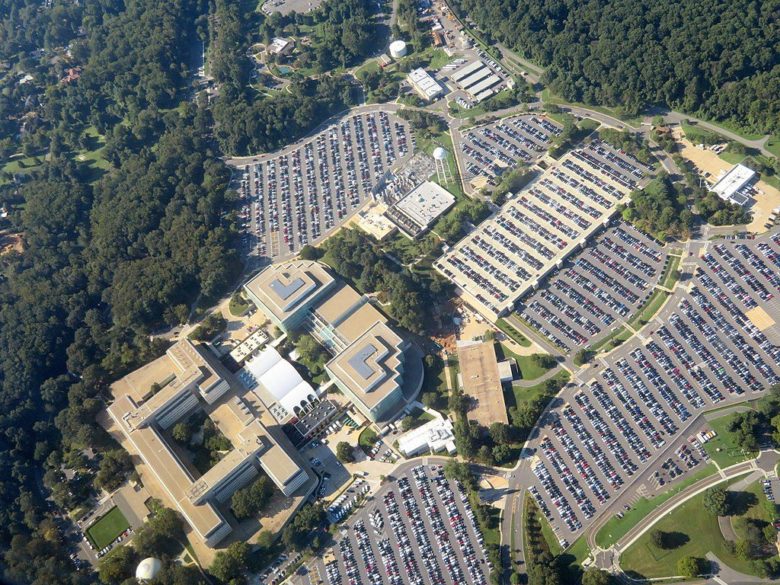
CIA headquarters (United States) (Photo: CIA / Wikimedia [CC BY-SA 3.0])
It is unclear how extensive such operations are today, but in 2014 it came to light that a reporter for a major U.S. outlet had a close relationship with the CIA, sending draft articles for editing. Some observers argue that from the standpoint of U.S. intelligence agencies, the need to conduct such coordination covertly has decreased. For example, many former intelligence officials—including a former Director of National Intelligence who has been caught lying to Congress—are now employed as commentators and analysts at major U.S. media and openly disseminate information. The current structure is that U.S. media rely on the U.S. government as a source, and Japanese media in turn keep echoing and relaying U.S. media output as is.
What is dangerous disinformation?
Media define “good” and “evil” in line with who is an “ally” or an “enemy” of their own government, downplaying wrongdoing by the former while exaggerating the latter’s misdeeds beyond the facts. Such tendencies deviate greatly from the media’s proper role in a democracy to seek facts and scrutinize power. Readers may become unable to view facts objectively and may find it difficult to calmly assess threats from other countries and their own.
Both the United States and Russia interfere in other countries’ elections and societies, and both wage wars. Both conduct influence operations and disseminate disinformation as part of them. In Japan today, the focus is disproportionately on Russia’s external behavior. But the fact that the U.S. is an ally does not mean that such U.S. actions abroad pose no threat to Japan (Note 17).
As we have seen, whenever wars break out, U.S. officials disseminate disinformation. The media then echo and keep reporting it. About nine months after the start of the Russia-Ukraine war, in November 2022, a missile struck Poland. After the incident, the Associated Press, citing information from a U.S. intelligence official, reported that it was a Russian missile. It was later determined that the missile was not Russian, and AP issued a correction. Had such false information taken hold, there was a risk of significant escalation. Moreover, an AP staffer involved in the decision to run the report said in an internal message at the time, “I can’t imagine a U.S. intelligence officer would be wrong on this,” revealing how much major media trust information from U.S. intelligence sources.
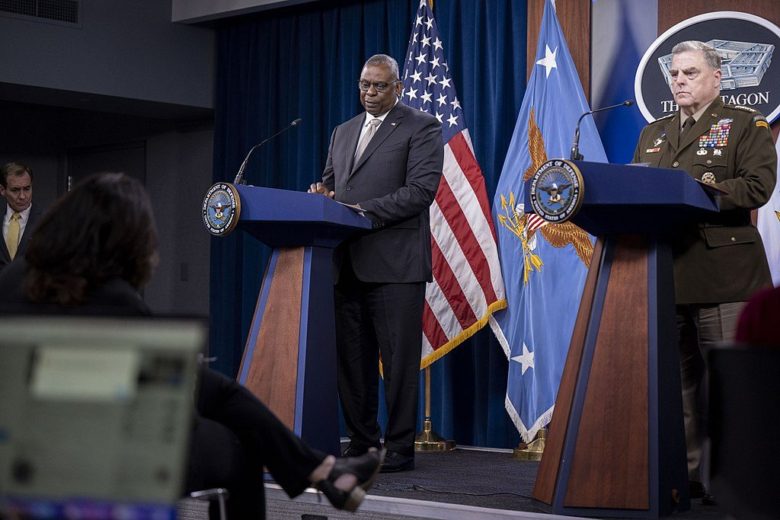
Press briefing at the Pentagon on the Russia-Ukraine war, United States (Photo: U.S. Secretary of Defense / Wikimedia [CC BY 2.0])
With the development of communication technologies, the volume of information in cyberspace, including social media, has surged, making disinformation easier to spread and raising unprecedented concern about the threats it may pose to politics and society. In international relations, while potential risks from foreign disinformation are naturally increasing, we should be cautious about concluding that its impact is rapidly escalating; further analysis and verification are needed. Yet what may be truly dangerous is not the information space online, but an information ecosystem in which the governments of major powers and their top officials brazenly announce fabricated falsehoods at press conferences and the media report them without verifying their truthfulness—something Japanese media are turning a blind eye to.
Note 1: While both misinformation and disinformation denote information that diverges from fact, disinformation refers to false or misleading information generated intentionally to inflict political or economic harm on a state, organization, or individual.
Note 2: Yomiuri Shimbun, “U.S. bombs North Vietnam: Countering a second torpedo attack—Presidential statement—Limited measures toward peace,” August 5, 1964.
Note 3: Asahi Shimbun, “Kuwaiti escapee testifies to homeland’s ‘devastation’—U.S. House,” October 12, 1990.
Note 4: Mainichi Shimbun, “U.S. Secretary of State also points to Iraqi support for al-Qaeda—Report to UN Security Council,” February 6, 2003.
Note 5: For example, Mainichi Shimbun, “Former U.S. Secretary of State Powell: ‘The Iraq War could have been avoided’—Mainichi Shimbun interview,” August 28, 2010; Yomiuri Shimbun, “Iraq ‘disinformation’ caused by simple mistake, says U.S. deputy national security adviser,” July 24, 2003.
Note 6: Asahi Shimbun, “Fleeing civilians also targeted—Libyan government forces carry out indiscriminate attacks in Benghazi,” March 28, 2011.
Note 7: For example, Mainichi Shimbun, “Syria: ‘Syria used chemical weapons’—U.S. concludes chlorine gas was used in May,” September 27, 2019.
Note 8: Asahi Shimbun, “Russia offers bounties for killing U.S. troops? Proposal to Taliban-linked forces reported in U.S. media,” June 29, 2020; Mainichi Shimbun, “Afghanistan: U.S. troops killed in Afghanistan—Russia may have offered bounties to armed groups, U.S. paper reports,” July 1, 2020; Yomiuri Shimbun, “Russia offers bounties for killing U.S. troops in Afghanistan—U.S. reports—Aiming to obstruct peace talks,” June 28, 2020.
Note 9: A “proxy war” is a state of indirect involvement in combat in which a country does not participate directly with its own forces in a given war but engages indirectly through support and other means.
Note 10: Mainichi Shimbun, “Editorial: Russia’s indiscriminate attacks in the invasion of Ukraine—Use of chemical weapons must not be tolerated,” March 26, 2022.
Note 11: The number of Yomiuri Shimbun articles referencing “disinformation” increased during the 2003 Iraq invasion due to more reporting on disinformation related to weapons of mass destruction.
Note 12: Asahi Shimbun, “Summary of the investigative report on suspicions regarding Mr. Trump and Russia,” April 20, 2019.
Note 13: Asahi Shimbun, “Angry youth: ‘Gun control, not prayers’—Protests after U.S. mass shooting,” February 23, 2018.
Note 14: Mainichi Shimbun, “America’s Choice: The 2020 presidential election—China, Russia, Iran carry out cyberattacks on Trump and Biden campaigns, Microsoft reports,” September 12, 2020; “President Trump: Executive order to regulate social media—Responsibility for deleting ‘unfair’ posts,” May 30, 2020.
Note 15: Mainichi Shimbun, “Russia: Russia may have offered bounties for killing U.S. troops—To Afghan armed groups, U.S. paper reports,” June 30, 2020.
Note 16: Asahi Shimbun, “Angry youth: ‘Gun control, not prayers’—Protests after U.S. mass shooting,” February 23, 2018.
Note 17: For example, the 2003 Iraq War—backed by U.S. disinformation—caused enormous loss of life, destabilized the Middle East, and contributed to the rise of IS (Islamic State). The Japanese government expressed support for the war and also provided support.
Writer: Virgil Hawkins
Graphics: Virgil Hawkins






.jpg)


大変興味深く拝読しました。政府による偽情報の発表は昔から行われてきたことなのでしょうが、ここ最近は開き直りのように堂々と発表することに恐ろしさを覚えます。それをそのまま裏も取らず、流しっぱなしのメディア(特に日本大手)の凋落はどうしようもありませんね。せめてフリーの記者や独立系メディアには頑張ってほしいです。