
The novel coronavirus has wreaked havoc across the world. In the two years and eight months from December 2019, when the first case was reported, to August 2022, the cumulative death toll reached about 6.4 million. Yet there is a cause of death that easily surpasses that number in just one year: air pollution. It is even described as the world’s leading cause of death, with around 6.7 million people dying from it annually worldwide. This article explores where, how, and to what extent air pollution causes harm, the current situation and countermeasures, and the challenges that still remain.
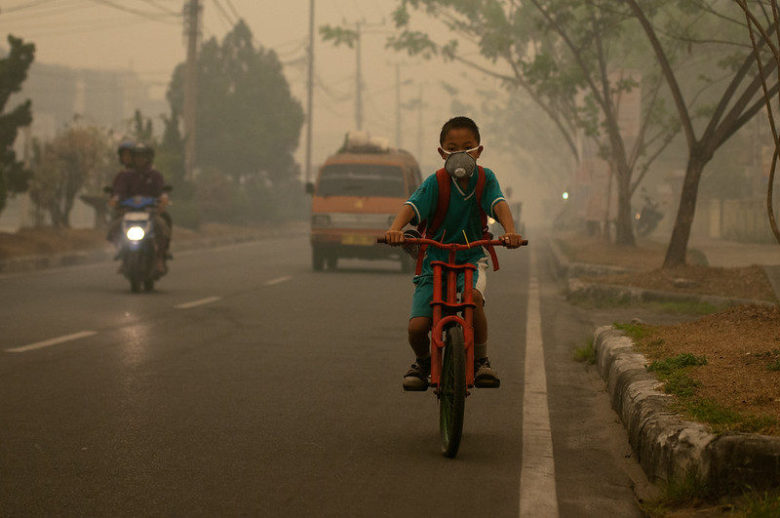
Hazy air in Indonesia and a boy wearing a mask (Photo: CIFOR / Flickr [CC BY-NC-ND 2.0])
目次
Pollutants and health impacts
First, let’s picture how air pollution harms the human body. The culprits are air pollutants floating in the air. There are many types, including sulfur oxides, nitrogen oxides, photochemical oxidants, and black carbon; their sources, forms, and effects vary widely. For example, photochemical smog occurs when exhaust from cars and factories is irradiated by sunlight and transforms into pollutants called photochemical oxidants, which linger in the air like fog. These irritate mucous membranes and can cause eye and respiratory inflammation; in severe cases they can lead to breathing difficulties and fainting. In addition, black carbon produced by burning coal or firewood has been suggested to be potentially carcinogenic. Likewise, carbon dioxide produced during combustion can cause dizziness, nausea, and impaired consciousness at high concentrations.
The much-discussed PM2.5 refers to extremely fine particles with a diameter of 2.5μm (Note 1) or less, which include substances like those above as well as sulfates and aluminum. These arise from human production and consumption activities as well as natural phenomena such as volcanic eruptions. Because of their minuteness, they can penetrate deep into the lungs and trigger respiratory diseases such as asthma, bronchitis, and pneumonia, as well as cardiovascular diseases like heart disease and arrhythmia.
There are also findings that these pollutants affect neurodevelopment and cognitive ability, potentially lowering intelligence levels.
Global impacts
Next, let’s look at the concrete scale of the damage due to air pollution. According to a paper (2022) published in the globally authoritative journal The Lancet, in 2019 over the course of 1 year, around 9 million people died from “pollution,” including air and water pollution. This amounts to about 1/6 of the total deaths worldwide in the same year.
Among these, the impact of air pollution is particularly severe, estimated to have caused about 6.67 million deaths. Looking at deaths by region, 1st: East Asia and the Pacific, 2.49 million; 2nd: South Asia, 2.17 million; 3rd: Sub-Saharan Africa, 0.93 million. By country, 1st: China, 1.85 million; 2nd: India, 1.67 million; 3rd: Pakistan, 0.24 million; 4th: Nigeria, 0.20 million; 5th: Indonesia, 0.19 million. As these rankings show, the three regions above dominate the top spots, with more than half of the world’s air-pollution-related deaths concentrated in China and India. It also suggests that low- and middle-income countries, rather than high-income countries within a region, rank higher; indeed, over 90% of pollution-related deaths occur in low- and middle-income countries. The figure below shows deaths due to air pollution on a heat map.
However, note that countries with larger populations will naturally have more deaths. The figure below shows a heat map of deaths from air pollution as a share of the population. 1st: The Bahamas, 0.5% ; 2nd: North Korea, 0.2% ; 3rd: Solomon Islands, 0.2% ; 4th: Taiwan, 0.2% ; 5th: Somalia, 0.2%.
The impact of air pollution is not limited to death. Even when it is not fatal, it causes serious illness that severely impairs people’s lives and leads to missed school and work. This translates into economic costs. Reduced labor productivity and a shrinking workforce due to death and disease, along with increased medical expenses, are cited as drivers, and it is estimated that the world economy loses as much as 290 million US dollars every year. These economic losses can make life even tougher, potentially leading to other causes of death such as malnutrition and sanitation problems.
Two types of air pollution
Air pollution can be divided into 2 categories: 1 is outdoor air pollution, and 2 is indoor air pollution.
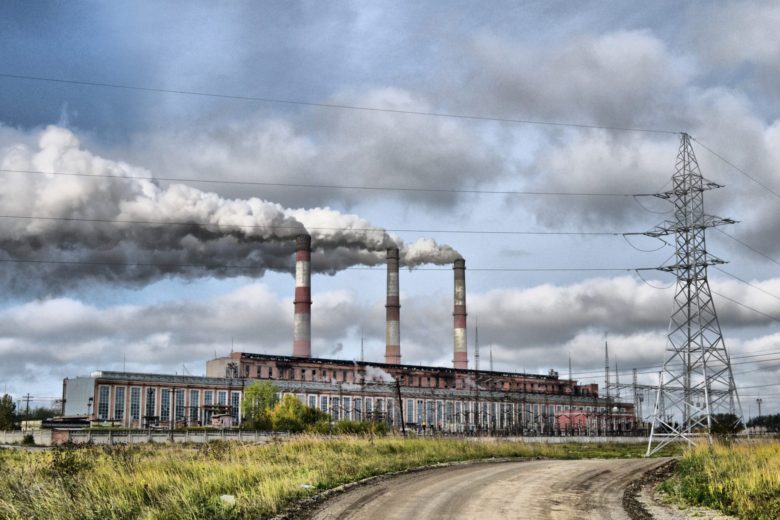
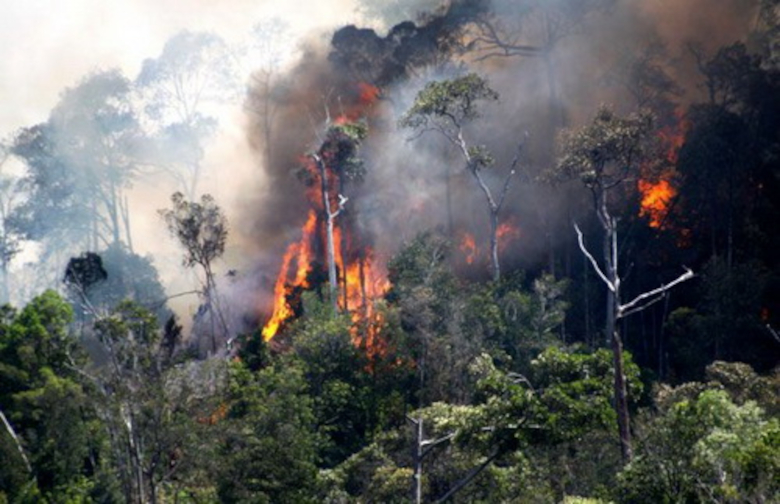
Outdoor air pollution is considered to arise from two sources: natural and anthropogenic. Natural causes include wildfires and savanna fires triggered by lightning or drought, and volcanic eruptions. Smoke rises high above the ground and spreads across regions on the wind. As a result, air pollution can extend far from the source, potentially affecting the health of large numbers of people.
Anthropogenic sources include vehicle and factory emissions, as well as slash-and-burn agriculture and the forest fires it can trigger. In Indonesia, for example, large-scale forest fires broke out frequently in 2019, and severe haze was reported spreading to other countries. The cause was slash-and-burn agriculture, which sets fire to grasslands and hillsides to create farmland. Normally, the fire would burn out on its own, but decreased rainfall and dry conditions allowed the flames to spread and develop into forest fires. As a result, about one million people reported respiratory illness, and operations at schools and airports were also disrupted.
Now let’s look at indoor air pollution. There are mainly 2 factors. The first is household use of solid fuels. In fact, about 40% of households worldwide lack access to modern energy such as electricity and gas. Instead, people cook by burning firewood or coal on stoves, which also serve as heating when temperatures drop. The resulting smoke contains black carbon, carbon dioxide, and other substances that can harm the respiratory system.
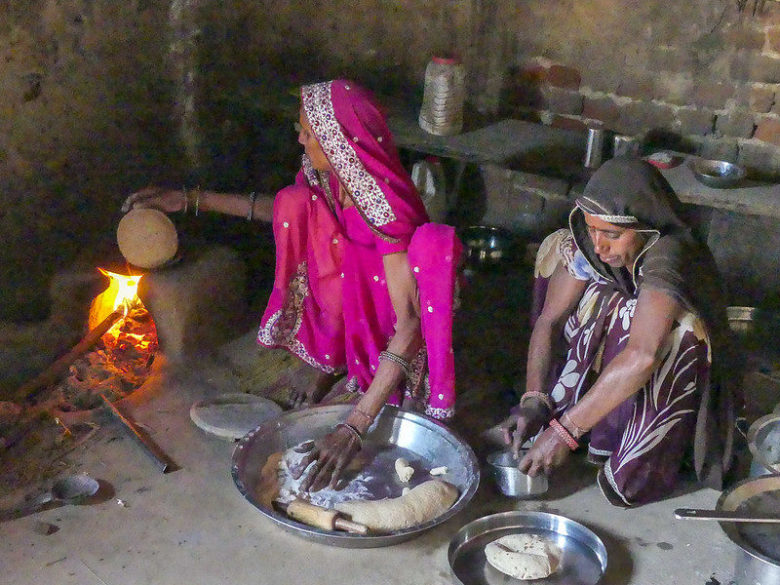
Women in India cooking with firewood (Photo: Mike Prince / Flickr [CC BY 2.0])
The second factor is smoking indoors. Smoke from tobacco consists of three types: mainstream smoke inhaled directly from the cigarette by the smoker, sidestream smoke rising from the burning end, and exhaled smoke from the smoker. For indoor air pollution, sidestream and exhaled smoke are key. Because sidestream smoke does not pass through a filter, it contains harmful substances at concentrations many times higher than mainstream smoke and may increase the risk of lung cancer and heart attacks when inhaled by others. Exposure to air containing sidestream and exhaled smoke is called secondhand smoke, and it causes 1.2 million deaths a year worldwide. If people smoke indoors without proper ventilation, high concentrations of harmful substances linger throughout the room, exposing occupants to pollutants for prolonged periods.
In 2019, about 4.51 million people died due to outdoor air pollution, and about 2.31 million due to indoor air pollution. While men account for more deaths in both cases, women make up a larger share in indoor air pollution than in outdoor air pollution. One reason is that, globally, women spend more time on household tasks, including cooking, than men on average.
The shadow looming over children
Victims of air pollution are not only adults. It is estimated that about 10% of deaths in children under 5 are caused by air pollution, underscoring the profound impact on children. Reasons include a faster breathing rate than adults; their shorter stature brings them closer to the ground, where pollutants tend to accumulate, leading them to inhale more; and their developing bodies have less ability to metabolize, detoxify, and excrete inhaled pollutants. Once inside the body, pollutants travel through the bloodstream, spreading throughout and harming young bodies.
In addition to the health effects described above, the impact on children’s education is significant. Studies around the world are examining the relationship between air pollution and education, and suggest negative effects on academic performance and cognitive ability. In one study in the United States, students attending schools downwind of highways had worse test scores, more absences, and more behavioral problems than those attending schools upwind, likely because schools downwind were exposed to more pollutants. There are also findings that test scores worsen when classrooms are not properly ventilated and carbon dioxide concentrations increase.
Air pollution also affects lives yet to be born. When pregnant women inhale polluted air, pollutants enter the fetus’s bloodstream through the placenta, increasing the risk of preterm birth, low birthweight, and stillbirth. Even if a child is born safely, the likelihood of developing asthma in early childhood increases. One study indicates that air pollution causes up to 6 million premature births and 3 million low-birthweight babies each year.
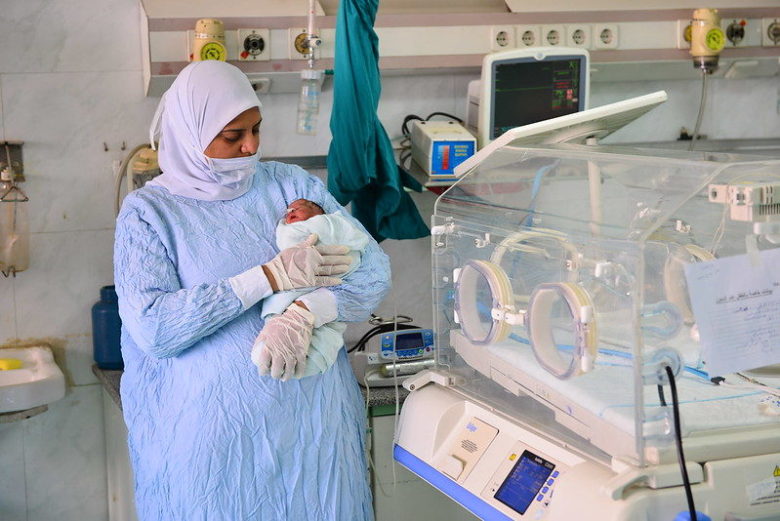
A premature baby born in Egypt (Photo: USAID Egypt / Flickr [CC BY-NC 2.0])
Measures and challenges
What countermeasures can we consider in the face of such devastation? Let’s look in turn at outdoor and indoor air pollution.
Approaches to outdoor air pollution can be broadly divided into three. The first is to suppress pollution sources. For example, in China, strong measures were implemented for the 2008 Beijing Olympics. Shutting down or relocating factories and restricting driving days based on license plate numbers sharply reduced pollution levels in Beijing and surrounding cities. However, these measures made daily life highly inconvenient for residents, and pollution levels rose again as soon as the Games ended, suggesting low sustainability.
The second approach is to replace pollution sources with cleaner ones. A good example is Germany in the 1990s, where laws shifted energy sources from coal to natural gas. Natural gas emits very little of air pollutants like sulfur oxides and nitrogen oxides. Thanks to this, Germany reduced sulfur dioxide emissions by about 60% and particulate matter by about 82%. However, carbon dioxide emissions remain high—more than half those of coal—so air pollution and global warming due to CO2 remain unresolved.
The third approach is to encourage people to understand pollution levels and take action. Kampala, the capital of Uganda, is one of the cities with notably high pollution levels in Sub-Saharan Africa, where air-pollution-related deaths are many. To improve the situation, numerous air-quality monitors were installed around the city. The data are uploaded online, allowing anyone to check pollution in real time. This is expected to help the government identify sources while raising public awareness of the risks of air pollution. Given that pollution-related deaths occur especially frequently in low- and middle-income countries, this could greatly support the implementation of countermeasures.
However, the problem is not so simple, because low-income countries bear the brunt of high-income countries. Low-income countries have lower labor and living costs and relatively looser environmental regulations. Thus, it is cheaper to manufacture there than in high-income countries, and production that emits more pollutants is also feasible. According to one report, companies from the United States, Japan, and some European countries reduced deaths and economic losses from air pollution at home by relocating parts of their industrial production to low-income countries. As the air becomes cleaner in high-income countries, pollution worsens and deaths increase in low-income countries. Raising awareness in low- and middle-income countries is undoubtedly an important first step toward improving air quality. But unless people recognize and change their thinking about the reality that governments and companies in high-income countries are offloading responsibility onto others, major progress is unlikely.
Next, indoor air pollution. First and foremost is the introduction of cleaner fuels. In India, where indoor air pollution is particularly severe in rural areas, a project called PMUY was launched in 2016 to shift household energy from solid fuels to liquefied petroleum gas (LPG). The program provides LPG cookstoves to households that had been cooking with firewood or coal. In August 2021, a new phase called PMUY 2.0 began with an expanded target group, and as of August 2022, it has provided a total of over 100 million LPG connections.
But there are problems here as well. Many households are not making effective use of the provided access to LPG. The reason is that as international crude oil prices rose, LPG prices did too. For poor households in rural areas, procuring food is the top priority, and they cannot afford costly refills. They cannot rely on LPG alone and end up continuing to use firewood or coal as before. There are ways to improve stove efficiency, but these have not led to substantial improvements.
A similar example can be found in Mongolia. In the capital Ulaanbaatar, coal stoves used to withstand the harsh cold cause extremely severe air pollution in winter. In response, the government banned raw coal and recommended the use of semi-coke, which emits fewer pollutants. Nevertheless, raw coal remains very cheap and accessible in Mongolia, so many people still rely on it for heating.
The common thread is that clean energy is expensive and particularly out of reach for the poor. Even knowing the environmental harm, people are compelled to seek cheaper energy simply to survive.
Beyond fuel-switching, there are also building-design measures. In addition to pursuing energy efficiency, appropriate ventilation systems are needed. By creating air circulation, one can prevent high concentrations of air pollutants from stagnating indoors. Specific ideas include installing exhaust fans, adding chimneys or vents (often called slots) to let smoke escape, and designing roof shapes to aid ventilation. However, ventilation lets conditioned air escape, raising heating and cooling costs. This may be a particularly difficult approach for low-income households living in extreme heat or cold.
As for harm from smoking, in addition to ventilation, reducing the number of smokers in the first place leads to improvement. As noted above, cigarettes have a large impact not only on smokers themselves but also on people around them and on the air. Quitting smoking contributes to improvements in indoor air quality and outdoor air pollution alike.
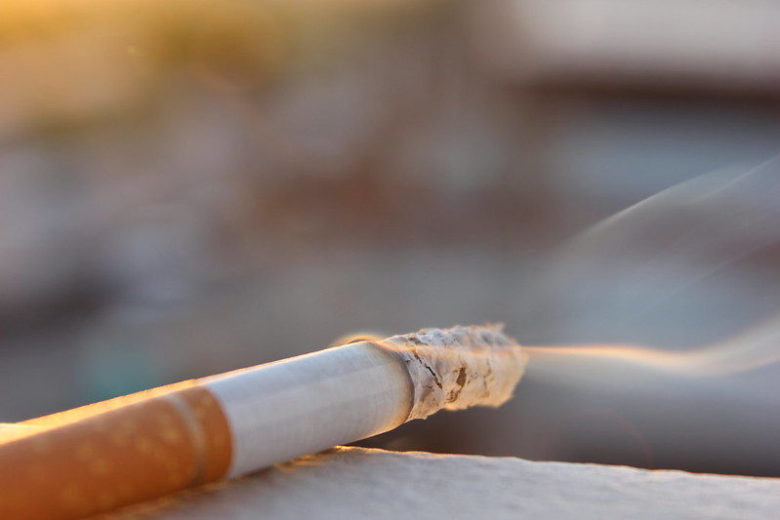
Smoke rising from a cigarette (Photo: Lindsay Fox / Flickr [CC BY 2.0])
How to fight air pollution
Air has no borders. The policies of one country and the activities of one company can inflict major damage on people living far away. Air pollution is a global challenge shared by all humanity; it cannot be solved by the actions of a single country, a single company, or a single approach, which is why it is crucial for the world to move in step. International conferences on air pollution, treaties, and cooperation among countries are indispensable. At the same time, it is important for governments to set concrete guidelines and targets and proactively work to curb pollution sources. Likewise, people learning how air pollution works and how extensive its harm is—and demanding improvements from their own governments and companies—will translate into better health for the planet and those who live on it.
Note 1: ㎛ is a unit of length. 1 ㎛ is 1/1,000 of 1 ㎜.
Writer: Nao Morimoto
Graphics: Takumi Kuriyama













大気汚染の原因の多くは国家内や家庭内にあるものと思っていたが、国家間の問題でもあるということを知れた。また、新型コロナの流行で人々の外出や企業の生産活動が減少したことで、インドで大気が浄化されたという話も聞くので、最新のデータにも目を向けてみたいと思った。
今起こって要る異常気象 大気汚染 全て人類が今迄行ってきた行動の結果だと、考えさせられる文章でした。
大気汚染という問題が浮き彫りになったことにより、エネルギー源の移行や生活スタイルの変化が生じていると感じています。
ところが私たちの気付かないところで、今も高所得国が低所得国の問題に関与しているという現象は、汚染に限らず見直されるべきであり、このような記事がより注目されるといいなと思います。