
In recent years, products certified as “Fairtrade” have begun to appear on store shelves in a number of countries. This indicates that the products were produced and transported under trade that guarantees fair and equitable prices for producers. There are also questions about whether Fairtrade products are truly “fair,” but in the first place, such “Fairtrade” goods make up only a tiny fraction of global trade, and only a limited quantity of a narrow set of items such as chocolate, coffee, and cotton. Of course, there are many goods that are traded at fair and equitable prices without certification, but as discussed below, unfair trade still accounts for much of global commerce. Why, then, is unfair trade “unfair”? This article looks at the current state of unfair trade, its background, and efforts toward a fairer society.
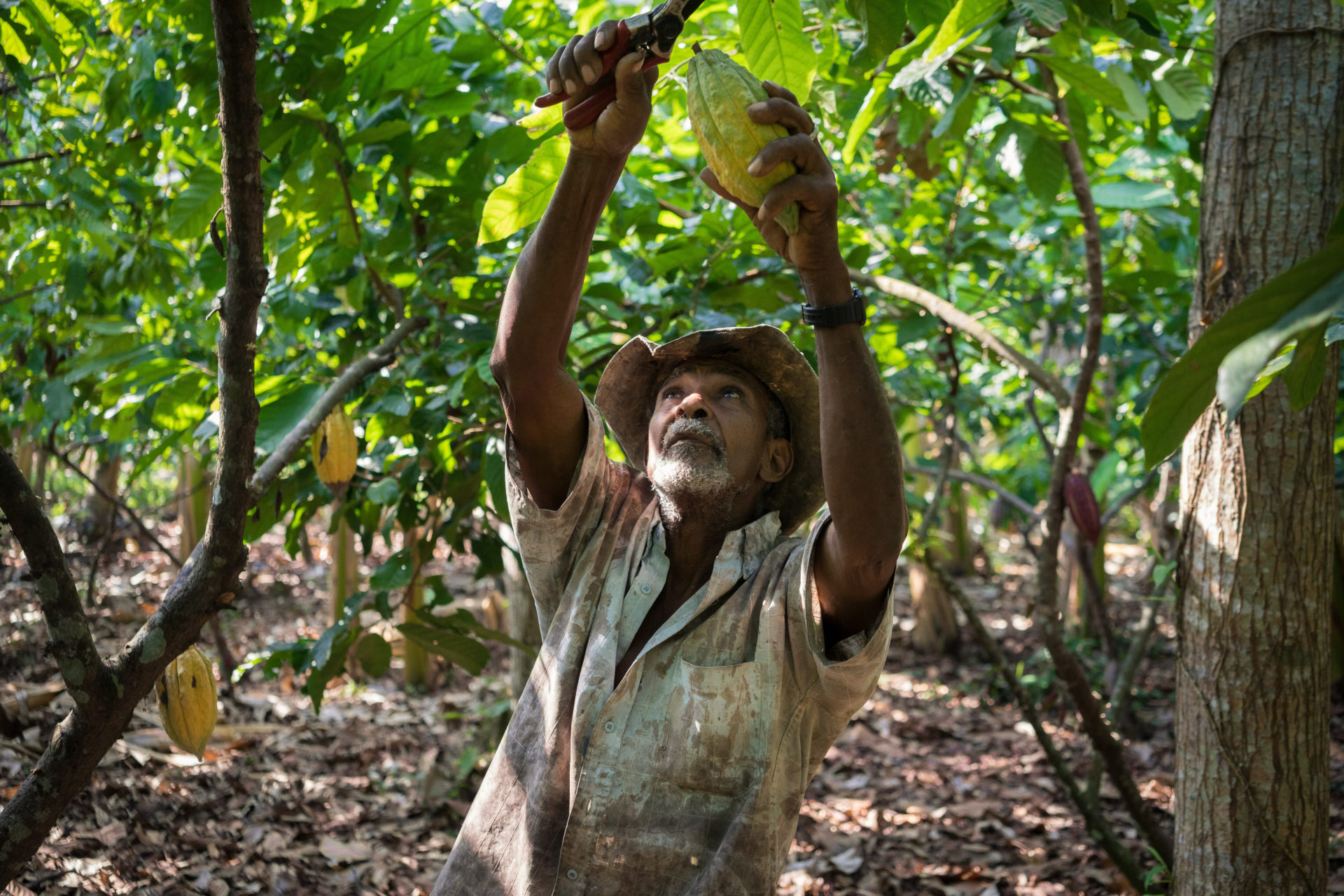
A man in Colombia harvesting cocoa beans (USAID U.S. Agency for International Development / Flickr [CC BY-NC 2.0])
目次
What is fair trade?
What do “fair” trade and prices look like? Global trade is complex to begin with. For example, even the process of delivering a single personal computer to a consumer involves numerous trades. The first step is sourcing materials for the parts. For example, cobalt is mined in the Democratic Republic of the Congo, and lithium in Chile. Plastics are made from oil drilled in Saudi Arabia. These raw materials are then brought to other countries to manufacture parts. Those parts are assembled into computers in yet another country and delivered to consumers waiting elsewhere. After use, items that are discarded may even be traded further as waste.
As such, today’s trade is complex and intertwined among many countries, and this complex form accounts for about 70% of global trade, while simple trade in which countries export products made domestically to foreign consumers makes up only 30%. Consumers pay for the final products thus delivered, but the question is where, to whom, and how that money is distributed.
There are various ways to conceive of “fair” trade. For example, some approaches are based on the philosophy of “distributive justice,” which considers how resources should be allocated in society. Here we present 2 approaches.
The 1st is to distribute according to the amount of labor required for production. In other words, those who contribute more to making the product receive greater compensation. However, a problem remains as to the standard by which “contribution” should be measured. While a measure based on working hours may be the easiest to understand and perhaps the most egalitarian, one also needs to consider workers’ skills, capital, and technological inputs.
The 2nd is based on the right to life and human dignity, and involves setting prices that allow producers and workers to maintain a minimum standard of living. In addition to the 1st element, this approach safeguards people’s lives and livelihoods. Universal Declaration of Human Rights Article 23, paragraph 3—“Everyone who works has the right to just and favourable remuneration ensuring for himself and his family an existence worthy of human dignity, and supplemented, if necessary, by other means of social protection.”—is precisely grounded in this idea. The Fairtrade movement, which has been spreading in recent years, likely places more emphasis on the latter, as certification sets floor prices for raw materials at a certain level.
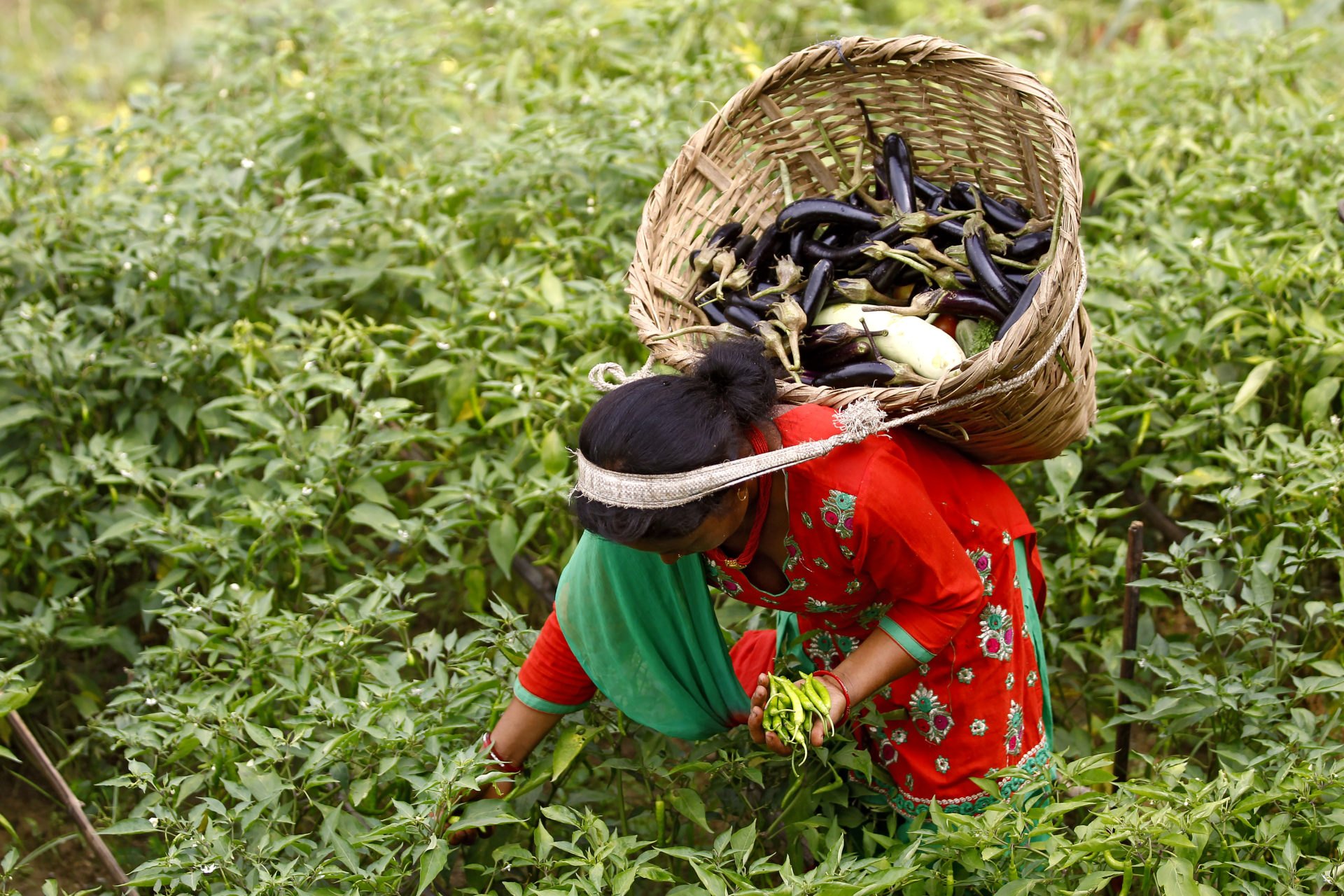
A woman in Nepal harvesting vegetables she grew (UN Women / Flickr [CC BY-NC-ND 2.0])
The winners and losers of global trade
What does global trade actually look like? First, let us consider the broad history. Going back about 500 years, with the development of navigation technology, European powers began abducting local people as slaves and plundering agricultural and mineral resources. Colonialism entrenched this exploitation. While many of these transactions amounted to extraction rather than what we would now call “trade,” the fact remains that the movement of goods around the world increased dramatically. When World War II began, the expansion of trade temporarily slowed, but as colonies won independence and as advances such as the introduction of air transport, greater efficiency in shipping, and improved communications reduced transaction costs, trade expansion accelerated again after the war. Today, most countries produce more and trade more than they did a few decades ago.
Next, a word on the effects of trade. For example, trading can have positive effects such as improved access to all kinds of products—including those that cannot be grown or made domestically—and lower prices. At the same time, we must not forget the negative effects, such as low-wage labor and reduced employment opportunities. Considering both sides, there are data suggesting that trade has produced net positive economic effects globally, but huge problems remain in how those gains are distributed. Details below.
Let us now look at the composition of global trade. From 1900 to recent years, the share of manufactures in the total value of traded goods has increased dramatically, while the share of agricultural products has declined markedly. This partly reflects the fact that more manufactures are being produced and traded, but, as discussed later, it also reflects falling agricultural prices. As a trend, high-income countries tend to export more expensive manufactured goods such as electronics and automobiles to low-income countries, while low-income countries tend to export cheaper primary commodities such as agricultural products and mineral resources to high-income countries.
Two reasons can be considered for this. The 1st is differences in national economic capacity. Primary commodities can fetch higher prices if processed, but doing so requires massive upfront investment, making it difficult for low-income countries to carry out processing. The 2nd is the legacy of past colonialism. During the colonial era, world trade often operated through a system in which the metropole built large plantations and developed mines in colonies, used the primary commodities produced there, and manufactured finished goods in the metropole. As such, countries with a colonial past were forced by imperial policy to specialize in certain industries, leaving other sectors underdeveloped. Furthermore, because the revenues needed to develop other sectors also depend on those specific industries, even today, many countries rely on just a few primary commodities for the bulk of their foreign exchange earnings. In fact, more than 50 low-income countries depend on three or fewer primary commodities for over half of their export earnings. For example, in Burundi in East Africa, coffee and tea account for 86% of foreign exchange earnings.
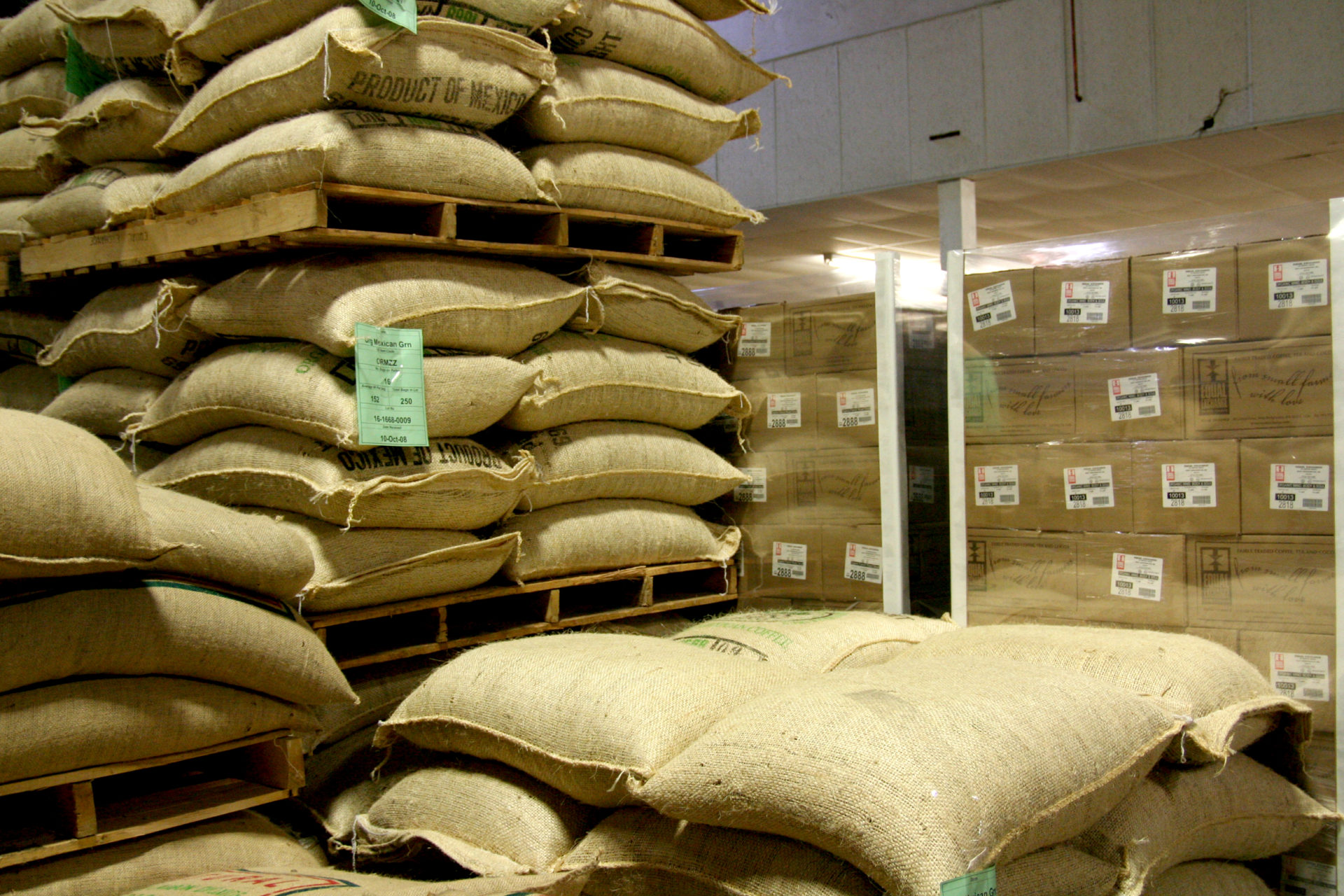
Coffee beans awaiting shipment (uusc4all / Flickr [CC BY-NC-ND 2.0])
In such monoculture economies, national revenue—and by extension the lives of individual citizens—depend on the prices of a handful of primary commodities. Unlike expensive manufactured goods, which tend to maintain relatively stable prices, the prices of primary commodities are constantly volatile. In addition to weather and supply–demand balance, what strongly affects primary commodity prices is the speculative behavior of wealthy investors. In particular, when futures contracts (※1) and other financial derivatives (※2) are traded like stocks and bought and sold repeatedly in the short term, prices swing wildly. As a result, many people in low-income countries live with unstable incomes, constantly exposed to life-threatening risks.
Given this situation, one might think inequality is naturally widening, but one dataset shows that global income inequality declined slightly from 1988 to 2015. However, this is largely due to China and India, which together account for more than one-third of the world’s population and have posted remarkable growth in recent years; without those two countries, inequality is likely increasing. As evidence, if countries are divided into high- and low-income groups, the growth rate of per capita GDP in high-income countries far outpaces that of low-income countries. At the individual level, too, most of the world’s wealth is concentrated in the hands of a very few, and this inequality has widened significantly during the COVID-19 pandemic.
And the global state of poverty, which has long been a concern, has hardly improved at all if China and India are excluded. The share of people living below the ethical poverty line (※3), considered the threshold for basic human survival, was 56.8% worldwide as of 2014 and 92.0% in Sub-Saharan Africa, while in some high-income countries it was as low as 2.1%. This shows vast disparities between countries.
Careful observation of the current state of global trade reveals that low-income countries and low-income people are clearly at a disadvantage. In other words, in low-income countries historically disadvantaged by colonization, the development of manufacturing lagged, limiting income growth. Yet in addition to this disadvantage of starting late, isn’t the current unfair trading system also amplifying inequality? Below, we look at the realities of unfair trade and its causes and background.
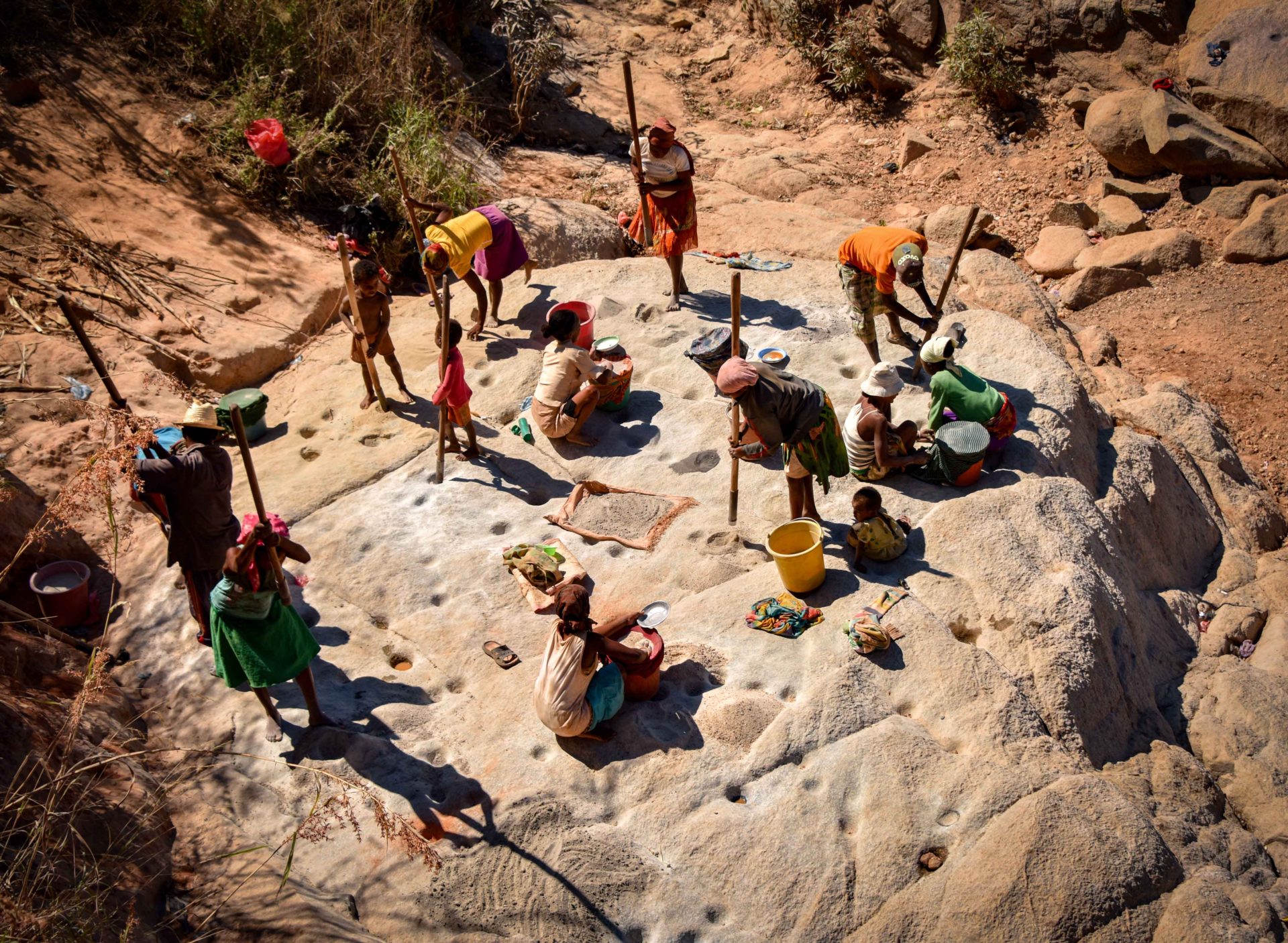
Gold mine workers in Madagascar (Rod Waddington / Flickr [CC BY-SA 2.0])
Unfairness in price setting
As a breeding ground for unfair trade, we must first consider how prices are set. In general retail transactions, the seller posts a price and the buyer purchases at that fixed price. However, in many primary commodity production sites, the exact opposite occurs—the buyer sets the price. Behind this lies a survival-of-the-fittest system in which pricing power in global trade is determined by clout. Those who move more capital and goods can influence prices. Consider a simplified example of the food-relatedvalue chain (value chain). Looking at shares of the final price, the order of “power” is retailers, manufacturers, trading houses, and producers (※4). In other words, producers have almost no power to set prices.
In primary commodities as well as foodstuffs, the reverse of ordinary transactions often occurs, with buyers rather than sellers setting the prices of finished goods. When a major tobacco company buys tobacco leaves from producers in Malawi, the manufacturer evaluates the quality and unilaterally sets the price to suit its own interests. Similar systems are seen in India’s cotton industry and Madagascar’s vanilla industry, and are common especially for goods sourced from low-income countries. Producers, who can scarcely participate in pricing, are placed at a disadvantage, leading to exploitation.
So why has such a system taken shape? Let’s look at the broad flow of price setting for raw materials and the like. First, price movements are aggregated on international exchanges. For example, the Chicago Mercantile Exchange (CME), often called the world’s largest for agricultural commodities and related products, and the London Metal Exchange (LME), which boasts the world’s largest volume of metal trading. On such exchanges, supply from producers and manufacturers and consumer demand are balanced. Here, the buying and selling of international trading houses and major retailers has a major impact on prices. But another very powerful force, as noted above, is the speculative behavior of wealthy investors and funds. They trade not only physical commodities but also derivatives to make profits. For example, the total amount of metal trading on the LME far exceeds the volume of physical metals. Such virtual trading also moves spot prices substantially.
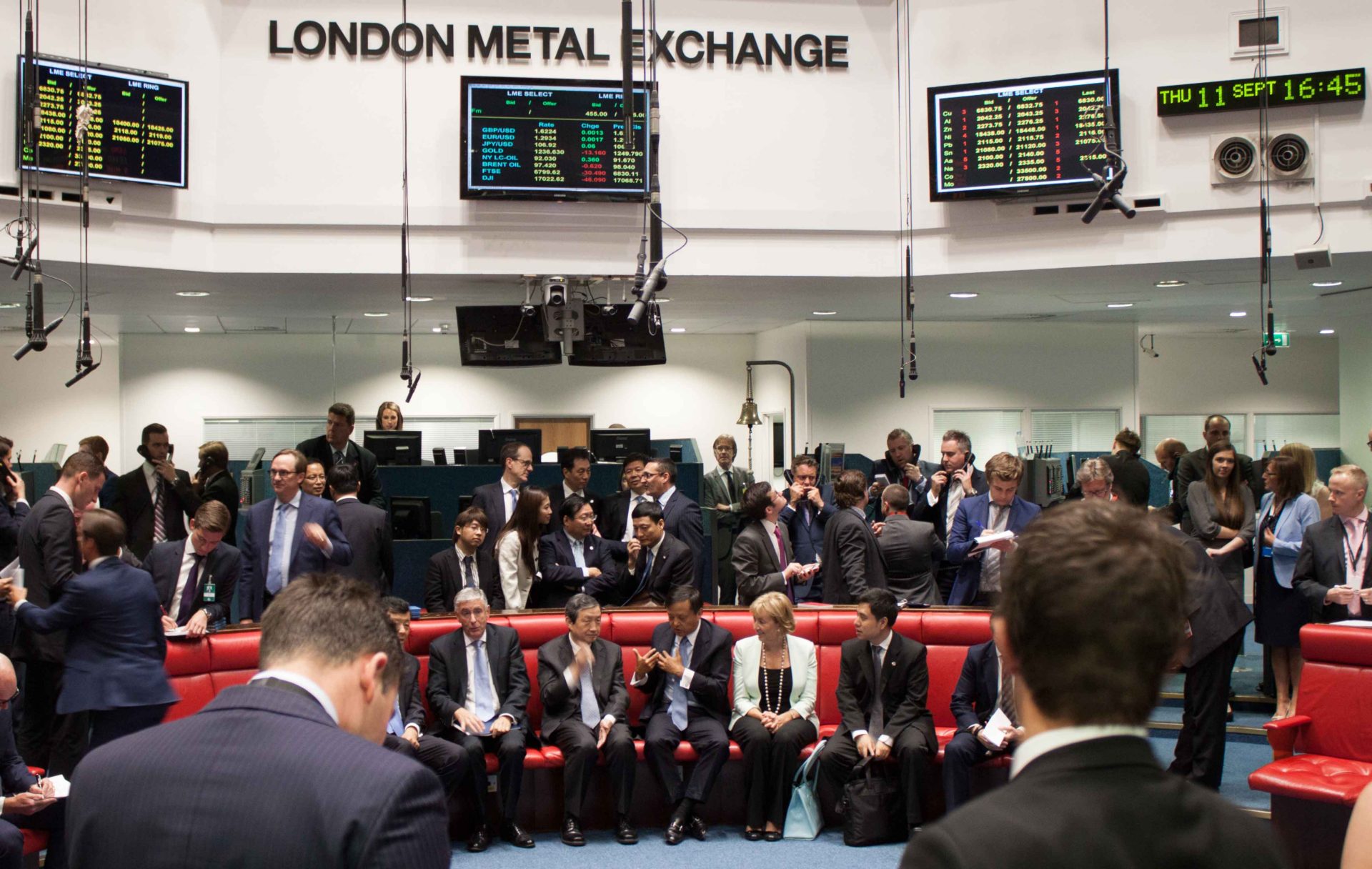
London Metal Exchange (HM Treasury / Flickr [CC BY-NC-ND 2.0])
Once international benchmarks are set on exchanges, major international trading houses and local trading companies/buyers closer to producers set prices in line with the global market. Finally, prices must be agreed between local buyers and producers, but producers are often limited in market access and potential buyers. In addition, they often lack sufficient information about international market trends, making price negotiations difficult, and poverty may force them to need cash income immediately. For these reasons, many producers have no choice but to sell at the offered price and are disadvantaged (※5).
In response to these realities, producer-country governments and international organizations are not without measures. They can set minimum farm-gate prices for crops, or set royalties (mining taxes) on resources extracted and exported by foreign firms. For example, in Rwanda the National Agricultural Export Development Board (NAEB) raised the minimum farm-gate price for coffee beans. The Zambian government has also tried several times to raise royalties on copper production charged to foreign mining companies. However, because low-income countries face pressure from giant trading houses and foreign companies, they often set royalties low, and it is hard to say these have been raised to “fair” levels.
Having looked at how product prices are set, we now turn to unfairness hidden in how labor is priced. Multinational corporations from high-income countries have a tendency to move factories to lower-income countries. This is to reduce labor costs, and as a result workers in low-income countries are often forced to work for low wages in poor conditions. Companies exploit people’s poverty and lax labor laws to keep labor and production costs down. According to one survey, in producing a single polo shirt that retails for the equivalent of 1,130 yen in a high-income country, subcontracted factory workers in Bangladesh receive only about 10 yen, or 0.9% of the retail price. Meanwhile, the manufacturer’s profit is the equivalent of 672 yen, or 59.5%. Such low wages make it hard to make a living even in low-income countries where prices are lower.
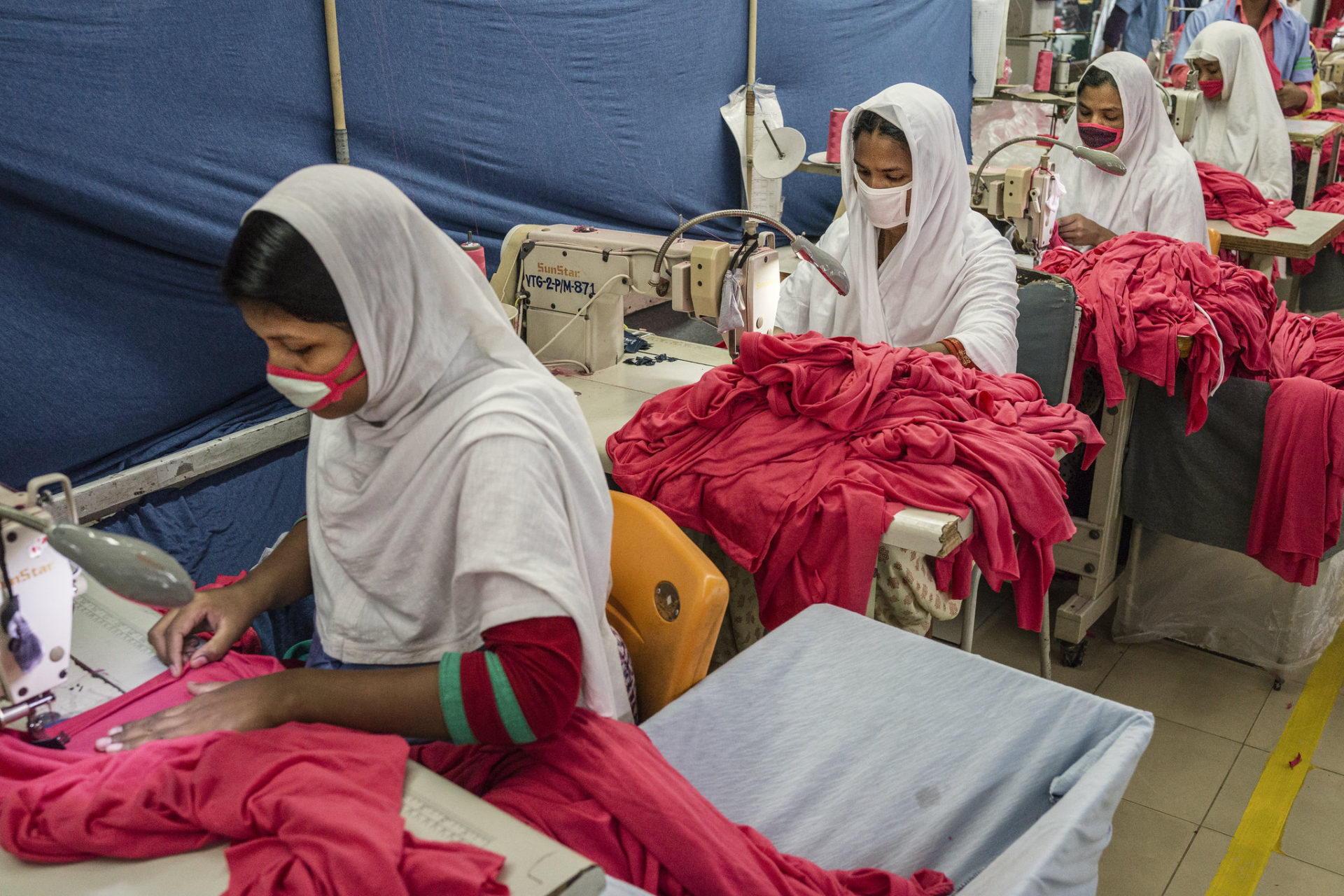
Garment factory workers in Bangladesh (UN SG’s Special Advocate for Inclusive Finance / Flickr [CC BY-NC-ND 2.0])
In response to such dire treatment, protests demanding higher wages are often seen in Bangladesh and Cambodia. However, police have been deployed and used force to suppress them, and deaths have been reported. In some cases employers ban the formation of labor unions in the first place, preventing workers from organizing to demand wage increases. There are even cases in which foreign governments intervene in local politics to block minimum wage hikes in order to protect the interests of their own companies using local factories. Take Haiti. In the 1990s, Haiti’s parliament was moving to raise the minimum wage. But the U.S. Embassy, fearing higher production costs for its companies operating local factories, secretly pressured officials to cap the hourly wage at 24 cents, well below the planned increase. As a result, the daily wage settled at 3 U.S. dollars, far from sufficient to live on in Haiti.
Unfair policies by high-income countries
In trade, there is much unfairness beyond the behavior of buyers and sellers. First, tariffs. In most high-income countries, tariffs are higher on processed goods with added value and lower on primary commodities. This phenomenon is called “tariff escalation.” For example, in Japan unroasted coffee beans are duty-free, but roasted beans face a 20% import tariff. In this way, products with value added in other countries can be shut out to benefit domestic industries. High-income country governments also provide massive subsidies to domestic industries, both supporting producers’ incomes and lowering the prices of domestic products. For example, huge subsidies are provided to agriculture in the United States, China, Japan, and European Union (EU) countries, totaling as much as 7,000 billion U.S. dollars annually. This boosts the price competitiveness of domestic products and can prevent imports. It can also outcompete foreign products on price in other markets and promote exports. Such practices are called dumping.
Countries also conclude free trade agreements with each other. Under agreements that remove tariffs, products from high-income countries that have been made cheaper by subsidies are, unsurprisingly, advantaged. High-income countries sometimes propose such agreements to low-income countries in order to open their markets. For example, the EU–Cameroon Economic Partnership Agreement encouraged opening about 80% of Cameroon’s market to imports from the EU, with tariffs gradually phased out. In such a scenario, Cameroon’s less competitive products cannot withstand competition from EU imports. The loss of tariff revenue is also unavoidable, raising concerns domestically about an already fragile fiscal base. Even so-called “free” trade agreements contain major unfairness.
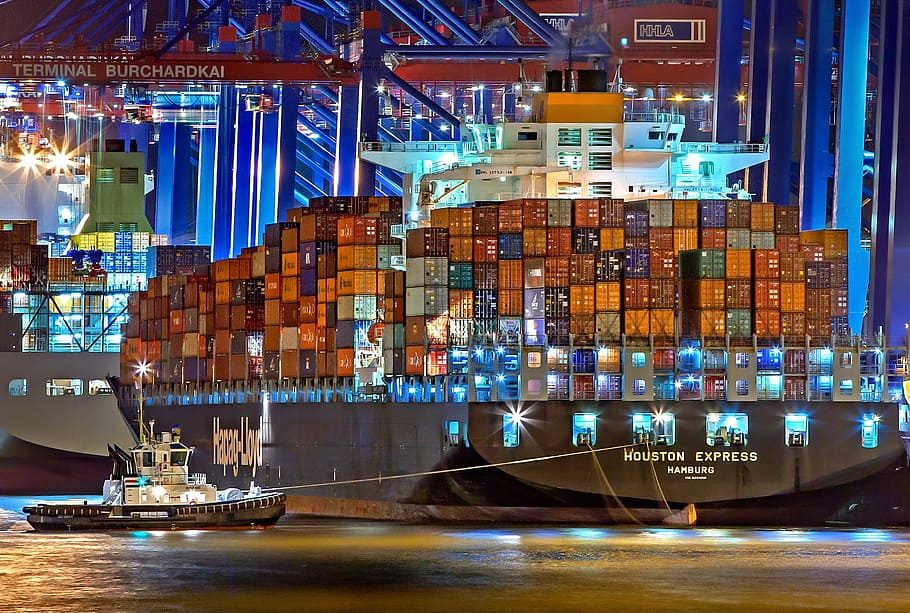
A large cargo ship in the Port of Hamburg (Piqsels [CC0])
We should also touch on unfairness around patents. In high-income countries with strong economies, often aided by government support, companies can pour ample funds into improving crop seeds and developing pharmaceuticals. By obtaining patents on these inventions, companies in high-income countries can monopolize production and set prices freely. As a result, products under patent are often priced so high that they are out of reach for low-income countries. One reason that COVID-19 vaccination has been slow in low-income countries is precisely the problem of prices being fixed at high levels by patents.
In agriculture and other sectors, companies from high-income countries sometimes leverage pressure from their own governments to push adoption of patented products. For example, in Africa and elsewhere, farmers have exchanged crop seeds with each other for over a thousand years to coexist and support each other. In recent years, however, high-income countries and their companies have pressured African countries to enact laws banning seed exchange. They fear that if seed exchange is allowed, seeds developed by their companies will also be exchanged. In addition to legal changes, large seed manufacturers sometimes sue farmers. For instance, the now-defunct Monsanto brought numerous lawsuits against farmers who saved patented seeds for their own use and won. In this way, they seek to expand their sales channels.
Toward a fairer society
We have examined serious unfairness in trade, but this does not mean there are no remedies. At the grassroots level, forming cooperatives is one option. In Ethiopia, where coffee accounts for 40% of foreign exchange earnings, there is the Oromia Coffee Farmers Cooperative Union (OCFCU). The union provides services such as training on production techniques and information on market trends. Such activities improve the quality of coffee beans and, in turn, raise transaction prices and living standards for producers.
Global campaigns can also put pressure on manufacturers and retailers higher up the supply chain. Consider the PayUp campaign sparked by COVID-19. Expecting a drop in demand for apparel due to the pandemic, major brands exploited the power imbalance and canceled huge numbers of orders that had already been placed. The total value of wrongfully canceled apparel reached about 16 billion U.S. dollars. Subcontractors who had already begun production were hit hard and forced to lay off many workers. In response, since 2020 a global movement has held brands accountable. Centered on petitions and strikes, the PayUp campaign had some success, helping recoup part of the losses.
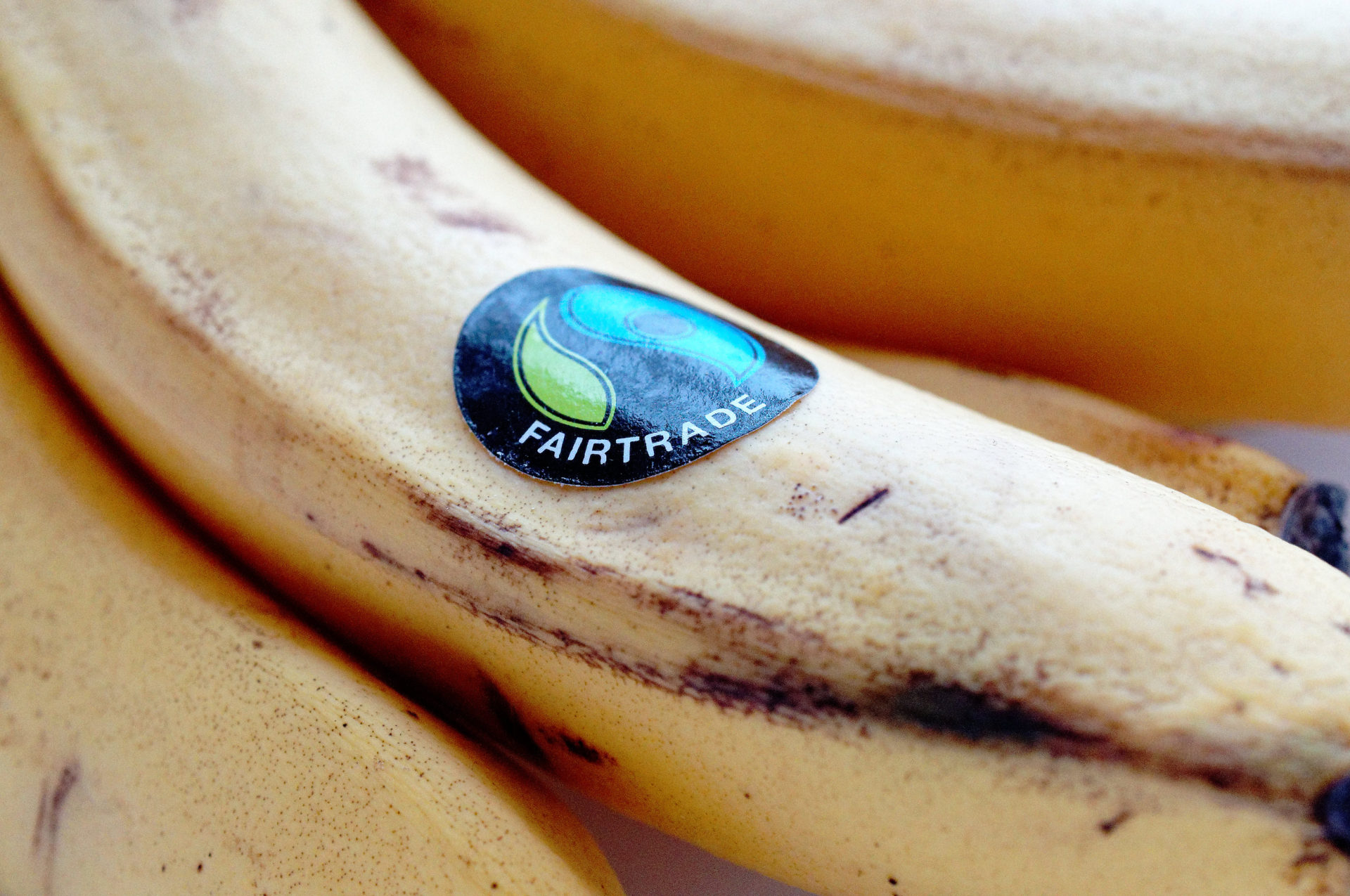
Fairtrade-certified bananas (Dave Crosby / Flickr [CC BY 2.0])
Although “Fairtrade” products still face questions about whether they are fully fair, they are certainly a steady step toward fairer trade. Beyond agricultural products like chocolate and coffee, initiatives such as the “Fairphone,” which focuses on the minerals that go into smartphones and is made with attention to workers’ wages and safety, are gradually spreading.
However, it is the governments, retailers, manufacturers, and trading houses of high-income countries—the most powerful actors in trade—that must be pressed to act. At present, it is hard to say these actors are taking proactive steps. Without their reforms, significant progress toward addressing unfair trade is unlikely.
※1 Setting a price for a fixed quantity in advance of production. This system functions like insurance against poor harvests and price swings.
※2 Derivatives are “transactions and products based on fluctuations in interest rates, exchange rates, stock prices, etc.” Many such trades have no underlying physical transaction, and there is strong criticism that they are speculative bets on future prices.
※3 GNV uses an ethical poverty line (US$7.4 per day) rather than the World Bank’s extreme poverty line (US$1.9 per day). For details, see the GNV article “How should we interpret the state of global poverty?”
※4 In Oxfam’s report, producers’ overall share of value is larger than trading houses’, but because there are far more producers, profit per person is likely higher for employees at trading houses.
※5 Other forms of buyer–producer arrangements include contract farming, in which the buyer lends seedlings and pesticides after pre-agreeing on crops and prices, and then recoups those costs from the harvested product. Even here, there are cases where unattainable yields are set as collateral or prices are set so that farmers cannot earn a profit, leaving producers at a disadvantage.
Writer: Nao Morimoto









私たち一人一人が自国や周囲の環境だけでなく、他者に対する理解・リスペクトを持つ必要があると感じました。