
February 21, 2022, the Constitutional Court of Colombia issued a historic ruling decriminalizing abortion up to the 24th week (sixth month) of pregnancy, allowing pregnant women to obtain an abortion. This development in Colombia can be seen as part of a broader feminist movement across the region. Feminist movements had already been gaining momentum in Latin America, but for about 10 years they have re-energized through demonstrations and information-sharing on social mediahave become active again. What lies behind this resurgence? And how are these movements affecting societies in Latin American countries?
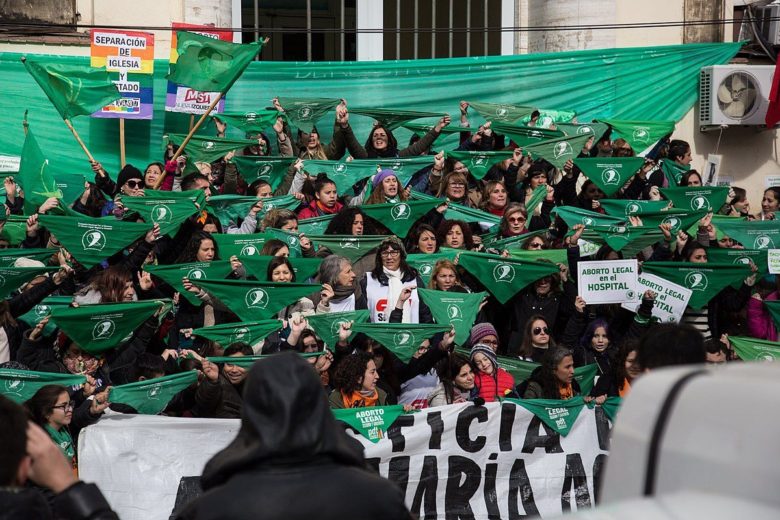
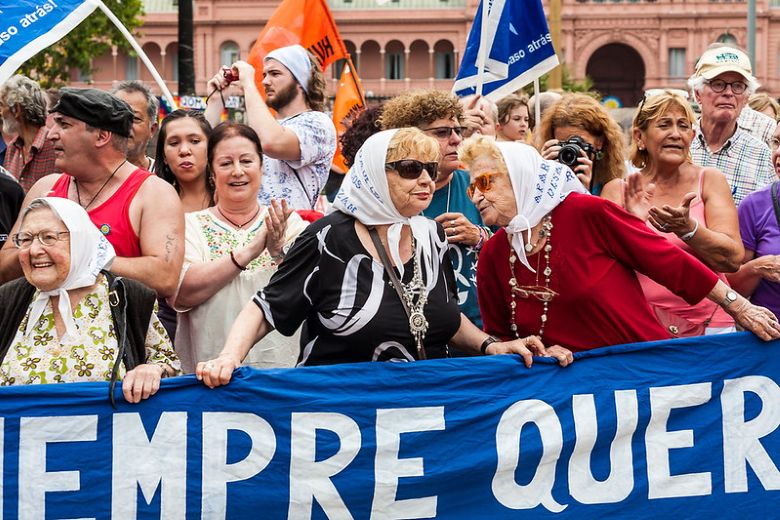
A feminist demonstration in Argentina (Lara Va / Wikimedia [CC BY-SA 4.0])
目次
Background
The social status of women in Latin America was not always low. For example, women in the 15th to 16th centuries who lived in the western regions of South America in the flourishing Inca civilization—while not in a completely equal society—participated in politics and shared in structures of rule with men. Spanish soldiers and clergy who arrived on the coasts of Peru and Ecuador in the 1530s were reportedly astonished to find that these women not only held political voice and command, but were also respected by all men. It is said that with subsequent Spanish colonial rule, patriarchal ideas were reinforced. Even after the countries gained independence in the first half of the 19th century, those patriarchal ideas, once entrenched, did not change significantly. However, in the latter half of the 19th century, influenced by socialist women’s movements in Europe and the United States led by figures such as Elizabeth Cady Stanton (※1) and others, socialist women’s movements emerged, and feminist (※2) movements were launched by some women in several Latin American countries. From the late 19th to the early 20th century, campaigns demanding gender equality—such as suffrage and improvements in other civil and cultural rights and roles—became active.
In Argentina, anarchist and socialist women led the first feminist organizations. For example, the Unión Gremial Femenina (Women’s Labor Union), formed in 1903 primarily among women workers to promote women’s labor rights. As a more powerful organization, the Unión Feminista Nacional (National Feminist Union), which aimed at women’s civil and political emancipation, raising cultural standards, and the right to equal pay for equal work, began its activities in 1918. Thanks to these movements, a law for women’s political participation was passed in September 1947, and in 1951 Argentina held its first elections in which women also participated.
In Chile, a National Council of Women was established in the early 20th century. Through a newspaper published by the Chilean women’s liberation movement called La Mujer Nueva (The New Woman), they criticized discrimination against women in workplaces and educational settings. In 1934, women’s suffrage was recognized in municipal elections, and in 1949 women were granted the right to vote in presidential and parliamentary elections. Women voted for the first time in the 1952 presidential election.
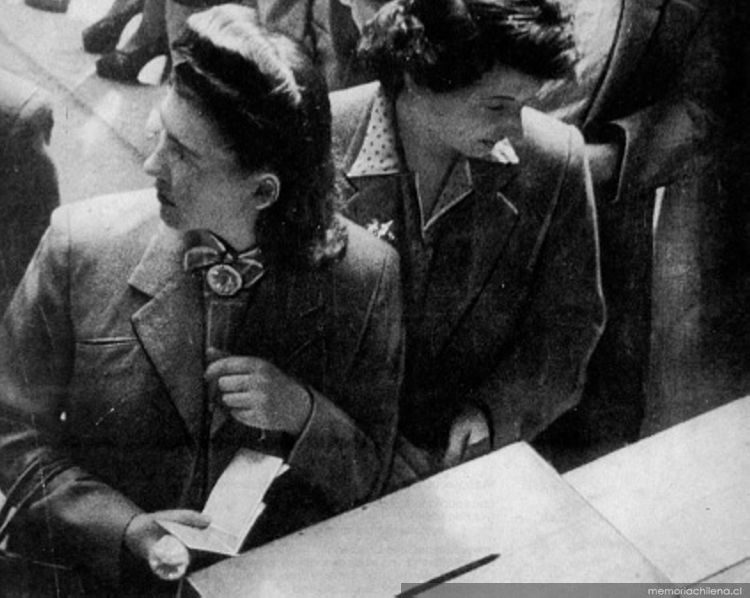
The 1945 elections in Chile (Crónica del sufragio femenino en Chile / Diamela Eltit / Wikimedia [CC BY-SA 4.0])
In Mexico, women’s groups began to mobilize in the latter half of the 19th century. This is considered a precursor to feminism, or the first wave. In 1915, the magazine La Mujer Moderna (The Modern Woman) was launched, disseminating liberal ideas for women. After the Mexican Revolution from 1910 to 1920, women across Mexico formed a National Council of Women, and with the magazine La Mujer (The Woman), founded in 1920, they promoted feminist ideas. In 1953, Article 34 of the Mexican Constitution was amended to grant women the right to vote. In the 1955 national elections, Mexican women participated in voting for the first time.
Once suffrage was achieved, feminist movements across South America gradually declined. However, in the 1970s, movements once again emerged—driven by socialist feminists who were confronting the dictatorships that had arisen in Latin America—promoting new demands and leading to a robust revival of feminism in the region. Feminism in Latin America in the 1970s was part of a global wave and was influenced by the socialism that had permeated Latin America. In the 1970s and 80s, feminism was intensely active, with feminists considering how to transform societies marked by cultural, racial, and economic inequalities and by disparities stemming from men’s privileged status. In the 1990s, the focus shifted to gender equality and non-discrimination.
From the 2000s, feminist activism advanced and new organizations were created in several parts of Latin America. For example, in 2007, GLEFAS (Grupo Latinoamericano de Estudios, Formación y Acción Feminista) was established. The group aims to create spaces for dialogue between Latin American feminists and other social and territorial struggles.
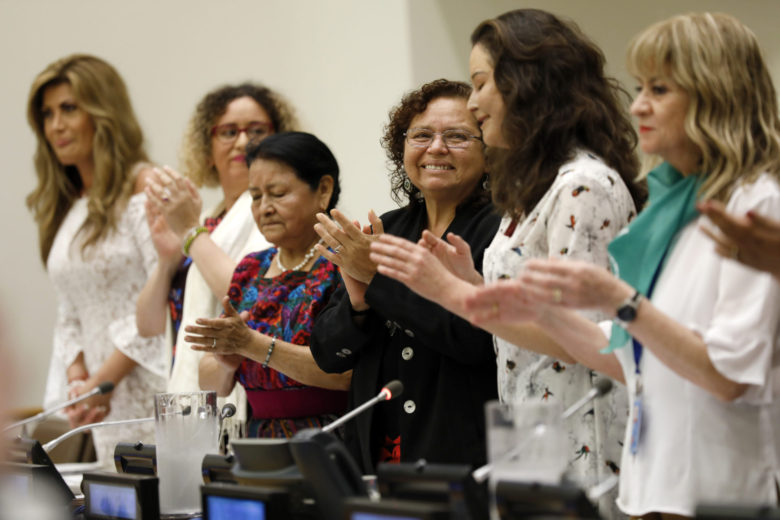
Feminist politicians in Latin America (UN Women / Flickr [CC BY-NC-ND 2.0])
Today, what feminists are demanding across the continent includes the legalization of abortion, the eradication of violence against women, equality for LGBT people, gender equality, equal pay, and women’s political participation.
Types of feminism
As feminism has gathered strength in Latin America, it is important to note that “feminism” is not monolithic in its approaches or goals. For example, there is “liberal feminism,” which does not rely on state intervention, and “eco-feminism,” which considers the relationship between women and nature. Other strands include “Marxist feminism,” which calls for the abolition of capitalism and the introduction of socialism to liberate women from patriarchy, and “Black feminism,” which argues that racism affects gender roles. Moreover, there are feminisms that originated in Latin America.
For instance, there is a movement called “community feminism” that emerged among Indigenous women in Guatemala and Bolivia. The premise of community feminism is that women’s revolution is collective and is born within communities that form a shared ancestral identity. For example, the concept of the heterosexual couple (man/woman) replaced an earlier concept among Latin America’s Indigenous peoples (the Aymara) based on complementary relationships irrespective of gender. Community feminism works to ensure that the basic principles of Indigenous peoples are upheld.
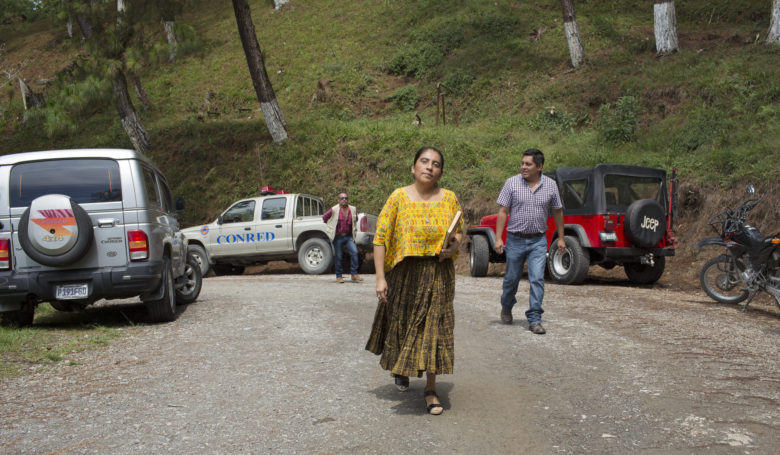
A mayor in Guatemala (UN Women / Flickr [CC BY-NC-ND 2.0])
There is also the concept of “decolonial feminism (※3),” which arose in Colombia and Brazil. It links issues to the cultural institutions (such as gender roles) imposed since the era when these countries were colonies of Spain and Portugal, prioritizes the issues of sex/gender, status, and race, and raises critical questions. Beyond NGOs, the state, and political parties, it also engages in activities to eliminate fixed ideas that have remained since the colonial era. Such actions include artistic practices like street art and counterculture.
Across Latin America, the serious problem of violence against women has also given rise to new movements. “Ni Una Menos” (“Not One Woman Less”) is a movement opposing femicide and violence against women. Born in Argentina in 2015, participants wear items such as green bandanas and hold demonstrations. The first took place on June 3 of that year, simultaneously in 80 cities in Argentina. Since then, “Ni Una Menos” has held demonstrations repeatedly, drawing great attention—150,000 people participated in the June 4, 2018 march. The movement then spread on a large scale to numerous countries around the world, beginning with Latin America.
Legalization of abortion
As feminist movements have grown more active in Latin America, they are said to have significantly influenced the legalization of abortion. As of 2022, among the 21 countries in Latin America, 16 still have strict restrictions on abortion.
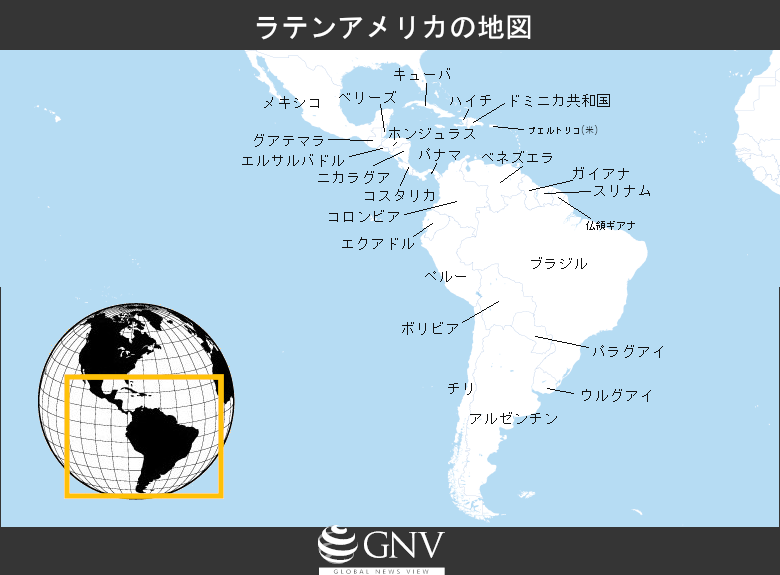
Religion lies in the background. Roman Catholicism is the most common religion in Latin America. Evidence of this is that 69% of people in Latin America are Catholic. Catholic teaching prohibits abortion. Countries that cooperate closely with the Vatican, the seat of Catholicism, are believed to fear that legalizing abortion will worsen their relations with the Vatican. Strictly observant Christians have also strongly resisted legalization.
There are two main reasons behind the movement seeking legalization. The first is women’s bodily autonomy and sexual and reproductive rights. Unless abortion is legal, women do not have control over their own bodies. The second reason is that even when abortion is illegal, some women will still seek to terminate a pregnancy. They then go to illegal clinics for procedures and many die as a result. It is estimated that between 5,000 and 10,000 women die each year in Latin America due to abortion. Behind this are factors such as poor hygiene in illegal clinics and the fact that those performing procedures often lack proper qualifications .
Feminists are calling for the legalization of abortion mainly for these two reasons. In recent years, thanks in part to the efforts of feminist movements such as “Ni Una Menos,” legalization has advanced in many countries.
In Latin America, Cuba moved exceptionally early, legalizing abortion in 1965 and becoming the first country in Latin America to decriminalize abortion (excluding Puerto Rico, where U.S. law applies). The next significant move came in the 2010s, when Uruguay legalized abortion in 2012.
The “Ni Una Menos” movement that began in 2015 created a new tide. First, in 2020, Argentina legalized abortion. The newly introduced law stipulates that all people with the capacity to become pregnant are entitled to freely and legally obtain abortion services and post-abortion care, and it is mandated nationwide.
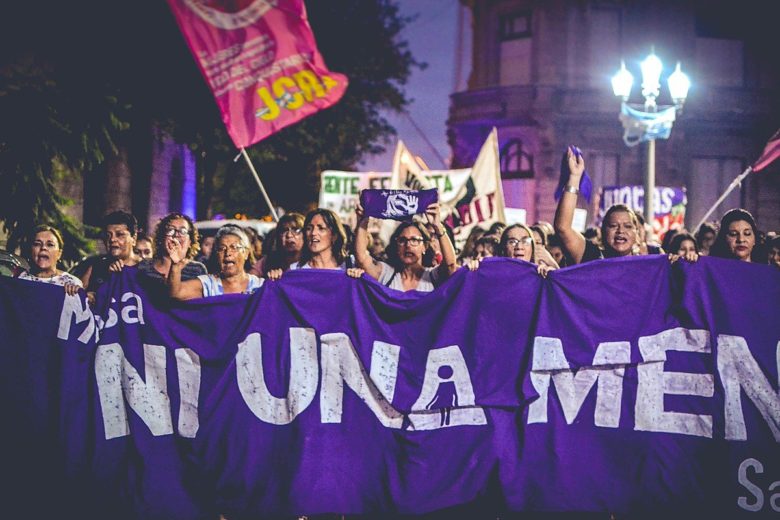
“Ni Una Menos” demonstration in Argentina (TitiNicola / Wikimedia [CC BY-SA 4.0])
In Mexico, abortion has been effectively legal since 2021. Previously, it was legal in only three states, but in 2021 the Supreme Court ruled that criminalizing abortion is unconstitutional.
Furthermore, as noted at the beginning, Colombia also decriminalized abortion up to 24 weeks in 2022. Since 2006, abortion had been recognized as a right only for three reasons: when there was a risk to the woman’s physical or mental health, in cases of rape or incest, and in cases of fetal malformation.
Thus, while abortion has been decriminalized in several Latin American countries, there are still 16 where it remains illegal. Even in those countries, however, moves toward legalization are underway. For example, in Chile, a bill to legalize abortion was taken up in 2021 but was rejected. In 2017, under a Socialist administration, Chile’s Congress approved legalization in only three specific scenarios: when the mother’s life is at risk, when the pregnancy is the result of rape, and in cases of fetal anomalies.
There has also been movement in Ecuador, where abortion is strictly regulated. In 2019, a bill to allow abortion in cases of pregnancy resulting from rape was rejected, but in February 2022 it was legalized. Currently, most countries allow abortion only in limited circumstances, as in Chile and Ecuador. Exceptions include Nicaragua, Honduras, El Salvador, Haiti, and the Dominican Republic, where abortion is prohibited under all circumstances.
NGOs, activists, and politicians advancing feminist movements in Latin America are pushing for the legalization of abortion across the region, and their activities are likely to increase.
Backlash against feminism
Many people support feminist movements. In a 2019 survey, 32% of Argentine women identified themselves as feminists. In 2020, a survey in Mexico found that, regardless of gender, 57% supported demonstrations advocating for women’s rights.
However, there are also many opponents. First, there is the issue of the Church. As noted above, the Catholic Church wields strong influence in Latin America and strongly opposes the legalization of abortion. For example, in response to legalization movements rooted in feminism, Catholic believers and others have launched a continent-wide movement called “Pro-Vida” (Pro-Life).
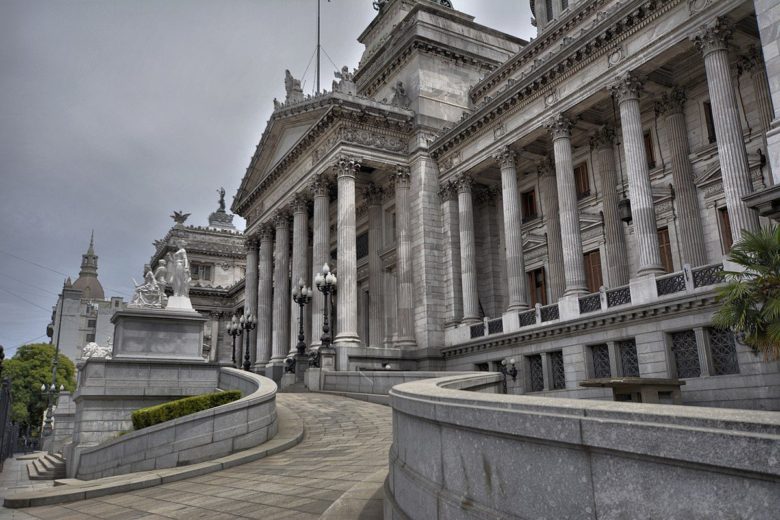
Argentina’s National Congress (Nicolas Solop / Wikimedia [CC BY-SA 2.0])
Backlash is also seen in education. For example, demonstrations opposing “gender studies,” which became part of compulsory education under feminism’s influence, have been held in Argentina and Puerto Rico. They petition the state not to deprive Catholic parents of the right to live and act according to their beliefs and conscience. The underlying idea is that children should be educated without being exposed at school to ideologies that contradict their parents’ beliefs.
Conclusion
Feminist movements in Latin America are expanding every year. Feminists are working to build a society in which women can live more easily, aiming for gender equality while encouraging new women to join the movement. The legalization of abortion in Argentina was a major step for feminist movements in Latin America. New feminist perspectives that attract the interests of diverse women will continue to emerge. For young women in Latin America, feminism cannot be contemplated without a plurality of voices. The feminist struggle is becoming broader still. Feminism is understood not as a single theme but as something more transversal, involved in every aspect of life.
※1 Elizabeth Cady Stanton (born November 12, 1815; died October 26, 1902) was one of the major forces behind the expansion of women’s rights in the United States and around the world. In particular, she was a founder and leader of the 19th-century women’s rights movement, which led to the realization of women’s suffrage in the United States in 1920.
※2 According to the Oxford dictionary, feminism is a movement that advocates for rights historically monopolized by men to be applied equally to women. It is generally translated as “women’s rights advocacy” or “gender equality.”
※3 A term referring to formerly colonized countries achieving independence from their ruling powers and freeing themselves from the cultural influences they imposed.
Writer: Martin Parle
Graphics: Kato Hikaru










.jpg)
日本でまず報道されることのない、ラテンアメリカの情勢について伝えていただきありがとうございました。ラテンアメリカ諸国がこれほどフェミニズムに熱心で、具体的に実現に向け活動してきたことを初めて知りました。今後も、機会がありましたらまたその後の状況について教えていただけるとありがたいです。