
In 2/2021, UN Secretary-General Antonio Guterres said that “no country is close to achieving the goals of the Paris Agreement (※1).” To realize these goals, set to put the brakes on the advance of climate change, carbon dioxide emissions need to be reduced by 45% by 2030 compared with 2010 levels. Countries around the world have set their own CO2 reduction targets. However, even if these national targets were achieved, they would amount to only about a 1% reduction of 2010 CO2 emissions by 2030.
Amid this situation, how much attention is the media—capable of influencing the actions of governments, companies, and individuals—paying to climate change? And what does climate reporting actually look like? Here, we expand GNV’s 2017 article on climate change and follow climate coverage from a long-term perspective.
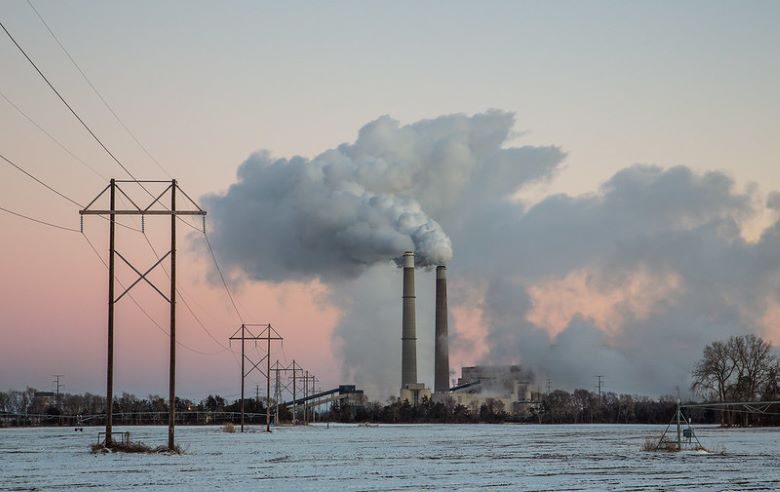
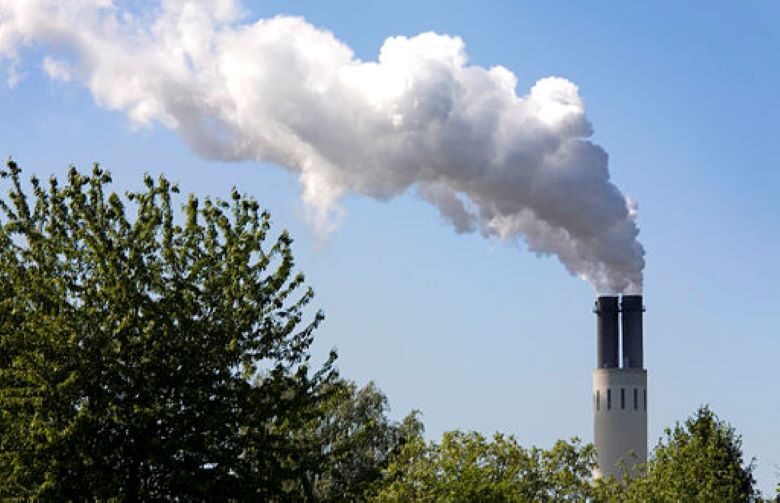
Smoke from a thermal power plant (Photo: Tony Webster / Flickr [CC BY-SA 2.0])

目次
Climate change issues
Today, climate change is threatening the world in numerous ways. Here are a few examples.
First is global warming. According to data released by the National Aeronautics and Space Administration (NASA), 2020 was tied with 2016 as the warmest year on record. As of 2018, the Intergovernmental Panel on Climate Change (IPCC) reported in its Special Report that “the Earth’s current average temperature is about 1°C warmer than in pre-industrial times.” Global warming is having a variety of environmental impacts, including the loss of species’ geographic ranges, the disappearance of coral reefs, and health impacts.
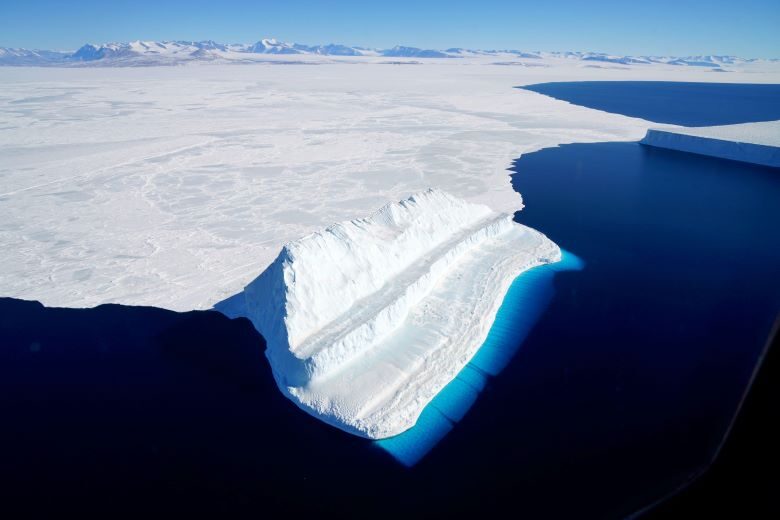
Furthermore, global warming is causing ice sheets to melt around the world. In recent years, Greenland’s ice sheet has been melting at the most rapid rate in the past 12,000 years, reaching a level where snowfall can no longer replenish the ice lost to the sea each year. Ice sheet melt is also progressing in other regions including the Arctic and Antarctica, and these are major drivers of sea-level rise.
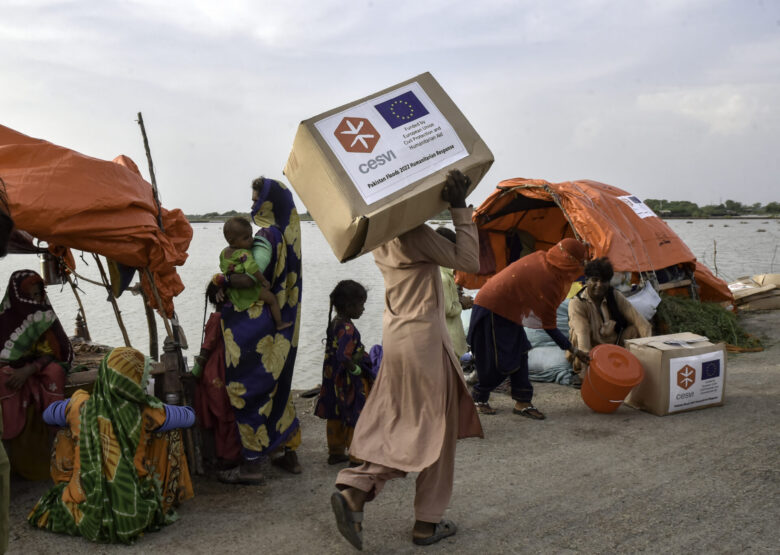
Extreme weather is also severe. In 2020, devastating floods struck the Bay of Bengal coastal region centered on Bangladesh, with climate change cited as one cause. Heavy monsoon rains submerged about one-third of Bangladesh and affected 5.4 million people. In India, more than 14 million people were affected by similar flooding, and over 1,000 people died across the two countries. That same year, multiple typhoons—including three major ones—made landfall in the Philippines and Vietnam. These events caused many deaths and missing persons, damaged infrastructure and destroyed homes, and pushed survivors into economic hardship. Since 2019, East Africa has also been hit by massive downpours, which have fueled outbreaks of infectious diseases such as cholera and caused soil erosion of farmland, triggering severe food crises. In 2020, the heavy rains spurred the breeding of desert locusts, and swarms devastated farmland, making the food crisis even worse rather than easing it. The swarms spread to the Middle East and South Asia, triggering food crises in many places.
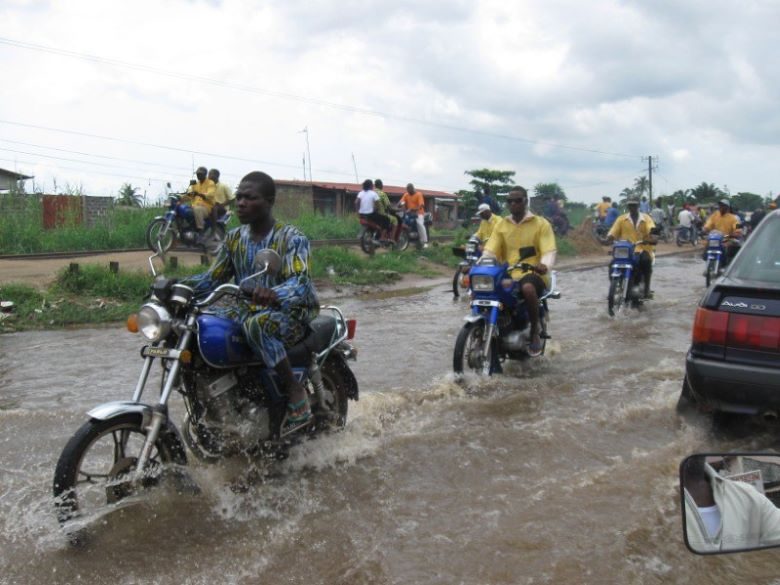
Flooding in Africa (Photo: Theresa Carpenter / Flickr [CC BY-SA 2.0])
Climate change is also closely tied to inequality and poverty. One concept to note here is what’s called “climate apartheid.” Climate apartheid refers to a situation in which high-income countries that contribute most to climate change can mitigate some of the harm thanks to their economic power, while low-income countries lack the resources to take measures, thereby suffering greater damage from climate change and seeing the gap with high-income countries widen. Examples include the floods in Bangladesh and India and the heavy rains in East Africa mentioned above. In fact, Bangladesh accounts for only about 1% of global greenhouse gas emissions. Poverty makes the damage from climate change more severe, and that damage in turn exacerbates poverty, trapping countries in a vicious cycle.
Past 35 years of coverage trends
From the above, it is clear how climate change is creating a crisis worldwide. So how much has this issue been covered in Japan? We examined the number of articles referencing climate change—domestic and international—in three major newspapers (Yomiuri Shimbun, Asahi Shimbun, and Mainichi Shimbun) from 1986, when climate change began to receive serious attention, through 2020, and tallied the annual volume of coverage (※2).
As the shape of the graph shows, the three papers exhibit broadly similar trends in increases and decreases in coverage. Let’s look at what happened in the years when coverage rose.
Coverage of climate change began to be picked up gradually around 1990, with a slight increase in 1992. This is related to the adoption of the United Nations Framework Convention on Climate Change at the UN Conference on Environment and Development (Earth Summit) held in Brazil. The first big spike came in 1997, when the Kyoto Protocol was adopted at the 3rd Conference of the Parties to the UNFCCC (COP3). The Kyoto Protocol set a target of “reducing greenhouse gas emissions by about 5% between 2008 and 2012 compared with 1990 levels,” imposing binding reduction commitments on high-income countries. The sharp increase in coverage compared with preceding years is likely because COP3 was held in Japan. A similar pattern was seen when coverage of biodiversity increased around COP10.
After that, the volume of coverage fluctuated, but it increased dramatically from 2007 to 2009. One likely reason is that political debates intensified during that period over whether to extend the Kyoto Protocol and, if not extended, what new framework would replace it. Expectations grew for participation by the United States, which had withdrawn from the Kyoto Protocol, and by China, which had no binding reduction obligations under it, and there appeared to be a rising global momentum to confront climate change. However, COP15 in 2009 in Copenhagen, Denmark, ended without delivering a new framework. At COP17 in 2011 in Durban, South Africa, Japan, Canada, and Russia chose not to participate in the Kyoto Protocol’s second commitment period starting in 2013. Despite the major development of three countries with high emissions withdrawing, coverage in 2011 plummeted—even compared with the downward trend the previous year. Thereafter, the volume of reporting again languished, as if the heat around climate change had cooled.
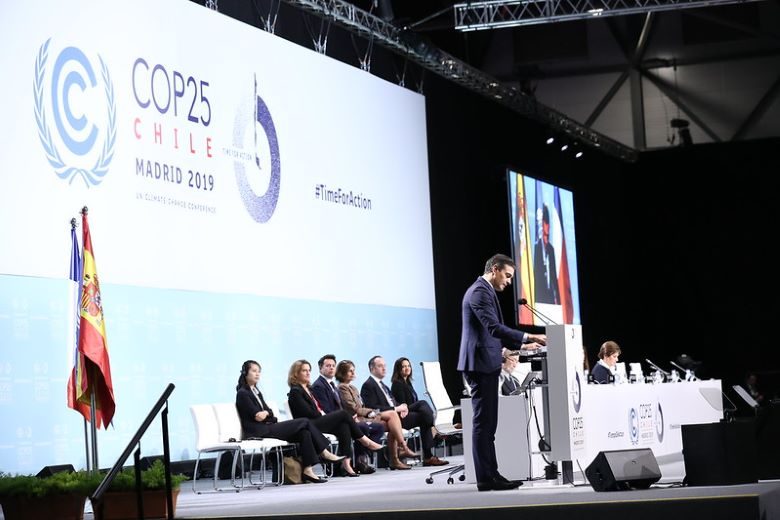
Speech at COP25 (Photo: La Moncloa – Gobierno de España / Flickr [CC BY-NC-ND 2.0])
In 2015, COP21 was held in Paris, France. Unlike the Kyoto Protocol, which imposed reduction obligations only on high-income countries, the Paris Agreement was an accord in which all ratifying countries pledged to take action on warming. In 2017, then-U.S. President Donald Trump drew attention by announcing the United States’ withdrawal from the Paris Agreement. These likely account for the slight increases in coverage in 2015 and 2017. Although the Paris Agreement drew major global attention as the international accord replacing the Kyoto Protocol, the absolute volume of coverage was still low compared with the two major peaks in the graph—1997, when the Kyoto Protocol was adopted, and 2008, the start of its target period—revealing the low level of attention to the Paris Agreement in Japanese reporting.
Past 2 years of coverage trends
Next, let’s take a closer look at trends over the most recent 2 years. Focusing on articles in Asahi Shimbun centered on climate change, whether domestic or international, we examined and analyzed monthly coverage over 2019 and 2020—a total of 2 years (※3).
There were 106 climate-related articles over the 2 years—an average of only 4.4 per month. As the 35-year graph shows, 2019 had the highest volume of coverage in the past 10 years. What drove this increase? Comparing month by month, December had 16 articles, largely because 13 of them were about COP25, held that December in Madrid, Spain. Many pieces also focused on the words and actions of politicians and activists—most notably Japan’s environment minister Shinjiro Koizumi and Swedish student activist Greta Thunberg. Koizumi drew attention for his diplomatic debut at the UN Climate Action Summit, and there were 3 articles about him in 2019. Thunberg’s speech at the UN Climate Action Summit in September 2019 attracted particular attention, and there were 6 articles about her in 2019. Given that the scale of climate change itself is vast, difficult to capture as a discrete “event,” and ongoing—making it a challenging news topic—it is understandable that coverage gravitates toward governments and individuals. Even so, reporting on the problems and impacts of climate change remains extremely limited.
By contrast, 2020 saw a sharp drop in coverage—unsurprisingly due to the media’s focus on the COVID-19 pandemic. As GNV has examined in a past article, rising temperatures and extreme weather are closely linked to health impacts and the spread of infectious diseases. In other words, climate change and pandemics are not unrelated. Yet coverage of the continuing climate crisis has plummeted of late. While coverage appeared to recover slightly toward December 2020, monthly coverage in 2021 fell to 1 article in January, 3 in February, and 4 in March.
Asahi Shimbun is a partner in the international initiative “Covering Climate Now” (Covering Climate Now), whose partners are expected to increase climate coverage, and there are reporters at Asahi who actively focus on environmental issues. In addition to using social media, the paper also runs a special feature page on its website. However, based on this study, there was little sign that climate coverage is increasing. Despite the need to sound the alarm and demand rapid action from governments and corporations, the current level of coverage falls far short of fulfilling that role.
Climate change and international reporting
We next analyze international coverage alone under the same conditions. As noted, there were 106 climate-related articles over the 2 years, consisting of 42 domestic and 64 international pieces. Of the international coverage, 15.5 articles (※4) were about COP25 in Madrid in 2019 and the then-postponed COP26 scheduled for Glasgow in 2021, and more than half—35.5 articles (※4)—concerned climate countermeasures, including those COP-related stories.
Two major inferences emerge from this analysis. First, media coverage still tends to follow when governments move. Coverage spikes in the months when a COP is held each year. Yet, as noted, the content often focuses on the actions of politicians and activists or simply on the fact that an international conference took place; there is little reporting on the causes and worsening impacts of climate change itself. Only 7 international articles over the 2 years discussed its causes or impacts.
Second, most of the countries covered are high-income nations. Specifically, there were 15 articles related to the United States, 9 related to Spain, and 7 related to the United Kingdom. Meanwhile, there was very little reporting on low-income countries that suffered major climate impacts. At this rate, a solution to “climate apartheid” remains a distant prospect.
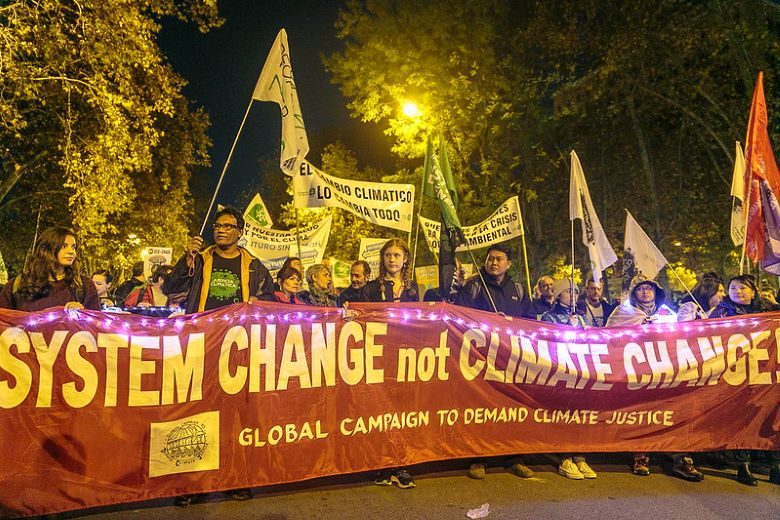
People calling for climate policies (Photo: Friends of the Earth International/Flickr [CC BY-NC-ND 2.0])
Expectations for the media
At the UN Climate Action Summit in 2019, Japan was denied a speaking slot for lacking concrete measures and targets. During COP25, the Japanese government also received the satirical “Fossil of the Day” award twice from the NGO Climate Action Network (CAN) for its inadequate stance on climate action. In October 2020, in his policy speech to the 203rd extraordinary Diet session, Prime Minister Yoshihide Suga declared that Japan would aim for carbon neutrality by 2050—“reducing greenhouse gas emissions to net zero by 2050.” Even so, Japan’s commitment to tackling climate change remains insufficient by global standards.
How does the Japanese media understand this clearly critical situation? The media should play a watchdog role: covering the problem itself, raising public awareness, and pressing governments and companies to act. Yet it is hard to say the media are fulfilling that role today. Although the Sustainable Development Goals (SDGs) have gained attention and are more visible in coverage and society, it is clear from the reporting that climate change—also one of the SDGs—has not received increased attention. If this continues, a rise in coverage is unlikely. We hope to see the media step up in the years ahead.
※1 The Paris Agreement is an international accord concluded at the 21st Conference of the Parties (COP21) to the UNFCCC in 2015, with the goal of “holding the increase in the global average temperature to well below 2°C above pre-industrial levels and pursuing efforts to limit the temperature increase to 1.5°C from 2020 onward.”
※2 For this research, we used Asahi Shimbun’s online database “KikuzoⅡ,” Mainichi Shimbun’s “Maisaku,” and Yomiuri Shimbun’s “Yomidas.” We counted all articles published in the morning and evening editions (all pages) of the Mainichi/Asahi/Yomiuri newspapers between January 1986 and December 2020 whose headlines or body text contained the terms “COP,” “climate change,” or “global warming.”
※3 For this research, we used Asahi Shimbun’s online database “KikuzoⅡ.” We counted all articles published in the morning and evening editions between January 2019 and December 2020 whose headlines contained the terms “COP,” “climate change,” or “global warming.”
※4 To count articles fairly, when a single article covered two themes, each theme was counted as 0.5 of an article.
Writer: Mayuko Hanafusa
Graphics: Mayuko Hanafusa












気候変動が私たちの生活を脅かすことはわかっているものの、私自身何か行動して生活を変えようとしていません。自分自身の考え方を根本から変えていく必要があると感じました。
メディアが関心に「応える」だけではなく、関心を「作る」立場となって、市民の気候変動に対する問題意識を高めていかなければならないのではないかと感じました。
環境問題がニュースとして人々の目を引く時だけ、都合よくそれらを大々的に取り上げる、この現状では環境問題解決は中々困難なことだと感じました。今一度、マスコミの役割を考え直し、それを果たすような報道がされてほしいと思います。
政府や人物に着目した方が伝えやすいという側面は理解できますが、政府や人物の話に終始してしまい、結局中身のない記事になってしまっては意味がないと思いました。この記事が指摘しているように、環境問題そのものを報道する必要があると感じました。
気候変動に限らず、メディアにはもっと自己を持って欲しい。確かに、問題の専門性や他の記事との尺の問題もあり取り扱いにくいトピックにはなると思うが、明らかに国際情勢の変化の波に合わしているその報道姿勢は変えるべきである。新聞の何ページに何番目の記事はウイグル問題で、その下が地球温暖化みたいに固定化したりして少しでも人々の目に触れる細工夫をして欲しい。意識あるものだけが能動的に情報を受け取るのではなく、全ての人が受動的な情報を受け取れるような環境整備に尽力して欲しい。