
In November 2020, a massive strike took place in India. Organizers claimed that participation reached as many as 250 million people, the largest in history worldwide, with 10 trade unions and numerous farmers’ organizations taking part. As a result, the strike affected a wide range of industries, including banking, transportation, and telecommunications services. Participants cited demands such as raising the minimum wage for workers and opposition to proposed legal amendments aimed at liberalizing agriculture as the main reasons for the strike. The aftermath of the strike continues, and farmers’ protests are still ongoing today.
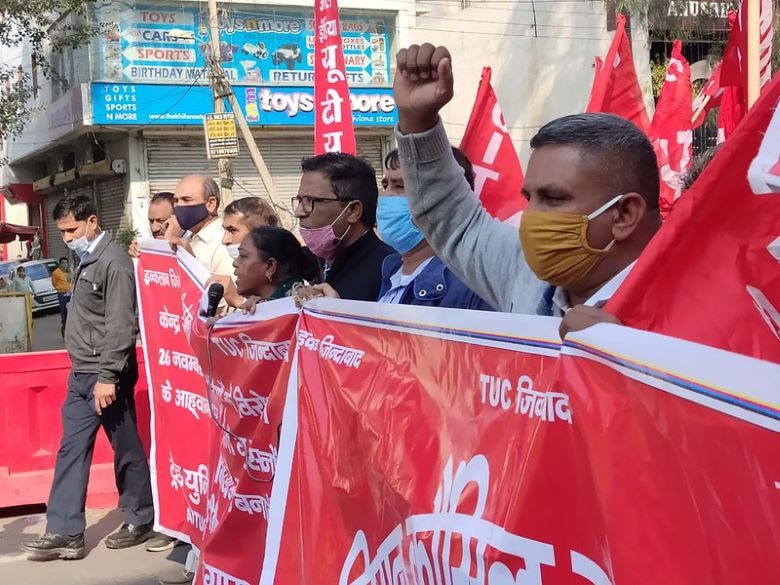
Large-scale strike held in India (Photo: IndustriALL Global Union / Flickr [CC BY-NC-ND 2.0])
As in this example from India, movements asserting workers’ rights are unfolding around the world, and many violations of workers’ rights are being reported. So how are workers’ rights covered in Japan? This article first outlines the global situation regarding workers’ rights, then explores how it is reported.
目次
What are workers’ rights?
To begin with, what are workers’ rights? The International Labour Organization (ILO), one of the UN agencies focusing on labor-related issues, was established in 1919. Based on the fact that many workers were laboring under unfair and harsh conditions at the time, the ILO’s goal is “to promote opportunities for women and men to obtain decent and productive work, in conditions of freedom, equity, security and dignity.” Labor-related topics were also vigorously debated at the World Trade Organization (WTO), but since the WTO primarily aims to promote trade, member countries could not reach agreement on discussions concerning labor provisions, and at the 1996 Singapore Ministerial Conference they reached the conclusion that all discussions on labor standards would be conducted within the ILO.
The ILO sets international labor standards, which are divided into legally binding conventions and non-binding recommendations that complement the conventions. The eight fundamental conventions include: the Convention on Freedom of Association and Protection of the Right to Organise (1948 year), the Right to Organise and Collective Bargaining Convention (1949 year), the Forced Labour Convention (1930), the Abolition of Forced Labour Convention (1957), the Minimum Age Convention (1973), the Worst Forms of Child Labour Convention (1999), the Equal Remuneration Convention (1951), and the Discrimination (Employment and Occupation) Convention (1958). Through these conventions, workers are guaranteed the right to freely form trade unions by choosing their own representatives, and—by prohibiting sanctions for participating in strikes under the abolition of forced labor conventions—the right to strike is protected.
An empty office (Photo: Blake Patterson / Flickr [CC BY 2.0])
Violations of workers’ rights
So what specific rights of workers are being violated? According to the 2020 report by the International Trade Union Confederation (ITUC), the most frequently violated workers’ rights worldwide are six: the right to strike, the right to collective bargaining, the right to establish or join a union, civil liberties regarding access to justice, the right to carry out trade union activities, and civil liberties concerning physical integrity and safety [six].
Let’s look at these six rights in more detail. According to the ITUC, the right to strike is violated in 85% of countries. The right to collective bargaining is violated in 115 countries. Regarding trade union rights, violations are particularly evident for migrant workers in the informal economy and live-in domestic workers. As for access to justice, there are cases in which workers’ complaints to courts are not accepted, or they are arbitrarily detained and denied access to legal counsel—constituting violations of workers’ rights by the justice system. Regarding the right to engage in trade union activities, governments and authorities hinder union activities by refusing to register unions at the initial stage after workers establish them. In terms of civil liberties relating to physical safety, many governments put pressure on workers by arresting and detaining trade union leaders. These are the rights that are commonly violated—but where are these violations most prevalent? We examine the ITUC’s country and regional rankings of the degree of rights violations. 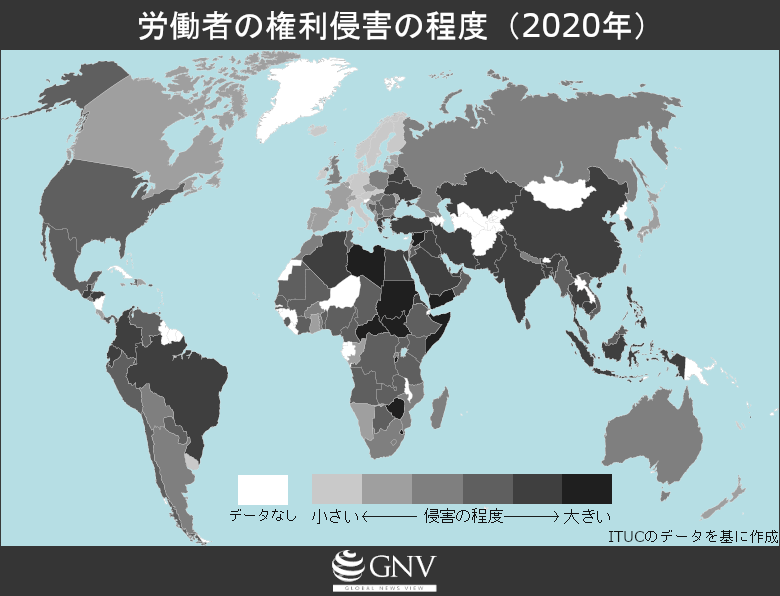
According to the ITUC’s data for 2020, by region—as shown on the map above—workers’ rights violations are most severe in the Middle East and North Africa, where many workers still face physical violence and labor under employers who commit grave human rights abuses. In the Asia-Pacific region, violations of the right to strike and the right to collective bargaining are especially prominent, and arrests of workers—including labor activists and trade union leaders—have been frequent in China, Cambodia, the Philippines, Nepal, and elsewhere. In Sub-Saharan Africa, in most countries the rights to strike, to bargain collectively, and to establish and join trade unions are violated. In the Americas, violations are most notable in South America, where cases of trade union leaders and workers participating in protests being killed are frequently seen in Colombia, Brazil, and Bolivia. Europe, where violations are the least severe overall, still sees restrictions on union activities mainly in Eastern European countries.
Also, in the report published by the ITUC since 2014, which lists the top 10 worst countries for workers, Bangladesh, Colombia, Kazakhstan, the Philippines, and Turkey appeared for three consecutive years between 2018, 2019, and 2020(※1). According to the reports from 2018 to 2020, in Bangladesh there is insufficient legal protection for workers, and when rights are asserted, not only employers but even the police intervene and suppress them. The situation is even more severe in Colombia and the Philippines, where not only have trade union members been killed, but those responsible have not been brought to justice. In Kazakhstan and Turkey, the governments strictly crack down on trade unions, preventing workers from asserting their rights. Turkey remains one of the toughest countries for trade union members.
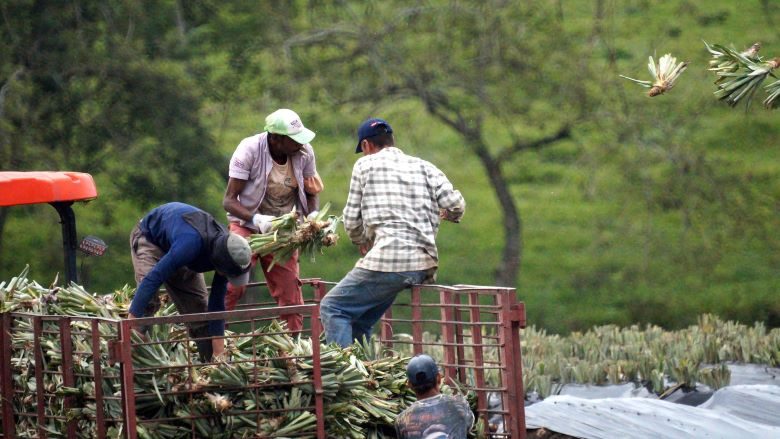
Workers on a pineapple plantation in Colombia (Photo: TRAPHITHO / Pixabay)
The issue of violations of workers’ rights is not uniform, and workers face specific problems depending on the country or region. For example, in the Middle East, there is the kafala system; employers confiscate and control domestic workers’ employment visas and passports, depriving them of freedom and leaving them with no escape, which in many cases forces them to accept coercive labor. Child labor is also a serious problem. For example, on tobacco farms and in cocoa plantations, poverty drives children into labor, preventing them from receiving adequate education and trapping them in a cycle of poverty into adulthood. Meanwhile, amid accelerating mass consumption, demand for fast fashion continues to expand in the fashion industry, and to cut labor costs, workers are forced to labor under low wages and poor conditions—especially in Bangladesh, Cambodia, and Myanmar. There are also issues of forced labor. In China, labor has been coerced among Uyghurs, and in Uzbekistan, one of the world’s largest cotton exporters, the government has a history of forcing citizens into labor. In this way, issues surrounding violations of workers’ rights are coming to light across various regions of the world.
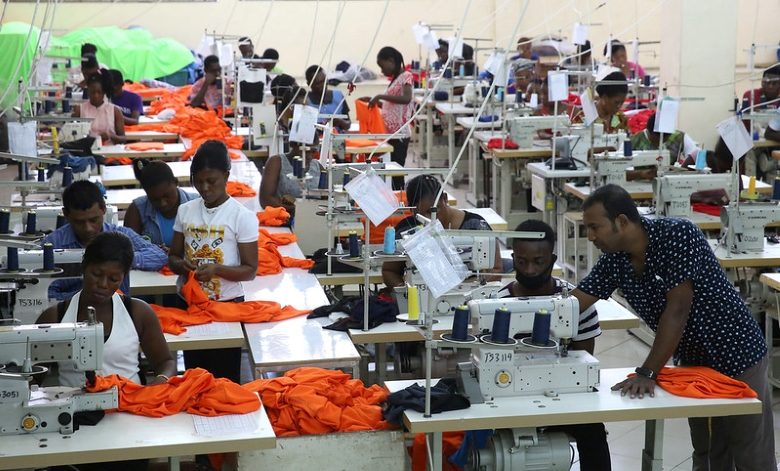
Workers in a garment factory in Ghana (Photo: World Bank Photo Collection / Flickr [CC BY-NC-ND 2.0])
Workers’ rights in media coverage
Are the serious problems faced by workers around the world, as described above, being sufficiently reported? And are the countries and regions where workers’ rights are threatened the focus of coverage? Assuming that an economic newspaper would include labor issues among its areas of specialization, this article focuses on coverage of workers’ rights in the Nikkei (Nihon Keizai Shimbun). The research method targeted articles related to workers’ rights and human rights in the Nikkei over the 10 years from 2011 to 2020 (※2). Narrowing the set of articles on workers’ rights and human rights to those dealing with events outside Japan resulted in 323 articles(※3). First and foremost, what stands out is the small volume of coverage. Articles referencing workers’ rights around the world appeared only about two or three times a month. Furthermore, when looking closely at content, there were not many articles that specifically spotlighted workers’ rights; rather, many articles mentioned rights only in part while focusing mainly on other topics.
Let’s look more closely at how the Nikkei reports on violations of workers’ rights. Viewing the 323 international articles analyzed by region (※4), articles about Europe and North America account for roughly 40%, whereas Sub-Saharan Africa accounts for 0.9%, and the Middle East and North Africa for 2.9%, revealing a significant disparity in coverage. The regions where workers’ rights violations are severe and the regions that receive media attention are thus considerably disconnected. Which countries were most reported on among the articles we examined?
By far the most reported country was the United States, followed by China; together, these two countries accounted for more than 30% of the total, and half of the most-covered countries were high-income nations. Next, we compare the volume of coverage by country with the ITUC’s reports from 2018 to 2020. Of the 14 countries that ranked among the worst 10 for three years in the ITUC survey, only two—Cambodia (2018) and India (2020)—made it into the top 10 most covered countries above. Kazakhstan ranked among the worst 10 for three consecutive years in the ITUC’s survey, but we found no individual articles on Kazakhstan.
There were several trends in the coverage. One was political and diplomatic reporting, which stood out in particular. This includes statements before and after national leadership elections, foreign policy and stances, and topics discussed at international fora. For example, coverage of policy agendas and statements during U.S. presidential elections. However, in such cases, specific areas of workers’ rights were rarely pursued, and most articles only referenced rights in general. This trend was especially notable in reporting on Europe and North America. There were also a certain number of articles focusing on workers at manufacturing sites and the like. These tended to cover actual rights violations or instances where external parties or contracting companies pointed out problems or initiated investigations. The industries covered included automotive and electronics manufacturing, as well as garment production, agriculture and fisheries, and the IT sector. In these articles on rights violations, topics often focused on the IT sector in the United States and on China, Cambodia, Thailand, Myanmar, and other parts of Asia. Although the volume of coverage was not very large, we also found articles on the rights of workers involved in ride-hailing services, which have increased in the United States in recent years. In addition, while there were several reports on strikes and demonstrations, there were very few articles with trade unions as the main subject.
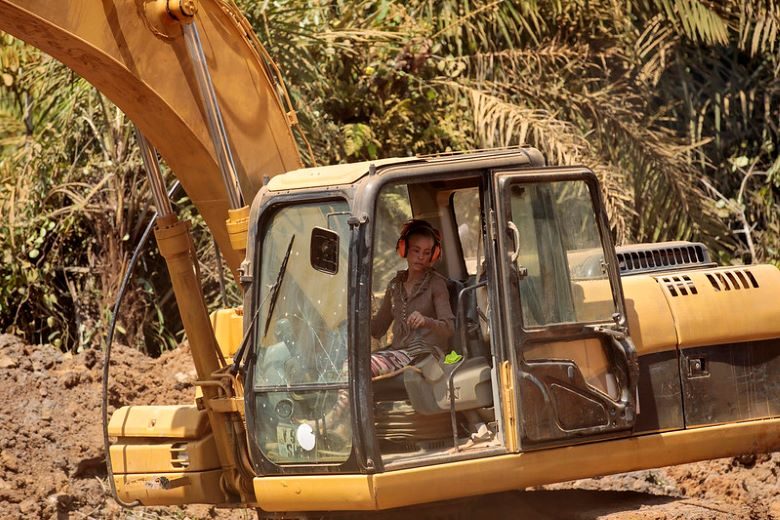
Road construction in Cameroon (Photo: UN Women / Flickr [CC BY-NC-ND 2.0])
Behind the coverage
Why do such regional and content biases occur in reporting? To begin with, possibly because the Nikkei is more attuned to perspectives from management than workers, there were few articles that addressed workers’ rights.
As the analysis of coverage volume shows, there were many articles about high-income countries, and, in addition, articles often focused on countries with strong economic, trade, or security ties to Japan. This aligns with the broader biases in international coverage, not limited to workers’ rights. However, this does not apply to all reporting. For example, the Philippines is geographically close to Japan, has strong trade and exchange ties, and is a country where workers’ human rights are heavily violated—yet there were only 3 articles over 10 years. Such disparities in coverage may in part be due to Japanese media’s limited interest in low-income countries. Indeed, many countries where workers’ rights violations were severe but coverage was insufficient were low-income countries.
At the same time, it can be said that Japanese media are heavily influenced by coverage in the United States. For example, among the articles we examined, specific companies mentioned included Amazon, the major e-commerce platform, and Apple, a major electronics and software firm, in reporting on excessive working hours in their factories. Violations of workers’ rights associated with these companies have been widely reported in U.S. media. Topics that draw high interest in U.S. media may be more readily covered by Japanese media as well. For the same reason, statements and actions by political leaders of economically powerful countries such as the United States may also attract more attention.
Another reason for the low volume of coverage is the absence of major change. It may be a characteristic of the media that events with major developments are more likely to be covered. When there are significant improvements or deteriorations in workers’ rights, or new measures are introduced, they are more likely to become subjects of reporting—but the reality that workers’ rights continue to be violated for years without major change may be less likely to be covered.
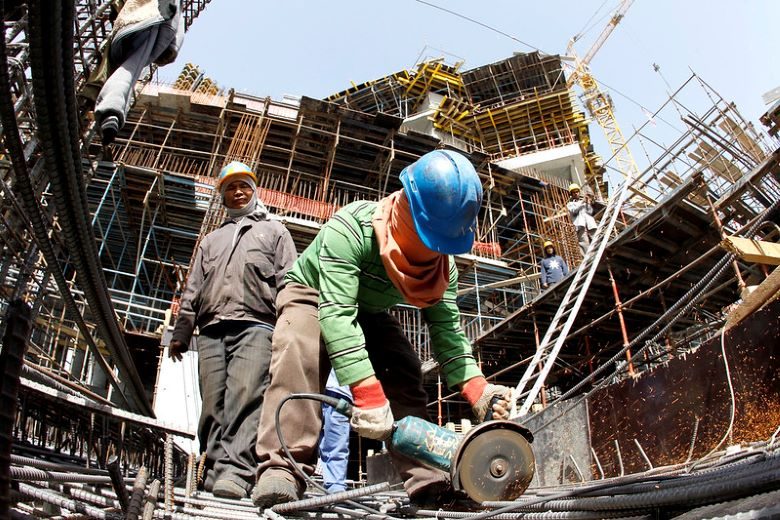
Migrant workers at a construction site in Qatar (Photo: International Labour Organization ILO / Flickr [CC BY-NC-ND 2.0])
Conclusion
In the Nikkei, which was the focus of this investigation, the subsequent farmers’ protests in India mentioned at the outset were reported, but the strike itself was not covered. As globalization advances, the world’s economies and labor are becoming ever more closely connected. With the Sustainable Development Goals (SDGs) also in the spotlight, perhaps media should pay more attention to workers’ rights around the world.
※1 However, there are multiple countries—such as North Korea and Turkmenistan—where workers’ rights are likely even more severely violated than in the countries listed, but sufficient data are not available.
※2 The target was articles in the Nikkei from 2011 to 2020 that included the keywords “workers’ rights” or “human rights.”
※3 There were 132 articles concerning workers’ rights within Japan; many of these focused on the rights of foreign workers, whose numbers are increasing in Japan.
※4 For articles focused on one country, that country received 1 point; for articles covering two countries, each country received 0.5 points; and so on, to compare coverage volume by article count. For Japan, only international coverage spanning two or more countries was counted, excluding articles focused solely on domestic issues.
Writer: Rioka Tateishi
Graphics: Yumi Ariyoshi






確かに大きな変化のない労働者の権利の問題は、報道されにくいと思った。それでも労働者問題は報道するべき重大なニュースだと感じた。
日経新聞に関する分析、新鮮でした!ただ他の新聞と同じように地域の偏りは大きいんですね、、包括的な報道が増えることを期待したいです。