
In 2020, in September, during a speech in Kuala Lumpur by Malaysia’s current prime minister, Muhyiddin Yassin, there was a startling remark. He said that while “politics based on racial prejudice” should have no place in a multi-ethnic country like Malaysia, it may not be possible to eradicate it completely. The remark was shocking in that it could be taken as the prime minister himself acknowledging that politics along “racial” lines had been practiced up to now. There is also a record of the same prime minister saying he identifies more as Malay than as Malaysian.
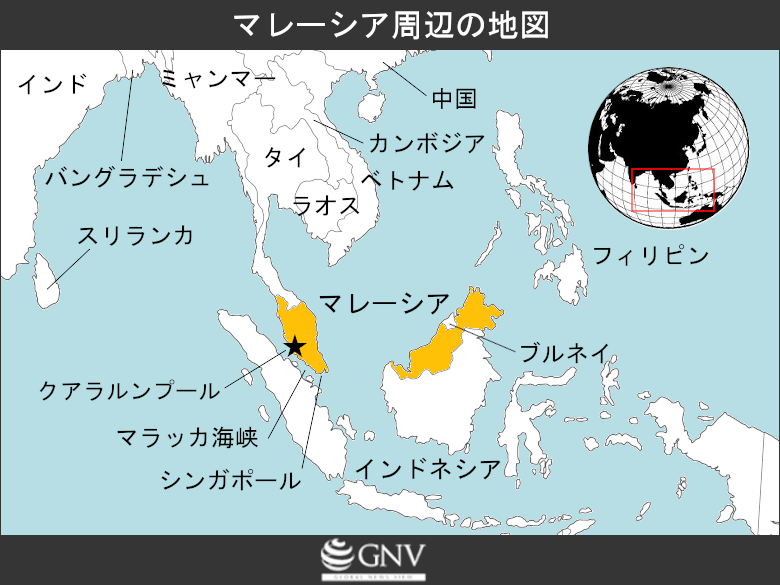
In Malaysia, the majority of citizens identify as Malay, Chinese, or Indian, and politics has operated through ethnically based parties that represent the interests of each group. The Federal Constitution explicitly states that Malays, who currently make up about 70% of the population (Note 1), are to be given preference over other ethnicities, and since independence in 1957, ethnically discriminatory policies have been pursued. In 2018, when former prime minister Mahathir Mohamad decided to sign and ratify the anti-racial discrimination convention that most countries in the world have joined, there was a major backlash mainly among Malays. The decision to sign the treaty was reversed, and Malaysia still has not joined. This article explores the history and structures behind this.
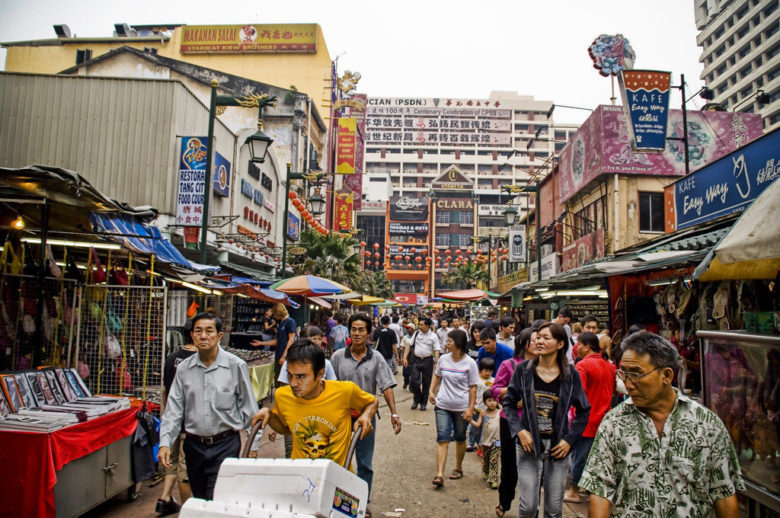
Street scene at a market in Malaysia (Photo: Trey Ratcliff / Flickr [CC BY 2.0])
目次
The formation of Malaysia
Malaysia’s history can be traced back to the early 15th century and the founding of the Malacca Sultanate. Malacca was strategically located between East Asia and the Middle East and became a key port for the spice trade in Southeast Asia. Not only spices, but also gold from the Malay Archipelago and Chinese silk and tea, were routed through Malacca to South Asia, the Middle East, and Europe. Because it served as a trading hub, religions and cultures from other regions, including Islam, were transmitted to Malacca, influencing the kingdom. At its height, merchants from China, the Arabian Peninsula, Persia, India, and elsewhere visited, laying the groundwork for the multi-ethnic country that would follow.
Malacca’s reputation as a trading center in Asia had spread to Europe by the early 16th century. From 1509, when Portugal, then seeking a sea route to East Asia, began to take control, Malaysia subsequently came under the colonial rule of European powers such as the Dutch and the British. Until then, the indigenous Malays had lived chiefly agricultural lives. When British colonial policy developed mines and plantations and labor shortages arose, between 1800 and 1941, when the Japanese army invaded, millions of Chinese flowed into the islands of Southeast Asia to work as mine laborers, plantation owners, and merchants, and Tamils from southern India were brought to Malaysia as labor for rubber plantations. With so many immigrants arriving, the colonial authorities implemented divide-and-rule. This meant that most Malays lived in villages, Chinese in towns, and Indians worked on plantations. As a result, in each divided state, communities practiced their own religions and languages according to ethnicity. To facilitate colonial rule, the British also concluded agreements with Malay rulers to protect Malay interests and rights across many sectors of society.
Independence and preferential policies for Malays
After World War II ended and the Japanese army withdrew from Malaysia, the movement for national independence intensified. In the background was the Atlantic Charter (Note 2), declared in 1941, which established basic principles for postwar world peace. Judging that the independence movements that had broken out across Asia would be unavoidable in Malaya as well, the British devised a new colonial polity, the Malayan Union, which would grant limited self-government. Because this plan negated the traditional primacy afforded to Malays in various ways, Malays opposed the Malayan Union proposal and in 1946 founded the United Malays National Organisation (UMNO). After a series of strikes, demonstrations, and boycotts led by UMNO derailed the Malayan Union plan, negotiations between Britain and UMNO were held, and it was reorganized as the Federation of Malaya in 1948.
From 1948, when the Federation of Malaya was established, for 12 years the Malayan Communist Party’s campaign to overthrow the colonial government intensified, and Britain struggled to suppress the conflict far from home. During that time, discussions were held with UMNO, the Malayan Chinese Association (MCA) founded by wealthy Chinese, and the Malayan Indian Congress (MIC) representing Indians; ultimately, in 1957, in August, the Federation of Malaya (Note 3) achieved full independence from Britain under UMNO leader Abdul Rahman. Although the present Federation of Malaysia was formed in 1963 by adding Singapore, Sabah, and Sarawak, Singapore separated and became independent two years later. One reason was that Malaysia sought to adopt policies favoring Malays, whereas Singapore, whose population was largely Chinese, demanded equality, leading to friction.
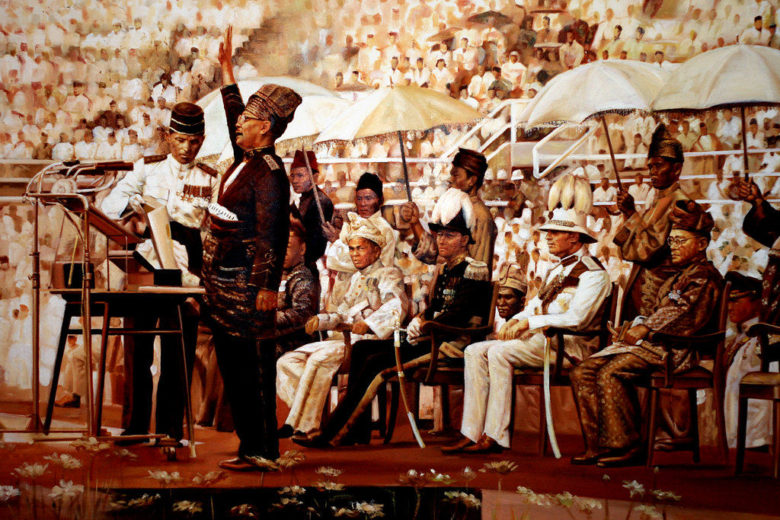
Declaration of independence by UMNO leader Abdul Rahman (Photo: Brian J. Chong / Flickr [CC BY 2.0])
After independence, during negotiations to establish the Federal Constitution—the framework for Malaysia’s political and economic systems—a trade-off was struck between Malays and Chinese by sector. As a result, leadership in political and cultural matters was allocated to Malays (Note 4), while leadership in economic matters was allocated to the Chinese. It was also codified that Malays and indigenous peoples would be accorded a special position (Article 153 of the Federal Constitution); and in cultural matters, Malay values were prioritized, including designating Islam—the faith of Malays—as the religion of the federation (Article 3) and Malay as the national language (Article 152). In return, the Chinese were given real authority over economic policy-making, including the allocation of ministerial posts related to the economy.
In post-independence politics, the Barisan Nasional (BN) ruling coalition of parties such as UMNO, MCA, and MIC held power from independence until 2018. 60% of BN was held by UMNO, making it easier for Malay views to be reflected in politics.
New Economic Policy (NEP)
However, agreement on the constitution did not resolve interethnic issues, and at times clashes escalated into violence. At independence, many Malays, who made up about half of the domestic population, were among the poorest strata with low average incomes and harbored resentment toward other ethnic groups. At the same time, repeated demonstrations and hate speech by Chinese against favored Malays culminated in 1969 in the worst interethnic clash in Malaysia’s history. Known as the “May 13 Incident”, it was triggered by a fight between Malay and Chinese youths; participants in a Malay demonstration organized by UMNO turned into a mob within hours, and shootings and arson resulted in 196 deaths.
To correct the interethnic economic disparities that lay behind the May 13 Incident, policies favoring Bumiputera (“sons of the soil,” comprising Malays and indigenous peoples) in capital ownership and employment were introduced, also known as Bumiputera policies. This New Economic Policy (NEP) was a type of affirmative action (Note 5) launched in 1971 after the incident. The policy’s basic philosophy is said to have been an attempt to dismantle the ethnically segmented occupational structure and division of labor that British colonial rule had produced.
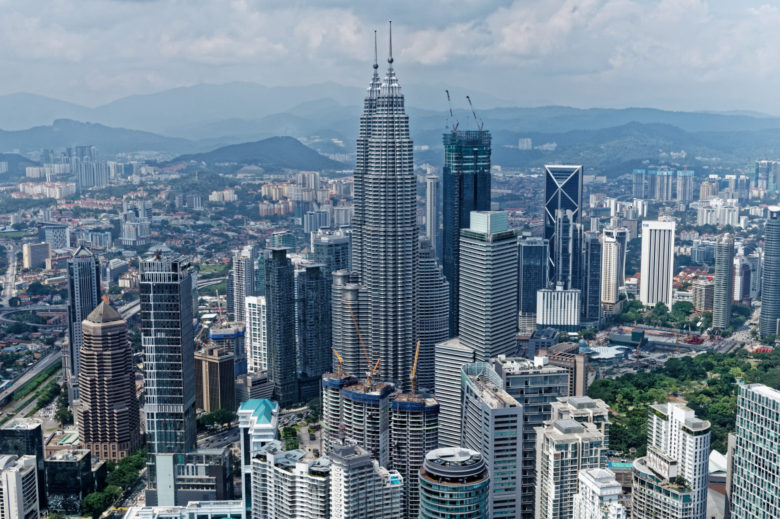
Kuala Lumpur Tower in the capital (Photo: SławomirGajowniczek / Wikipedia Commons [CC BY 4.0])
Under the NEP, measures such as a quota system allocating a certain number of places in public education to Malays and reduced interest rates on home loans were introduced to move toward reducing disparities with the Chinese across a wide range of areas. Because it was originally a policy responding to the 1969 ethnic riots, the policy—intended to last 20 years—has continued in different forms to the present (Note 6). Under its two pillars of eradicating poverty and restructuring society, it may have contributed to resolving income gaps and poverty among ethnic groups. From 1971 to 1990, Malaysia recorded a high annual economic growth rate of 6.7%, while income inequality as measured by the Gini coefficient (Note 7) also declined to some extent (Note 8).
On the other hand, economic disparities within the Malay community also exist, and support for the poorest Malays has been insufficient. Moreover, even though overall income inequality has narrowed nationwide, the continuation of ethnicity-based quotas for scholarships and civil service appointments has generated dissatisfaction among Chinese and Indians. In addition, ethnicity-based preferential policies in Malaysia have caused other problems. One is that many Malays have become dependent on these preferences and believe that they cannot get by without affirmative action, as has been pointed out. In short, there is no consensus on the evaluation of the NEP and the policies that followed.
Decision not to ratify the Convention on the Elimination of Racial Discrimination
Even after the 1969 ethnic riots, the policies favoring Malays described above continued. However, ethnic tensions in Malaysia have not subsided. In 2001, clashes between Malays and Indians left many dead and injured, the worst interethnic conflict since 1969. Malaysian politics has been in a situation where it cannot avoid ethnic issues, and according to the Racial Discrimination Report 2019 produced by the non-profit “Pusat KOMAS (Community Communications Centre),” racism remains serious and progress toward improvement has not advanced much, it concludes.
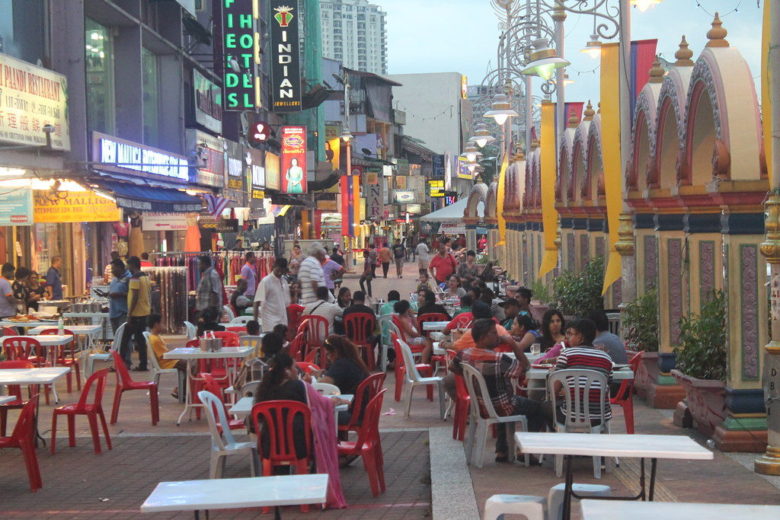
“Little India,” lined with Indian-style shops and restaurants (Photo: Robert Wilson / Flickr [CC BY 2.0])
In 2018, the 1MDB scandal, called one of the world’s worst cases of corruption, came to light. It involved the alleged misappropriation of about 700 million US dollars in funds from 1MDB, a state investment company launched in 2009 by then-prime minister Najib Razak himself. In place of Najib, who was condemned for his alleged involvement, Mahathir Mohamad, who served as prime minister from 1981 to 2003 and headed Pakatan Harapan (the Alliance of Hope), returned to office, bringing about the first change of government since independence.
Mahathir served as prime minister from 1981 to 2003, during which time he adopted Bumiputera policies. However, in his campaign platform for the May 2018 general election, he stated that, to win support from Chinese and Indians as well, he would adopt policies promoting the maintenance of a multi-ethnic society, a stance fully at odds with his previous approach of advancing Bumiputera policies. In addition to the cabinet announcement after the general election, in September 2018, in a speech at the United Nations after assuming office, he not only indicated the government’s intention to ratify the International Convention on the Elimination of All Forms of Racial Discrimination (ICERD), but also declared that Malaysia would ratify all of the UN’s major conventions related to racial protection. Adopted by the UN General Assembly in 1965, the convention calls on states to take measures to eliminate all forms of racial discrimination based on race, color, descent, or national or ethnic origin. Along with Brunei and Myanmar, Malaysia is one of 14 countries in the world that have not yet signed and ratified the convention.
In his speech at the UN, Mahathir said the new government promised to distribute wealth equally to all Malaysians. However, ratifying this convention would mean abolishing the preferential policies for Malays that had been in place. For that reason, UMNO and the Pan-Malaysian Islamic Party (PAS), which draws support from Malay Muslims, criticized the government, saying that ratification would abolish Bumiputera policies and undermine the basis of benefits Malays had received, and large protests were held particularly in 2018, in November. In the end, later that month the government decided not to ratify ICERD; nevertheless, rallies protesting the government were still held into December, once again highlighting that many Malays, who comprise the national majority, reacted strongly against the treaty.
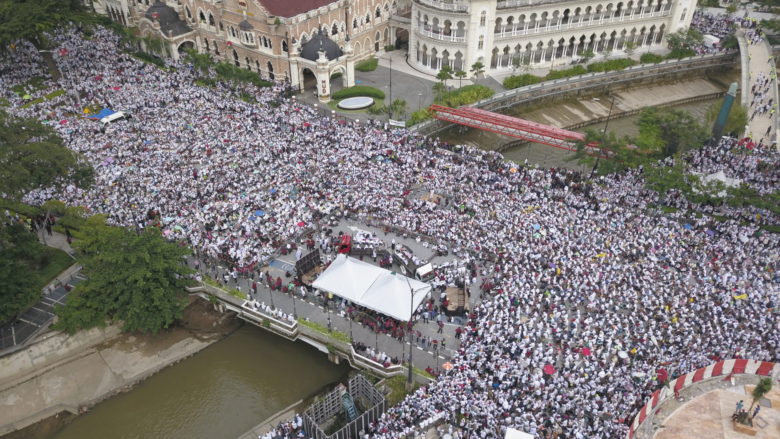
A rally opposing the Convention on the Elimination of Racial Discrimination (Photo: Imranharithazmy / Wikipedia Commons [CC BY 4.0])
However, Malaysia could have joined the convention with interpretative declarations and reservations, taking the country’s current circumstances into account. Moreover, actually ratifying the convention would not immediately lead to deleting the constitutional provisions that establish Malay privileges and amending the constitution. In the end, the main reason people opposed ratification so strongly was that many Malays in economically difficult positions feared that ratification would abolish Bumiputera policies or remove the privileges provided in the constitution. According to 2019 household income data released by the Department of Statistics Malaysia, 71.6% of households with monthly incomes of US$750 or less are Bumiputera, and these households would likely become even more impoverished if preferential policies were eliminated.
Where is Malaysia headed?
As described above, Malaysian politics has always had to face ethnic issues. At the same time, Malaysia has struggled to ride the wave among the most rapidly developing parts of Asia. The “Vision 2020” plan to join the ranks of high-income countries by 2020 has not progressed as hoped, with its targets being revised downward or postponed since it was formulated. Even under policies favoring Malays, not all Malays have benefited; the poor among Malays have not been sufficiently helped and are dissatisfied. Chinese Malaysians continue to emigrate to other countries such as Singapore, and the proportion of Chinese in Malaysia’s total population is declining year by year. As the same trend is expected to continue in the future, it will likely lead to reduced tax revenues the government can collect from the comparatively affluent Chinese community, a weakening of the private sector of the economy that the Chinese have largely led to date, and a decline in the number of professionals.
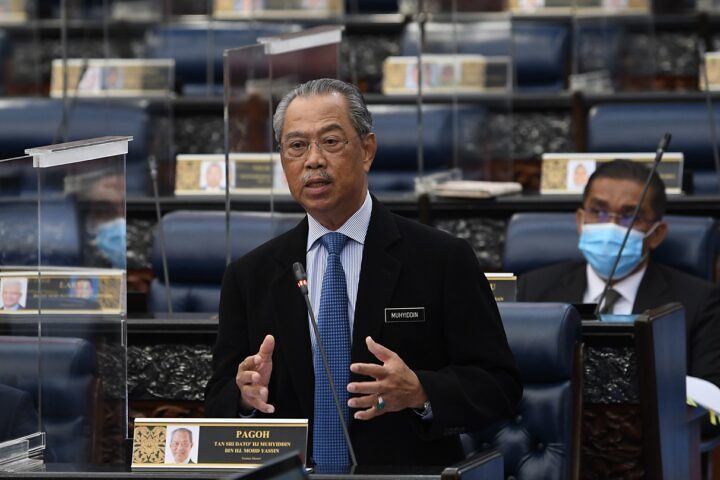
Malaysia’s current prime minister, Muhyiddin Yassin (Photo: Atiqah Nazir / Flickr [CC BY 2.0])
In March 2020, Mahathir resigned, and Muhyiddin Yassin took office as the new prime minister. That same month, Yassin decided to provide support equivalent to about US$62 billion to all Malaysians as part of an economic policy package. Will Yassin continue to craft policies for all Malaysians regardless of ethnicity? And what stance will he take toward the preferential treatment of Malays pursued to date? We will be watching developments closely.
※1 Bumiputera (Malays plus indigenous peoples) constitute 67.4% of Malaysian citizens, Chinese 24.6%, Indians 7.3%, and other ethnicities 0.7%.
※2 The Atlantic Charter, announced in August 1941 as a joint declaration by British Prime Minister Churchill and U.S. President Roosevelt, laid out basic principles such as no territorial aggrandizement, the right to choose one’s form of government, and the restoration of sovereignty and self-government taken by force; these ideas were later inherited by the United Nations.
※3 After winning independence in 1957 under the name Federation of Malaya, Malaysia was formed in 1963 by adding Singapore, Sabah, and Sarawak. Singapore separated in 1965 and became the Republic of Singapore.
※4 Article 160 of the Federal Constitution of Malaysia defines “Malay” as a person who professes Islam, habitually speaks Malay, conforms to Malay customs, and is born to Malaysian parents.
※5 Affirmative action, also called positive discrimination, aims to improve and raise the status of minorities and the socially and economically disadvantaged. Under Bumiputera policies, the focus was on elevating the status of Malay Malaysians and correcting disparities.
※6 It was continued as the National Development Policy (1990~2000) and the National Vision Policy (1990~2000), and as the New Economic Model (2010~2020). Former Prime Minister Mahathir announced the “Shared Prosperity Vision 2030 (SPV2030)” plan for “sustainable growth with fair and equitable distribution across income groups, ethnicities, religions, and the supply chain” by 2030, aiming to resolve disparities among ethnicities and regions.
※7 The Gini coefficient is an indicator of equality/inequality in income distribution in a society. It ranges from 0 to 1, with higher values indicating greater inequality and larger gaps.
※8 The Gini coefficient was 0.513 in 1970, 0.446 in 1989, and 0.410 in 2014, indicating that income disparities have been improving.
Writer: Koki Morita
Graphics: Mayuko Hanafusa











まず、憲法に人種による優遇が定められていることが驚きでした。国外からの差別撤廃に向けたアプローチが有効ともいえるかもしれないとは思いました。その外国が自国の利益を追求しては意味がありませんし、具体的にどうすればいいのかはわからない状態ですが、、、
むずかしいね。
日本でも、在日(韓国系とか中国系とかいう人種)に参政権を!とか叫ぶ政治家は、日系が受けるべき恩恵の基盤が揺らぐってことで、すぐに不人気・落選させられるでしょ? どこでも根深いんだよ、差別区別感情は