
A major issue has emerged on the international stage over the small islands of the Chagos Archipelago in the Indian Ocean. Since 1966, the United Kingdom has leased land on Diego Garcia in the Chagos Archipelago to the United States, expelled all Chagos residents, and allowed the island to be used as a U.S. military base. The world is now pressing the UK to return the Chagos Archipelago to Mauritius, to which it originally belonged, but the British government is refusing. Why do the UK, the United States, and Mauritius insist on claiming this small island? What thoughts do former Chagossians live with outside their homeland? And what will happen to this issue in the future? Let’s take a closer look.
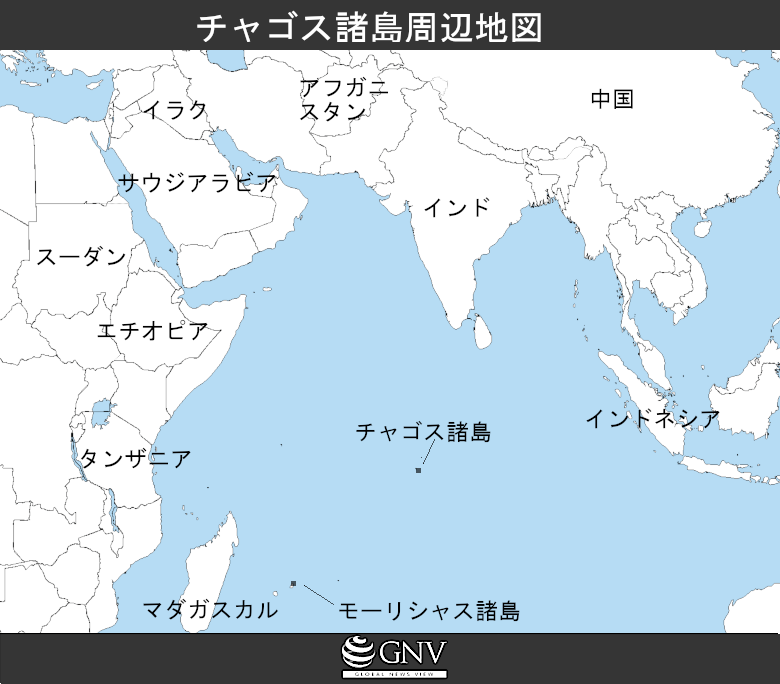
Map of the area around the Chagos Archipelago
目次
From an “Island of Dreams” to a military installation
The Chagos Archipelago lies about 1,600km south of the Indian subcontinent and has a total land area of just 197 km². It consists of 7 main atolls and more than 60 small islands. The largest by area, at 44 km², and the southernmost, is the atoll of Diego Garcia. The Chagos islands were long uninhabited, but settlement on Diego Garcia began in the late 18th century as part of French-ruled Mauritius. Enslaved people were brought from Senegal, Madagascar, India, and elsewhere as labor for coconut and sugarcane plantations, and made to live on what had been an uninhabited island. Under the 1814 Treaty of Paris, Mauritius, including the French-held Chagos Archipelago, officially became British territory, after which the British periodically sent enslaved people to Diego Garcia. With a calm climate and abundant agricultural produce, the population grew rapidly over roughly 200 years after settlement began, and by the mid-20th century about 1,500 people were living there. The villages prospered, and schools, hospitals, churches, and even a railway were established; people say they lacked for nothing. When former Mauritian administrator Robert Scott visited the Chagos Archipelago in the 1950s, he described it as an “Island of Dreams”, a phrase that hints at the extent of its prosperity.
It was the UK and the United States that brought an end to that peaceful life. During the Cold War in the 1960s, the U.S. sought to expand its military reach in the Indian Ocean region near the Middle East. In 1961, a U.S. Navy admiral visited Diego Garcia to secretly assess the Chagos Archipelago as a potential military base; the UK and the U.S. subsequently agreed that Britain would lease the Chagos to the U.S. for use as a base. To allow unfettered use of the islands as military facilities, the U.S. demanded the expulsion of all inhabitants of the Chagos, and the first thing the UK did to that end was to secure direct control over the archipelago.
In 1965 the Chagos Archipelago was part of British Mauritius, which had self-government. That year, a secret agreement was struck between the then British foreign secretary and Seewoosagur Ramgoolam, who would later become prime minister of Mauritius. The two sides agreed that Mauritius would achieve its long-sought independence on the condition that the Chagos be separated, and that in exchange for the Chagos the UK would pay Mauritius £4 million. It has since become clear, however, that this agreement was underpinned by a British threat: without agreeing to the separation of the Chagos, Mauritius would not be granted independence.
Thus the Chagos Archipelago could not become independent as part of Mauritius and remained under British rule. Under a 1966 UK-U.S. agreement, Diego Garcia was to be used as a U.S. military facility for 50 years. A further 20-year extension was later allowed, and in fact an extension of 20 years from 2016 has been made. In return for leasing the land, the UK received an £11 million discount from the U.S. on the supply of Polaris nuclear weapons.
From 1968 to 1974, the UK and U.S. began implementing the policy the U.S. demanded—expelling all residents of the Chagos. It started with eviction orders and bans on ships entering and leaving, restricting access to dairy products, salt, medicines, and the like. For those who still tried to remain, they threatened to use bombs and guns, gathered pet dogs and killed them with gas, and even burned them in front of terrified, grieving children. It is said that about 1,000 dogs were killed—exploiting a culture that cherished pets. Some people were tricked into boarding ships for what they were told would be free travel, while others left the islands for holidays or hospital visits and were never allowed to return.
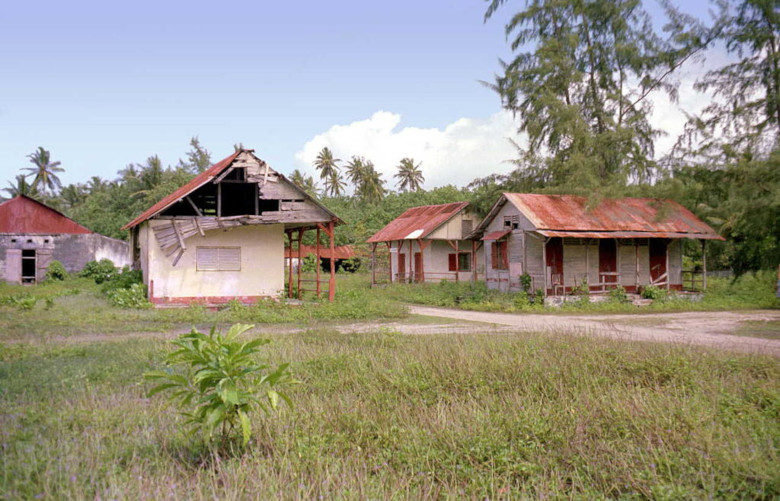
Former coconut plantation land on Diego Garcia (Photo: Steve Swayne / Wikimedia [CC BY-SA 2.0])
When it came time to leave, they were restricted in how much they could carry and forced onto overcrowded ships holding more than ten times their capacity, under harsh conditions; some had to sleep on compost. The Chagos islanders were offloaded in the Seychelles in the Indian Ocean off East Africa, placed temporarily in solitary prison cells, and then taken to abandoned land in Mauritius without running water or electricity. No housing or jobs had been prepared at the place of exile. Former Chagossians fell into homelessness and extreme poverty, and many also died by suicide due to illness, drugs, and psychological trauma.
A launchpad for airstrikes in Middle Eastern conflicts
Why did the U.S. want to turn the Chagos into a military base, even at the cost of expelling all inhabitants? Geography. Some European countries, including the U.S. and the UK, possess external territories beyond their home territory, used mainly for military bases, nuclear tests, or space facilities. For the U.S., the Chagos Archipelago has become a major base in the Indian Ocean region and plays a crucial role in Middle Eastern military strategy. For example, the U.S. can carry out airstrikes on the Middle East from Diego Garcia with aerial refueling, and is beyond the reach of other states whose aerial refueling capabilities and aircraft performance are insufficient. Diego Garcia, therefore, is a base with geographic advantages the U.S. is loath to relinquish.
There is also the advantage that, by depopulating the islands, the U.S. need not worry about local opposition to noise, falling debris during construction of facilities and runways, and other issues that accompany foreign bases. In practice, bombing raids on Iraq during the 1991 Gulf War, the 2001 airstrikes on Afghanistan, and the 2003 Iraq War were conducted from Diego Garcia. Today, the B-2 stealth strategic bomber and the B-2 and the B-52 strategic bomber are stationed there.
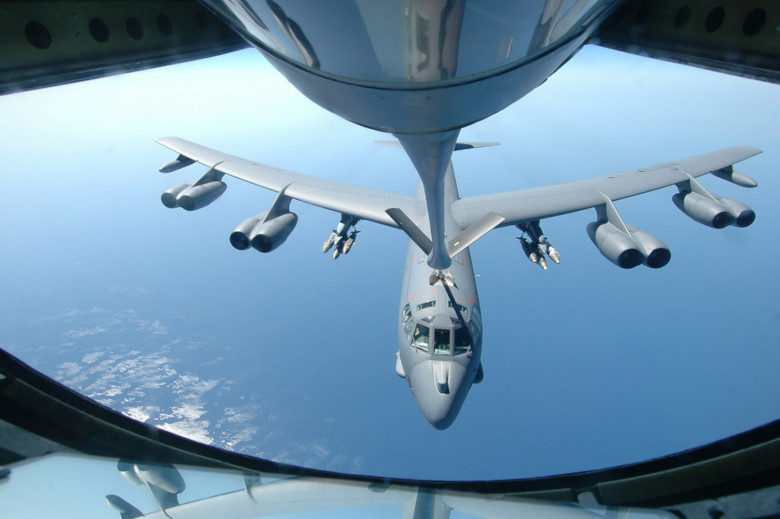
A B-52 being refueled over the Indian Ocean (Photo: U.S. Air Force Staff Sgt. Doug Nicodemus [Public Domain])
In addition to its use as a base, Diego Garcia is also thought to have served as a “black site” abroad for the U.S. Central Intelligence Agency (CIA), where terror suspects were taken for interrogations that included illegal torture. Because the Chagos are isolated and landings are tightly controlled, activities on the islands can be carried out freely without concern for outside eyes or oversight—an advantage exploited to the full. The UK government claims the Chagos are used only for defense, but in reality they have repeatedly served as a base for attacking other countries and appear instead to be a source of heightened fear of domestic and international conflict, armed action, and terrorism.
The Chagossians’ struggle
Since their expulsion, Chagossians have long demanded the right to return to Diego Garcia. In 1975, one Chagossian filed suit in the High Court in London over the expulsion from the Chagos. A settlement was reached in 1982, under which the UK government, via the Mauritian government, would pay £4 million in compensation to former residents of the Chagos Archipelago. The beneficiaries numbered 1,344, with compensation of £2,976 per person. Some did not accept the compensation, judging it inadequate as payment for the loss of their homes, communities, culture, and entire way of life. Moreover, to receive the compensation one had to agree to forfeit the right to return to the islands. The contracts were written in English, but few former Chagossians could read English at the time, and many signed without understanding the terms.
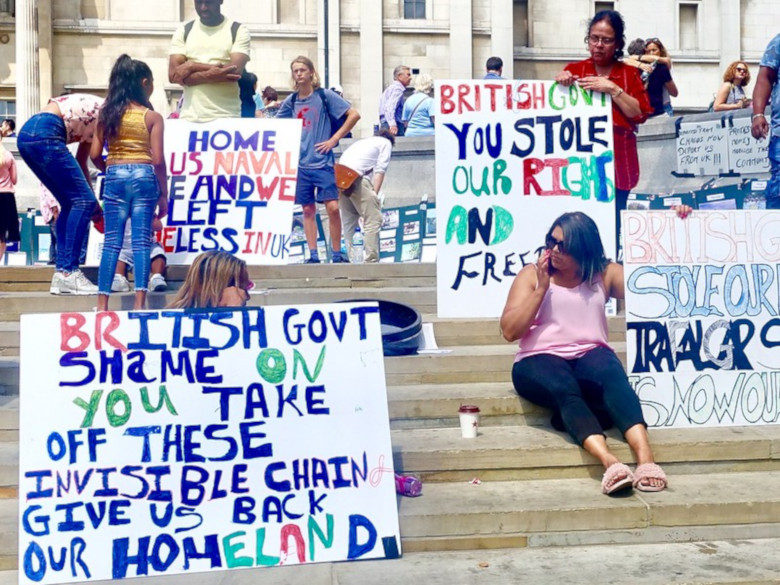
People calling for the right to return to the Chagos Archipelago (Photo: Gerry Popplestone / Flickr [CC BY-NC-ND 2.0])
In 2000, the UK Supreme Court ruled that the expulsion of Chagossians was unlawful and that they should be permitted to return to islands other than Diego Garcia. In 2004, however, the UK government used the Privy Council and the royal prerogative to overrule this judgment. This response by the UK is thought to have been influenced in part by the attacks of 9/11 in 2001, which increased the strategic importance of Diego Garcia as a naval base near the Middle East and made continued use more likely.
In 2010, to strengthen the protection of marine resources in the surrounding waters, a marine protected area (Marine Protected Area, MPA) was established, banning fishing within its boundaries. It became the largest marine protected area in the world. However, subsequent WikiLeaks (WikiLeaks) disclosures of UK-U.S. diplomatic cables revealed that the aim of establishing the protected area was not purely conservation, but in fact to prevent the return of Chagossians. One cable concludes: “Establishing a marine protected area, as the FCO has stated, might indeed be the most effective long-term way to prevent the former inhabitants of the Chagos Archipelago and their descendants from resettling.” By designating the area as a marine protected area, the UK could maintain its claim to sovereignty over those waters and, by prohibiting activities such as fishing that sustain life on the islands, create a pretext to prevent the Chagossians from returning.
Mauritius seeks the return of the Chagos Archipelago
Mauritius challenged the UK at the International Court of Justice (ICJ), arguing that the UK’s separation of the Chagos in 1965 to enable Mauritian independence was an unlawful act in the decolonization process. In February 2019, the ICJ held that UK administration of the Chagos contravened UN General Assembly resolution 1514 (Declaration on the Granting of Independence to Colonial Countries and Peoples) and issued an advisory opinion recommending that UK administration be brought to an end as soon as possible. In response, at the General Assembly in May, Senegal introduced a resolution calling for the end of UK administration. Backed primarily by countries in the Non-Aligned Movement and the Global South seeking decolonization—such as African states, India, Brazil, Nicaragua, Venezuela, and Uruguay—the resolution was adopted with 116 votes in favor out of 178.
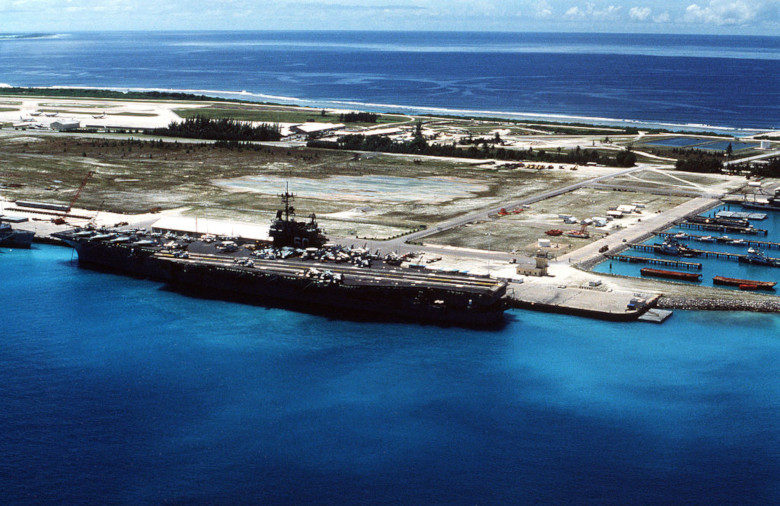
Diego Garcia’s military base and a U.S. aircraft carrier in 1987 (Photo: USN [Public Domain])
The resolution called for the end of UK administration within 6 months and for the Chagos Archipelago to be returned to Mauritius, but the British government justified its stance by saying that General Assembly resolutions are not legally binding and that the military base in the Chagos serves security purposes. On November 22, 2019, the end of the 6-month period, the chairperson of the African Union Commission again urged the UK to comply with the resolution. Around the British High Commission in Port Louis, the Mauritian capital, a demonstration of about 200 people was held. As of January 2020, more than six months later, the UK continues to claim the Chagos.
Moreover, the return of the Chagos will not by itself resolve the issue of Chagossians’ right to return. Even if the Chagos Archipelago is returned to Mauritius, Mauritius could well lease the territory to the U.S. in place of the UK. In fact, Mauritius has publicly stated that it wants to conclude a longer-term lease with the U.S. than the current UK-U.S. agreement (which runs until 2036) would allow. In that case, the Chagos would continue to be used as a U.S. military facility, and former residents would still be unable to return.
Roughly 50 years after the forced relocation, it is also true that those former residents who remember life in the Chagos are aging and growing fewer in number. Perhaps the UK is simply waiting for the day when no one remains to demand a return. Will there be an end to a territorial dispute that proceeds without respecting the will of the islanders who built the society and culture of the Chagos?
Writer: Yuna Takatsuki
Graphics: Saki Takeuchi





そもそも、チャゴス諸島の存在自体知りませんでした。
また、イラク戦争等での空爆はアメリカ本土からではなく、インド洋の小さな島から出発した航空機だとも知りませんでした。
自分達がまだ知らないだけで、このように、先進国の政治的・軍事的理由によって人権が侵害されている市民たちが数多くいる事例が世界には数多く存在するんだろうなと思いました。