
On June 29, 2019, in Doha, the capital of Qatar, peace talks aimed at ending the war in Afghanistan began. The main actors in this war are the government forces and the anti-government armed group “the Taliban.” However, this time the Taliban’s counterpart in negotiations is not the Afghan government but the United States government. What kind of organization is the Taliban, which is negotiating on equal footing with the U.S. government? Since the U.S.-led coalition invaded Afghanistan in 2001, the Taliban was thought to have disappeared for a time, but in fact that was not the case. In this article, we focus on the Taliban’s resurgence and look at the situation in Afghanistan.
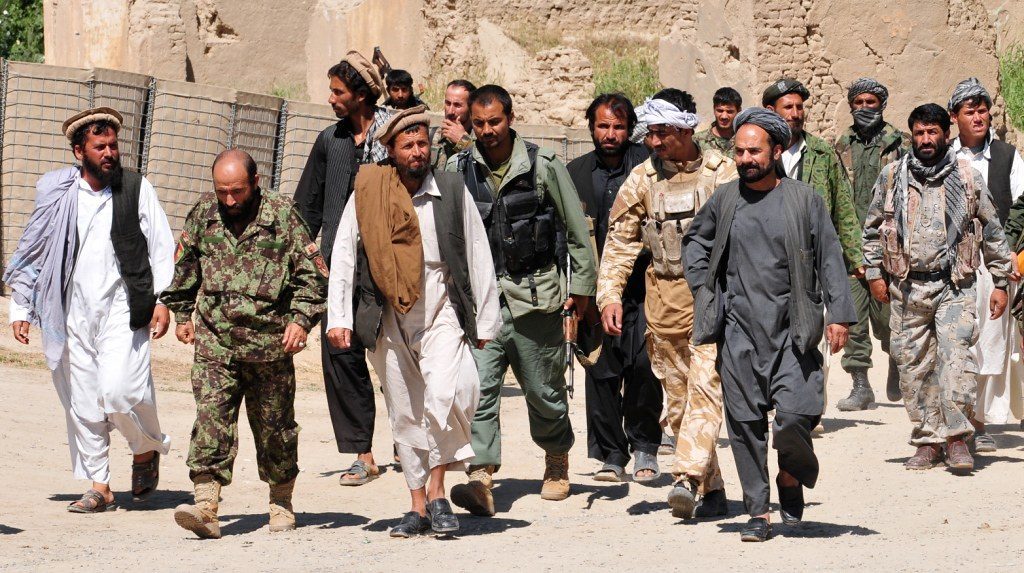
People of the “Taliban” (Photo: Aslan Media/Flickr [CC BY-NC-ND 2.0])
目次
Who are the Taliban?
After the Soviet invasion (Note 1) that lasted from 1979 to 1989 ended and the troops withdrew, Afghanistan saw frequent armed clashes over control. Amid this, in 1994 the Taliban was formed on the Pakistan–Afghanistan border. It was an armed group that called for rebuilding the war-weary land and people through the strict application of Sharia law (Note 2). “Taliban” means “students” in Arabic, reflecting that it was composed of students from Islamic religious schools. Thereafter, it defeated, one after another, armed groups mainly of minority ethnicities, ultimately seizing the capital Kabul, and in 1996 declared the establishment of the “Islamic Emirate of Afghanistan.” Behind this rapid rise is said to have been support from the Pakistani military. It continued steadily expanding its sphere of influence, and in 1997 it took under its protection Osama bin Laden, the first leader of the international terrorist organization al-Qaeda (Note 3), and others. During the September 2001 terrorist attacks in the United States, when the U.S. demanded the unconditional handover (Note 4) of bin Laden, identified as central to the operation, the Taliban refused; in October the United States and its allies began attacks on Afghanistan. After fierce battles by the coalition forces, the Taliban regime abandoned its last stronghold of Kandahar in December of the same year and collapsed.
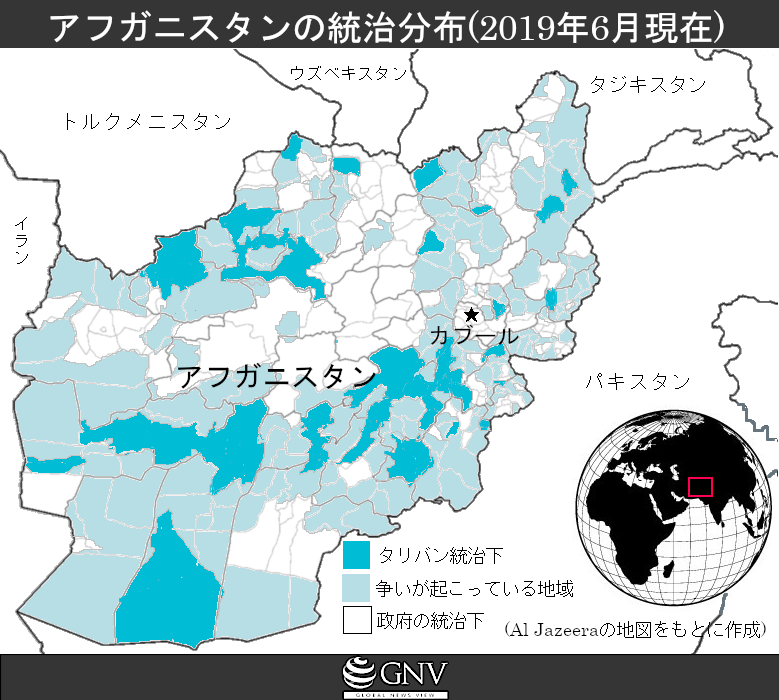
To be sure, the Taliban regime once collapsed. However, under the new government Afghanistan did not stabilize; instead, the Taliban reemerged and gradually expanded its power. Today it controls, or brings within its sphere of influence, 12% of districts nationwide, and a further 34% are contested with the government. The Taliban’s presence has been strong enough to bedevil the world’s foremost military power, the United States, for 17 years. Where do the reasons for the Taliban’s resurgence and expansion lie? Let’s look at both the hard and soft factors.
Military and organizational factors
First, let’s focus on the military expansion. After U.S. intervention, with American troops stationed in the country, the Taliban, having nowhere else to go, sought refuge in Pakistan as a safe haven. However, by 2002 the Taliban resumed armed activities and gradually expanded its influence from eastern to southern Afghanistan. There are thought to be three factors behind its ability to expand its area of operations. First, due to a state of corruption in which government forces prioritized their own interests over their duties amid massive financial aid, external incursions became relatively easy. Second, the withdrawal of NATO forces in 2014 reduced the number of foreign troops in Afghanistan, making the Taliban relatively stronger. And finally, it strengthened its alliance with the Haqquani Network, considered the most powerful faction that had separated from the Taliban. With ample funding through ties to Arab oil interests and exceptional military capabilities, this group became a valuable partner for the Taliban, which placed great importance on expanding its domestic support base.
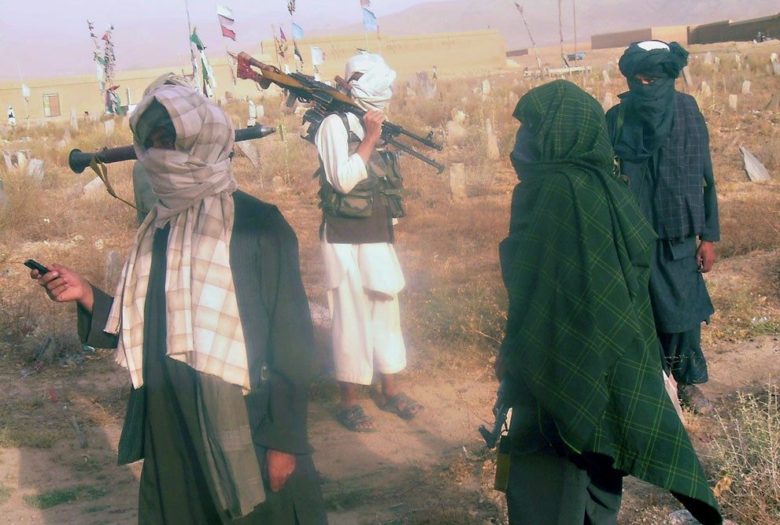
Taliban militiaman standing in a cemetery (Photo: Gerard Van der Leun / Flickr [CC BY-NC-ND 2.0])
As with military strength, indispensable for sustaining ongoing activities is funding. The Taliban’s annual income is said to reach US$1.5 billion, sourced from foreign fundraising, mineral sales, and taxation. However, the largest source is the production and smuggling of opium and heroin (Note 5) made from poppies. In fact, Afghanistan produces 80% of the world’s opium and heroin, and is said to earn US$3 billion annually from it. Poppies are cheap and easy to grow yet fetch high prices, making them a suitable industry for devastated conflict zones. Moreover, Afghanistan’s soil is particularly well-suited for cultivation, and poppies have become such an important industry that they account for a large majority of the country’s agricultural output today. For years, the Taliban has levied taxes amounting to about 20% of profits from poppy farmers in areas under its control, but recently there have been moves to establish its own laboratories and factories. Processing into morphine and heroin yields greater profits than taxation.
What deserves attention here is that encouraging poppy cultivation has been, for the Taliban, not only a way to secure funding but also a means to expand its support base. Unlike the Afghan government and U.S. forces, which have worked to eradicate poppy cultivation, the Taliban was welcomed by local residents, who saw it as a force that protected their livelihoods.
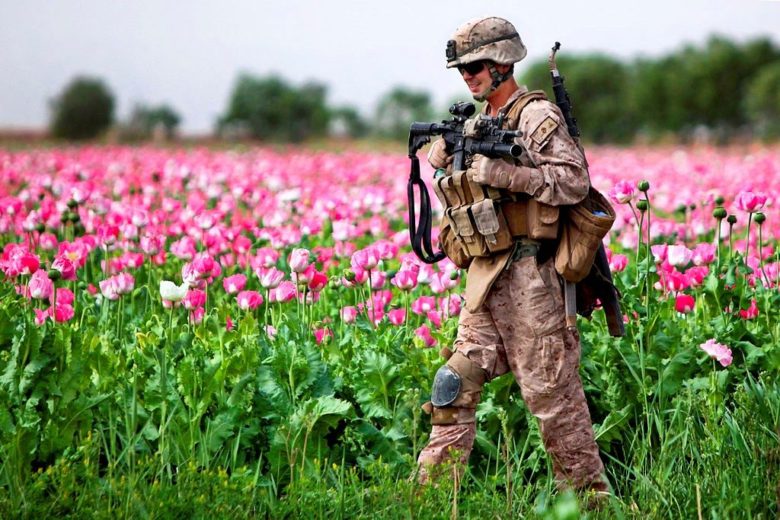
U.S. soldier standing in a poppy field (Photo: Cpl. John M. McCall, U.S. Marine Corps / Wikimedia Commons)
The Taliban has also gained support from residents through its judicial system. Official trials by the state or provinces are rife with corruption, opaque, and time-consuming. The wholesale importation of Western systems is also thought to be one cause of friction with local communities. By contrast, while Taliban courts can hand down brutal punishments based on subjective interpretations of the Quran, there are many residents who place their trust in them as being “swift and fair.” Whereas government cases often failed to deliver solutions despite paying lawyers more than US$1,000, there is no end of examples in which the Taliban resolved issues within a few days without bribes or fees. Combined with the fact that large portions of the country are under Taliban governance, many citizens abide by Taliban judicial rulings.
Improving their negative image
The Taliban government that once ruled Afghanistan was notorious for its excessively severe oppression of women. How has its reputation changed since the regime collapsed? Under Taliban rule, girls’ education and women’s employment were banned. However, since the fall of the Taliban in 2001, restrictions across Afghanistan have gradually eased, women’s participation in society has advanced, and the Taliban’s stance toward women is said to have become relatively milder. Today, millions of girls attend school, and some women work outside the home. In recent years, there have even been statements suggesting that they would guarantee women’s rights within a strict interpretation of Sharia law. In a sense, these moves can be seen as a strategy by the Taliban to win popular support.
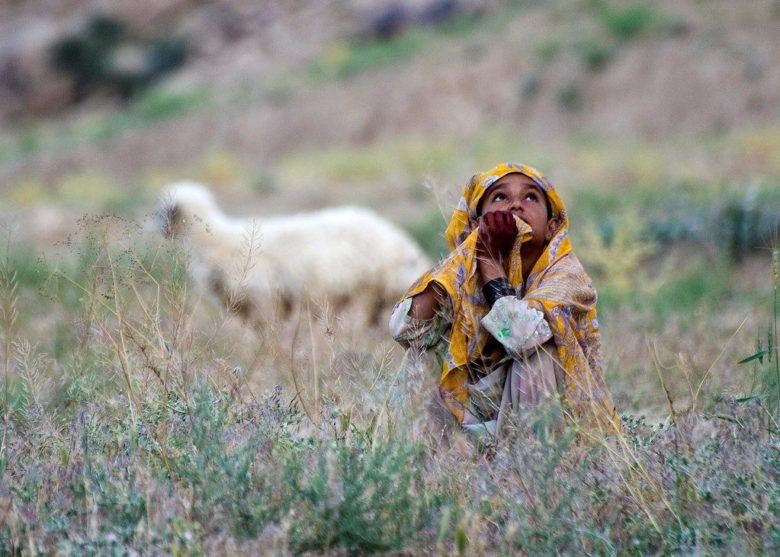
A girl looking up at a coalition aircraft in Kandahar Province (Photo: DVIDSHUB / Flickr [CC BY 2.0 ])
Moreover, the Taliban has been active not only in expanding its domestic support base but also in diplomacy abroad. This is completely different from the closed and internationally isolated diplomacy when it held power. The Taliban established a political office in Qatar and, in opposition to President Ashraf Ghani’s counterterrorism measures, is strengthening diplomatic relations by promoting its presence to Russia, China, Iran, and countries in Central Asia and the Middle East. In that light, the negotiations with the United States introduced at the beginning can be seen as part of its diplomatic activities. On the other hand, it refuses to negotiate directly with the central government, an important domestic actor, because it regards it as a puppet of the United States. For that reason, although indirect, it is likely pursuing peace talks with the United States.
Will a peace agreement be achieved?
As we have seen, the Taliban once wielded enough power to seize the state, then rapidly declined, and later resurged to where it is today. Now it stands shoulder to shoulder with the central government as a key actor reshaping Afghanistan’s political landscape. The hot topic in recent days is the peace talks with the United States, and attention is focused on how the Taliban will be involved in Afghanistan’s politics going forward. They state that, in exchange for the withdrawal of U.S. troops, they will take measures toward counterterrorism and a ceasefire, but the talks have been difficult. How the Taliban will position itself in Afghan politics from here is of growing interest.
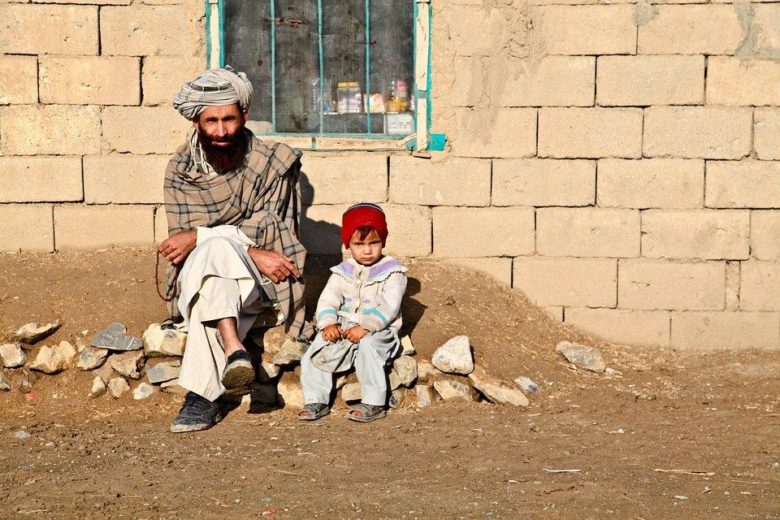
A parent and child sitting and looking at us (Photo: ArmyAmber / Pixabay)
Note 1: Soviet invasion of Afghanistan: The Soviet military intervention that began at the end of 1979, taking advantage of internal conflict in Afghanistan. The Soviet objective was to prevent Afghanistan from being absorbed into the U.S.-led capitalist bloc. The troops withdrew in 1988–89 after the start of perestroika, a movement to reform the political system in the Soviet Union.
Note 2: Sharia law: A legal system built on the contents of the Quran, the holy book of Islam, supplemented by the interpretations of scholars. It provides norms for all areas of life, from methods of worship and rituals to state administration, family matters, and commercial transactions.
Note 3: Al-Qaeda: An international terrorist organization. “Al-Qaeda” means “the base.” It is said to have played a central role in the simultaneous bombings of the U.S. embassies in Kenya and Tanzania in 1998 and the September 11, 2001 attacks in the United States. It moved its base to Sudan for a time but returned to Taliban-controlled Afghanistan in 1996. The Taliban, as an indigenous organization, is markedly different from al-Qaeda, which is an international network.
Note 4: The Taliban stated that if evidence proving bin Laden’s involvement in the attacks were presented, they were prepared to hand him over, but the United States rejected this and demanded his unconditional surrender.
Note 5: Relationship between poppies, opium, heroin, and morphine: Generally, the sap harvested from poppy seed pods and then dried becomes opium; extracting and refining opium yields higher-purity morphine and heroin. Morphine and heroin command higher prices than opium.
Correction: We have corrected an error regarding the percentage of areas controlled by or within the sphere of influence of the Taliban. (2019/12/17)
Writer: Yuka Ikeda
Graphics: Saki Takeuchi
We also post on social media!
Follow us here ↓



「現在では全国の地区の46.2%を掌握している、もしくは勢力圏内に入れるに至っている」の根拠が分かりません。例えばP72の図を見ましたが「掌握している、もしくは勢力圏内に入れるに至っている」のは3+9=12%にすぎません。Contestの34%を加算するのはオカシイと思います。
ご指摘いただきありがとうございます。ご指摘の件につきましては、確認の結果、誤りが見受けられましたので、訂正しております。
下記に関するソースはありますか。タリバン寄りのソースから発信されているのであれば、プロパガンダをそのまま記載している事になるかと思います。
司法制度でもタリバンは住民の支持を得ている。国家や州による公的な裁判は、汚職が横行して不透明なうえに時間がかかる。西洋の制度をそのまま導入している点も地域との不和を起こす原因の一つとも考えられる。他方、タリバンによる裁判は、主観的なコーランの解釈によって残忍な処罰を下す場合もあるが、それ以上に「迅速かつ公正」だとして信頼をよせる住人も少なくない。政府の場合は1千米ドル以上の費用を弁護士に支払っていたにも関わらず解決策は提示されないままだったことが多い一方で、タリバンは数日以内に賄賂や手数料なしに問題解決が図られたなどの例が尽きない。国土の大部分がタリバンの統治下にあることも相まって、タリバンによる裁判制度に従う国民は多い。