
In 2018, the production of 100 new types of legal highs and synthetic drugs was identified in Southeast Asia. Over the past two years, Thailand has seen seizures of high-purity methamphetamine increase more than tenfold. In 2018 alone, Thailand seized 18.4 tons of methamphetamine.
Historically, the so-called “Golden Triangle,” comprising Myanmar, Thailand, and Laos, has been known as a hub for opium production and trafficking, becoming famous for its many poppy fields, especially in Myanmar. However, in recent years the primary drugs produced in Myanmar have shifted significantly from opium and heroin to synthetic drugs such as methamphetamine.
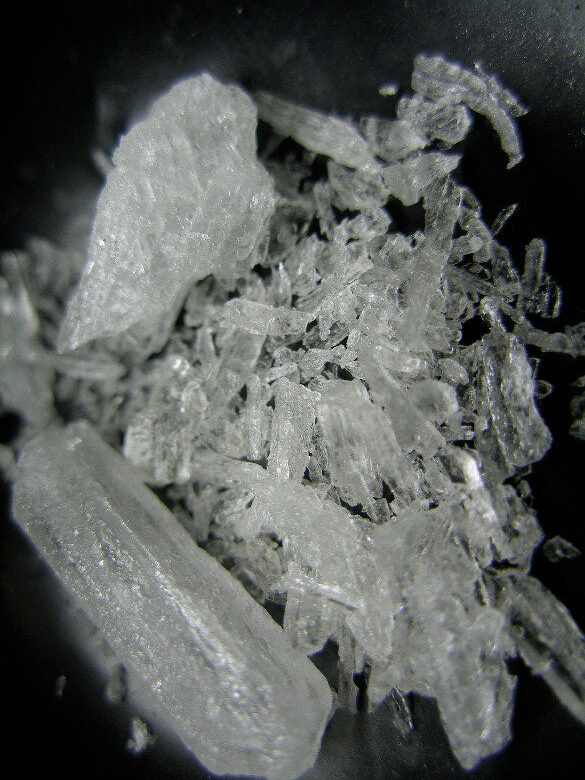
A high-purity form of methamphetamine, crystal (Photo: Radspunk/Wikimedia [C.C. BY-SA 4.0])
Methamphetamine flowing out of the Golden Triangle reaches not only Myanmar, Thailand, and Laos, but also neighboring countries such as Vietnam, Cambodia, Bangladesh, India, and China. Moreover, it has spread throughout the broader Asia-Pacific region, including Japan, South Korea, Taiwan, Indonesia, Malaysia, Singapore, the Philippines, Australia, and New Zealand.
目次
What is methamphetamine?
What exactly is methamphetamine? Methamphetamine belongs to the amphetamine-type stimulants (ATS). Unlike opium and heroin, which are derived from poppy cultivation, methamphetamine is a synthetic drug made by mixing chemical precursors.
Two main types of methamphetamine are produced in this region, particularly in Myanmar. The high-purity form, often called “crystal” or “ice,” is trafficked to Thailand and China and then transported to countries such as Japan, South Korea, and Australia, where it fetches high prices. The other is a low-purity methamphetamine tablet known locally as “yaba.” Some people use yaba recreationally, while night-time drivers and factory workers on long shifts take it as a stimulant to stay awake. Due to oversupply from overproduction, the price of yaba in Myanmar fell in 2018 to 300 kyat (about 21 yen) per tablet—one-fifth of what it was a few years earlier.
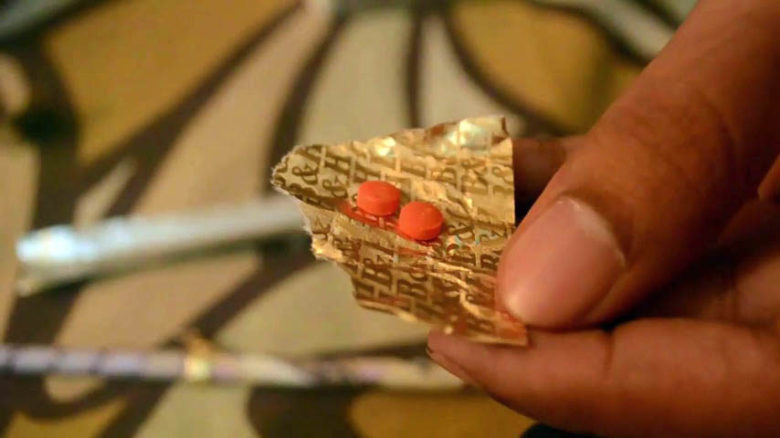
Low-purity methamphetamine, yaba (Photo: Labib Ittihadul/Flickr [C.C. BY 2.0])
The current state of the Golden Triangle
Let’s look at the current situation in the Golden Triangle. In Myanmar, anti-government forces such as the Kachin Independence Army (KIA), based in Kachin State, and the United Wa State Army (UWSA), based in Shan State, along with its political wing, the United Wa State Party (UWSP), have long fought the central government’s military seeking expanded autonomy. In the 2016 International Narcotics Control Strategy Report, Western countries assert that the UWSA manufactures methamphetamine and that the UWSA and UWSP use profits from meth production to fund their war efforts. Organized crime groups have also moved into these conflict-affected areas and, by doing business with numerous anti-government forces and militias, are increasing on-the-ground production and smuggling of meth. Furthermore, pro-government militias are also said to be involved in its production and distribution. Like the anti-government groups, these militias use profits from meth production to fund their war efforts, and the Myanmar military is said not only to refrain from criticizing them but to secretly support their meth production.
Meanwhile, Thailand and Laos are not production countries, but they are said to be major trafficking routes for meth manufactured in Myanmar’s Shan and Kachin states. Why has Myanmar’s drug production shifted from opium and heroin to synthetic drugs such as meth? First, because the production costs for meth are lower than for opium or heroin, and fewer personnel are needed than for poppy cultivation, the profits are higher. Another major reason is that meth labs are easier to hide. Thanks to efforts by the United Nations Office on Drugs and Crime (UNODC) and governments, such as cultivation restrictions, poppy production has been reduced year by year. However, compared with poppy fields, whose locations are relatively easy to pinpoint, factory-produced meth is less visible and can more easily evade the law. Rising demand is also likely a factor. Organized crime groups have flooded countries such as Thailand with large quantities of meth and, by selling it at low prices, have created “new users”; as users become dependent on the highly addictive drug, further meth is required. In response to this heightened demand, producers have reduced heroin and opium production and increased meth production.
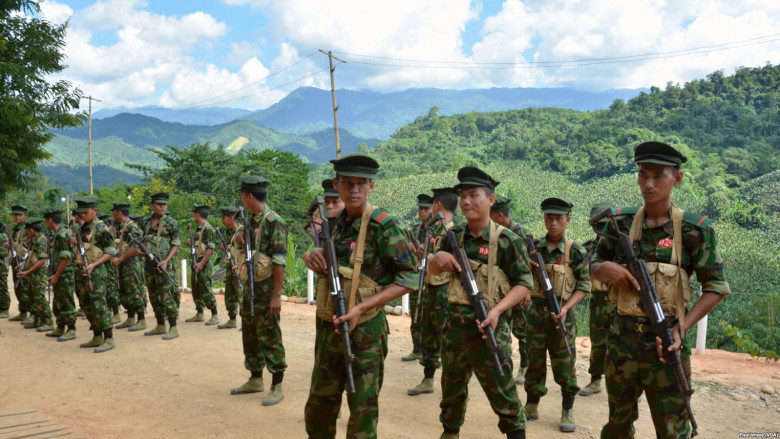
Anti-government forces in Kachin State: Kachin Independence Army (Photo: Paul Vrieze (VOA)/Wikimedia)
The spread of methamphetamine
How is meth spreading from the Golden Triangle to other countries? As the figure below shows, the scale of meth’s spread is considerable and clearly serious.
First, meth is manufactured in Myanmar’s Shan and Kachin states and transported by truck and other means, often smuggled via Laos and Chiang Rai in northern Thailand into Ayutthaya Province in central Thailand. From there, it is carried from Thailand via neighboring Malaysia to Australia, Singapore, Japan, South Korea, and elsewhere.
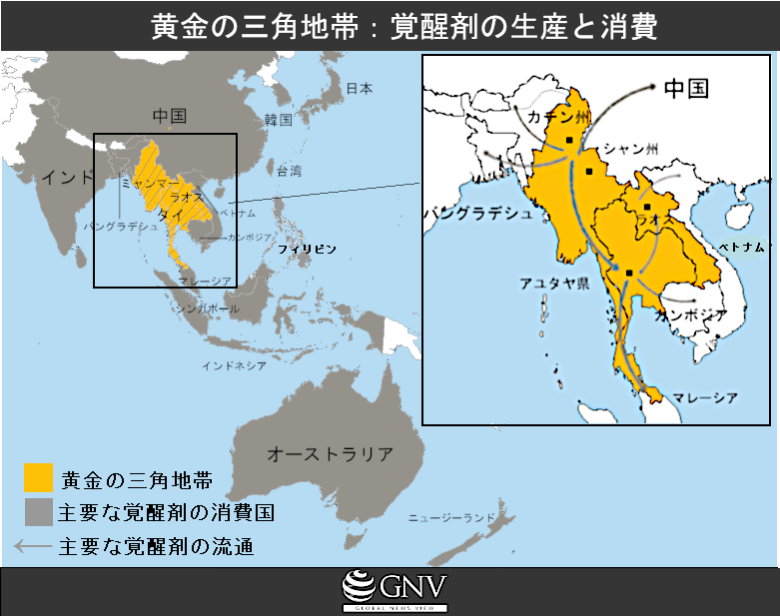 The extent of meth’s proliferation can be seen from the quantities seized in each country. On May 25, 2019, Indonesia’s National Narcotics Agency discovered 35 kilograms of meth hidden in a truck carrying cabbage in West Java. Not only Southeast Asia, but countries far from the Golden Triangle such as Australia and Japan are also seeing worsening drug problems. In June 2019, 1.6 tons of meth shipped from Thailand were seized by police in Melbourne. In Japan, the amount seized exceeded 1 ton for two consecutive years, 2016 and 2017, creating an unprecedented situation.
Countermeasures
What measures are countries and the United Nations taking against the increasingly serious meth problem? First, let’s look at enforcement during the production process. The difficulties of controlling meth production are not limited to the problem of hidden manufacturing sites. The substances used in production are also problematic. The precursor chemicals used in manufacturing are legal chemicals also used in products such as pharmaceuticals, cosmetics, and plastics, making control at the raw material stage difficult. Moreover, precursors flow in from countries with large industrial bases such as Vietnam, Thailand, and China. Many are diverted clandestinely to drug producers during production, distribution, or sales, and governments and industries are unable to fully grasp the quantities of precursors that leak illegally—another key problem.
With as many as five neighboring countries and unavoidable contact with other states due to its geography, Myanmar must cooperate with other countries to conduct effective enforcement. Carefully tracking each step of the production process will be key to narrowing legal loopholes.
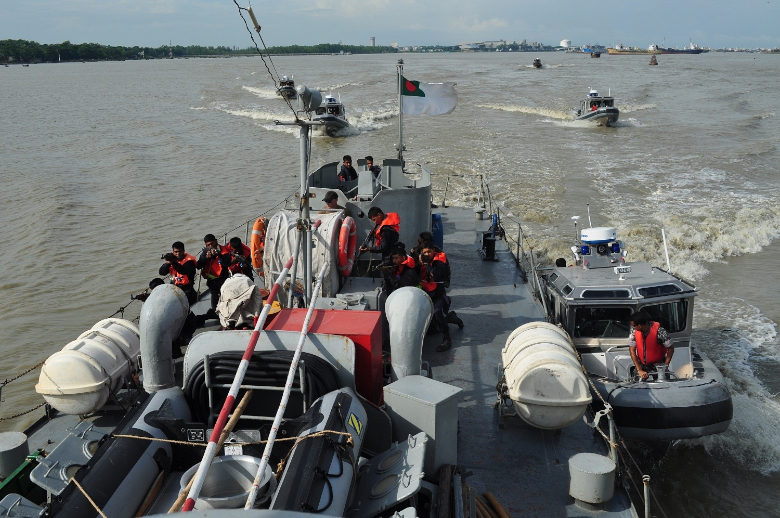
One countermeasure to distribution issues: monitoring cargo ships (Kali Pinckey/ US Dept of Defense)
As with enforcement in the production process, international connections are also crucial in the distribution phase. Across the Golden Triangle, large-scale infrastructure development driven by China’s Belt and Road Initiative has played a major role in economic development and integrating the region with the world. Ironically, however, improved transportation convenience has facilitated the spread of meth from remote areas of Shan State across South Asia. In 2019, within just five months, the total amount of drugs seized in Malaysia and Myanmar exceeded the entire total for 2017. While this can be seen as the result of effective law-enforcement efforts, it also suggests that more is circulating in the market and that the amount actually reaching consumers may be unchanged—or even increasing. By mass-producing meth and lowering prices, producers can still secure profits even if a certain share is seized. First, it will be necessary to identify the vast networks linking producers to consumers and approach the problem from multiple directions.
What about measures aimed at consumers? In both low- and high-income countries, annual seizure totals have risen, but interception rates remain low and countermeasures are not keeping up. To break this impasse, Thailand is pursuing new initiatives: vocational training and reintegration programs. These programs provide support not only to those arrested for using drugs, but also to those involved in supply, such as sellers. In Thailand, poverty frequently pushes young people into drug trafficking, and the lack of basic education often creates a negative spiral. Many former inmates have returned to society after receiving only basic education, even without needing drug rehabilitation. Solving such fundamental community-level problems requires steady, long-term effort. Nevertheless, reexamining the very social structures that leave people little choice but to rely on drugs is indispensable for a fundamental solution in all regions—not just in Thailand.
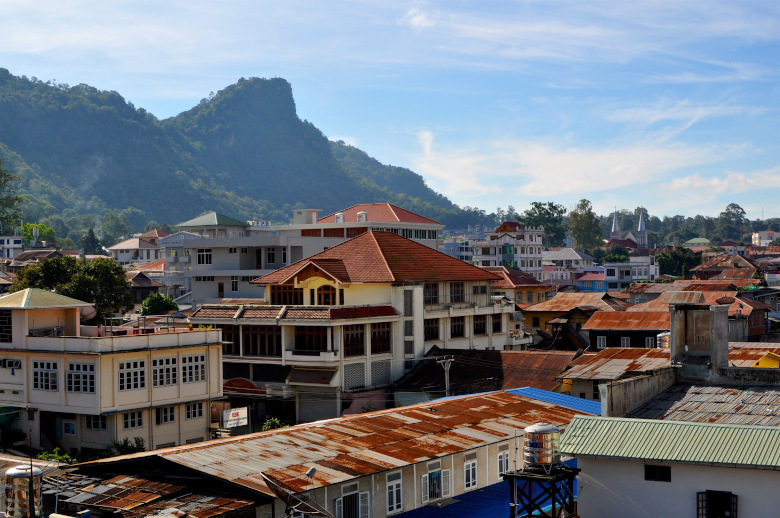
Taunggyi, the capital of Shan State, where meth production is high (Photo: Beyond Access/Flickr [C.C. BY-SA 2.0])
Thus, countries and international organizations are attempting countermeasures at each stage of production, distribution, and consumption. However, it cannot be said that the situation is improving. Normalizing government functions and eradicating production capacity in Myanmar’s Kachin and Shan states—where production is centered—is an urgent priority. If this most fundamental issue is left unaddressed, any other measures will be merely stopgaps. Yet as long as high demand persists in consuming countries, production and distribution cannot be completely cut off. Beyond police enforcement, addressing the various social issues that lead to drug use is also crucial. How much countries around the world treat this as their own problem will greatly shape the future of the Golden Triangle.
Writer: Yow Shuning
Graphics: Yow Shuning, Saki Takeuchi
We’re on social media too!
Follow us here ↓




覚醒剤の主な生産国がミャンマーであることを初めて知った。覚醒剤は一国の問題ではなく、生産国、その周辺国や覚醒剤利用国、国際的問題である。一国が覚醒剤を取り締まる政策を実行しても無駄。各国の国際的協力が不可欠であるが、やはりミャンマーが覚醒剤生産国であることから抜け出せない大きな理由として、貧困国であるということがあり、覚醒剤をただ取り締まるだけでなく、ミャンマーの内情や経済を国際的に支え、覚醒剤以外からしっかりお金を生み出せるシステム作りに協力することが必要であると思う。
覚醒剤や薬品の押収量が増えているということは、薬に頼らなければ生きていけない人が増えているということだ、という解釈もでき、悲しくなりました。経済的に貧しい国にとって、覚醒剤は一つの大きな経済圏を創り出すことのできるものであり、その動きが大きくなってしまうのは、悲しいけれど、自然なことだと思います。だからこそ、日本など、経済的に豊かな国には、そうした国々のより良い社会の構築を協同して目指す使命があり、覚醒剤ユーザーを増やさないために、世界が一体となって、精神的な豊かさをより多くの人が手に入れられる努力をするべきだと思いました。そのアプローチは、芸術、スポーツなども含め、多方面からの柔軟な取り組みが期待されます。
日本でもたくさん押収されているんですね。驚きです。
ニュースで芸能人の麻薬使用が報道されているように、日本に関係のない話ではない。各国の需要を満たすために、教育を受けていないもの、経済的に弱いもの、社会的弱者が運び屋として利用されていることも事実。早急に対策が必要だと考えます。現状がリアルに伝わる良い記事だと思います。
ミャンマーに限らず、麻薬の蔓延による利益を受けている人間は世界にたくさんいるのだろうなと思います。増え続ける麻薬を取り締まるよりも、そういった人たちを取り締まる方が早いような気もします
貧困が原因で青年の頃から麻薬販売に手を染めてしまうという点は、かなり印象的だった。貧困という根本的でそして大きな問題に取り組まなければまた同じことの繰り返しが起きることは確かだろうと感じた。ミャンマーだけでなく、貧困に苦しんでいる国は他にもたくさんしそういった国でも同じ問題が蔓延しているのだろうと思う。貧困対策、教育の充実を一つの国でもきちんと行い、たとえゆっくりでも解決の道を模索していくべきだし、日本のような国も手助けを行うべきだと思う。
貧困と紛争が、麻薬と切っても切り離せない関係にある現状を知った。さらに、覚醒剤の取引によって得られた利益が反社会的な勢力に加担してしまうことを知り、この流れを断ち切ることがどれだけ重要であるかを考えさせられた。記事にもあったように、覚醒剤の生産国だけではなく、それらが行き着く先となる国も連携をとって取り締まりを行うことが大切だと思う。物流はよりスムーズかつ大規模になってきたが、そのような状況でこそ物流を監視することを怠ってはいけないと考えた。
流通する麻薬の主流が、ケシの実を原料とするアヘンやヘロインからプラスチックなどにも使われ合法である前駆化学物質等を混ぜて作った覚醒剤へと変化したことや大規模なインフラ整備による物流の拡充によって、麻薬の蔓延を水際で取り締まることはとても困難になってきていることが分かり、やはり根本的な解決を目指すには覚醒剤を生産する動機となっている生産国内の貧困や紛争、教育、政治といった問題に適切なアプローチをしていく事が重要だと痛感させられた。
麻薬と言えばメキシコのイメージがありましたが、アジアでもこんなに大きな問題になってるとは驚きました。
記事にもあるように、覚醒剤等の問題は取り締まりを強化するだけでは、再発し根本的な解決には至らないので、覚醒剤の需要やそれに頼らざる得ない社会構造そのものから少しずつ変えていく必要があると思いました。
覚醒剤問題はこんなに深刻になっているのは初めて知りました。貧困状態に陥っている人を駆け込んでいる組織犯罪集団は本当に最低ですよね。。。ミャンマー政府も自国における覚醒剤の生産を無視して、場合によってむしろ支持するのも許せない。