
Georgia’s politics stand at a major turning point. Since leaving the Union of Soviet Socialist Republics (USSR) in 1991, Georgia has strengthened its ties with the European Union (EU) and the United States. However, in recent years, as the ruling party Georgian Dream has taken power at both the central and local levels and expanded its influence, it has gradually reconsidered the traditionally pro-Western line and begun to distance itself from it. Furthermore, the government is expanding economic relations with Russia and China, marking a sharp departure from its previous foreign policy. Yet there has also been pushback from some citizens, and Georgian society is experiencing a deep divide. Focusing on Georgia’s politics and economy and its relations with Western countries and Russia, this article explores what is happening in the country now.
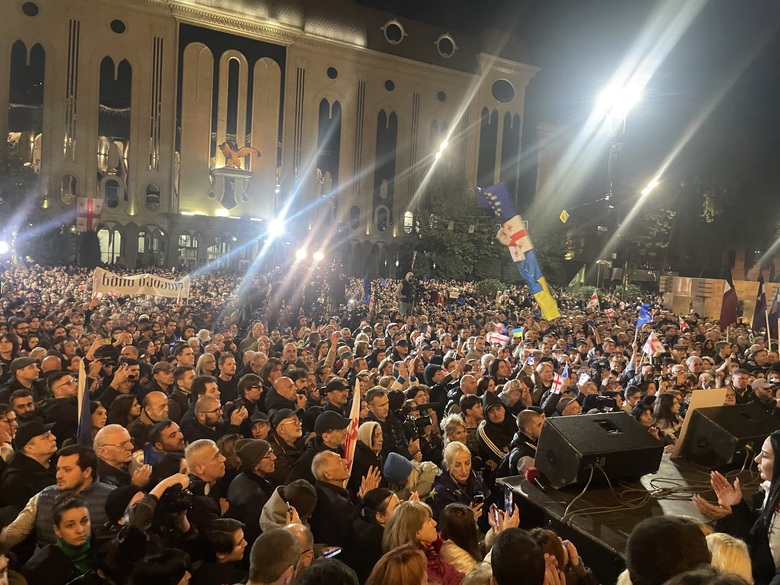
People gather in front of parliament to protest the results of the 2024 parliamentary elections (Photo: AlexandreAssatiani / Wikimedia Commons [CC0 1.0] )
目次
Basic information on Georgia
Georgia is a South Caucasus country located between the Caucasus Mountains and the eastern coast of the Black Sea. It borders Russia to the north, Azerbaijan to the east, Armenia and Turkey to the south, and sits at the boundary of Europe and Asia. As of January 2025, the population is about 3.7 million, of whom roughly 1.28 million live in the capital, Tbilisi.
Georgia has an ancient history with civilizations dating back to antiquity. The present-day capital Tbilisi prospered as one of the trade hubs on the Silk Road. From the 10th to 13th centuries, the Kingdom of Georgia, centered on Tbilisi and other cities, ruled much of the South Caucasus. After periods under the Ottoman Empire and Persia, Georgia was annexed by the Russian Empire in the 19th century. Following a brief period of independence, it was incorporated into the Soviet Union. Today’s borders of Georgia were drawn with reference to administrative divisions from the Russian Empire and Soviet eras.
In the 4th century, the then monarch adopted Christianity as the state religion, making Georgia one of the first countries in the world to recognize Christianity at the state level. Christianity has remained Georgia’s main religion, and today about 83.4% of the population adheres to the Georgian Orthodox Church.
Georgia’s terrain—bordered by the Black Sea to the west and the Greater and Lesser Caucasus Mountains to the north and south—provided favorable conditions for defending against external threats. This unique geography helped preserve Georgia’s distinctive culture and language. As a result, Georgia has maintained an independent language different from those of neighboring regions, and retained religious autonomy even under the rule of powers with different faiths.
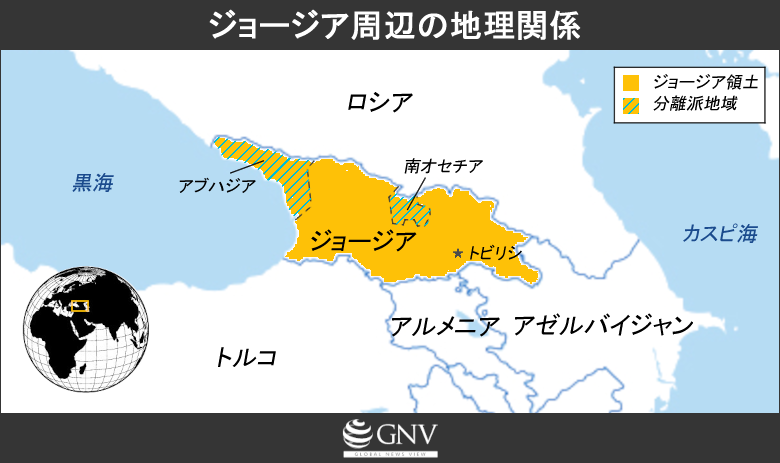
Georgia caught between the West and Russia
In 1921, Georgia was absorbed into the Soviet Union and remained under Soviet influence for many years. In the late 1980s, as the Soviet collapse began and independence movements spread across the USSR, Georgia also saw moves toward independence. A major turning point came in April 1989, when Soviet troops shot and killed unarmed civilians during a protest in Tbilisi demanding independence. Trust in the Soviet Union then plummeted. Ultimately, like other former Soviet republics, Georgia declared independence in 1991.
However, immediately after independence, armed conflicts between political factions broke out multiple times. In place of governance by state institutions, groups with criminal organization-like characteristics held power. Later, former Soviet foreign minister Eduard Shevardnadze became president and the situation improved, but problems such as corruption, graft, and economic stagnation persisted.
During this period, South Ossetia and Abkhazia became flashpoints. In Georgia’s north, South Ossetia and Abkhazia held autonomous status because their peoples, differing from the Kartvelian (Georgian) majority in language and culture, were distinct. In the 1990s, attempts were made to reduce their autonomy, including moves to unify their official language to Georgian, spoken by Kartvelians. This provoked strong resistance in these regions and sparked independence movements. In South Ossetia, armed conflict broke out seeking separation and independence, and in 1992 it declared independence. That same year, armed conflict also erupted in Abkhazia, and a ceasefire agreement was reached with Georgia in 1994.
In these conflicts, Russia acted as a mediator for ceasefires but elements within its military and political spheres effectively supported South Ossetia and Abkhazia, reportedly influencing the conflict through arms supplies and involvement of the Black Sea Fleet, among other means . After the ceasefires, Russian peacekeepers were deployed to South Ossetia and Abkhazia and worked on infrastructure, and such support effectively helped sustain the separatist forces.
In response, Georgia pivoted to strengthening ties with Western countries, joining the Council of Europe (CoE) in 1999. Despite progress in foreign affairs, domestically the country faced issues such as corruption, severe economic stagnation, and rampant organized crime. These frustrations exploded following allegations of electoral fraud in the 2003 parliamentary elections. Public protests led to a bloodless change of power known as the Rose Revolution, and Mikheil Saakashvili assumed power later that year.
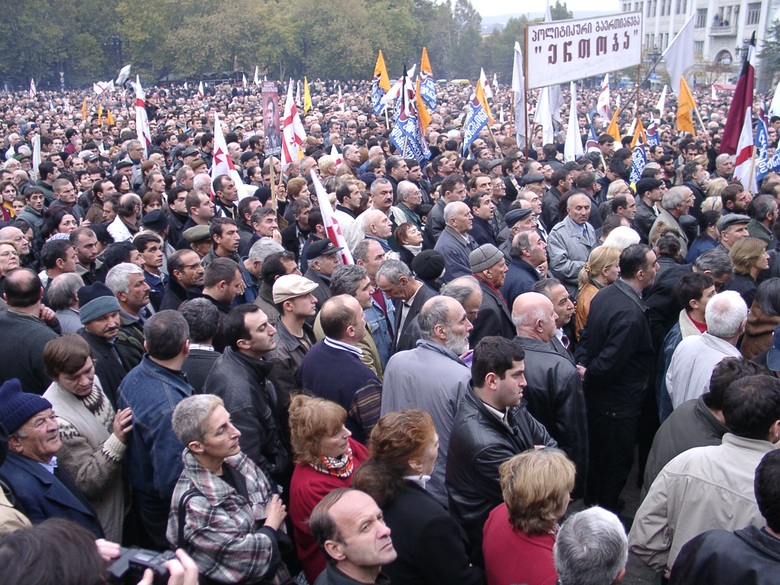
Scenes from the day of the Rose Revolution (Photo: AlexandreAssatiani / Wikimedia Commons [CC BY-SA 3.0] )
Saakashvili strongly advocated a pro-Western line. Some point out that the United States was indirectly involved in the change of power by supporting student movements and the transition through election monitoring and NGO support before and after the Rose Revolution. One background to U.S. support for the new government was oil. For Western countries, a pipeline transporting oil from Azerbaijan’s Baku fields through Georgia to Turkey provided a more stable supply from their perspective than routes via Russia or Iran. There was also the objective of hindering Russia’s ambitions to control energy flows from the Caspian to Europe, and the United States provided substantial economic assistance to the Saakashvili government. Moreover, beginning in 2002, the U.S. conducted military training programs in Georgia, so support went beyond the economic realm.
Georgia, in turn, advanced pro-Western policies. For example, during the 2003 invasion of Iraq by a U.S.-led multinational coalition, Georgia also dispatched troops as a member of the coalition. While the decision to send troops dates back to the Shevardnadze administration, the Saakashvili government expanded it, and by the 2008 withdrawal the total number of Georgian troops deployed was the third largest after the United States and the United Kingdom. Georgia also concluded an Individual Partnership Action Plan (IPAP) with NATO in 2004, and in 2006 held an “Intensified Dialogue” seen as a step toward NATO membership. (※1)
Clash with Russia
Such a posture by the Saakashvili administration was perceived as a threat by Russia. The turning point was the NATO summit held in Bucharest in April 2008. Although Georgia’s accession to NATO was not approved at that time, the policy that Georgia would become a NATO member if it met the necessary conditions was clearly stated. In response, Russian President Vladimir Putin warned that NATO’s eastward expansion threatened Russia’s security, heightening vigilance toward Georgia.
This vigilance manifested in South Ossetia and Abkhazia. Since 1994, Georgia had barely contained separatist movements despite small-scale clashes. In the summer of 2008, however, Russia increased the strength of its peacekeepers stationed in South Ossetia, prompting Georgia to launch a large-scale military intervention in South Ossetia and Abkhazia. The fighting lasted five days, but Georgia suffered a crushing defeat in the face of Russia’s overwhelming military power. Russia then severed formal diplomatic relations with Georgia and recognized South Ossetia and Abkhazia as independent states. This sequence of events sharply intensified anti-Russian sentiment in Georgia.
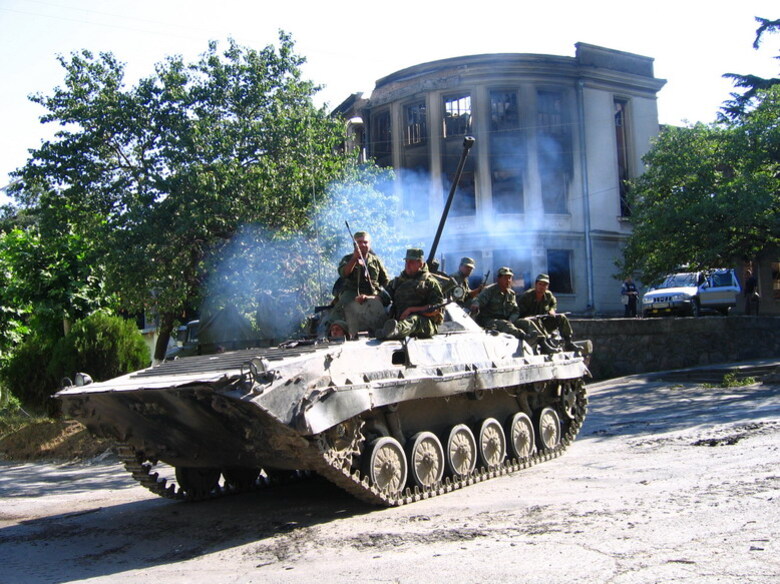
Russian military vehicles in South Ossetia (Photo: Yana Amelina /Wikimedia Commons [CC BY-SA 3.0])
While the Saakashvili administration was held responsible for the defeat, it maintained cooperation with the West and continued strong-handed rule under the banner of state rebuilding and anti-corruption. Arrests surged, and from 2003 to 2010 the prison population in Georgia increased by 300%. However, just before the 2012 parliamentary elections, videos of torture in prisons leaked, and public trust rapidly eroded.
Against this backdrop, voters sought different leadership. As a result, the opposition Georgian Dream won the 2012 parliamentary elections, leading to a change of government. Since then, through 2025, Georgian Dream has remained in power. The new prime minister was businessman and billionaire Bidzina Ivanishvili. He spent the 1990s in Russia and made his fortune in banking, steel, telecommunications, and other sectors after the Soviet collapse. Opponents have criticized Ivanishvili for having loyalties to Russia, citing the Russian roots of his wealth. Although he stepped down as prime minister after one year and formally retired from politics, he retained strong influence within Georgian Dream as a “shadow power broker.” In 2024, he became the party’s Honorary Chairman, effectively returning to the public stage.
Impact of Russia’s invasion of Ukraine
Shifts in relations between Ukraine and Russia influence Georgian public sentiment toward Russia. Let’s look at public opinion polling in Georgia. In a survey conducted since 2010 by the International Republican Institute (IRI) , respondents were asked whether they agreed or disagreed with “further dialogue with Russia,” answering on a five-point scale: “strongly agree,” “somewhat agree,” “somewhat disagree,” “strongly disagree,” and “don’t know/no answer.”
According to the graph above, the share of people who do not want dialogue with Russia has gradually increased since 2014. That was the year Russia annexed the Crimean Peninsula, which may have influenced Georgian public opinion. Like Georgia, Ukraine is a former Soviet republic that has long sought NATO membership. The two also share a similar security situation in that both border Russia. At the time, the Georgian government strongly condemned Russia’s actions.
In February 2022, Russia’s invasion of Ukraine again increased the number of people in Georgia who do not want dialogue with Russia. Georgian volunteers have formed one of the largest contingents in Ukraine’s foreign units. Meanwhile, although the Georgian government criticized the invasion, it has not officially joined the Western economic sanctions against Russia and has kept its distance from Ukraine.
Georgian Dream claims that Ukraine and Western countries are trying to drag Georgia into this war, and has refused to do so. There are also reports that the government has been interrogating returnees from Ukraine. Russian troops stationed in South Ossetia are 40 km from Tbilisi, and the government appears to be struggling to balance between Russia and Western countries to avoid provoking Russia.
Georgia’s economic situation
Foreign policy is not the only issue of concern for Georgians. According to an IRI poll in June 2021, when asked “What is the biggest problem facing the country?”, 73% cited economic issues such as unemployment and the rising cost of living. In fact, as of 2024, the share of people living below the ethical poverty line (※2) of US$7.4 per day was about 37.5%. The unemployment rate was 13.9% in 2024.
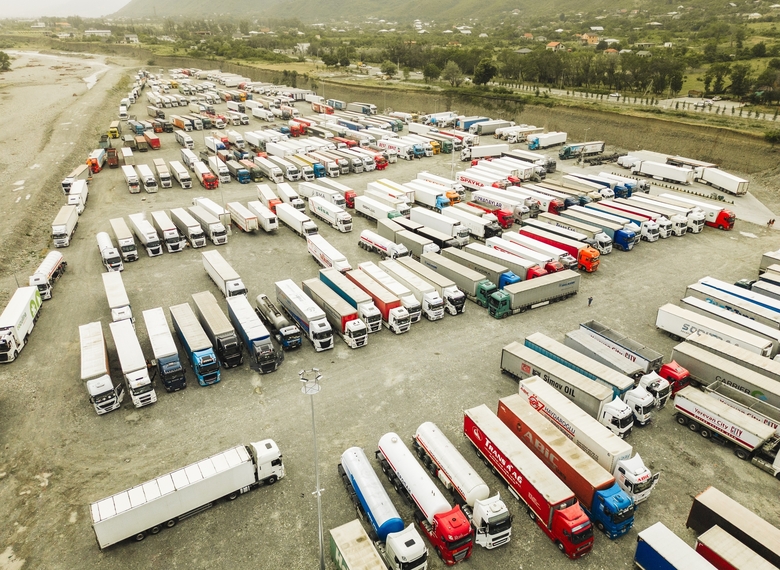
Trucks lined up at the Russia–Georgia border (Photo: EvaL Miko / Shutterstock)
Experts point out reasons such as the still-insufficient reallocation of labor from low-productivity to high-productivity activities and deep economic inequality. On the other hand, Georgia’s GDP growth rate has been high since 2021. In other words, while the overall economy is gradually improving, many citizens have not perceived the benefits.
The graph referenced earlier shows that attitudes toward Russia improved in 2021. This may be related to economic factors. The COVID-19 pandemic in 2020 had a major impact on Georgia. The following year, in 2021, Georgia’s economic dependence on Russia increased. That year, Georgia’s largest import partner was China, with Russia the second largest. In the wine sector, 55% of Georgian wine exports went to Russia, and including remittances from migrant workers and tourism revenues, the value flowing from Russia to Georgia amounted to 6.7% of GDP that year. While recognizing the risks of strengthening ties with Russia, many also see those ties as important for economic stability.
The 2024 election and two bills
In October 2024, Georgia held parliamentary elections. One factor that heightened tensions around the election was the Law on Transparency of Foreign Influence, commonly known as the “foreign agents law” (※3). The law requires organizations receiving 20% or more of their funding from abroad to register as “organizations pursuing the interests of a foreign power,” while granting the Georgian government broad and opaque investigative powers. The government argues that the law is intended to block harmful foreign forces that threaten Georgia’s security.
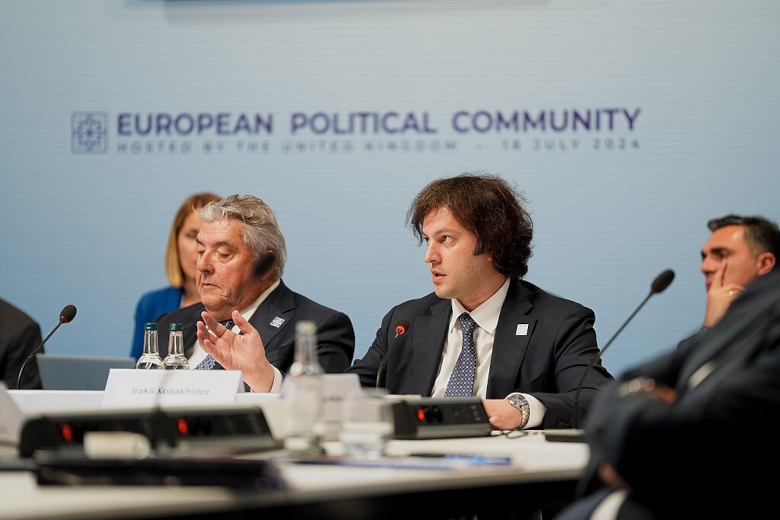
Irakli Kobakhidze, who became Georgia’s prime minister in February 2024 (Photo: Foreign, Commonwealth & Development Office /Wikimedia Commons [CC BY 2.0] )
The government claims to have modeled the law on similar U.S. legislation, while opponents argue it resembles laws in Russia. Human Rights Watch says the law violates Georgia’s legal obligations under the European Convention on Human Rights and the International Covenant on Civil and Political Rights. It has also been pointed out that the law very likely violates provisions of Georgia’s constitution. The president (※4) vetoed the bill, but the decision was overturned by the parliament where Georgian Dream holds a large majority, and the bill ultimately passed. That same year, the government also enacted an “anti-LGBTQ law” banning same-sex marriage and gender-affirming surgery on the grounds of “protecting family values” (※5), which also caused a stir.
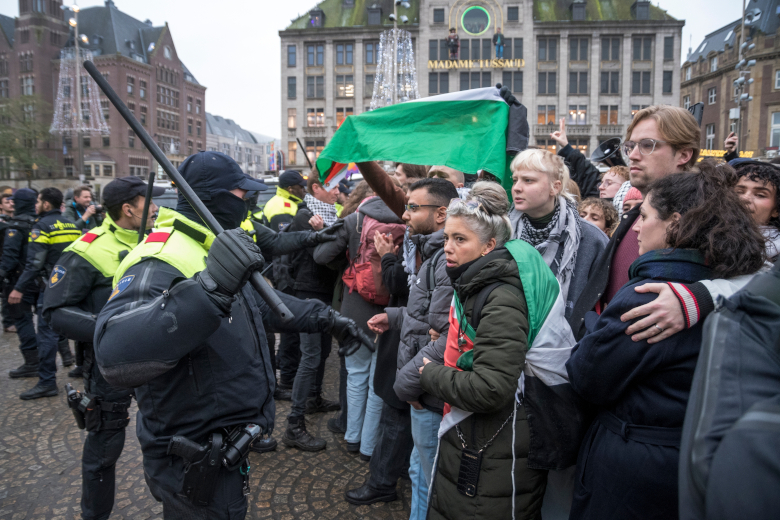
Against this background, three exit polls were conducted for the election. Two exit polls commissioned by opposition-leaning TV stations to U.S. pollsters predicted a combined opposition victory, while an exit poll by a pro-government TV station predicted an overwhelming ruling party victory. Ultimately, Georgian Dream won 53.9% of the vote and was re-elected. Although there were protests against the result, police arrested some protesters, increasing the risk of violence. International election observers likewise reported violence against voters during the electoral period.
In response to these developments, in November the European Parliament announced it would not accept the election results due to “serious irregularities.” In turn, the Georgian Dream government announced it would suspend the EU accession talks that had been advancing since the invasion of Ukraine for four years. The United States also decided to suspend the Strategic Partnership Charter with Georgia that had been in place since 2009. This further widened the distance between Georgia and Western countries.
In December 2024, the electoral law was revised. This amendment significantly increased the number of single-member districts, reduced proportional representation seats, and skewed these changes by region in a way that favored the ruling party. The unified local elections held in October 2025 were the first under the revised law. Georgian Dream candidates placed first in all 64 local councils, demonstrating the ruling party’s advantage in local politics as well. Behind this was the lack of coherence among opposition policies, which prevented the presentation of a unified alternative for a change of government.
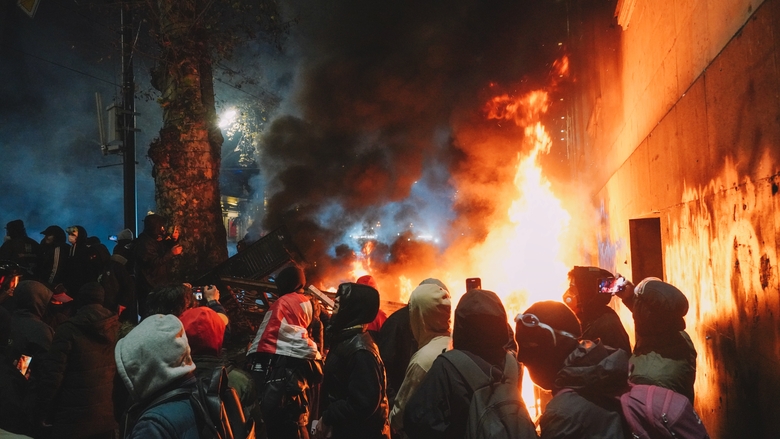
People voicing protests against the government in late November 2024 (Photo: George Khelashvili / Shutterstock)
Summary
The Asian Development Bank assesses Georgia’s economy in 2025 as “maintaining strong growth.” At the same time, as noted above, long-standing issues such as unemployment and poverty have not improved. These socioeconomic frustrations feed political distrust and social division, contributing to instability in Georgia’s domestic politics.
In foreign affairs, with relations with Western countries at a crossroads, Georgia is seeking alternative partnerships. In October 2025, media reported deepening economic ties with Russia, including the construction of a refinery for Russian crude in Georgia. More recently, Georgia has also advanced relations with China, confirming strengthened economic and infrastructure cooperation through high-level exchanges. As it pursues domestic economic growth, Georgia faces increasing pressure over how to balance and choose its partners.
※1 In his inauguration speech upon re-election in January 2008, Saakashvili said, “Georgia is tied to Europe forever.” The administration’s pro-Western stance is reflected in remarks such as this.
※2 At GNV we use the ethical poverty line (US$7.4 per day), not the World Bank’s extreme poverty line (US$2.15 per day). For details, see GNV’s article “How should we interpret global poverty?”
※3 The official name of the law commonly known as the “foreign agents law,” passed in 2024, is the Law on Transparency of Foreign Influence. In 2025, a stricter “foreign agents law” was enacted that expanded audit targets from organizations to individuals and imposed heavier criminal penalties. The 2025 law’s official name is the “Foreign Agents Law.”
※4 Under the constitution amended in 2017/18 and in force as of 2025, the president is only the head of state and does not represent the executive or the government. While the president has veto power over parliamentary decisions, those decisions usually override the veto with a simple majority in parliament.
※5 The Georgian Dream government has long claimed that LGBTQ is Western propaganda. In addition to banning same-sex marriage and gender-affirming surgery, the law also prohibits events such as Pride parades and the display of the rainbow flag—an LGBTQ rights symbol—in public spaces. The “anti-LGBTQ” law grants the government authority to censor films and books related to LGBTQ issues. The day after the law was enacted, a trans woman was killed in Georgia, and human rights groups argue the law fueled transphobia (hatred toward transgender and transsexual people).
Writer: Ito Risa
Graphics: A. Ishida, Seita Morimoto


.jpg)


[3419]SportsPlus Online Casino Philippines: Easy Login, Register & Download for Top Slots. Experience the best at SportsPlus Online Casino Philippines! Enjoy easy sportsplus login and quick sportsplus register steps to play top sportsplus slot games. Get the sportsplus download app now for premium gaming anytime, anywhere. visit: sportsplus
[3225]Taya999 Online Casino Philippines: Best Slot Games, Easy Login, Register & App Download Experience the ultimate gaming at Taya999 Online Casino Philippines! Access top-tier taya999 slot games, easy taya999 login, and fast taya999 register. Secure your taya999 app download today for 24/7 access to the best online casino rewards and big wins! visit: taya999
[9856]Phcrown Official Site: Easy Phcrown Login, Fast Register & App Download for the Best Philippines Slot Games. Visit the Phcrown official site for the best Philippines slot games. Enjoy easy phcrown login, fast phcrown register, and a quick phcrown app download. Play now! visit: phcrown
[4629]999pub Online Casino Philippines: Login, Register, and App Download for the Best Slots Experience. Join 999pub Online Casino Philippines for the ultimate gaming experience! Access your 999pub login, complete a quick 999pub register, and get the 999pub app download to enjoy the best 999pub slots and big wins. Experience the top-rated 999pub online casino today! visit: 999pub
[139]LuckyCola: Easy Login, Fast Registration & App Download for Top Online Slots and Casino Games in the Philippines. Experience the best online slots and casino games in the Philippines at LuckyCola. Enjoy an easy LuckyCola login, fast register process, and seamless LuckyCola app download. Join today for top-tier gaming, secure play, and exciting rewards at the ultimate online casino destination! visit: LuckyCola
[5805]The Best Online Casino and Mobile Gaming Experience in the Philippines visit: 77jili
[8151]Jilibb Online Casino Philippines: Fast Jilibb Login, Easy Register, & App Download for the Best Jilibb Slots. Experience Jilibb Online Casino Philippines! Fast jilibb login, easy jilibb register, and jilibb app download for the best jilibb slots. Play and win big today! visit: jilibb
[3270]PHTAYA Casino: Best Online Slots in the Philippines. Quick PHTAYA Login, Easy Register & PHTAYA App Download for Real Wins. Experience PHTAYA Casino: Best online slots in the Philippines. Quick PHTAYA login, easy register & PHTAYA app download for real wins. Join PHTAYA slots today! visit: phtaya
[7018]33jl Philippines: Best Online Casino & Slots. Easy 33jl Login, Register, and App Download for Big Wins. Join 33jl Philippines for the ultimate online casino experience. Easy 33jl login & 33jl register for top 33jl slot games. Secure 33jl app download for big wins on the go! visit: 33jl
[4352]Hand777: The Best GCash Online Casino in the Philippines for Trusted Real Money Slots. Experience Hand777, the best GCash online casino in the Philippines. Play trusted real money online slots and enjoy secure gaming on the #1 casino platform PH. Access your Hand777 official login today for the ultimate online gambling experience! visit: hand777
Can you be more specific about the content of your article? After reading it, I still have some doubts. Hope you can help me.