
Brunei (Brunei Darussalam) is a country blessed with abundant oil resources. While some of those benefits have been returned to citizens’ daily lives, the country faces a problem of rising unemployment. In particular, youth unemployment, employment arrangements, and dissatisfaction with the labor market are reportedly growing. In fact, Brunei’s youth unemployment rate in 2024 (Note 1) was about 18.5%, far exceeding the overall national unemployment rate of about 5.1%. Moreover, many young people who do find jobs are reported to be employed in positions that do not match their skills or preferred forms of employment.
GNV previously covered Brunei’s politics and economic issues, focusing on the history and current state of this oil nation. This article focuses on the challenges facing Brunei’s youth, such as high unemployment, and examines the causes and the government’s responses.
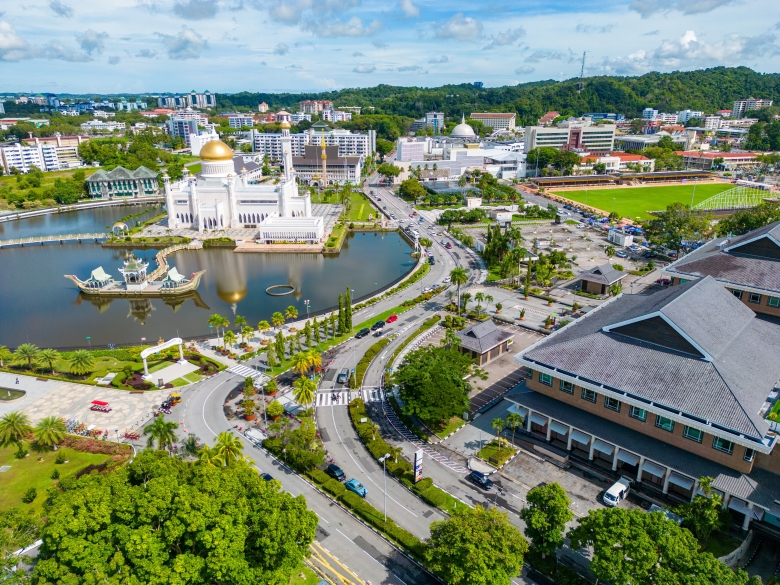
The Royal Mosque of Brunei and its surroundings (Photo: Curioso.Photography / Shutterstock.com)
目次
Overview of Brunei
Before turning to the main topic, let’s cover some basics. Brunei is located in the northern part of Borneo in Southeast Asia and shares a border with Malaysia. With an area of 5,765 km² and a 2024 population of about 455,500, it is a relatively small country.
From the 14th to the 16th century, the kingdom known as Brunei extended its influence to what are now Malaysia’s Sabah and Sarawak states and the Sulu Islands of the Philippines. This kingdom was an autocracy in which the monarch, known as the sultan, wielded significant power. From the late 16th century onward, domestic conflicts mounted and its territory gradually shrank. From the mid-19th century, following cessions of territory to the British and other developments, the kingdom came under British influence and became a British protectorate in 1888. Even after independence in 1984, the sultan has continued to rule the country. A sultan is the title of the monarch of an Islamic state and in Brunei holds concurrent posts as prime minister, foreign minister, defense minister, and finance minister, exercising executive power unconstrained by legislative or judicial bodies. 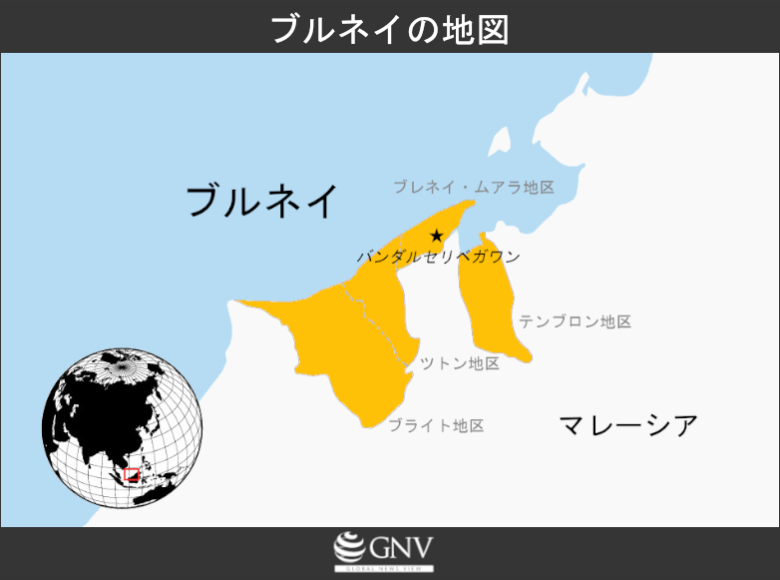
Brunei has a large Muslim population, with about 82.1% of residents being Muslim. Very strict Islamic law has been introduced, including restrictions on freedom of expression. Under a penal code revised in 2019, those who publish or disseminate statements deemed blasphemous or encouraging apostasy may even face the death penalty. The penal code also legalizes flogging, imprisonment, or death by stoning for same-sex acts, which has drawn criticism as a human rights violation. For example, several UN bodies called for the repeal of the new penal code as contrary to international human rights standards.
Because Brunei’s media faces strict government censorship, it is difficult for journalists to raise critical voices against such systems. The government can shut down media without cause and even imprison journalists for reporting that is “false or malicious.” In 2024, Reporters Without Borders (RSF) ranked Brunei 117th out of 180 countries in its press freedom index.
Overview of Brunei’s economy
Brunei’s economy depends on natural resources such as oil and natural gas; in 2023, the oil and gas sector accounted for over 90% of government revenue and more than half of GDP. GDP growth was 4.2% that year and is expected to grow at a similar pace in 2025. This growth is attributed to the expansion of non-resource sectors such as services (tourism and transport) and to oilfield development. For non-resource sectors, the government has set guidelines focusing on five areas: petroleum and gas-related products, food, tourism, ICT, and services.
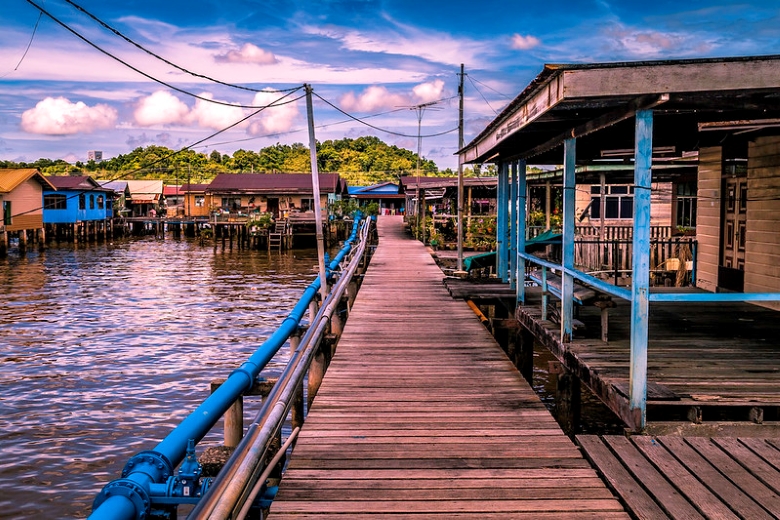
A water village in Brunei (Photo: Baron Reznik / Flickr [CC BY-NC-SA 2.0])
In the resource sector, the start of operations at oilfields discovered in 2023 and the resumption of production at previously suspended oil and gas facilities were cited as the main drivers of 2024’s economic growth. However, in recent years Brunei’s oil production has reportedly been declining due to depletion at existing fields and reduced development activity. In terms of average daily production, output fell sharply from 204,000 barrels in 2000 to 118,000 in 2010 and 103,000 in 2020, a significant decline. Despite falling output and reduced development, some experts predict Brunei’s oil reserves could be depleted within 20–25 years.
It is true that the ample revenues from natural resources have been returned to citizens to some extent, enabling robust healthcare and welfare services and free education up to the university level. Bruneian citizens also do not pay income tax. Thanks to strong healthcare and welfare services, the birth rate is on par with the world average while the death rate is among the lowest globally. Demographically, more than one-fifth of the population is under 15, and about half is under 30.
In 2024, GDP per capita was US$79,200, ranking 11th in the world. However, a large share of this wealth flows into the hands of the sultan, whose net worth is said to reach US$30 billion. Inequality exists nonetheless. While the government, World Bank, and other public bodies do not publish detailed poverty statistics, one study that defined the poverty line as half the median household income found that about 19% of the population lived below that line as of 2015.

As of 2025, Brunei’s sultan, Hassanal Bolkiah (Photo: imagemaker / Shutterstock.com)
To address the economic and social challenges Brunei faces, the government unveiled Wawasan Brunei 2035 in 2008, setting three goals to be achieved by 2035. The first is quality education and lifelong learning; the second is a high quality of life; and the third is sustainable economic growth and diversification. Achieving a low unemployment rate is among the targets for the third goal.
Youth unemployment
At present, however, the younger generation faces high unemployment. Below we consider the background, starting with recent trends in youth unemployment.
As the graph shows, the unemployment rate rose steadily from 1991 to 2018, reaching 30.8% in 2018. Although it declined after 2019, it still stood at 18.5% in 2024, above the world average of 13.6%. This situation also applies to university graduates, many of whom experience prolonged job searches or are forced into non-regular employment.
Why, then, is youth unemployment so high in Brunei? One reason lies in the country’s economic structure. Thanks to revenues from abundant natural resources, Bruneian youth have grown up with extensive health, welfare, and education services. There is evidence that young people raised in such a rentier state (Note 3) tend to aspire to jobs that offer “high income, job security, and prestige.” As a result, the public sector, such as civil service positions with good pay and stability, is popular, while private-sector jobs are less preferred. In fact, dependence on foreign workers in key industries such as construction, agriculture, and manufacturing has increased. Their numbers reached 65,579 in 2019 and 75,402 in 2023, accounting for about 16.4% of the population.
What measures is the government taking to improve the situation? One example is the Youth Entrepreneurship Steering Committee, established in 2019 under government leadership to support youth entrepreneurship and the growth process of their businesses. Initiatives include grants to match startups, SMEs, and professionals; a mentoring network to foster entrepreneurs; consulting to help local firms obtain international certifications; and the provision of factory space when young people launch manufacturing-related businesses.
Through these efforts, the government aims to diversify the economy, provide business opportunities for youth, and create jobs. In March 2017, four young people were also appointed to the Legislative Council, the government’s legislative body, creating opportunities to incorporate youth voices into politics.
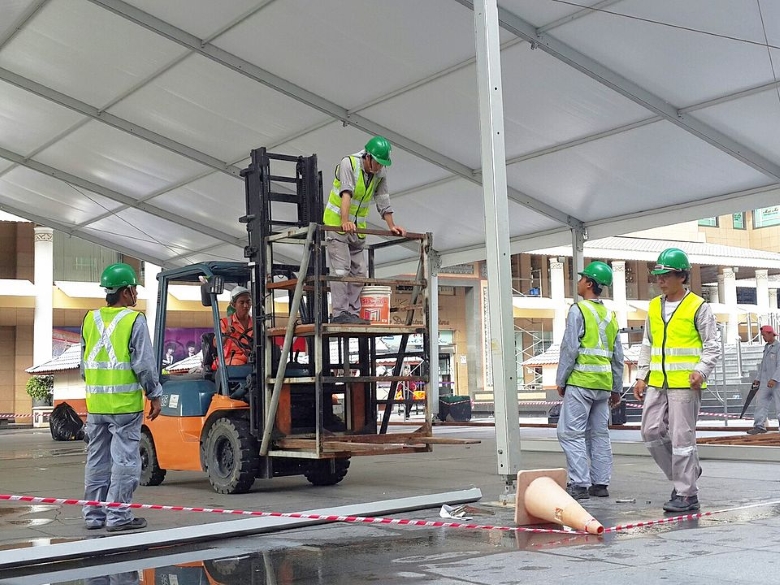
Migrant workers from the Philippines working in Brunei (Photo: Jpquidores / Wikimedia Commons [CC BY-SA 3.0] )
Youth and social media
Under the autocratic sultanate that dates back to around the 14th century, the current sultan, Hassanal Bolkiah, has held power for nearly 60 years since his accession in 1967. The sultan wields sweeping authority in Brunei, and the government maintains old customs and values. Against this backdrop, the high penetration of the internet and social media among young people is seen as potentially shaking these traditional values. Exposure to diverse viewpoints through social media can lead to questioning old customs and social structures. In particular, young people with overseas educational experience are reported to be more critical of the country’s conservative social structures and values. Through digital engagement, many issues once considered taboo are now being discussed on various digital platforms.
These shifts in awareness are beginning to translate into concrete social actions. One example concerns discrimination against migrant workers. Migrant workers from India, Pakistan, and Bangladesh engaged in manual labor have long been targets of discrimination by many Bruneians, but the issue was rarely discussed publicly. In response, Bruneian youth, including local influencers, have begun to voice opposition to such discrimination through social media.
While such solidarity is emerging through digital platforms, a challenge remains: Brunei’s constitution and laws lack provisions that guarantee freedom of expression, as noted. Furthermore, under the 2019 penal code, those deemed “mukallaf” (persons of legal responsibility) aged 15 or older can face the death penalty depending on the charge, and children called “mumayyiz,” around seven years old, may be subjected to whipping as a criminal punishment. As a result, there are limits to how far young people can push for reforms to traditional social structures.
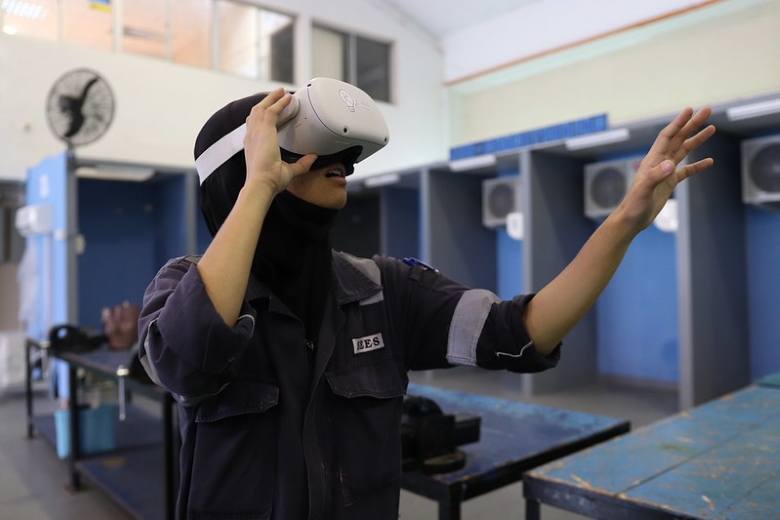
People engaged in digital skills training in Brunei (Photo: UNESCO-UNEVOC / Flickr [CC BY-NC-SA 2.0])
Conclusion
This article has examined the issues facing young people in Brunei. While citizens have benefited from natural-resource wealth through robust healthcare and education services, high youth unemployment and social and legal problems persist. Behind this lies a rentier economic structure dependent on oil wealth: young people gravitate toward public-sector jobs offering stability and high income, while the private sector depends heavily on foreign labor. In response, the government is seeking to diversify the economy and create jobs by supporting youth entrepreneurship and SMEs.
Young people are showing signs of change through online engagement—for example, speaking out against discrimination toward migrant workers—but they are constrained by a strict legal framework. Going forward, it will be important to watch how Brunei reduces youth unemployment and advances economic diversification.
Note 1: Here, youth unemployment refers to the unemployment rate among people aged 15–24 who are able to work and are actively seeking employment.
Note 2: One barrel is about 159 liters, a unit often used internationally for crude oil and petroleum products.
Note 3: A state whose public finances depend heavily on revenues from natural resources such as oil and natural gas, and that maintains authoritarian rule by distributing those revenues to the public free of charge.
Writer: Hayato Ishimoto
Graphics: Yow Shuning





[3611]PHPark Official Site: Best Slots in the Philippines. Login, Register, & App Download Now. Experience PHPark, the official site for the best slots in the Philippines. Secure your phpark login, complete your phpark register, and get the phpark app download now to start winning on premium phpark slots! visit: phpark
[2478]PlayMojo Philippines: PlayMojo Login & Register for Top Online Slots, Casino Bonuses, and App Download. Join PlayMojo Philippines! Quick PlayMojo login & register to access top PlayMojo online slots. Claim a huge PlayMojo casino bonus & get the PlayMojo app download now! visit: PlayMojo
[2794]JILI888 Login & Register: Top Online Casino Philippines. Play JILI888 Slot Games & Get the App Download Today. Experience JILI888, the top online casino Philippines. Quick JILI888 login & register to play premium JILI888 slot games. Win big and get the JILI888 app download today! visit: jili888
[4318]Slotph Online Casino Philippines: Secure Slotph Login, Register & App Download for the Best Slots Games. Join Slotph Online Casino Philippines! Secure slotph login, fast slotph register & slotph app download. Play top slotph slots game titles and win big today! visit: slotph
[649]ug7771 download|ug7771 app|ug7771 giris|ug7771 login|ug7771 register Join ug7771, the leading Philippines online casino. Secure the official ug7771 download for our mobile app. Fast ug7771 register and ug7771 login (giris) to enjoy premium slots, live games, and big rewards today! visit: ug7771
[8637]188JILI Online Casino Philippines: Quick Login, Easy Register, and App Download for the Best Slot Games. Experience the thrill of 188JILI Online Casino Philippines. Get quick 188JILI login, easy register, and fast 188JILI app download for the best slot games. Join the top-rated 188JILI online casino and start winning today! visit: 188JILICasino
[6507]OkayBet: Philippines’ Top Online Casino – Quick Login, Register, App Download & Premium Slots Join OkayBet, the Philippines’ top online casino. Quick OkayBet login & register for premium OkayBet slots. Secure OkayBet app download for the best casino experience! visit: okaybet
[557]VIPPH Online Casino: Top Philippines Slots, Easy Login & App Download Experience VIPPH Online Casino, the #1 hub for Philippines slots. Quick VIPPH login, easy VIPPH register, and fast VIPPH app download. Play VIPPH slots today! visit: vipph
[2191]MNL63 Online Casino: The Best Philippines Slot Games. Easy MNL63 Login, Register & App Download for Big Wins! Experience the ultimate gaming at MNL63 Online Casino, the top destination for the best Philippines slot games. Enjoy a seamless mnl63 login, quick mnl63 register, and easy mnl63 app download to start playing today. Explore a wide variety of mnl63 slot titles and secure your chance for big wins at the most trusted online casino in the Philippines! visit: mnl63
[1349]41jili Online Casino: Official Login, Register, & App Download for Best Philippines Slots Experience the best of 41jili Online Casino! Secure your 41jili login, complete your 41jili register, and play top Philippines 41jili slot games. Get the 41jili app download today for the ultimate mobile gaming experience and big wins. visit: 41jili