
Guyana, where oil fields were discovered in 2015, has gained major economic opportunities by beginning oil exports in 2020. However, the benefits and potential adverse effects of these resources are still unclear. With the discovery of more than 11 billion barrels of offshore oil and the start of commercial production, the country has established itself as 1 of the fastest-growing economies in the world. While gross domestic product (GDP) is surging, a significant portion of the population still lives in poverty, indicating that economic growth has not yet translated into broad social welfare.
Guyana’s oil production and exports present significant opportunities—such as increased government revenue, infrastructure development, and heightened geopolitical importance—while also creating numerous challenges, including the risk of overdependence on oil, environmental degradation, heightened political and ethnic tensions, and the need to develop fair systems to manage oil revenues. In addition, the long-standing territorial dispute with Venezuela has taken on a more international dimension, further complicating efforts to ensure Guyana’s stable and sustainable growth.
This article examines how oil production affects Guyana’s domestic politics, ethnic relations, civil society, the environment, and its regional and international connections. It then assesses the opportunities and challenges of becoming a new oil producer and explores how resource wealth can be managed to promote sustainable and inclusive development.
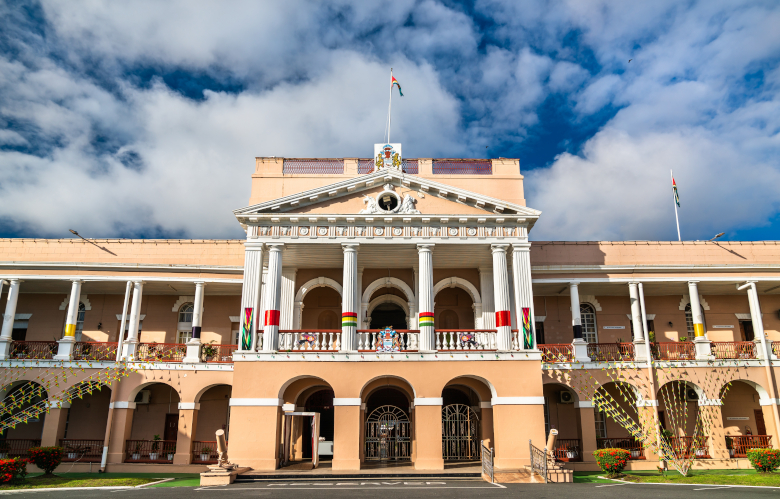
Guyana’s Parliament Building (Photo: Leonid Andronov / Shutterstock.com)
目次
Overview of Guyana
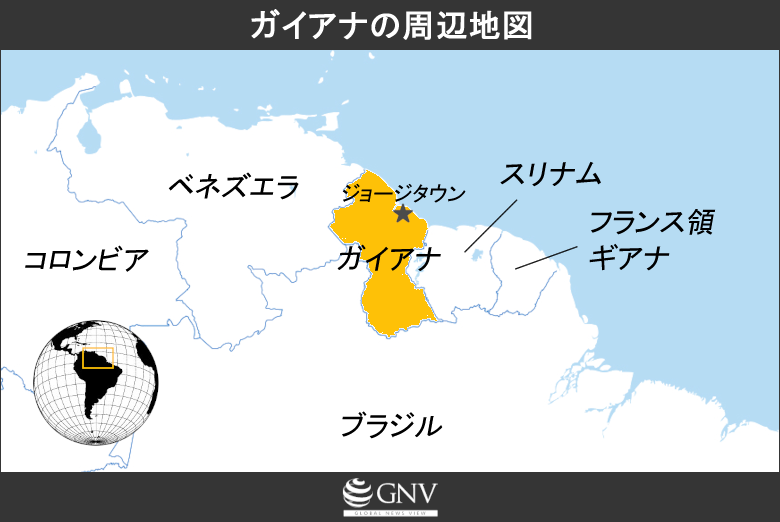
The Co-operative Republic of Guyana is a South American country with a population of 810,000, located between Venezuela, Brazil, and Suriname. The country has strong historical and cultural ties with the Caribbean and is one of the founding members of the Caribbean Community (CARICOM). It is also known as the only English-speaking country in South America.
Guyanese society is ethnically and religiously diverse, composed of people of African descent (Afro-Guyanese), Indian descent (Indo-Guyanese), people of mixed backgrounds, Indigenous Amerindians, and several other groups. About 90% of Guyana’s population resides in the low-lying coastal area, which accounts for only about 10% of the country’s landmass, and most economic activity and agricultural production—including in the capital, Georgetown—are concentrated along this coast. Because of this geography, the country is highly vulnerable to climate change and sea-level rise; if these worsen coastal flooding, both human settlements and economic infrastructure will suffer significant damage.
Although 80% of Guyana’s territory is covered by vast tropical rainforest, fertile agricultural land is also in use. The country is rich in natural resources; until recently, gold and bauxite were the principal minerals. The discovery of offshore oil in 2015 has fundamentally transformed the economic structure in recent years. The estimated resources are about 11.2 billion barrels of oil equivalent and approximately 481 billion cubic meters of natural gas.
From 2010 to 2019, GDP growth generally ranged between 1% and 5%, with near stagnation in 2015 (0.1%). However, in 2020, when oil production began, GDP recorded an astonishing increase of 43.5%. The country has continued to post remarkable GDP growth every year since, recording 63.3% in 2022 and 43.4% in 2024. These growth rates have made Guyana one of the fastest-growing economies in the world in recent years.
On the other hand, although data on poverty rates have not been collected since the start of oil production in Guyana, poverty levels are still considered to be relatively high, according to reports. A significant share of the population falls below the minimum income required for a decent standard of living, suggesting that economic growth has not automatically translated into ethically sustainable welfare. It is also reported that a large portion of the population relies heavily on remittances from overseas.
Historical and political context
Guyana’s historical and political development is essential to understanding its contemporary society and governance. The region now known as Guyana has long been home to various Indigenous peoples, including the Carib, Warao, and Arawak. These communities developed distinctive cultural and linguistic traditions along rivers and the coastal plain, organizing societies based mainly on fishing, hunting, and small-scale agriculture, thereby shaping the early demographic profile of the region. Around 1580, the Dutch advanced into the area and began settlement. They introduced plantation agriculture and later slavery. During this period, enslaved people were transported primarily from West Africa as labor for sugarcane plantations, while most Indigenous peoples were displaced or assimilated.
After the Napoleonic Wars, in 1814, the British took control of the Dutch colonies, and in 1831 the colonies of Berbice, Essequibo, and Demerara were consolidated and governed as British Guiana. Slavery was abolished in 1834, and to sustain the plantation economy, the British colonial government brought indentured laborers primarily from India, as well as from the Portuguese island of Madeira and from China. This process contributed to the formation of a multi-ethnic society.
Even before independence, political movements and parties emerged that reflected tensions among different ethnic groups. Guyana gained independence from Britain in 1966 and established a parliamentary democracy. However, in the decades following independence, ethnic- and class-based tensions shaped the country’s political development. Disputes over elections, economic challenges, and governance reforms also influenced the nature of politics in Guyana.
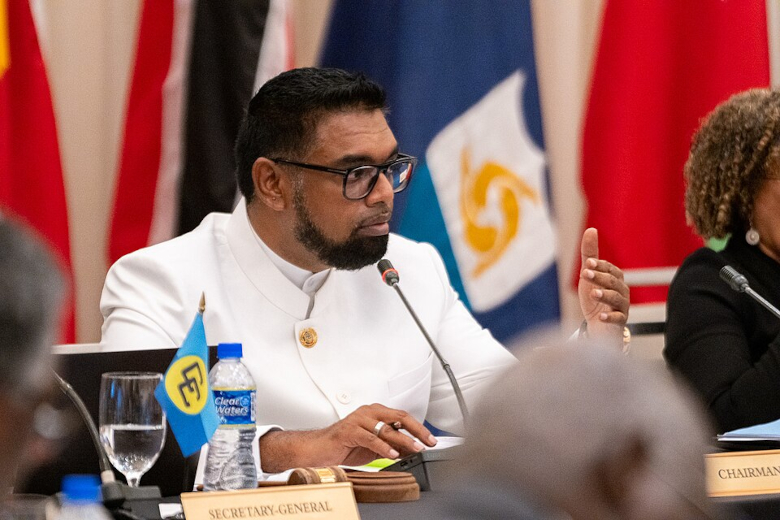
President Mohamed Irfaan Ali (Photo: PMO Barbados / Wikimedia Commons [Public domain] )
Since independence, the political landscape has been largely dominated by two major parties: the People’s National Congress (PNC) and the People’s Progressive Party (PPP). The PNC, supported mainly by communities of African descent, governed from 1966 to 1992 under the leadership of Forbes Burnham. In 1992, the PPP, based on support from people of Indian descent, took power and has held office for much of the period since. Throughout this time, ethnic identity remained a central factor in forming electoral coalitions and party support, often exerting more influence than ideological differences. However, recent developments suggest a shift in voter behavior. In the 2025 general election, the newly formed Workers’ Independent Network (WIN) emerged as the largest opposition force, indicating that Guyanese voters are increasingly willing to vote beyond traditional party and ethnic affiliations.
Oil wealth and political, regional, and social impacts
The offshore oil resources discovered off Guyana have significantly reshaped the country’s economic and political landscape since the start of commercial production in 2019. The discovery of over 11 billion barrels of oil has greatly expanded Guyana’s development potential but has also introduced major management challenges. Oil revenues have indeed driven rapid economic growth, reflected in rising GDP. However, this rapid expansion risks triggering the so-called Dutch disease, a phenomenon in which a sharp and sudden increase in national income from natural resource discoveries undermines the competitiveness of other sectors—such as agriculture, mining, and services—disrupting economic balance and weakening non-oil industries. These weakened sectors may face declining productivity, rising costs, and reduced international demand, potentially widening income inequality.
To manage oil revenues sustainably and regulate budget expenditures, the government established a Natural Resource Fund (Guyana Natural Resource Fund) intended to safeguard resources for future generations. However, ensuring effective management, transparent reporting, and the prevention of corruption remains a major challenge. The rapid expansion of the oil sector has also exposed the limitations of state institutions, as disparities in technical knowledge and experience between the government and oil companies make proper contract implementation and regulatory enforcement difficult. Some of the benefits of oil revenues have been returned to the public through cash transfers and infrastructure projects, but many citizens—especially in rural areas—still do not fully enjoy the wealth’s advantages.
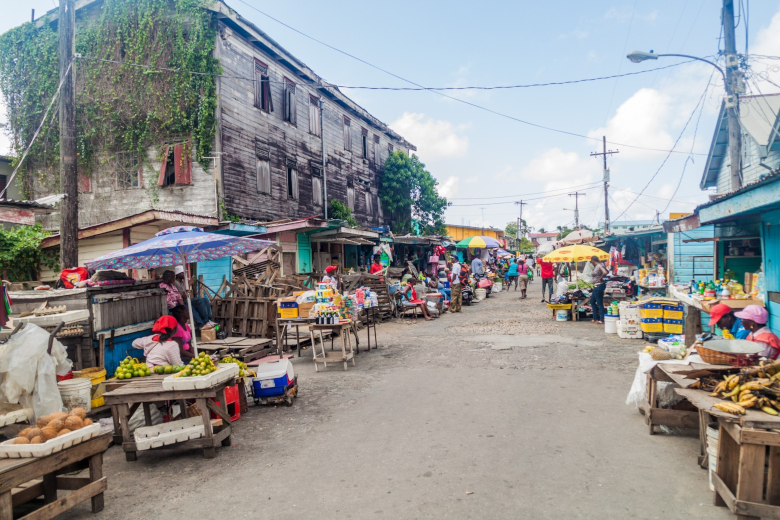
Georgetown, Guyana’s capital (Photo: Matyas Rehak / Shutterstock.com)
Moreover, while the country is experiencing rapid economic growth, oil production is carried out by foreign companies, which are believed to be benefiting the most from production. Specifically, agreements between the Guyanese government and these oil companies allow the extraction of oil without paying income taxes. For example, ExxonMobil, the U.S. oil major with the largest stake in Guyana’s oil fields, reportedly paid no taxes to the Guyanese government in 2024.
The wealth generated by oil resources has also exacerbated existing inter-ethnic and political tensions. Control over oil resources has become a point of competition between major parties, influencing which communities benefit from investments and social programs. This situation deepens divisions; perceived favoritism toward or exclusion of certain regions fosters distrust and social friction, thereby fueling the view of oil as not only an economic asset but also a politically contentious issue.
Foreign policy and external issues
Guyana’s oil resources are closely linked not only to domestic affairs but also to international geopolitical issues, particularly the long-standing border dispute with Venezuela over the Essequibo region. Venezuela claims about 2-thirds of Guyanese territory, asserting historical rights and arguing that colonial-era agreements were unfair, contending as much. Offshore oil discoveries near the disputed maritime area have heightened tensions. Venezuela has periodically issued diplomatic warnings and increased its military presence near the border region. Such moves raise concerns about the security of Guyana’s energy investments, potential disruptions to oil production, and the country’s broader economic stability. The dispute has also complicated foreign investment, as international companies must consider geopolitical risks when operating in contested waters.
The Caribbean Community (CARICOM) has played an important role in de-escalating tensions between Guyana and Venezuela. For example, in February 2021, it supported efforts that led to the release of Guyanese fishing vessels and crew detained by Venezuelan authorities. The organization has consistently supported dialogue and legal resolution through international mechanisms while condemning unilateral actions that escalate the dispute. In addition to CARICOM, other regional and international stakeholders have encouraged diplomatic engagement and monitored the situation to prevent deterioration. These efforts aim to maintain stability, protect Guyana’s energy investments, and promote a peaceful resolution of the long-standing border dispute.
(A Venezuelan politician looks at a map of Venezuela that includes the Essequibo region, which is part of Guyana)
However, the geopolitical situation surrounding Guyana’s oil is complicated by the involvement of the United States and major multinational oil companies. U.S. support for Guyana’s territorial claims strengthens Guyana’s defense of its sovereignty and its capacity to manage oil resources, while also adding an element of regional competition. Guyana’s oil benefits U.S. companies, particularly ExxonMobil and Chevron, but the U.S. military presence in the region that underpins this also increases pressure on Venezuela. In 2025, the United States intensified military activity in the region, carrying out attacks on vessels in international waters near Venezuela. The U.S. government also announced a public acknowledgment of covert CIA operations in Venezuela, suggesting a possible plan to overthrow the government.
Oil management and environmental risks
Environmental protection is also among Guyana’s concerns. Offshore drilling activities in Guyana pose several environmental risks, particularly given the country’s proximity to the Amazon basin. These risks include oil spills that could harm marine life and coral reefs, pollution of coastal fisheries, disruptions to the migratory patterns of aquatic species, and deforestation or contamination affecting adjacent forest ecosystems, among other impacts. Increased maritime traffic and industrial activity may also threaten biodiversity and accelerate habitat degradation.
Civil society organizations are advocating for stronger environmental oversight to prevent ecological damage, calling for stringent regulations, regular environmental impact assessments, and monitoring of oil operations. These groups emphasize the need for transparent reporting and public participation in environmental governance to ensure that the use of oil revenues aligns with the goal of sustainable development. Other organizations urge a reassessment of pursuing oil production in Guyana itself, considering the global impact of greenhouse gas emissions from the extraction and consumption of fossil fuels.
The Guyanese government has pledged environmental protection measures, including adopting policies to reduce carbon emissions, tightening regulations on offshore drilling, and participating in international frameworks such as the Paris Agreement. Effectively balancing oil development with environmental conservation remains a core challenge, and coordinated efforts by government agencies, industry, and civil society are needed to protect ecosystems while pursuing economic growth.
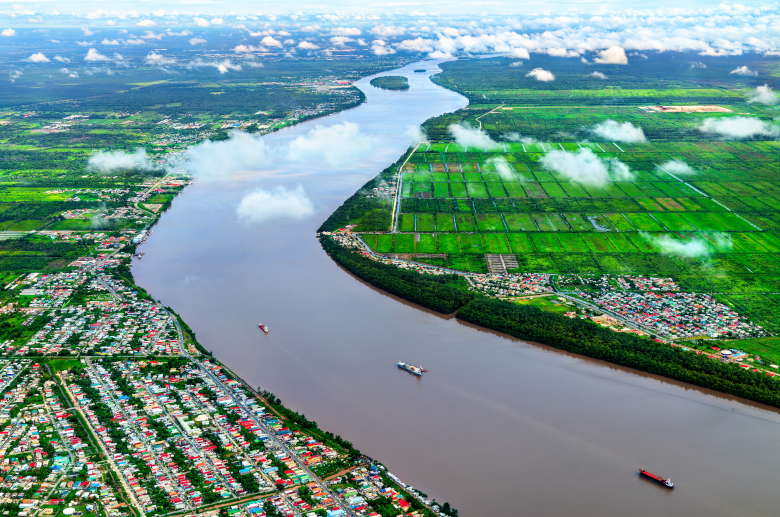
The Demerara River, near Georgetown (Photo: Leonid Andronov / Shutterstock.com)
Toward sustainable development
Guyana’s emergence as an oil producer presents significant economic opportunities while also posing structural, social, and environmental challenges. The offshore fields have rapidly boosted Guyana’s GDP and growth outlook, but these gains have not been equitably returned as welfare across all segments of society.
Managing oil resources requires balancing economic growth with environmental protection, strong governance, and social inclusion. Risks such as Dutch disease, environmental degradation, and escalating regional tensions highlight the need for careful oversight. For oil wealth to support sustainable and inclusive development, mechanisms such as civil society engagement and the Natural Resource Fund are indispensable.
Ultimately, Guyana’s case shows that resource wealth alone does not guarantee prosperity. Long-term success depends on an approach centered on sustainability that integrates economic, environmental, and social considerations, enabling the country’s oil resources to benefit both its people and its ecosystems.
Writer: Esma Akcicek
Graphics: A. Ishida







_(53554175146).jpg)
[680]swerte77 download|swerte77 app|swerte77 slots|swerte77 login|swerte77 casino Experience the ultimate online gaming at Swerte77 Casino, the premier destination for players in the Philippines. Play exciting Swerte77 slots, enjoy a secure Swerte77 login, and get the mobile-optimized Swerte77 app. Download Swerte77 today to start winning and enjoy the best casino experience! visit: swerte77
[8707]bw29 register|bw29 download|bw29 login|bw29 giris|bw29 casino Experience the ultimate online gaming at bw29, the premier casino platform in the Philippines. Complete your bw29 register and bw29 login/giris today to access exclusive slots and live dealer games. Get the official bw29 download for mobile and enjoy seamless play anytime. Join bw29 casino for big wins and top-tier rewards! visit: bw29
[6719]888jili Login & Register: Top Philippines Slot Games & Official App Download Experience the ultimate gaming at 888jili! Quick 888jili login and 888jili register for top Philippines slot games. Get the official 888jili app download and access your 888jili casino login for massive bonuses and secure wins today! visit: 888jili
[5076]Tsars Casino Philippines: Secure Login, Easy Register & Best Slots Online. Download the Tsars App for Exclusive Casino Bonuses. Join Tsars Casino Philippines! Secure Tsars casino login & easy Tsars casino register. Play top Tsars slots online and get the Tsars app download for exclusive Tsars casino bonuses today. visit: Tsars
[1907]PH888 Online Casino Philippines: Easy Login & Register, Top PH888 Slots, and Official App Download. Join PH888 Online Casino Philippines! Quick ph888 login & register to play top ph888 slots. Get the official ph888 app download and win big at ph888 online casino today. visit: ph888
[4265]VPH777 Online Casino: Official Login, Register, Slots, and App Download for Philippines Players. Experience the best at VPH777 Online Casino! Easy vph777 login and register to play premium vph777 slots. Get the vph777 app download for top-tier gaming in the Philippines. visit: vph777
[6909]JLSlot: Best Online Slot & Casino Games in the Philippines. Quick JLSlot Login, Register, and App Download for Top-Tier Gaming. Experience top-tier gaming at JLSlot, the #1 hub for online slot and casino games in the Philippines. Quick jlslot login, register, and jlslot app download. Join now! visit: jlslot
[2964]PHPGames31: Top Online Casino in the Philippines. Secure PHPGames31 Login & Register to play premium PHPGames31 Slot games. Download the PHPGames31 APK now for the ultimate mobile gaming experience. Join PHPGames31, the premier online casino in the Philippines. Secure PHPGames31 login & register to play top-tier PHPGames31 slot games. Download the PHPGames31 APK today for the ultimate mobile gaming experience! visit: phpgames31
[3328]Jilihot Online Casino: The Best Philippines Slot Games. Experience Seamless Jilihot Login, Easy Register, and Secure App Download Today. Join Jilihot Online Casino for the best Philippines slot games. Experience a seamless Jilihot login, fast Jilihot register, and secure Jilihot app download. Start winning today! visit: jilihot
[1095]The Top Online Casino and Slot Games Destination in the Philippines visit: slotphlogin
Chidowincasino, now we’re talking! Feeling lucky? Give it a shot, who knows, could be your night! chidowincasino
Mxbbrwin, another one to check out. Plenty of options, just be smart about it, yeah? Always gamble responsibly. mxbbrwin
Canelocasino! Sounds fun! Dig around, see if they’ve got your game. Remember that winning isn’t everything. canelocasino