
At the Davos meeting (※1), which discusses the problems the world faces, in January 2019 one participant’s remark caused controversy. “It’s my first time at Davos and, to be honest, I’m a little bewildered… Hardly anyone is talking about tax avoidance—the real issue—or about how the rich aren’t paying their fair share… It feels like I’m at a firefighters’ conference and we’re not allowed to talk about water.” The speaker was the young Dutch historian Rutger Bregman. He also forcefully argued, “We need to stop talking about philanthropy and start talking about taxes.”
Bregman’s point is on target. In their relationships with high-income countries, low-income countries lose overwhelmingly more through tax avoidance, unfair trade, and trade barriers than they gain from official development assistance (ODA) and aid organizations. It is clear that, for high-income countries to solve the problems the world faces, it is more important to reduce actions that disadvantage low-income countries and to discuss reforms of trade and financial systems than to focus on charitable activities like aid.
Nevertheless, every time global issues such as poverty and inequality are discussed in high-income countries, actions taken as the offending side are shelved, and “aid” alone becomes the center of conversation as the solution. This trend is seen not only among governments and aid organizations that engage in assistance activities, but also in the media, which should be responsible for seeking and conveying the truth about the world. This article therefore examines how “international contribution” is reported.
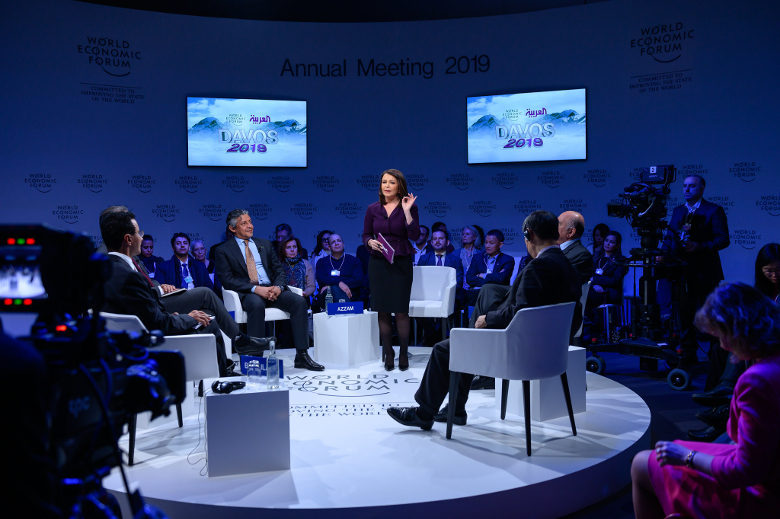
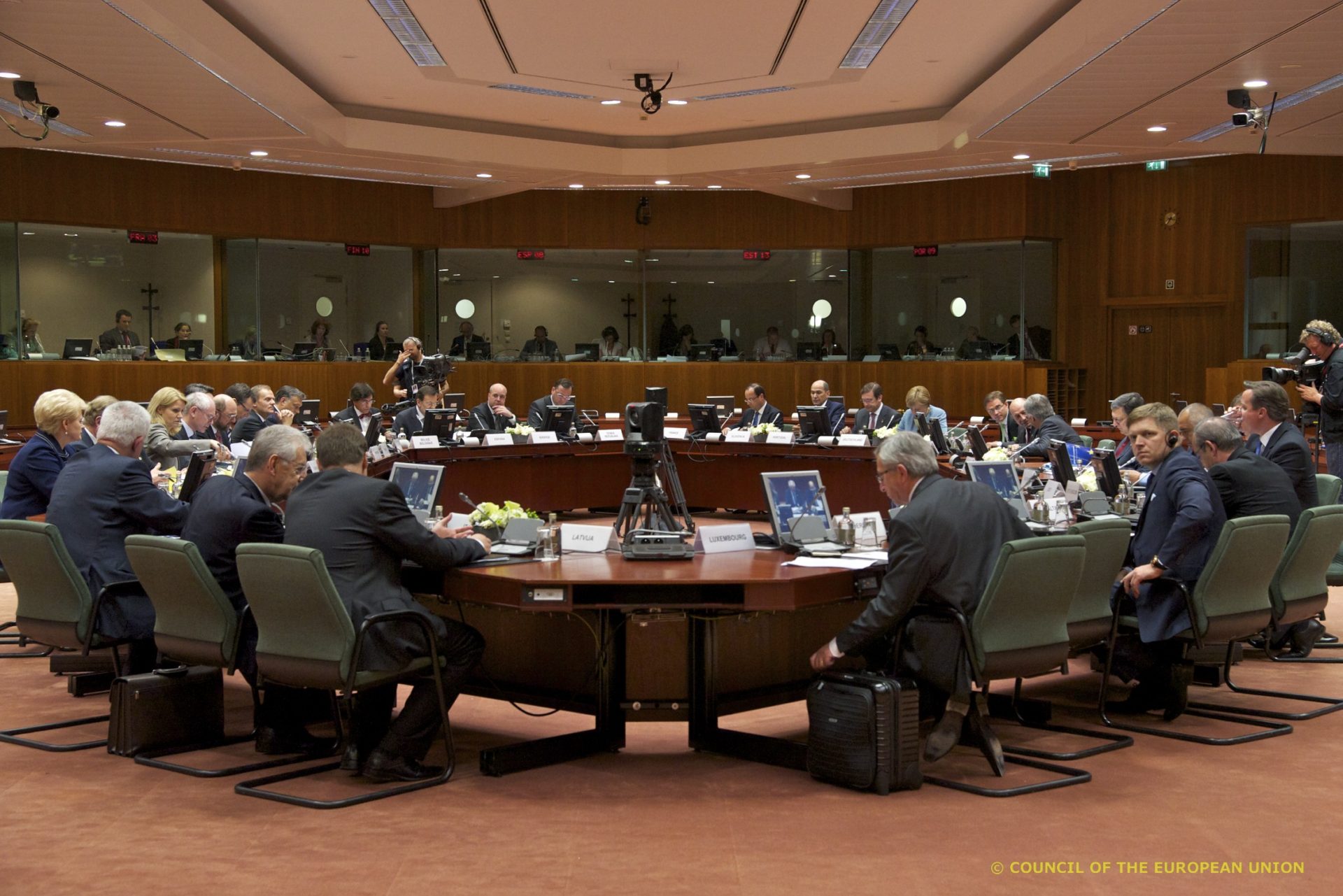
Scene from the Davos meeting (2019) (Photo: World Economic Forum [CC BY-NC-SA 2.0])
The light and shadow of international contribution
The definition of “international contribution” is not singular. Examples include “a stance of playing an active role in international issues” (Britannica International Encyclopedia, concise entry) and “cooperating, as a member of the international community, to create a better order” (Sanseido Daijirin). It is also used almost synonymously with “international cooperation.” Yet under any of the above definitions, it is clear that international contribution does not fit within the narrow frame of “aid.” Indeed, international contribution includes assistance to promote the development of low-income countries, but it can also be said to include the responsibility to stop actions that hinder that development and to remove obstacles.
Accordingly, the Center for Global Development (Center for Global Development, CGD) has created an index measuring the extent to which high-income countries contribute to the development of low-income countries (Commitment to Development Index), which it publishes annually. When evaluating contributions to development, “aid” is only one of seven indicators. In addition to aid, finance, technology, environment, trade, security, and migration policy are also evaluated.
Among the elements other than aid, many causes can be found that hinder the development of low-income countries. Trade is a prime example. Half of international trade passes through tax havens where secrecy is maintained on paper, which in itself speaks volumes. Compared to high-income countries, low-income countries have weaker enforcement capacity and suffer massive economic losses through the tax avoidance and other illicit financial outflows of high-income countries. Furthermore, because low-income countries are in a weak position in price-setting, they also fall victim to unfair trade, and a large portion of the wealth that should be generated from all kinds of products—beginning with mineral resources, cocoa, and tobacco—is extracted by foreign corporations. On top of that, to protect and develop their domestic industries, high-income countries impose tariffs on value-added imports (for example, in the case of coffee, they do not levy tariffs on green beans but impose high tariffs on roasted beans) and provide subsidies for their own products. This deprives low-income countries of opportunities for free trade and exports and hinders their development. In short, the global trading system is designed to be extremely advantageous to high-income countries.
In terms of environmental issues as well, climate change caused by the actions of industrialized countries is bringing heavy damage to low-income countries, which have had little to do with its causes. The frequency of desertification, floods, and extreme weather is increasing, and these countries have no choice but to bear most of the cost. For example, the massive Cyclone Idai that struck Mozambique in March 2019 has been suspected of being linked to climate change. To deal with the enormous damage, Mozambique received a loan from the International Monetary Fund (IMF), but in exchange, the possibility of relief for its existing debt was cut off, and in the end the country’s taxpayers were left to shoulder the burden.
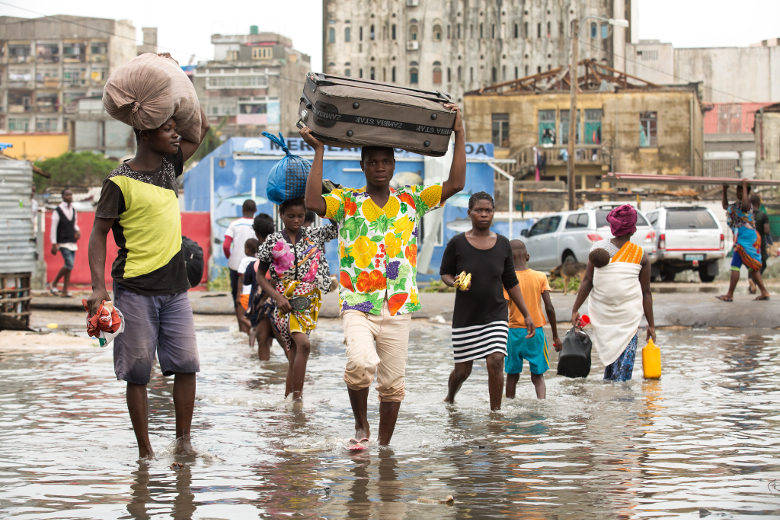
Cyclone Idai, which struck Mozambique in March 2019 (Photo: Denis Onyodi: IFRC/DRK/Climate Centre [CC BY-NC 2.0])
In the first place, the ODA actually being paid is not very large. Major countries such as Japan and the United States allocate less than one-third of the UN target to ODA. Moreover, much of the aid is used for domestic programs, or takes the form of effectively “tied aid,” that is, as an “ODA business” benefiting domestic companies. Meanwhile, the damage suffered by low-income countries due to exploitation, unfair trading systems, and climate change far exceeds ODA. Fulfilling the responsibility, as the offending side, to remove the causes of these problems and set them on a path to improvement would also be an “international contribution.” Interestingly, in CGD’s index measuring contributions to development, Japan ranked 24th out of 27 high-income countries as of 2018.
Reporting on international contribution
When Japanese media report on “international contribution,” they hardly touch on areas such as trade issues and tax avoidance where the Japanese government and companies contribute to the causes of problems, and basically discuss it only in the context of “aid.” For example, during the five years from 2014 to 2018, Asahi Shimbun ran 310 articles that mentioned “international contribution” (※2). Among them, articles that appeared particularly frequently were those in the context of participation in peacekeeping operations (PKO) by the Self-Defense Forces (42%) and the issue of technical interns in Japan (16%). Both are forms of “aid,” but reporting volume likely increased because the nature or implementation of these activities was being questioned. In addition, there were many articles on assistance related to the Japanese government, Japanese NGOs and individuals (15%), disasters (5%), sports (4%), and healthcare (3%). Only one article referred to fair trade in the context of international contribution, and there were no articles addressing other issues such as trade and tax avoidance.
During the same period, a search for “ODA” in Yomiuri Shimbun shows 417 articles were published. By contrast, a search for “tax haven,” which has a greater impact on international contribution in monetary terms than ODA, yielded 212 articles, about half as many. Moreover, the vast majority of articles related to tax havens focused on losses and countermeasures in Japan and other high-income countries, and very few focused on the impact on low-income countries. A search for “fair trade” returned only 33 articles. Numerous problems have already been pointed out in Japan’s fair trade reporting, and there is a strong tendency to portray fair trade as if it were “aid.”
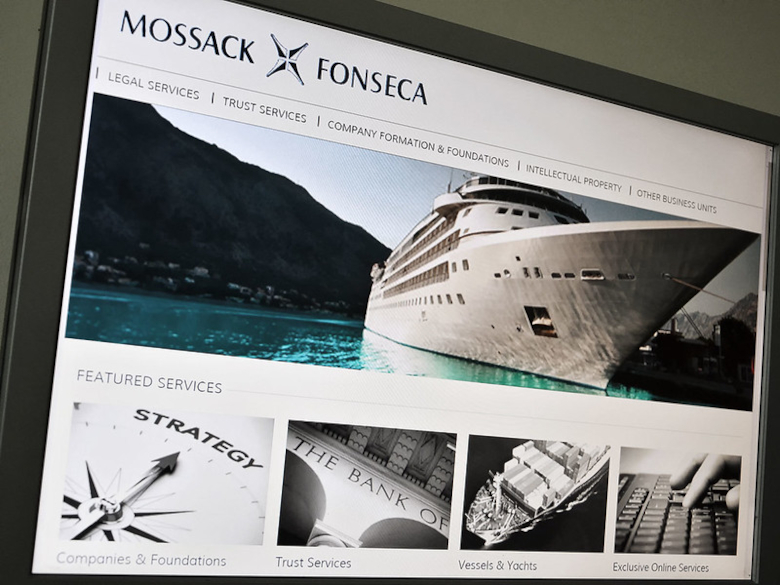
The Swiss UBS financial group, which has been involved in numerous tax-avoidance scandals (Photo: Martin Abegglen [CC BY-SA 2.0])
Akira Ikegami, who frequently appears in the media, has said the following about international contribution: “When, through ‘international cooperation,’ people in developing countries feel grateful for the existence of ‘Japan,’ doesn’t that turn into true ‘international contribution’?” he says. In variety shows that feature low-income countries, it is also a standard angle to show people “highly praising/expressing gratitude” to Japan and the Japanese for aid.
The misconception that “international contribution” equals “aid” seems to be broad and deeply rooted in reporting. Below, we take up two case studies.
Bangladesh: Apparel and poverty
In a globalized world, companies lower production costs by seeking places with cheap labor and fewer regulations on production processes, thereby making profits while supplying low-priced goods to customers. When this goes too far, workers are forced to work in poor conditions with low safety standards and fall into extreme poverty. In the apparel and fashion industry, a representative example of this is Bangladesh.
While foreign manufacturers carry out such exploitation, governments and NGOs in the same country also engage in aid activities. If, from a holistic perspective, workers were paid appropriate wages and provided with safe working environments, there would be no need for aid, but the level of losses from exploitation far exceeds the level of aid, and thus this does not lead to a fundamental solution.
However, Japanese reporting focuses on aid rather than the exploitation behind the poverty. A search in Yomiuri Shimbun (over the five years 2014–2018) using the keywords “Bangladesh” and “ODA” (or assistance/aid) shows 198 articles were published. Changing the keywords to “Bangladesh” and “wages” reduces that to seven articles, and using “Bangladesh” and “fair trade” yields only five articles. In 2019, some 50,000 garment factory workers went on strike because the minimum wage (equivalent to US$95) was too low to live on, and 10,000 of them joined demonstrations. Over the course of the weeks-long demonstrations, one person was killed, 50 were injured, and 5,000 were dismissed, yet Yomiuri Shimbun, Asahi Shimbun, and Mainichi Shimbun did not report on this series of events even once.
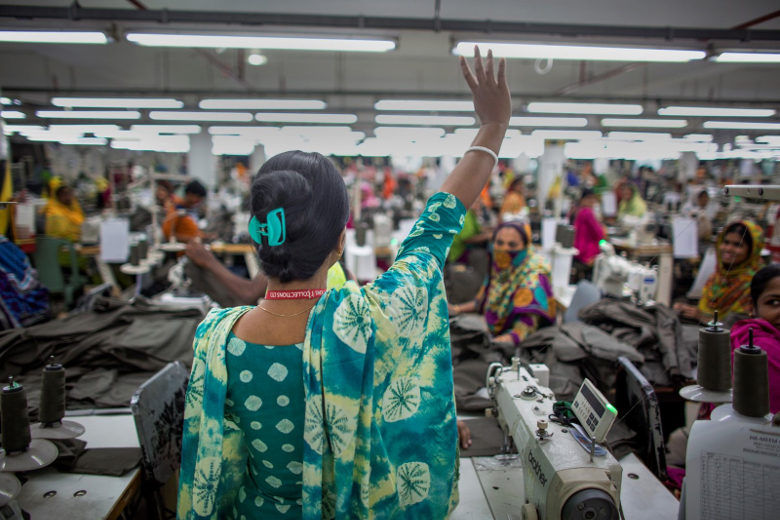
A woman elected as a workers’ representative at a garment factory in Bangladesh (Photo: ILO in Asia and the Pacific [CC BY-NC-ND 2.0])
Saudi Arabia: “Aid” and war crimes
“Support for women’s participation in society.” When Japanese Foreign Minister Taro Kono visited Saudi Arabia in April 2019 and inspected a Japanese company’s factory where women are employed, NHK News reported it this way. Regarding this visit, major newspapers also highlighted, as-is, the Japanese government’s “aid” message in their April 29 articles. The headlines were: Yomiuri Shimbun, “Support for Saudi economic reform”; Asahi Shimbun, “Saudi economic reform, FM Kono says ‘support’”; and Mainichi Shimbun, “Talks with Saudi foreign minister; conveys backing for economic reform.”
Foreign Minister Kono himself stated, “We must also provide support that will encourage many Japanese companies to consider investing in Saudi Arabia and the Middle East.” In other words, this is support for Japanese companies, not for Saudi Arabia. In the first place, Saudi Arabia supplies 40% of Japan’s oil, boasts one of the world’s largest oil reserves, and the royal family—numbering 15,000 people—is frequently noted for its lavish lifestyle. It would not be strange to question the need for “aid,” yet there was no such reporting.
The only issue pursued by Japanese media regarding the Japanese foreign minister’s visit to Saudi Arabia was the killing of journalist Jamal Khashoggi inside the Saudi consulate in Turkey in 2018. Although Foreign Minister Kono was asked whether he raised this issue in talks with the Saudi government, it appears he did not. However, if one is to focus on human rights issues, there are plenty of others. For example, one week before Foreign Minister Kono’s visit, Saudi Arabia carried out the public beheading of 37 prisoners in a single day. Furthermore, as a warning to others, the severed head of one person was mounted on a pole and displayed. Because the charges were vague—allegedly belonging to “terrorist” groups—human rights organizations condemned the trials as grossly unfair. Yet Yomiuri Shimbun, Asahi Shimbun, Mainichi Shimbun, and NHK did not report on this series of events even once.
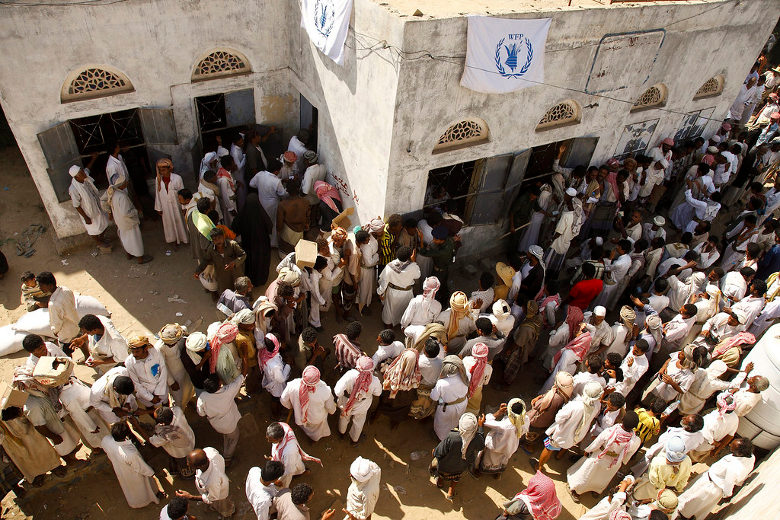
Internally displaced people who fled the Yemen conflict (Photo: IRIN Photos [CC BY-NC-ND 2.0])
And above all, there is Saudi Arabia’s intervention in the Yemen conflict, often called the world’s worst humanitarian crisis. Since 2015, the Saudi-led coalition has conducted 20,000 airstrikes on Yemen and continues to wage ground war. While many people are starving to death due to the causes of the conflict, no major news outlet mentioned this when Foreign Minister Kono visited. In Mainichi Shimbun’s 2018 coverage, more space was devoted to Saudi Arabia’s participation in the soccer World Cup than to its involvement in the conflict.
It would be “international contribution” to engage in diplomatic efforts to reduce the human rights violations and war crimes committed by Saudi Arabia, but the Japanese government did none of that during this foreign minister’s visit. This can be seen as condoning Saudi Arabia’s actions, and on top of that, it openly announced “support” for the expansion of Japanese companies. Japan’s media hardly pursued this and merely relayed the government’s words to viewers and readers. The lingering impression from the reporting on this visit is not Saudi Arabia’s numerous human rights abuses, but simply that “Japan is supporting Saudi Arabia.”
The illusion being created
In today’s society, where ethnocentrism and patriotism/nationalism are rampant, citizens who are bystanders likely do not want to believe that their own government and companies are not alleviating poverty and human rights violations but actively exacerbating them. Still less do they want to think that their own desires and actions—such as “wanting to buy goods cheaply” or “wanting to avoid paying taxes”—are linked to global poverty and environmental destruction. The more the media report the unvarnished reality of the world, the more discomfort they cause to viewers and readers, who may stop watching or reading the news.
Thus, when reporting international news, the media try to attract viewers and readers by emphasizing only parts such as “our government, companies, and aid organizations are properly making international contributions” and “because we are working hard in the world, society is moving in a good direction”—in other words, by creating such an illusion. This may be a major reason shaping current reporting.
(Photo: Nick Potts)
※1 Davos refers to the World Economic Forum’s 2019 annual meeting. Representatives of national governments, international organizations, corporations, NGOs, and others gather in Davos, Switzerland, for a conference known for addressing the challenges the world faces.
※2 The data from Asahi Shimbun and Yomiuri Shimbun were obtained by searches of national editions only.
Writer: Virgil Hawkins
We’re on social media, too!
Follow us here ↓





支援だけが国際貢献じゃない。例えば、非支援国の政治体制が整っていなければ、送ったお金が独裁者の贅沢に使われて終わることも往々にある。根本的な解決から目をそらし、「国際貢献」という名の正義ごっこに苦言を呈したブレグマン氏の指摘がもっと報道されてほしい。
「消防士の会議に参加したのに、水について話すことが許されていないような気分です」まさにその通りと思いました。
先進国の不正を正す取り組みはどうやったら広めることができるんだろう、、。
今のままじゃ、世界の貧困は解決できるわけないですね。
なんとかして現状を変えないといけませんね!
もっとみんなが知らなきゃ。
国際貢献という言葉の裏に、先進国の傲慢さが隠れていることを再認識しました。先進国が途上国を「利用」するのではなく、本来の意味で、各国が世界を良くしていくようになればいいなと思いました。
サウジアラビアについてのネガティブな報道はおそらくカショギ氏の暗殺事件くらいしか日本では伝えられてないかと。支援という聞こえのいい言葉にすり替えて実態を隠そう、知らないことにしようという姿勢は日本の大手メディアでは顕著ですね。伝えてくださってありがとうございます。
SDGsやESG投資などが最近の「トレンド」のようになっていますが、日本に住んでいてテレビ・新聞のニュースのみを情報源にしていると「どれだけ支援しているか?貢献しているか」ということが国際貢献のメインテーマになってしまう傾向があるように見えます。おそらく
アンフェアトレードに加担しない・気候変動の原因を作った国として責任の一端を担う必要があるということがもっと報道されてもよいのではないでしょうか。
国際貢献というのは、途上国の人々たちがもっといい暮らしができるようになるためではなく、国の利益や国の権力者の為に貢献しているような感じですね。
インターナショナルではなく、グローバル社会の為の貢献はされてるのでしょうか。
「助けてあげよう」という姿勢が、先進国出身者のボランティアにおける最大の問題だと思います。これは海外に対する国際貢献だけでなく、日本国内の被災者「支援」でも、同じ問題があると思います。