
On April 2, 2019, following massive popular demonstrations, Algeria’s 81-year-old President Abdelaziz Bouteflika, who had held the presidency for 20 years, announced his immediate resignation. For the past six years he had scarcely appeared in public and had given no speeches. Since suffering a stroke, his health had been shrouded in mystery, to the point that top officials recently had to report that the president was indeed alive. During his term, he was reportedly treated repeatedly at hospitals in Europe. In fact, even this resignation announcement did not feature the president speaking himself; only video was broadcast showing him handing someone a letter said to announce his resignation. How was he, clearly unable to function as president, able to cling to the presidency for so long? And why have protests continued even after he tendered his resignation? Will these demonstrations bring genuine change to Algerian politics?
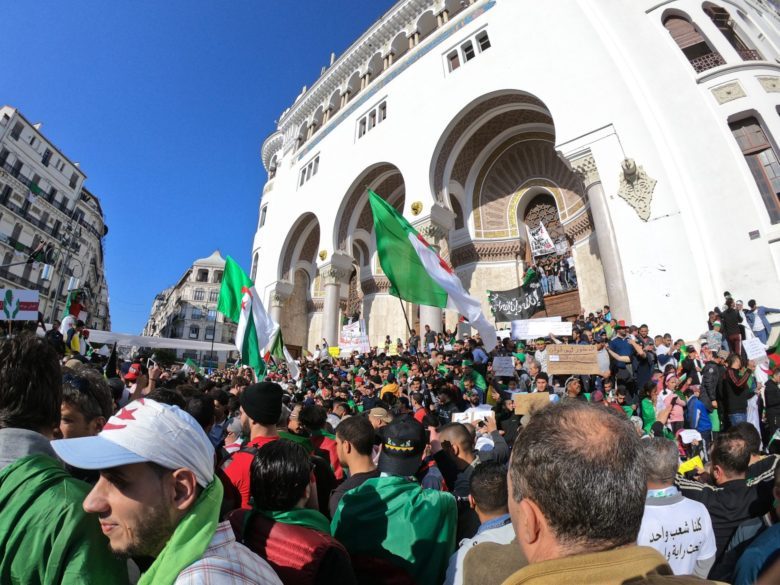
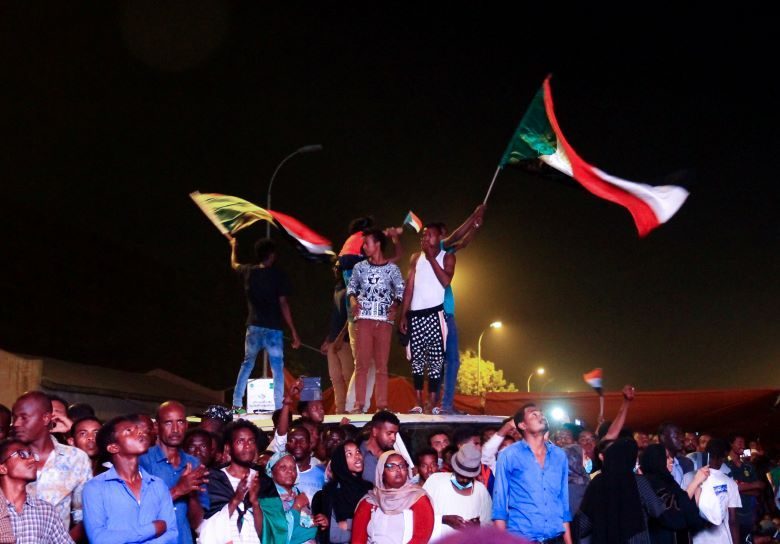
Scenes from the protests (Abdelfatah Cezayirli [Pexels License])
Algeria’s dark history
Since the 19th century, Algeria was under French colonial rule, and after World War II, the independence movement began to gain momentum. In November 1954, spurred by then-French territory Vietnam winning independence from France, the National Liberation Front (FLN) launched an armed uprising across Algeria, igniting the Algerian War of Independence. Dissatisfied with what they saw as France’s weak-kneed stance on the Algerian question, the French military staged a coup in France in May 1958, an event that even paved the way for France’s Fifth Republic. In April 1961, prominent French generals attempted a coup in Algeria aimed at maintaining colonial rule. The war continued until independence was achieved via a 1962 referendum, with the death toll said to have reached one million. After the war, the military came to play an important role in Algerian politics as well.
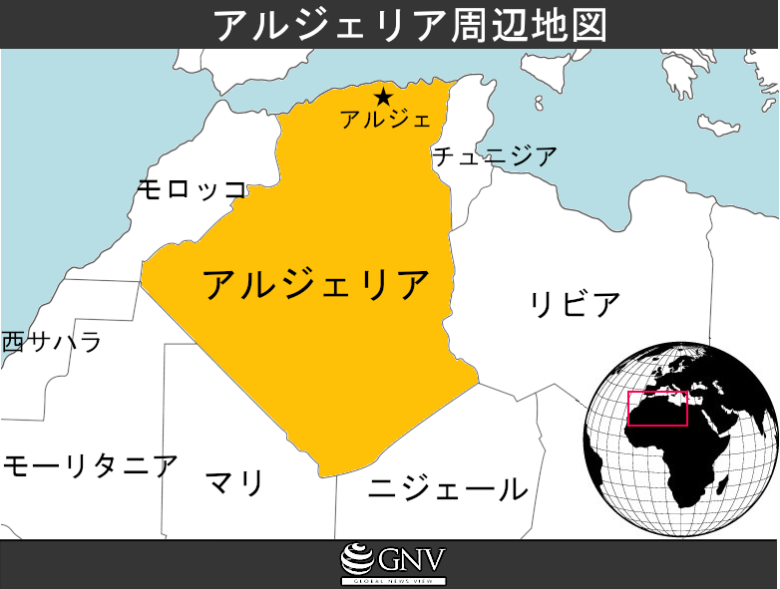
After independence, the regime became authoritarian, but when oil prices fell in the 1980s, Algeria’s oil-dependent economy was hit hard. As a result, social unrest spread nationwide, compelling a move toward democratization. However, when the ruling party, fearing a victory by the Islamic Salvation Front (FIS), canceled the 1991 election, a conflict known as the “Black Decade” began. The ruling party, fearing the expansion of Islamist forces, launched a crackdown; in response, Islamist insurgents formed multiple armed groups. Both sides carried out terror attacks and massacres, and although the exact number remains unknown, around 200,000 people were killed. Amid this turmoil, in the 1999 presidential election, Bouteflika, who ran as the ruling party’s candidate, was elected. Since taking office, he promoted national reconciliation, worked to restore security, and enjoyed high popularity among the public.
The Arab Spring arrives
From 2010 to 2012, North Africa and the Middle East saw the spread of large-scale civic movements known as the Arab Spring. It began in December 2010 with the Jasmine Revolution in Tunisia, when an unemployed young man set himself on fire, sparking protests over rising prices, high unemployment, pervasive corruption, and the long-standing dictatorship. In less than a month, the president was forced to flee the country, and the 23-year dictatorship collapsed. Tunisia’s democratization protests quickly spread across borders to other countries. As a result, long-standing regimes in Egypt, Libya, and Yemen also fell to popular demonstrations. The wave reached Algeria as well. However, the government promised to use its abundant oil to improve citizens’ lives, acceded to protesters’ demands to lift the state of emergency that had been in place since 1992 to suppress the opposition and demonstrations, and amended the constitution—measures that prevented the regime’s collapse. In addition, seeing in neighboring Libya that the Arab Spring had resulted in many civilian casualties dampened protesters’ zeal.
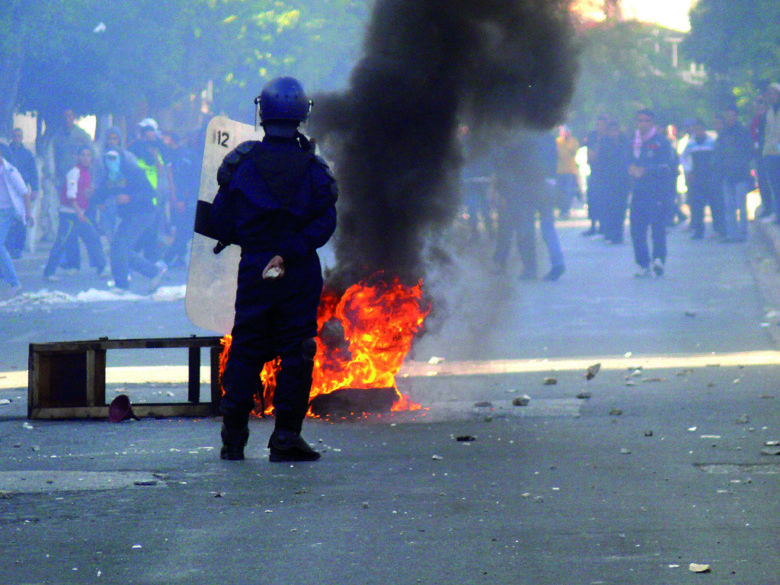
The Arab Spring in Algeria (Photo: Magharebia/ Flickr [CC BY 2.0])
The president’s stroke and “Le Pouvoir”
Although Bouteflika was initially highly popular as the president who led Algeria toward peace, after suffering a stroke in 2013 he was confined to a wheelchair, rarely appeared in public, and stopped giving speeches. Despite this, he ran again in 2014 and, astonishingly, won without making a single campaign appearance. Some may have hoped his health would recover in time. But the biggest reason was the presence of the ruling elite surrounding Bouteflika, colloquially known as Le Pouvoir (le pouvoir)—the power—which included the military, the intelligence service (DRS), and the president’s younger brother, Saïd Bouteflika. Saïd was regarded as the de facto leader, and in reality they were the ones pulling the strings behind the scenes. For them, maintaining the status quo—keeping Bouteflika as president—was in their greatest interest. Public dissatisfaction grew as people watched this situation. Particularly in 2016, the Panama Papers released by the International Consortium of Investigative Journalists (ICIJ) exposed corruption among Algerian officials and businessmen, causing a major stir domestically.
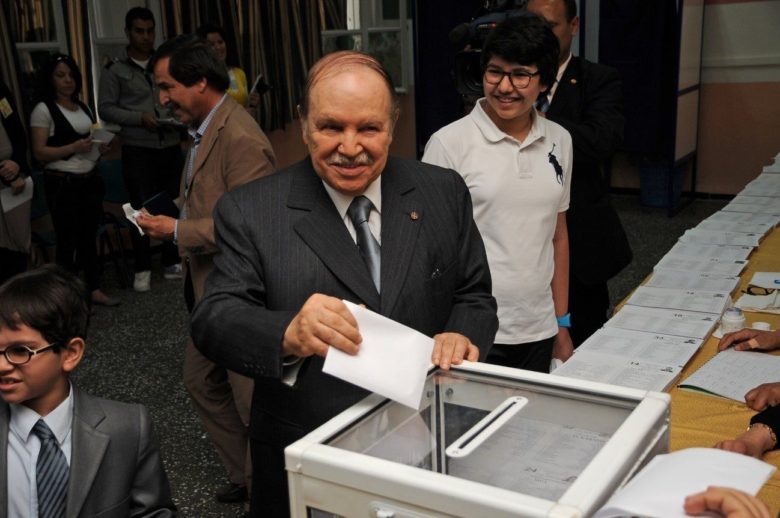
President Bouteflika in better days (Photo: Magharebia/ Flickr [CC BY 2.0])
In February 2019, after Bouteflika announced he would run for a fifth term in the presidential election scheduled for April 18, protests began. They spread not only in major urban centers but across cities nationwide, swelling to about 800,000 people. Protests also took place in France, where Algerian immigrants and second-generation descendants demonstrated in central Paris. On March 1, tens of thousands protested across Algeria; in response, the president withdrew his candidacy and promised a change of prime minister, but the protests did not subside. Political elites, the military, and business groups tried to shield Bouteflika’s regime, but on April 2, Army Chief of Staff Ahmed Gaid Salah declared that the army was on the side of the Algerian people and demanded Bouteflika’s immediate resignation, costing him the military’s support.
Yet even after the president resigned, the protests have continued. Why? Because the people’s goal now is not merely to remove President Bouteflika, but to bring down “Le Pouvoir” and change Algeria’s fundamental system. At the time of writing, former upper house speaker Abdelkader Bensalah has become interim leader and pledged to hold free elections in July. However, the public understands that unless the current system—under which figures linked to the previous regime still hold power—changes, any election will only be conducted to the advantage of the current government, and so they continue protesting to expel them all. Judges, who play a major role during elections, are also protesting that they will not permit an election under current conditions. In response to this movement, many power brokers have come under investigation, and numerous billionaires and former prime ministers have been arrested. On May 5, Bouteflika’s brother and two former intelligence chiefs were brought before a military court—the first time since Bouteflika suffered a stroke in 2013.
Will this become a second Arab Spring?
During these protests, a certain photo became a hot topic on social media, drawing attention. It shows six Arab leaders at a 2010 summit, each marked with a red X. From the left, the first four are the former presidents of Tunisia, Yemen, Libya, and Egypt, who were forced to resign during the Arab Spring of 2011. To their right are the two who were not toppled by the Arab Spring: Sudan’s Omar al-Bashir and Bouteflika. The image seemed to imply that their day would come as well. In fact, a movement similar to Algeria’s protests has been unfolding in Sudan. Triggered by hikes in bread and fuel prices, protests against the government spread from December 2018, and massive demonstrations took place in Khartoum and elsewhere demanding the resignation of President Bashir, who had held power for 30 years. As with the Arab Spring, the large-scale protests in Algeria and Sudan influenced each other. On April 11, the Sudanese military announced it had deposed and detained Bashir. However, as in Algeria, with power still in the hands of figures who supported the previous regime, large-scale demonstrations are continuing in opposition to a transition to military rule.
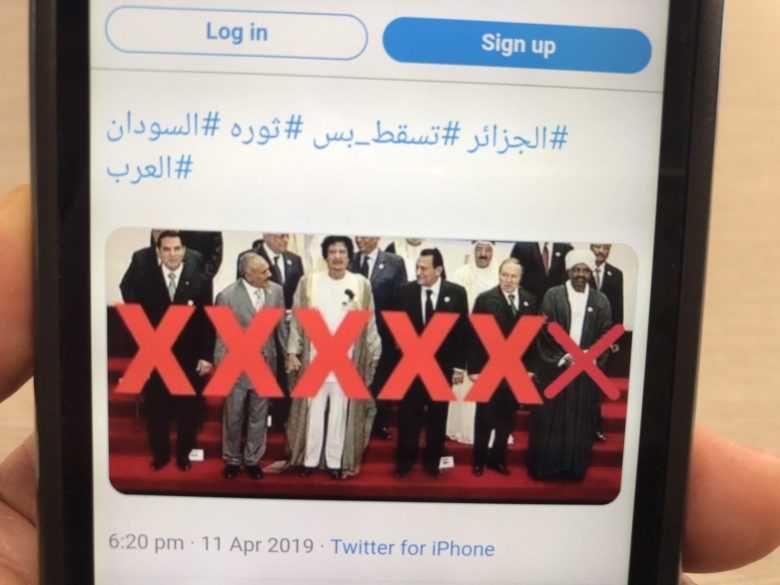
Arab leaders marked with red Xs (2010)
Of Algeria’s 41 million people, 40 percent are under 25, and many of them have known no leader other than Bouteflika. While public opinion is united on changing the system, it has not coalesced around who should succeed him as president. The current government and the military also have powerful friends: authoritarian states such as Egypt and Saudi Arabia, as well as France, Russia, and the United States, which are seen as wanting to maintain the existing political order for reasons related to resources, counterterrorism, and arms. In the wake of the Arab Spring, Egypt reverted to authoritarian rule, while Libya, Syria, and Yemen descended into armed conflict. Can Algeria achieve true political reform without repeating such mistakes? We will be watching the actions of the public and the army leading up to the next election.
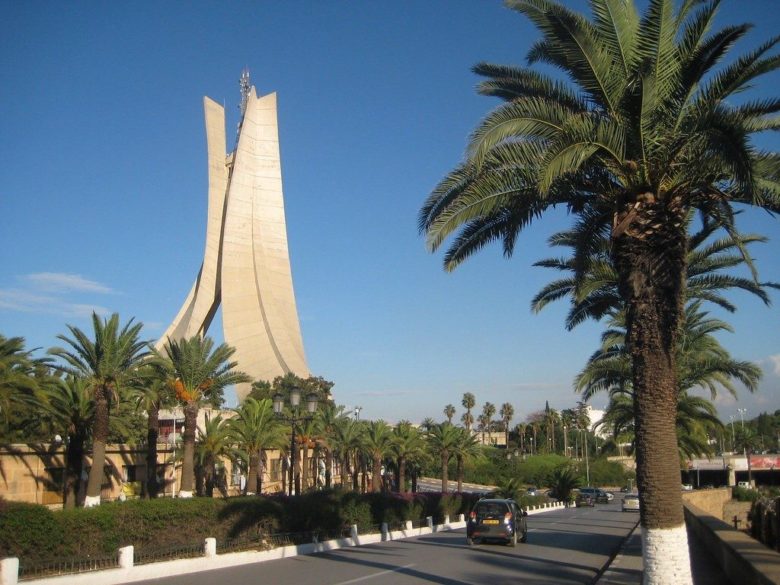
Monument to Algeria’s independence and its victims (Photo: Magharebia/ Flickr [CC BY 2.0] )
Writer: Mizuki Uchiyama
Graphics: Saki Takeuchi
We are also on social media!
Follow us here ↓



大統領が辞任した後も講義デモは未だに続いていますね。7月の選挙は本当に行えるか期待しています。
これからを担う若い力に期待したいとシンプルに強く思いました。
裏のない政治の実現は難しいと思うけど、その裏に気づけた市民は諦めずに活動を続けてほしいと思った。
ル・プヴォワールがもし全員降ろされたとしたも、再び同じようなグループが権力を握れるようなシステムのままだと、同じ問題が発生するかもしれませんね。
改革を目指して立ち上がる場合、どのような変化を誰に求めるのか、そのために民衆がどう動くべきなのかを明確にするべきだと感じましたが、そもそも蜂起というものは流れに従って大きくなっていく自然発生的なものであって計画的で明確な皮切りが必ずしもあるというわけではないので、うーん難しいものですね,,,,,,,
国民の意見がまとまってないことが非常に問題だと思います。
Перед запуском важно понимать, для чего нужен xrumer https://www.olx.ua/d/uk/obyavlenie/progon-hrumerom-dr-50-po-ahrefs-uvelichu-reyting-domena-IDXnHrG.html, чтобы достичь максимального эффекта.