
In recent years, racism in Europe and the United States has been a hot topic in the news. In the United States, President Donald Trump, as part of his immigration policies, has tightened the refugee asylum system and set up a hotline for victims of crimes by immigrants, among other measures, thereby strengthening regulations that cast immigrants as “enemies,” which has drawn attention. Discrimination against Black people has also been a focus. In February 2019, Childish Gambino’s music video for “This Is America,” which drew attention for containing many scenes reminiscent of racist incidents such as assaults on Black people in the United States, won the Grammy for Best Music Video, which could be seen as evidence of this. In Europe as well, clashes stemming from the increase in immigrants and refugees have become a problem, the popularity of right-wing parties in various countries has risen, and populist tendencies are strengthening.
These kinds of incidents and policies have been widely reported, but do they truly allow the media to comprehensively and objectively depict the current state of racism in the world? Let’s take a closer look at racism around the world and reporting on racism in Japan.

Crowd holding a Nazi flag in the United States (Photo: Moses Apostaticus [CC BY 2.0])
The overall picture of racism and xenophobia in the world
What is racism in the first place? According to the definition of the International Convention on the Elimination of All Forms of Racial Discrimination, “racial discrimination” means “any distinction, exclusion, restriction or preference based on race, colour, descent, or national or ethnic origin which has the purpose or effect of nullifying or impairing the recognition, enjoyment or exercise, on an equal footing, of human rights and fundamental freedoms in the political, economic, social, cultural or any other field of public life.” In other words, racism is not monolithic; the backgrounds that can become targets of discrimination—such as skin color, ethnicity, class, and nationality—are diverse, and any difference can become a factor in discrimination.
Due to recent reporting, many people may have the impression that racism is on the rise. Indeed, there are experts and UN officials who say that xenophobia is growing “around the world.” But can we really say xenophobia is increasing “worldwide”?
According to surveys conducted in various parts of the world, in Europe (excluding the north), racism is on an upward trend, but it cannot necessarily be said to be increasing worldwide, and there appear to be many regions where it is decreasing. However, it is also true that comprehensive global data are insufficient.
There are also data suggesting that, rather than in the West which garners attention, racist attitudes are stronger in South Asia and the Middle East and North Africa. For example, in South Asia, about 260 million people are affected by caste-based discrimination, and there are numerous regions where discrimination is more severe than in the West.
Why does this gap arise between our image of racism and reality? Might there be problems in the reporting that shapes our perceptions? To unpack this, let’s examine in detail, based on actual data, how racism is reported in Japan.
Racism that gets reported
We analyzed 20 years (1999–2018) of “racism” reporting in the Asahi Shimbun (※1). As can be seen from the graph below, mirroring the impression that racism is on the rise, the volume of reporting on racism surged around 2015, when the number of immigrants and refugees in Europe increased, Donald Trump rose to prominence, and European politics shifted rightward.

Loading…
We also classified the volume of racism reporting by country. As can be seen from the graph below, the amount of reporting on Europe and the United States—especially the United States—is overwhelmingly high. Although there are many regions in the world besides the United States that deserve coverage, about half of the reporting on racism is concentrated in a single country. The country with the second most coverage was France, accounting for about 10% of the total. Reporting on France’s rightward political shift and its immigration policies stood out conspicuously. Many other European countries also appear in the top 10, and overall about a quarter of the reporting was on Europe. South Africa had the third highest number of mentions, with many feature articles on history such as the apartheid policy, and articles on the World Conference against Racism held in South Africa.
Loading…
In this way, it is clear there is a bias so great that Western countries account for more than 75% of the countries appearing in racism reporting. So, within reporting related to racism, what kinds of racism are actually covered? The graph below classifies the content of racism reporting by the identity of the victims.
Loading…
As the graph shows, by far the most common were articles portraying Black people (※2) as victims of racism—120 articles (about 35%). Of those articles on discrimination against Black people, 82 (about 68%) concerned the United States, indicating a significant skew. In recent years, with the rise of President Trump and the rightward shift in European politics, there were also many articles—54 (about 16%)—depicting immigrants as victims of discrimination. Of those 54 articles on discrimination against immigrants, fully 51 (about 94%) concerned Europe and the United States.
As for religious discrimination, Muslims were the most frequently portrayed victims, appearing in 30 of 51 articles (about 59%), 9 of which concerned the United States. Meanwhile, Jews, who make up less than 0.2% of the world’s population, were featured as victims in 20 articles (about 6%), which is a lot relative to their share of the population.
As seen above, reporting on racism in Japan focuses on Europe and the United States, spotlighting discrimination against people with differing identities such as “race,” “nationality,” and “religion.” In other words, there is a very high possibility that our image of racism in the world is shaped by Western-centric international reporting. Behind this skew in coverage lies the nature of Japanese media, which, because of close ties with and the strong influence of the advanced Western countries, routinely gives great prominence to Western news. The tendency to be influenced by American media coverage, as well as the current state of Japanese media that further neglects poor countries, can also be cited.
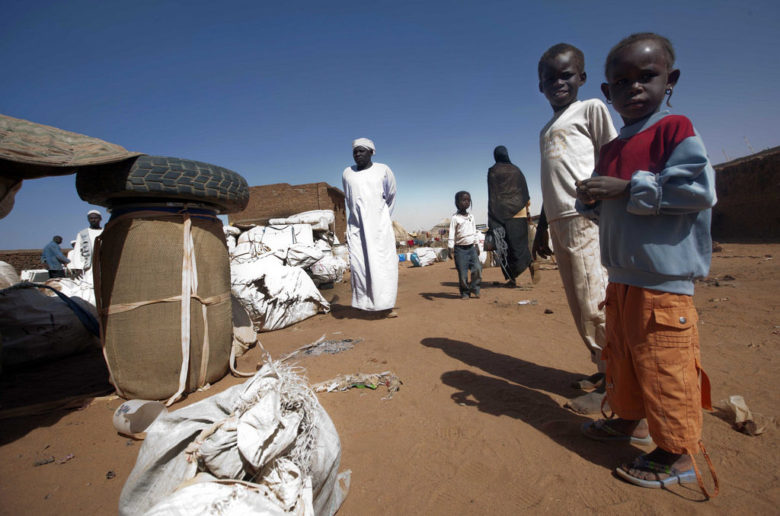
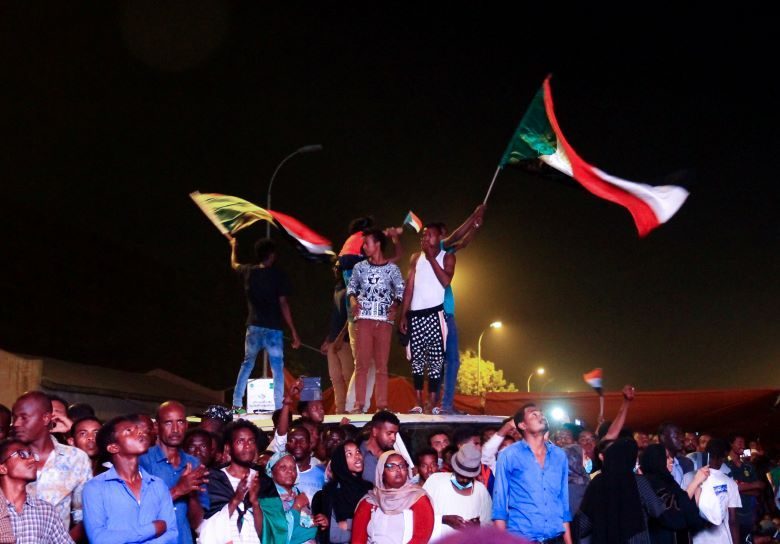
Migrant workers and their families returning to Sudan after fleeing the Libyan conflict (Photo: UNAMID [CC BY-NC-ND 2.0] )
Racism that goes unreported
What kinds of racism go unreported in Japan? Let’s look in detail at examples of regions where discrimination is pervasive yet gets little coverage.
South Asia
South Asia has long had a social and economic system of governance based on rules and customs known as the caste system. The caste system divides people into four classes—Brahmins, Kshatriyas, Vaishyas, and Shudras—and discrimination is deeply rooted in the belief that not only social status but also occupation and marriage should be determined by caste. In addition to these four classes, there are people called “Dalits,” the lowest stratum considered “untouchables,” who are forced to do demeaning work such as handling corpses and are subjected to atrocities.
Today, about 260 million people in South Asia are said to be affected by caste-based discrimination, with infringements on their civil, political, economic, social, and cultural rights. These forms of discrimination have also spread to Christians, Buddhists, Muslims, and Sikhs. Despite this, as introduced in a previous GNV article, reporting that focuses on these realities is scarce. In the data we collected this time as well, South Asia appeared in only 4 of 347 articles on racism, three of which involved politics related to other countries, and there were no articles addressing domestic caste issues or religious discrimination.
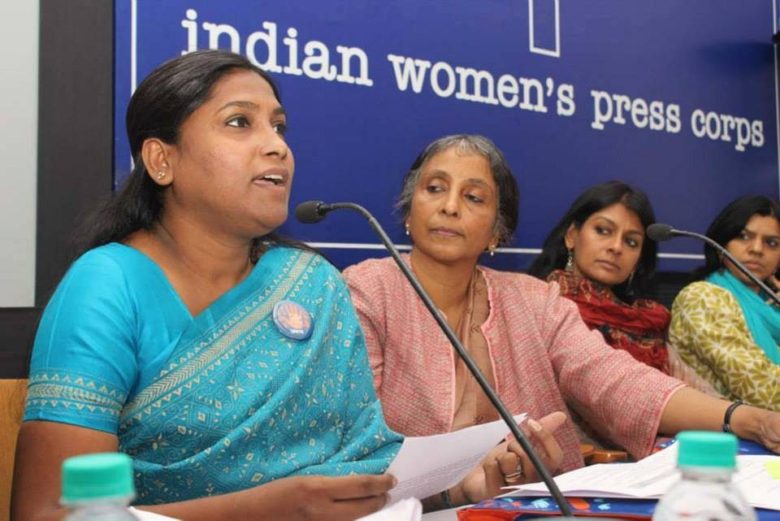
A Dalit woman asserting her rights (Photo: UN Women Asia and the Pacific’s shotostream [CC BY-NC-ND 2.0] )
Middle East and North Africa
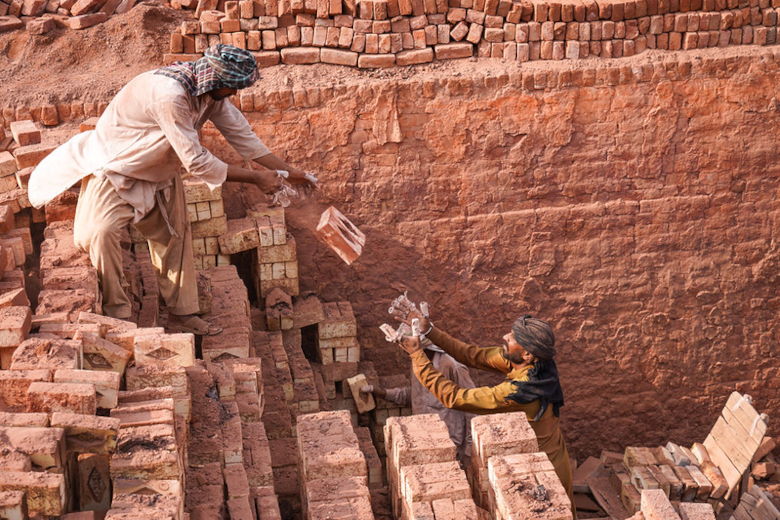
In the data collected this time, the Middle East and North Africa were covered in 25 out of 347 articles, but most were related to Israel–Palestine and discrimination against Arabs or Jews. However, beyond discrimination by Israel against Arab residents and Palestinians, there are various discrimination-related problems in this region. Particularly severe are the discrimination and abuse faced by migrant workers and refugees who come to the Middle East for construction work or domestic labor. Migrant workers are paid extremely low wages, and there are reports of being forced into slave-like labor without any consent. There are even predictions that during construction for the 2022 Qatar World Cup, over 4,000 low-wage workers will die.
In Saudi Arabia, discrimination and oppression against believers other than Sunni Islam are extremely strong. Blasphemy against God and conversion to religions other than Islam are punishable by death under the legal system.
Racism also persists in North Africa. In Egypt, discrimination against minorities such as the Nubians and against migrant workers and refugees from sub-Saharan Africa is serious, and it is said that the darker one’s skin, the more intense the discrimination.
In Libya, slave trading has, astonishingly, re-emerged due to the surge in migrants. In the three years from 2014 to 2016, 150,000 people attempted the dangerous crossing from Libya across the Mediterranean, making Libya a transit point for migrants and refugees. Many of those detained during crackdowns have been put up for auction in “slave markets” and forced into labor.
Despite the existence of such dire racism in the Middle East and North Africa, none of the 25 articles on racism in this region that we collected mentioned these circumstances.
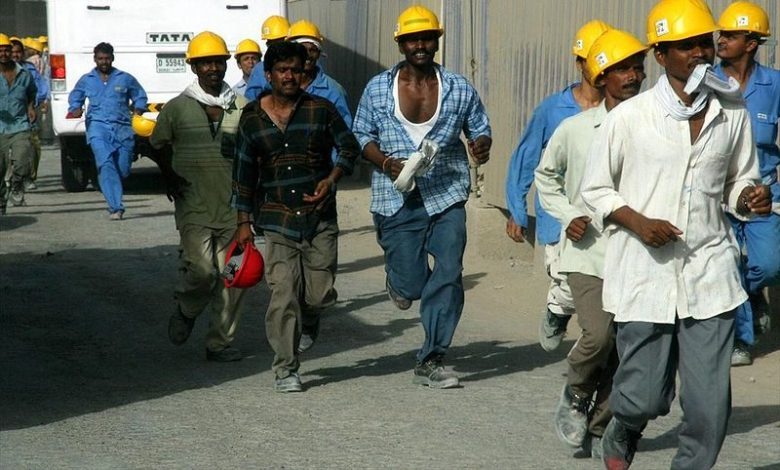
Migrant workers at a construction site in Dubai (Photo: Imre Solt [CC BY-SA 3.0])
Latin America
Latin America has a history of people being brought as slaves, and many descendants of Africans live there. Even in Latin America, where Black people make up a large share of the population, racism remains an issue. In Brazil, based on self-identified identity, 50.7% of the population is Black or of mixed race including Black, but compared to whites they tend to have lower levels of education and wages, making it clear that there is discrimination based on skin color.
In Colombia as well, compared to other races, Afro-descendants are overrepresented among the poorest, and many Afro-descendants were subjected to forced displacement during the conflict, among other abusive treatment. In Guatemala and Bolivia, too, Afro-descendants and indigenous peoples are said to face discriminatory treatment compared to whites in areas such as the economy, education, and employment. Some researchers refer to this phenomenon in Latin America as pigmentocracy, meaning that social status changes based on skin color.
In response to such discrimination, policies to improve living standards and bills to eliminate racism have been implemented in various countries, but discrimination in areas such as the economy and education against Afro-descendants in Latin America persists, and it may be fair to say the problem of racism is more serious there than in the United States. However, whereas discrimination against Black people in the United States accounts for 82 of the 120 total articles on discrimination against Black people (about 68%), discrimination against Black people in Latin America was mentioned in only a single article.
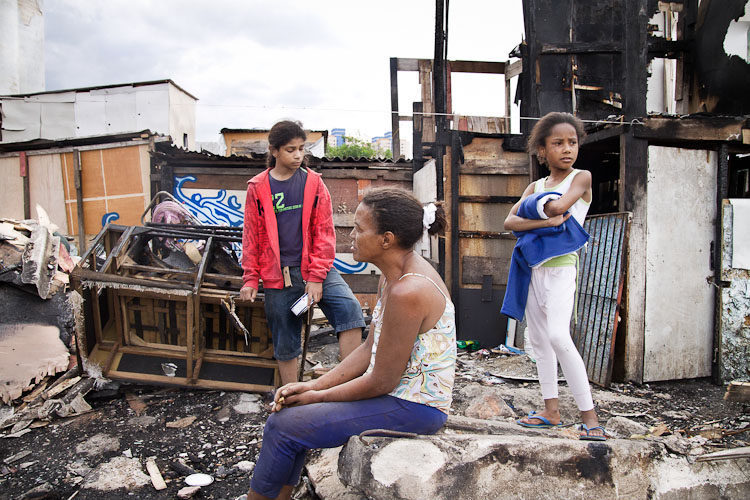
Boys in a poor neighborhood in Brazil (Photo: Zé Carlos Barretta [CC BY 2.0] )
As described above, many problems of racism persist today in parts of the world that go unreported in Japan. Despite this situation, due to the skew in Japanese reporting, our image of racism in the “world” is being formed by reporting on racism in the “West,” and we are only able to learn about racism with the West as the focus. In underreported regions, prejudices can be stronger than in the West and tragic events occur, and there is clearly a gap between the information we usually see and reality—but is it acceptable to leave things as they are? To eradicate racism, we must begin by reporting objectively and comprehensively on the current global state of racism and raising awareness of the problem.
※1: These figures were calculated based on results obtained from “Kikuzō II Visual” using the search term “人種差別,” section: international pages, publisher for 【本紙】 and 【地域面】 set to 【東京】, period: 1999–2018.
※2: The racial terminology used in this article follows the terminology as it appeared in Asahi Shimbun articles.
Writer: Yutaro Yamazaki









確かに差別=黒人というようなイメージをもっています。日本ではスクールカーストなどと簡単にカーストというワードを使用しますが、現実にそのような卒業することのできない社会構造が存在すること、もっと認識を深めないといけませんね。
日本人もよく何気ない会話の中で、外国人を差別をしているなーと感じることがあります。肌の色や宗教の違いで区別した発言のみを差別だと思っているからこそ生まれる発言かもしれません。差別への認識が薄い現状を生み出すのも、変えうるのも報道ですね
記事をよんでハッとさせられました。人種差別ときけば黒人、移民問題ときけば欧州、宗教対立ときけばイスラム教をすぐに思い出してしまうのですが、それらが非常に偏った認識であり、実情とは異っていたことを痛感しています。
今回の差別の問題に留まらず、様々な問題について同じことが言え、報道が持つ力の危うさを感じました。一方で現状を変え、事態を好転させられるのも報道。報道が変わるには国民の意識を少しずつ変える必要があるため、このサイトのような活動がさらに増えていけば良いのになと思います。
ウイグル族やチベット族を蹂躙して、移植用臓器の摘出や同族婚の禁止等による民族抹消というとてつもない残虐行為を行っている中華人民共和国のことは一言も触れない記事を見て、恣意的な印象操作を強く感じました。
偏向報道を問題にするなら、このことに言及しないことは許されないと考えます。
ウイグルやチベットの人々への弾圧・迫害が極めて深刻な問題だという意味ではまったく同感です。
ただし、本記事では①報道される人種差別問題、②報道されない人種差別問題を取り上げています。
①に関しては、20年分の報道データを客観的に分析するために、「人種差別」というキーワードが新聞に掲載された場合、ピックアップした上で分析をしました。ありのままのデータを集計しています。日本の新聞がウイグルやチベット問題を報道する場合、「人種差別」としてではなく、「弾圧」や「迫害」として取り上げていることが多いため、「人種差別」をテーマにした記事ではデータに反映されません。つまり、「報道される人種差別」に関して、この記事はメディアの傾向をそのまま反映しています。
②に関しては、報道されない事例をピックアップしています。当然、報道が極めて少ない問題だというのが条件となります。大きな人種差別問題を抱えながら、ほとんど報道されていない3つの地域をピックアップしています。20年間の報道量は、南アジア:実質0記事、中東・北アフリカ:実質0記事、中南米:実質1記事。ちなみに、同期間でウイグルの人々への迫害やその関連の事件を含めたとしたら、200以上の記事になります。深刻ではあるが、報道されていない問題ではありません。