
“To buy a single hot dog, I have to pay a month’s salary.” So says a man who is a Venezuelan refugee/migrant (※1) living in a refugee camp in Colombia. Due to the political, economic, and social turmoil currently gripping Venezuela, about 5,500 people a day are leaving their homeland like him and flowing into neighboring countries in search of safety. The number has already surpassed 3 million and is projected to reach 5.3 million by the end of 2019. While Venezuela’s extreme instability draws attention, concerns and details about the mass migration/refugee crisis—described by some as “comparable to a massive earthquake”—often go unmentioned. This article explores the essence of the Venezuelan migration/refugee problem that is not visible from everyday news.
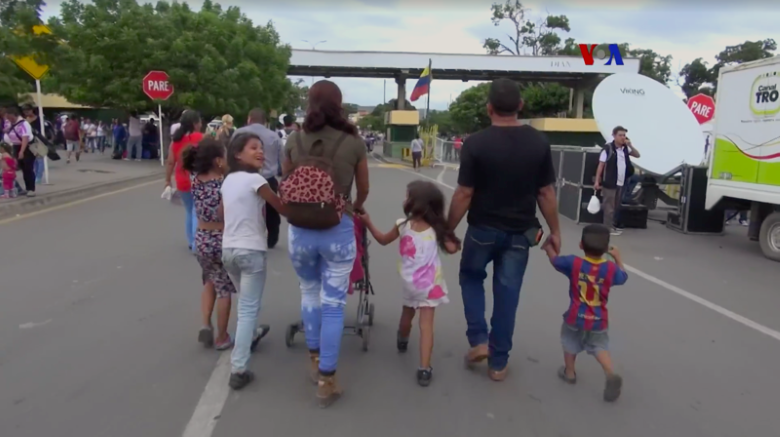
A family leaving Venezuela for Colombia (Photo: Voice of America / Wikimedia [CC-BY-SA-3.0])
Venezuela today
Before addressing the migration/refugee crisis, let’s touch on the political, economic, and social chaos that has driven Venezuelans to flee abroad. Things have only worsened since 2019 began. As the economic crisis deepens, opposition leader and National Assembly speaker Juan Guaidó has declared himself interim president in defiance of sitting President Nicolás Maduro, and multiple foreign countries have already recognized him. Governed haphazardly by two presidents, Venezuela has come to resemble a failed state. Hyperinflation that leaves you able to buy only one hot dog with a monthly salary is said to rival post–World War I Germany and late-2000s Zimbabwe, and is expected to reach 10,000,000%. With the currency dysfunctional and shortages of all kinds of goods, about 90% of the population lives in poverty, and there are reports that people lost an average of 11 kg per person over one year. Beyond the deteriorating public health—85% of hospitals lack medical equipment and malaria cases are rising—the last resort for earning money to survive is theft or robbery. Including cases that escalate into armed robbery and murder, Venezuela now ranks among the world’s three worst in homicide rates and can no longer be called safe.
What brought about such chaos in the first place? Domestically, the collapse of former President Hugo Chávez’s “21st-century socialism” has had a huge impact. Venezuela still depends on oil for 96% of its export earnings, and corruption was rampant over oil interests. In response, Chávez pledged a fair distribution of oil revenues and implemented “21st-century socialism,” through which the government intervened heavily in markets and controlled prices so that even the poor could purchase essentials. As a result, goods priced too low were unprofitable; many manufacturers and farmers slashed production, and essentials and food became even harder to obtain. Chávez died of cancer in 2013 in the midst of his reforms, and Nicolás Maduro took over. His tightening of price controls forced even more companies into bankruptcy, and today only about 30% of Venezuela’s industry is functioning.
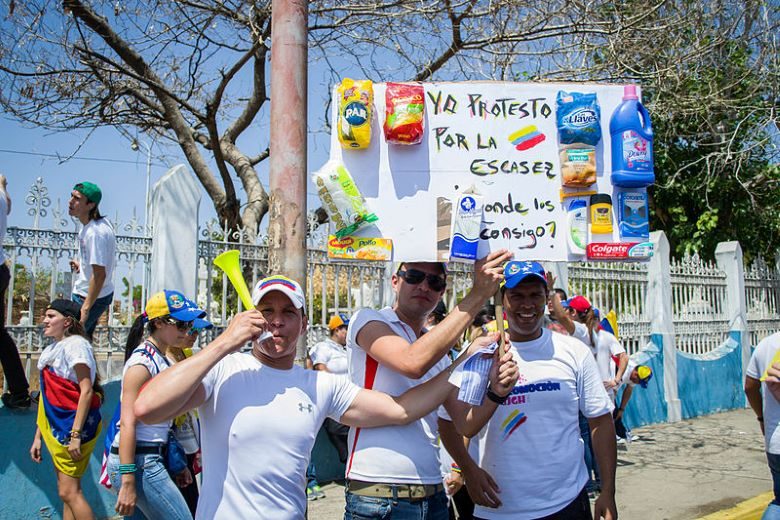
Venezuelans protesting shortages of daily necessities. The sign reads, “Protesting scarcity—Where can we go to buy these items?” (Photo: María Alejandra Mora (SoyMAM)/ Wikimedia [CC BY-SA 3.0])
As for external factors, the biggest is the global drop in oil prices in 2014. As noted above, because the country depends so heavily on oil, the decline hit especially hard. Due to illicit capital outflows widely reported in the oil sector, oil profits that should have accrued to Venezuela have been siphoned off by developed countries that import its oil—another reason the oil-dependent economy has been unable to recover. Another factor that cannot be ignored is interference by the U.S. government. Beyond economic pressure, in 2002 the United States backed segments of the public and the military seeking to overthrow the anti-U.S. Chávez government, resulting in a failed coup attempt. In 2019, there were reports that President Trump and certain officials plotting regime change in Venezuela were in contact and planning a new coup, as well as remarks by a U.S. official calling for military intervention to secure Venezuelan crude for U.S. oil companies. For more background, see this GNV article.
Venezuelans living in other countries
Having escaped a desperate situation in Venezuela and finally arrived in neighboring countries, what kind of life do they lead? Low-skill jobs are saturated with nationals of the host countries and the large influx of Venezuelan refugees/migrants. Left with few options, even those who held professional careers in Venezuela end up scraping by with day labor or by selling snacks on the street.
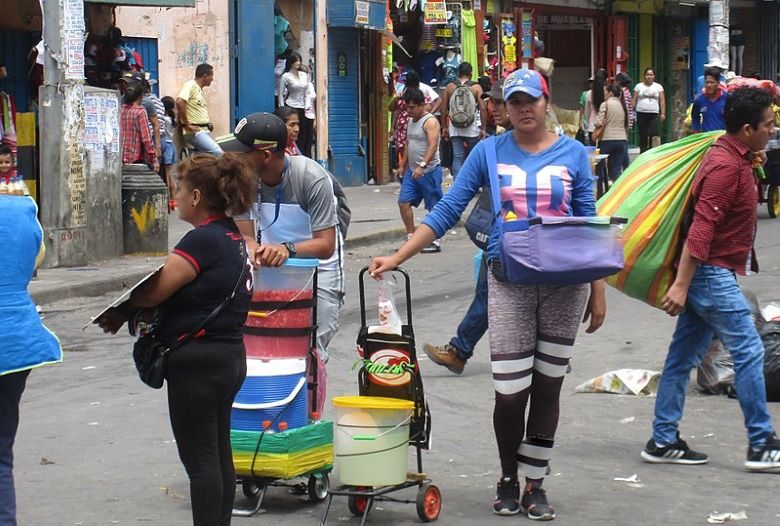
A Venezuelan refugee/migrant selling juice on a street in Peru (Photo: LLs / Wikimedia [CC-BY-SA-4.0])
As poverty deepens, young people in particular become vulnerable to recruitment by armed groups and to targeting for prostitution and kidnapping. In fact, in Trinidad and Tobago, a Caribbean island nation, there has been a case of a woman who had been a lawyer in Venezuela being trafficked into prostitution. The negative impacts are not limited to Venezuelans. As former Venezuelan fishermen turned to piracy out of poverty, raids began occurring along the Trinidadian coast. Robberies and kidnappings targeting local residents have become a concern. How are these neighboring countries responding to such a severe migration/refugee crisis?
Open-door policy
A shared approach across Latin America to this Venezuelan migration/refugee crisis is the open-door policy. This means opening borders to Venezuelan refugees/migrants in crisis and welcoming them as flexibly as possible, with some countries introducing special measures. Below is a chart showing the number of refugees/migrants accepted by each country.
As shown above, Colombia, which borders Venezuela, has already admitted over 1 million Venezuelan refugees/migrants and is among the most accommodating in South America. Not only is entry possible without visas or other official documents, but access to school education and emergency medical care is also ensured. One reason Colombia is so conciliatory toward Venezuelans is that during the Colombian conflict, many Colombian refugees fled to Venezuela and received compassionate treatment, which remains fresh in public memory. For Colombia, welcoming Venezuelans may be a kind of “payback”. Peru is also working to streamline entry procedures to get them employed as quickly as possible. In 2017 it introduced a temporary stay permit for Venezuelan refugees/migrants, allowing one year of work and access to education and the opening of bank accounts—a relatively lenient response.
Limits of each country
Even if the open-door policy is a shared understanding, it is not easy to accept all refugees/migrants who arrive day after day unconditionally, and entry restrictions are tightening. According to the World Bank, Venezuelan refugees/migrants have cost the Colombian government US$1.2 billion so far, equivalent to 0.5% of Colombia’s GDP as of September 2018. It is unlikely that Colombia can continue its current accommodating approach indefinitely, and new regulations introduced in 2018 limit access to public services without registration.
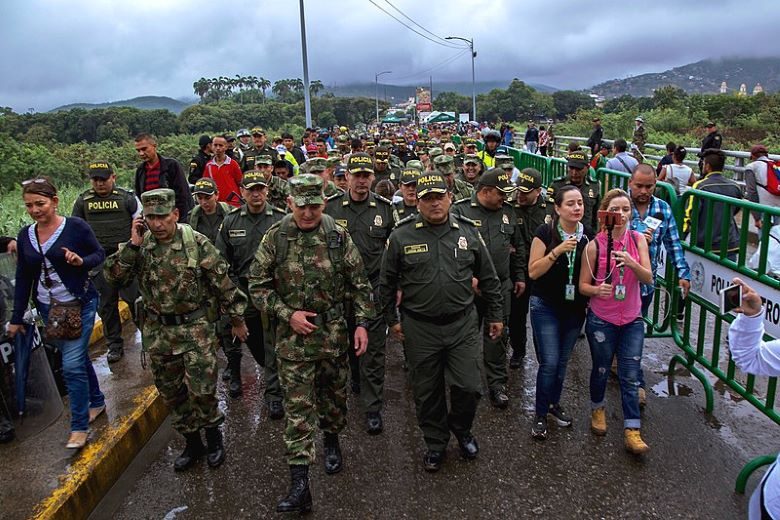
Colombian police directing Venezuelan refugees/migrants crowding the border (Photo: Policia Nacional de Colombia / Wikimedia [CC-BY-SA-2.0])
Peru and Ecuador made passports mandatory for entry in 2018. Peru has received 500,000 arrivals so far, and Ecuador, often used as a transit point to other countries, has received 180,000, many of whom are undocumented. Requiring a passport on entry is standard in most countries, but in Venezuela, where social services have collapsed, obtaining a passport can take up to two years. There are brokers who speed up the process, charging an additional US$800 to US$1,000 for a document that would normally cost around $3, but with a minimum monthly income of 50 cents, obtaining a passport is effectively impossible for many. In fact, since this rule was introduced, daily arrivals to Peru dropped from about 5,100 before implementation to 1,200 people. Panama, where the currency is the U.S. dollar, had been a popular destination because it is easier to earn money to remit home, but a stamped visa requirement has made entry more difficult.
Brazil has taken an even harder line. Although refugee camps have been set up there, most residents live on the bare ground and face risks of malnutrition, disease, prostitution, and violence. Beyond living conditions, the time required for asylum adjudication in Brazil is notably slow. While Venezuelans are allowed to look for work during the review, it can take months, making employers reluctant to hire people whose status is uncertain; as a result, many end up in the informal sector without legal procedures. Moreover, claiming that “The Venezuelan crisis is disrupting harmony across South America”, the Brazilian military was deployed to refugee camps near the border to maintain order. Local residents angered by deteriorating security have attacked camps, and arson incidents have occurred.
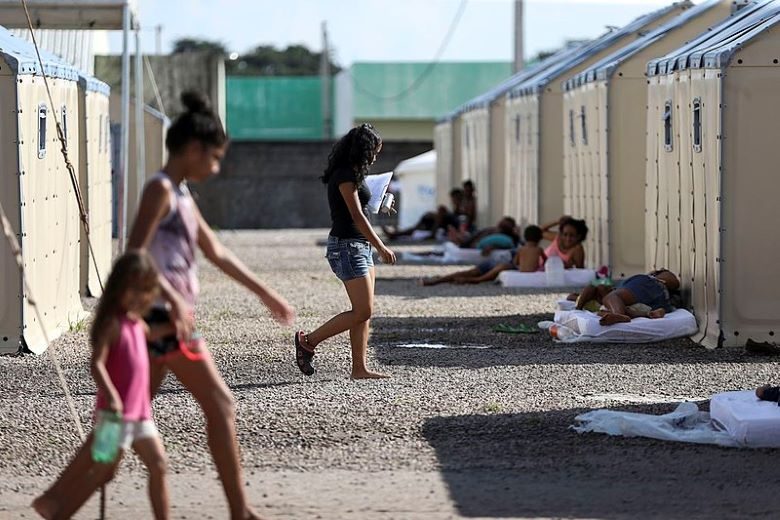
A refugee camp in Brazil (Photo: Marcelo Camargo / Wikimedia [CC-BY-3.0-BR])
What lies ahead for Venezuelan refugees/migrants
The open-door policy may be a model to emulate in a world increasingly reluctant to accept refugees/migrants. However, as we have seen, given capacity limits and economic burdens, it is uncertain how long the doors will remain open.
In November 2018, immigration authorities from 12 Latin American countries issued the “Lima Declaration” in Peru’s capital. They agreed to take measures to streamline migration procedures that consider the safety of both Venezuelan refugees/migrants and host populations, and declared they would maintain and improve existing initiatives to prevent and identify international crime.
Following the Lima Declaration, in December 2018, under the leadership of UNHCR and IOM, 95 organizations from 16 countries agreed to cooperate on emergency support for Venezuelan refugees/migrants and host countries. The Venezuela Refugee and Migrant Response Plan totals US$738 million in support and targets 2.2 million Venezuelan refugees/migrants in 16 major host countries and 500,000 people in host communities. The funds are slated for emergency medical care, refugee protection, socio-economic and cultural integration, and capacity building for host countries. This kind of regional refugee/migrant response plan is the first prescription for the Venezuelan migration/refugee crisis in the Americas and aims to promote social and economic stability in host countries.
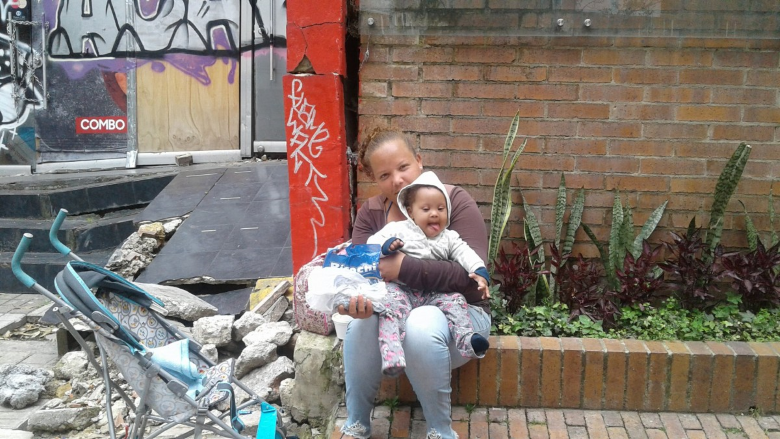
Venezuelan refugee/migrant mother and child on a street in Colombia (Photo: Brian Daniel Quiroz Murill / pxhere [CC-0])
As we have seen, the Venezuelan migration/refugee crisis has emerged as the most urgent issue in Latin America today. At the time of writing, power is being contested in Venezuela, and even U.S. military intervention has been hinted at as a “solution.” However the standoff ends, Venezuela’s economy is unlikely to recover quickly, and the number of refugees/migrants is expected to grow. Unfortunately, the policies introduced so far are only stopgaps, and concrete, long-term measures are still being sought. Time is of the essence, but to achieve long-term coexistence it is essential to integrate refugees and migrants into the formal economy and labor market of the host countries, and that will take time. How neighboring countries—and the world—welcome those who had no choice but to flee Venezuela and move this crisis toward resolution will test their capacity and skill.
Writer: Yuka Komai
Graphics: Saki Takeuchi / Yuka Komai
※1 Because it is difficult to completely distinguish between migrants and refugees statistically, this article uses “refugees/migrants” for convenience, but in most cases it refers to people who have had to leave Venezuela as refugees.
We also share information on social media!
Follow us here ↓





難民移民問題と言えば中東ヨーロッパばかりがニュースに取り上げられがちですが、一国が崩壊寸前の非常事態であることもを知らなかったことを恥ずかしく思います。アメリカが関わっているため、日本では報道しにくいのでしょうか?普段見ているニュースがいかに偏っているかを痛感させていただきました。
日本では、シリア難民や、欧米での移民問題に多く焦点があてられており、ベネズエラでここまで難民問題が深刻化しているとは思いませんでした。その中で助け合いの精神からの門戸解放宣言は、非常に良い宣言だと思いました。
移民・難民に対して、世界でも有数の入国が厳しい日本でも、このような考え方があっても良いではないかなと思いました。
ベネズエラがこんなに危機的状況であるとは知りませんでした。すごいインフラ率ですね。弁護士の方でも売春でしか稼げない移住先での現状も問題と思いました、今までのgnvの難民受け入れは経済面でプラスなのかマイナスなのか色んな研究結果がありますが、各国がどうすればプラスに持っていくことができるか考える必要があるのかなと思います。
コロンビアの難民・移民受け入れの対応は本当に見習うものだと思いますが、恩返しという側面がある以上、理想であるも一概にロールモデルと言うことはできず、むしろ南米全体として見られる門戸開放政策こそ今の時代に各国が持つべき前提ではないかと思います。ただし、難民や移民の受け入れは、既存住民の感情的な問題や社会的な懸念も多く、ただ受け入れるだけでは経済的な負担もばかにならないため、受け入れで終わる仕組みではなく、国民の理解情勢や移民たちの自立を促すような、受け入れ前後のフォローを構築する必要がありますね。