
These days, TV programs that praise “Japanese culture” and “the Japanese” stand out. It seems only natural that by elevating the category of “Japanese,” which applies to many viewers, they aim to satisfy people’s need for recognition and boost ratings. Regarding media that praise Japan, there is an analysis that this reflects a lack of confidence among Japanese people. On the other hand, there is also the view that it is a “Japan-praise boom” stemming from Japan’s emergence from a long recession and the external recognition it has received, such as winning the Olympic bid and having “washoku” registered on UNESCO’s Intangible Cultural Heritage list. Indeed, many foreigners gush about Japan on these programs. However, many people feel uncomfortable, objectively speaking, with excessive glorification of Japan. It is necessary to reexamine how Japan-praise programs depict the world, how Japan appears in the world, and the significance and problems of praising one’s own country.

Idols dancing at JAPAN EXPO held in Thailand (Photo: Iudexvivorum /Wikimedia Commons[CC0 1.0])
“Japan-praise programs” broadcast by many TV stations
How many programs fall under Japan-praise shows? Researching programming across networks shows that many TV stations broadcast variety shows that praise Japan.
For example, TV Asahi’s Japan That Amazed the World! Isn’t It Great!! Inspection Team is, according to the program’s website, a show that “has foreigners introduce the amazing aspects of Japan that differ greatly from their own countries, rediscovering Japan’s excellence and uniqueness.” NHK’s COOL JAPAN — Unearthing Cool Nippon — focuses on Japanese culture, and for over 10 years has “explored the appeal of Japanese culture from the perspective of foreigners.” The website states that “various aspects of Japanese culture that we have taken for granted are accepted by people overseas as cool and are trending.” Meanwhile, TBS’s Made in Japan! mainly features “Japanese products.” The show is described as a “heartwarming variety program” in which foreigners living in Japan “take home the Japanese product they think is the most wonderful, allowing them to recognize both the moving bonds of family and the excellence of Japanese products at the same time.”
There are also programs that show Japanese people living overseas helping local residents and being thanked or becoming popular. TV Tokyo’s Why on Earth Are You Here? Japanese — Unknown Tumultuous Biographies — is “a documentary variety show that instills pride in being Japanese and cheers on Japan,” treating the achievements of a given Japanese person abroad as if they were a joy shared by the entire nation. TV Asahi’s Found in Villages Around the World! Japanese People in Such Places visits Japanese people living in various parts of the world and unravels their unimaginable lifestyles and life stories.
What these programs have in common is that they project an “image of Japan as valued by the world.” Their methods of praising Japan are all but templated: interviewing foreigners who have come to Japan and showing them complimenting the country, or success stories in which Japanese people help others overseas and are thanked. All of them present Japan through subjective, biased lenses.
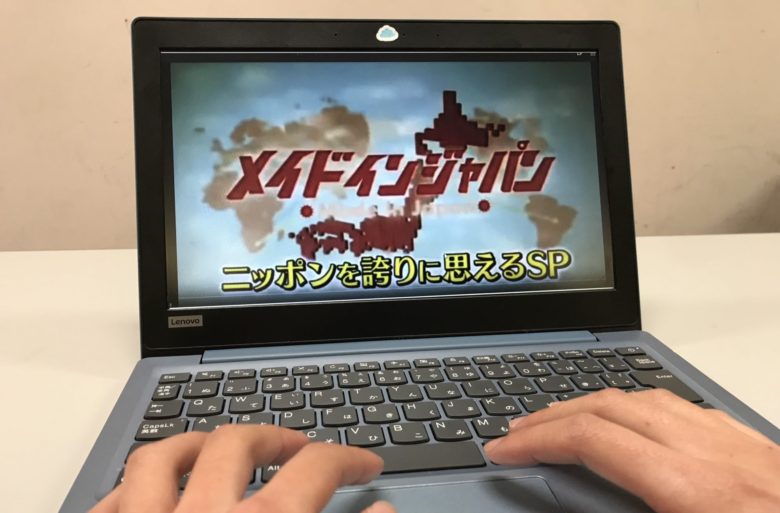
Title of a Japan-praising program
There have also been multiple claims that producers intentionally distort content in these broadcasts. For example, a woman who works as an English conversation teacher in Japan has alleged that when appearing on a Japan-praise program she was asked to bring eye-catching items like Japanese anime merchandise and was instructed to excessively praise convenience stores, which she found unpleasant. There was also a problem where a Japan-praise program introduced a foreign-made toy as a “Made in Japan” product. In addition, a newspaper reporter living in Iran has pointed out that Persian lines were exaggerated in the subtitles and that subtitles were added to make it seem as if people were praising Japanese products. Exploiting foreign perspectives and overseas evaluations to suit the program’s needs may be undermining trust in the media.
What kind of world do Japan-praise programs set on the global stage portray?
Among the many Japan-praise programs, as noted above there are several that are set in countries around the world. Although these shows provide viewers with opportunities to learn about different aspects of various nations, their purpose is said to be to confirm “how wonderful Japan is.” With that in mind, we took a close look at TV Tokyo’s Why on Earth Are You Here? Japanese — Unknown Tumultuous Biographies —, which travels to many countries to conduct interviews, to see what kind of world emerges from it.
Over seven years since it began airing, the program has visited more than 130 countries to interview Japanese people living there. While retracing their dramatic lives, it shows why they left Japan for foreign lands and how they struggle and live locally. In addition, while basing each episode on the tumultuous life of one Japanese person, many episodes center on themes such as “stories of Japanese people saving local residents and being thanked” or “stories of Japanese culture spreading and becoming popular or acclaimed locally.” Of all 307 episodes, as many as 94 are stories in which Japanese people aided the underprivileged and were thanked, and 39 are stories in which Japanese culture was highly rated by people overseas.

Loading…
Looking more closely at each episode, among those where Japanese people provided relief and were thanked, titles include “A Japanese person who has spent as much as 20 million yen of personal funds and continues, unpaid, to save poor children in Cambodia,” “A Japanese doctor who left his beloved wife and child in Japan to save the lives of the poor in Sudan,” and “For 19 years in a remote area of Central Africa… a Japanese woman helping the impoverished indigenous Baka people,” showing many stories about founding orphanages and schools or providing free medical care. Furthermore, the program clearly tends to emphasize the point that “Japanese are appreciated around the world.” The phrase “Japanese who are thanked” appears in the titles of 24 episodes, and in 2018, an expanded two-hour special titled “Japanese who are appreciated around the world” aired five times. Many of the “being thanked” stories involve support in medical and educational settings, and eight titles emphasized financial support with phrases like “spent X hundred million yen of personal funds.”
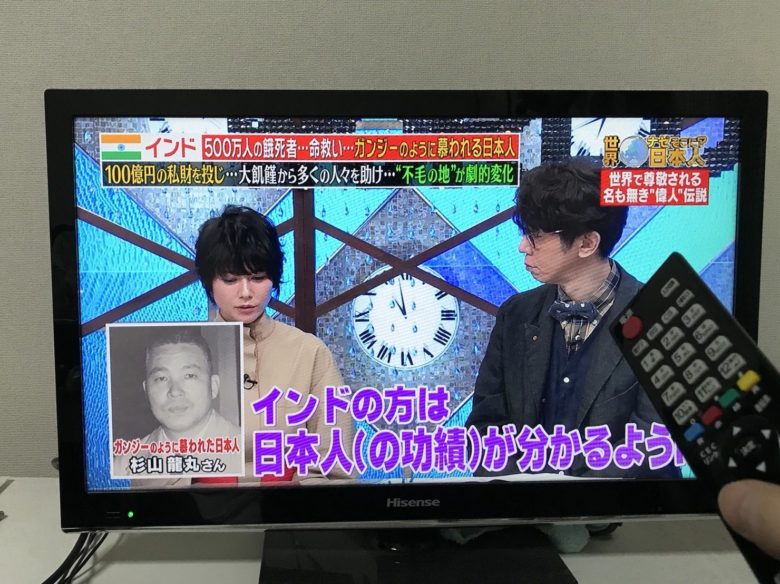
A Japan-praise program broadcasting a special on “Japanese respected around the world”
In episodes where Japanese culture is praised, titles such as “A Japanese craftsman who spread ‘that Japanese thing’ in Canada and, for some reason, is greatly appreciated by locals,” “A Japanese woman who became extremely famous in Australia after performing ‘a traditional Japanese art,’ to the point of receiving standing ovations,” and “A smash hit across the U.S.! A Japanese person who spread ‘that Japanese thing’ in America, more famous than Ichiro! Still being thanked” suggest the high popularity of Japanese culture.
Breaking it down by region also highlights differences. In terms of number of episodes, four regions—South and Southeast Asia, Europe, Africa, and Latin America—dominate, together accounting for 80% of the total, but each region shows its own characteristics. Stories of “relief assistance,” rarely seen in Europe, in contrast make up more than half of all episodes set in South and Southeast Asia, and are similarly numerous in Africa. In particular, Cambodia (12 times) and Kenya (9 times) are among the countries most frequently featured by the program, and most of those episodes involve building schools or providing medical relief. Despite the diversity of possible forms of aid, the show keeps airing the same kinds of stories over and over.
Loading…
Problems with Japan-praise programs
Having analyzed Japan-praise programs so far, what are the problems with the excessive praise of Japan seen in such shows?
First, because these programs focus so much on praising Japan, they end up standardizing and oversimplifying depictions of countries other than Japan. In particular, in “Why on Earth Are You Here? Japanese,” they mostly show Japanese people providing assistance in African and Southeast Asian countries, subtly instilling in viewers the one-sided perception that these countries “lack the means to develop on their own and rely on Japan’s helping hand.” Yet even in so-called developing countries such as those in Africa, it goes without saying that they achieve growth through self-help, creating various innovations domestically. In short, these programs hinder understanding of how different countries grow and of relationships between nations.
Moreover, if they show only foreigners who express gratitude toward Japanese people or culture, they create the misunderstanding that an entire country is “pro-Japanese.” An individual’s feelings toward another country are highly complex, based on personal values and experiences, and it is unrealistic to assume an entire nation is uniformly “pro-Japanese.” Relations between states are similarly complex: alongside “aid” there are also relationships of “exploitation.” While Japan-praise programs exaggerate the presence of “aid” and of some “pro-Japanese” individuals, few media outlets report on the kinds of exploitation carried out by economic powers, including Japan.
For example, Bangladesh is portrayed as “pro-Japanese” in Japan-praise programs, showing only the side where “Japanese people are appreciated.” However, while the fashion industry’s dismal labor conditions have been criticized, in Bangladesh—home to garment factories for brands around the world—workers are still staging protests against low wages. The Japanese companies that have advanced into Bangladesh in large numbers are no exception. Nevertheless, when a terrorist attack in Dhaka, the capital of Bangladesh, in 2016 killed 20 people, including seven Japanese, in Japan the unexpectedness of such an incident occurring “in a supposedly pro-Japanese country” became a topic of discussion. Although this attack was not directly caused by workers’ protests, it can be dangerous when the media constructs the myth that an entire country is “pro-Japanese.”
Furthermore, Japan-praise programs generally proclaim that they reaffirm “how great Japan is” and instill “pride in being Japanese” in viewers, but without an objective perspective they invite many misunderstandings. The Japan-praise boom has been seen in the past, overlapping with the period when, triggered by the 1933 Manchurian Incident, Japan became isolated from the international community and plunged into the Pacific War. There is a history of nationalism inflated by the media and egos tied to “being Japanese” acting as a detonator that propelled the nation in a self-centered direction.
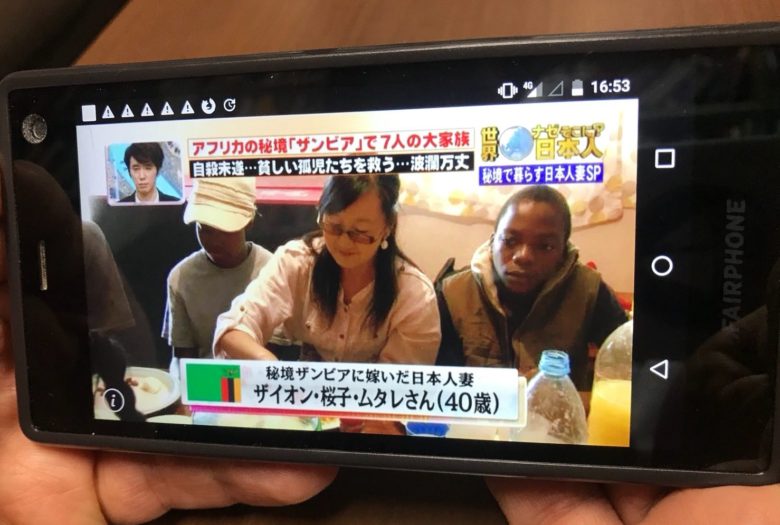
A Japan-praise program broadcasting scenes from Zambia, Africa
Japan-praise programs convey “how wonderful Japan is” through various angles and methods. However, if they distort facts and focus excessively on “praising Japan,” there is a danger of fostering people who ignore world affairs and diverse values. Cherry-picking only the parts that flatter Japan does not reveal the world as it is, and could foster excessive nationalism born of overvaluation. In particular, because Africa and South Asia are regions that are rarely covered in everyday news, the existence and responsibility of Japan-praise programs, which provide opportunities to learn about those countries, are especially important. Broadcasters need to understand that Japan-praise programs can at times wield influence far beyond mere entertainment.
Writer: Aya Inoue
Graphics: Saki Takeuchi
Follow us here ↓















自国の外国からの「客観的」な「スゴさ」は実は客観的ではなく歪められたスゴさなんですよね。
自国民の活躍や文化の賞賛などは一見するとそこまで問題性がなさそうですが、記事を読んで問題点を明確に理解することができました。
日本人は元来謙虚さが売りであったように思うが、このような偏狭的な報道により、それを鵜呑みにした視聴者が「私は日本人だからすごいんだ」といったような傲慢さを持つことに繋がりかねないと、このような番組を見る度に危機感を抱いていた。記事ではデータがきちんと示されていて、報道の歪みを強く感じさせられた。
ただたんなる娯楽で済むならいいけど、残念ながらそうではなくて、
このような番組がかなり有害だよね。
番組が助長するナルシズムとナショナリズムも問題だけど、
実際の世界と違う歪んだイメージをつくっているのも大きな問題。
この記事にあるように、アフリカは通常のニュースでは基本的に報道されないから、
視聴者の「アフリカ」に対するイメージはこのような番組で作られてしまう。
強い危機感を感じる。
こういう番組をただただ楽しんで見ていたという人にこそ、この記事を読んでみてほしい。受身的に享受しているだけでも価値観に与える影響は大きいと思う。
テレビは、限られた時間内で「面白い」番組を届けるために、あらゆる物事を単純化して切り取っている。それがテレビの特性でもあり、ある程度はしょうがないのかもしれない。だからこそ私たち見る側は「分かりやすい=重要な細部が多々端折られている」ということに自覚的に見なきゃですね。
日本を褒め称えるような言論が多くなってきている、この風潮にすこし危機感を感じています。日本の外へと目を向けず、日本の内へ内へと注意が向かう現状の空気は、戦前のそれと近いものがあるのではないでしょうか?また、ここで取り上げられているような番組が、普段報道がなされないアフリカや南米についてを紹介する数少ない機会だと知り、その点でも非常に問題視されるべきことだと感じています。自国の認識も他国の認識もある種捻じ曲げてしまっているからです。
客観的に世界を捉えること、そしてそこから相対化して初めて己も理解できること。それができなくなっている日本の危うさが、こういった番組や今のメディアの在り方に表れていると思います。是正していかないと。
私自身も近年、日本人を称賛する番組が増えていることに違和感を覚えていた。
変に日本人をヒーローのように誇張して祭り上げ、現地の生活などは全く触れない番組が多く存在するのは、ナショナリズムを高揚させ、世界を歪んだ見方で見てしまうことに繋がりかねないので、非常に危機感を感じる。
記事の趣旨とは外れますが、番組中にある「秘境」という表現が、そもそも「日本から見て”秘められた場所”」であり、偏った認知を促進するワーディングだなと感じました。世界で戦っている日本人を承認・賞賛するのは意義あることですが、大衆の目に触れるメディアでは表現に気を配るべきだと思います。
日本称賛番組に対して違和感を抱きつつも、「なぜ」それが危険なことなのかというのは自分の中でぼんやりしていたのですが、この記事でよく理解できました。このような番組を放送することによって満たされる承認欲求的なものの引き合いに出されるのが東南アジアやアフリカの誇張された貧困とというは問題視すべきだと思います。
今の日本人は一時期日本製品やら何やらが世界で売れまくった時の幻影にすがりついて
現実逃避したくてしょうがないのだと思います。
現実はすでに先進国と呼べないような状況になっているけど、それを認めたくないのではないでしょうか。
世界に向けて大々的にゴリ押しするには恥の精神が邪魔をするけど自画自賛してるくらいならいいだろ?みたいな感じかな、と。
今の高齢者層がいなくなるまではこういうのは続くんだろうなって思います。
日本全体がナショナリズム化させられていて、とても不安。
オリンピック→金メダルの数をひたすら求める。+ダメでも感動を与えたなど称賛。ぶっちゃけかずで競うものでもないし、お涙頂戴でもない。
出場できた彼らがただひたすら自身の成果を披露するだけ。
そこにお涙頂戴はいらない。
日本称賛番組も反吐が出る。朝夕のニュースでも海外からの観光客が和食に舌鼓を映すさまを放送するが、ホントに不愉快。
このニュース系の字幕は特に信用していない。日本を称賛する部分だけを特に誇張している風に感じるから。(実際誇張している)
もうね、日本のマスゴミのレベル低下は来るところまで来ています。
そして、低下したからかナショナリズムにすることに走ってる気がする。1番安易な方法だし。
報道はあくまで中立に行ってほしいものだ。とはいえ、日本人は馬鹿なのでこういった偏った情報を求めている。(こういう意見はマイノリティ)
要するに井の中の蛙大海を知らずというか、知りたくもない。なんだろうね。
先行きが不安になります。
すみません今になっての通りすがりです。
日本上げな番組は東日本大震災後から始まってます。
私も始まった時は違和感がありましたが、
番組開始時のコメントで「震災で失われた日本人の自信を取り戻してほしい」というのが有り腑に落ちました。
人気が出て今まで続いているんでしょう。
それはおかしいですよ。
日本国民の豊かさを誇るのならわかるのですが、なぜ国民をさしおいて国を褒めるのでしょうか。
誤魔化しにしかすぎませんよ。
日本アゲは一見してわかるのですが、それに隠されてしまう日本以外への見方を画一化してしまうほうが恐ろしいですね。
決して相対的なものでなく絶対的なものだと思います。マスコミというか現在の政府、与党への献金をしている企業がそれらのスポンサーを
しているわけでどうにも気持ちが悪いです。わざとらしいというか炎上というか煽情的なものに感じるんですよね。極端なことを表に出し、
その反対で自分たちの都合のいいようにことを進める。憲法改正、オリンピック、コロナに乗じて一体どれだけの疑惑、犯罪が隠れてしまったのか。復興オリンピックと嘯くならばまず何人もの犠牲者が出てしまった開会式会場建設よりも、被災地を救済すべきでした。
ようやく我が国のリーダーが退きこの国にも少し希望が出てきたのではないでしょうか。膿をだすにはそれこそ政府与党の身を切らねばならないわけですが、臆することなく断行しすこしでも前進してそれこそすごいぞニッポンと外からではなく日本人として言いたいものですね。
日本賞賛番組は、全く違和感ない。私たちが知らない話や視点を提示してくれるのはありがたい。むしろいいことだと思う。
ただ、世の中の番組が同じ色に染まるのは気持ち悪い。同じように、このコメント欄が同じ色に染まるのも気持ち悪い。検閲がないことを願う。
国籍は民族は、個人が何の努力もなし得られるもの。海外で活躍する日本人はその人個人の努力や情熱の賜物であるのに、日本人というくくりだけ悦に入ってしまう。その個人を尊敬したり見倣ったりする事もなく、ただひと時の安心感を得ているだけの哀れな姿と言える。それは日本人だけでなく、どの国にもあるんじゃないのかな。その国や社会が勢いを失い膠着化してくると噴出してくる現象ではないでしょうか。
日本賞賛番組ウンザリです。特に夕方の朝日テレビの情報番組は訪日外国人のオンパレード! いいかげんにしてくれ!
日本賞賛の方向性が浅いのが問題