
If solar power were generated over approximately 1.2% (335×335 km) of the Sahara Desert, it could supply the entire world’s electricity. While this remains a theoretical possibility, solar power projects in North Africa are in fact beginning to offer new hope to the world. Amid growing concern over climate change exacerbated by thermal power and the risks of nuclear power, solar power not only helps resolve electricity shortages but also contributes to reducing greenhouse gas emissions. The desert—vast land with low precipitation and strong sunlight—is therefore highly suitable for solar power.
Several major solar power projects are already underway in North Africa, and the electricity generated is being used in the region. Exports of electricity to Europe are also anticipated, and although significant hurdles remain, it is possible that North African countries could lead the power industry in the future. However, there are also voices condemning this as the “beginning of a new colonial policy.” Will solar power in North Africa be a beacon of hope for the future, or will it be a repetition of the past—resource extraction by developed countries?
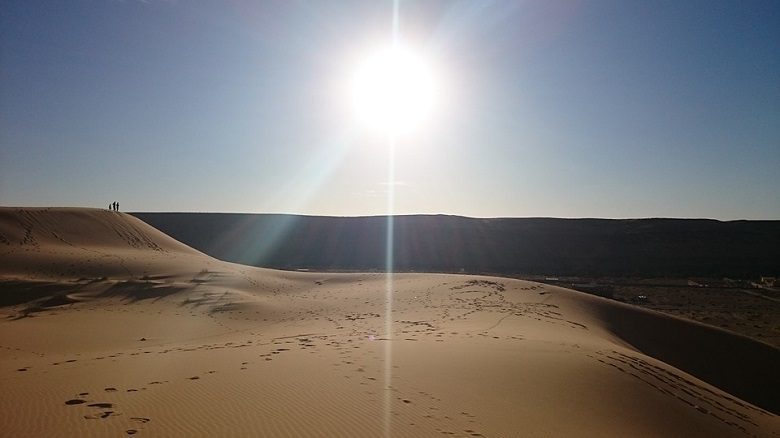
Desert in Algeria (Photo: Max Pixel [CC0 1.0])
Concentrated solar power attracting attention in North Africa
There are two main methods of solar power generation: photovoltaic and solar thermal. Photovoltaic (hereafter PV) converts the sun’s light energy directly into electricity using solar panels, and is often used on a small scale, such as installations on residential rooftops.
Solar thermal power, on the other hand, is called concentrating solar power (hereafter CSP: Concentrating Solar Power) (Note 1). It concentrates sunlight using heat-collecting devices such as mirrors and lenses, and generates electricity by driving a steam turbine with that solar heat. Because it can produce a large amount of power at once, its power generation efficiency is significantly higher than PV. A notable characteristic of CSP is its dispatchability. Conventional solar power requires sunlight and therefore cannot meet nighttime demand. However, solar thermal power uses thermal energy storage systems employing molten salt, ceramics, concrete, and other materials to store heat energy, enabling power generation at night. For example, a plant in Morocco can store heat energy for up to 7.8 hours. While storage time varies depending on the technology adopted, the ability to provide stable power supply in response to changes in demand is a major strength of CSP.
Various solar power initiatives are underway in North Africa, but this article focuses on CSP projects. The figure below illustrates two of the four CSP generation methods (Note 2): the widely used parabolic trough type and the tower type, which has attracted attention in recent years.
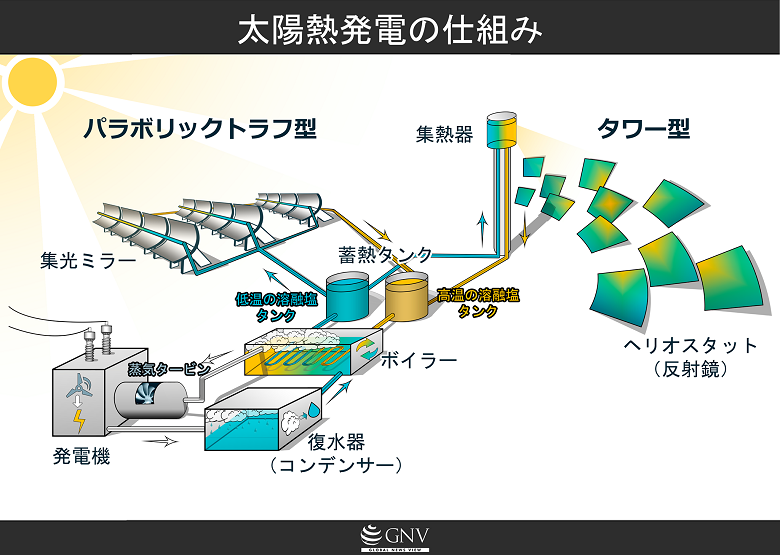
Created based on data from the Office of Energy Efficiency & Renewable Energy (U.S.)
Because CSP requires the collection of large amounts of thermal energy, vast areas with strong direct sunlight are most suitable, and its practical application has been limited to certain regions. It requires sunlight that reaches the ground directly without being blocked by clouds, gases, or dust, and regions that record a direct normal irradiation (DNI) of 2,000 kWh/m2/year (kilowatt-hours per square meter per year) are appropriate. Such conditions are found in desert and savanna regions, including North Africa where the Sahara stretches. According to TuNur Ltd (TuNur Ltd) (Note 3), the Sahara receives twice as much solar energy as Central Europe. On the other hand, sand and dust accumulate on receiver panels and reduce heat collection efficiency, requiring frequent cleaning. In response, technologies that can drastically reduce the amount of water used for cleaning are being developed.
Another issue for CSP has been the large amount of water used. Water is used to cool the steam and to clean panels, but most of it is consumed during the cooling stage (corresponding to the condenser in the diagram above). Conventional cooling systems used water-cooled condensers (WCC), which consume large amounts of water, necessitating the construction of reservoirs or transporting water from remote areas in arid desert regions. The air-cooled condenser (ACC), whose adoption has recently expanded, can reduce water consumption to one thirteenth that of WCC. Although ACC has an installation cost that is 5–10% higher than WCC, the worsening global water shortage and cost reductions through technological development are expected to increase demand. If ACC adoption continues, CSP will also become more environmentally friendly from the perspective of water use during power generation.
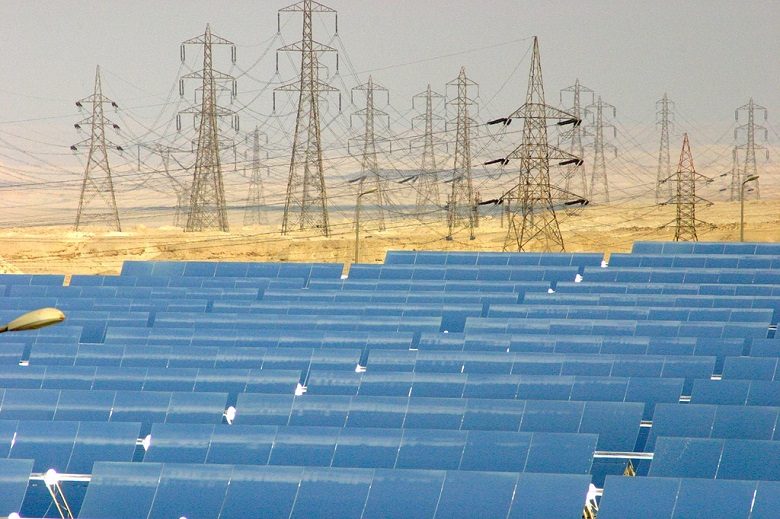
Concentrated solar power (CSP) facility, Egypt (Photo: Green Prophet / Flickr [ CC BY 2.0 ])
The current state of solar power in North Africa
Below are some examples of the progress of CSP projects in countries around the Sahara: Algeria, Egypt, Tunisia, and Morocco.
In Algeria, a relatively small 25 MW (megawatt) CSP plant is currently in operation. In 2011, the government announced a “Renewable Energy and Energy Efficiency Program” and has actively pursued a shift to renewable energy. It set a target to raise the share of renewables (solar + wind + hydro) in total power generation, which at the time was less than 1%, to 27% by 2030.
In Egypt, the first CSP plant began operation in 2011, and new CSP projects are currently planned. The country aims to supply 20% of its electricity from renewables by 2020, but it is not on track to meet that target. Tunisia has thus far focused on PV projects and currently has no CSP plant, but the large-scale TuNur (TuNur) project is at the conceptual stage.
Amid many countries lagging behind their renewable energy targets, Morocco is the most advanced in putting CSP into practical use in North Africa. The Noor (Noor) project—one of the world’s largest CSP complexes—is underway in Ouarzazate. Ouarzazate, one of Morocco’s major tourist cities, sits at the northwestern edge of the Sahara. As the facility nears completion and partial operations have begun, once all phases I–IV are complete, it is expected to generate 580 MW of electricity. This would supply power to 1.1 million people (about 3% of Morocco’s total population).
The Noor project is expected to reduce Morocco’s oil dependence by 25 million tons and its carbon dioxide emissions by 760,000 tons each year (about 1.2% of 2014 emissions). The Moroccan government plans to meet 52% (6 GW) of its electricity demand with renewables by 2030, and as of 2017 it had already succeeded in generating 34% of its power from renewable sources.
Obstacles to solar power projects in North Africa
Although CSP offers great benefits and high demand, it faces numerous obstacles.
・Desert-specific issues
Harsh construction work under blazing sun is one challenge unique to the desert. Because available water resources are limited, technologies and designs that can be adopted for plant construction are constrained. As mentioned earlier, there are also desert-specific issues such as increased maintenance due to sand and dust.
・Power transmission methods
Establishing power transmission networks is another hurdle. For intercontinental transmission, it is necessary to build cables with low power loss under the sea, which requires advanced technology. North Africa first drew major attention as a power generation site when a plan emerged to transmit electricity from solar and wind power in North Africa and the Middle East to Europe. Although the plan involved many companies centered in Europe, it failed to progress due to the complexity of power transmission and ultimately fell through. Recently, however, the plan has been revived, and the installation of a transmission network from Tunisia via Malta and Italy, as shown in the figure below, is being considered. Meanwhile, infrastructure development for transmission from North Africa to sub-Saharan Africa remains inadequate and underdeveloped.
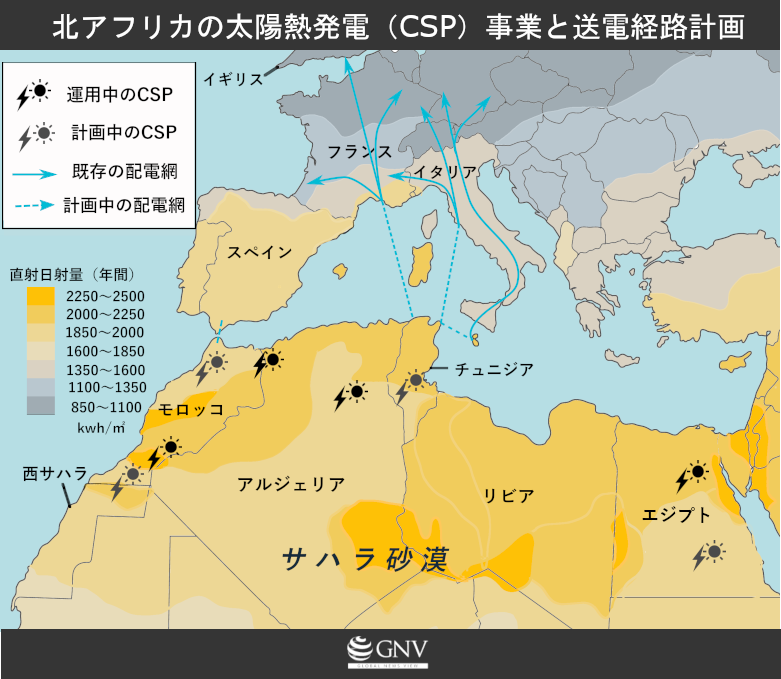
・Cost factors
Compared with PV, CSP faces relatively high installation costs, and as a still-developing technology it is often viewed as experimental—factors that cause governments and banks to hesitate to invest. In recent years, however, rapid technological advances have reduced those upfront costs. The tower-type CSP, which has high generation efficiency but historically high operating costs, has succeeded in lowering costs below those of the mainstream parabolic trough type.
According to Quartz Africa, investment in the power sector needs to be between $33.4 billion and $63.0 billion annually from 2015 to 2040, but average annual spending on Africa’s power sector over the past decade was only $12 billion. As a result, Africa faces low electricity access rates and high electricity prices, and for countries with limited financial resources, development investments from the World Bank and other countries are essential. Whether sufficient funding can be secured will be key to CSP’s success.
・Political instability
In Europe, some worry about relying on North Africa for electricity. They fear the impact that regions with ongoing instability could have on the power sector. Although no CSP projects are currently underway there, Libya has remained unstable since the fall of the Gaddafi regime, due to competing central authorities and scattered militias and armed groups. In Egypt, clashes between armed groups and government forces have led to acts of terrorism in the Sinai Peninsula. In 2013 in Algeria, a natural gas processing plant was hit by a terrorist attack. Plants, where many foreign workers gather, can become targets for such attacks.
・Relations with neighboring countries
For transmission, relationships with neighboring and transit countries are as important as the technical aspects. However, Algeria and Morocco, which share a border, have kept their border closed since 1994 due to the Western Sahara issue. Moreover, Morocco has launched a solar power project in Western Sahara—the very area at the heart of the dispute. As the region is illegally occupied by Morocco, how electricity produced there will be treated in international markets bears watching.
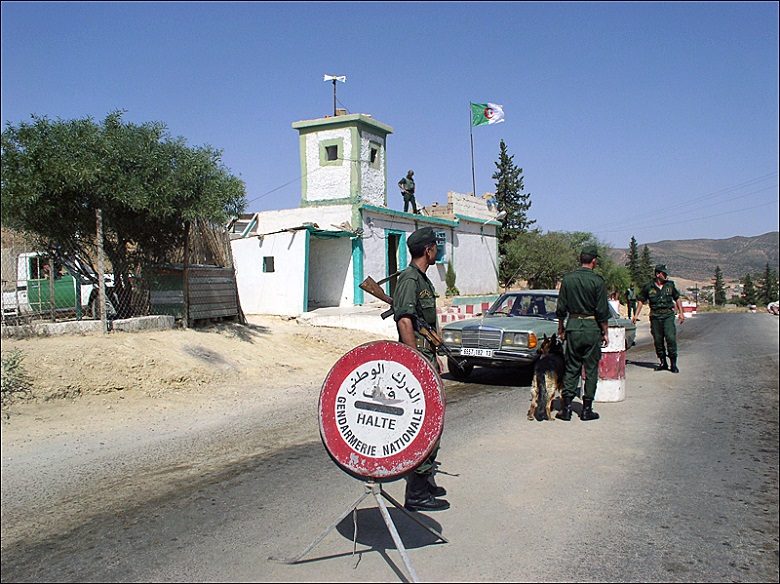
Algeria–Morocco border (Photo: Magharebia / Flickr [ CC BY 2.0 ])
That said, these hurdles—technology, costs, political conditions—are perennial issues in power projects and not unique to CSP. Development continues, especially with improvements in technology and costs, and it is undeniable that CSP is steadily advancing.
Africa a low priority behind Europe-led efforts
North African countries view this industry as a new opportunity for economic growth and plan to export electricity to Europe. In Tunisia, only 5–10% of the electricity generated by solar power is slated for domestic supply. Globally, electricity access is at 87.4% (2016), and most countries, including those in North Africa, have electrification rates exceeding 90%. Against this backdrop, sub-Saharan Africa’s electricity access rate stands out at just 35% (2012). However, because European companies are sponsors of many solar projects and electricity can be sold at higher prices in Europe than within Africa, exports to Europe are being prioritized.
There are also criticisms that this constitutes “new colonization.” In many cases, CSP plant construction in North Africa is largely financed by Europe, with engineers and equipment sent from Europe. As a result, the economic balance of power allows Europe to control pricing and profit distribution, and to purchase output cheaply. There are concerns that this will produce the same pattern as today’s neo-colonialism, in which most of the wealth generated by North Africa’s resources flows to Europe. On the other hand, in Tunisia the solar project is expected to create a supply chain of 700 local companies and 20,000 jobs. It is also true that such projects can positively impact the local economy, making it difficult to judge the issue in absolute terms.
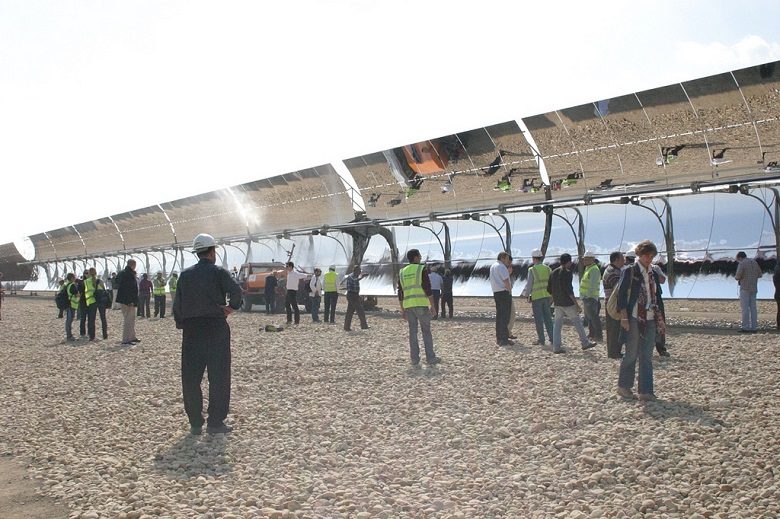
CSP concentrating mirrors (Photo: Green Prophet / Flickr [ CC BY 2.0 ])
Looking ahead
Currently in Africa, two out of three people (600 million) live without electricity. This imposes hardships and, in turn, hampers economic growth. CSP in North Africa not only has the potential to break this impasse, but may also help alleviate future global electricity shortages expected from population growth. However, at this stage, the electricity generated in North Africa is set to flow to Europe rather than sub-Saharan Africa.
On a global scale, we are now witnessing severe environmental destruction and the resulting extreme weather, forcing us to rethink existing industrial structures. Solar power can solve multiple problems—from reducing greenhouse gas emissions to the eventual depletion of fossil fuels. We hope to see solar projects expand not only across Africa but as a light that illuminates the world.
Writer: Mizuki Nakai
Graphics: Kamil Hamidov, Hinako Hosokawa
Note 1: Because solar thermal power is sometimes written as STE: solar thermal electricity, sources that use STE are also presented here as CSP.
Note 2: The four types of generation are as follows.
1) Parabolic trough: Low manufacturing cost but low generation efficiency.
2) Linear Fresnel: Can be installed in narrower spaces, but has high manufacturing costs.
3) Tower/beam-down: High generation efficiency, but requires advanced technology and has high operating costs.
4) Dish type: Simple shape and low manufacturing cost, but low output.
Note 3: TuNur: Engages in solar power projects between North Africa and Europe.





いつも楽しく読ませていただいてます。不毛の砂漠にこんな使い方があったとは、目から鱗です。アフリカでのソーラー発電が今直面している地球の危機を救うための光になるかも知れないという結び。感動しました。
夜でも発電できる太陽熱発電すごく画期的だと思いました。
課題も多く存在しますが、環境に配慮しながら電力需要を満たしながら現地の経済にも好影響を与える砂漠でのソーラー発電プロジェクトが成功することを願いたいです。
日本はまだまだ環境保護や再生エネルギーに対する議論がまだまだ活発ではない印象があります。こうした他国の動きについてももっと知ることで、もっと深く考えて議論し行動していきたいです。
“サハラ砂漠のおよそ1.2% (335×335km) の面積でソーラー発電を行うと、世界全体の電力が賄える” 最初の一文がとてもキャッチーですね。純粋に驚きました。情勢の不安定さや隣接国との関係性等の懸念点はあるものの、世界の安定的なエネルギー共有に向けて当事業が今後発展して欲しいです。
“サハラ砂漠のおよそ1.2% (335×335km) の面積でソーラー発電を行うと、世界全体の電力が賄える” 最初の一文がとてもキャッチーですね。純粋に驚きました。情勢の不安定さや隣接国との関係性等の懸念点はあるものの、世界の安定的なエネルギー共有に向けて当事業が今後発展して欲しいです。
熱エネルギーの活用は考えてみれば当たり前かもしれませんが、これまでの太陽光発電のイメージを覆されました。「新・植民地主義」という表現がありましたが、どうなのでしょう。いわゆる先進国が自国に必要なものを安価で手に入れられる構図…という点で理解はできますが、記事にもある通り、議論の余地は大きいと思います。
面白いですね!新しい発見がたくさんある記事でした!
僕が将来実現させます