
Only a few days remain in 2018. At year’s end, newspapers and TV news programs in Japan annually release rankings such as the year’s top 10 domestic and international stories. What kinds of events will appear in each outlet’s 2018 rankings of international news? The US–North Korea summit and the inter-Korean summit will likely make the list. Others include the rescue of the Thai boys from a cave, the murder of a Saudi journalist, the US midterm elections, and protests in France. At the same time, many major events that affected large numbers of people are unlikely to be included in such rankings. GNV therefore introduces, in ranking format, significant news that received limited coverage in Japan.
In selecting the items, we considered factors such as the annual volume of coverage related to the event/phenomenon, its impact on people and the world, and how much it changed in 2018. In addition to events/phenomena that occurred in 2018, we also included those that happened earlier but came to light in 2018. For coverage volume, we emphasized how much a story was reported relative to its scale. (Details of the ranking method are provided in the footnote (Note 1).)
GNV’s top 10 hidden world news stories of 2018 are as follows.
目次
No. 1 Ethiopia: Sweeping reforms by the new prime minister bring positive effects for regional peace
In April 2018, Abiy Ahmed became prime minister of Ethiopia. Since then, a range of reforms have been carried out domestically and internationally. At home, anti-government protests and armed conflicts had continued across multiple regions against previous administrations that had repeatedly committed human rights abuses, with people demanding freedom and equality. From the moment he took office, Abiy began releasing political prisoners, shutting down prisons where torture had taken place, and working toward domestic peace. As a political reform, he also appears set to amend the constitution to prevent the emergence of a dictatorship. Internationally, peace with Eritrea was the first major achievement. Ethiopia had fought a large-scale war with Eritrea over their border since 1998, but in June 2018, they concluded peace for the first time in 20 years and normalized relations. Furthermore, as a result of this peace agreement, Eritrea and Djibouti, which had a border dispute, reconciled, and relations between Somalia and Eritrea also recovered. As the UN Secretary-General noted that “winds of hope” are blowing across the Horn of Africa, these peace deals are having a positive impact across the region. However, there have also been incidents by those opposing Abiy’s reforms. The country’s future peace rests on this administration.
Media coverage
Asahi Shimbun: 2.5 articles/416 characters
Mainichi Shimbun: 5 articles/2,220 characters
Yomiuri Shimbun: 0 articles/0 characters
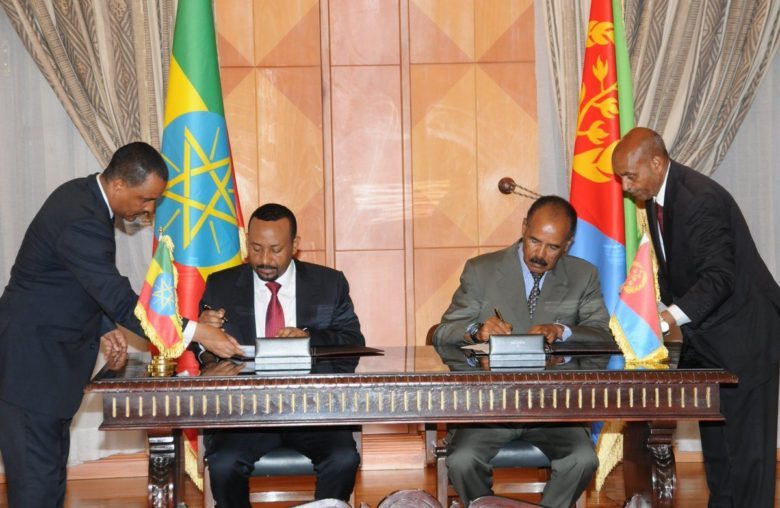
Peace agreement between Ethiopia and Eritrea (Photo: Yemane Gebremeskel /Wikimedia)
No. 2 Yemen: The world’s worst humanitarian crisis
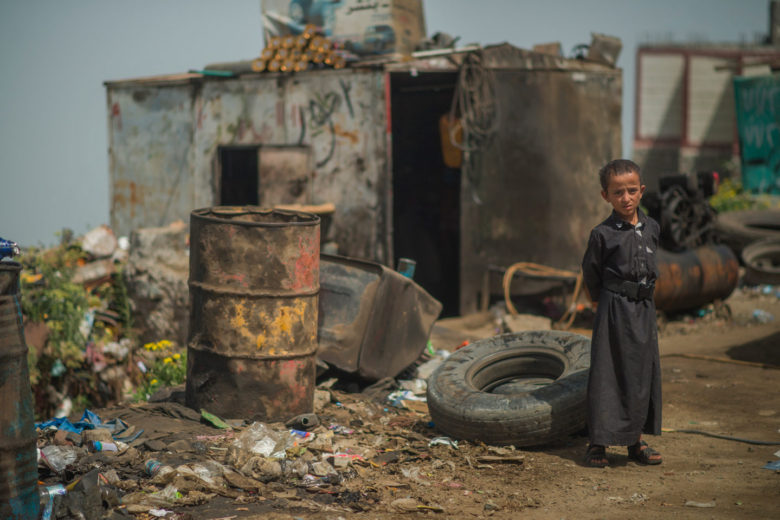
Due to the armed conflict that has continued since 2014, three-quarters of Yemen’s population requires aid and protection, making it the world’s worst humanitarian crisis, as announced by the UN Secretary-General in April 2018 here. As of December, 14 million people were food insecure, and since 2015, about 85,000 children under five have died of starvation. Cholera has also spread, with over 1 million infections. The Yemen conflict began when the Houthi movement, which opposed the new government in 2014, ousted the government and seized the capital, Sana’a. Since 2015, the Saudi-led coalition has intervened, carrying out repeated large-scale airstrikes and ground operations. The Houthis, said to be supported by Iran, have also launched missile attacks against Saudi Arabia, which supports the government. Saudi Arabia’s blockade of land, sea, and air routes caused shortages of food and other supplies. In December 2018, direct talks between the Houthis and the government were held in Sweden toward ending the conflict. On the 13th, a ceasefire was agreed for Hodeidah, a key theater of the war. This could be a step toward resolving the conflict and improving the humanitarian crisis.
Media coverage
Asahi Shimbun: 26 articles/16,417 characters
Mainichi Shimbun: 17 articles/9,303 characters
Yomiuri Shimbun: 17 articles/6,399 characters
(Photo: Peter Biro /Flickr[CC BY-NC-ND 2.0])
No. 3 Venezuela: Surge in refugees and migrants
In Venezuela, primarily due to the economic crisis, by November 2018 more than 3 million people out of a population of 32.4 million had fled the country. Over 1 million refugees and migrants are in Colombia, 500,000 in Peru, and others have fled to Brazil, Ecuador, Argentina, as well as Central America and the Caribbean. Since 2014, in addition to shortages of goods accompanying the decline in oil prices—the main source of revenue—hyperinflation has taken hold, the economy has deteriorated, and large numbers of refugees and migrants have emerged. In August 2018, the currency unit was slashed to one hundred-thousandth and a new currency introduced, but access to the new currency has been difficult. Infrastructure shortfalls have also led to water shortages and power outages, and in some areas—especially in healthcare—adequate treatment cannot be provided. These factors have also pushed people to leave the country. Initially, neighboring countries were receptive, for example by granting legal status to Venezuelan refugees and migrants. However, as the scale has grown, some countries are struggling with reception and in some cases taking harsher measures such as expelling refugees and migrants. A region-wide framework across Latin America is needed to address the growing number of Venezuelan refugees and migrants.
Media coverage
Asahi Shimbun: 4 articles/3,930 characters
Mainichi Shimbun: 1 article/1,080 characters
Yomiuri Shimbun: 0 articles/0 characters
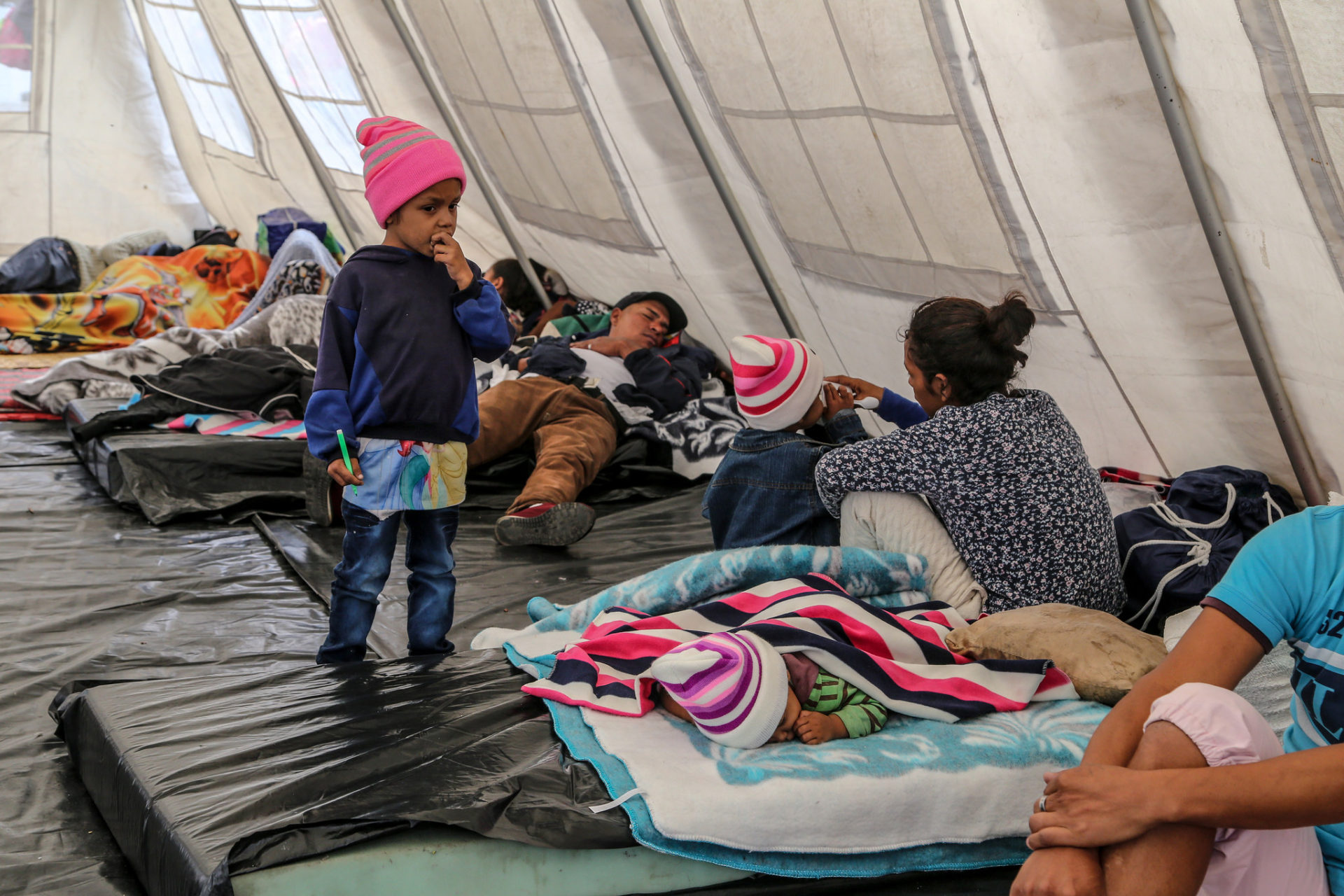
Inside a temporary tent set up by UNICEF for Venezuelan refugees and migrants (Photo: UNICEF Ecuador /Flickr[CC BY 2.0])
No. 4 India: 4 million struck off the citizenship register
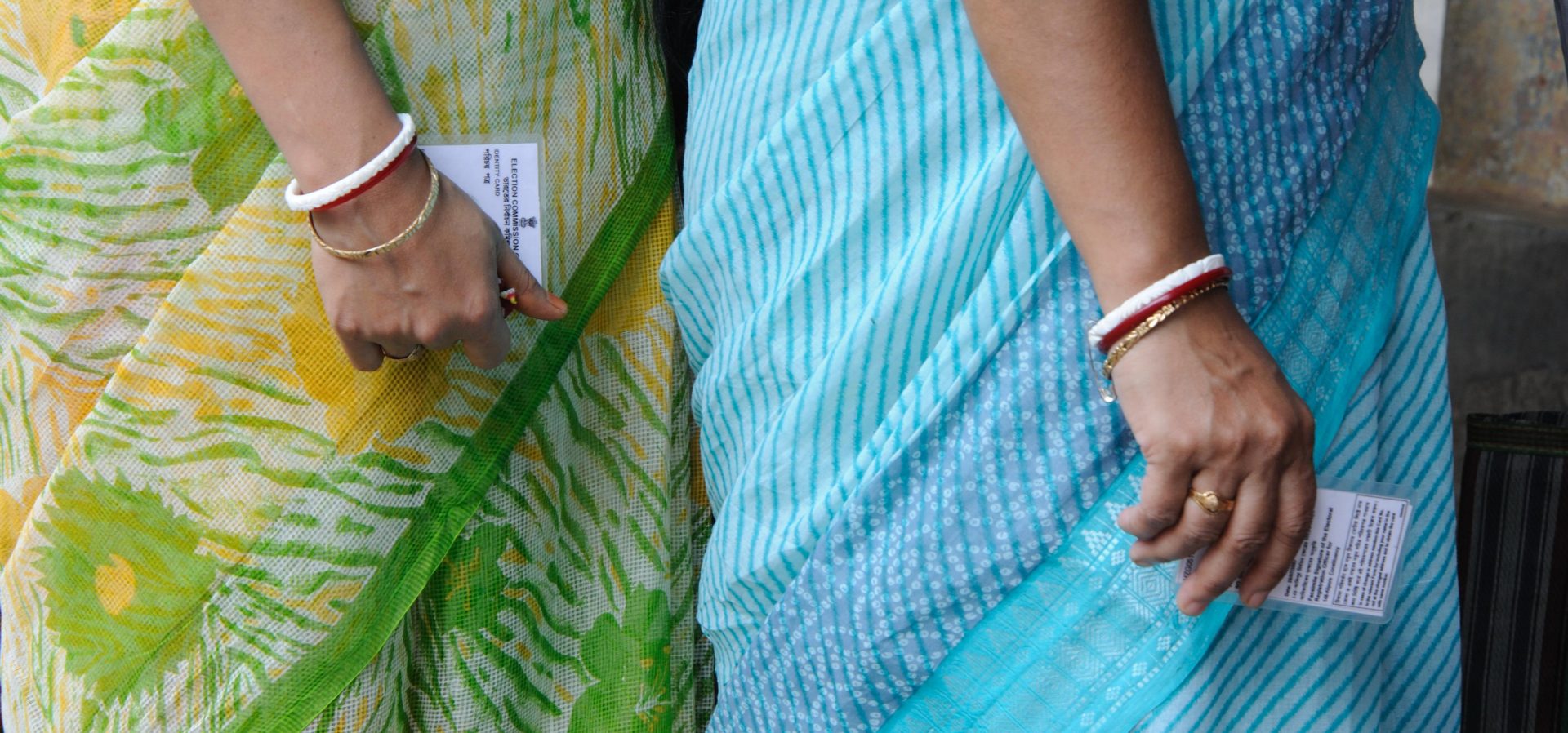
In Assam state in northeastern India, 4 million people could face the risk of expulsion after being excluded from the citizenship register. Residents of Assam were required to prove that they or their family members had lived in India before March 1971. March 1971 was when as many as 10 million people from Bangladesh fled across the border to escape the war of independence from Pakistan. While most returned after independence, many settled in Assam. The Bharatiya Janata Party, led by Prime Minister Narendra Modi, says the citizenship registration protects ethnic Assamese and cracks down on illegal immigration. As a result, out of 32 million people who applied to be registered as Indian citizens, more than 4 million were excluded in the draft list. On the other hand, it is said that the delisting is a measure targeting Muslims, a minority in India, under the pretext of anti-immigrant policy. Those struck off the list are not immediately expelled and have the opportunity to appeal. However, the situation is likely to be difficult for those excluded. The final citizenship register will be completed on December 31.
Media coverage
Asahi Shimbun: 1 article/2,217 characters
Mainichi Shimbun: 0 articles/0 characters
Yomiuri Shimbun: 0 articles/0 characters
(Photo: Goutam Roy/Flickr[CC BY-SA 2.0])
No. 5 World: Refugees and displaced at a record high (2017)
According to a June 2018 survey by UNHCR, the number of refugees worldwide, including internally displaced persons (IDPs), increased for the fifth consecutive year in 2017, reaching 68.5 million, the highest on record. Of these, 40 million are IDPs, 25.4 million are refugees, and 3.1 million are asylum seekers awaiting the outcome of their claims. More than half of the 25.4 million refugees are under the age of 18. The number of people newly displaced in 2017 was 16.2 million. The drivers in 2017 included the sharp escalation of the Rohingya refugee crisis in the latter half of the year and the Democratic Republic of the Congo, which saw the highest number of newly internally displaced worldwide in 2017. Refugees and asylum seekers heading from Central America to Mexico and the United States, such as Venezuelans, also contributed. Including those who became refugees in the past and remain so, Syria remains the largest country of origin with about 6.3 million, followed by Afghanistan and South Sudan. Eighty-five percent of refugees live in developing countries. As the number of refugees increases, in addition to resolving the conflicts that cause displacement, systems to receive and host refugees are also crucial.
Media coverage (articles on global refugee numbers including UNHCR releases)
Asahi Shimbun: 0 articles/0 characters
Mainichi Shimbun: 1 article/441 characters
Yomiuri Shimbun: 1 article/158 characters
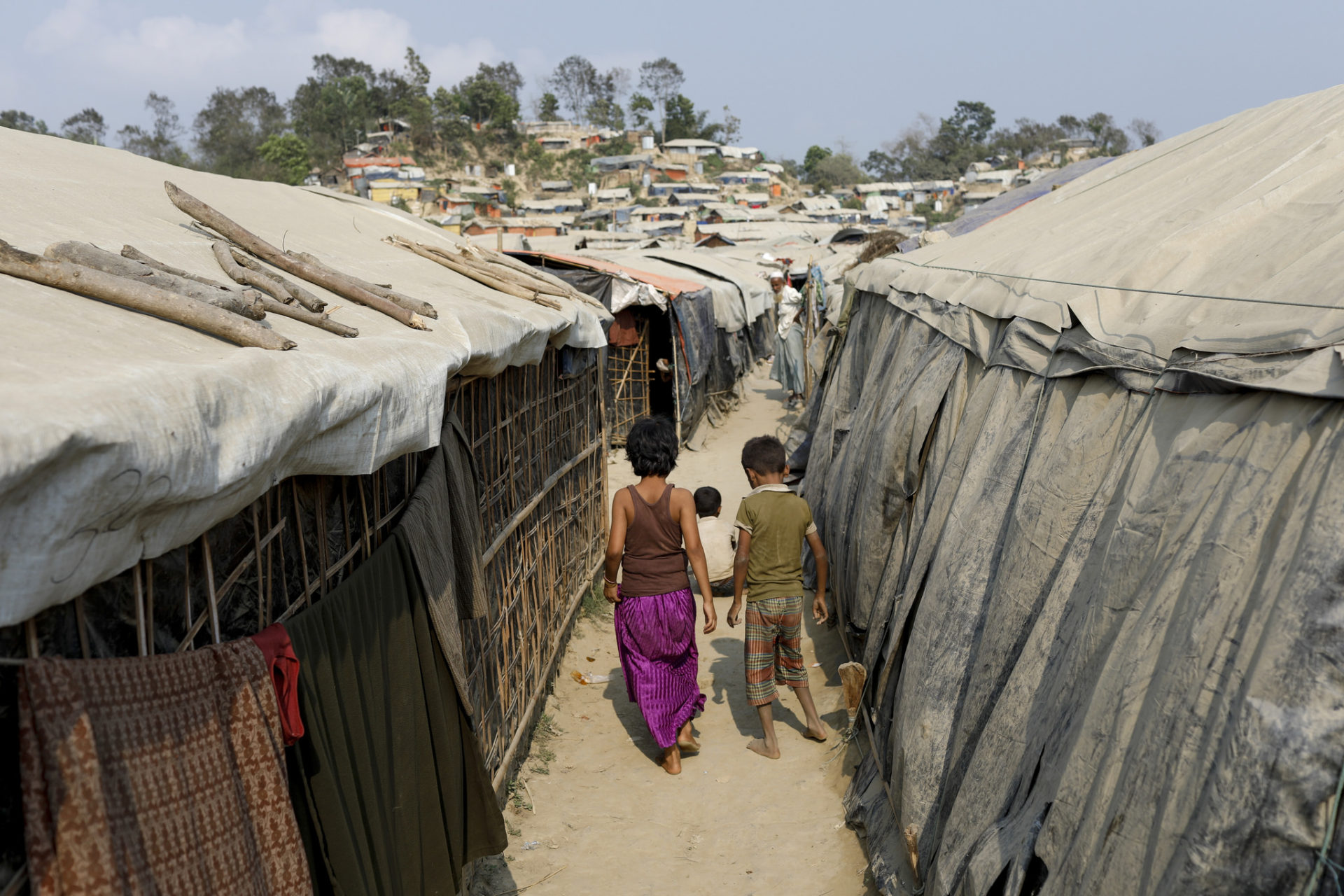
Rohingya refugee children walking in a camp in Bangladesh (Photo: EU Civil Protection and Humanitarian Aid Operations /Flickr[CC BY-NC-ND 2.0])
No. 6 World: The problem of antibiotic resistance
According to a WHO report released in 2018, in 49 out of 65 surveyed countries, antibiotics that should be used only when resistant bacteria are detected—so as to prevent resistance—accounted for more than half of all antibiotics prescribed. In other words, antibiotic resistance has reached a critical level. Excessive use of antibiotics enables pathogens to develop resistance, rendering antibiotics ineffective. As a result, there is a risk that treatments for pneumonia, cancer, infections, and more will become inadequate. While consumption of antibiotics is increasing year by year particularly in low- and middle-income countries, it is a global trend, and the emergence of superbugs is surging. In regions with insufficient drug supply, appropriate prescribing is not possible, further exacerbating resistance. Moreover, because developing new antibiotics is not sufficiently profitable, development has lagged. Superbugs are also found in animals. In livestock production, antibiotics are overused for disease prevention in healthy animals to speed growth and boost efficiency, which is believed to be another cause.
Media coverage
Asahi Shimbun: 0 articles/0 characters
Mainichi Shimbun: 0 articles/0 characters
Yomiuri Shimbun: 0 articles/0 characters

(Photo: ranys /Pixabay)
No. 7 World: Widening wealth gap
According to the international NGO Oxfam, which tackles international issues centered on poverty, in 2018 it emerged that the world’s 42 richest individuals own the same wealth as 3.7 billion people—the poorest half of the global population. This is an annual survey: in 2017 the figure was 61 people, and in 2009 it was 380 people whose wealth equaled that of the poorest half, indicating that inequality has been widening year by year. Moreover, 82% of the wealth created in 2017 went to the richest 1% globally. With the stock markets booming, as seen with Jeff Bezos becoming the world’s richest person in 2018, the wealth of those already affluent rose by $762 billion in 2017. One-seventh of this amount would be sufficient to end extreme poverty worldwide. Meanwhile, the wealth of the bottom half of the world’s population has not increased. The gender gap is also stark: 90% of the world’s billionaires are men.
Media coverage
Asahi Shimbun: 0 articles/0 characters
Mainichi Shimbun: 0 articles/0 characters
Yomiuri Shimbun: 0 articles/0 characters
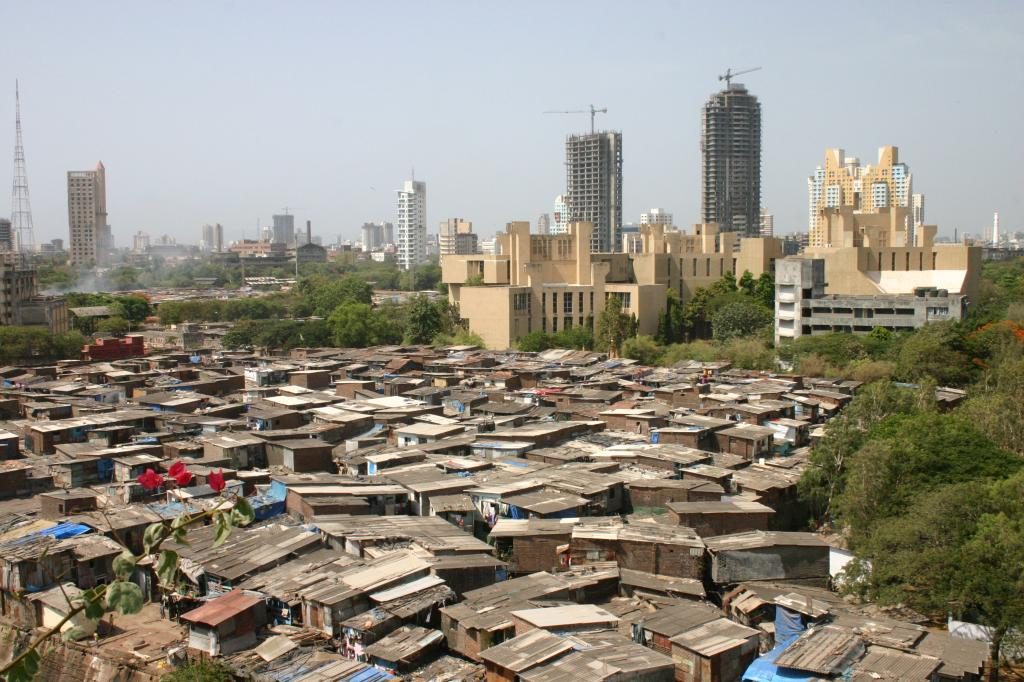
Slums and the cityscape as seen from Mumbai, India (Photo: Sthitaprajna Jena /Flickr[CC BY-SA 2.0])
No. 8 Sahel: Worst humanitarian crisis in a decade
In 2018, due to lack of rain, rising food prices, conflict, and other factors, child hunger in the Sahel—a band across the southern edge of the Sahara—reached its highest level in a decade. The Sahel also had the world’s fastest increase in hunger in 2018. In particular, in six countries—Burkina Faso, Chad, Mali, Senegal, Mauritania, and Niger—more than 1.3 million children under five are acutely malnourished. Malnutrition is especially severe during the lean season, when food is scarce and diseases such as malaria increase. According to the FAO, around 6 million people faced food shortages during this period in 2018. The Sahel has only one rainy season per year for growing food. Therefore, when harvests fail due to climate change or conflict, it becomes difficult for those who grow crops and raise livestock to make it through to the next year. In recent years, climate change has made rainfall increasingly unstable, further worsening malnutrition.
Media coverage
Asahi Shimbun: 0 articles/0 characters
Mainichi Shimbun: 0 articles/0 characters
Yomiuri Shimbun: 0 articles/0 characters
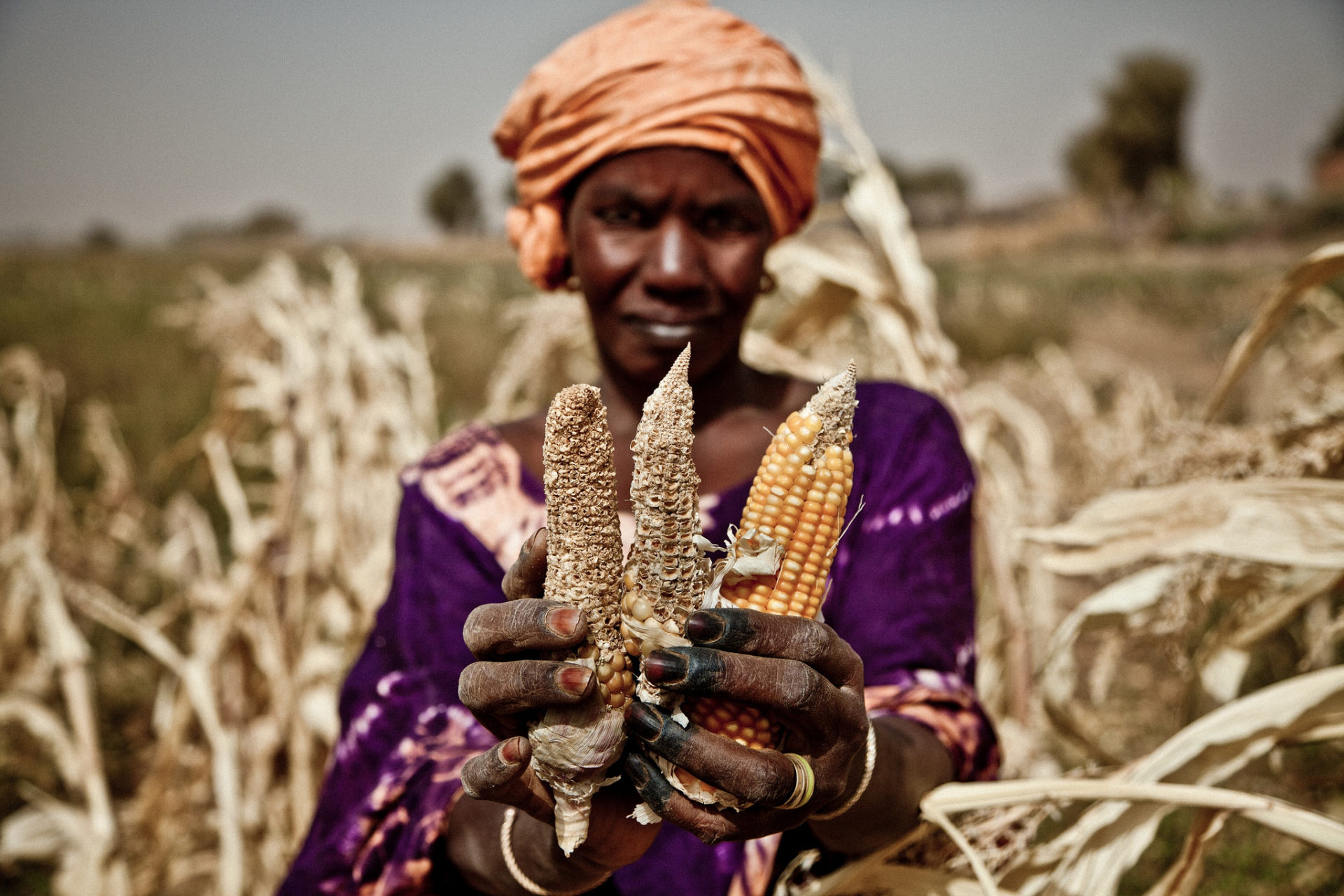
A woman in Mauritania struggling with low yields due to drought (Photo: Pablo Tosco /Flickr[CC BY-NC-ND 2.0])
No. 9 East Africa: FGM (female genital mutilation) down sharply over 20 years
Between 1995 and 2016, the proportion of girls aged 14 and under who underwent FGM in East Africa fell dramatically from 71.4% to 8%, as revealed in 2018. North Africa saw a 43.8% drop and West Africa a 48.2% drop. The sharp decline is likely due to policy shifts and persistent grassroots campaigns. FGM involves cutting parts of female genitalia at a certain age and is a cultural practice in some regions. It can lead to infections, infertility, and lifelong health consequences. Of the 28 African countries where FGM is practiced, 22 have enacted laws banning it. While it is decreasing in Africa, it has not declined in Yemen and Iraq in the Middle East, and the problem persists elsewhere. Even in many places where FGM has decreased, poverty, lack of education, and continued cultural support for FGM could cause it to rise again. The number of girls projected to undergo FGM worldwide could reach 46 million by 2030, a trend linked to population growth in places where the practice is customary. Improving education in those regions is considered crucial to reducing FGM.
Media coverage
Asahi Shimbun: 0 articles/0 characters
Mainichi Shimbun: 0 articles/0 characters
Yomiuri Shimbun: 0 articles/0 characters
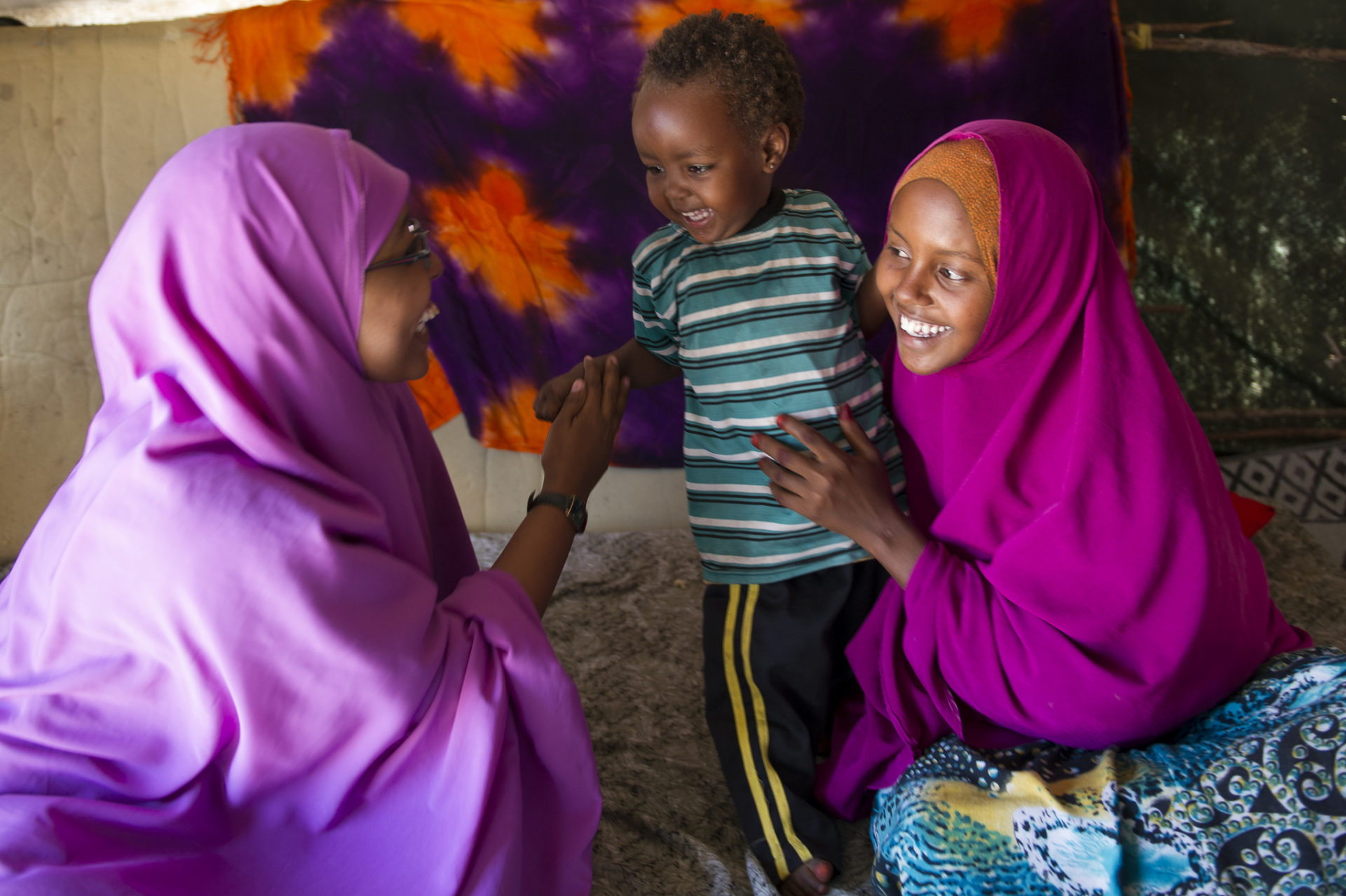
A gathering to learn about the risks of FGM (Photo: David Mutua /Flickr)
No. 10 Southeast Asia: Methamphetamine production and trafficking surge
According to the United Nations, 2018 revealed a rapid increase in the production and trafficking of methamphetamine in the Mekong region of Southeast Asia. The area has long been known for opium and heroin, and the region spanning Laos, Myanmar, and Thailand is called the “Golden Triangle.” Driven by market factors, criminal groups are investing in methamphetamine. Meth labs are temporary and easy to move, making production hard to detect. Much of it is currently taking place in northern Myanmar, beyond the reach of central government control. According to UN officials, while opium and heroin production in the Mekong is declining, seizures of methamphetamine have increased compared to 2017. Meth produced in the Mekong and Myanmar has been found in large quantities across the Asia-Pacific, including in Japan and Australia. The heroin and meth markets are estimated to be worth $40 billion. In Thailand and other Southeast Asian countries, a different, cheaper form of meth—distinct from what is consumed in developed countries—is also widely circulating.
Media coverage
Asahi Shimbun: 1 article/2,137 characters
Mainichi Shimbun: 0 articles/0 characters
Yomiuri Shimbun: 0 articles/0 characters
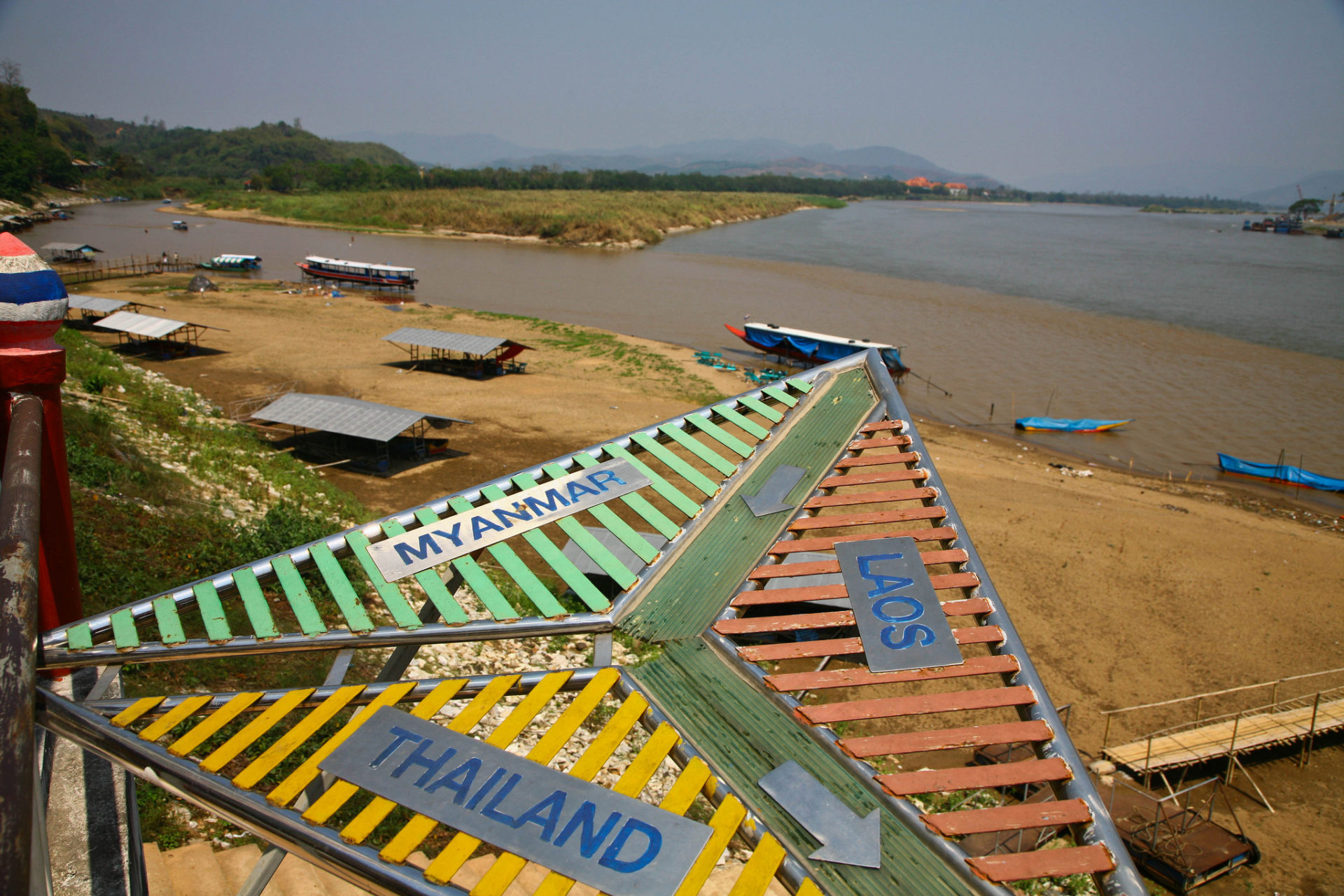
“Golden Triangle” (Photo: ryan harvey /Flickr[CC BY-SA 2.0])
These are the results of the ranking. Many of these stories received little coverage in Japan, yet 2018 again saw a variety of events and phenomena that significantly affected people around the world. Many cross borders or spread globally, requiring responses at the global level. We will continue to focus on a wide range of events and phenomena worldwide, including those underreported in Japan.
Note 1: The ranking was determined as follows. From events/phenomena in six regions (East/South/Central Asia; Southeast Asia/Pacific/Indian Ocean; Middle East/North Africa; Sub-Saharan Africa; Europe; North and South America), four items each were selected, plus six global events/phenomena, for a total of 30 major stories that received limited coverage in Japan. Each was scored on five criteria: coverage volume, cross-border nature, number of people affected, impact on systems such as politics/economy/security, and timeliness. Because this ranking emphasizes undercovered stories, the coverage volume criterion was weighted double compared to the other four. Based on the scores, seven of the 30 were determined. For the remaining three, items with the same scores were chosen in an editorial meeting considering thematic and regional balance. Finally, the order of the ranking was decided through editorial discussion. Coverage volume was tallied from January 1, 2018 to December 19, 2018.
Writer: Saki Takeuchi






すごいリストですね。たくさんの人間が大きな影響を受けているのに、まったく報道されていないものがあまりにも多すぎます・・
毎年、発表してほしい!
世界での出来事、知らない事ばかり。同じ人間なのに一日、一日の生き方が全く違う。
世界の富を独占している42人! 何とかしようと思わないの? おなじ人間としてもっと考えよう!!!
知らないことばかりで、特に1,2位はかなり衝撃を受けました。自力であるのが難しいのでこういうものは続けてほしいです。
ここまで甚大な被害が出ているにもかかわらず、GNVを読むまでほとんど知りませんでした。
こういった状況は明らかにおかしいので、日本の報道機関にはもっと目覚めてもらいたいですね。
読売新聞の「2018年海外の10大ニュース」が出ましたね。
https://www.yomiuri.co.jp/feature/top10news/20181129-OYT8T50038.html
GNVのトップ3のひとつも入っていない。というか、もとの候補にも入っていない。
それに、読売の【6位】英ヘンリー王子、米女優と挙式??
なんだか芸能ニュースのタブロイドみたい・・
潜んだニュース興味深く拝見しました。さまざまな出来事があるからこそ、世界を包括的に見ていかなければならないのに、日本の新聞の報道量の少なさには驚きを隠せません。2019年も世界のニュースを届けてください!
いつも興味深く読んでいます。GNVを知り記事を読んでいくうちに、世界や日本に対して見方や考えが変わってきました。
知らなかった世界がある‼️まず知る事の大切さを痛感しています。
より多くの人にGNVを読んで欲しいと願います。
1位のエチオピアのアビー首相がノーベル平和賞を受賞しましたね。
ノーベル平和賞になって初めて各報道機関が報道する。
それは、報道機関の役割を十分に果たせていると言えるのでしょうか。