
Of the approximately 7,000 languages that exist in the world, an astonishing 12% are concentrated in a single country. That country is Papua New Guinea, located in Oceania near the equator. Although its population is relatively small at 6.06 million, as many as 853 languages are spoken there. Why does such linguistic diversity exist in Papua New Guinea? Let’s explore the secret behind it.
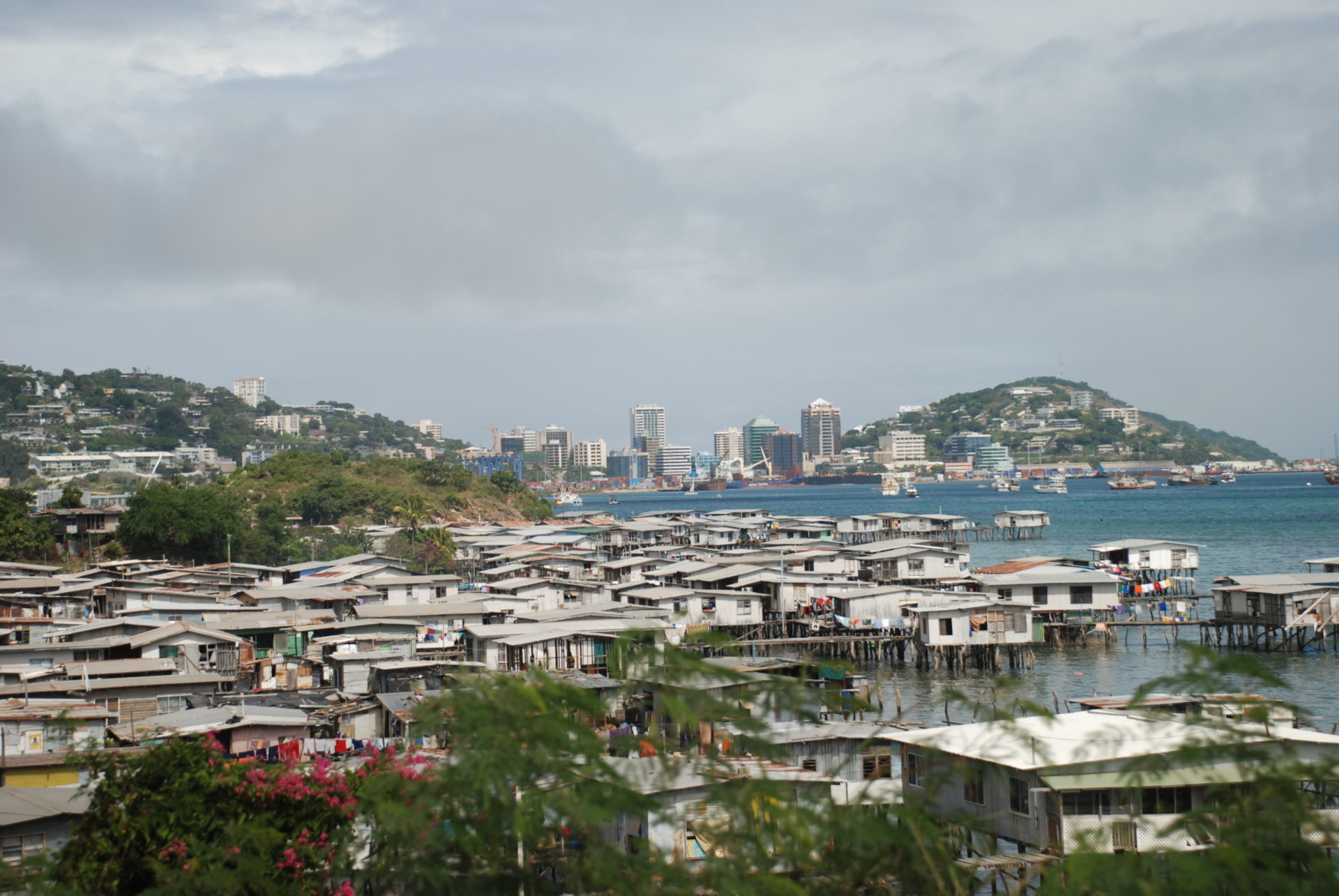
Port Moresby, the capital of Papua New Guinea (Photo: Commonwealth Secretariat/Flickr [CC-BY-NC-ND-2.0])
Development of languages
Languages are thought to have been brought to Papua New Guinea by people presumed to be of Southeast Asian origin who first settled there roughly 50,000 years ago. This language group is called Papuan, but because it derives from various languages and branches into many different ones, there is little mutual relationship among them. Around 2,500 years ago, people from Austronesian-speaking regions such as Southeast Asia also migrated to the coastal areas, bringing new languages into circulation.
Amid this, numerous languages developed, including Enga (currently with about 230,000 speakers), Huli (about 150,000), and Melpa (about 130,000). A language called Hiri Motu also emerged among multiple communities that were connected through trade. Looking at the map shows just how many languages are scattered throughout the country.
Furthermore, colonization brought new languages. In the late 18th century, when the northern half of the country came under German control and the southern coastal area became British territory, elements of German and English were added to the languages of Papua New Guinea. Among these, Tok Pisin stands out (※1), formed on the basis of English mixed with German and various languages already in use in Papua New Guinea before colonization. Tok Pisin originated in the 19th century when migrant laborers from Papua New Guinea began using it in places like Queensland, Australia, Samoa, and Fiji. It spread widely as male workers in particular brought it back home and passed it on to younger generations. Although Tok Pisin was a byproduct of colonial rule, it gradually took root across the country as more than just a means of communication between locals and European settlers—as a new language in its own right.
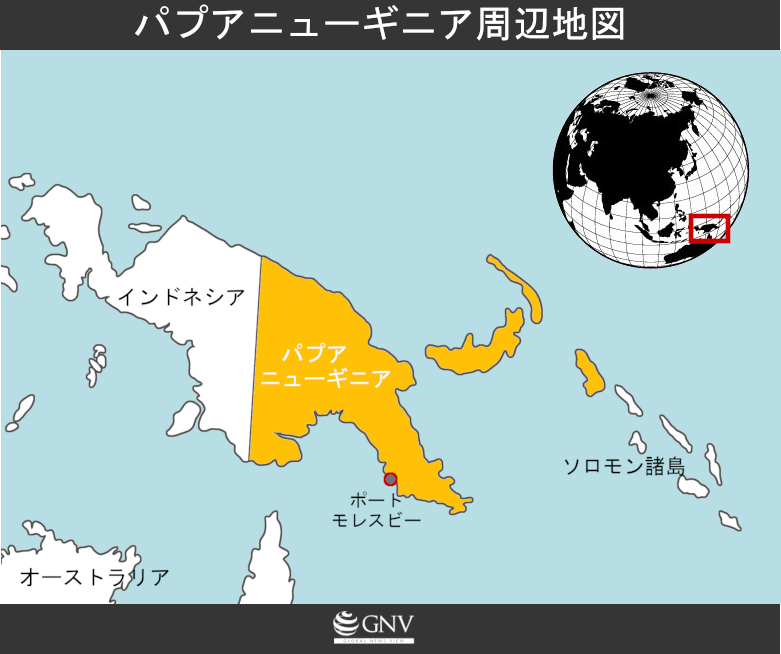
Papua and New Guinea were unified under Australian administration in 1949 and gained independence in 1975, at which time they adopted three official languages: Tok Pisin, English, and Hiri Motu. Today, Tok Pisin has the most native speakers; due to its simple vocabulary, it is used by 122,000 people as a first language and 4,000,000 as a second language, and is now used in newspapers and Parliament. English and Hiri Motu, while official, have not spread as widely; English remains mainly used in government and education, and Hiri Motu is used by many people primarily as a second language. In 2015, sign language was also adopted as an official language.
Reasons for diversity
As interaction among people increases globally and nations become more unified, languages are being weeded out. So why have so many languages survived in Papua New Guinea? The reasons are thought to be the following three.
The first reason is geographical. In Papua New Guinea, numerous swamps, dense forests, and mountains have isolated villages or regions into small units, leading to the development of distinct languages. Moreover, the number of people living in rural areas is more than six times that of those living in cities, so even today, interaction between villages is limited. The continued isolation can also be attributed to the fact that deforestation has not advanced extensively in Papua New Guinea. It has been observed that deforestation causes people to lose their homes and scatter, leading to the loss of languages.
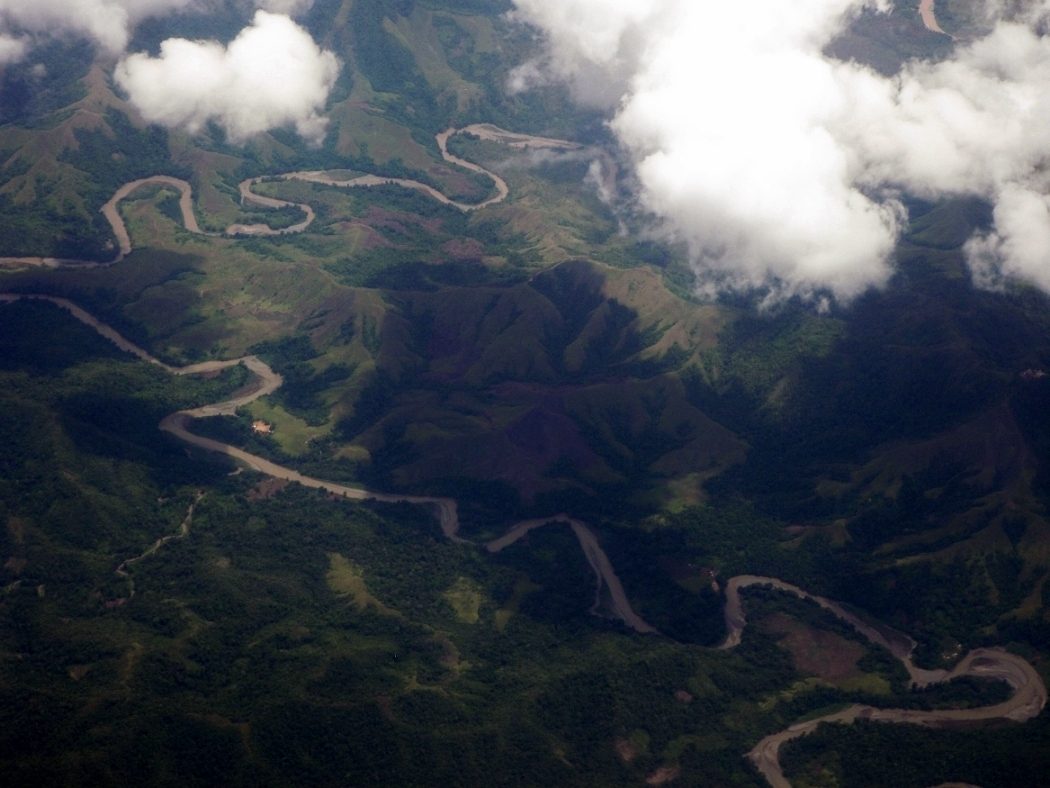
A large river flowing within Papua New Guinea (Photo: Jim/Flickr[CC-BY-NC-ND-2.0])
The second reason is temporal. According to linguist William Foley, assuming it takes about 1,000 years for languages to split, it is estimated that since 40,000 years have passed since the birth of languages in Papua New Guinea, the emergence of more than 1,000 languages is only natural.
The third reason is social. In multi-ethnic Papua New Guinea, language is an element that signifies ethnic identity, and the state regards it as a strength. In the process of forming many modern nation-states, governments have sought to unify language through coercive power. In countries that did so relatively early, such as France and Japan, only some dialects remain, whereas in Germany and Italy, which were unified comparatively recently, a wealth of dialects is still used today.
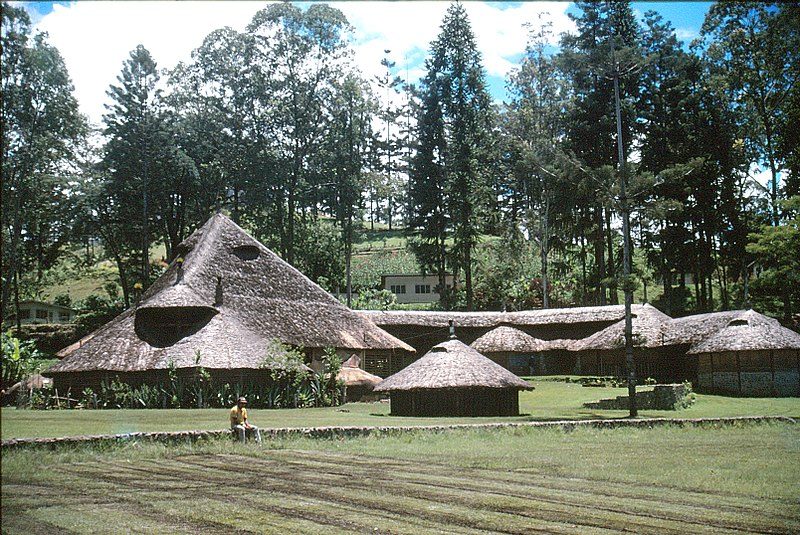
A rural landscape in the highlands (Photo: Brian Ireland/Wikimedia [CC-BY-SA-2.0])
Diversity at risk
However, many of these languages are in crisis. Reasons include young people leaving their hometowns for school or work, and entire communities relocating to areas where other languages are used due to deforestation and other factors. If a language falls out of everyday use and is not passed down from elders—who grew up with it—to younger generations, the language moves toward extinction as the number of elders dwindles.
For these reasons, the majority of the 853 languages spoken in Papua New Guinea have fewer than 1,000 speakers. Twelve languages have already become extinct, and 40 languages are in the process of disappearing. A further 124 languages are considered endangered. Those in the most severe crisis have fewer than 100 speakers: from languages like Likum and Hoia with 80 speakers, to Kamasa with 7 speakers and Abaga with just 5.
Why is diversity necessary?
Even so, why do we need linguistic diversity? First, to preserve the unique cultures and traditions that languages carry. Take the example of the Pandanus language, a language in Papua New Guinea. In central Papua New Guinea grows the pandanus tree, and the Pandanus language is used only when gathering the nuts that grow on it. The collected nuts are crushed into a pudding and served at festivals. It is said that since the Ice Age, residents crossed the sea and trekked through mountains to gather these nuts, and today the practice holds ritual importance. Beyond rituals and culture, each language plays a role in offering a distinct perspective on the world and life, which can be expected to spark new ideas and innovations.

A man studying in the Are (Are) language (Photo: Jim /Flickr[CC-BY-NC-ND-2.0])
There are also educational merits to maintaining indigenous languages. According to UNESCO, there is data showing that children achieve the best results when they learn in their mother tongue. While there are costs for preparing teaching materials and training teachers who can handle local languages, various benefits can be expected, such as improving the quality of learning and reducing the number of children who drop out because they cannot keep up with classes.
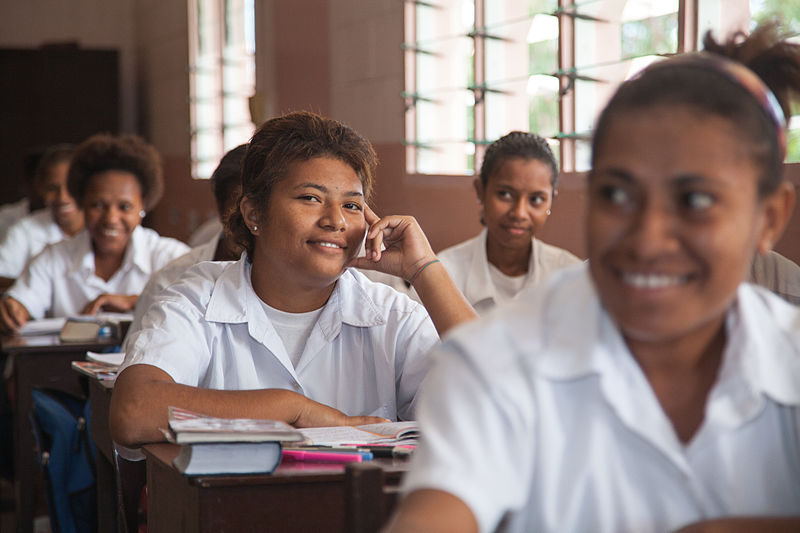
Students studying at school (Photo: Ness Kerson /Wikimedia [CC-BY-SA-4.0])
To preserve diversity
Here are some of the initiatives being advocated around the world to preserve diversity.
The first is the recording of languages by a UK company. GoCompare, a financial web service company, is recording the sounds and rhythms of endangered languages to preserve them for future generations. Specifically, speakers of 25 endangered languages around the world record sentences with the same meaning, which are then made available online.
The second is Bible translation. The international organization Wycliffe Associates is translating the Bible into many languages within Papua New Guinea. In predominantly Christian Papua New Guinea, leaving a written record of each language could create opportunities to use them in Mass and prayer. On the other hand, because this is a missionary endeavor, unforeseen impacts on each society are also possible.
Lastly, let’s take a slightly different view and look at social media such as Facebook in relation to language preservation. In May 2018, the minister in charge of communications announced that access to Facebook would be restricted for one month for system improvements. In response, citizens criticized the announcement, saying Facebook is an important tool for promoting communication and business. It can be said that people who use the same language but live far apart maintain their languages through communication via social media, and SNS is playing a role in preserving linguistic diversity.
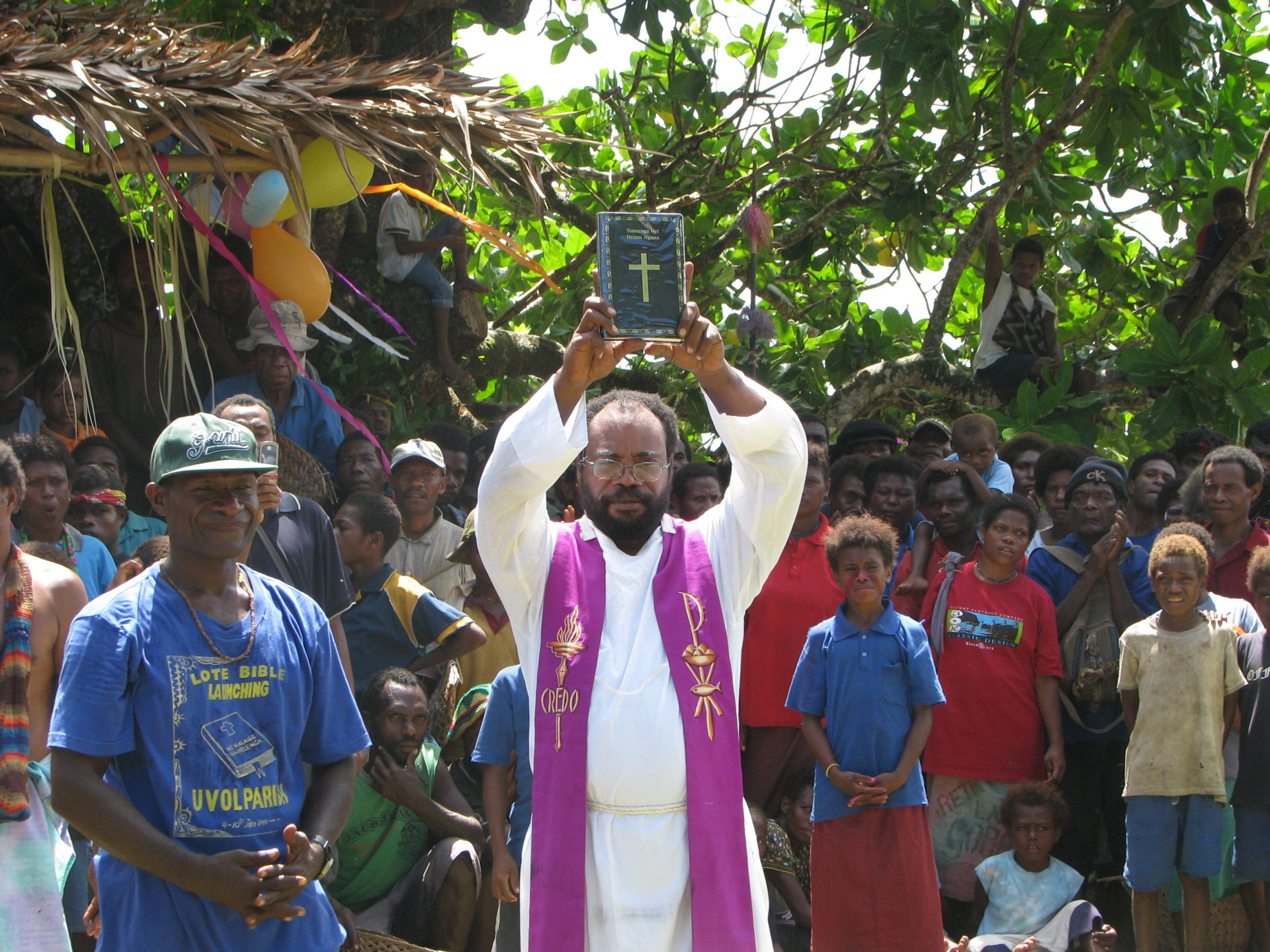
A priest holding up the New Testament (Photo: Kahunapule Michael Johnson/Flickr [CC-BY-NC-SA-2.0])
Today, many people around the world live using a small number of common languages after repeated unification. While communicating in a common language has its conveniences, making information sharing and communication smoother, we also risk losing the perspectives afforded by linguistic diversity—and by extension, the diversity of cultures and historical backgrounds—that enrich our lives. The cost of that loss is extremely high. We can only hope that endangered languages will be passed down to future generations and spared from extinction. How far can Papua New Guinea go in protecting each of its precious languages?
※1:When people who speak two different languages interact and live together, their languages mix and a simplified communication tool containing elements of both, called a “pidgin,” emerges. As it develops further, it becomes established as a new language called a “creole.” Tok Pisin is considered one such creole.
Writer: Nanami Yoshimura
Graphics: Hinako Hosokawa









パプアニューギニアにそんなに多くの言語があったなんて知りませんでした。
3つの要因の説明が分かりやすかったです。
今まで言語は少なくてもコミュニケーションが円滑になるからそこまで問題ないという風に思っていましたが、「ひとつひとつの言語が世界や人生に関する個別の異なった視点を提供する」という側面があると知って感銘を受けました。
パプアニューギニアにこれほどの言語が現存していることに驚きました。
多様性を保持するための取り組みも興味深かったです。
パプアニューギニアにこれほどたくさんの言語があったなんて初めて知りました。
言語の消滅が進む中で、言語の統一化に向かうのではなく多様性を保持する取組みが行われていることが面白いと思いました。
1つの国にこんなにもたくさんの言語があることに驚きました。多様な言語を用いて実際にどのようにコミュニケーションを行っているのか気になりました。今後も言語の消滅を防ぎ、多様性を保持していってほしいと思いました。