
Global plastic waste exceeds about 300 million tons per year. Eighty percent of marine debris is plastic, much of which flows from land-based sources such as construction sites, industrial facilities, coastlines, and landfills. Food containers and packaging account for 31.7% of that land-based waste, and together with plastic bags they make up the bulk of marine debris and pose a serious problem.
But when did people start becoming aware of this plastic problem? The media can be cited as a key actor in raising awareness, but how has the plastic problem been reported? In this article, we take a closer look at that.
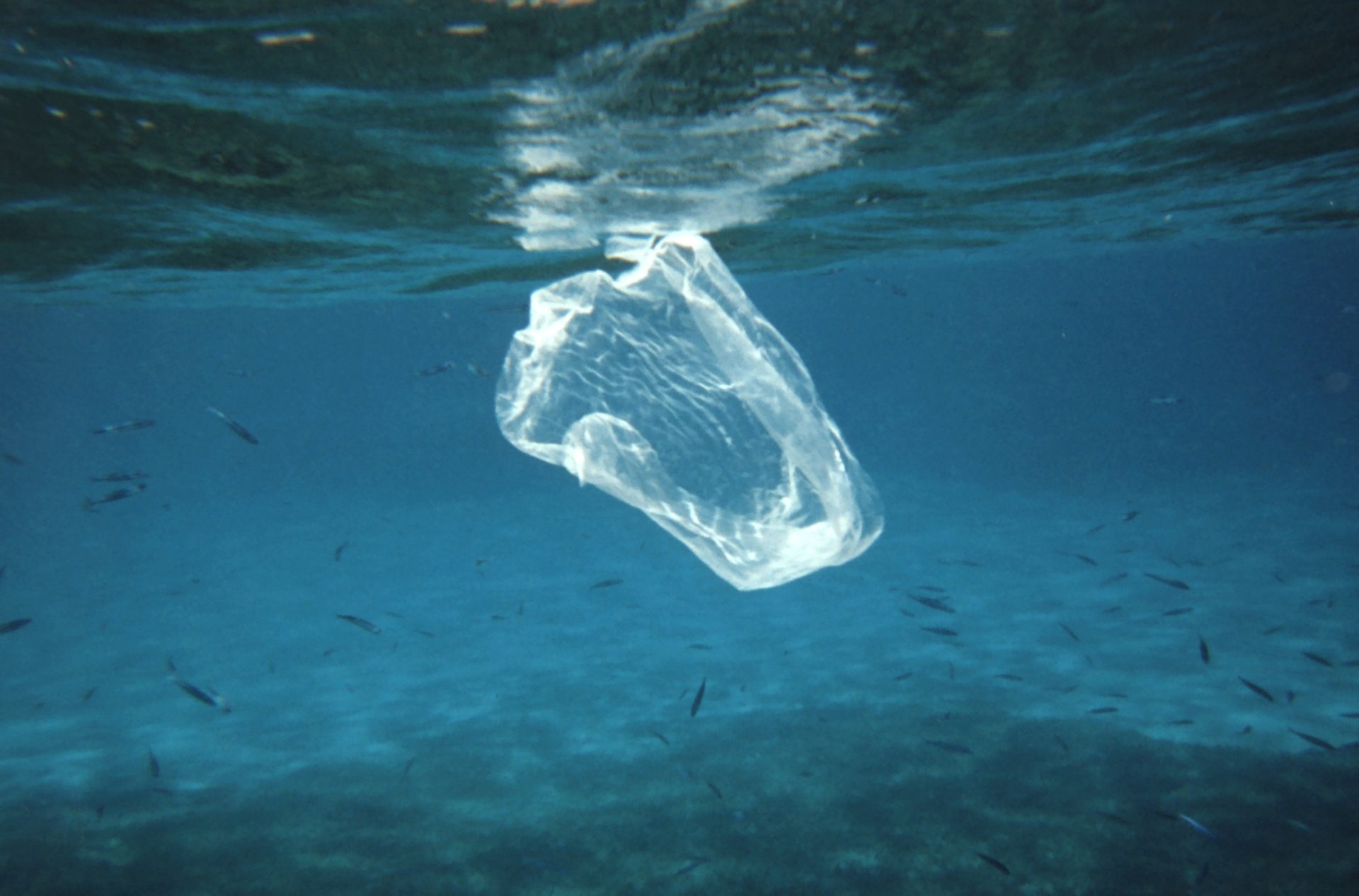
A plastic bag floating in the sea (Photo: Ben Mierement/ NOAA NOS (ret.))
The plastic waste problem
The root cause of the plastic problem lies in its chemical structure. Plastics are chemically very stable; once produced, they do not rot and are extremely difficult to break down. Despite not rotting and despite insufficient human-led decomposition processes, excessive packaging and single-use plastic products are flooding the market. For example, at convenience stores, magazines, drinks, and boxed lunches are each put into separate plastic bags. Yet behind the convenience of using many disposable bags, the air is polluted, the oceans are contaminated, and climate change is advancing. Because checkout bags are cheap, stores have little incentive to recycle or reduce them, and when it comes time to shop, consumers tend to prioritize convenience over environmental concerns. Shopping bags are only a small part of plastic waste, but society has been structured to mass-produce plastic products, use them for only a few minutes, and then throw them away.
Beyond sheer volume, plastics that flow into the ocean also cause problems. Marine organisms such as seabirds and fish mistakenly ingest ocean plastics and suffocate. Marine plastic debris affects at least 267 species worldwide. Among them, 86% of all turtle species and 44% of seabirds are included. Recently, 5.9 kilograms of plastic waste—including 25 plastic bags, 115 cups, four PET bottles, two sandals, and rope—were found in the stomach of a sperm whale that washed ashore on the coast of central Sulawesi, Indonesia 5.9.
In recent years, microplastics have drawn particular concern. Microplastics are plastic fragments of 5 mm or less. Of the plastics that flow into the ocean via rivers and wind, those that are neither washed ashore nor eaten are eventually broken into small pieces by waves and ultraviolet radiation. However, they do not decompose in nature, so the plastic polymers remain. Plastics are said to have the property of absorbing hazardous substances such as polychlorinated biphenyls dissolved in seawater. Microplastics are even taken up by plankton, and then ingested by fish and other organisms that eat plankton. Because plankton are the foundation of the food chain, biomagnification could ultimately pose risks to human health. Microplastics have also been found in the intestines of ordinary citizens, and one report suggests that residents of the United Kingdom consume an average of 70,000 microplastic particles per year. Microplastics have been found not only in seawater but also in bottled mineral water and tap water.
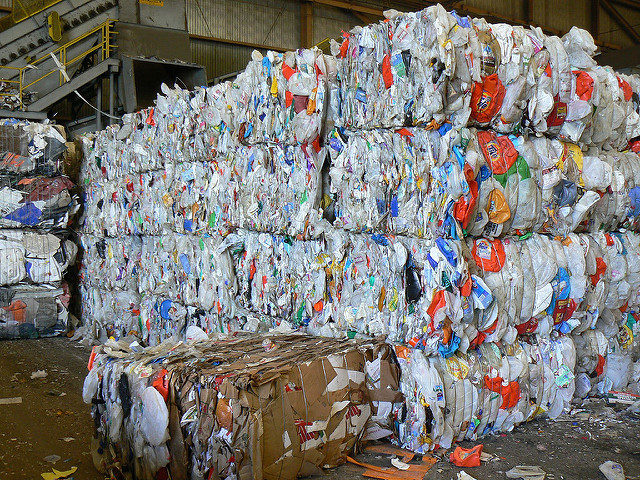
A large amount of collected plastic waste (Photo: Walter Parenteau/Flickr [CC BY-NC-ND 2.0] )
Measures to address the plastic problem
Next, let’s look at what measures are being taken to address the various problems caused by plastic. Much plastic waste generated in developed countries is exported to developing countries such as China for recycling. However, most of what is collected as “recycling” is sent to countries with lax environmental regulations on pollutants and wastewater and is reprocessed in low-tech, family-run facilities. In fact, China accepted 56% of waste plastic exports gathered from around the world, including Europe and the United States. Due to these issues, the Chinese government began to implement a ban on imports of waste plastic at the end of 2017 as part of domestic environmental measures. This policy shift left Europe, the United States, and Japan without a destination for their waste plastic. Large volumes were exported to Southeast Asia as new destinations, where illegal incineration occurred, and domestic disposal prices in developed countries rose.
Africa also faces a serious plastic problem. Due to unplanned urbanization, as in many regions, waste management cannot keep up. Trash accumulates in drainage channels and on roads, affecting the environment and public health. In response to these conditions, some African countries—including Rwanda and Kenya—have banned plastic bags as a measure against the waste disposal problem. On the surface, this may seem like a good policy. However, using paper or cloth as alternatives does not necessarily bring major environmental benefits, and comprehensive improvements in waste management are needed. It is a difficult problem that cannot necessarily be solved simply by abolishing plastic bags, but measures other than bag bans are making gradual progress in countries such as Rwanda.
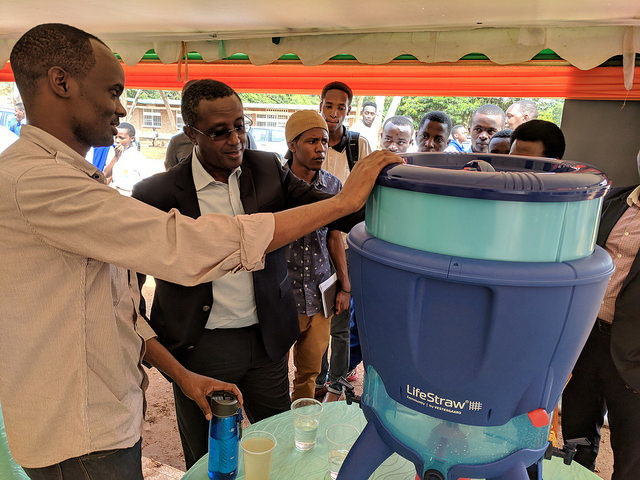
Scene from a World Environment Day event held in Rwanda on June 5, 2018
(Photo: RWANDA ENVIRONMENT MANAGEMENT AUTHORITY REMA /Flickr [CC BY 2.0] )
On the other hand, some policies in India are effective. In the summer of 2017, under the state government, a campaign called Stitwa Sagaram (“clean the sea”) was launched. The campaign trains fishers—who had been returning plastic caught in their nets to the sea—to instead collect it and bring it back to shore. The plastic thus collected is reused as a raw material for roads in India by mixing it into asphalt. More than 34,000 km of roads have been built using this plastic road technology, with 1 million plastic bags used per kilometer. These roads not only withstand India’s intense heat but also cost 8% less than conventional roads, making them increasingly popular.
There are also efforts to develop technological solutions to the waste plastic problem. In 2014, Beihang University in China discovered that bacteria found in the digestive system of wax moth larvae degrade polyethylene. Students at the University of British Columbia in Canada developed a method called “bioselection” that breaks down plastic into water and carbon dioxide 80 times faster than ordinary bacteria. There are also research institutions exploring ways to refine waste plastic into feedstock for fossil fuels.
Volume of reporting on the plastic problem
As noted above, the plastic problem has long been understood as a major issue, and efforts to find solutions have been ongoing for some time. But how has it been covered by the media? As one example, we analyzed coverage of the plastic problem in the Mainichi Shimbun over the past six years, from 2013 to 2018.
From 2013 to 2017, the total volume of coverage was 9,329 characters (13 pieces), which is very little. Of that, articles on marine plastic issues such as microplastics and drifting plastic waste accounted for 8,217 characters (10 pieces), while articles on research and development of environmentally friendly plastics totaled 1,112 characters (3 pieces). Essentially all coverage could be broadly divided into one of these two categories, indicating a bias in the perspectives emphasized. Although plastic containers and packaging account for 67.6% of plastic waste, there were few articles primarily addressing plastic consumption and how it is handled when it becomes waste, and few that probed the root causes of the plastic waste problem. Articles related to Japan totaled 3,683 characters, about 39%.
In 2018, attention to plastics surged. In less than a year, the volume exceeded more than three times the total coverage of the previous five years. In 2018 (through October), coverage amounted to 43,765 characters (50 pieces). As with the 2013–2017 articles, those on marine plastic issues were the most numerous, but articles about reducing plastic waste such as plastic bags and straws increased. Although measures to reduce the use of bags and straws were widely covered in the context of disposal issues, there were very few articles on plastic problems beyond bags and straws or on promoting recycling.

Loading…
Compared with before 2017, articles on plastics in 2018 increased dramatically. Why did they increase so much? This appears to be related to the Group of Seven (G7) summit held in June 2018. At the summit, four European countries and the European Union (EU), excluding Japan and the United States, endorsed the Ocean Plastics Charter on plastic waste countermeasures, which became news. Even in 2018, before the G7 summit held in June, there were only 872 characters on the plastic problem. After the G7 summit, there were three articles (4,061 characters) about China’s ban on imports of waste plastic, but China had in fact decided on the ban at the end of 2017, and at that time there was not a single article about it. The first reporting on China’s ban came after the G7 summit. Similarly, articles about overseas policies such as France’s decision in 2016 to become the first country in the world to ban the distribution of plastic cups, plates, knives, forks, and spoons were not seen before the summit. Most articles concerned environmental pollution. However, after the G7 summit, articles about plastic in other countries increased; although such overseas measures were not covered at all from 2013 through June 2018, after the summit there were 17 pieces (19,204 characters) reporting on measures abroad, with a large rise in articles about bills and countermeasures.
Of the articles on the plastic problem in 2018, those related to Japan totaled 15,471 characters, accounting for roughly 35% of all coverage on the plastic problem in 2018. From 2013 to 2017 the share was 39%, suggesting that the perspective on overseas issues has broadened slightly.
Loading…
A major feature of 2018 coverage was the sheer number of articles on eliminating straws. Articles about straw elimination in 2018 totaled 6,542 characters. On July 9, Starbucks, a global coffee chain based in the United States, announced it would eliminate straws. The plan is to introduce lids that allow drinks to be consumed without straws, as well as paper straws. Some companies followed Starbucks by announcing their own straw eliminations. However, straws are only one of the plastic products the company uses, and a change in lids alone will hardly reduce plastics and does not constitute a fundamental measure to solve the planet’s plastic problem. Moreover, some reporting appears to focus less on the plastic problem itself and more on the straw elimination of the globally famous Starbucks. Because it is reported worldwide, such coverage effectively serves as corporate promotion, and it remains questionable whether it leads to broader reductions in plastic use. Among 2018 articles, pieces on regulations or bills to reduce waste totaled 3,507 characters, but many were tied to marine pollution, and there were hardly any articles that succinctly criticized the excessive number of disposable products beyond straws or Japan’s excessive packaging. In reporting, reducing plastic use in everyday life before moving to bans on plastic products seems to be underemphasized.

A Starbucks drink (Photo: Daisuke Matsumura/Flickr [CC BY-NC 2.0] )
Recently, reporting on the plastic problem has increased, but it was only after the 2018 G7 summit brought attention to the issue that it began to be covered extensively. Before then, the plastic problem was scarcely treated as an issue, and it seems as if the media waited for decisions by leaders of major powers to determine whether it merited attention. Even now that it is being reported, is the content truly serving the environment? The media should inherently play a role in posing questions to government, but if the G7 had not taken up the issue, perhaps the plastic problem would never have seen the light of day; if so, there is ample room for improvement in reporting. To protect a sustainable planet, major reforms are needed in plastic production volumes, usage, and disposal. Rather than simply following the lead of those in power or large corporations, we hope the media will grasp and communicate the essence of this extremely important issue comprehensively on a global scale.
Writer: Shiori Tomohara
Graphics: Shiori Tomohara










ヨーロッパでは日本のコンビニのようにレジ袋をばら撒いておらず、再利用できる厚手の袋やオリジナルの布トートバックが売られており、常にエコバッグを持つのが習慣づいていました。日本でもレジ袋の無料配布をやめるスーパーがここ最近すごく増えた印象です。いざ無くなればそれが当たり前になり慣れていくものだと思うのでもっと厳しく削減してもいいと思います。
インドの道路への再利用の例、おもしろく画期的ですね!!
プラスチック問題がそれ自体にもその報道にも非常に大きな問題を孕んでいることに驚きました。
自分の生活の中でプラスチックの使い方を見直そうと思いましたが、このようにこの記事を読んでコンシャスになる人が増えることがプラ問題とその報道に関する問題の軽減につながるのではないかと思います。
実際に人間の排泄物からマイクロプラスチックが検出されたという研究結果も最近出ていますね(https://www.businessinsider.jp/post-177973)。
大量生産大量消費がもたらす弊害について一人ひとりが意識し、少しずつ行動を変えていくのは重要ですが、そうした状況の実現のために報道が果たすことのできる役割は大きいと思います。
プラスチックの使用量を減らそうという世界的な動きが素晴らしいものであるのは間違いないですが、報道を通して事態を眺めてみると、主体が有名企業であるからか問題への貢献度合いに比べて報道量が過度に多かったり、問題の本質的な原因は報道されていなかったりと、考えるべきことが沢山浮かび上がりますね。
ただ、社会課題の解決のために一歩目を大々的に取り上げ、人々の認知や活動を促すことは社会にとってプラスであると思うので、プラスチック問題もこれからの流れを見ながら、自身としても削減のために日々の中で工夫ができたらと思います。
プラスチックに関する問題が重要視されてきていると言っても、日本ではなかなかレジ袋廃止には至っていないと感じます。
2018年になって急に報道量が伸びる、などのばらつきのせいで、人々の危機意識が定着しない気がしました。
インド道路への活用方法が面白いです。
世界のこのような事例を見ると、日本の企業や政府はもっとプラスチック問題を真剣に捉えるべきではないかと思いました。
2018年がここまで顕著に報道量が増加しているということにおどろきました。ガストや大戸屋でもたしかにプラスチックの「ストロー」ばかりが廃止されているように思います。
インドの政策、実用的でおもしろいと思いました。
プラスチックの排出量を減らすことはもちろんですが、もっと多様な再利用方法が生まれたらもっといいのかなと思いました。
日本でも最近スーパーでレジ袋を配布しないところも増えてきているけれども、インドのように使ったプラスチックの利用方法も考える必要があると思いました。2018年になって急に報道量が増えているが、今プラスチックが問題になり始めたわけではないのでG7などの出来事がなくても世界的な問題として報道していくべきだと思います。
プラスティック問題は、
いくら使っても環境にはそんな影響ないよ!っていう意見がずっとあって、
ほかの国もこういう意見は強いのかな?と気になりました。
日本では日常に溶け込みすぎて、目にしないところでも大量に消費されているんだろうな、、と思います。
ストローやプラスチック製品を製造している業者が急に悪者にされて戸惑っているというような趣旨の記事も以前目にしました。
プラスチック製品の禁止を訴えるだけでなく、並行してそのような関係者たちのために何らかの対策も立てられるべきだなと感じました。