
Eradicating poverty is set as the first goal of the Sustainable Development Goals (SDGs) adopted by the United Nations in 2015, and it has been regarded as a critical issue for the international community. To eradicate poverty, it is essential that more people deepen their understanding of it. How do newspapers—the primary source of information for citizens—report on poverty? This article focuses on Africa, a region where the poverty problem is particularly severe internationally, and analyzes coverage related to poverty in Africa in Japan’s three major dailies in the years 1995, 2005, and 2015.
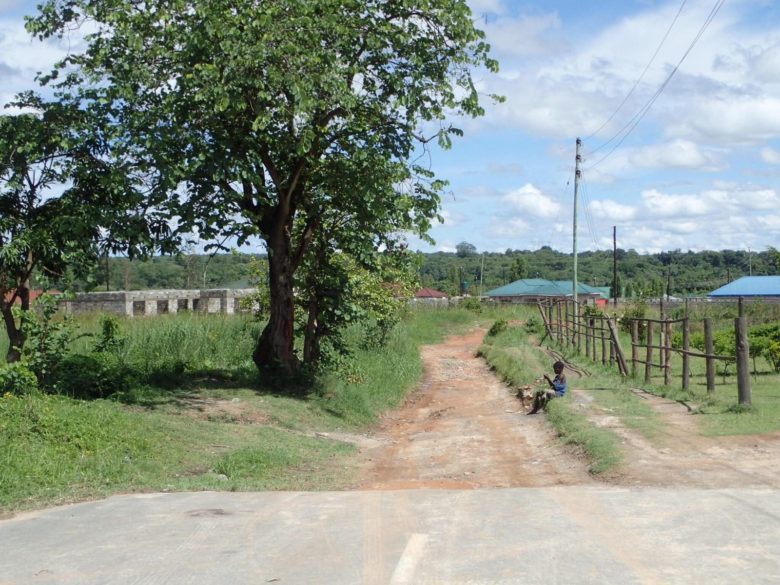
Kitwe, Zambia (Photo: Azusa Iwane)
What is the current state of poverty in Africa?
What is the situation of poverty in Africa? According to World Bank data, the poverty rates in 1996 were 40.3% in South Asia and 41.0% in East Asia and the Pacific. Considering that the poverty rate in Sub-Saharan Africa was 58.1% in 1996, the rates in South Asia and East Asia and the Pacific may seem lower; however, they are high compared with the global rate of 29.4% across all regions. Looking at the figures for 2005, there was a marked improvement: poverty rates in South Asia and East Asia and the Pacific declined to 33.7% and 19.1% respectively, pulling far ahead of Sub-Saharan Africa’s 50.0%. By 2013, the gap had become even more pronounced, with South Asia and East Asia and the Pacific at 16.1% and 3.6% respectively. The background to the substantial reduction in poverty in East and South Asia includes the rapid economic growth of India and China. Meanwhile, Sub-Saharan Africa’s poverty rate in 2013 remained high at 42.5%. Looking at the poverty gap ratio—an indicator of how severe poverty is among the poor—Sub-Saharan Africa registered 27.0% in 1996, 21.5% in 2005, and 16.5% in 2013 (※1).
We can see that the poverty rate in Sub-Saharan Africa has also been gradually decreasing, but it remains high compared with South Asia and East Asia and the Pacific.

Loading…
Volume of coverage on poverty in Africa
We have established that poverty rates in Africa remain high and the situation is serious, but how does this appear in news reporting? Focusing on the years 1995, 2005, and 2015, we examined how poverty in Africa was reported in Japan’s three major newspapers (Yomiuri Shimbun, Asahi Shimbun, and Mainichi Shimbun).
First, let’s look at the volume of reporting. Using “Africa” and “poverty” as keywords, we counted the number of articles extracted by search and, after excluding those not directly related to poverty in Africa, obtained the following counts.
Loading…
All three newspapers ran the most articles in 2005. We observed changes in the number of articles by month over the analysis periods, and aside from an increase in June and July 2005, there were no changes in volume common to all three years and all three papers. The increased annual total in 2005 is likely attributable to the spike in articles related to the 31st G8 Summit (the Gleneagles Summit) held from June to July. The summit prioritized poverty reduction in Africa and climate change, with particular attention to debt relief for Africa.
In years other than 2005, coverage related to poverty in Africa can hardly be called abundant. In 1995 and 2015, there were on average roughly two to three articles per month related to poverty in Africa. Coverage of Africa is limited in the news overall, and we found a similar trend in poverty reporting.
How the causes of poverty in Africa are reported
How, then, do these articles about poverty in Africa portray the continent? This analysis focuses on reporting about the causes of poverty. Counting the number of paragraphs that mention causes of poverty, we found 10 such paragraphs in 1995, 66 in 2005, and 20 in 2015. The total number of paragraphs across all articles on poverty was 184 in 1995, 942 in 2005, and 227 in 2015.
Aggregating the number of paragraphs that mentioned poverty countermeasures within the same set of articles reveals that reporting on causes of poverty was limited. For example, in 2005, when overall coverage increased, there were 642 paragraphs that mentioned poverty countermeasures in total, while only 66 paragraphs mentioned causes of poverty in the same year. The share of paragraphs on causes within the combined total of paragraphs on causes and countermeasures was only 9% to 20%. Causes of poverty were not a central topic in Japanese newspaper reporting; rather, there was a tendency to report more on countermeasures.
Loading…
Classifying the causes of poverty mentioned, we found that paragraphs referring to debt issues increased in 2005. This appears related to the Gleneagles Summit held in Scotland that year. The summit prioritized “Africa” and “climate change,” and among the Africa-related items, debt relief and similar issues were discussed. As a result, paragraphs on debt issues surged in 2005 within the articles analyzed.
Has Africa’s debt problem been resolved? After 2005, debt in the region seemed to decrease for a time. However, from around 2007 debt levels began to rise again, and by 2014 their total was estimated to be twice that of ten years earlier, according to one calculation. Did debt issues still play a central role in articles reporting causes of poverty in 2015? In fact, there was not a single paragraph that mentioned debt issues in 2015. The heightened focus on debt in 2005 was likely a temporary flurry prompted by the summit agenda. In other words, unless poverty and debt are discussed on platforms that attract major-power attention—like summits—these issues may not be deemed problematic in news coverage and consequently may not be reported.

A demonstration in Scotland bearing the message “Make poverty history” following the summit’s focus on debt issues (Photo: TED Conference / Flickr [CC BY-NC 2.0])
There are various issues underlying poverty in Africa. In this analysis, we classified these causes into two categories: internal factors such as environmental problems and corruption (※2), and external factors such as unfair trade and illicit financial flows (※3). We then categorized paragraphs mentioning causes of poverty according to these two criteria.
Across the three newspapers and analysis periods combined, there were 47 paragraphs referring to internal factors and 35 referring to external factors. Although debt problems can arise against a backdrop of endogenous issues—such as arrears in debt repayment—many countermeasures require exogenous change. Therefore, in this analysis we classified debt issues as external factors. There were 17 paragraphs about debt issues, accounting for about half of the external factors; nevertheless, in the actual articles on debt issues, we often saw writing that gave the impression that the causes of debt lay within African countries. Of the 13 articles in 2005 that described debt issues, 8 also mentioned dictators or corruption in African countries within the same piece, and 4 directly linked the background of debt problems to past dictators or dictatorial regimes. On the other hand, among the articles analyzed, none explained the direct link between exogenous problems and the background to Africa’s debt issues or reported on those relationships. In other words, news coverage can give the impression that debt issues, too, are poverty causes created by African countries themselves. Debt problems and debt crises arise when sovereign debts are not repaid as scheduled. The background to their occurrence is said to include “endogenous problems typified by a weak tax base, exogenous shocks beyond the control of developing-country governments such as declines in the prices of foreign-exchange-earning products or disasters, and currency/financial crises.” If we were to follow the lead of Japanese newspaper coverage and classify debt issues as internal, the totals would be 64 paragraphs for internal factors and 18 for external factors.
Among internal causes of poverty, the two most reported categories were corruption/political problems/malfeasance and environmental problems/natural disasters. Across all three years and newspapers, there were 18 paragraphs on corruption/political problems/malfeasance and 12 paragraphs referring to environmental problems/natural disasters.
Overall, Japanese newspapers more often located the causes of poverty in Africa within internal factors. Moreover, even for debt issues—which are also produced by external factors—coverage tended to link them only to endogenous problems. Can such reporting be said to capture the causes of poverty in Africa from multiple perspectives?
Are the causes of poverty in Africa found only within African countries?
So far, we have pointed out the possibility that reporting on poverty in Africa tends to locate causes within Africa itself. Are only endogenous problems responsible for creating poverty in Africa? Here, we look at what kinds of causes exist.
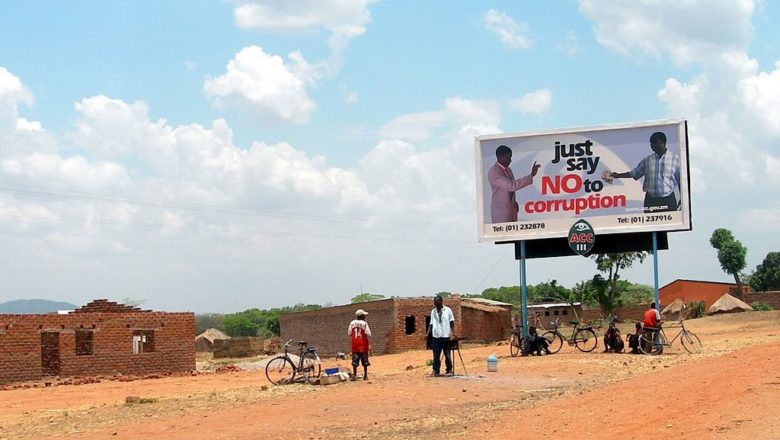
“Just say NO to corruption,” Chipata, Zambia (Photo: Lars Plougmann / Wikimedia [CC BY-SA 2.0])
There are cases in which events within a country—such as corruption, policy failures, infrastructure problems, disasters, and epidemics—trigger poverty in that country or prolong it. Of course, this does not mean there is no involvement from outside Africa behind these issues. In this analysis we conveniently referred to these as internal factors, but foreign companies may be complicit in politicians’ corruption, and international actors such as the World Bank and the International Monetary Fund (IMF) may be implicated in policy failures.
Furthermore, the politics and economic activities of other countries or relationships in the international community—i.e., actors other than African countries—can be direct causes of poverty in certain African regions or countries, or factors that prolong poverty. For example, tax havens and tax avoidance and evasion, whether legal or illegal, can lead to shortages in government revenue, thereby creating or prolonging poverty. In addition, despite being resource-rich, African countries—which tend to be placed at a disadvantage in dealings with foreign capital and in the international community—often cannot sufficiently participate in setting mining fees or prices for natural resources, resulting in an inability to reap adequate benefits from their own resources.
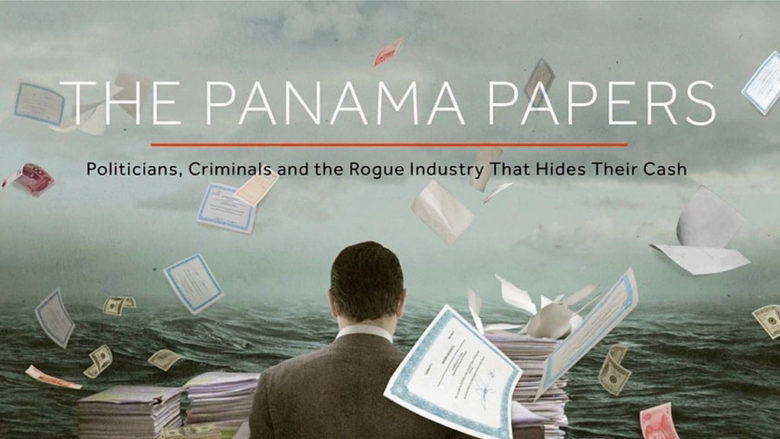
The Panama Papers exposed records of financial transactions that used tax havens (Photo: Sollok29 / Wikimedia [CC BY-SA 4.0])
Understanding the causes of poverty is indispensable for considering necessary countermeasures. Particularly in today’s Africa, taking measures against structurally created poverty is essential to its eradication. In that context, how might the kind of biased understanding of poverty seen in Japanese newspaper coverage affect the way poverty countermeasures are debated? This is something we intend to continue observing.
※1 The poverty gap ratio is an indicator focusing on the difference between the poverty line and the expenditures and income of the poor. It can also be described as a measure of the depth of poverty, assessing how severe poverty is among the poor.
※2 The internal-factor cause frame comprised nine items: infrastructure; environmental problems/natural-disaster damage; food and water shortages; population growth; low wages; lack of education; corruption/political problems/malfeasance; crime/terrorism; and disease/disability/death.
※3 The external-factor cause frame comprised seven items: unfair trade/exploitation; trade issues other than unfair trade; debt problems; tax havens; capital flight/illicit financial flows; issues in international finance; and conflict/war.
This article is based on Azusa Iwane (2018), “How is poverty in Africa reported? — A content analysis using Japan’s three major newspapers —,” International Public Policy, Vol. 22, No. 2.
Writer: Azusa Iwane
Graphics: Virgil Hawkins






「貧困を無くしたい」といった志の高い学生は周りにも多くいますが、その貧困の原因を知っている学生は私を含め多くないように思います。
先進国によるイベントなどが開催されないとメディアが貧困に注目しない現状の中で、貧困を始めとした様々な国際問題の原因をこのサイトで学ばせてもらっています。ありがとうございます。
私もこれが気になりました。世界の政治的エリートに問題提起をするはずのメディアが結局、後を追ってばかりでは・・・世界の問題が改善されることはありませんね。
貧困を一面的に解説する報道が、アフリカに対する偏見を助長することもあるかと思います。
アフリカに対する貧困のイメージはありますが、報道が少ないと、原因や詳細もわからないまま漠然と「貧困」というイメージのみを人々に与えてしまう気がしました。
また、貧困の原因よりもその対策の方が報道されているというのが興味深かったです。原因から目を背けることはできないのに、報道がこういう在り方なのは残念です。
原因を正しく理解しているから、対策も立てられるということは本当に感じています。外交や政策だけに関わらず、一般市民にも言えることです。例えば市民が貧困を作り出す構造への理解が進めば、市民レベルで貧困撲滅に向けて取れるアクションもあると思います。
貧困に関する報道は偏見を助長する危険性が高く慎重なリサーチをもとにした報道が必要ですが、一方で報道量を増やさねければ注目されることはなく、注目されるべきアフリカの貧困には「質と量」の点である種のジレンマがあるように感じています。
ですが正しい情報を届けることが報道に求められる前提的な責務であることは間違いがなく、このGNVの記事で指摘・疑問視されていることが広く浸透することを願います。
確かにアフリカは貧困だ、といった一側面だけを強調した報道が増えることは、偏見の助長につながるかもしれません。一方で、それらの偏見には貧困がつくりだされる構造を理解していないという問題もつきまとっています。そのため、情報の質の部分にも当たりますが、どのようなアクターがどのような形で関わっているのかといった問題の背景をきちんと理解する必要があると考えています。そのような情報の量が増えることでアフリカの貧困に対する見方が変わるのではと思います。