
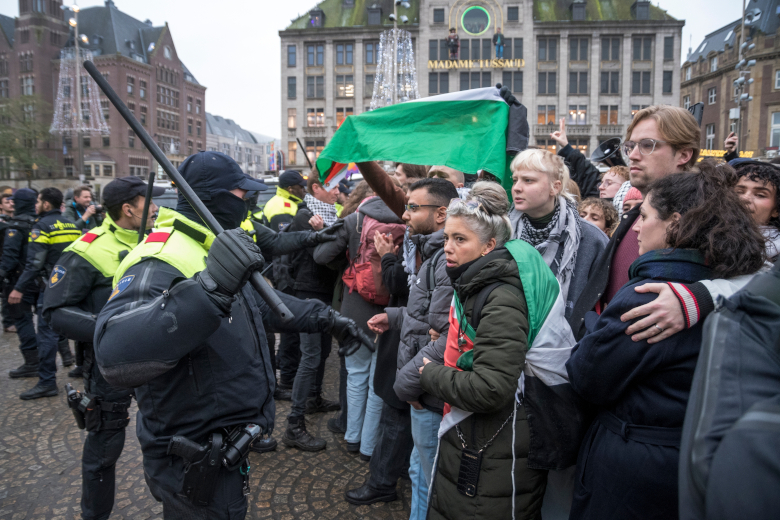
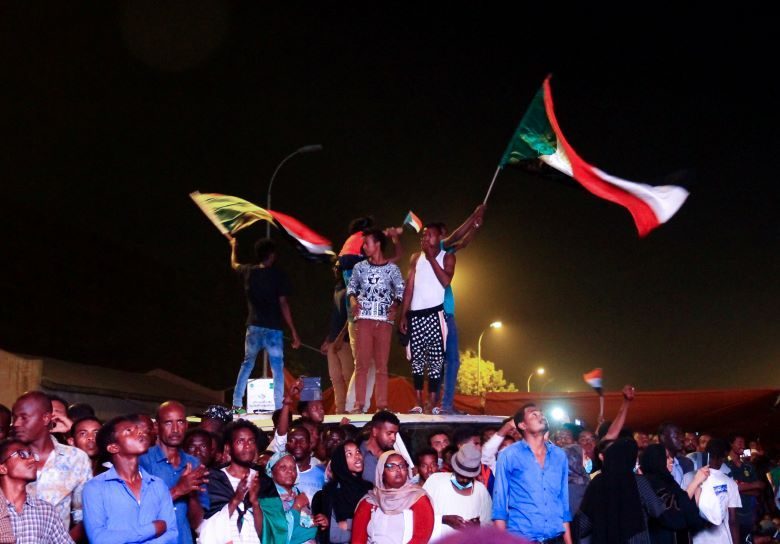
November 25, 2010. On Independence Square in Paramaribo, Suriname’s capital, people from diverse cultural backgrounds gathered to celebrate the 35th anniversary of independence from Dutch colonial rule. Newly elected President Desi Bouterse pledged further development and prosperity for the country, and in fact the economy was doing well. But seven years later, people packed the square and raised their voices in protest. What had happened to Suriname in less than a decade, and what lies ahead for the country?
Basic facts about Suriname
Situated on the northeastern coast of South America, Suriname is the continent’s smallest country, bordered by French Guiana to the east, Guyana to the west, and Brazil to the south. Its population is about 570,000, and it ranks sixth in the world for lowest population density. Some 90% of its land is covered by the lush Amazon rainforest, making it the most forested country in the world. The vast majority of people live along the coast, about half of them in the capital, Paramaribo. The country is also the 17th most resource-rich in the world. About 70% of its trade—the bulk of its economy—depends on exports of bauxite, gold, and oil, which account for 15% of Suriname’s GDP.
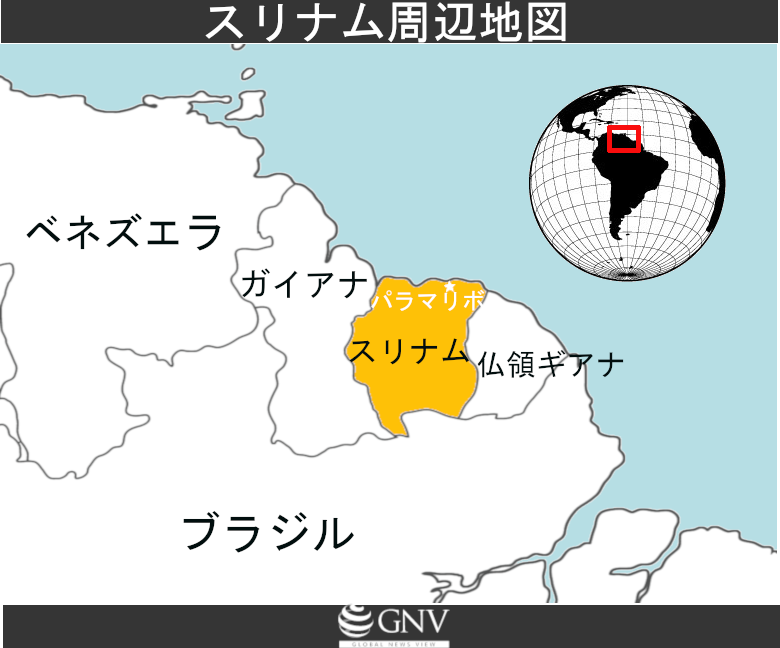
Suriname was initially colonized by the British, but in 1667 it was exchanged for New Amsterdam (present-day New York) between Britain and the Netherlands, after which it remained under Dutch rule for roughly 300 years until independence in 1975. Even after independence there was a period of more than ten years when a military dictatorship took power. During this period of warlord rule, a conflict broke out that contributed to the country’s devastation; democracy was restored in 1991.
Today, Suriname’s demographics are among the most ethnically diverse in the world. Under Dutch rule, Africans were forcibly brought as slaves; after slavery was abolished in 1863, people from Britain, India, and Java (then part of the Dutch East Indies, present-day Indonesia) arrived as indentured laborers. As a result, people with roots in the above regions now form the majority, and Indigenous people account for only 4% of the total. The ethnic composition, in descending order, is Indo-Surinamese (27.4%); Maroons (※1) and Creoles (※2), both of African origin (21.7% and 15.7%); and people of Javanese origin (13.7%). In addition, immigrants from China (about 1.5% of the population) have increased since the latter half of the 20th century, and more recently Brazilian miners (estimated to account for about 3.5% of the population, most of them undocumented) have also been on the rise.
This cultural diversity is regarded as an important part of the national identity. A telling symbol is the sight of synagogues and mosques standing side by side with homes in the city center of the capital. President Desi Bouterse himself has Creole, Dutch, French, and Chinese roots, and in his 2015 inaugural address he stated that ethnic backgrounds can be a source of richness and prosperity rather than division.
His ethnic roots and forward-looking words give the impression of a leader well-suited to a multicultural nation. But what about the reality? The Guardian, for example, has called him “the world’s most controversial leader.” There are reasons for that.
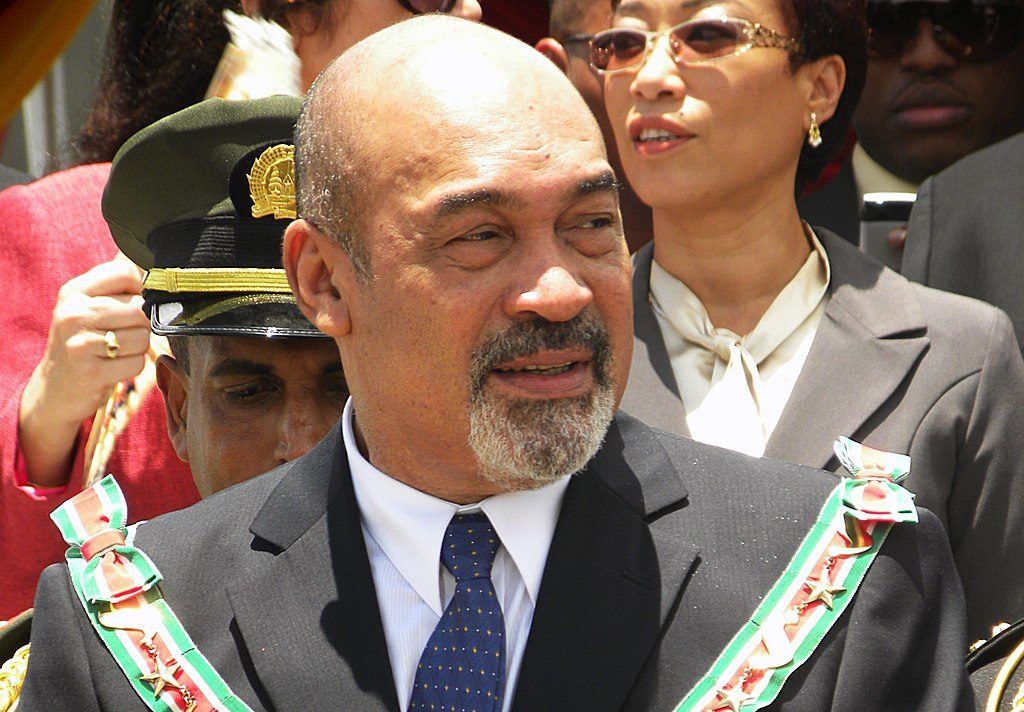
President Bouterse (Photo: Pieter Van Maele/ Wikimedia Commons [CC BY 3.0])
Suriname after independence and Desi Bouterse
If there is one person who has played the most consequential role in Suriname’s history, it would, by unanimous agreement, be Desi Bouterse. But not in a context to be proud of.
First, he has deep ties to drugs. In a 1999 Dutch trial held in absentia, he was convicted of importing cocaine and sentenced to 11 years in prison, and in 2011 WikiLeaks revealed that he was involved in the drug trade at least until 2006. There is also testimony that he exchanged weapons and drugs with the Colombian armed group FARC. The European police agency issued an international warrant for him, but Suriname refused to extradite Bouterse to the Netherlands.
Second, he bears heavy responsibility for human rights abuses. Bouterse was regarded as a key figure because he was the de facto national leader during the conflict that devastated Suriname and the commander of the military. This conflict was an uprising that began in 1986 when Bouterse’s former bodyguard formed a Maroon guerrilla command. The main issue was the human rights of Maroons living in the eastern jungle of Suriname, but it was also a struggle over control of the jungle, a critical corridor for cocaine smuggling. During the Suriname conflict, Bouterse destroyed schools, infrastructure, and government buildings and burned Maroon villages. There were also massacres in which hundreds of Maroons were killed.
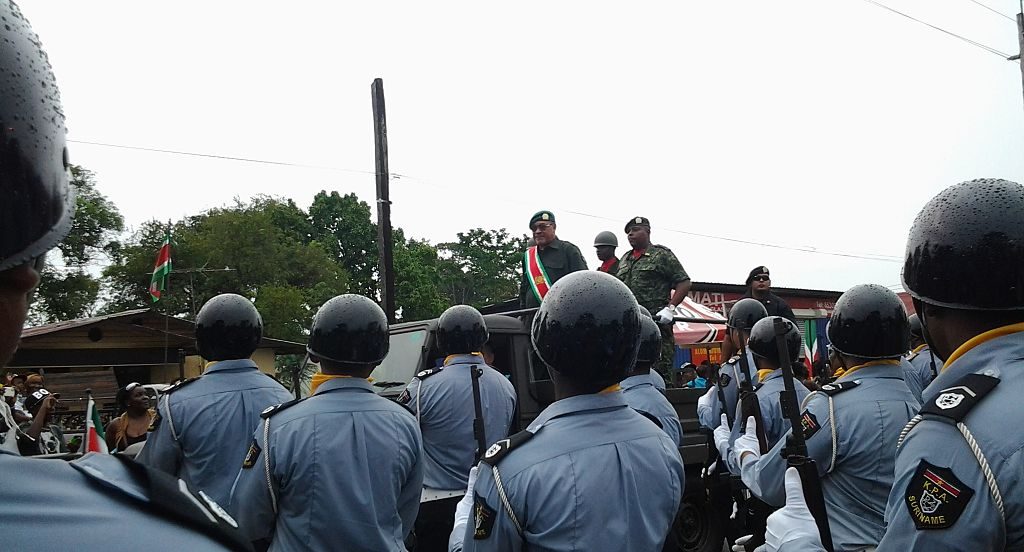
The Surinamese Army and Desi Bouterse (Photo: Sanoesoe101 / Wikimedia Commons)
In 1982, the notorious “December Murders” took place. President Bouterse is said to have been involved as the principal figure in this incident as well. In 1980, shortly after independence, Bouterse, then a sergeant major in the army, led a group of officers in a coup and imposed a dictatorship. Two years later, 15 leaders of the pro-democracy movement were tortured and executed.
Bouterse has acknowledged political responsibility for the incident, but to this day he has not been held legally accountable. Two things stand out in particular: contradictory testimony and the enactment of an amnesty law.
The contradictory testimony refers to Bouterse’s claim, when the trial over the December Murders opened in 2007, that he was not present at Fort Zeelandia, the scene of the killings, versus the conflicting testimony of Ruben Rozendaal, one of the soldiers later charged, who said Bouterse gave the order to kill at Fort Zeelandia and personally shot two people himself.

Fort Zeelandia in Paramaribo (Photo: Rijksdienst voor het Cultureel Erfgoed / Wikimedia Commons [CC BY-SA 4.0])
Next, the amnesty law. Since the trial opened in 2007, Bouterse had been petitioning for amnesty for the perpetrators. In the Surinamese government, immediately after Rozendaal’s testimony in 2012 and just a week before the verdict was to be handed down, an amendment was made to expand the existing amnesty law. This law granted amnesty for 20 crimes committed at the end of the Suriname conflict, including the December Murders. The bill was passed. However, because the law was clearly a prohibited interference with an ongoing trial and unconstitutional, there was a backlash both inside and outside Suriname. Foreign governments, the United Nations, organizations such as Human Rights Watch, and the Inter-American human rights system responded strongly.
To this day, Suriname does not have a constitutional court. As a result, the constitutional issue of the amnesty law was left unresolved, the trial over the December Murders resumed, and in 2017 prosecutors requested a 20-year sentence for Bouterse. But under the authority of the presidency, he refused to accept any guilty verdict, saying, “By God’s will I am president; who can hand down a judgment to drive me out?” He has avoided imprisonment by remaining president. By staying in office, he is the one person with the power to obstruct a court-martial and continue to shut out Suriname’s democratic process.
The new Bouterse administration
Given all this, you might wonder how this man won the 2010 and 2015 elections. How did he win popular support?
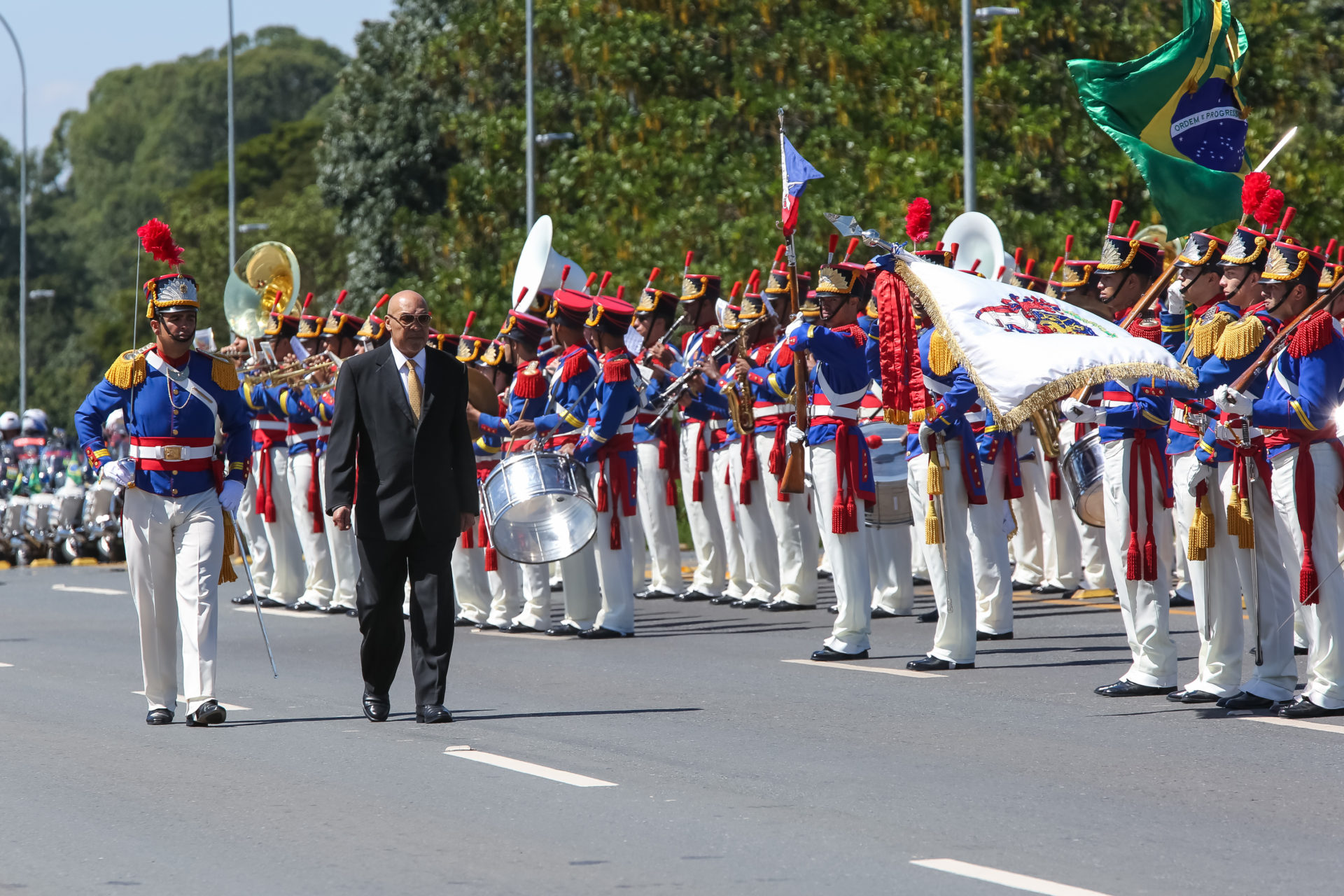
President Desi Bouterse attending a ceremony (Photo: Palácio do Planalto/ Flickr [CC BY-NC-SA 2.0])
There had been three administrations before Desi Bouterse was elected again. But Surinamese citizens were dissatisfied with each of them over foreign relations, economic conditions, high crime rates, and other issues, including corruption among politicians and ethnically biased political dealings. To such a public, Bouterse—charismatic, with multiethnic roots and delivering unifying, rousing speeches—was embraced as a figure of hope.
Beyond his ethnic background and charisma, one factor in Bouterse’s popularity was his identification of an “enemy.” He drew a contrast between himself and the former colonial power, the Netherlands, as well as former presidents who pushed policies that favored certain ethnic groups. As a result, the motto “één volk, één natie (One people, one nation)” gained wide acceptance and attracted support especially among young people.
Suriname in an international context
Two points are key to understanding Suriname’s current international relations. First, Suriname’s economy is increasingly dependent on foreign companies; second, since 2010 the country has effectively shifted its foreign policy orientation.
Suriname’s economy relies heavily on mining resources. This means it is extremely vulnerable, directly exposed to fluctuations in international commodity prices. In 2013, falling global prices and commodity prices dealt a major blow to Suriname’s economy. The government was forced to respond to overcome the situation, but conditions did not improve, and in 2016 the country slipped into a full-blown recession. It was clearly on the brink of economic collapse. How did it raise funds at the time?
Historically, Suriname has had strong ties with the Netherlands even after independence. Dutch is the official language, trade between the two countries is active, and as many as 350,000 people of Surinamese origin—fully 60% of the total Surinamese population—now live in the Netherlands. The country had also relied heavily on Dutch foreign aid. However, Bouterse’s victory in the 2010 presidential election was unacceptable to Western countries—especially the Netherlands—and bilateral relations deteriorated. The 2012 amnesty law further accelerated the rupture. Although development aid initially continued, reaching US$26 million per year, the Netherlands decided to suspend aid in response to the law.
Having lost its main source of aid, Suriname sought to escape recession and in the spring of 2016 decided to approve a 24‑month, US$407.8 million Stand-By Arrangement (SBA) with the IMF. One of the conditions was the introduction of a value-added tax and tariffs, measures that were unpopular with the public. For Bouterse, whose fall from the presidency could mean prison, a public backlash was the greatest fear. After receiving the first US$81 million disbursement, he withdrew from the agreement. That same year, he secured funding from the Islamic Development Bank (IDB). The terms required the introduction and promotion of Islamic banking and finance in exchange for investment of about US$178 billion—more than three times the amount promised by the IMF.
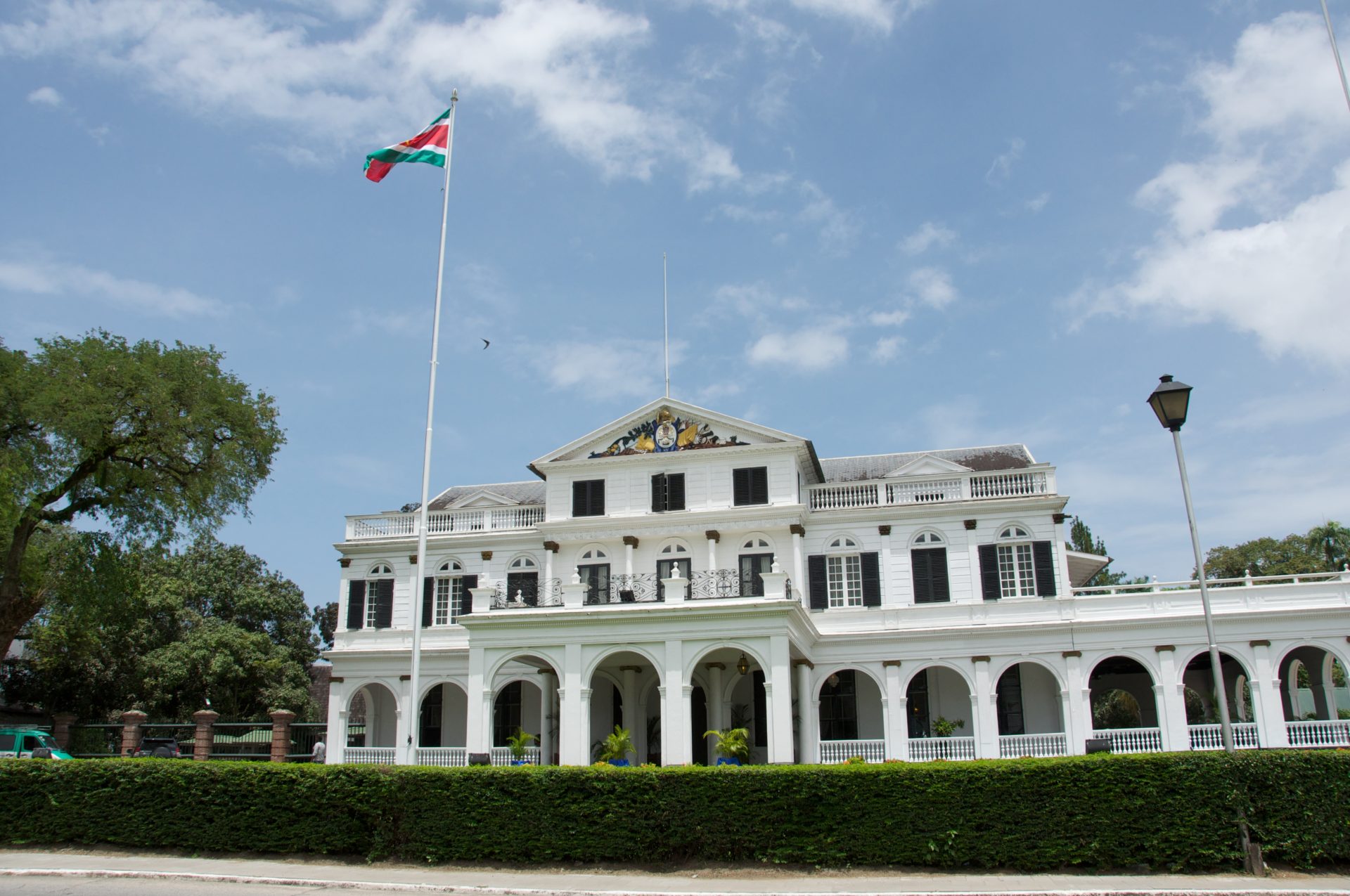
The Presidential Palace in Paramaribo, Suriname (Photo: teachandlearn/ Flickr [CC BY-NY-SA 2.0])
Suriname has also been deepening ties with the United States, Canada, Russia, and India. The rapprochement with China is particularly striking. China has risen across the globe over the past decades, and Suriname is no exception. China has built a great deal, quickly and proactively—from infrastructure, shops, and homes to a new headquarters for the Ministry of Foreign Affairs. It was one of the first countries to increase foreign aid when Suriname faced difficulties; it offered low-interest loans during the recession, as well as military aid and support for renewable energy development.
At home, while some express gratitude and admiration for China’s assistance, others complain that Suriname is becoming a de facto Chinese colony. Low-wage labor is flowing in, and Chinese immigrants tend to be relatively favored within the country.
Despite aid and investment from China, Suriname’s economy continues to worsen. By late 2017, the Central Bank of Suriname was on the verge of collapse, prompting warnings from international credit rating agencies. For example, the U.S. rating agency Moody’s described Suriname’s external borrowing in February as “highly risky” and downgraded the country.
Outlook for Suriname
Suriname is currently on the brink of economic collapse. Ecotourism and the diaspora have been cited as possibilities for overcoming the crisis. As for the latter, of a total of 1 million people of Surinamese origin, 450,000 live abroad. Most are wealthier than those inside Suriname and feel a strong attachment to their country and people. In fact, about US$1,200 per month is sent to families in Suriname.
Measures against political corruption—an underlying cause of the economic crisis—are also urgently needed. Considering that Bouterse faces imprisonment after his term ends, the situation is unlikely to improve immediately. The presidential term is five years. We will need to watch developments closely.
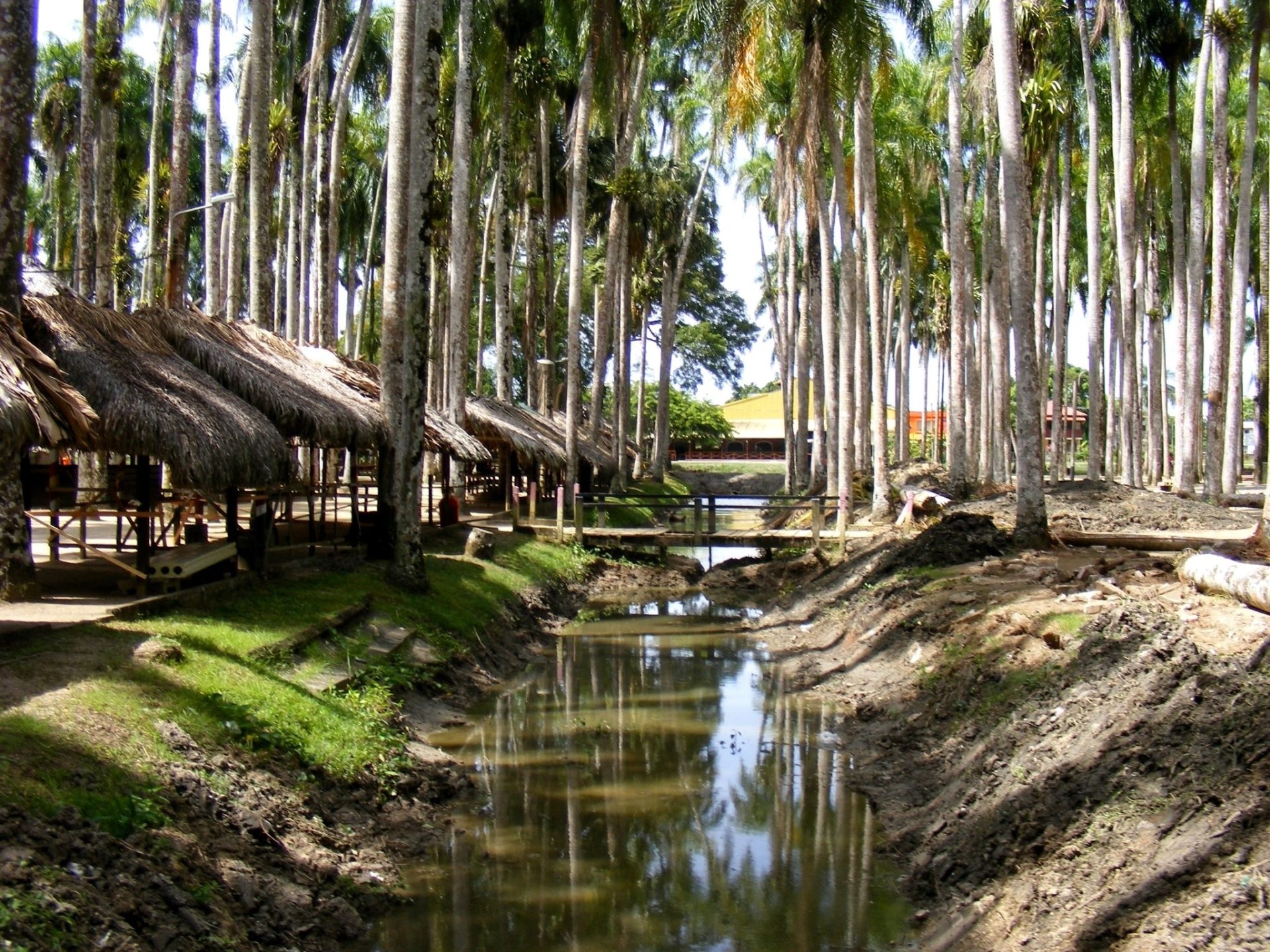
Paramaribo (Photo: Георгий Долгопский / Wikimedia Commons [CC BY-SA 3.0])
※1 Maroons: descendants of enslaved people who escaped from plantations and came to Suriname’s hinterland
※2 Creoles: people descended from Europeans (mainly Dutch) who lived there during the colonial period and from African slaves
Writer: Dennis Boor
Translation: Yuka Ikeda
Graphics: Eiko Asano



恥ずかしながらスリナムという国を初めて知ったのですが、非常に興味深く読ませて頂きました。
ここまで悪事を暴かれながらも大統領の立場から失脚しないのは、いろいろな要因があるのでしょうが、やはり大統領に与えられた権力の大きさが一番の問題なのでしょうか?同国の政治体制が気になりました。
選んだ国民の責任……と言ってしまえばそこまでですが選挙というものの難しさを改めて考えさせられます。
コメントありがとうございます。質問に返答させていただくと同国の政治体制は立憲共和制で、やはり大統領の権力の大きさは無視できないものがあります。現大統領が2期連続当選していることに関しては、カリスマ性によるところも大きそうです。とはいえ、2015年5月25日の国会議員選挙では、与党である国民民主党(NDP)が、ボーターセ氏が自動的に大統領となるほどの圧勝ではなく、国会による指名によって同氏が2期目の大統領に選出されたことをからは、現在の与党を支持しない人々も一定数存在していることがうかがい知れます。
スリナムという国があることも知らなかったので、知識を広げるきっかけとなる記事でした。
経済危機を脱し、スリナムの人々が平和に暮らせる日が来ることを願います。
ここまで人権侵害を繰り返しているにもかかわらず、大統領として政治を行い、逮捕されないという事実に非常に驚きました。今回の記事でスリナムについて初めて知りましたが、このように政治腐敗が続く国が世界にはたくさんあり、その原因が国民にもあると思いました。「敵」を作り、内と外を作ることでナショナリズムを仰ぐ政治は世界の至るところで見られ、多くはそれに乗せられているのが現状です。今後グローバル化が進み、多様性の尊重が大切になってくる中で、国民の価値観も少しずつ変わっていくことを願いたいです。
スリナムは日本ではほぼ報道されていないと思うので、全貌が理解できて興味深かったです。読み応えがありました。
大統領が、どんなに酷いことをしていてもカリスマ性によってその地位に居座り続けているとなると、一般的に難しい問題だなと感じます。
経済危機に関しては、日本ももっと注目しておくべきではないかと思いました。
コメントありがとうございます。外務省のデータによると、2017年には日本はスリナムに対して47.2憶円の輸出を行っています(主な輸出品目は自動車)。経済危機が悪化すれば少なからず影響を受けることが予想されます。
参考:外務省「スリナム基礎データ」
https://www.mofa.go.jp/mofaj/area/suriname/data.html
どれぐらいの人々がボーダーセの悪事を容認したうえで彼を支持してしまったのか気になりました。
私もスリナムという国家の存在自体を知らなかったので大変勉強になりました。
コメントありがとうございます。ある調査によると2015年の時点でボーターセ氏に対する支持率は、投票者のうち42%だったという結果が出ています。
参考:The economist, “Suriname”
http://country.eiu.com/article.aspx?articleid=1990558783&Country=Suriname&topic=Politics&subtopic_5