
Seventeen years have passed since the 2001 September 11 attacks in the United States, yet interest in terrorism remains high. Terrorist attacks in advanced countries—France’s coordinated attacks, Germany’s Christmas market, and a concert venue in the United Kingdom—drew major attention, and it is still fresh in our memory that “terrorists plunged the world into fear.” So what about armed conflicts, which are far more destructive than terrorism? Compared with the anxiety of not knowing when we might be caught up in the terrorist incidents that occur “one after another” in developed countries, do conflicts feel like events in faraway countries? Is this tendency related to news coverage? We analyze how information about conflicts and terrorism is delivered to Japanese readers by newspapers.
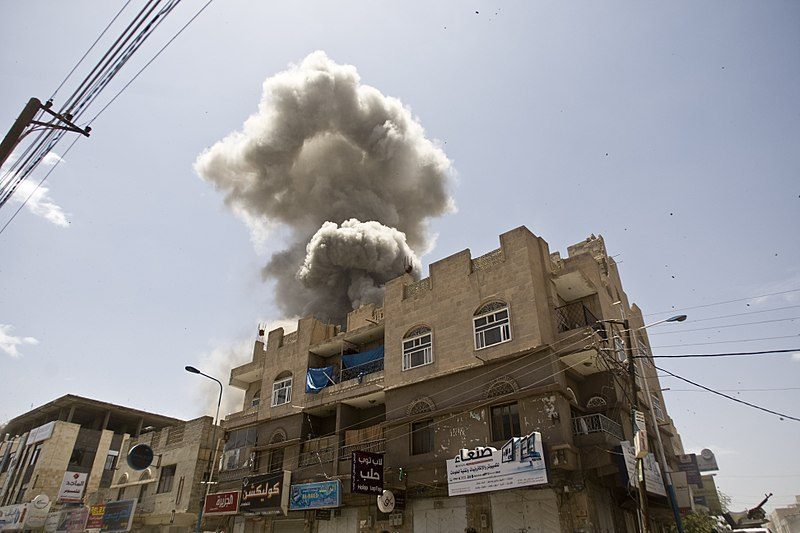
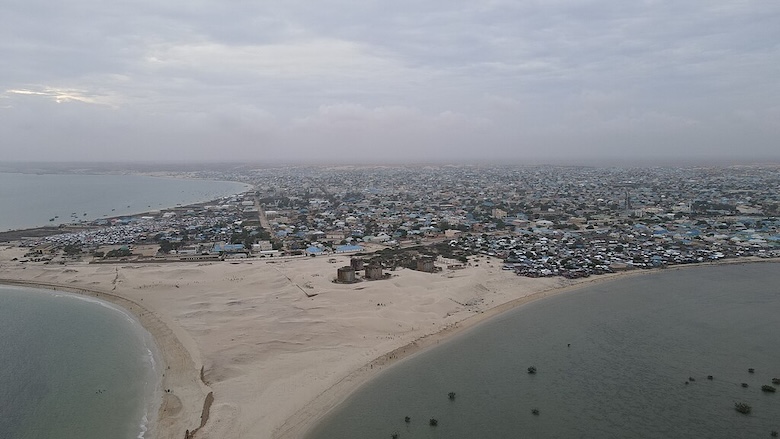
Sanaa, the capital of Yemen, bombed by Saudi Arabia (Photo: fahd sadi /Wikimedia Commons [CC BY 3.0])
Conflicts and terrorism as seen through volume of coverage
We will analyze the attention given to conflicts and terrorism based on the volume of coverage using two charts. First, we ranked by character count the coverage of conflicts and terrorism by country reported by the Yomiuri Shimbun over the course of 2016. On the left are the total death tolls for each conflict/terror incident in 2016.

Looking at this, we see that except for Syria in first place, the top spots are occupied by terrorism. Belgium in second place consists mostly of coverage related to the Brussels attacks of March 2016. “Terrorism in the United States” ranked third, but most of the topics covered were not about attacks that actually occurred; they concerned U.S. counterterrorism policy. Fourth-place France included not only the Nice attack of 2016 but also continued extensive reporting on the 2015 coordinated attacks in Paris.
Next is the reverse: a ranking of conflicts and terrorist incidents with the highest death tolls. The volume of coverage is shown on the right, so please compare it with the previous chart.

What we would like you to feel from comparing the two charts is that, except for Syria, terrorism is covered far more extensively than conflicts whose scale of damage is overwhelmingly larger. For example, Belgium—among the most covered terror cases—had 35 deaths and was covered in 36,000 characters, whereas the conflicts in Mexico and Northern Central America (El Salvador, Honduras, Guatemala), where battles with drug cartels and gangs killed 39,000 people—1,200 times the toll of that terror attack—and the conflict in Sudan, where 3,500 people died, were not reported even once during the year.
Furthermore, looking at timing, while conflicts receive only this much coverage over the course of an entire year, tens of thousands of characters are devoted to terrorism within just a few days after an incident. Beyond the charts, we also found that when attempted attacks occur in countries geographically close to Japan, such as Indonesia and Malaysia, they often make the papers as noteworthy events. In other words, even when an attack is foiled and there is no actual damage, the mere fact that it is labeled “terrorism” makes it more likely to be reported.
The unseen dead
As is easy to infer from the contrast in death tolls in the charts, conflicts inflict overwhelmingly greater damage on a country than terrorism. Terrorism destroys only a very small portion of buildings or facilities and causes far fewer deaths than conflicts, whereas conflicts destroy everything—politics, the economy, infrastructure—and needless to say, result in hundreds or thousands of times more deaths than terrorism. The reason the death tolls for conflicts are shown only as estimates in the earlier chart is that the numbers are too high to count; in conflict zones where media oversight does not reach, even accurate records of deaths are often not kept.
The chart counts only direct deaths from violence, but if we include deaths caused by the many other problems that conflicts trigger, the numbers climb even higher. For example, in Somalia and in Nigeria—not only violence against civilians perpetrated by armed groups such as al-Shabaab and Boko Haram but also indirect deaths from infectious diseases that spread due to the collapse of public health functions claim many lives, and most people who die in conflicts do so from these indirect causes. In Yemen, for instance, the destruction of infrastructure such as water and sewage systems worsened sanitary conditions, and reportedly 1 million people—said to be the most since World War II—were infected with cholera. Conflicts also affect other countries’ societies and economies as refugees forced from their homes flow into neighboring states. Taking the Democratic Republic of the Congo as an example, in 2016 about 2.68 million people were displaced from their homes, of whom about 450,000 were refugees forced to flee abroad; many of these people end up in refugee camps set up along neighboring countries’ borders and live there for years.
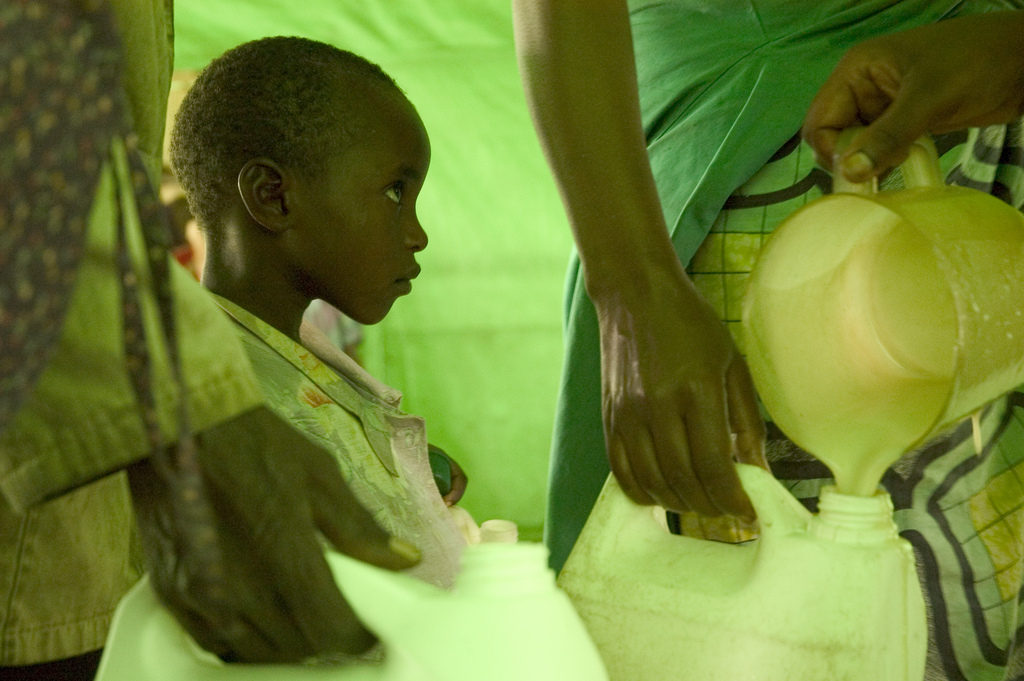
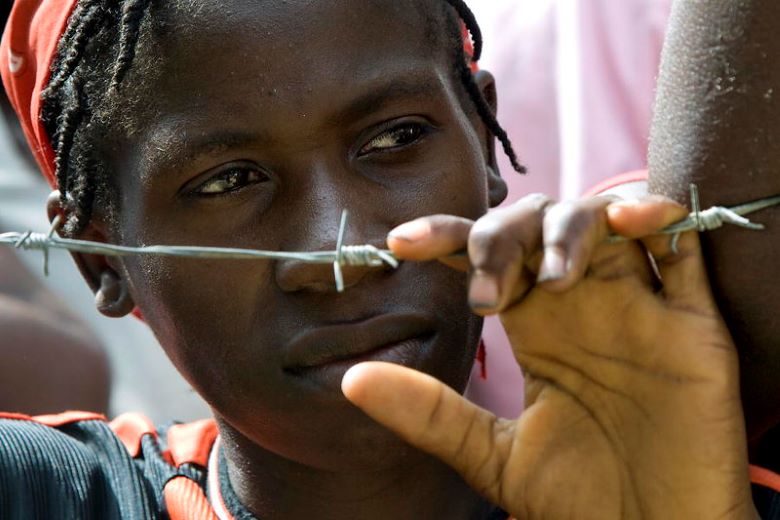
A refugee child from the Democratic Republic of the Congo living in a refugee camp (Photo: Elisa Finocchiaro /flickr [CC BY-NC 2.0 ])
Terrorism draws attention; conflicts do not
Why, then, are conflicts—which so profoundly reshape countries and people—given less attention than terrorism? Several mechanisms in news coverage may be at work. First, note that countries where the most-covered terror incidents occurred in the first chart include many advanced countries, such as Belgium, Germany, and France. These countries resemble today’s Japan in terms of high living standards and the higher likelihood of terrorism than conflict within their borders. They are also familiar as trade partners and tourist destinations. Japanese audiences can more easily picture events in these relatable advanced countries than in the poorest nations. In other words, people empathize more readily with the fear of a terror attack in a developed country than with the misery of conflicts in the poorest countries. Looking again at the first chart, terrorism in Bangladesh, a developing country, was also covered extensively—likely because Japanese nationals were among the dead and injured in that attack.
Alongside living standards and ties in trade and tourism, the placement of foreign correspondents is another major factor reducing coverage of conflicts. We examined this issue in detail in a previous article, but to summarize: few bureaus are placed in Africa, and the few that exist are geographically far from conflict zones with inadequate infrastructure, making it much harder for correspondents to rush to the scene compared with terror incidents in cities in Europe and elsewhere. This is another reason conflicts receive less coverage than terrorism. For the same reason, terror attacks in advanced countries are more likely to be reported than those in developing countries; for that, please see a previous article.

The remains of a car used as a bomb in Baghdad, Iraq (Photo: Jim Gordon /Wikimedia Commons [CC BY 2.0])
Is terrorism “rare”?
A final reason why terror incidents in developed countries draw such great attention is that the media prefer “unexpected events.” As we have seen in the charts, terrorism in advanced countries has been prominently covered. But is terrorism really that rare? Judging only by coverage, it may appear that terror attacks happen “one after another” only in advanced countries, but in reality, terrorism is an everyday occurrence in conflict zones. In Syria, Somalia, Iraq, and Nigeria, bomb attacks are common. In Mexico and across Latin America’s drug-related conflicts, terror tactics are also used as tools of intimidation. Terrorism and conflict are inseparable. However, because media trade in “surprise,” when an explosion occurs in a place where blasts do not usually happen—like developed countries—coverage surges; conversely, the more routine the explosions in a place, the less coverage it receives—a bitter irony.
The media are terrorism’s “oxygen”
Terrorism, as a form of violence, aims for anti-government forces that trigger sensational events to attract public attention through the media, stoke fear among the masses, and assert their presence in society. Conversely, when the media rush to the scene and sensationally broadcast the horror, they amplify what is in fact relatively limited damage and make weaker perpetrators seem more terrifying than they are—entities that “plunge the world into fear.” Sadly, today’s coverage plays right into the hands of terrorists who commit attacks to say “look at us,” making the media the “oxygen” of terrorism and helping terrorists survive. A study has even found that the more coverage there is after an attack, the more likely additional attacks become, suggesting that media reporting may encourage terrorist acts.

Mass media rushing to the scene of the Brussels, Belgium terror attack (Photo: LeMecChat77 /Wikimedia Commons [CC BY SA 4.0])
I am not saying we should not report on terrorism. I wish to point out the imbalance in coverage that, depending on the topic, embellishes some events and makes them seem bigger than they are, while treating others with what looks like indifference. In the current media environment, it is hard to say that the level of coverage reflects the true scale of harm caused by conflicts. Terrorism in countries similar to Japan is certainly a threat, but that does not mean we should treat conflicts in distant countries as someone else’s problem. In an acceleratingly globalized world, Japan cannot claim to be entirely unaffected by distant conflicts. Simply keeping in mind that the world we see through the media carries such biases may change how the world looks when we watch the news.
Writer: Yuka Komai
Graphics: Yuka Komai




ひどいですね。
バランスがまったくとれてない報道で、現実が全然見えてこない。
「テロ」が比較的に小さいな問題なのに、報道がこのように武力紛争を忘れ、テロに夢中になると、
テロの発生率にも影響するし、紛争への対応のなさにも貢献してしまう。
紛争で命を落とす人の多くが「間接死」が原因であることに驚きました。現代医療の技術があれば防げるようなことが原因で亡くなっている人もいるのだろうと思います。適切な報道がされることが他国の支援を得ることにも繋がると思うので、バランスのとれた報道がなされることを願うばかりです。