
There are approximately 1.1 billion smokers worldwide. It is also said that half of smokers die due to tobacco. Today, tobacco is a major cause undermining health. However, the problems tobacco causes around the world are not limited to health impacts. Here, we will look at various tobacco-related issues around the world and see whether they are being reported.
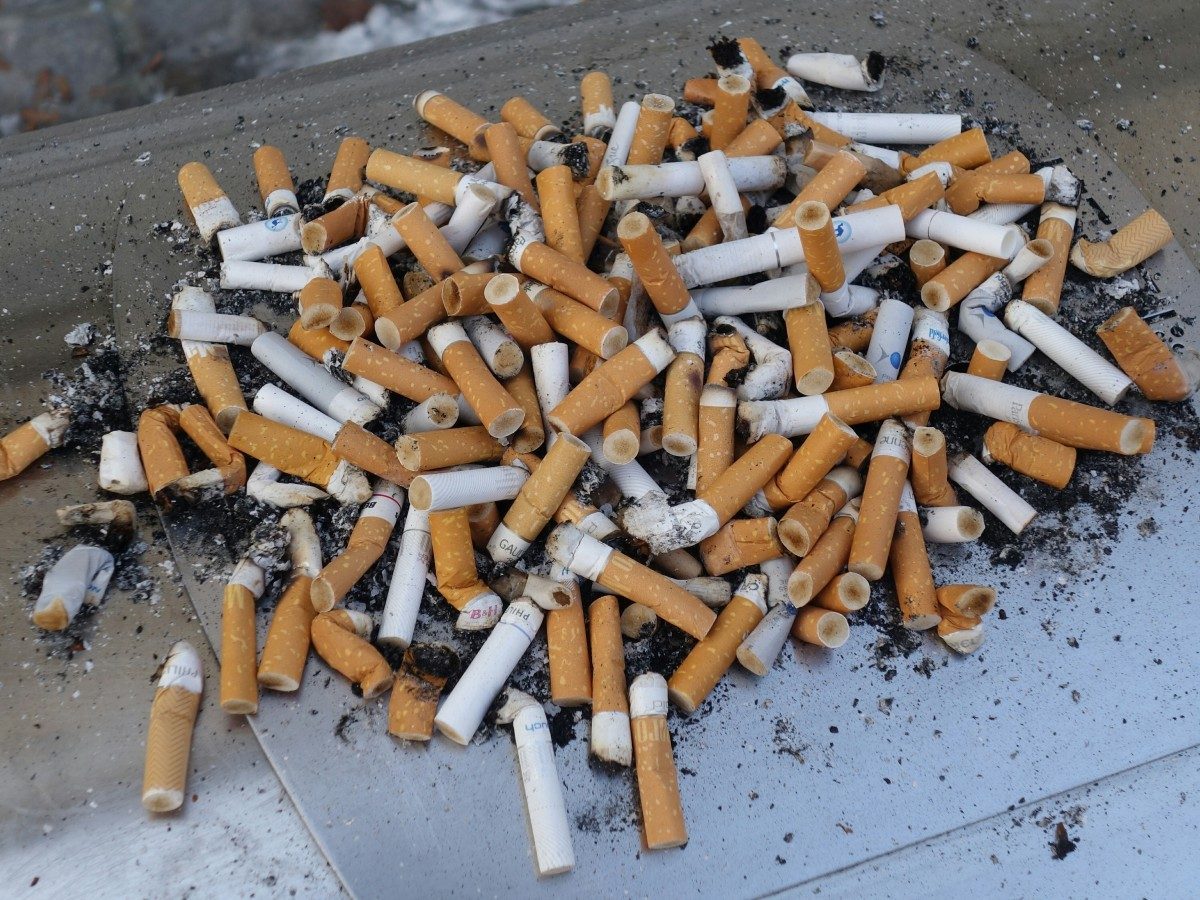
A large number of used cigarettes (Photo: PxHere)
Basic facts about tobacco
Before we get to the main topic, let’s review some basic information about tobacco. Tobacco is made from plants of the genus Nicotiana in the nightshade family. According to FAO statistics, as of 2016, 6,664,238 tons of leaf tobacco were produced. The main producing countries are shown in the graph below. China overwhelmingly leads in production. Among the top 10 are four countries in Asia, three in Africa, and three in the Americas. By contrast, Brazil exports the most. Moreover, the ratio of exports to production exceeds 90% in Zimbabwe and Argentina.

Loading…
FAO (Food and Agriculture Organization of the United Nations) statistics used to create this
Leaf tobacco is grown by farmers in many countries. The manufacturers that process it and sell it as tobacco are increasingly oligopolistic. As of 2016, five tobacco companies accounted for about 80% of the global market. The five are China National Tobacco Corporation (China), Philip Morris (United States), British American Tobacco (United Kingdom), Imperial Tobacco (United Kingdom), and JT (Japan Tobacco). China National Tobacco Corporation is a state-owned enterprise, and most of its sales are within China. Therefore, in practice, the other four companies hold the global share.
Health problems caused by tobacco
When you think of the problems with tobacco, health likely comes first to mind. According to WHO (World Health Organization), tobacco kills more than 7 million people every year. Of these, about 890,000 die due to secondhand smoke. Tobacco smoke contains many harmful substances. As a result, it causes various illnesses, including many cancers such as lung and pharyngeal cancers, as well as cardiovascular and cerebrovascular diseases. In addition, manufacturers add as many as 599 additives to cigarettes beyond leaf tobacco, and many of them are thought to increase addictiveness.
These days, more people are using e-cigarettes instead of conventional cigarettes. The reason is that e-cigarettes are said to be less harmful than traditional cigarettes. In fact, there are reports that they contain fewer carcinogens and have less impact on people exposed to secondhand vapor. However, much remains unknown about their long-term effects on the body. Recent research has shown that e-cigarette vapor may destroy immune cells.
Children deprived of health and education in tobacco fields
It is not only smokers and those around them who lose healthy lives because of tobacco. Producers are also victims. At the root lies the problem of poverty. When major tobacco companies procure leaf tobacco, there is a system in which they evaluate the quality of the harvested leaf and set the price. In other words, the buyers of tobacco leaves decide how much to pay the growers. This structure leads to exploitation of producers. Because major companies set low prices, farmers cannot earn sufficient income. As a result, struggling farmers are forced to mobilize their own children to work in the fields.
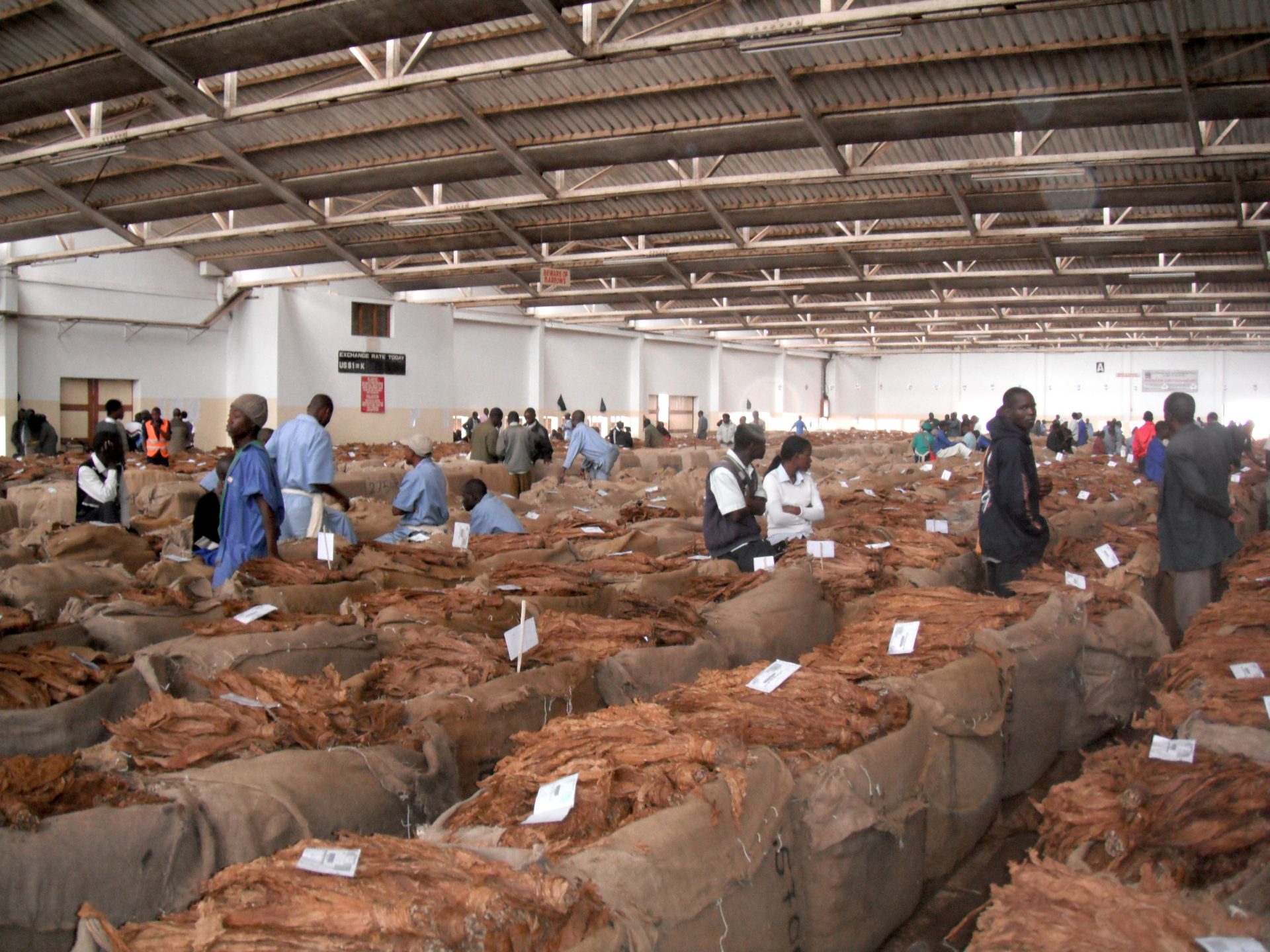
Leaf-tobacco auction in Lilongwe, the capital of Malawi (Photo: Guillaume Kroll/Flickr [ CC BY-NC-ND 2.0])
Child labor on tobacco farms is a serious issue. The working environment for children is very dangerous. Many children working in tobacco fields suffer from symptoms such as nausea, headaches, and dizziness. These symptoms among producers are known as green tobacco sickness. Because nicotine is absorbed through the skin, they can suffer acute nicotine poisoning. There are also reports that prolonged exposure to nicotine during adolescence can adversely affect brain development. Leaf-tobacco producers of all ages face these health problems, but the negative impact on vulnerable children is particularly severe.
Child labor also robs children of educational opportunities. Some children cannot attend school because they have to work on tobacco farms. Among producing countries, there are poor countries that cannot escape exploitation and poverty because children are unable to receive an education. One such country is Malawi.
Malawi’s economy is supported by tobacco exports. It exports more than 98% of its low-priced leaf tobacco to developed countries, most of which goes to Philip Morris, British American Tobacco, and JT International (Note 1). Sales of this tobacco account for 70% of national revenue. Given such an economic situation, children are forced to work to mass-produce cheap tobacco. In response to this situation, the Malawian government is trying to address child labor, including by signing an international convention banning child labor. Major tobacco companies say they donate to funds aimed at eliminating child labor, but unless the underlying structure of poverty is improved, the problem will not be solved. In fact, according to the ILO (International Labour Organization), child labor on tobacco farms is increasing, not decreasing.
Market development? Who is being targeted…
The tobacco industry is racing to develop new markets. The new target is schoolchildren. Research conducted in more than 22 countries shows that tobacco is being sold and advertised near schools. Shops near schools display cigarettes and tobacco ads in places that are easily visible to children, such as next to candy and juice. In Indonesia, lines of shops near school gates display huge banner ads for tobacco brands. According to the owner of one such shop, a person from a tobacco company provided the banner and a carton of cigarettes for free. Such situations carry a high risk of leading to youth smoking.

Anti-tobacco campaign at a school in India (Photo: Justicekurup/Wikimedia commons [CC BY-SA 3.0])
Developing countries such as those in Africa and the Middle East are also being eyed as new markets. In developed countries, tobacco regulations are advancing and the number of smokers is decreasing. However, in developing countries, tobacco companies are trying to block regulation by various means. For example, there were whistleblower revelations that British American Tobacco had bribed politicians and officials in Kenya, Burundi, Rwanda, and the Comoros Islands. In August 2018, a bill was introduced in South Africa to strengthen tobacco control laws. In response, JT International ran a campaign opposing the bill, using Facebook, radio ads, and billboards.
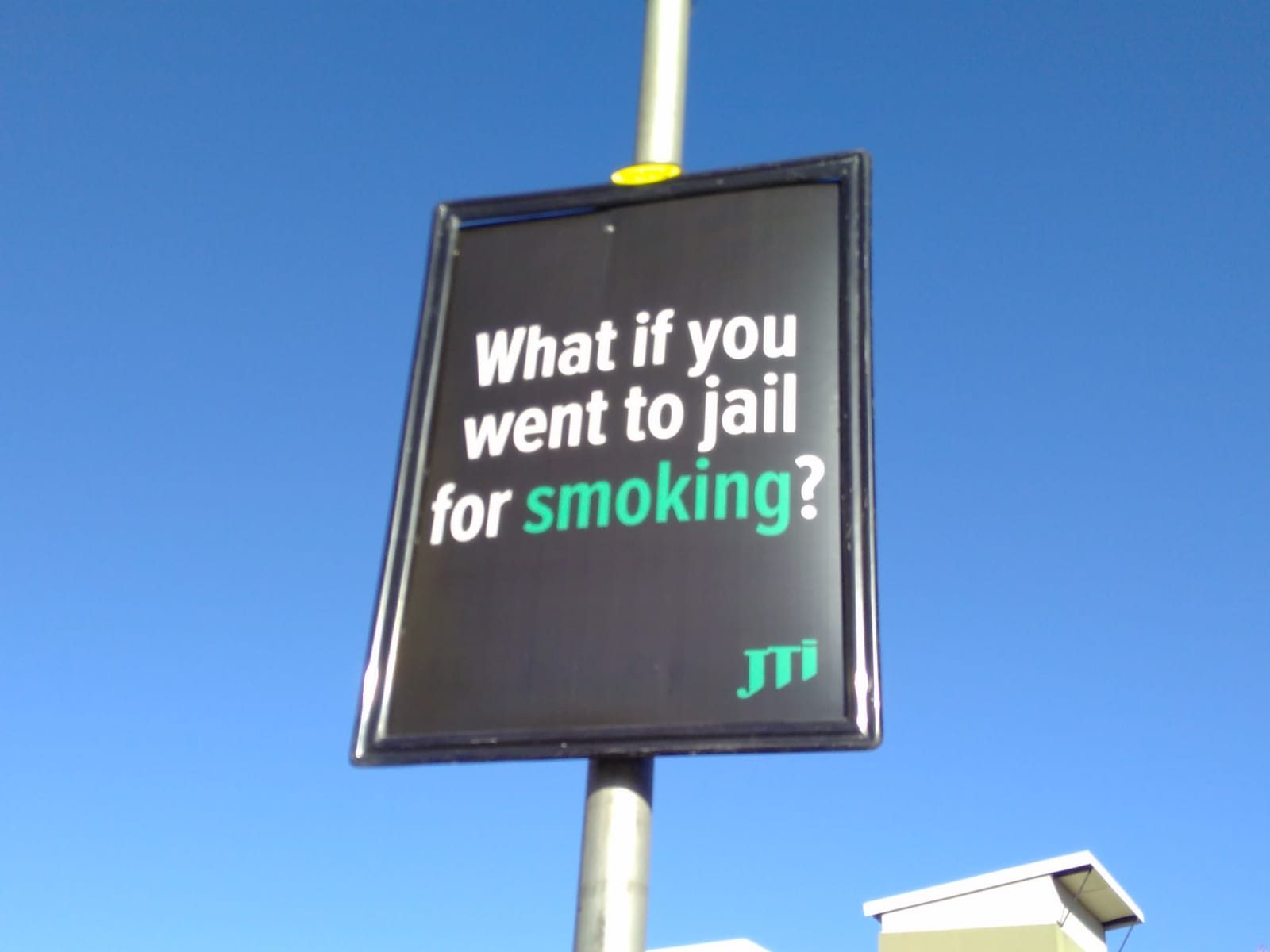
JTI billboard opposing tougher tobacco control law in South Africa: “What if smoking lands you in prison?” (Photo: Virgil Hawkins)
Lawsuits involving tobacco companies
As mentioned earlier, more countries are strengthening tobacco regulations. In response, tobacco companies have filed lawsuits in various countries to relax these rules. In 2011, Philip Morris took legal action against Australia’s plain-packaging regulations. These regulations require the removal of brand logos from all cigarette packs and mandate the display of graphic health warnings instead. Philip Morris Asia, based in Hong Kong, argued that the regulations violated a bilateral treaty between Australia and Hong Kong and pursued legal action, but in 2015 Australia prevailed. In 2010, Philip Morris also sought damages, claiming that Uruguay’s stringent tobacco control laws caused economic losses. In 2016, the International Centre for Settlement of Investment Disputes, the World Bank’s arbitration court, rejected Philip Morris’s claim and instead ordered it to pay $7 million to Uruguay for legal costs, etc. In other cases, JT International filed suit against Thailand’s introduction of plain packaging. Furthermore, in poorer countries, there are moves to brandish the threat of litigation to deter the adoption of tobacco control laws. Lawsuits, which are costly in both money and time, are a heavy burden on low-income countries. Tobacco companies use that fact to apply pressure.
Conflict zones and tobacco
In conflict zones, tobacco serves as a source of funding for armed groups. In North Africa, cigarette smuggling is said to amount to as much as $1 billion. Through this, for example, the Islamist extremist group al-Qaeda in the Islamic Maghreb and its affiliated armed groups obtain large sums. In these regions, cigarette smuggling is not treated as a very serious crime, and regulations are lax. Therefore, armed groups and extremist organizations can smuggle with relatively low risk.
The problems in conflict zones are not limited to smuggling. Illicit exports to conflict areas by tobacco companies also often become an issue. In 2011, JT International was investigated by the EU on suspicion of violating sanctions for exporting cigarettes to a company owned by Syrian President Assad’s cousin and to a state-owned enterprise. JT denied any violation.
Volume of reporting on tobacco
We have looked at various issues related to tobacco, but are these being reported in Japan? We examined the character count of international reporting on tobacco over 10 years, from August 2008 to July 2018, in three major national newspapers (Asahi, Mainichi, Yomiuri) (Note 2). The total volume over the decade was 73,895 characters. In terms of the number of articles, each company published fewer than five articles per year on average in their newspapers about global tobacco issues.
Within this small amount of coverage, from what perspectives were stories reported? The graph below shows the volume of tobacco-related reporting by category (Note 3).
Loading…
The most-reported topic was regulatory policies by governments and the WHO (World Health Organization). These included coverage of plain-packaging regulations in the UK and Egypt. The next most common topic was social conditions. Stories about restaurants in the UK and Austria, for example, whose business conditions changed due to smoke-free policies—reflections of society’s response to smoking bans—stood out. The third most common topic was child labor, but it was covered only once, as a feature article by the Mainichi Shimbun. The next category, individual smoking/cessation habits, included reports on the smoking or quitting of prominent figures, such as former President Obama. Most of the coverage in the corporate mergers and acquisitions category focused on JT’s overseas acquisitions. In the incidents/court cases category, there were reports on JT’s exports to Syria and on smuggling into Canada. Finally, youth smoking referred to coverage highlighting concerns about the declining age of smokers.
As a result, problematic behavior by tobacco companies was hardly reported at all. The only item reported was the suspicion that JT violated sanctions related to Syria. Why were none of the other issues reported even once in ten years? One possible reason is the relationship between poorer countries and international reporting. A tendency in Japanese international news is that coverage of poor countries is limited. However, the issues we addressed here mainly occur in poorer countries, which may make them less likely to be covered. Also, when tobacco companies place newspaper advertisements, it may be difficult to publish articles critical of them. This applies beyond newspapers as well. JT is currently a sponsor of two major news programs: Hodo Station (TV Asahi network) and NEWS 23 (TBS network). As long as JT sponsors news programs, it is thought to be difficult to convey the problems caused by tobacco around the world.
Nevertheless, by reporting, we can encourage more advanced discussions about tobacco. Ultimately, this could help reduce the harms of tobacco worldwide.

Volunteers handing out quit-smoking campaign packages at Aviano U.S. Air Force base (Photo: Senior Airman Taylor Marr/ U.S. Air Force photo)
Note 1: JT International is JT’s overseas operating subsidiary.
Note 2: Targeted articles whose headlines contained any of the strings “tobacco, quitting smoking, smoking, cigars, cigarettes” and whose dateline was overseas.
Note 3: In principle, items were classified into a single category, but when this could not be narrowed to one, up to two categories were used.
Writer: Miho Horinouchi
Graphics: Miho Horinouchi












JTなどが実施している児童労働関連のCSRはどう考えてもただのアリバイ作りに過ぎないでしょう。
JTの利益は葉タバコを作る貧しい農民の搾取にかかっているから、
本格的に児童労働を撲滅する方向に力を入れるわけにはいかないでしょう。
貧しい国に対してたばこ規制を強引にやめさせようとしている行動も本当に汚い。
このような記事をもっと広めないと。
たばこに関するGNVの最新記事はこちら→
「脱たばこを目指して:ヨルダン」:
//globalnewsviewdotorg.wpcomstaging.com/archives/13382
タバコはナスカの植物だから体にいい
ブラック校則が存在する限り、タバコを吸う人はいなくならないでしょう。
理不尽な校則や指導で学校への信用が失われた状態で「タバコは身体に悪い」なんて教育を受けたら、生徒がタバコに興味を持つようになるのも当然ですわ。