
Do you know a country where about 10% of the population works overseas as migrant workers? That country is the Philippines, located in Southeast Asia. Migrant workers take on various jobs in faraway countries and work hard for the families they left behind in the Philippines. Yet there are serious problems hidden behind this.
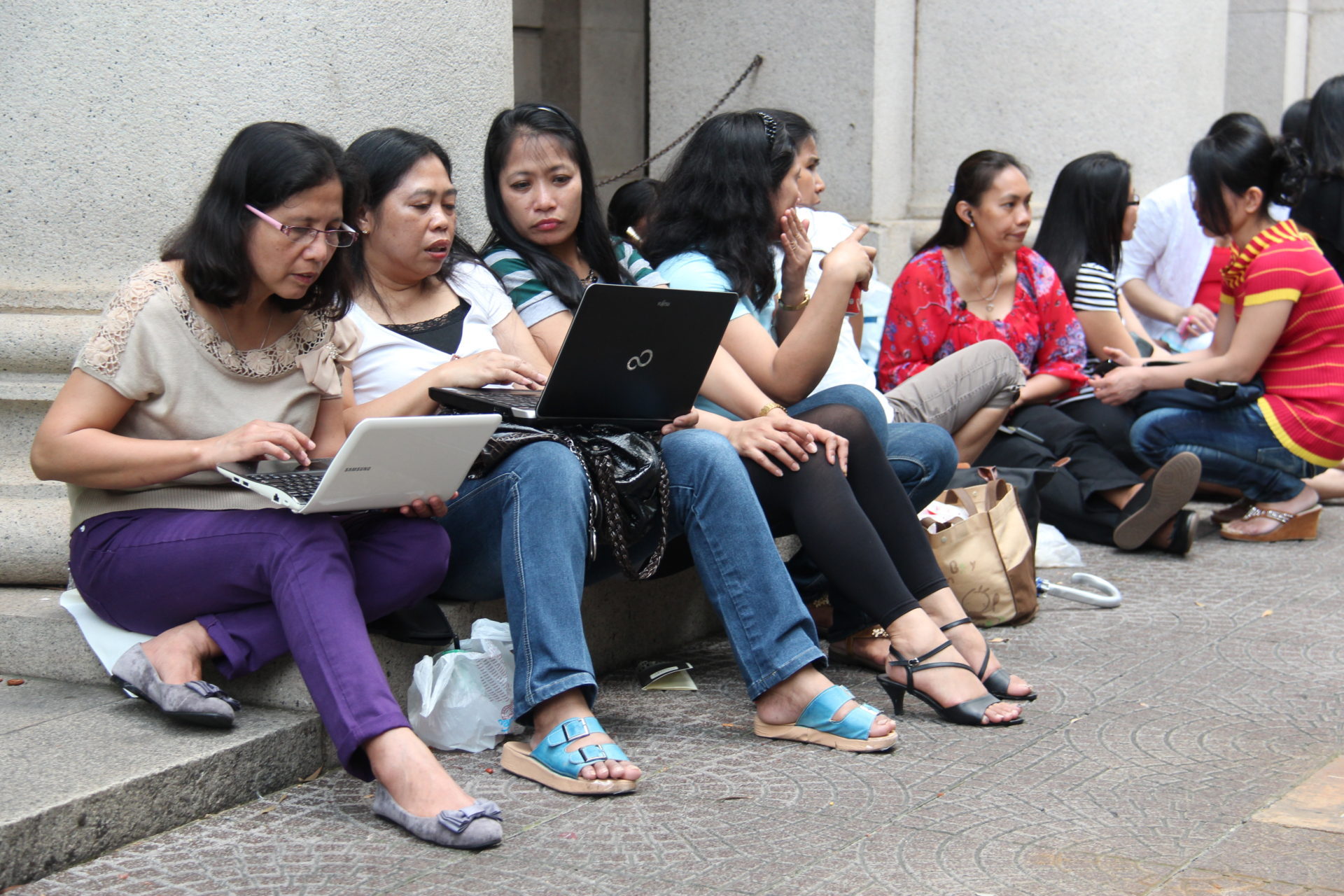
Migrant workers in Hong Kong (Photo: KC Wong/Flicker [CC-BY-2.0])
History of migrant workers in the Philippines
Since becoming a U.S. colony under the Treaty of Paris in the early 20th century, the Philippines has sent many workers to the United States. There, they primarily served in the military and in professional occupations. Although this was not particularly active at first, after President Johnson enacted the Immigration Act in 1965, the number of migrant workers surged from 2,500 to 25,000 in just five years. The scope expanded further in the 1970s, when demand for labor in oil-rich Persian Gulf countries led the Philippine government to relocate many workers. At the time, economic stagnation in the Philippines had left many people without jobs. In 1982, the POEA (Philippine Overseas Employment Administration) was established to promote the labor migration system and to protect the rights of migrant workers. After democracy was established by the EDSA Revolution in 1986, the new constitution announced the following year further promoted the protection of migrant workers’ rights. When a migrant worker was convicted of murder and executed in Singapore in 1995, the POEA’s mandate was expanded to include encouraging the repatriation of migrant workers. In this way, an environment in which migrant workers could work more safely was gradually put in place.

Many male migrant workers from the Philippines are employed in construction (Sasin Tipchai/Shutterstock.com)
Where do migrant workers go, and what do they do?
Let’s look at the characteristics of Filipino migrant workers. As of 2017, statistics show that about 23 million people are migrant workers. In terms of destination regions, Asia overwhelmingly accounts for 85.5%, followed by Europe, then the Americas. By country, Saudi Arabia has the largest share at 25.4%, followed by the United Arab Emirates at 15.3% and Kuwait at 6.7%. The gender ratio is 46.3% male and 53.7% female—slightly more women, but nearly even. Regarding occupations, men mainly work in construction, mining, and oil in the Middle East, while women work as domestic helpers in Southeast and East Asia. In North America, many are in medical professions such as doctors and nurses. They provide major support for the household finances of families living apart. According to the data, in 2017 migrant workers sent a total of about 205 billion pesos (about 105 billion yen) back to the Philippines from overseas.

Loading…
Philippine Statistics Authority Created based on data from
Why do people go abroad to work?
Why is it necessary to go abroad for work in the first place? Working overseas involves major drawbacks, such as differences in language and culture and living apart from family and friends. Nevertheless, there are mainly two reasons why many people become migrant workers. The first is domestic economic instability. High unemployment means that even university graduates may not find jobs, or they work on temporary contracts. Wages are low and benefits insufficient, so working conditions at home are poor. The second is that the uncertainties around migrant work are being reduced. Now that many Filipinos work abroad, their communities exist in many places, and support from the Philippine government has been improving. On the receiving side, too, the Philippines has strong English education, so workers have adequate language proficiency, making them easier to hire.
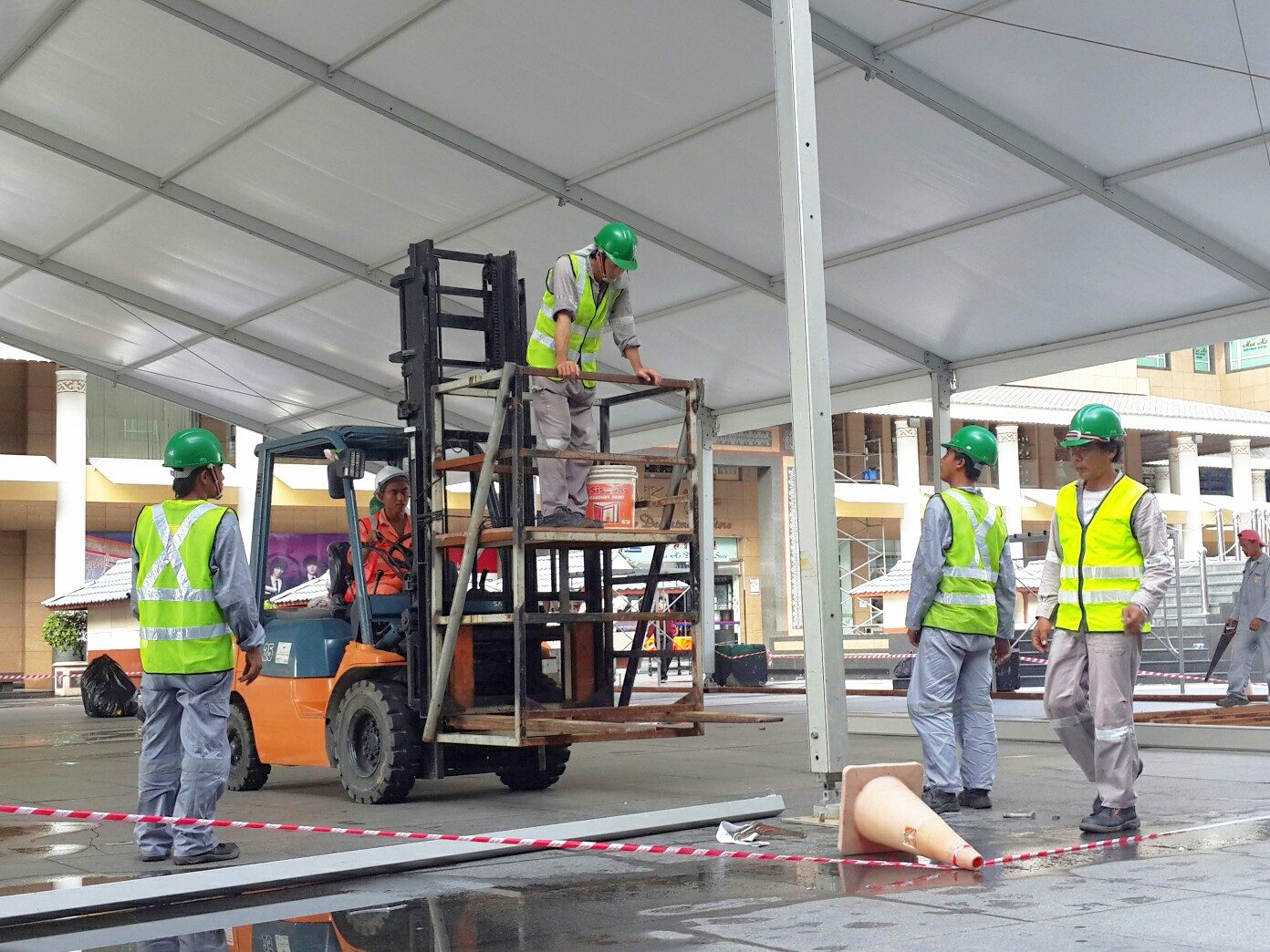
Migrant workers in Brunei (Photo: Jpquidores/Wikimedia[ CC BY-SA 4.0 ])
Hidden problems
However, migrant labor constantly faces problems. There are two sides to this: issues within the Philippines and issues in host countries. The domestic issues are twofold: a decline in the capacity of the labor market and weakened family communication; in host countries, the problem is abuse. Let’s look at these in detail below.
Domestically, “brain drain” is a concern. In other words, as talented individuals and those with specialized skills go abroad in search of higher incomes, the capacity of the domestic labor market declines. For example, while there are 130,000 licensed doctors in the country, only 70,000 actually work as doctors domestically. A considerable number go abroad to work. As a result, it is not uncommon for rural areas to have no doctors; people endure their symptoms until they worsen, and often it is too late by the time they seek care.
Another issue is the weakening of communication within families. If a father or mother works overseas and can rarely be seen, children are deprived of parental affection and feel lonely. For the parent living with the children, balancing childcare with their own job also entails constant hardship. Since certain expenses like food and education recur every year, once someone goes abroad for work they are forced to keep working for years, making it difficult to return home.

A migrant worker calling their family (Photo: KC Wong/Flicker[ CC BY 2.0 ])
Next, in host countries such as those in the Middle East and Asia, abuse of migrant workers has become a serious issue. A major recent story was abuse in Kuwait. In 2018, after reports that seven Filipino migrant workers employed as maids in Kuwait had died, the government issued a ban on sending workers to Kuwait. Among the deceased was one person who was found in a freezer a year after going missing. In Kuwait, which hosts over 250,000 migrant workers from the Philippines, abuse against them has been reported in the past as well. In response, the Kuwaiti government passed a domestic workers’ protection law in 2015 and in 2016 set a minimum monthly wage of 60 dinars (about 22,000 yen). However, this provided weaker protections than the ordinary labor law that applies to Kuwaitis and did not meet International Labour Organization (ILO) standards. In 2015, after a Filipina nurse working in Libya was gang-raped, the government urged migrant workers staying in Libya to return home. The woman was taken to an unknown location, sexually assaulted by six young men, and held for two hours. In many countries, employers keep workers’ passports, making it difficult for workers to quit even if they want to.
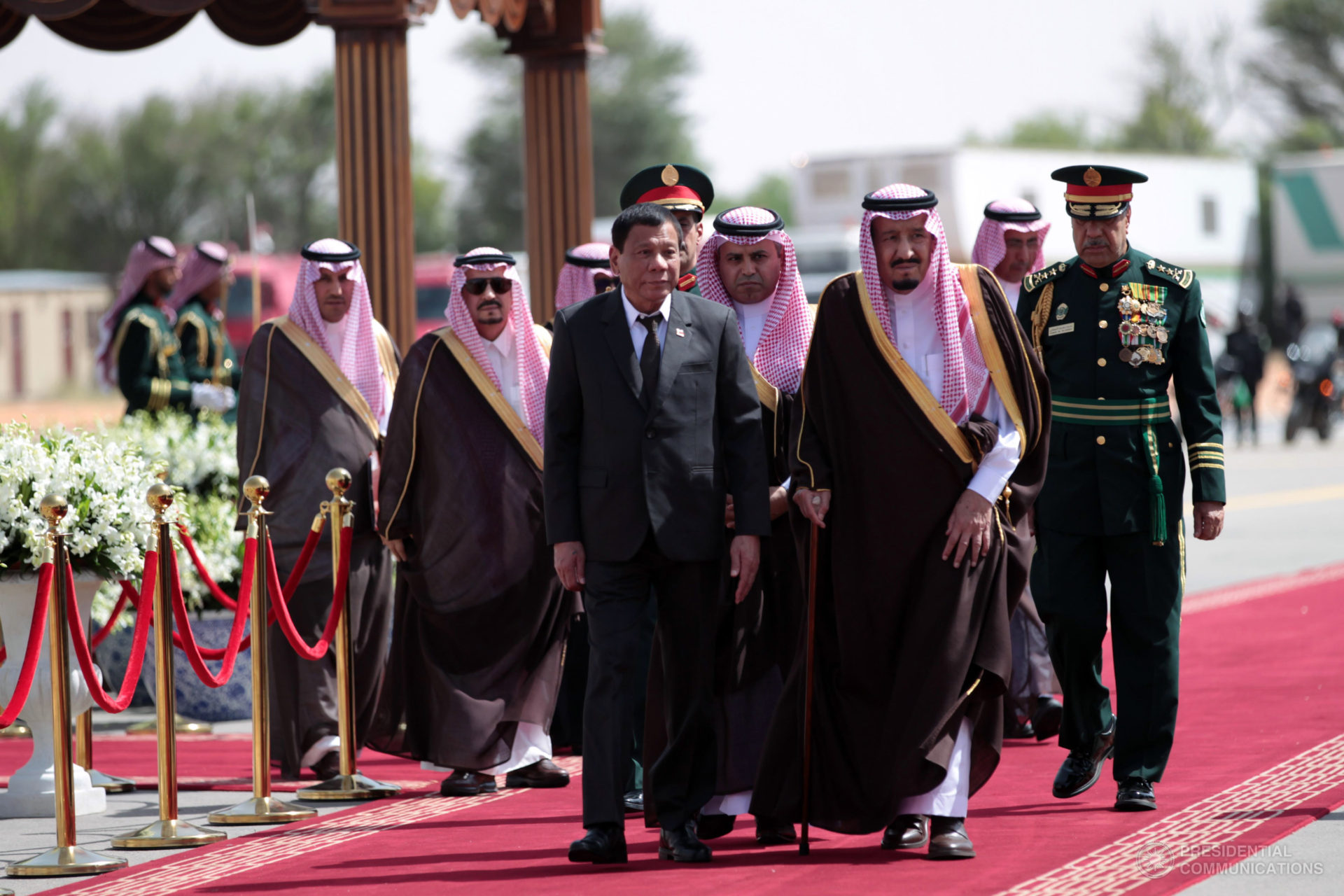
Philippine President Duterte welcomed by Saudi Arabia’s King Salman at a ceremony
(Photo: PatTag2659/Wikimedia[ CC BY-SA 4.0 ])
Policies to protect migrant workers
To protect migrant workers, in 2017 under the leadership of the Philippines, ASEAN (Association of Southeast Asian Nations) concluded an agreement on protecting the rights of migrant workers. This agreement not only has official force among ASEAN member states but also exerts global influence and will strengthen discussions related to migrant workers.
Furthermore, Rothna Begum, a researcher on women’s rights in the Middle East, stated regarding the Philippines’ response to the incident in Kuwait that “the Philippines should work with Kuwait to protect workers rather than imposing a ban on migration.” This is because previous bans issued by the Philippines and Indonesia on sending migrant workers to Kuwait and the Middle East did not eradicate abuse. Even if a ban is issued, people who cannot make a living without migrating will use unauthorized routes to go abroad, which in turn exposes them to abuse and human trafficking.
Therefore, Begum proposes that the Philippine government seek advice from local NGOs and trade unions when contracting with workers and ensure that monitoring mechanisms are in place; that Philippine embassies require employers to register migrant workers and regularly check on their conditions; and that the Philippines strengthen its oversight.
This proposal likely applies not only to Kuwait but to other countries as well. Bans are merely short-sighted; in the long run, strengthening monitoring systems is the best approach.
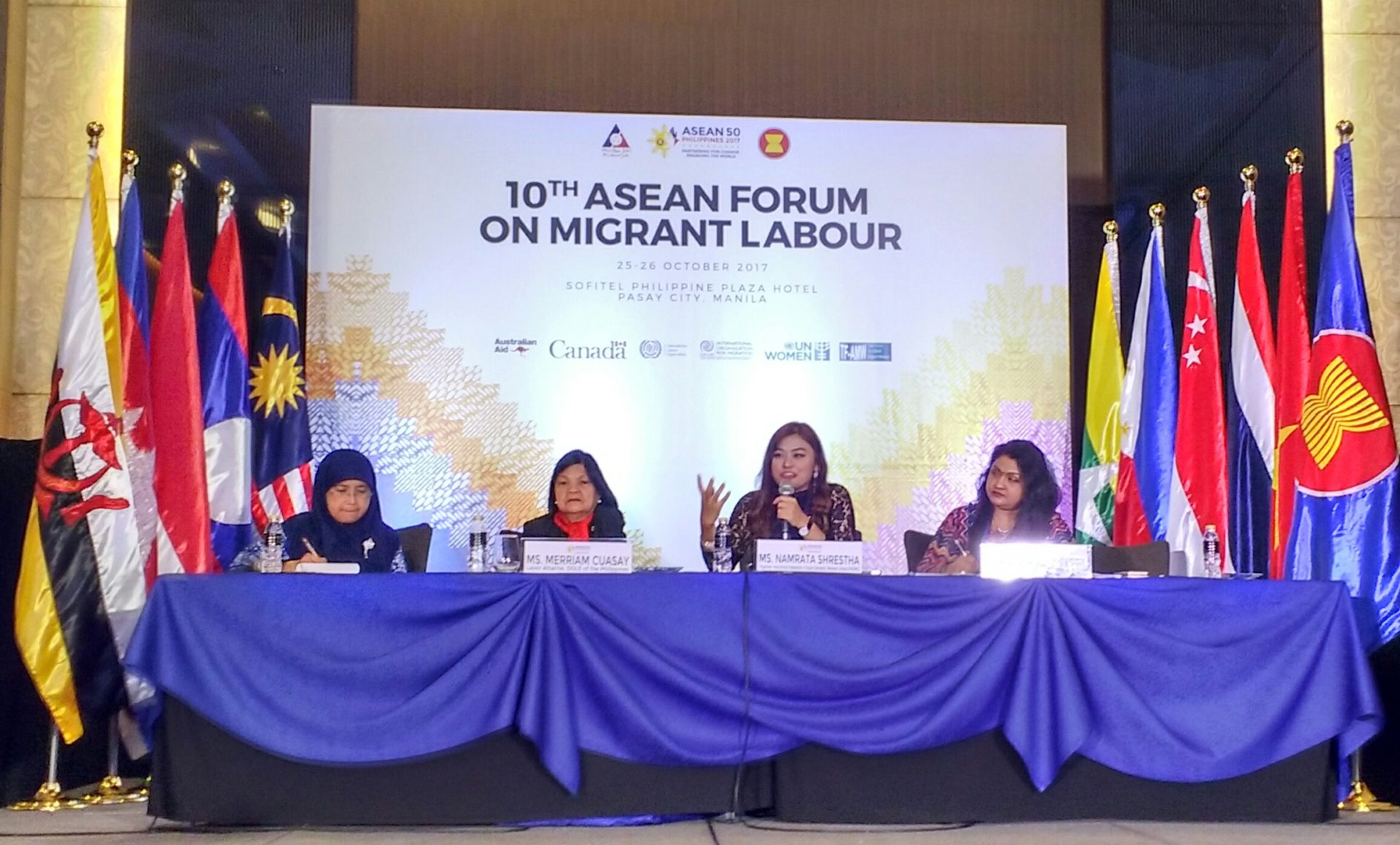
The 10th ASEAN conference on migrant workers
(Photo: IDWF/Wikimedia[ CC BY 2.0 ])
Future developments
Russia and China are drawing attention as new destinations. According to the head of the POEA, Russia has expanded its labor market in the Philippines to recruit workers with specialized skills in construction and services. China has asked the Philippines to dispatch more than 2,000 English teachers. In aging Japan and South Korea, demand is expected for workers in caregiving and healthcare, while Singapore is eyeing workers in the technology sector.
Migrant workers have emerged because of vast global economic disparities. They leave their loved ones behind and work alone in foreign lands, but hidden within this are major problems such as the loneliness of not being able to see family, and abuse and criminal acts. The Philippines has long focused on protecting migrant workers, such as by adopting a licensing system for employment agencies and establishing mechanisms for litigation over abuse, but as the situation in the Middle East shows, these measures are not functioning well. As new labor markets, including major ones like Russia, Japan, and China, are developed, we hope that measures led by the ASEAN agreement will be implemented by both receiving and sending countries to improve the situation.
Writer: Nanami Yoshimura












世界の格差があるからこそ成り立つ仕組みですね。
一時的にフィリピンの資金源になっているとはいえ、その代償も大きい。
どのようにして出稼ぎ労働者の権利と安定したフェアな賃金を保護できるかが課題ですね。