
On 2018–7–13, just ahead of Pakistan’s general elections, a suicide bombing described as the 2nd deadliest in Pakistan’s history occurred, claiming 149 people. The incident took place in Balochistan, the largest province located in Pakistan’s southwest. Despite facing a variety of problems, this region attracts little international attention. Pakistan itself rarely comes into the spotlight, and when events there do draw notice, they are largely limited to terrorism by IS, al-Qaeda, or the Taliban, and the Kashmir conflict. This suicide bombing, being an IS-claimed attack that occurred right before the general election, did receive a certain degree of attention. Meanwhile, the world pays little heed to the long-running conflicts and human rights abuses in Balochistan. This article delves into the largely hidden conflict there.
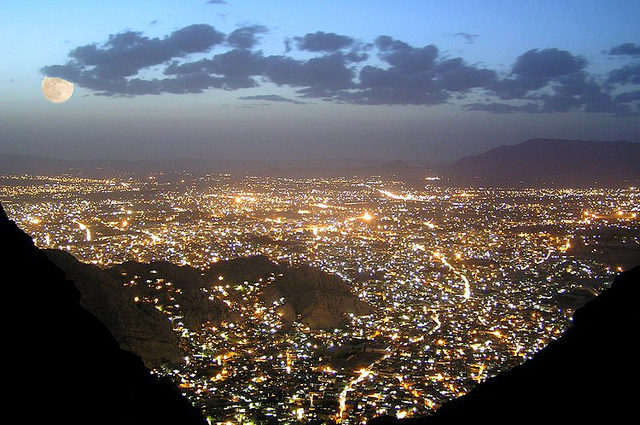
Quetta, the capital of Balochistan (Photo: Baluchistan / Flickr [CC BY-SA 2.0])
Historical background of the conflict
Today’s Balochistan is a multiethnic society composed mainly of three groups—Baloch, Pashtuns, and Brahui—along with other minorities. The Baloch, from whom the region takes its name, speak Balochi, an Iranian language, and live not only in Balochistan but also primarily in neighboring Iran and Afghanistan. A look at the region’s history shows that Balochistan was ruled by various powers, including the Persian and Mughal empires. When Safavid Persia and the Mughal Empire, which controlled Balochistan in the 18th century, collapsed, Balochistan regained independence. However, in the late 19th century, it was colonized again by Britain. Balochistan was divided into four princely states—Kalat, Kharan, Las Bela, and Makran—and placed under British India.
In 1947, when the British Indian Empire was dissolved and Pakistan gained independence from Britain, Pakistan’s first Governor-General, Muhammad Ali Jinnah, recognized the Khanate of Kalat as an independent sovereign state and was prepared to accept its annexation of the princely states of Las Bela and Kharan. However, just two months later, Jinnah changed course and demanded that Kalat accede to Pakistan. Negotiations between Pakistan and Kalat failed to resolve the issue, and in 1948 the Pakistani army invaded Balochistan’s coastal areas. Under this military pressure, on March 28, 1948, Kalat surrendered and was annexed to Pakistan on April 1 of the same year. Since that annexation, conflicts between the Pakistani government and separatists have repeatedly broken out to the present day.
Economic background of the conflict
However, the current conflict is driven not only by the historical factors described above. Domestic economic conditions also significantly influence what is happening in Balochistan. Balochistan is one of Pakistan’s least developed regions. 52% of its people live below the basic needs line. Education also lags behind: literacy is only 29.8%, even lower than Pakistan’s average of 39.7%. These economic conditions are in part the result of unequal economic policies pursued by the central government.
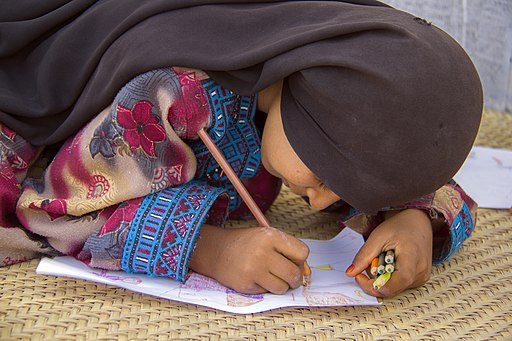
Children in Balochistan (Photo: Mostafameraji / Wikimedia [CC BY-SA 4.0])
Balochistan is rich in resources such as minerals and natural gas. In particular, it supplies 23% of Pakistan’s total natural gas production. Other important minerals extracted include gold, copper, chromite, and marble. Nevertheless, it is difficult for the people of Balochistan to benefit from these resources. Despite supplying most of the natural gas, gas is provided only to urban areas in Balochistan, and rural regions do not receive supplies. Such inequalities have fueled discontent among Balochistan’s people. In 2012, a protest was held in Quetta, the provincial capital, against the extremely limited gas supply.
In addition, the China–Pakistan Economic Corridor (CPEC), being advanced between China and Pakistan, has further stoked discontent in Balochistan. CPEC is part of China’s Belt and Road Initiative: a plan to develop railways, roads, and pipelines to link Kashgar in China’s Xinjiang Uyghur Autonomous Region with Gwadar Port in Balochistan. The Pakistani government aims to use this project to develop infrastructure and drive economic growth. However, the people of Balochistan are not positioned to reap fair benefits from CPEC. Gwadar Port, a key node in CPEC, is operated by a Chinese company. For the next 40 years, this Chinese company will receive 91% of Gwadar Port’s revenue, leaving only minimal gains to flow back to Balochistan’s people. This kind of economic inequality faced by the people of Balochistan is one factor that intensifies resistance to the Pakistani government.
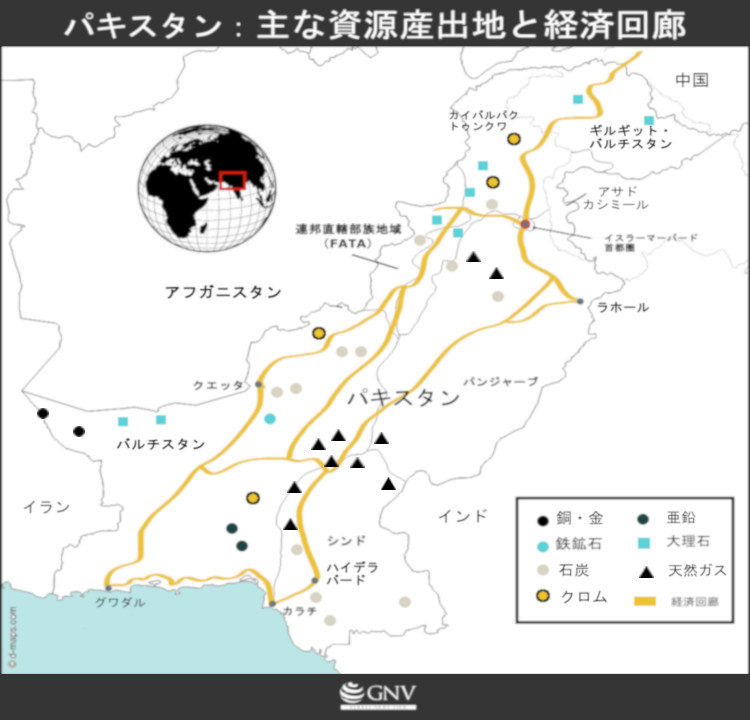
Created based on the Alhasan Systems website
Proliferation of armed groups
Against these economic and historical backdrops, armed groups in Balochistan are currently operating in pursuit of independence from Pakistan. Here, we focus on three major groups: the Balochistan Liberation Front (BLF), the Balochistan Liberation Army (BLA), and the Baloch Republican Army (BRA).
The BLF is one of the most active groups, operating in Makran in southernmost Balochistan. Formed in 1964, the BLF seeks independence from Pakistan. It is known for carrying out an independence insurgency from 1973 to 1977, reportedly with support from Iraq. The conflict escalated, and as many as 80,000 government troops were deployed. Although the conflict ended in 1977, it left 12,000 casualties. The BLF then remained relatively quiet for a time, but in 2004 it killed Chinese workers at the port of Gwadar and has carried out repeated attacks since.
The BLA was formed in 2000 with the goal of independence from the Pakistani government. Shortly after its formation, it carried out a series of attacks targeting Pakistani soldiers and police in markets and on railways. In response, the Pakistani military deployed additional forces and, in 2006, killed the BLA’s leader. His killing escalated BLA attacks—but, ironically, that very escalation helped justify further intervention by the security forces.
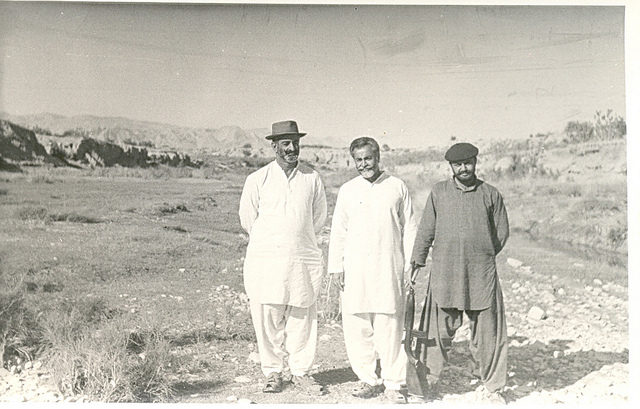
Nawab Bugti, BLA leader killed in 2006 (left in photo) (Photo: Zoraak Zagr / Flickr [CC BY 2.0] )
The BRA was formed in 2006. Out of resentment at strong central control and resource monopolization, it called for independence from Pakistan. To “take back” Balochistan’s resources for its people, it has conducted attacks targeting Pakistani security forces and public transport targets.
These three armed groups and the Pakistani government reached a ceasefire in September 2008. However, only four months later, in January 2009, the three groups abrogated the ceasefire. They had demanded steps such as the withdrawal of troops from Balochistan, but the government did not comply and did not engage in negotiations toward a broader peace agreement. Since then, and to this day, these three groups and other armed organizations have continued to press for independence from Pakistan through attacks.
Repression amid the conflict
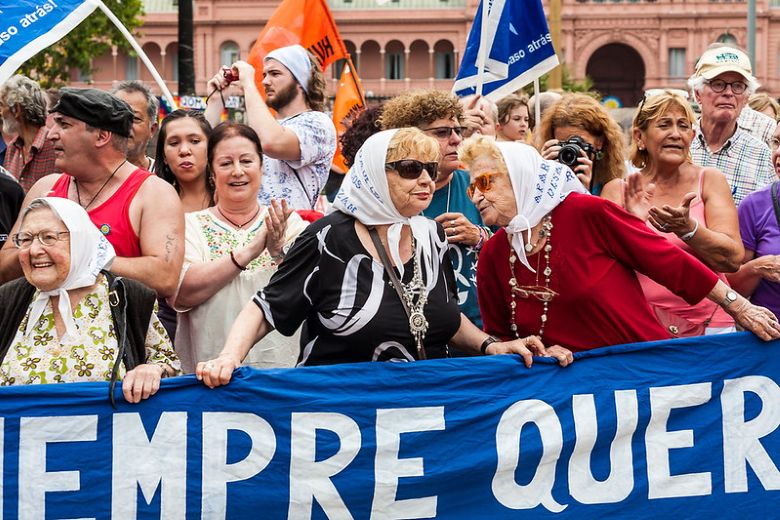
As the conflict has continued, Pakistan has intensified repression of separatists. This repression by the government has led to serious human rights abuses. One such abuse is the disappearance and arbitrary arrest of Baloch leaders. In many cases, the disappeared are detained, but their families are never informed of their whereabouts. Some are not only detained but also killed. Between 2011 and 2016, at least 936 bodies were found dumped in Balochistan. This practice is believed to be carried out by the Pakistani authorities and is known as the “kill and dump” policy. In response to such repression, families of the disappeared marched in 2014 from the city of Quetta to Pakistan’s capital to seek UN intervention in a march. The situation of disappearances and killings has worsened further, influenced by the elections held in July 2018. In June, just before the polls, disappearances and killings surged across many villages in Balochistan, with 79 people reported missing and 24 killed.
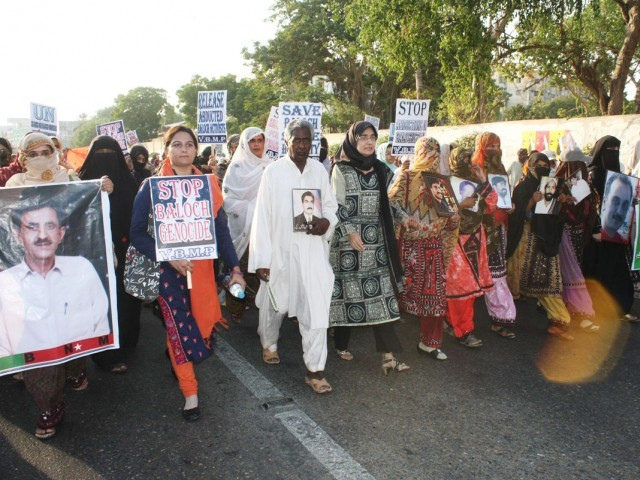
People protesting disappearances (Photo: Sharnoff’s Global Views / Flickr [CC BY 2.0])
Press freedom in Balochistan is also a serious problem. Journalists there face the dangers of violence, arrest, and even murder. Over the past 15 years, 40 journalists have been killed in Balochistan. In 2017, an incident occurred in which newspapers were not distributed for a month across nearly half the province. Caught between the government and armed groups, media outlets are unable to report freely. Because of these restrictions, the situation in Balochistan is not shared with the world, and many human rights abuses remain unaddressed, out of the public eye.
The hidden Balochistan issue
We have traced the various problems in Balochistan. Nevertheless, the situation there is still not seen as a serious issue globally. Even within Pakistan, few people pay attention to what is happening in Balochistan. In the July 2018 elections repeatedly referenced in this article, the major political parties were indifferent to Balochistan. Unless this indifference changes, the situation is unlikely to improve. With a change of government following Pakistan’s general elections, will conditions in Balochistan change? We should watch closely to see how the vicious cycle of violence in this hidden corner of the world is addressed.
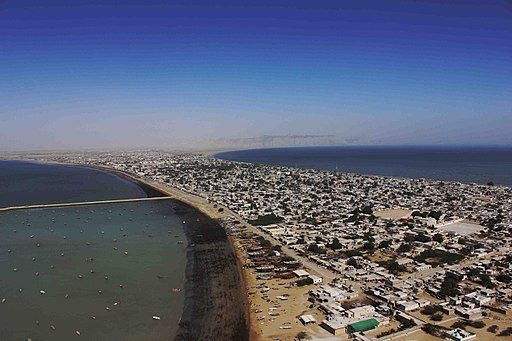
View of Gwadar (Photo: Shayhaq Baloch/ Wikimedia [CC BY-SA 4.0])
Writer: Tomoko Kitamura
Graphics: Hinako Hosokawa




この記事を読むまで、バルチスタンという言葉さえ知りませんでした。改めて紛争には”内戦”というものは存在せず、様々なアクターが関係してこの状況を生み出しているのだと気づきました。ここまで人権侵害などの悲惨な状態が続いているにもかかわらず、世界で問題視されていない現状は明らかに良くないことで、一刻も早くバルチスタン問題への認知が高まって解決への動きが強まることを祈るばかりです…
バルキスタン出身のジャーナリストが作成した動画をご覧頂けますか。
https://youtu.be/wpw5eWvLeJA
記事を発表する場を探しています。