
U.S. tech giant Google bowed to pressure. It was not pressure from users, clients, or governments, but from its own employees. Google had entered into a contract with the U.S. Department of Defense(※) and was providing artificial intelligence (AI) technology. In March 2018, it became clear that this was being used to develop video analysis and identification software for U.S. military unmanned aircraft (drones), intended to distinguish and track vehicles, people, and the like. The following month, after more than 3,000 employees—about 3% of the workforce—signed a protest letter stating that the company should not be in the business of war, and 12 engineers resigned, Google announced it would not renew its contract with the Department of Defense.
When Google’s parent company Alphabet was established in 2015, the long-standing company motto “Don’t be evil,” which had been part of Google’s code of conduct, was not adopted; instead “Do the right thing” became the motto. Then, around May 2018, when the contract with the Department of Defense was under scrutiny, Google also, for some reason, removed “Don’t be evil” from its code of conduct.
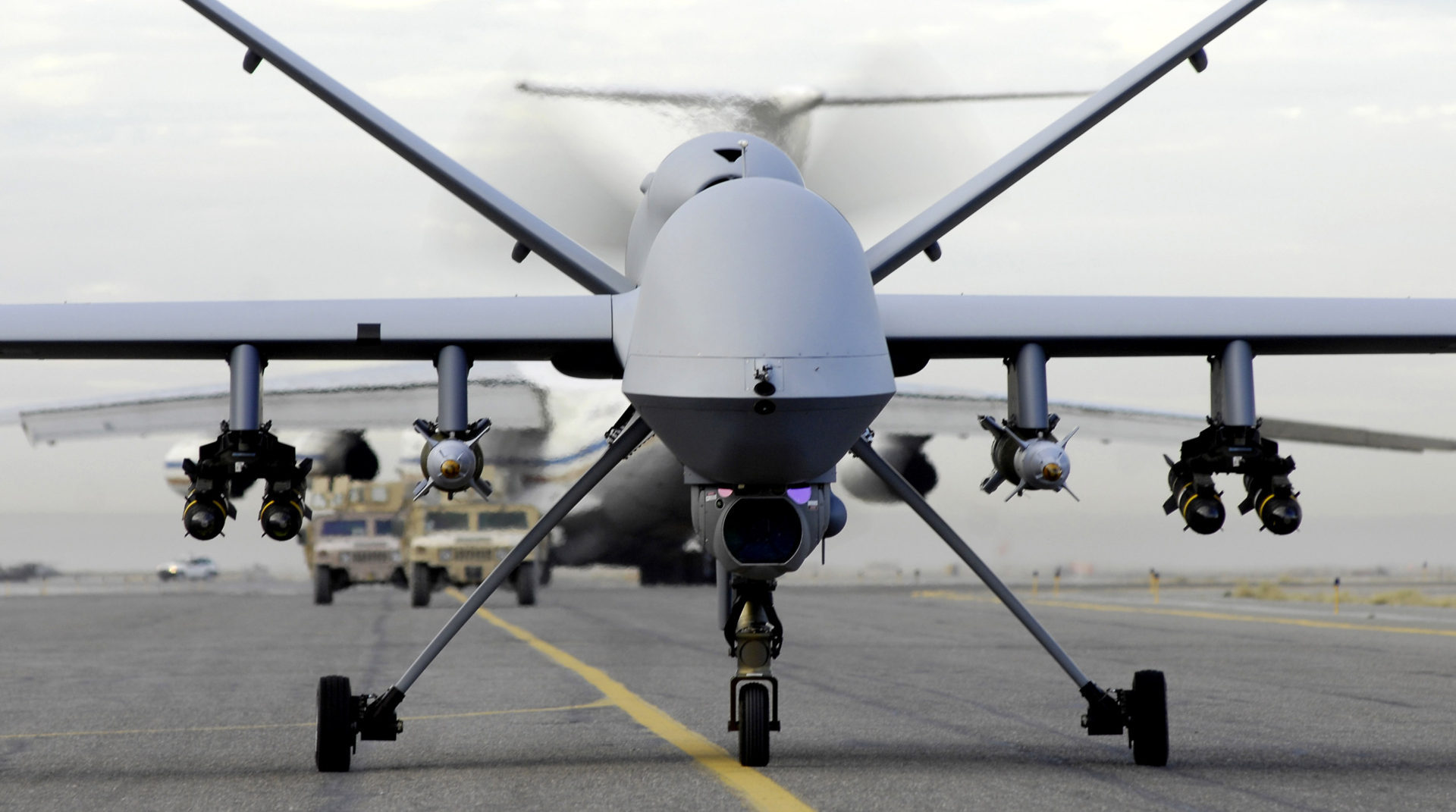
A drone loaded with missiles (Photo: U.S. Air Force photo / Brian Ferguson)
As in Google’s case, there are other instances of employees protesting or resisting their own company’s actions on ethical grounds. This article examines that phenomenon.
Unexpected “Heroes”
People and organizations have been standing up for “justice” around the world. For example, many international groups conduct investigations worldwide into environmental issues, the exploitation of natural resources in poor countries, tax havens, and human rights violations, and protest against multinational corporations and governments. Far more numerous, however, are local organizations and activists close to where problems occur. They work to protect their communities’ and countries’ land and environment from multinational agribusiness and mining companies, often at great personal risk. In 2017 alone, at least 207 activists were killed in countries including Brazil, the Philippines, Colombia, Mexico, and the Democratic Republic of the Congo.
However, this article does not focus on people who devote their lives to changing their communities or the world. Rather, it highlights so-called unexpected “heroes”: ordinary employees who would normally build their careers without taking risks, but who, out of ethical convictions, oppose their own company’s actions and put their careers on the line. In some cases, the reasons they take a stand and the actions they take may spark debate about whether they are “right.” Yet as the darker side of globalization becomes more visible, and powerful multinational companies and governments pursue their own interests in poorer countries and elsewhere, it is important to shine a light on the actions of whistleblowers who, guided by conscience, expose realities that are hard to see from the outside.
A technological “revolution”?
Google is not the only one facing an internal “rebellion” over AI. This is not surprising. Leaving aside the military use of technology, today, in order to monetize advertising, the words we type into search engines and all our behavior online are tracked—often without our awareness. In our homes, more devices with cameras and sensors are connected to the internet, expanding the range of what can be tracked from outside, while companies that hold vast amounts of data about us and analyze it with AI are increasingly facing questions—both inside and outside—about their conduct.
U.S. tech giant Microsoft also faced internal protests in 2018 and ended its contracts with a U.S. government agency. It had been providing cloud computing and image and facial recognition technology to U.S. Immigration and Customs Enforcement (ICE). At the time, the agency was pursuing a policy of separating parents and children attempting to enter from Mexico as immigrants and refugees, drawing widespread criticism as a human rights issue. Microsoft employees also protested their company’s cooperation with such policies.
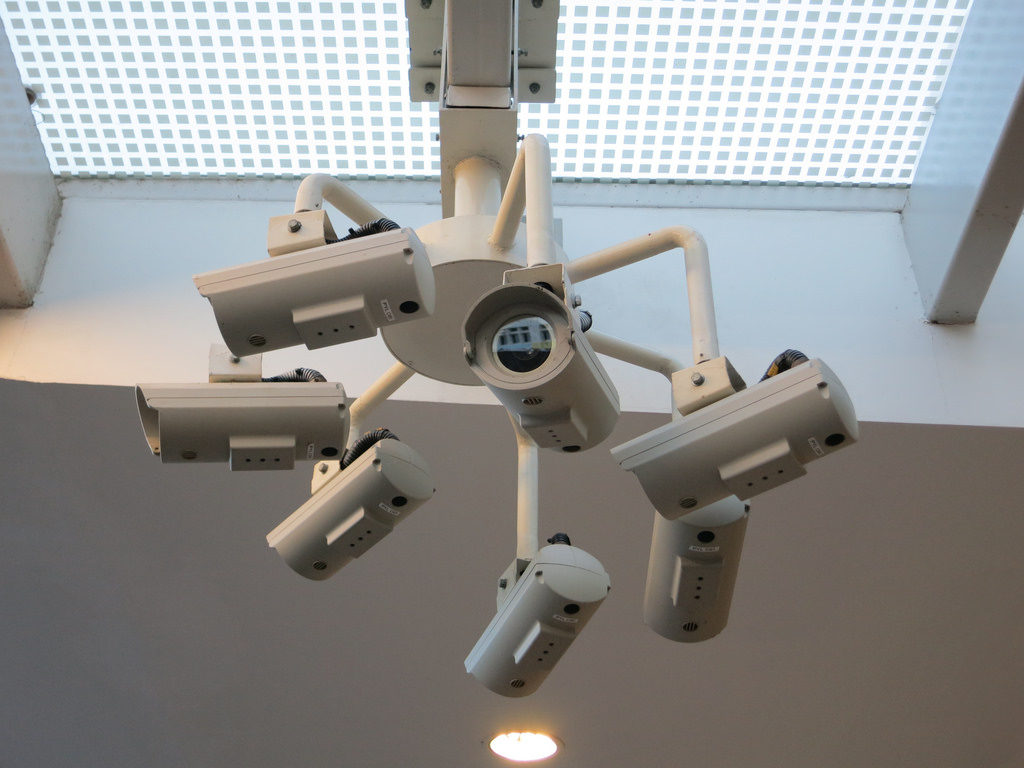
Surveillance camera (Photo: Kai Hendry/Flickr [ CC BY 2.0])
However, not all employee protests yield good results. Amazon has provided similar facial recognition and other technologies to U.S. police. In June 2018, several employees submitted a protest letter to CEO Jeff Bezos over the use of the company’s technology to track Black activists and refugees, as well as in the family separation issue. The letter also cited how IBM, a major IT infrastructure provider, supplied technologies used to track and manage people during Nazi Germany’s oppression and extermination of Jews. Amazon did not accede to the protest’s demands. Amazon also provides cloud computing technology to the U.S. Central Intelligence Agency (CIA).
From a procedural standpoint, it is relatively easy for a company to fire employees who stage such rebellions. But with high demand for talented engineers, IT firms cannot always easily ignore or suppress engineers’ protests. Moreover, on issues that are widely criticized in society, backlash from users and clients is also to be expected.
Dockworkers’ unions
Employees who oppose their company’s actions may not only unite temporarily; they may also act through labor unions. Dockworkers’ unions are particularly prominent, likely because their work is directly tied to international trade.
In 2008, Zimbabwe’s long-time ruler President Robert Mugabe was running for a sixth term, but with the opposition popular, he mobilized the police, military, and other security forces to violently suppress opposition politicians and supporters. The military ordered weapons from China, to be offloaded at a South African port and trucked inland to Zimbabwe. However, local lawyers and human rights groups strongly opposed allowing the shipment through South Africa, arguing the weapons would certainly be used to violate human rights. When the weapons arrived at the port of Durban, South Africa, the dockworkers’ union joined the movement and refused to offload the containers from the ship. After giving up on offloading in South Africa, the vessel tried neighboring Mozambique and Angola, but was blocked there as well by the power of dockworkers’ unions.
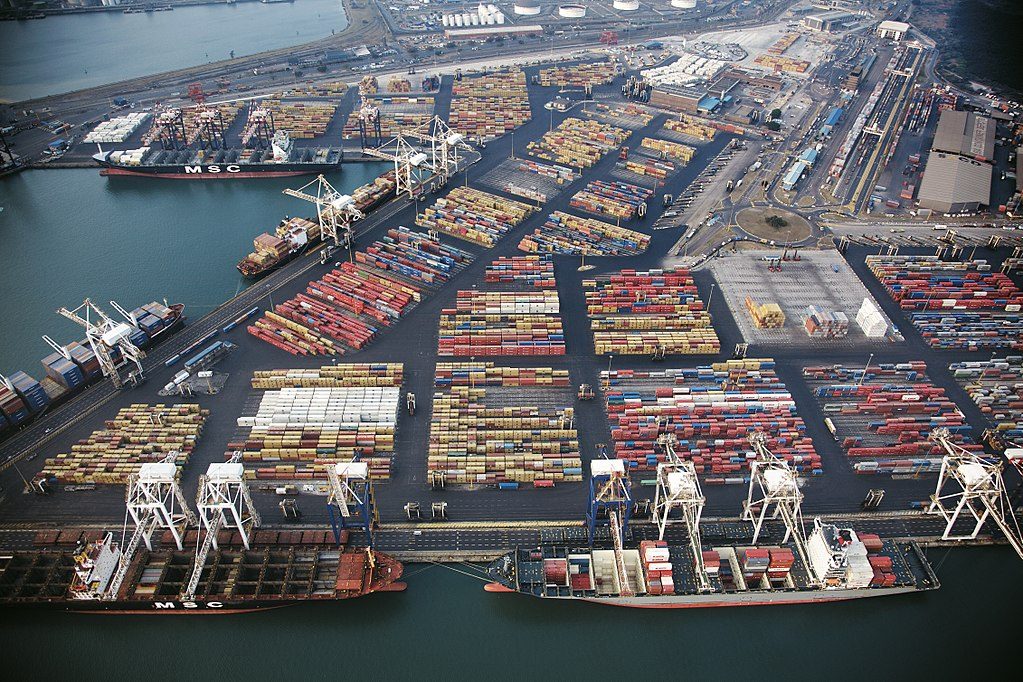
Port of Durban, South Africa (Photo: Media Club/Wikimedia Commons [ CC BY-SA 2.0])
On the Palestinian issue as well, as part of opposition to actions by the Israeli government, dockworkers’ unions across the world have at times refused entry to Israeli vessels. For example, since 2007 Israel has enforced a land, sea, and air blockade of the Gaza Strip. In 2010, when ships carrying humanitarian aid attempted to break the blockade, Israeli forces boarded to stop them and killed nine activists who resisted. In response, unions at multiple ports in Sweden, India, Turkey, the United States, and South Africa took action to block entry of Israeli ships. Similar refusals occurred when Israel invaded Palestinian territory on other occasions.
Employees who leak
Employees often take a stand as individuals, becoming whistleblowers who release internal documents, data, videos, and more to media outlets. Leaking company or government secrets can not only lead to dismissal but also to arrest for violating the law.
Governments are often the targets. For example, Daniel Ellsberg, who worked at the RAND Corporation, which was cooperating with the U.S. government, copied internal government reports on the Vietnam War and leaked them in 1971 to the New York Times and the Washington Post. The so-called “Pentagon Papers” contained numerous inconvenient facts that the U.S. government had concealed from the public about the war.
With the advent of the internet, it became easy to remove information as data rather than as photocopies, and such cases increased. A famous example is the actions of Edward Snowden, who worked at Booz Allen Hamilton, a consulting firm contracted to the U.S. National Security Agency (NSA). In 2013, he revealed that the governments of the United States and the United Kingdom were unlawfully collecting vast amounts of personal information; he remains in exile in Russia.
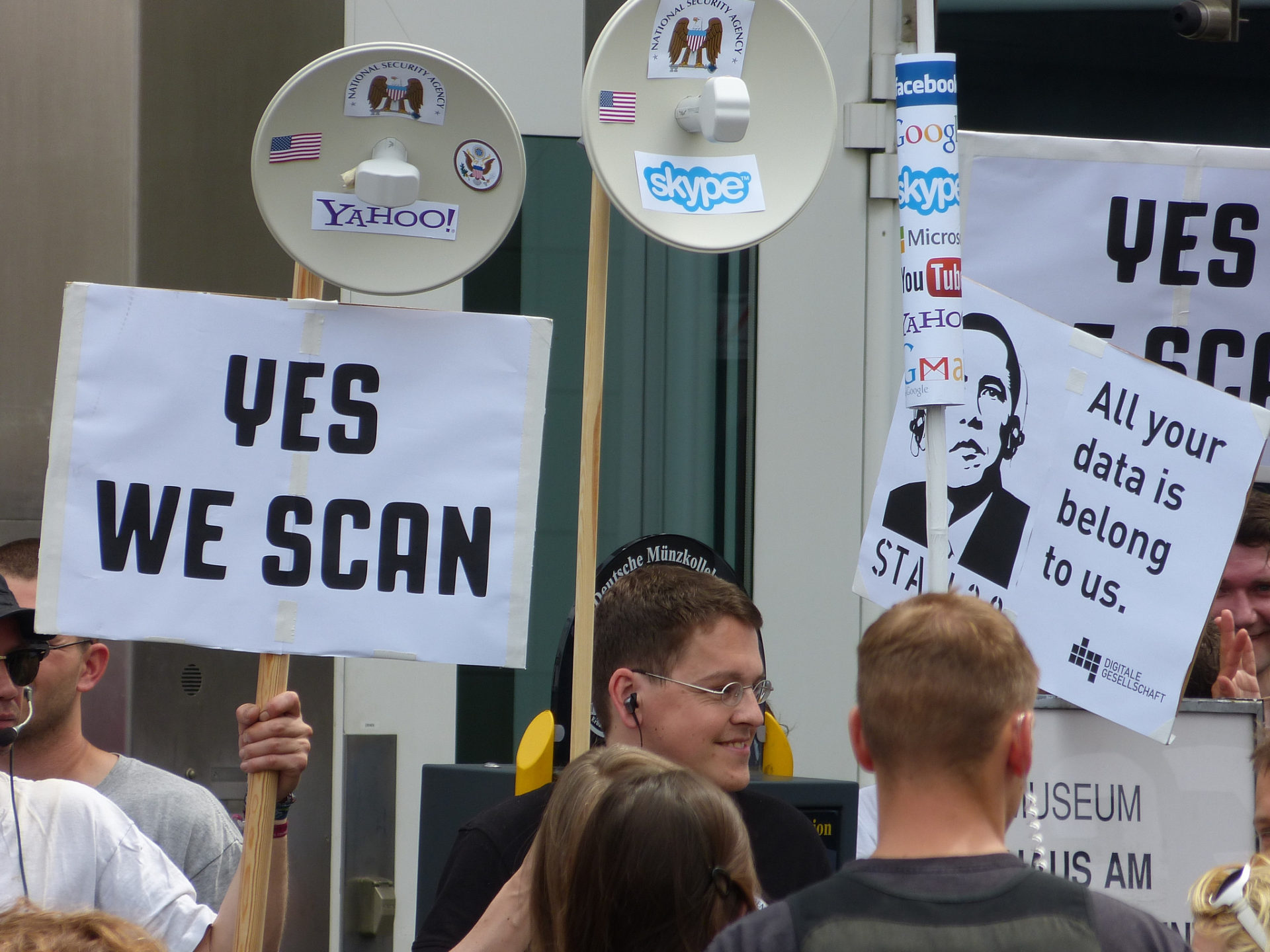
Not “Yes we can” but “Yes we scan” — a demonstration in Berlin against the U.S. government’s collection of personal data (Photo: Mike Herbst/Flickr [ CC BY 2.0])
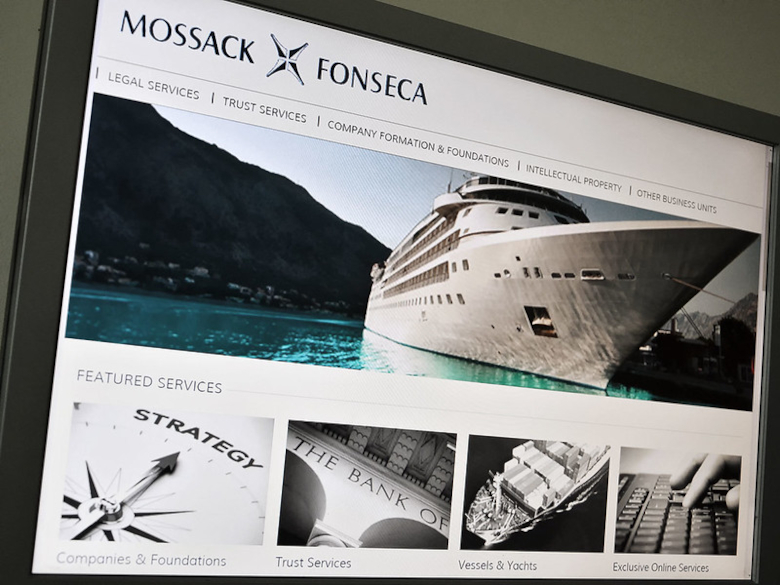
There are also many cases of individuals leaking information about their own companies outside of government-related contexts. The tax haven industry’s scale and mechanisms were exposed by whistleblowers in the Panama Papers and Paradise Papers, which are well known, but many cases did not become so famous. For example, in 2006 the Anglo-Dutch multinational commodity trader Trafigura was involved in an illegal dumping incident involving toxic waste. After the Netherlands refused to process 500 tons of waste, it was shipped to Côte d’Ivoire, where a subcontractor dumped it around Abidjan, resulting in 30 deaths and 100,000 people seeking medical treatment. An internal Trafigura report on the incident existed, but when the company tried to conceal it, a whistleblower leaked it, and it was eventually exposed by the UK’s Guardian newspaper.
There are also exposures involving harm to non-human victims. In 2018, a crew member filmed, at the risk of losing his job, the harsh conditions for sheep being shipped from Australia to the Middle East and leaked the footage to a TV station. To maximize profits, the ship was overloaded, many sheep died of heatstroke, and their bodies were thrown overboard. The leak received major coverage in Australian and other media.
Advances in communications technology and the spread of social media have made it physically easier to leak. Moreover, platforms used by Wikileaks and others provide strong anonymity.
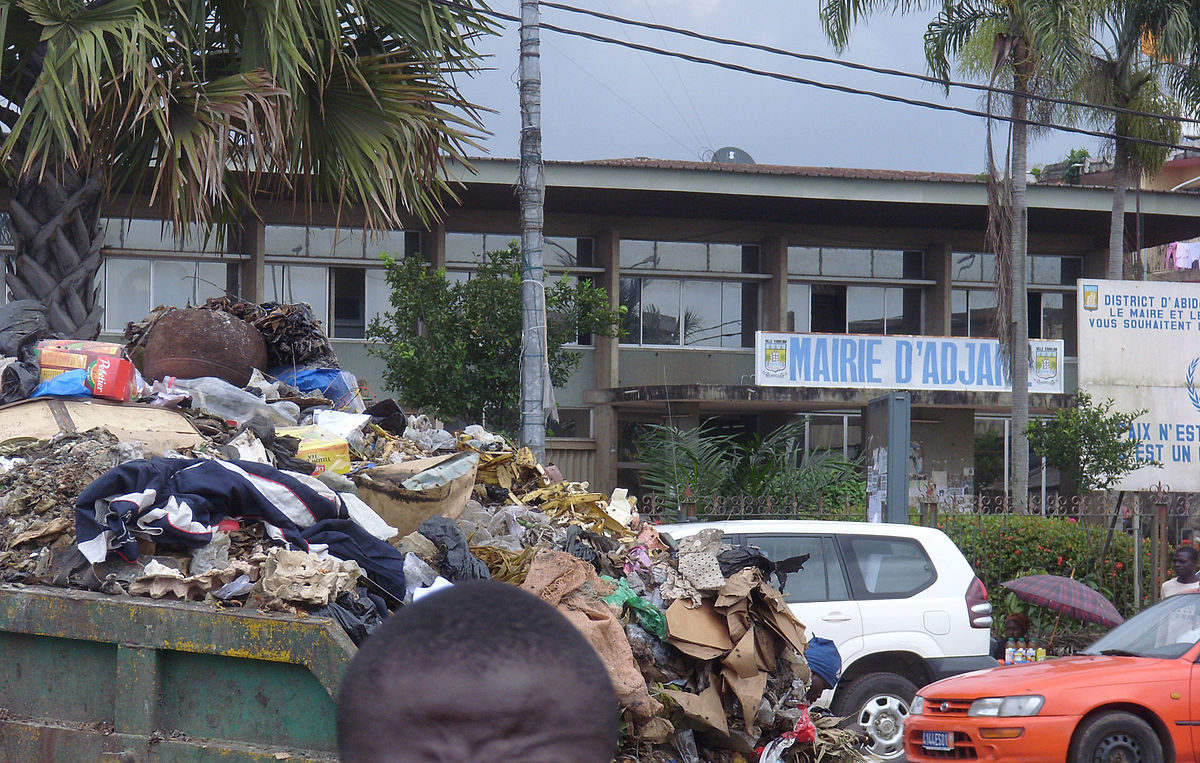
A garbage-laden truck driving in Abidjan, Côte d’Ivoire (Photo: Ouioui/Wikimedia Commons [ CC BY-SA 3.0])
Employees are, in principle, expected to put their company’s interests first. But when a company harms society or the world, when it tries to conceal such realities, or when internal warnings go unheard, how should employees act? Uniting with like-minded colleagues can be effective, but individual actions such as leaks can also have dramatic effects. As giant corporations now wield power exceeding the GDPs of many countries, employees acting as watchdogs may help steer us toward a better world.
Writer: Virgil Hawkins
※ The contract was part of the Department of Defense’s Project Maven, which began in 2017.








自分の職を失う可能性もあるのに、そのリスクよりも社会全体の利益を考えて行動している社員の勇気が報われる世界になればいいなと思いました。
情報は見えにくいものなので、どう扱われているかもっと危機感をもって知っておかないといけないなと怖くなりました。
内部からの告発がしやすい企業や社会になればいいなと思います。
巨大なグローバル企業は、世界にとって何が良いことなのか、考えて行動する社会責任があると思いました。
経営層が自社の利益を優先する中、社員たちが正義感をもって声を上げているのは、頼もしいです。
このような風潮がもみ消されないことを祈るばかりです。
グーグルやアマゾンなどのグローバル企業が私たちの生活を豊かにしているのは事実だと思いますが、それらの企業が負の影響をもたらす場合もあるという事実も、消費者として理解しなければと実感しました。ただ、その負の側面を消費者が直接に知ることは難しく、内部の人間の告発に頼らざる終えないので、消費者として、彼らを応援していたいと思いました。