
The “Africa” portrayed in the media may be imagined as rife with infectious diseases, with people there waiting for aid from developed countries and NGOs. However, in reality, a variety of innovations developed in Africa are helping to solve health and sanitation challenges. Here, we would like to introduce some of those innovations.
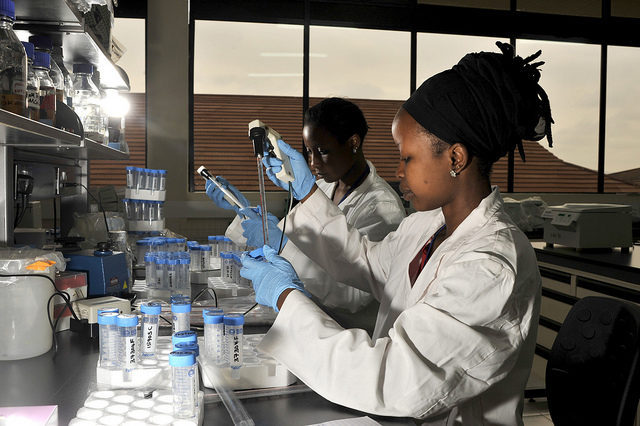
Women working in a lab in Kenya (Photo: ILRI /Flickr CC BY-SA 2.0 )
Innovations leveraging communications and electronic technologies
In recent years, communications technology has advanced rapidly in Africa, and mobile phones have become widespread. First, we would like to introduce an innovation that makes use of this communications technology. In Cameroon, there are only 50 cardiology specialists for a population of 20 million. Moreover, most of them are concentrated in cities. Some people die without ever being able to see a doctor. In response, Cameroonian engineer Arthur Zang developed a tablet computer called the Cardiopad. With the Cardiopad, heart examinations can be conducted and the results sent to specialists far away, who analyze them within 20 minutes.
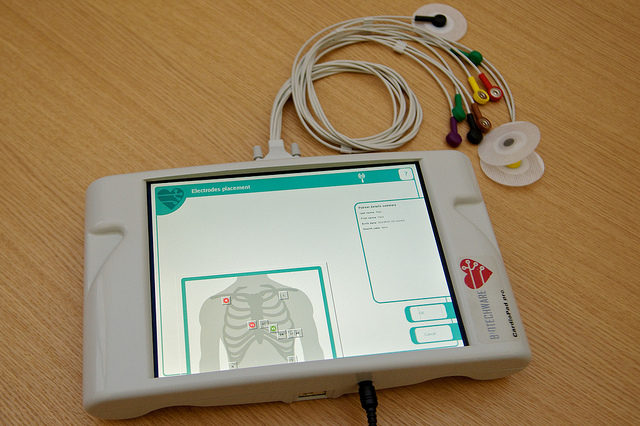
The Cardiopad device (Photo: Andrea Contri/Flickr CC BY-NC-SA 2.0 )
Malaria is an extremely serious problem in sub-Saharan Africa. It infects humans when they are bitten by female Anopheles mosquitoes carrying the malaria parasite and can be fatal. In 2016, there were 216 million infections confirmed in 91 countries worldwide, and deaths reached 445,000. Africa accounts for 90% of the world’s malaria cases and 91% of deaths. The conventional test for malaria—drawing blood—incurs costs for kits such as disposable needles and cotton and requires careful hygiene management. It also takes time because blood must be drawn with a syringe and then tested. Addressing these challenges is Matibabu, which can test for malaria without drawing blood.
Compared with the traditional method using a syringe, it requires less time and cost per person. Developed by a student group at Makerere University in Uganda, it allows a person to insert a finger into a device that uses light sensors and magnetism to test for malaria in 2 minutes, and the results can be viewed on a computer or smartphone.
There are also innovations that contribute to safe childbirth. Each year around the world, about 3 million newborns die, there are some 2 million stillbirths, and 200,000 mothers die during childbirth. Over 60% of these occur in developing countries. In sub-Saharan Africa in particular, inadequate prenatal checkups due to cost and poor access are one cause. In response, a small wand-like device called WinSenga was developed, which can be placed on a pregnant woman’s abdomen to take ultrasound measurements.
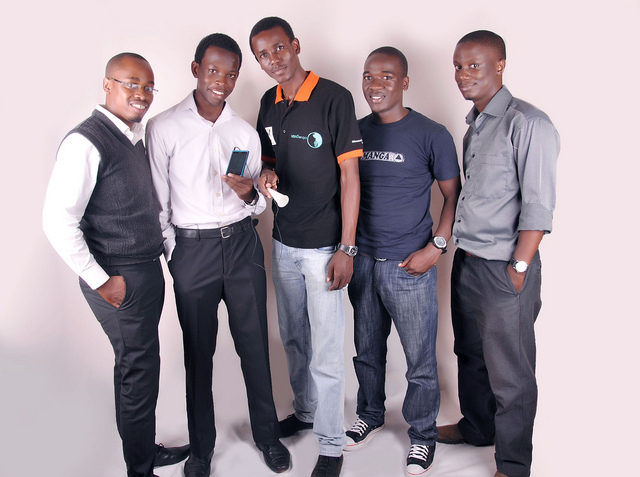
Members of the development team holding WinSenga (Photo: ImagineCup/ Flickr CC BY2.0 )
When connected to a smartphone, the ultrasound results can be viewed via an app. It is expected to be useful in places without access to full-scale hospital ultrasound machines. Pregnant women can also listen to the baby’s heartbeat. It was developed by a group who were students in Uganda at the time.
Innovations beyond machinery
So far we have looked at innovations that use modern technologies such as communications, but even without large-scale technology, unprecedented flexible ideas can also bring about innovation.
Around the world, about 750 million people cannot easily obtain clean water. In rural Africa, it is not uncommon for women and children to spend hours each day walking back and forth between water sources and home to collect safe drinking water. In 1991, the Hippo Roller was developed in South Africa for such women and children living in rural Africa.
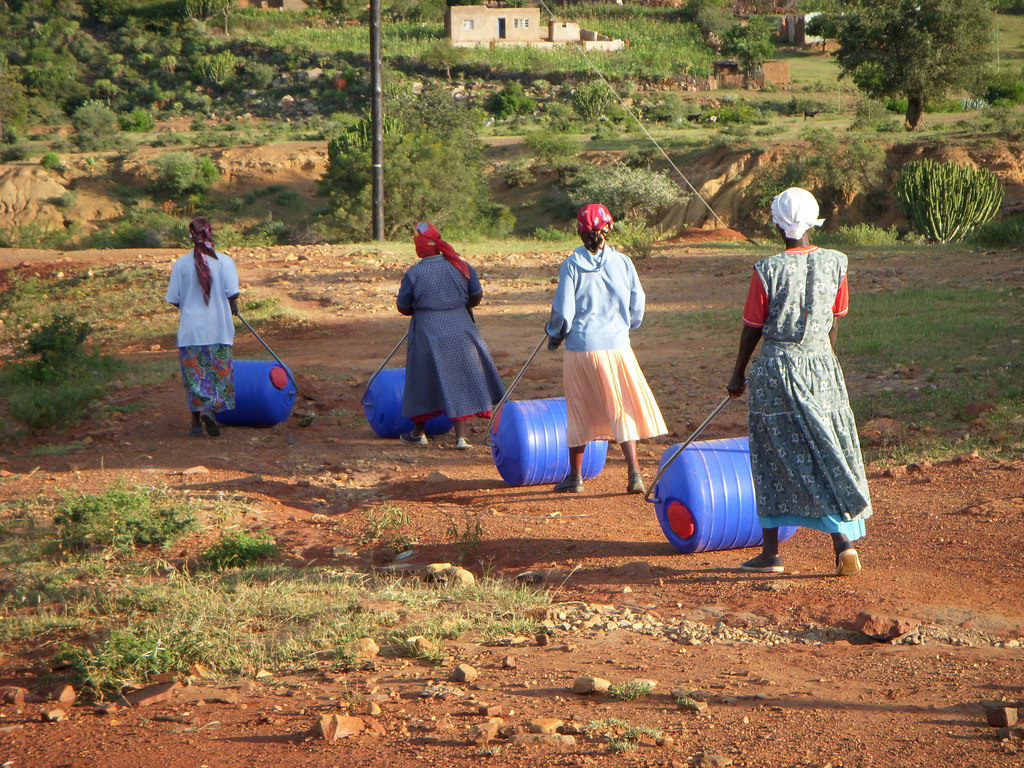
People using the Hippo Roller (Photo: Hippo Roller/ Flickr CC BY-NC-SA 2.0 )
The mechanism of the Hippo Roller is extremely simple. Instead of carrying containers on their heads as before, users can roll it along the ground to transport five times as much water at a time. In practice, rolling or pushing 90ℓ of water over level ground feels like the weight of 10ℓ. Thanks to the Hippo Roller, the frequency of water collection can be reduced to a quarter of what it was, enabling women and children to spend more time on household tasks, farming, and schooling.
Now let’s look at safe water supply from an urban perspective. Water supply problems also occur in cities. In Kibera, a low-income settlement in Nairobi, the capital of Kenya, houses are densely packed and sanitation conditions on the ground are poor. In such conditions, it is difficult to find places to run water pipes. In addition, pipes may be vandalized and water used without authorization. A solution that overturns conventional thinking is a groundbreaking water pipeline: instead of running pipes on the ground, they are routed overhead. Water flows by gravity from a tower holding 100,000ℓ into elevated pipes, and is delivered to intermediate collection points that serve as people’s water sources. The goal is to deliver water to these points so that Kibera residents do not have to walk more than 8 minutes to reach a source.
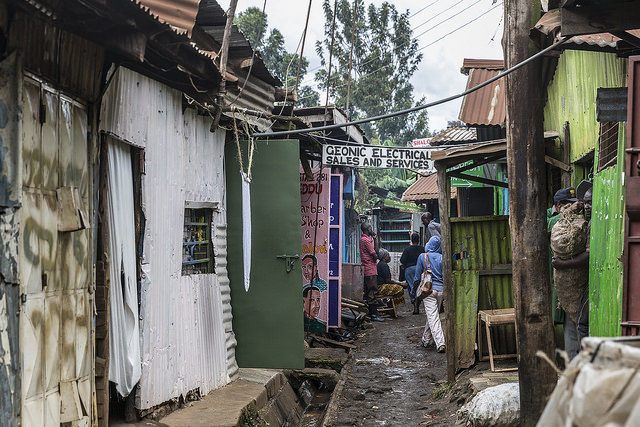
A view of Kibera (Photo: Ninara/ Flickr CC BY2.0 )
Another advantage of routing pipes overhead is security. When pipes run above people’s heads, they are in public view, reducing the risk of deliberate vandalism and allowing for sustained use.
We mentioned malaria testing earlier, but there is also a simple idea to repel the mosquitoes that transmit malaria: Faso Soap, a mosquito-repellent soap. It was conceived by two then-students, Moctar Dembélé of Burkina Faso in West Africa and Gérard Niyondiko of Burundi. Made from natural ingredients such as shea butter, lemongrass, and African marigold, the soap gives off a scent that repels mosquitoes. To ensure effectiveness even after the soap is rinsed off, it uses the latest cosmetic technology: natural insect-repellent ingredients are encapsulated in 0.1 mm capsules that adhere to the skin, releasing gradually to keep mosquitoes away for 6–8 hours. Furthermore, in drains and puddles where used soap flows, it can also help prevent mosquito breeding. Because we use soap daily, this simple method—allowing African households that cannot afford insect repellents containing harmful chemicals to easily obtain soap and prevent malaria—is appealing for being gentle on both people and the environment.
Innovation advances through trial and error
Of course, innovation does not only meet with success. Some developments were highly anticipated at first but did not work out. One example is the smokeless stove. It was hoped that it would reduce the risk of pneumonia compared with cooking over an open flame. About 2.8 billion people worldwide cook indoors using solid fuels such as firewood, agricultural waste, charcoal, and coal. Smoke particles impair lung cell function and increase the risk of respiratory infections. However, according to a paper published in the British medical journal The Lancet, the stove alone was not effective; ventilation seems to be more important. Research conducted in Nepal also found that, compared with solid fuels, 50% fewer particles are produced by gas and other liquid fuels, making them healthier. The challenge is how to spread fuels that are affordable, accessible, sustainable, and health-friendly. That said, while smokeless stoves did not lead to a reduction in pneumonia, there are reports of other benefits: fewer burns and reduced fuel use, enabling more efficient cooking.
There are also cases where the concept was unique and promising but failed. One such example is the PlayPump, which used the energy generated as children played. As children played on a merry-go-round-type apparatus, water was pumped into a storage tank. However, many of the installed PlayPumps fell out of use. Several reasons have been suggested, but the main one is that relying on children’s play as the power source is unstable and inefficient, resulting in many places where sufficient water could not be pumped.
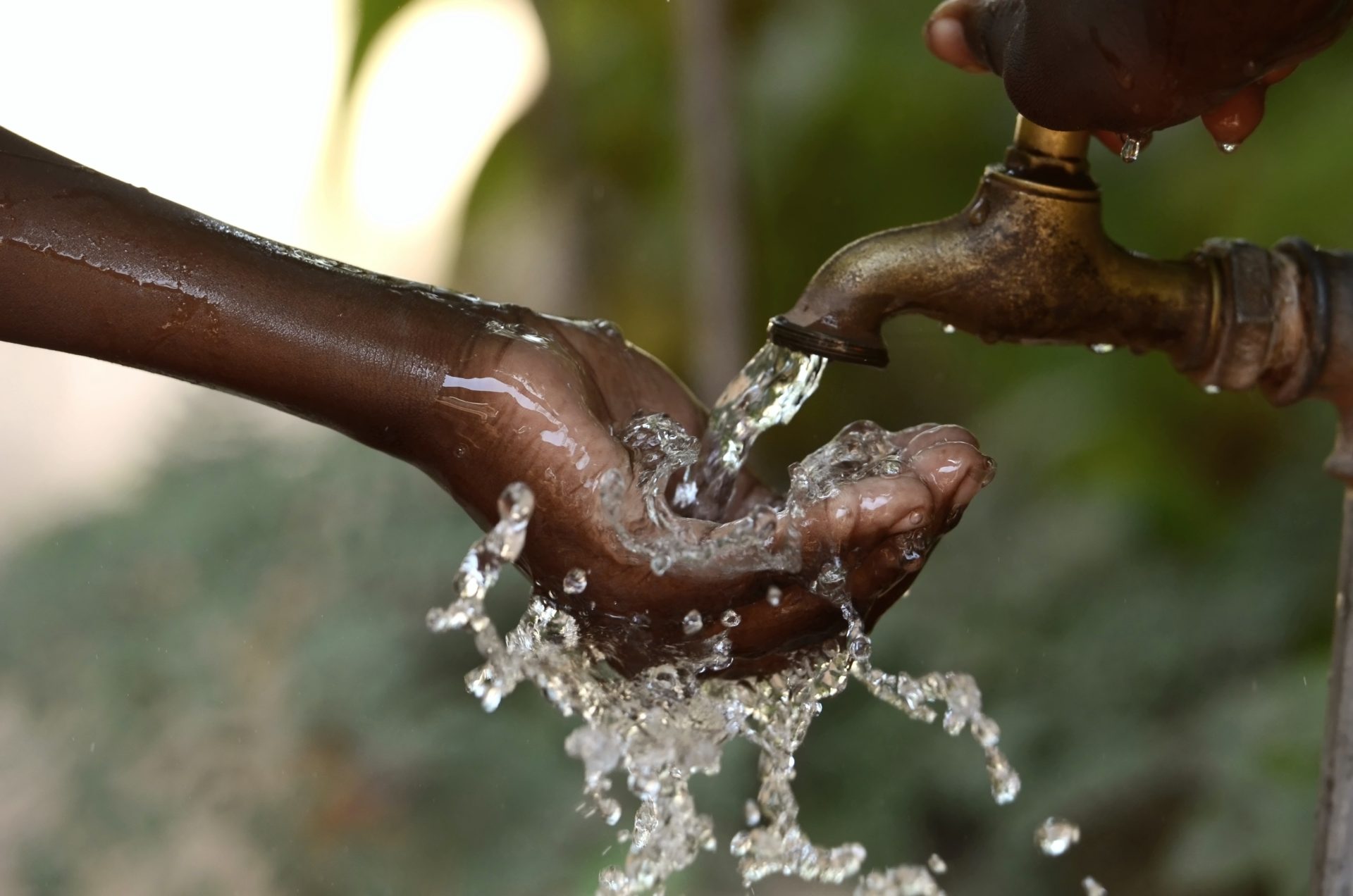
Child using a water tap (Photo: Riccardo Mayer / Shutterstock.com)
Based on prevailing media coverage, people tend to have the impression that Africa lacks technological development in health and sanitation and that the situation is not improving. However, technological innovation is emerging from within Africa and advancing, even if it tends to receive less coverage.
In addition to new innovations, there are also projects that make good use of existing systems. In Tanzania and Ghana, for example, soft drink companies shared their refrigeration and distribution know-how with governments, and this was applied to the cold storage and transport of vaccines that must be kept at certain low temperatures.
Even without technological innovation, changing customs can improve conditions. For example, from the late 1980s to the mid-1990s, Uganda succeeded in reducing HIV infection rates. Rather than technological innovation, it was likely the government’s efforts to disseminate contraceptives to prevent the spread of disease and to create an environment where HIV could be discussed openly—thereby changing people’s behavior—that brought success. We must remember that, beyond technology-driven innovations that pursue functionality and efficiency, innovations that people can enact locally—shaping cultures and norms that make life easier for more people—are also necessary.
Even now, new innovations continue to be explored across Africa.
Writer: Shiori Tomohara










人間の知恵の可能性を感じました。アフリカが「支援されるだけ」ではないことがもっと広まればいいなと思います。ファソ石鹸欲しいです。
このようなアフリカ発のイノベーションにこそ、投資すべきでしょう。
しかし、マスコミなどで、アフリカに対するステレオタイプが出来上がっちゃっていて、
このような側面に注目してもらえない。
注目されなければ、投資したくなる人の目に触れることもない・・・
アフリカには、原始的な生活ばかりでイノベーションがないというような偏ったイメージが広がっている中で、今回の記事は、意外でステレオタイプを払しょくするもので新鮮でした。これからも無意識に植え付けられているステレオタイプを払しょくするような意外性のある記事を期待してます!
自分の中でのアフリカのステレオタイプなイメージが強かったなと思いました、、
アフリカでこのようなイノベーションが為されているなんて全く知りませんでした。もっとこのような報道がされるようになって欲しいです。
知らないことばかりでした!面白いですね!
ファソ石鹸がほしいです
非常に興味深く拝読いたしました。
多くのイノベーションが学生から生まれていることを知り、可能性を感じました。
先進国が「支援する」というイメージでしたが、自分たちから変えていることを知りました。
アフリカで現地の学生たちが、自らの地域に貢献するようなイノベーションを起こしていることを知らなかったです。
先進国による支援ばかりが目立つなか、アフリカの地域に住む市民が自身で問題に立ち向かおうとしている姿ももっと報道されるべきだと思いました。
WinSengaっていうアプリがすごくいいなと思いました。
アフリカ以外にも、アクセスの悪さで苦しんでいる妊婦さんはいるのでぜひ世界中に広まってほしい!
学生が開発した例もいくつかあり、今後のイノベーションの将来性があるなと思いました。
正直、アフリカの大学生がこんなにイノベーションを起こしているなんて全然知らなかったし考えたこともなかったです。
アフリカ内だけでなく、同じような問題をかかえる地域(アジアとか、、?)や、世界でも評価されそうな物がたくさんあって、
同じ学生として刺激を受けたし、こういうところにもっとお金が渡ればいいのにって思いました。