
Do you know which country today is facing the most severe humanitarian crisis? Many people might think of countries like Syria that are reported daily for conflict and refugees. However, according to the UN Secretary-General, that country is Yemen.
The cause is the armed conflict that has continued since 2014. In Yemen now, the devastation of food and water pipelines and the depletion of fuel are worsening, and at this point over 70% of Yemenis need humanitarian assistance. This is not just a problem within Yemen. Various actors—neighboring countries, stakeholders, and international terrorist organizations—are creating this situation.
Despite the fact that the world’s largest humanitarian crisis is unfolding in Yemen, it is hardly covered in Japanese media. As a result, it would not be surprising if some people in Japan are unaware it even exists. What is happening in Yemen now? Why is it not being covered? In this article, we take a closer look at these questions.
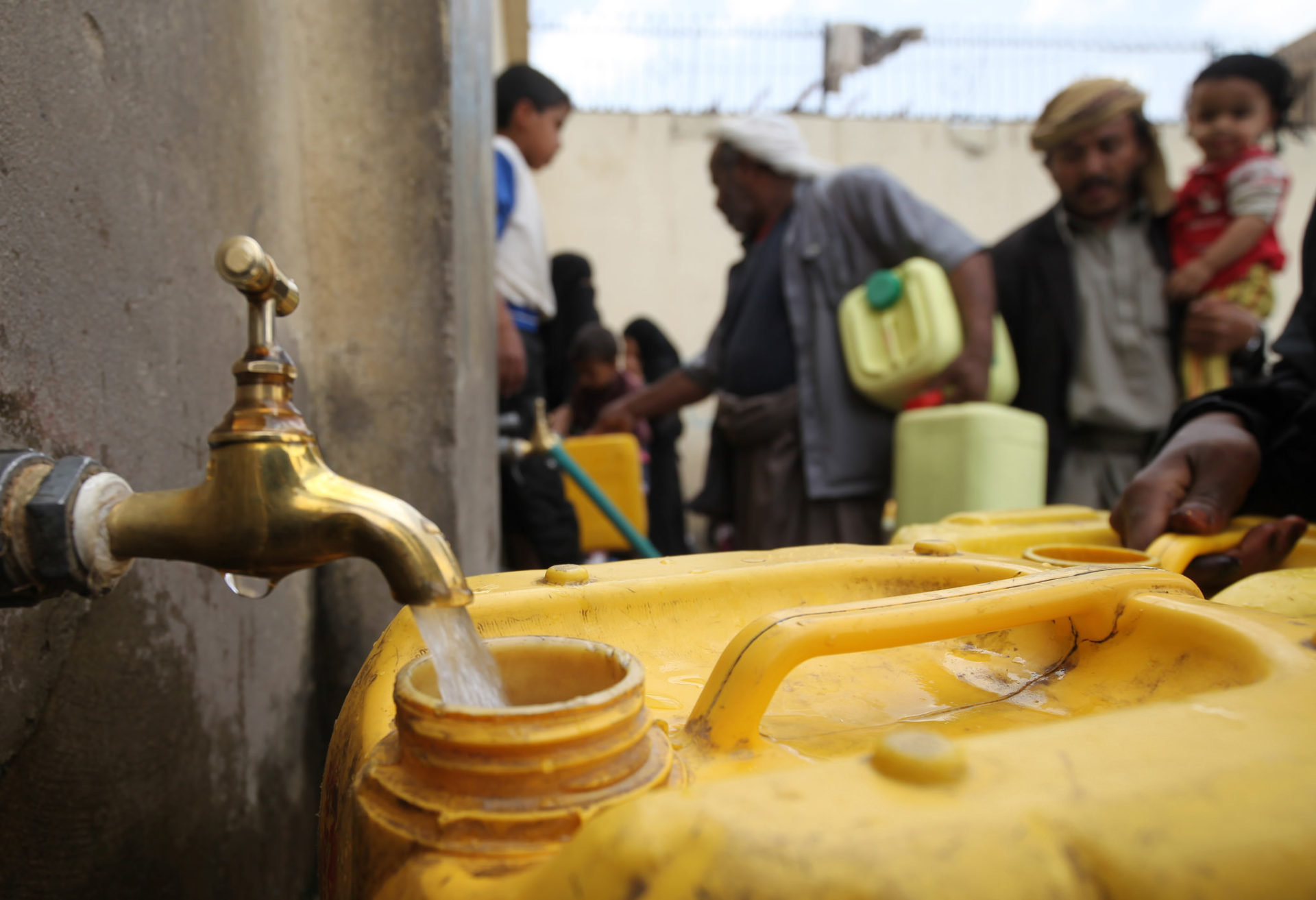
Yemenis drawing clean water supplied by UNICEF (Photo: EU Civil Protection and Humanitarian Aid Operation CC BY-ND 2.0)
Yemen Facing the World’s Largest Humanitarian Crisis
Yemen was originally formed when South Yemen and North Yemen unified in 1990, but various political upheavals have continued even after unification.
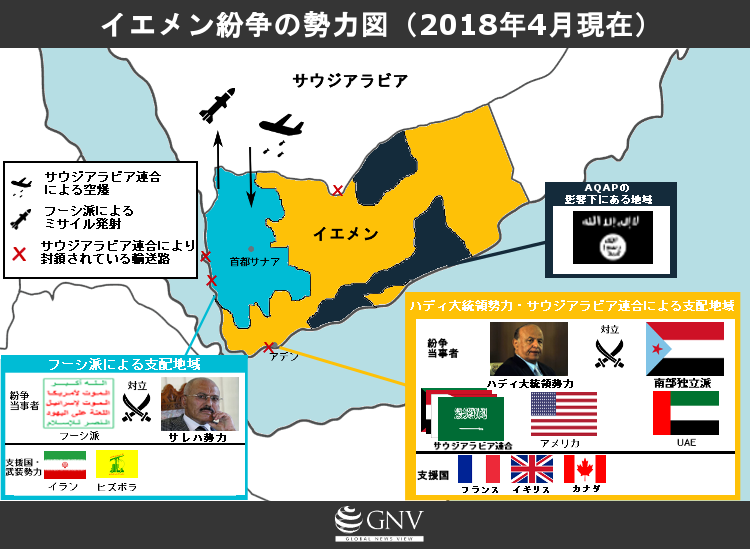
As covered in a previous GNV article, following the series of events known as the Arab Spring that swept North Africa and the Middle East, President Saleh, who had clung to power for many years, was ousted. A government led by President Hadi was then formed, but armed Houthi forces (Zaydi, a branch of Shia Islam) dissatisfied with the new regime seized the capital, Sana’a. Forces loyal to former President Saleh, seeing an opportunity to return to power, joined the Houthis. Taking advantage of the turmoil, al-Qaeda in the Arabian Peninsula (AQAP) also expanded its influence, particularly in the south where the government’s authority had weakened.
Saudi Arabia, which sided with the government that had fled to Aden in the south, formed a coalition with neighboring countries and has deployed airstrikes and ground forces. Meanwhile, Iran is said to be supporting the Houthi forces. On top of this, the United States has carried out drone strikes against AQAP, provided military support to the Saudi-led coalition, and sold weapons, further worsening the situation.
In this way, a variety of actors are intervening in the Yemen conflict with their own political aims, making the web of interests extremely complex.
Recently, new developments have emerged, making the situation even more complex and severe.
In the north, the Houthis and the forces of former President Saleh had been in a cooperative relationship, but when Saleh signaled a willingness to reach out to the Saudi-led coalition, the Houthis balked and a rift emerged, and in December 2017 former President Saleh was killed by Houthi fighters.
Meanwhile, in Aden in the south, where government forces had fled, southern secessionists seeking to reestablish an independent South Yemen surrounded the presidential palace in an attempt to drive out the president’s camp and clashed violently with government forces. At least 36 people were killed and 185 injured in these disturbances. The southern separatists are said to be backed by the United Arab Emirates (UAE).
Saudi Arabia, which claims to support the government, maintains that President Hadi’s government is legitimate and, under the pretext of protecting it, continues both airstrikes and ground attacks on Houthi-controlled areas, but it has also been reported that Saudi Arabia has prevented President Hadi, who is staying there, from returning to his country. In response, the Houthis have launched missiles targeting Saudi territory and oil tankers, and in recent years their range has increased, expanding the damage. Furthermore, support for the Houthis from Hezbollah, the Lebanese Shia militant organization, and Iran’s expanding involvement in Yemen are intensifying the conflict.
The humanitarian harm to civilians is not limited to deaths and injuries from airstrikes and other fighting. To counter the Houthis, Saudi Arabia has blocked all land, sea, and air supply routes into Yemen. As a result, food shortages have worsened, the worst famine in decades has taken hold, and about 18 million people are facing hunger. If the blockade is not lifted, millions of people will lose their lives. To make matters worse, the cholera outbreak in Yemen has reached 1 million cases—the highest worldwide since World War II—and the death toll has exceeded 2,000.
Amid this tragic and chaotic situation in Yemen, the population is facing the worst humanitarian crisis in the past 50 years.
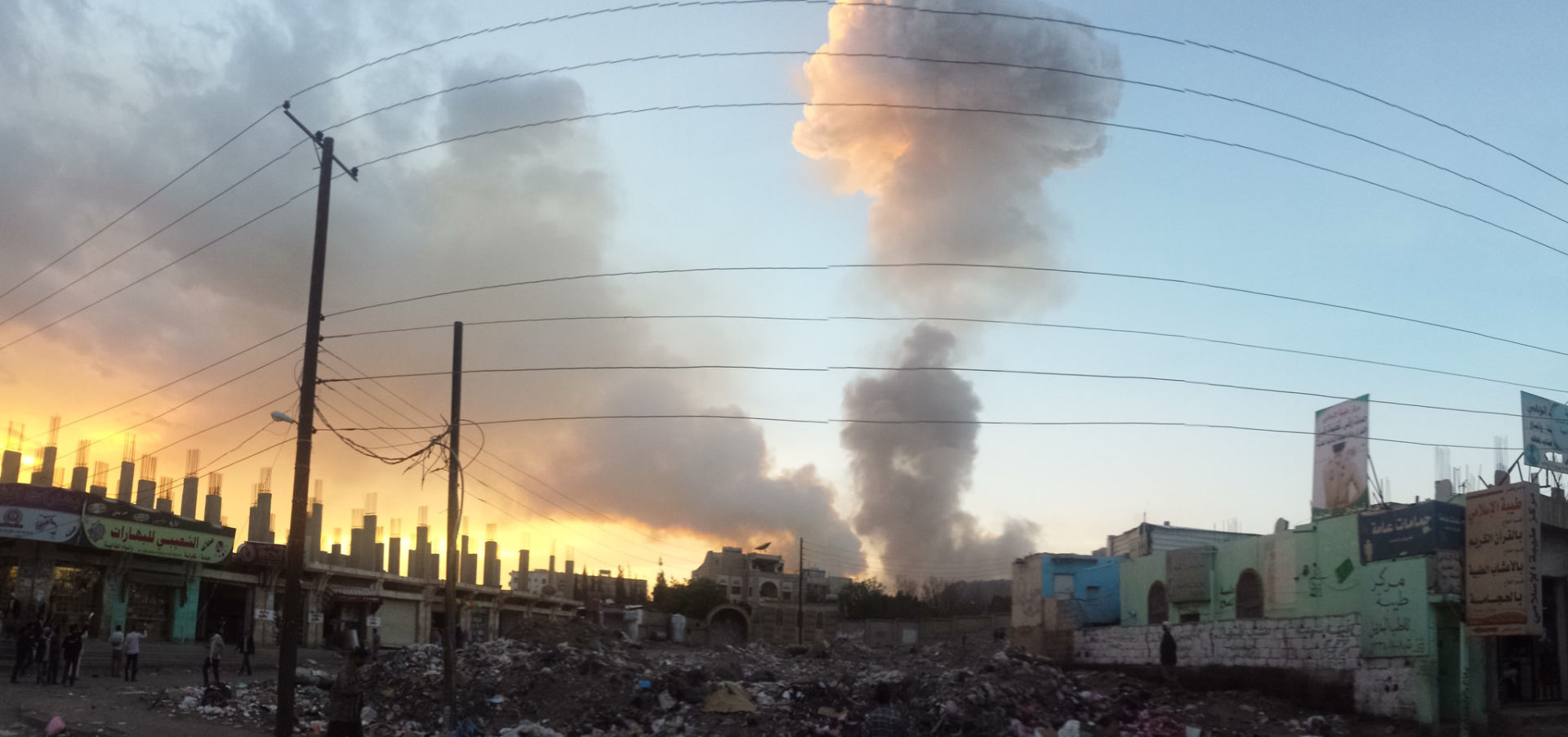
The capital, Sana’a, severely damaged by Saudi airstrikes and other attacks (Photo: ibrahem Qasim CC BY-SA 2.0)
The Volume and Content of Yemen Coverage in Japan
As we have seen, the current situation in Yemen is extremely dire. From an international relations perspective, it is also a very serious global issue. How much attention has such a critical issue received in Japan?
If we measure the volume of coverage, it becomes clear that reporting on the situation in Yemen in Japan is extremely limited. In the Tokyo morning and evening editions of Yomiuri Shimbun, the number of articles whose headlines include the word “Yemen” totaled 83 over the three years from September 2014, with 37,619 characters. In other words, on average, only 2.3 articles and 1,045 characters per month were published.
As the graph below shows, even when we sum up three years of coverage on Yemen since the outbreak of the conflict, it does not come close to the volume of international reporting on other conflicts covered in 2014, the year the Yemen conflict began. Compared to one year of coverage of the Ukraine conflict, which was reported daily, three years of reporting on the Yemen conflict amounts to less than one-tenth. The total three years of reporting on the humanitarian crisis in Yemen, which has harmed millions over many years, is less than half the one-year coverage of the terrorist attacks that occurred in a single day in the single city of Paris.

Loading…
Within the small amount of coverage published in Yomiuri Shimbun, which aspects of the Yemen conflict are being emphasized?
As the graph below shows, articles about “conflict/armed clashes” account for more than half of the Yemen coverage. Political developments receive some attention, but there are very few articles that address the “humanitarian crisis.” Moreover, those are almost entirely about cholera; hunger, famine, and the destruction of pipelines are barely mentioned, and the blockade of supply routes by the Saudi-led coalition was not covered at all. The reporting focuses on sensational, high-impact elements like conflict and terrorism, with little attention to the realities of the many civilians in need of humanitarian assistance.
Loading…
Various parties to the conflict appear in the articles, and among the external actors, Saudi Arabia appears the most—17 out of 83 articles. However, the content is almost entirely about airstrikes, and the reality of Saudi Arabia’s actions, which have created the primary cause of the worsening humanitarian harm, such as the blockade of supply routes, was not covered.
The United States appears in only 5 of the 83 headlines (about 6%). While U.S. airstrikes and President Obama’s 2015 approval of logistical support for Saudi military operations were reported, the fact that the United States supplied weapons to Saudi Arabia was not mentioned even once.
What Lies Behind the Biased Coverage
Why does the reporting end up like this?
First, we need to look at the usual tendencies and preferences of Japanese media. Japanese news outlets generally cover only a small portion of the world. As noted in another article by GNV, events in poorer countries or in countries with little direct connection to Japan tend to be assigned low news value and low priority, making them less likely to be covered. Therefore, events in Yemen—a poor country with weak ties to Japan—are likely to go unreported. Even if there were a willingness to report, there have been cases where the governments of Saudi Arabia and Yemen have hindered journalists from entering.
One reason for the lack of reporting on the negative aspects of Saudi involvement may be the influence of the United States, which is fighting on the Saudi side. There is evidence that Japanese and American media coverage are correlated and that Japanese coverage tends to resemble U.S. media trends. The United States is Saudi Arabia’s largest oil export destination and is heavily dependent on it, while Saudi Arabia also receives weapons from the United States and uses them to participate in the conflict. In other words, the interests of the oil and arms industries are deeply intertwined. Consequently, the United States may refrain from reporting on the negative aspects of Saudi Arabia, with which it has such ties, thereby obscuring their shared responsibility for the Yemen conflict. As a result, Japanese news outlets influenced by U.S. coverage may also avoid addressing issues such as the Saudi blockade of supply routes that helped cause Yemen’s humanitarian crisis.
Moreover, like the United States, Japan also imports 40% of its oil from Saudi Arabia, and the relationship between Japan and Saudi Arabia is very close. Such deference on Japan’s part may also be one reason for the limited reporting on Saudi Arabia’s negative aspects.
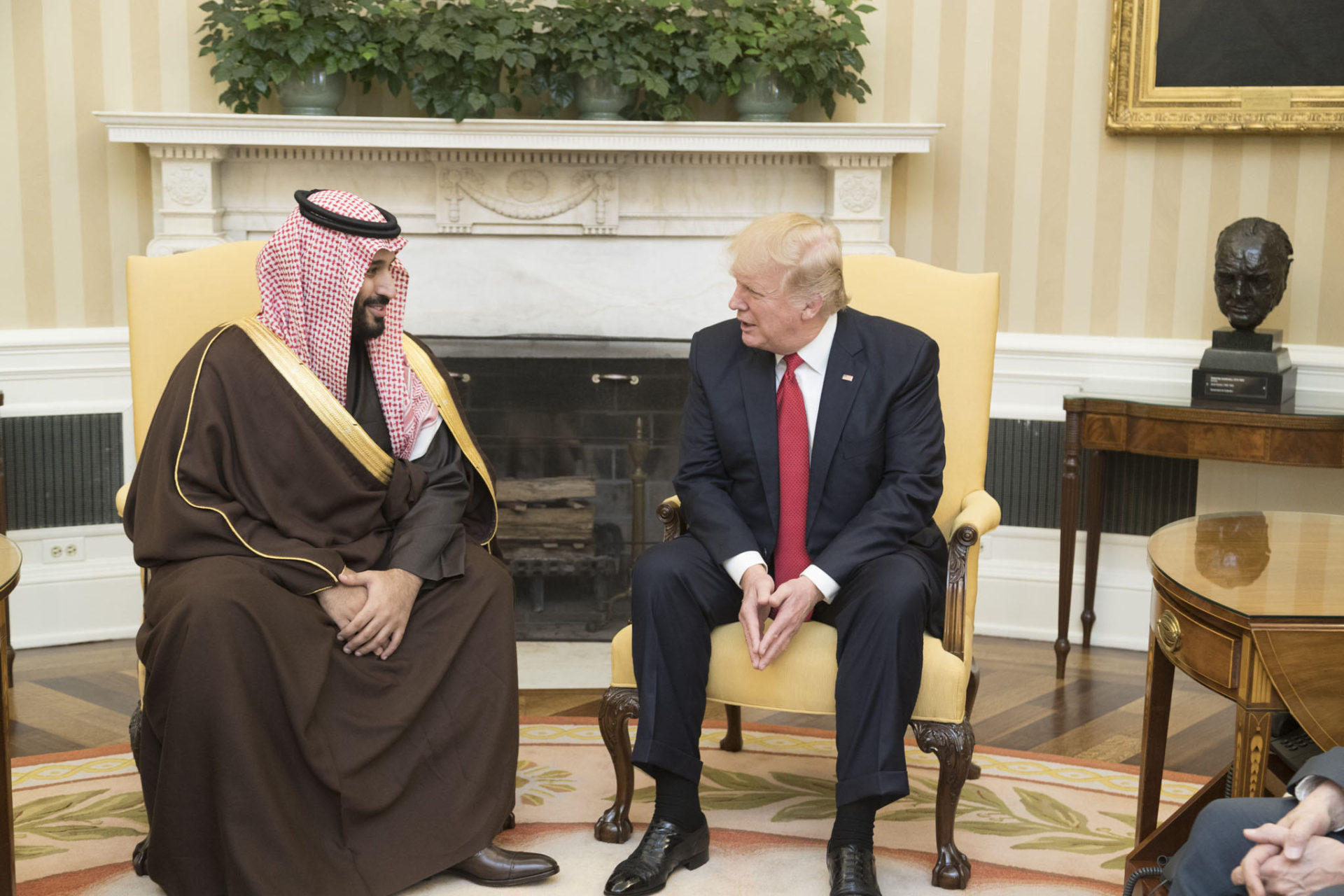
Trump and Crown Prince Salman, who is directing the attacks on Yemen (Photo: The White House Public Domain Mark 1.0)
As described above, in Japan there is extremely little coverage of the situation in Yemen, particularly of the humanitarian toll, and few reports that address the reality of Saudi Arabia’s actions in Yemen. Indifference to the wider world plays a role, but interstate interests likely also affect Japanese reporting.
To be concerned about international affairs, one must first be informed. Yet given the current state of Japanese media, it is difficult to gain a broad and deep understanding of the world. Can we accept remaining unaware of the severe humanitarian suffering that exists? There is an urgent need for objective international reporting in Japan.
Writer: Yutaro Yamazaki
Graphics: Hinako Hosokawa




ひどい話ですよね・・
日本の場合は、政府がサウジアラビアの石油に依存しているのも大きいな問題だが、
日本の企業と武器メーカーとの関係もあるでしょう。
例えば日本の大手銀行がアメリカの武器メーカーに融資をしている事実もあります。
その武器メーカーはクラスター爆弾を製造して、サウジアラビアに売ってきました。
日本の銀行の融資のおかげでサウジアラビアのクラスター爆弾がイエメンで使われています・・・
https://mainichi.jp/articles/20170528/k00/00m/040/106000c
イエメン紛争の次のラウンドがついに始まってしまいました・・・
国連などの声を聞かず、サウジアラビアの連合が、ホデイダ港への総攻撃を開始。
https://www.bbc.com/news/world-middle-east-44463749
この港からイエメンの食糧の7割が入ってきているとされています。
ただでさえ人道危機が世界で最悪の状態なのに、これからどうなるのか心配。