
Have you, the readers, ever seen products labeled “fair trade,” and have you ever bought them? Recently, even major Japanese confectionery makers have introduced fair trade chocolate, and it has gradually begun to attract attention in Japan. Paying a little more than usual for such products may make you feel you’ve done something good. You might be surprised to learn that while fair trade products in Japan carry a strong image of “social contribution,” in countries like the United Kingdom they are bought and sold in supermarkets as ordinary, everyday goods. So, in Japan—where fair trade is in some sense “out of the ordinary”—how aware are people of it, and how much attention does it receive? And might media coverage be related to the difference in attention between the UK and Japan? This article analyzes the state of fair trade in Japan by comparing transaction volumes and the amount of media coverage with those in the UK.
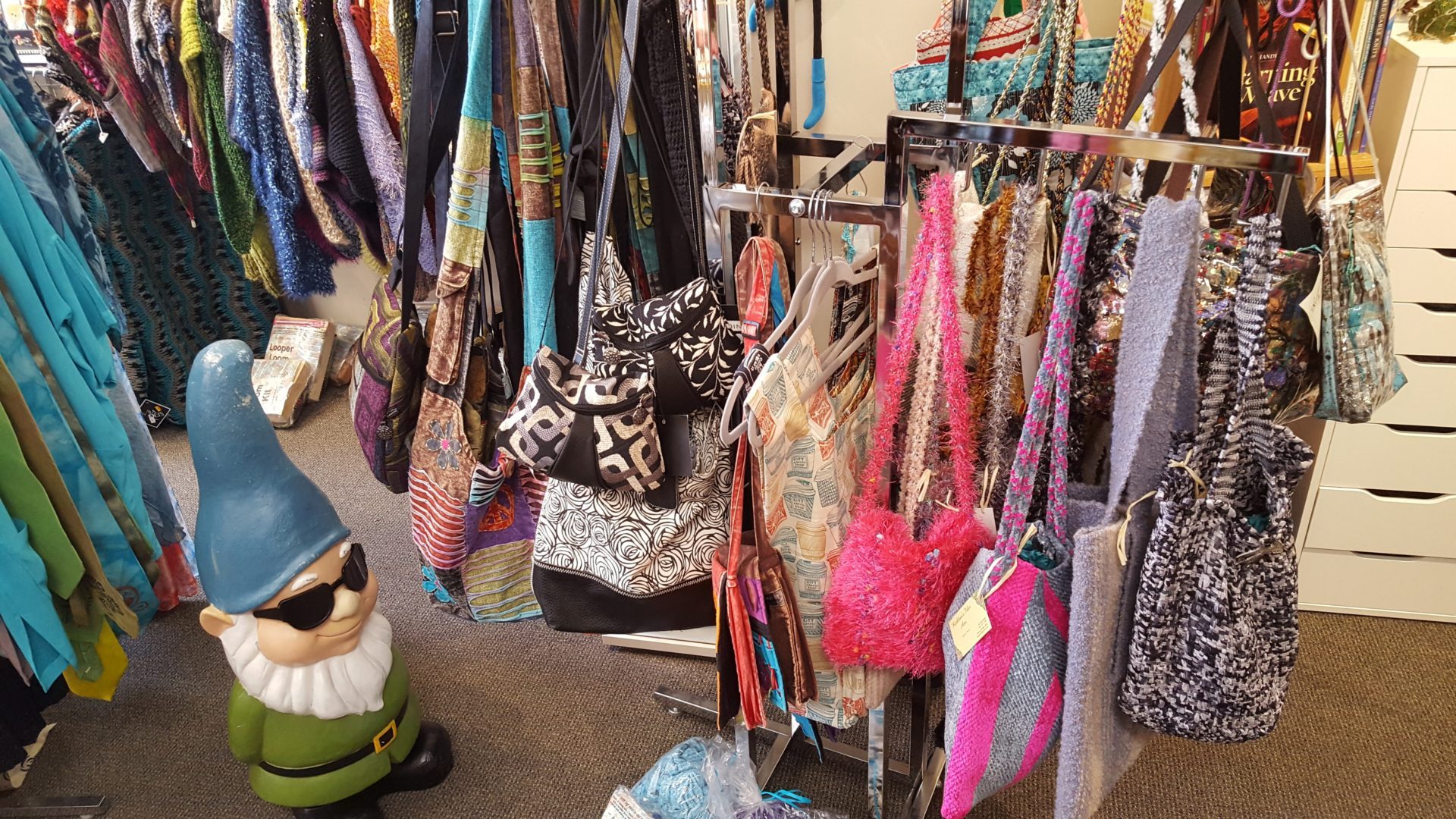
Apparel sold at a fair trade shop in New York (Henry Bellagnome/flickr)[CC BY-SA 2.0]
What is fair trade?
Before analyzing the situation of fair trade in Japan, let’s first explain how fair trade works. In conventional trade, by the time raw materials from developing countries reach consumers in developed countries as processed goods, multiple major trading companies and subcontractors have intervened, and only a tiny portion of the sales revenue reaches producers. In many cases, what is commonly called “unfair trade” prevails, where consumers in developed countries buy at very low prices the products that producers worked dozens of hours to complete under poor working conditions. Fair trade was introduced to improve, even if only somewhat, this unfair situation. It is trade that does not presuppose exploitation: producers and companies that use their raw materials enter into direct partnerships and transact in line with the Fairtrade Standards, returning to producers a fair income commensurate with their labor. The standards set not only requirements for producers’ working conditions but also minimum prices for each commodity; only by meeting these can a product be officially certified as fair trade by Fairtrade International. Representative products include indulgences such as chocolate, coffee, and tea, as well as everyday cotton goods; but in principle fair trade should apply not only to these specific items, but to all products.
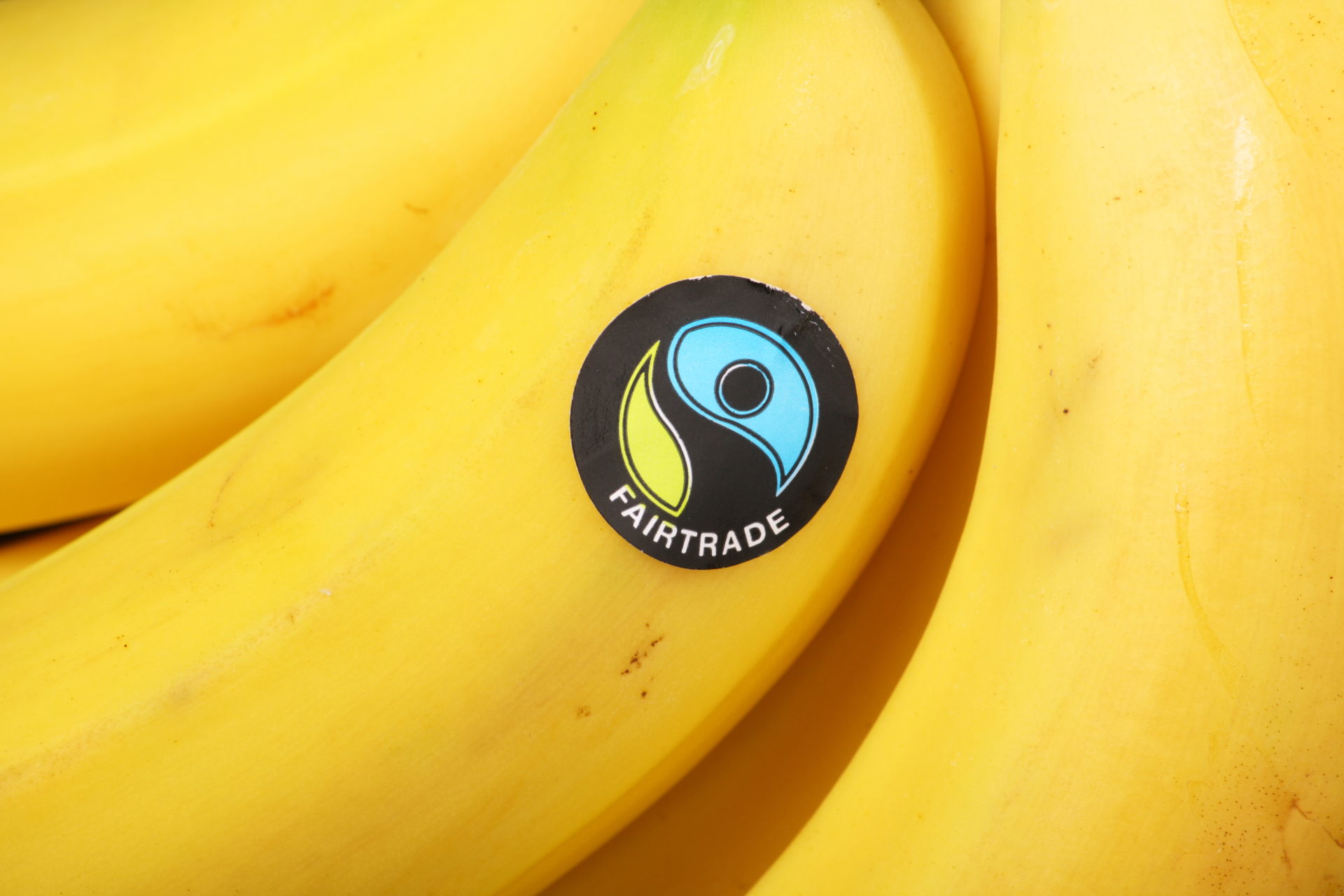
Bananas with a Fairtrade certification mark (Thinglass/shutterstock.com)
Japan’s fair trade market
So how widely are fair trade products distributed? The transaction values for fair trade products in Japan and the UK are as follows.

Loading…
It’s immediately apparent that the transaction value in Japan is overwhelmingly smaller than in the UK. While fair trade products circulate on a massive scale in the UK, why, even though they are gradually increasing in Japan, are they still handled only on such a small scale? To begin with, how well is fair trade recognized in Japan? We compared Japan and the UK in terms of awareness of fair trade, awareness of the Fairtrade certification mark, and the share of people who support buying fair trade products even at a somewhat higher price for the sake of fair trade, and summarized the results below.
Loading…
In every category, Japan’s percentages are far lower than the UK’s, indicating that fair trade has not taken root in Japan. This suggests that few people in Japan go about their daily lives mindful that their comfortable standard of living is built upon exploitation of developing countries. In other words, the low awareness and small transaction value in Japan may be because people have few everyday opportunities to learn about poverty and exploitation in other countries. So to what extent does the media—which should provide us with information about other countries and serve as our window to them—report on fair trade?
Fair trade and the media
Even before discussing coverage of fair trade, there is hardly any reporting in Japan on the poorest countries and their people. In Japan’s three national dailies, the share of characters devoted to the least developed countries is only around 5% of all international coverage. Also, over the ten years from 2007 to 2016, the number of articles containing the term “fair trade” was 376 in the UK national daily The Times of London and 837 in The Guardian (ten-year totals), whereas in Japan’s three comparable papers there were only 93 in the Asahi Shimbun, 86 in the Yomiuri Shimbun, and 74 in the Mainichi Shimbun. Narrowing further to pieces in which fair trade is the main subject (treated as the overarching theme of the article), the numbers were just 23 in the Asahi, 23 in the Yomiuri, and 26 in the Mainichi. About 17% of these were letters from readers calling for the expansion of fair trade.
Not only the number of articles but also their content differed greatly between Japan and the UK. Many pieces in the two UK papers reported on the realities faced by producers in developing countries and on how fair trade has changed conditions on the ground, offering more opportunities than in Japan to consider the more concrete realities of exploitation in poorer countries. They also point out problems inherent to fair trade and debate its appropriateness. By contrast, Japanese coverage rarely addresses the realities of producers’ poverty or fair trade’s shortcomings as the UK does; instead, it has an interesting characteristic. The subjects emphasized in articles focused on fair trade were as follows.
Loading…
This shows that Japanese reporting on fair trade is skewed toward corporate initiatives and product introductions, with little coverage of the producers actually affected by fair trade and their lives.
Fair trade reporting in which the production site is invisible
The centerpiece of Japanese fair trade coverage is the “social contribution” of people and companies engaged in it. Features on companies, products, and markets highlight new business opportunities that make “social contribution” itself into a commodity and tell the stories of companies that adopted fair trade; pieces centered on student activities spotlight how devotedly students engage in fair trade. Since the 2011 Great East Japan Earthquake, several articles have treated countermeasures against reputational damage as “fair trade,” such as calling for nondiscriminatory sales of products from disaster-affected areas or featuring handicrafts made by survivors. As noted at the outset, this stems from the common image in Japan that “fair trade equals doing good,” and at the same time reinforces that image. In analyzing articles across outlets, we frequently saw phrases like “thinking of producers in developing countries through fair trade products,” but the Japanese media’s focus is ultimately on “us” doing the thinking, and the reporting format leaves us knowing very little about the producers’ actual circumstances. In other words, what we see through the reporting is the altruistic nature of fair trade activities and the dedication of activists, while information on the actual effects on local producers and unresolved issues is provided hardly at all.
Not charity, but an ordinary part of everyday life
So is fair trade really the kind of self-sacrificing service the Japanese media praise it as? As noted above, what fair trade does is simply purchase goods produced in developing countries at a “fair price”; in other words, it merely restores an exploitative negative status quo to zero. It is not service to the have-nots, but an effort to put people whom we have pushed into deprivation on the same starting line as us. Moreover, because the standards for what counts as “fair” are those of consumers in developed countries, there is debate over whether it deserves to be called fair. Looking at the lives of producers of certified fair trade goods, poverty has eased somewhat compared with before, but they are still far from the living standards of consumers in developed countries. Nonetheless, even with its problems, fair trade is a vital first step toward achieving fairer trade worldwide. If we first raise the level of global trade transactions up to the current level of fair trade, we can expect further development of trade standards from that new starting line. When reporting frames fair trade not as “a support activity undertaken by a handful of companies and students” but as “a first step toward changing an unfair world trading system,” creating opportunities for anyone to pick up such products, perhaps the world will truly begin to move.
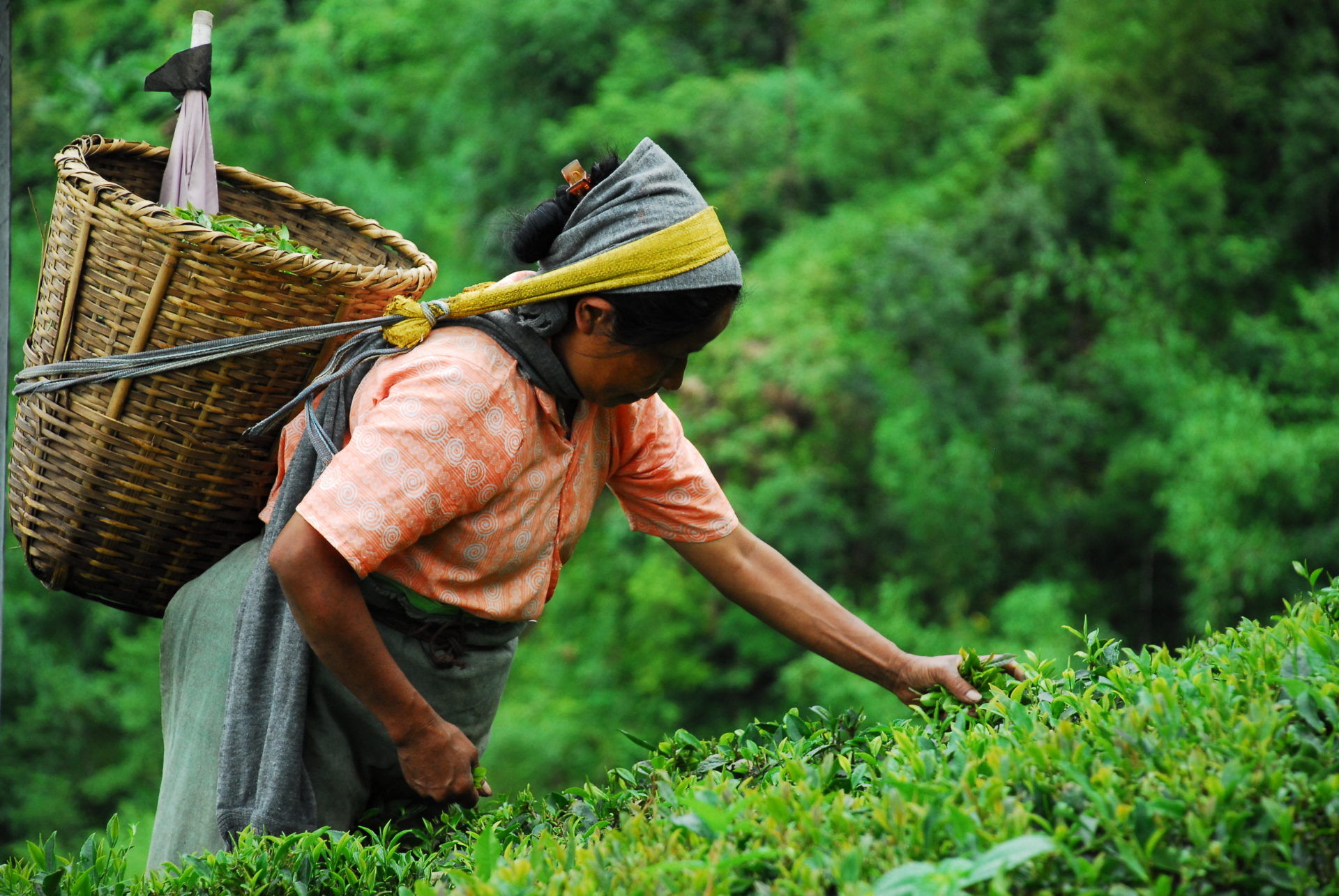
A woman plucking tea in Darjeeling, India, where a strike occurred (Maximum Exposure PR/shutterstock.com)
Writer: Yuka Komai
Graphics: Yosuke Tomino/Yuka Komai/Virgil Hawkins




1年前の記事へのコメントになりますが、この記事から1年経った今でもフェアトレードに対する認知度は低く、また「フェアトレード=いいことしている」というイメージが強いように感じます。報道の改善を求めるとともに、一人の消費者としてフェアトレードに対する認識を改めたいと思いました。
フェアトレード商品を買うと「ちょっといいことをした気分」になるとの指摘にドキッとしました。買う行為のみに目を向け、ただの自己満足で終止するのが常ですが、本来ならもっと、実際にそのお金がどのように生産者の手に渡っているかに気を配るべきなのだと気付かされました。