
On August 14, 2024, a bill was passed in Nepal’s House of Representatives. The bill concerns the armed conflict in Nepal that continued for many years and ended in 2006. Officially titled the “Third Amendment Bill to the Investigation of Enforced Disappeared Persons, Truth and Reconciliation Commission Act,” it is also known as the “Transitional Justice Bill.” Eighteen years after the conflict ended, why is this move still underway?
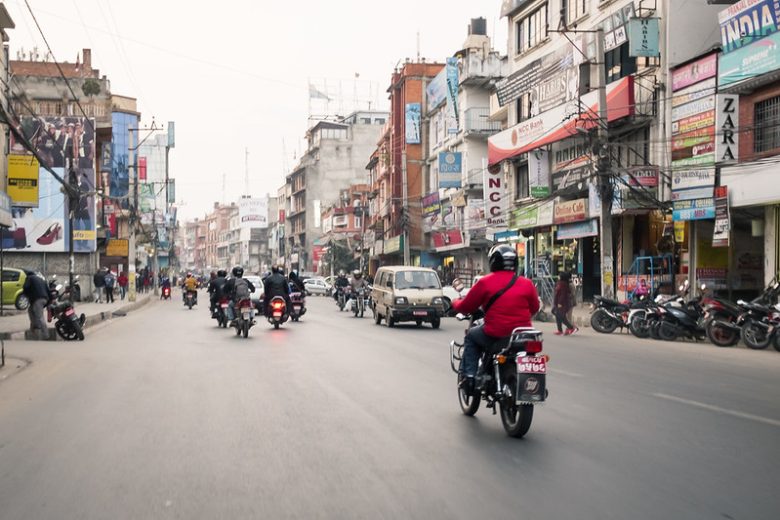
A view of Kathmandu, the capital of Nepal (Photo: Justin KinerFollow / Flickr [CC BY-NC-ND 2.0])
目次
Nepal’s armed conflict and its background
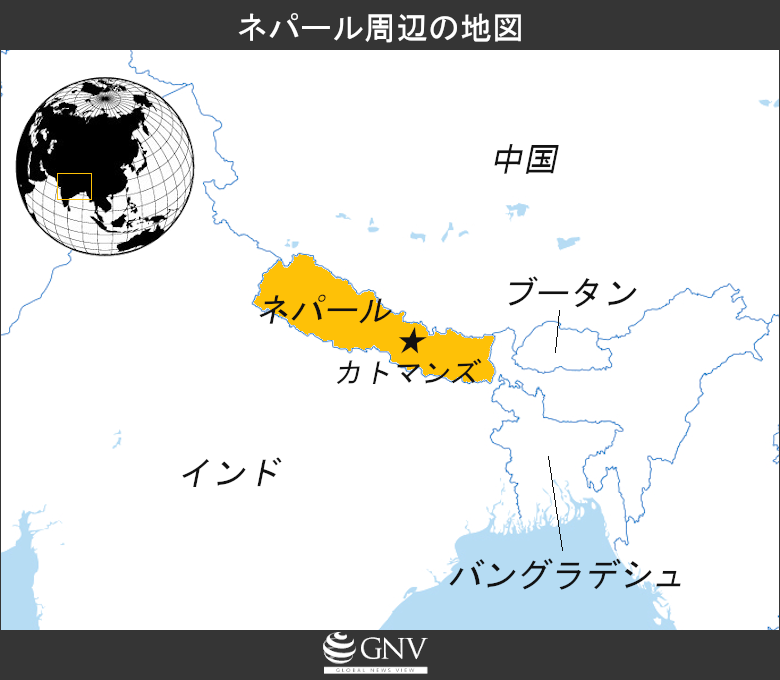
Nepal is a landlocked country bordered by China’s Tibet Autonomous Region to the north and India elsewhere. Seventy-five percent of its territory is mountainous, and because the northern region lies along the Himalayas, India has historically exerted more influence than China. The population is roughly 30 million, about 81 percent of whom are Hindu.
The prototype of modern Nepal was formed in the 18th century when the Gorkha dynasty unified Nepal and placed the capital in Kathmandu. However, amid political struggles with other powerful noble families, the Shah royal family of the Gorkha dynasty failed to gain political leadership and merely reigned as figurehead monarchs without real power. In the 19th century, the influence of Britain, which ruled India, grew. The Rana family, powerful nobles who effectively ruled Nepal at the time, reached an arrangement with the British whereby Nepal would provide Nepalese soldiers to the British Indian Army and cede diplomatic autonomy to Britain in exchange for maintaining autonomy over internal affairs.
In 1947, Britain withdrew from India, and the Rana family lost its British backing. In 1950, people inspired by India’s nationalist movement joined with the Shah royal family, which sought to regain power, and launched a revolution against the Ranas. With diplomatic support from India, the revolution succeeded and the Shahs regained power. Government functions were handed over to the revolutionary forces led by the Nepali Congress. In 1959, a constitution was established and parliamentary elections were held, in which the Nepali Congress became the largest party. However, in 1960 the king dissolved parliament and banned political parties. In 1962, a new constitution granting the king extensive powers was promulgated.
For some time thereafter, democracy remained weak and the king ruled directly. Bowing to popular opposition, elections to parliament were held in 1980 while political parties remained nominally banned. In practice, parties such as the Nepali Congress operated unofficially during the election. However, demands for democracy persisted, and in 1990 large-scale protests erupted. The army opened fire to suppress the protests, killing at least 50 people. In response, the government legalized political parties. A constitution incorporating parliamentary democracy was adopted, and parliamentary elections were held the following year. The Nepali Congress won the most seats, while the moderate Communist Party (Unified Marxist–Leninist) came second.
Meanwhile, apart from the moderates, a hardline Communist Party (Unity Centre) existed in Nepal. Founded in 1990, it operated underground because it was willing to engage in prolonged armed struggle to establish communism. During the 1990 election, it formed a political party called the Samyukta Janamorcha (United People’s Front), becoming the third largest. However, internal conflicts between radicals seeking to achieve communism by force and moderates pursuing a legal path to communism led to a split in 1994.
The radicals among them declared themselves Maoists and launched armed attacks in 1996, marking the start of the Nepal conflict that would last for the next 10 years. Initially, attacks targeted local police facilities and the government responded with police rather than military forces. Many people in rural areas felt socio-economic inequalities arising from poverty and caste-based discrimination, and it has been noted that the Maoists drew significant support from them.
The conflict escalated in 2002 after the Maoists attacked a Nepal Army installation. Countries such as the United States and India, fearing regional instability and communization, provided arms to the Nepalese government. Because the government forces relied heavily on foreign assistance for the weapons needed to continue the conflict, arms supplies ended up intensifying and prolonging the war. The failure of foreign suppliers to provide adequate training and oversight also contributed to the scale of civilian harm (Note 1).
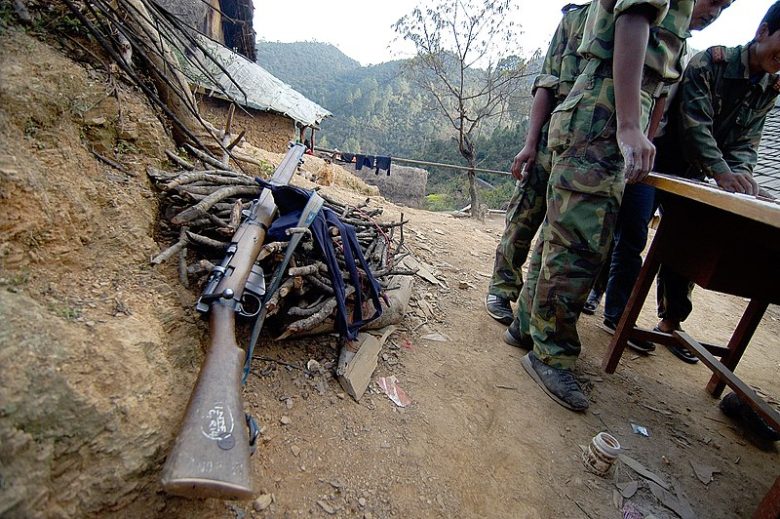
A British-made rifle left near a group of Maoists in Rolpa District, Nepal (Photo: Jonathan Alpeyrie / Wikimedia Commons [CC BY-SA 3.0])
It has been noted that the Maoists did not receive direct support from any government. However, as mentioned, the Maoists—who enjoyed support among those who felt rural inequalities—continued to expand their control in the countryside. In this context, in 2005, King Gyanendra Bir Bikram Shah blamed parliament for the problems, dismissed the prime minister, declared a state of emergency, and began direct rule. Constitutional rights, including freedom of expression, were suspended, and soldiers began pressuring journalists and politicians. This move cost the government public support and pushed sidelined politicians toward the Maoists.
In November 2005, the Maoists and seven political parties in Nepal reached a 12-point agreement aimed at ending the king’s autocracy and establishing full democracy. Following massive protests, the monarchy was suspended in April 2006. In June, the new government agreed with the Maoists to dissolve the existing parliament and form an interim government including the Maoists. In November 2006, the government and the Maoists signed a Comprehensive Peace Agreement, ending the decade-long armed conflict.
The toll of the conflict
The damage from this 10-year conflict was immense. Estimates of the death toll vary, but it is claimed that roughly 13,000 to 19,000 people, including civilians, died. It has also been noted that from 1996 to 2005, about 4,500 people were killed by the Maoists and about 8,200 by government forces. While the exact number of deaths remains unclear, data jointly compiled by the Prime Minister’s Office and the Ministry of Home Affairs states that 18,076 civilians lost their lives during the conflict. Several factors contributed to the high civilian toll: poor roads and communications infrastructure, weak oversight over rank-and-file soldiers, and frequent attacks by both government forces and the Maoists on non-cooperative civilians, as has been argued. Attacks against civilians also took other forms besides killing. A report by the Office of the United Nations High Commissioner for Human Rights states that illegal killings, enforced disappearances, torture, arbitrary arrests, and sexual violence were perpetrated during the conflict.
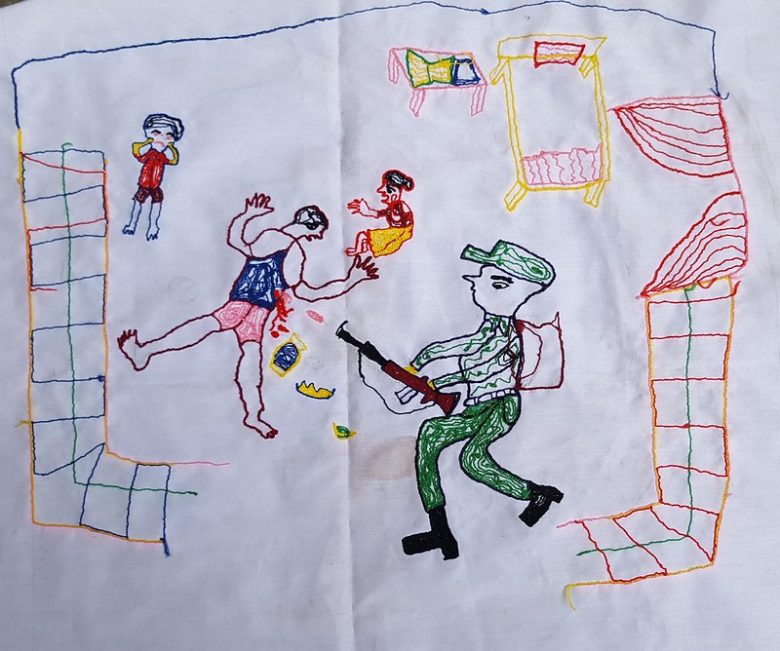
A drawing by a victim whose family was killed by government forces in 2002 (Photo: The Advocacy Project / Flickr [CC BY-NC-SA 2.0])
Unlawful killings were carried out by both the government and the Maoists, and many civilians suspected—often on uncertain information—of aiding the other side were killed. Enforced disappearance (Note 2) was committed by both sides, especially the government. A total of 1,275 disappearances were recorded during the conflict. In 2003, Nepal was even identified as the country with the highest number of enforced disappearances in the world. Enforced disappearance has severe consequences not only for victims but also for their families. Because they do not know the truth, families cannot tell whether it is an enforced disappearance or a regular missing person case; they struggle to find closure, and losing a breadwinner can plunge them into economic hardship. In most cases, families never hear from the disappeared again.
Torture was also perpetrated by both sides, with at least 2,500 cases reported. The purposes ranged from extracting information to punishing violations of organizational rules, but these acts also served to intimidate the general population as a warning.
Arbitrary arrest is, by definition, a category of human rights violation that can be carried out only by the state (Note 3). Nepalese law provides for a system known as preventive detention. Under the Public Security Act or the Terrorist and Disruptive Activities (Control and Punishment) Ordinance, abuse of this system weakened judicial oversight and made arrests and extensions of detention easier. In 1999, the number of political detainees reached 1,560. Sexual violence was perpetrated by both sides, but the full extent remains unclear because many survivors fear retaliation and social stigma and thus do not report the crimes.
Beyond human rights violations, tourism—an important source of foreign currency for Nepal—was hit hard by the prolonged conflict. Many people fled abroad out of fear, seeking migrant work not only in India, the traditional destination, but also in Gulf countries and Southeast Asia, leading to a rise in labor migration. As a result, Nepal’s economy came to depend heavily on remittances from migrant workers (Note 4).
In short, Nepal suffered deep wounds from the decade-long conflict. Yet its recovery from the war has been anything but smooth.
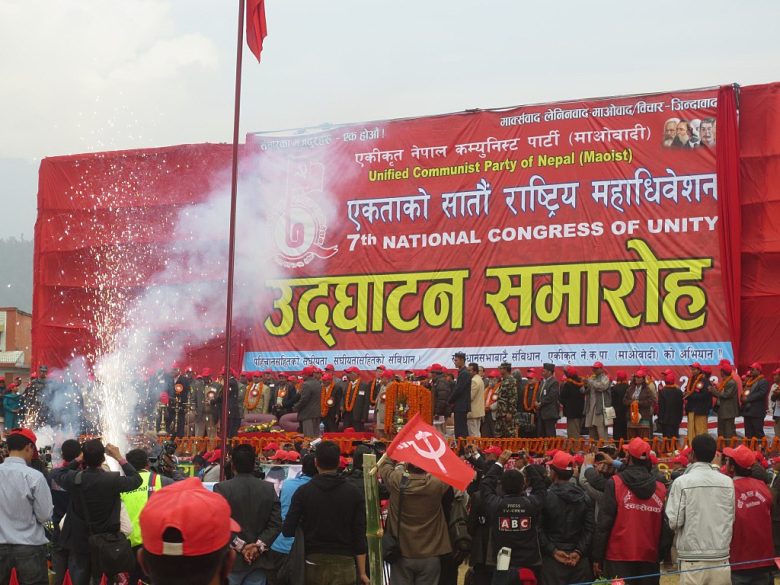
A ceremony celebrating the nationwide unity convention of the Maoists held in 2013 (Photo: Krish Dulal / Wikimedia Commons [CC BY-SA 3.0])
Transitional justice
Before looking at Nepal’s post-conflict trajectory, let us first consider what is generally needed for recovery from conflict. After large-scale human rights violations during war or unrest, societies undertake efforts to recover. This process is called transitional justice. The concept developed in Latin America, Eastern Europe, and South Africa from the late 1980s to early 1990s. At the time, these countries were transitioning from authoritarianism to democracy, and for new governments seeking public support, how to address the large-scale human rights violations committed by prior authoritarian regimes was crucial.
Born out of such social conditions, transitional justice is grounded in a victim-centered approach with the aims of uncovering the truth, providing reparations and ensuring accountability, and preventing the recurrence of similar human rights abuses. In the long term, strengthening democracy and promoting reconciliation among stakeholders can also be included within transitional justice. These are necessary processes to enable perpetrators, victims, and bereaved families to coexist within a single nation.
The theory of transitional justice has continued to evolve by incorporating new approaches with each conflict. Because each conflict has different backgrounds, contexts, and modalities of abuse, the approaches must be flexibly tailored. Examples include reintegration of combatants, reconciliation among minority communities, and the use of judicial proceedings. In Sierra Leone and Uganda, broader approaches included incorporating traditional rituals alongside legal processes to promote reconciliation.
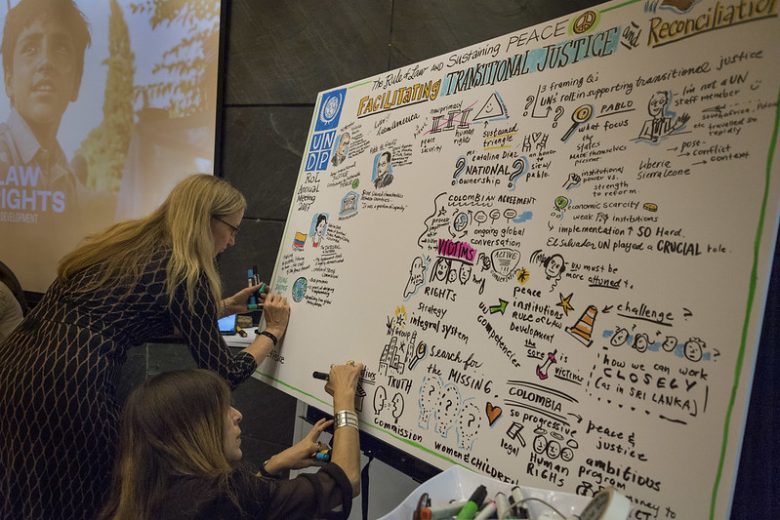
A workshop on transitional justice and reconciliation at the UNDP Annual Rule of Law Meeting in 2017 (Photo: United Nations Development Programme / Flickr [CC BY-NC-ND 2.0])
Because transitional justice takes place after large-scale violations, the harm is extensive and often intertwined with social structures, inequalities, and religion. Post-conflict governments are also often fragile. In such circumstances, a single approach is unlikely to resolve the issues. Hence, contemporary transitional justice advocates a holistic approach.
A holistic approach seeks to realize transitional justice by implementing multiple measures simultaneously. Specifically, it may include legal and political reforms, establishing and implementing truth-seeking mechanisms (Note 5), prosecuting perpetrators, providing reparations to victims, restitution of rights, and memorialization, among other measures. None of these alone is sufficient. For example, prosecutions in isolation may be perceived as mere political theater. Likewise, monetary compensation alone may be seen as hush money. In either case, transitional justice as a victim-centered effort to prevent recurrence would not be achieved.
Transitional justice takes many years and has no one-size-fits-all answer. It must proceed under a victim-centered ethos that takes into account the scale and nature of the abuses, as well as the culture, history, legal and political systems, religion, economy, and community distribution of the society in which the abuses occurred. Given this complex process, how has Nepal engaged with transitional justice?
Nepal after the conflict
From here, let us look at post-conflict developments in Nepal.
As noted, the Nepal conflict ended with the signing of the Comprehensive Peace Agreement in 2006. The agreement stipulated investigations into those who committed human rights violations, a rejection of impunity, and remedies for victims. A provisional constitution was adopted in January 2007. However, people from the Madhesi community in southern Nepal opposed it. The Madhesis, who make up one-third of the population, felt economically and politically marginalized. During 21 days of protests demanding local autonomy and federalism, demonstrators clashed with security forces, and about 40 people were killed.
Prime Minister Girija Prasad Koirala promised to amend the provisional constitution, easing the unrest. In April 2007, the term “federalism” was added to the provisional constitution. Article 33 also included provisions related to transitional justice, such as payments of relief and investigations into human rights violations.
Under the provisional constitution, elections to a Constituent Assembly were held in 2008. The Maoists, now a political party, became the largest party, followed by the Nepali Congress and the Communist Party (Unified Marxist–Leninist) respectively. The Maoists, however, did not win an outright majority. Following the election, the monarchy was formally abolished, the Constituent Assembly convened, and preparations for a permanent constitution were set in motion.
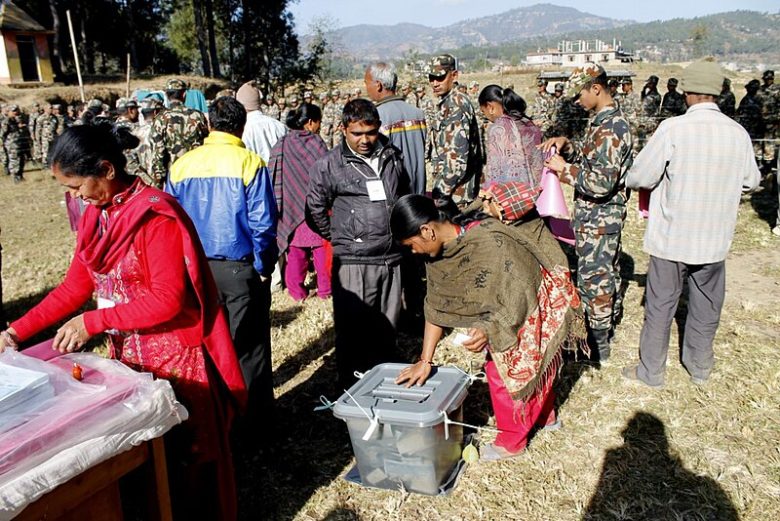
A polling station during the 2013 parliamentary elections (Photo: Krish Dulal / Wikimedia Commons [CC BY-SA 3.0])
However, disagreements over establishing the Truth and Reconciliation Commission (TRC) and the Commission of Investigation on Enforced Disappeared Persons (CIEDP) led to the dissolution of parliament in 2012. In 2013, Chief Justice Khil Raj Regmi effectively became prime minister, and an ordinance to establish the TRC was promulgated. However, as a product of political compromise, it did not align with the principles of transitional justice, notably because it contemplated amnesties for serious crimes and granted the commission weak powers. A coalition of victims’ groups filed suit. In 2014, the Supreme Court struck down the ordinance as inconsistent with international human rights law, Supreme Court precedent, and the interim constitution. Thereafter, a new Investigation of Enforced Disappeared Persons, Truth and Reconciliation Commission Act (TRC Act) was enacted. In 2015 the TRC and the CIEDP were established, but the Supreme Court ruled the Act’s amnesty provision unlawful.
In 2018, a draft amendment to the TRC Act was shared with victims’ groups. However, this draft proceeded without adequate consultation with victims and lacked transparency. Moreover, the consultation period was less than two weeks, and few changes were made. The result was further erosion of trust in the government.
In 2023, a new amendment bill to the TRC Act was introduced in parliament. While it offered some improvements—such as expanding eligibility for compensation and relief—consultation with victims remained insufficient, and longstanding concerns around amnesties and weak commission powers remained largely unaddressed. In 2024, the bill was agreed upon by three parliamentary parties and passed by parliament. Opinions are divided: opponents argue the improvements are inadequate, while others hope the stalled processes—such as compensation—will finally move forward.
Political instability may also explain the stalled process. From 2008 to 2020, Nepal had 11 prime ministers in 12 years—an unstable record. Nepal’s three major parties—the Maoists, the Communist Party (Unified Marxist–Leninist), and the Nepali Congress—have each failed to win an outright majority, necessitating coalitions to govern. These coalitions often collapse quickly, making long-term stable governance rare. In such circumstances, advancing policy is difficult.
Additionally, it has been argued that Nepal has had to carefully balance relations with China and India. The triangular dynamic is easier to understand with Tibet as the axis. Because Nepal lies on the route from Tibet to India, it posed challenges for China during its annexation of Tibet. Thus, when the Maoists became the largest party in 2008, China deepened ties and asked Nepal not to accept Tibetan refugees. India, historically close to Nepal and supportive of Tibet, viewed Nepal’s rapprochement with China with concern. Sandwiched between rival powers, Nepal must carefully manage its foreign relations to maintain balance.
Nepal’s transitional “justice”
Next, let us examine Nepal’s efforts through the lens of transitional justice introduced above. While transitional justice encompasses many elements, here we focus on four: accountability, truth-seeking, reparations to victims, and memorialization.
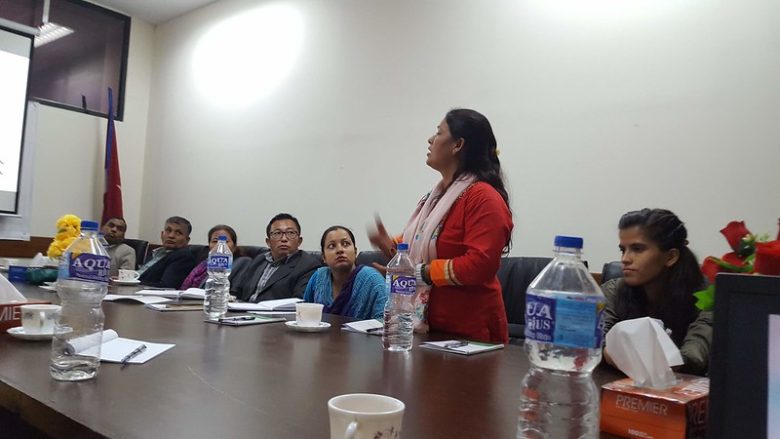
A family member of a victim of enforced disappearance speaks at a commission session (Photo: The Advocacy Project / Flickr [CC BY-NC-SA 2.0])
Accountability means identifying those responsible for human rights violations and imposing appropriate penalties. Nepal’s approach has two major problems, critics say. First is amnesty. Under the 2024 amendment to the TRC Act, violations committed during the conflict are categorized as either “human rights violations” or “serious human rights violations.” Those in the former category may be eligible for amnesty. The TRC may grant amnesty if it determines—subject to victims’ consent—that certain conditions are met (Note 6); otherwise, the case is referred to a special court. Cases classified as “serious human rights violations” are referred directly to the special court and may be prosecuted.
However, “serious human rights violations” are limited to rape and serious sexual violence, intentional or arbitrary killing, enforced disappearance, and inhuman or severe torture—classifications that do not align with international law. For example, under the Convention against Torture, which Nepal ratified in 1991, torture is treated alongside other cruel, inhuman, or degrading treatment. In other words, torture is inherently inhuman, and restricting it with qualifiers such as “inhuman or severe” is inappropriate, critics argue (Note 7).
The second problem concerns the Attorney General’s powers. Except in cases of sexual violence, the amended law allows the Attorney General to reduce sentences for “serious human rights violations” by up to 75 percent of the custodial term. This risks unduly favoring perpetrators, even if it is not a full amnesty.
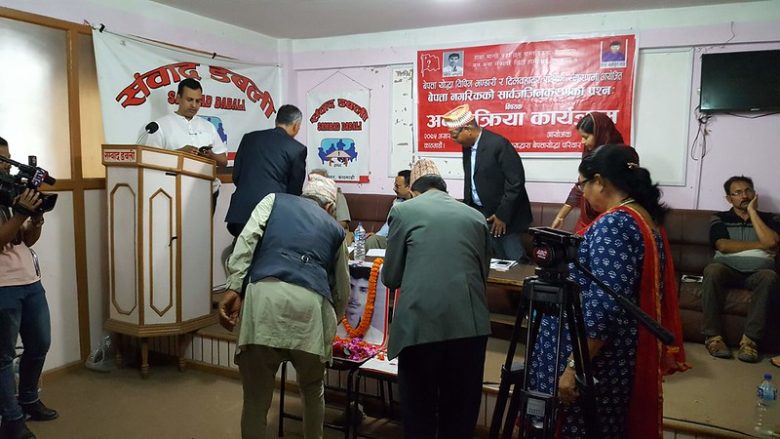
People commemorating a person who was a victim of enforced disappearance (Photo: The Advocacy Project / Flickr [CC BY-NC-SA 2.0])
Next, truth-seeking. Truth-seeking is to be carried out primarily by the Truth and Reconciliation Commission and the Commission of Investigation on Enforced Disappeared Persons. These bodies were established in 2015, and about 64,000 allegations of human rights violations were submitted. However, by 2019, the TRC had completed preliminary inquiries in less than 10 percent of cases, and the CIEDP had completed only about 75 percent of preliminary inquiries, with no case fully resolved. The commissions’ lack of effectiveness is a serious problem.
Regarding reparations, a compensation program began in 2007. By 2017, tens of millions of U.S. dollars (Note 8) had reportedly been distributed. However, critics argue it has been used as a means to silence victims (Note 9). Moreover, victims of torture and sexual violence were excluded from the program—a major concern. The 2024 amendment to the TRC Act, however, includes these previously excluded victims as eligible for reparations. On the other hand, reparations require first establishing the facts of harm; when truth-seeking stalls, appropriate compensation may not be possible.
On memorialization, it has been observed that government-led commemorations of the Nepal conflict are limited to the installation of the “Martyrs’ Gate,” a monument that in practice commemorates the Maoist fallen, now a major political party. In this sense, the government has not adequately undertaken the broader memorialization of the conflict’s tragedies. Grassroots commemorative initiatives do exist, but they often struggle due to lack of funding and government support. Given Nepal’s new constitution adopts federalism and grants local governments some discretion, it has been proposed that local governments take the lead in advancing memorialization.
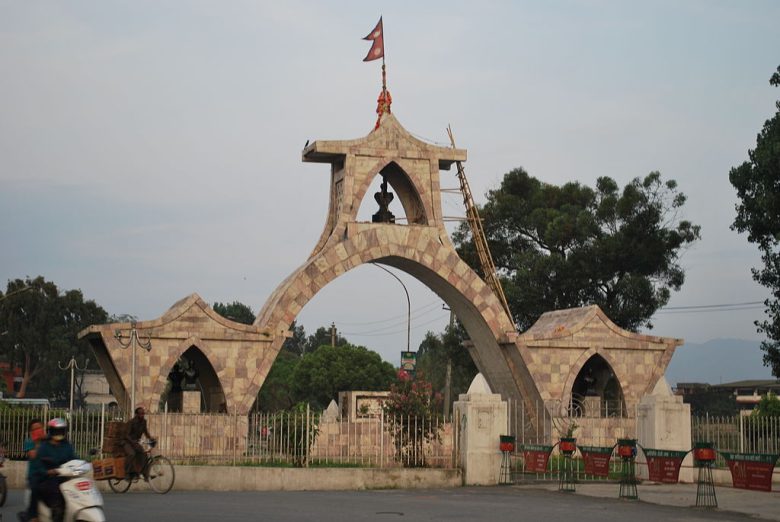
The “Martyrs’ Gate” in Kathmandu (Photo: Kuber Sodari / Wikimedia Commons [CC BY-SA 3.0])
Toward genuine transitional justice
In thinking about transitional justice, victims must be at the center. Transitional justice advances when victims participate in decision-making and multiple initiatives proceed holistically. Nepal’s transitional process has not embodied justice in this sense: victims have been excluded from decision-making; laws include provisions allowing politically compromised amnesties and sentence reductions; and the established commissions have scarcely functioned. Considering victims’ need to move forward from the conflict, Nepal’s repeatedly stalled transitional process has been far too slow.
The law passed in 2024 still has many noted shortcomings and cannot be called complete. Nevertheless, it is also being evaluated as progress in a process long stalled. Yet it remains uncertain whether the new law will be properly implemented. It is important to continue watching whether Nepal can advance a victim-centered transitional justice process.
Note 1: In addition to the United States and India, arms assistance was provided by the United Kingdom and Belgium. The Maoists sometimes seized weapons supplied to the government through this assistance.
Note 2: In a typical case, a person suspected of links to the opposing side would be abducted, subjected to violence, or detained in official facilities, among other abuses. Even when families reported the disappearance, authorities provided no information.
Note 3: That said, similar acts were also carried out by the Maoists.
Note 4: At the same time, it is argued that remittances from these migrant workers helped keep Nepal’s economy from collapsing.
Note 5: Truth-seeking investigates and clarifies the facts and causes of large-scale human rights violations and identifies victims. This approach provides crucial guidance for reparations and for designing measures to prevent recurrence.
Note 6: These conditions include a full confession, an apology to victims, and payment of compensation, among others.
Note 7: Moreover, apart from sexual violence, both categories require that the act be “targeted or planned” against “unarmed individuals or groups,” a limitation that could exclude many acts from the transitional “justice” process.
Note 8: Equivalent to several billion Nepalese rupees at the time (2017).
Note 9: When victims refused to accept compensation in the absence of truth, investigation, or prosecution, the money was paid instead under the label of “interim relief,” critics say.
Writer: Seita Morimoto
Graphics: Yumi Ariyoshi











_7th_General_Convention_Nepal.jpg)

.JPG)
日本に出稼ぎや留学で来るネパール人が急増しているのは、母国での仕事がないからと聞いたことがあったが、歴史を学ぶことで彼らが外国に行かざるを得ない状況がわかった。
移行期正義という考え方があることも初めて知った。
ネパールは植民地支配を受けていないにも関わらず、民主主義がうまく機能せず、政治が不安定であることも紛争処理が進まない原因であること。また、多くの人権侵害のケースが「深刻な人権侵害」の定義から外れたり、紛争処理の委員会が受理した事案のうち、1つも調査が完了していないなど、法的紛争処理について国連機関や他国の支援が必要なのではと思った。ネパール人の友人にこの問題についてどう思っているのか聞いてみたい。
移行期正義という言葉について聞いたことはあったが、そ意味を初めて詳しく知ることができた。紛争は和解されたら注目が薄れることが多い。しかし、その後のプロセスが適正出なければまた争いを生むことになりかねない。今後はそんな紛争後のプロセスのついても注目していきたい。
政府軍によって家族を殺害された被害者による絵が見ていてとても痛々しいものだった。移行期正義という概念を初めて知った。移行期正義のアプローチに取り組む主体がその国の人々だけでは、紛争があったこともありスムーズな実施が難しくなるだろうから、国連やNGOなど紛争に関して中立である組織も大きく関わっているのだろうかと思った。
Your point of view caught my eye and was very interesting. Thanks. I have a question for you.