
India, the host of the G20 in 2023, held numerous international meetings. One of them, the G20 Tourism Working Group meeting, was held in May in Srinagar in the Kashmir region. However, several countries, including China, boycotted. In addition, in the host region of Kashmir there was a harsh crackdown on the media and journalists were detained.
Both of these issues stem from the location of the meeting—Kashmir. Let’s examine the problems of this region from various perspectives.
Since the area referred to by the word “Kashmir” is ambiguous, this article uses the term “Kashmir region” to collectively refer to the parts of Kashmir administered by India, Pakistan, and China.
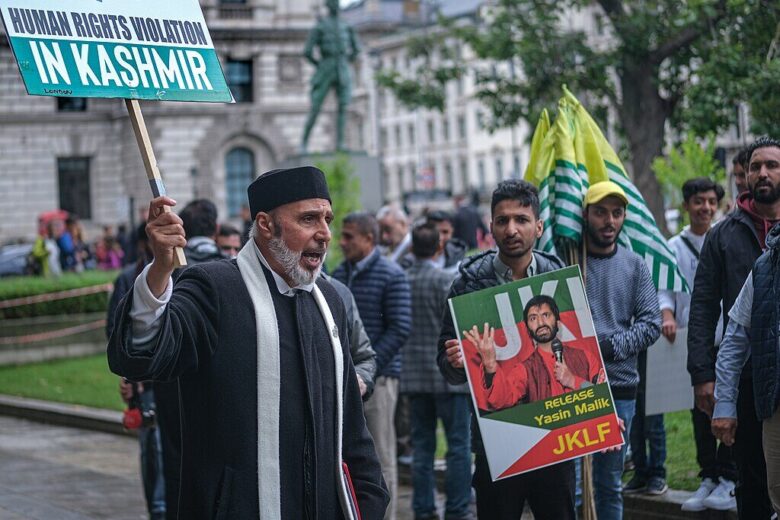
A demonstration in front of the Parliament in London, United Kingdom, protesting India’s human rights violations in Kashmir (Photo: Alisdare Hickson / Wikimedia Commons [CC BY-SA 4.0 DEED])
目次
Historical background of the Kashmir issue
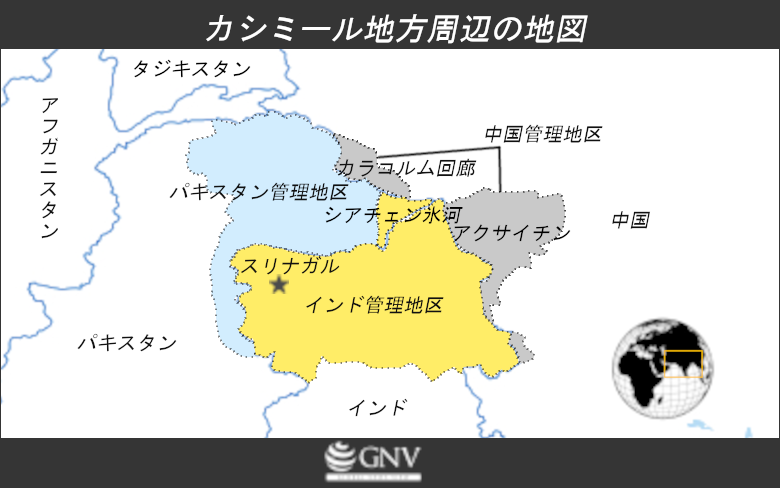
The Kashmir region generally refers to an area of about 220,000 square kilometers bordered by India, Pakistan, Afghanistan, and China. Much of it is mountainous, and there are many glaciers that serve as sources of water exist. The population of the Kashmir region exceeds 16 million, and in terms of religion, most residents are Muslim, though there are many Hindus in some areas. Although there is a provisional military demarcation line, no formal borders have been finalized, and India, Pakistan, and China each exercise partial de facto control. To understand this, we need to follow the historical background.
Most of the areas that are now India, Pakistan, and Bangladesh were ruled by the Mughal Empire, but from around the 18th century the power of the British East India Company grew. Following the Indian Rebellion of 1857, the region came under formal British rule as British India and entered British occupation.
However, the British did not directly govern all of these occupied territories; there were hundreds of areas known as princely states that were granted a degree of autonomy. The Kashmir region was one of these places and, though under British rule, held a unique status as the princely state of Jammu and Kashmir.
Meanwhile, to control British India, the British pursued a policy of divide and rule that treated people differently based on religion and deliberately prevented political unity. As part of this, the All-India Muslim League was founded in 1906 with British support.
After World War II, British India was to become independent from Britain, but at that time the All-India Muslim League, fearing autocracy by the Hindu majority, sought the separate independence of Muslim-majority regions. Further, in 1946, clashes broke out between Hindus and Muslims in Calcutta, now Kolkata (※1), killing 4,000 people. As a result, areas with a majority Muslim population seceded in August 1947 to form Pakistan (※2). During the summer and autumn of 1947, tremendous turmoil ensued, and it is believed that between 200,000 and 2 million people died.
At this time, many princely states were integrated into one country or the other, but the princely state of Jammu and Kashmir, although its population was largely Muslim, had a Hindu ruler, Hari Singh, and therefore took the position of belonging to neither country.
However, forces supported by Pakistan infiltrated, clashes with police occurred, and pro-Pakistan factions unilaterally declared a new government. In October 1947, the Maharaja sought India’s help, and in exchange for protection from pro-Pakistan forces, the princely state of Jammu and Kashmir became part of India. Under the Indian Constitution, the state of Jammu and Kashmir was granted broad autonomy, excluding communications, foreign affairs, and defense.
Wars over the Kashmir region
The confrontation between Pakistan, which opposed India’s rule over Kashmir, and India continued thereafter. War broke out in October 1947 between Indian forces deployed in the region and Pakistani armed groups, later the regular army. The war ended formally in January 1949 through UN mediation, which established a ceasefire line and recommended a plebiscite to determine accession to India. The ceasefire line left the western part of Kashmir under Pakistani control and the eastern part under Indian control. The plebiscite recommended at that time has not been held as of October 2023. At the same time, the United Nations Military Observer Group in India and Pakistan was established to monitor the ceasefire; it remains active today.
In 1965, renewed conflict erupted between the two countries following border skirmishes. The war, which also saw the deployment of air forces, expanded beyond Kashmir to fighting in Sialkot, Pakistan, and became large in scale. It eventually reached a stalemate and a ceasefire was achieved through UN mediation. In 1966, the ceasefire line was restored to its pre-conflict status.
Furthermore, a third war erupted between India and Pakistan in 1971. This conflict was not over Kashmir but over East Pakistan, which later became independent as Bangladesh (※3). In the peace agreement for this conflict, the ceasefire line in Kashmir was designated the Line of Control (LoC), and the policy of seeking a final resolution of the territorial dispute in Kashmir by peaceful means was affirmed (※4). Another clash occurred in 1999, but the LoC was subsequently restored. Since then, there have been no major armed clashes between India and Pakistan.
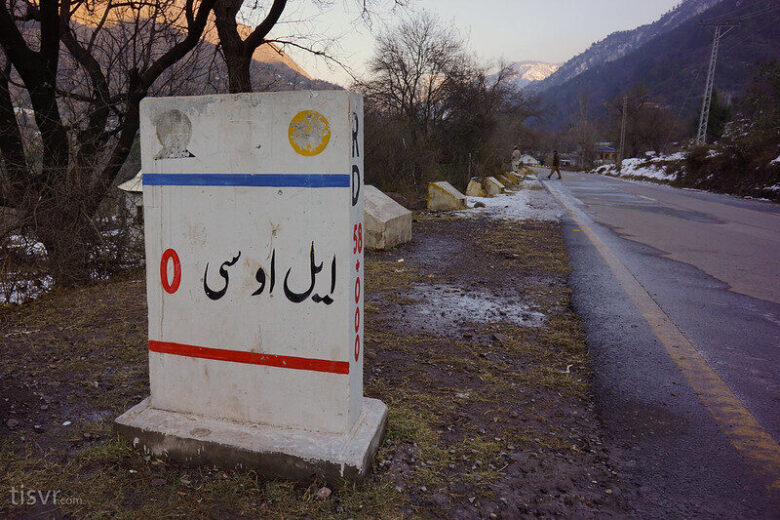
A sign marking the starting point of the LoC installed in Pakistan-administered Kashmir (Photo: Usman Malik / Flickr [CC BY-NC 2.0 DEED])
China also claims and controls Aksai Chin and the Karakoram Corridor in the eastern Kashmir region. Regarding the former, China’s road construction in Aksai Chin and other actions deepened Sino-Indian tensions, and the conflict escalated from border skirmishes to full-scale war in 1962 escalated. China won this war and has exercised effective control over Aksai Chin ever since. As for the Karakoram Corridor, it was transferred in 1963 from Pakistan, which had exercised effective control over the area, to China. It has been analyzed that this transfer strengthened ties between Pakistan and China and led to their joint construction of the Karakoram Highway, which connects the two countries.
Armed groups operating in the Kashmir region
Not only states but also non-state armed groups operate in the Kashmir region, as described above. Here we look at the armed groups active in Kashmir.
Armed groups in Indian-administered Kashmir are broadly thought to fall into two categories: those that emerged in the 1980s out of dissatisfaction with Indian rule, and those that grew with Pakistani support from the early 1990s are thought to be.
Attacks by non-state armed groups in Indian-administered Kashmir became frequent after the 1980s, following the Soviet invasion of Afghanistan. This is because many armed groups concentrated in geographically proximate Kashmir to confront the Soviets in Afghanistan.
Regarding this, Pakistan is believed to be deeply involved in the activities of armed groups in Afghanistan and the Kashmir region are thought to be. It is pointed out that Pakistan trained and nurtured Islamist armed groups both to prevent an India-friendly regime from emerging in Afghanistan and to attack Indian-administered Kashmir to undermine India’s control. The number of armed groups formed by this movement had reached triple digits by 1992. The United States, whose objective of containing Soviet expansion aligned with Pakistan’s, also supported this effort, and there are reports that it resulted in the nurturing of the Taliban.
Here are some of the major armed groups. The Jammu and Kashmir Liberation Front (JKLF) is an organization whose goal is independence for the Kashmir region from both India and Pakistan. JKLF began to intensify its activities in the late 1980s. Initially, it cooperated with Pakistan in attacking India, but because JKLF opposed Kashmir’s integration into Pakistan, its stance diverged from the Pakistani government. As other armed groups seeking integration with Pakistan grew in the 1990s, relations between JKLF and Pakistan deteriorated. Losing Pakistani backing, JKLF repeatedly splintered, and some parts became nonviolent political movements.
Lashkar-e-Taiba (LeT) is an armed group that was very active from the late 1990s. One of its objectives is to drive India out of the Kashmir region, and Indian authorities say LeT was responsible for the 2006 Mumbai train bombings that killed 189 people. It is believed to have received state support, including funding from Saudi Arabia and ties with Pakistan’s Inter-Services Intelligence (ISI).
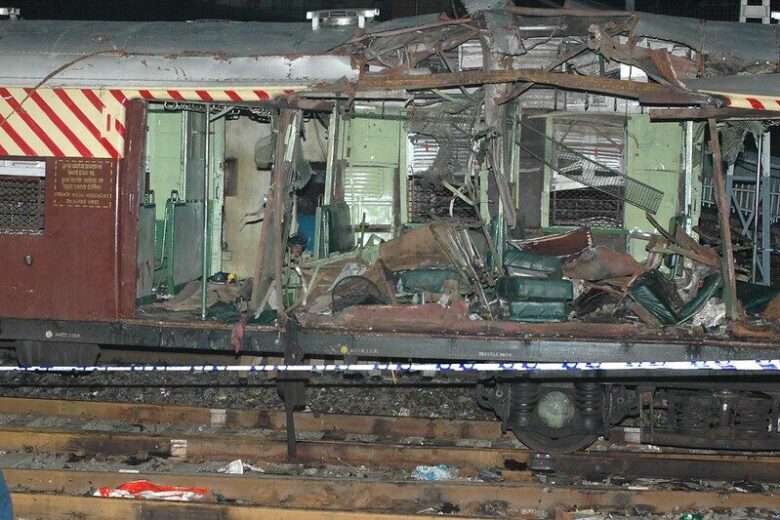
Scenes from the serial bombings that occurred in Mumbai in 2006 (Photo: Firoze Shakir / Flickr [CC0 1.0 DEED])
There are also reports that around 44,000 violent clashes occurred between these armed groups and Indian security forces between 1988 and 2000, resulting in more than 26,000 deaths. It is also pointed out that such attacks by armed groups have hindered moves to improve relations between India and Pakistan. India has claimed that these armed organizations were supported by Pakistan, but Pakistan denies this claim.
While the activities of armed groups had been thought to be on a downward trend in recent years, reports since 2019 indicate developments such as the formation of new organizations and changes in tactics.
International political developments
In 2019, the Indian government announced the abrogation of Article 370 of the constitution, which had granted wide autonomy to the state of Jammu and Kashmir. Leaving domestic reactions for later, let’s first look at inter-state political developments.
It has been noted that India’s move heightened tensions with Pakistan and changed the stance of then-Pakistani Prime Minister Imran Khan. Until then, Khan had taken a friendly attitude toward India and maintained the position that the Kashmir issue should be resolved through bilateral dialogue, but after this event Pakistan gave up on a bilateral solution and began calling for international intervention.
China also opposed India’s abrogation of Article 370, like Pakistan. Previously, although China controlled parts of the Kashmir region—Aksai Chin and the Karakoram Corridor—it did not seek to directly involve itself in India-Pakistan disputes and maintained a relatively neutral stance.
It has been suggested that this stance changed after 2013, when the plan for the China–Pakistan Economic Corridor (CPEC) with an investment of USD 52 billion began as part of the Belt and Road Initiative (※5). The plan is to connect a port on the Arabian Sea in Pakistan by passing from China’s Xinjiang Uygur Autonomous Region through Pakistan-administered Kashmir, and it is thought that China aims to reduce the time and cost of sea transport from Europe (※6).
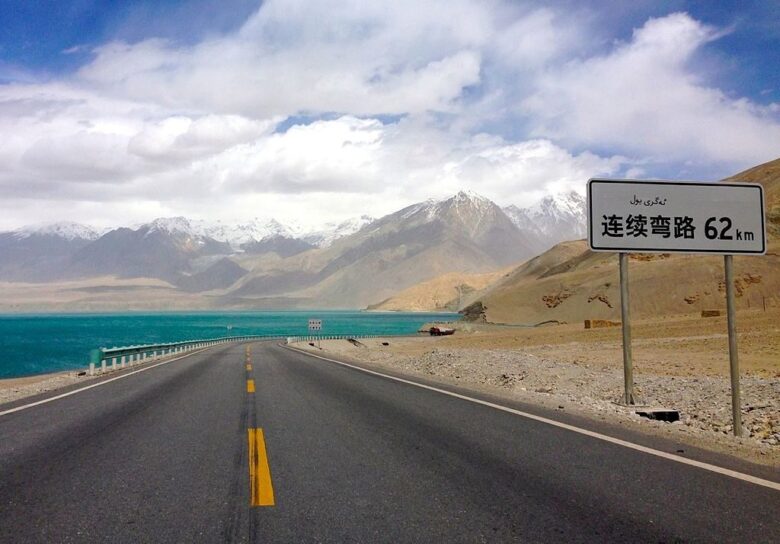
The Karakoram Highway linking China’s Xinjiang Uygur Autonomous Region and Pakistan’s capital Islamabad (Photo: Mahnoorrana11 / Wikimedia Commons [CC BY-SA 4.0 DEED])
Meanwhile, the other South Asian Association for Regional Cooperation (SAARC) member states aside from India and Pakistan—Bhutan, Bangladesh, Maldives, Nepal, Sri Lanka, and Afghanistan—have supported India’s abrogation of Article 370.
The importance of Kashmir
Why do India, Pakistan, and China claim sovereignty over the Kashmir region? Religious, resource-related, and geopolitical factors play a major role. Let’s look at these.
First, as a religious factor, most residents of the Kashmir region are Muslim. According to India’s 2011 census, of the roughly 13 million residents living in the Indian-administered state of Jammu and Kashmir, 8.6 million—about 66%—were Muslims, it is stated. Since Pakistan originated as a state for Muslims, the fact that Kashmir is a Muslim-majority area is considered one reason Pakistan seeks the region is considered. At the same time, many Hindus also live there, and there are Hindu holy sites such as the Amarnath Temple.
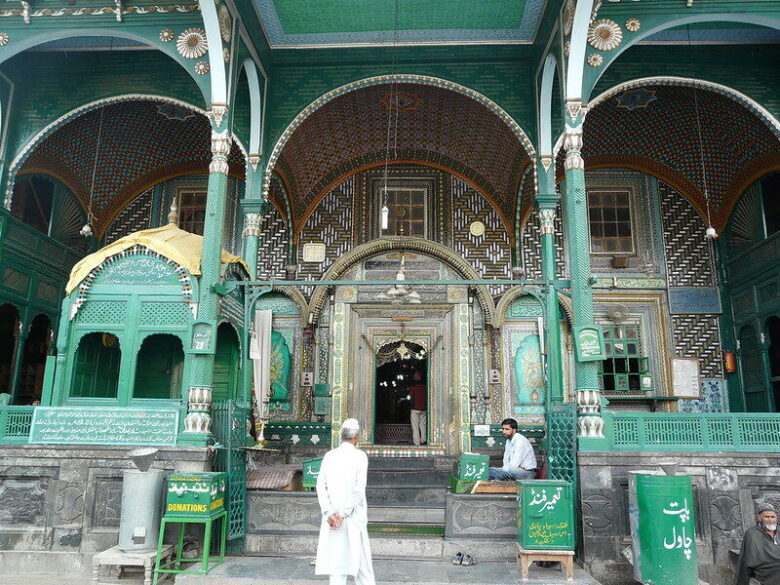
Shah-e-Hamadan Mosque in Indian-administered Kashmir (Photo: Varun Shiv Kapur / Flickr [CC BY 2.0 DEED])
On the other hand, Ladakh in Indian-administered Kashmir has been strongly influenced by Tibetan culture, to the extent that it is sometimes called “Little Tibet.” When the Indian government revoked Article 390 of the constitution—granting a high degree of autonomy to Kashmir—in 2019, it also split the state into Jammu and Kashmir and Ladakh. This move was welcomed by local Buddhist residents of Ladakh who felt discriminated against by Muslims within the former Jammu and Kashmir. However, since Ladakh became a union territory without autonomous powers, concerns about rapid development without local consent and migration from elsewhere in India have stoked local dissatisfaction. Note that Aksai Chin, part of Ladakh, is currently controlled by China.
Next, the resource factors. Two of the main tributaries of the Indus River run through the Kashmir region. The Indus is the only river system for Pakistan, more than 90% of whose land is arid, and is also one of the two river systems supporting northwestern India, which often lacks water. India and Pakistan are building large dams to use the Indus for irrigation and hydropower. The two countries concluded an agreement on the use of the Indus in 1960 through World Bank mediation, but Pakistan claims that India is violating the agreement by building dams.
Water resources are also an issue between India and China. Aksai Chin contains the headwaters of the Karakash River, which flows into China’s Xinjiang Uygur Autonomous Region, and it has been pointed out that the Chinese government, which encourages migration to Xinjiang where population growth is expected, prioritizes securing water sources for the region. In 2020, there was an incident in which Indian and Chinese troops clashed. It was reported that one trigger for the clash was an Indian road construction project, and there were also reports suggesting China had dammed the Galwan River at that time. Since the Galwan is a tributary of the Indus, some believe China was trying to prevent it from flowing into India.
As a geopolitical factor, the Kashmir region is considered strategically very important because it lies on routes linking South Asia and Central Asia is considered. India and Pakistan already have the Arabian Sea as a major commercial hub, so by bringing Kashmir under their control, they can link the Arabian Sea to Central Asia and gain greater commercial benefits. Considering that Central Asia is one of China’s Belt and Road Initiative routes, Kashmir can be a hub not only to Central Asia, but also to Europe, the Middle East, and East Asia for both India and Pakistan.
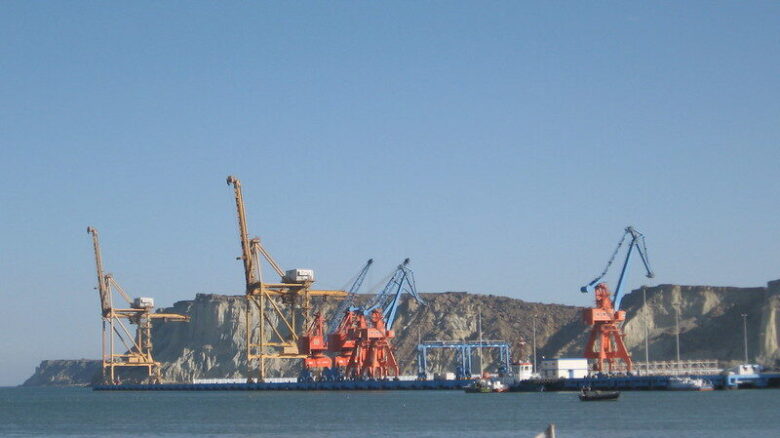
Gwadar Port in Pakistan, facing the Arabian Sea (Photo: Moign Khawaja / Flickr [CC BY-NC 2.0 DEED])
For China as well, the Kashmir region is important as it lies on the route of CPEC, which connects China to the Arabian Sea. Thus, Kashmir is important in various ways to India, China, and Pakistan.
Human rights violations and repression in Kashmir
So far we have discussed the political issues surrounding the Kashmir region. From here, we look at human rights violations in Kashmir—focusing on the Indian-administered side while also touching on the Pakistani-administered side.
In Indian-administered Kashmir, human rights violations and repression have occurred at various levels. Politically, although Article 370 of the Indian Constitution granted autonomy, in practice presidential orders (※7) and governor’s rules gradually narrowed its scope, and it is argued that autonomy was never fully protected. Furthermore, in 2018 the Indian government dissolved the Jammu and Kashmir state assembly, effectively bringing the region under direct rule by the federal government. Since then, as of October 2023, elections have not been held.
Indian troops stationed in Indian-administered Kashmir have also been implicated in human rights abuses. The Armed Forces (Jammu and Kashmir) Special Powers Act, which grants powers such as the use of force by the military, arrest and search without warrant, and provides immunity, was applied in Indian-administered Kashmir in 1990, and it has been pointed out that human rights violations against local residents became rampant. Specifically, torture, sexual violence, and extrajudicial killings were carried out by Indian security forces.
It is argued that the victims included not only those engaged in anti-government activity but also people killed innocently. According to the Jammu and Kashmir state government, from 1990 to 2011 the total number of deaths among militants and civilians (※8) reached 43,000, of which more than 3,600 civilians were killed by security forces, but even these figures are suspected to be underestimates. Another report estimated that by 2019 more than 8,000 residents in Indian-administered Kashmir had disappeared after being detained by security forces.
These acts by security forces are difficult to pursue legally due to immunity provided by laws such as the Armed Forces Special Powers Act, and the lack of information disclosure undermines transparency, it is pointed out. This immunity is also said to encourage violence by security forces.
It is also said that the police have used excessive force, exacerbating harm; for example, during a protest in 2016, more than 30 deaths occurred due to the use of pellet guns by security forces.
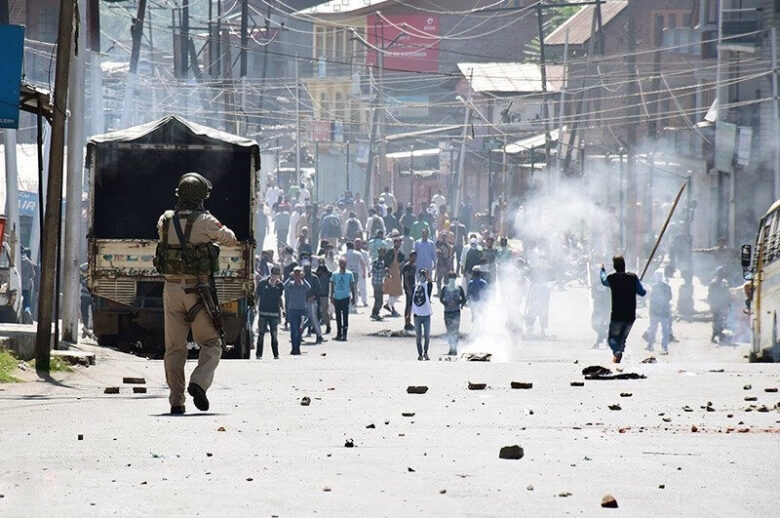
Demonstrators clashing with police in the Kashmir region in 2018 (Photo: Seyyed Sajed Hassan Razavi / Wikimedia Commons [CC BY 4.0 DEED])
When Article 370 of the Indian Constitution was abrogated in 2019, there was a very strong crackdown in Indian-administered Kashmir (※9). Specifically, all communications in Indian-administered Kashmir were cut off and a nighttime curfew was imposed. During this period, thousands of people were detained. The complete lifting of restrictions was announced about 18 months later, in February 2021. The economy of Indian-administered Kashmir was hit hard, with an estimated 500,000 job losses and economic losses totaling USD 5 billion. Even in 2023, the unemployment rate was 18%—double India’s average—and it is claimed that people are unable to protest this for fear of repression.
As noted at the beginning, freedom of the press has also been suppressed. In 2020, the Indian government introduced a new media policy in Jammu and Kashmir that gave authorities broad powers over the media and made it easier to arrest journalists. In fact, at least 35 journalists were investigated by police between 2019 and 2022, according to reports.
One week after communications were cut following the abrogation of Article 370, the Indian government set up a Media Facilitation Center for journalists, ostensibly to provide internet access. Although operating hours were restricted and waiting times sometimes lasted hours, journalists in Kashmir had no choice but to rely on this facility to send articles to their newsrooms or upload to websites while communications were cut (※10). It is unclear whether communications at the center were actually censored by the government, but it has been noted that using the center itself created anxiety among journalists, leading to self-censorship.
Moreover, the simultaneous revocation of Article 35A of the Indian Constitution further suppressed the rights of local residents. Article 35A had prohibited residents from outside Jammu and Kashmir from settling in the region or purchasing land, but after it was revoked, there were reports that in less than a year, as many as 25,000 people from outside the state obtained domiciles in Indian-administered Kashmir. If such trends continue long term, the demographic makeup could change, making indigenous residents a minority by number, enabling politics that look democratic on paper yet do not reflect the will of the local populace, it is feared.
There are also reports that while communications were cut, the Indian government conducted online bidding for mineral extraction rights in Indian-administered Kashmir, using methods that intentionally excluded local firms. In this way, policies favoring people and companies from outside Kashmir are being implemented at the expense of local rights.
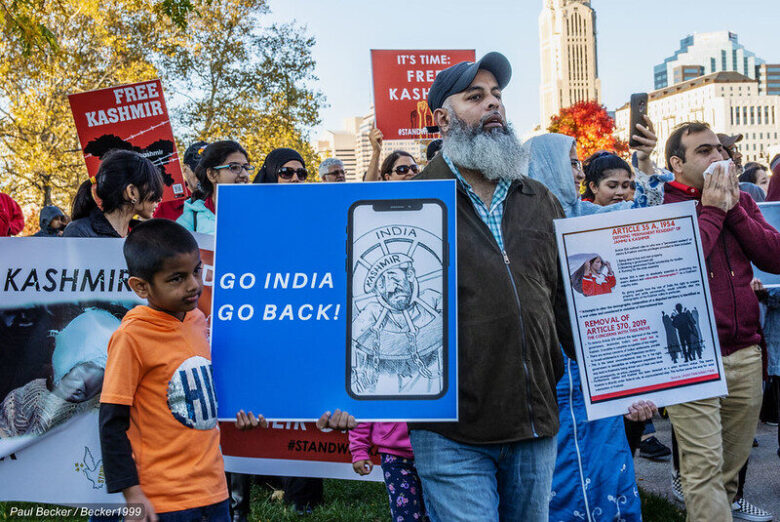
A protest in the U.S. state of Ohio opposing the abrogation of Article 370 of the Indian Constitution (Photo: Becker1999 / Flickr [CC BY 2.0 DEED])
Conversely, human rights violations against Hindus in the region have also become a problem. While Kashmir was historically a mixed region including Hindus, attacks targeting Hindus increased around 1990, leading to an exodus of what is said to be 250,000 Hindus from Jammu and Kashmir. While some Hindus have returned after the abrogation of Article 370, the move has also provoked militants in Kashmir and become a trigger for frequent attacks targeting Hindus.
Stress from a lack of employment and other factors has also made the drug problem severe in Indian-administered Kashmir. The government claims that nearly 1 million people living in Jammu and Kashmir use drugs. It is also pointed out that drug trafficking is a source of funding for armed groups.
There are also issues in Pakistan-administered Kashmir. Pakistan governs the parts it controls as Azad Jammu & Kashmir and Gilgit–Baltistan. Both have elected assemblies, but residents do not have voting rights for the national legislature, and the central government retains strong influence over the judiciary and security. Political activities and freedom of expression that do not align with Pakistan’s Kashmir policy are restricted. While enforcement may not be as harsh as in India, there have been reports of JKLF activists—now a nonviolent political group—being imprisoned for advocating Kashmir’s independence.
Regarding the China–Pakistan Economic Corridor, although Pakistan as a country may benefit, many locals oppose the project due to concerns such as job losses and environmental pollution. However, locals have not been given a voice in the project, raising concerns about unilateral exploitation.
Future developments
Since the Indian government abrogated Article 370 in 2019, the situation in Kashmir has undergone major changes. Relations with Pakistan have significantly worsened, and in 2023, then-Pakistani Prime Minister Shehbaz Sharif stated that talks would not be held unless India reversed its abrogation of Article 370. Meanwhile, in August 2023, the Indian government announced it was ready to hold elections in Indian-administered Kashmir. However, no exact date has been disclosed.
The withdrawal of U.S. forces from Afghanistan in 2021 has also affected the situation in Kashmir. Specifically, it has been pointed out that weapons used by U.S. forces in Afghanistan are flowing into Kashmir. When the U.S. withdrew, the Afghan government reportedly possessed over USD 7.1 billion worth of U.S.-made military equipment, much of which may have fallen into the hands of the Taliban, now ruling Afghanistan. Those weapons are thought to be reaching armed groups such as LeT.
Thus, the Kashmir region continues to have a major impact on South Asian politics and human rights. However, the political problems in Kashmir, which involve many actors, are difficult to resolve. Considering that residents of the Kashmir region also face strict crackdowns, restricted access to politics, and information control, an early resolution of the problem seems unlikely.
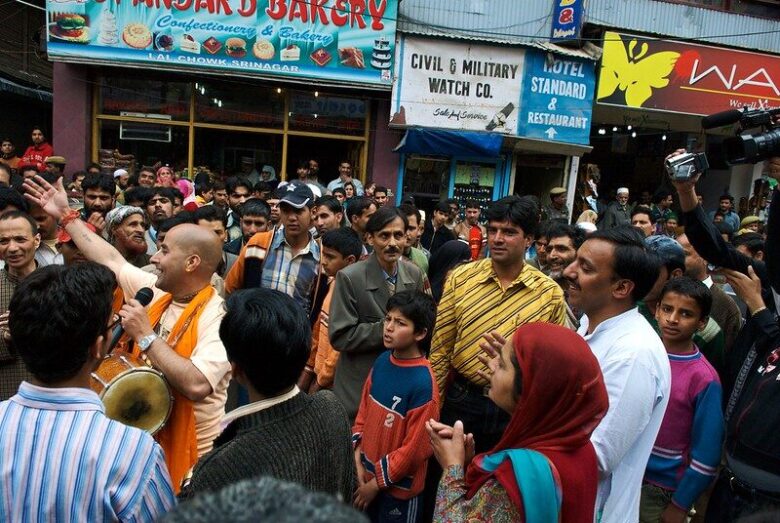
People and media covering remarks by a Hindu religious leader in Srinagar (Photo: Daniel Bachhuber / Flickr [CC BY-NC-ND 2.0 DEED])
※1 This city was called Calcutta during British rule, but in one of the local languages, Bengali, it is called Kolkata, and in 2001 the West Bengal state government decided to officially call it Kolkata.
※2 Because the Muslim-majority regions were divided between the northwest and northeast of the Indian subcontinent, Pakistan became independent as a single country on either side of India. West Pakistan is present-day Pakistan, and East Pakistan corresponds to present-day Bangladesh.
※3 The trigger for this war lies in the 1970 elections. As a result of the election, Sheikh Mujibur Rahman from East Pakistan was supposed to become Prime Minister, but the West Pakistani government refused, and carried out a military crackdown in East Pakistan. India intervened on East Pakistan’s side, and war broke out. The war ended in 13 days with West Pakistan’s surrender, and about 90,000 Pakistani soldiers were taken prisoner. It is believed that between 300,000 and 500,000 people died during this period.
※4 The LoC established then did not assign the Siachen Glacier to any country. In 1984, the Indian Army occupied the entire glacier. There were some skirmishes with Pakistani forces thereafter, but India still exercises effective control.
※5 Of course, relations between China and Pakistan are not without issues. For example, there are concerns that extremists in Xinjiang have links to Pakistan, and Pakistan has often opposed the China–Pakistan Economic Corridor, among other points.
※6 By using CPEC to land cargo from Europe and elsewhere at the Arabian Sea, China would no longer need to rely on the Strait of Malacca and the South China Sea, enabling faster transport to China.
※7 India has a President as head of state, elected by the parliament. As of October 2023, the President of India is Droupadi Murmu.
※8 Here, “civilians” refers to those not directly involved in hostilities, as defined.
※9 The Indian government announced that between 2018 and 2023, terror incidents decreased by about 45%, and public order disruptions such as stone-pelting decreased by 97%.
※10 Without using the internet, there were also cases where articles were saved to storage media and carried physically outside the Kashmir region to transmit information was also done.
Writer: Seita Morimoto
Graphics: Mayu Nakata






カシミールはまさに各国の取り合いになっている土地なのですね。そこに暮らしている人々の生活があまりにも顧みられていないことが分かりました。