
In the Middle East and North Africa (※1), as of 2021, children under age 14 make up 30% of the population. For children to understand the world they live in and to participate fully in society and the economy—and for countries, in terms of economic development as well as social and cultural aspects—education is crucial. In a region with such a large proportion of children, education becomes even more important. So what is the actual state of education? Given the region’s diversity in income, development status, and social and cultural contexts, how do the challenges differ by country? This article examines education issues in the Middle East and North Africa from multiple perspectives.
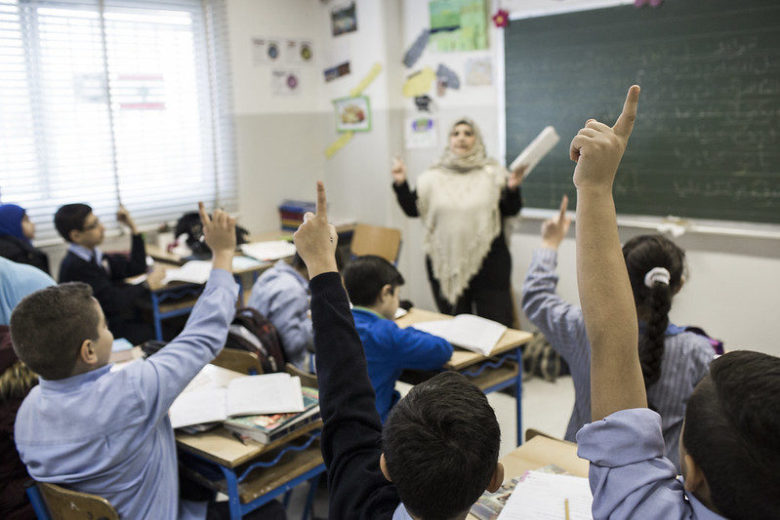
Children studying at a school in Lebanon that hosts Syrian refugees (Adam Patterson/Panos/DFID / Flickr [CC BY 2.0])
目次
Education across countries through data
We begin by looking at the state of education in the Middle East and North Africa using education-related data. Around 2019, the region’s overall learning poverty rate was 60%. Learning poverty is the share of children who cannot read and understand a simple text by age 10, indicating the proportion of children at the primary level who face barriers to schooling and learning. How much variation exists among countries? Here we look at enrollment rates and literacy rates at the primary, secondary, and tertiary levels; years of schooling; enrollment by gender; and results of international learning assessments. Note that the latest available year of data differs by country.
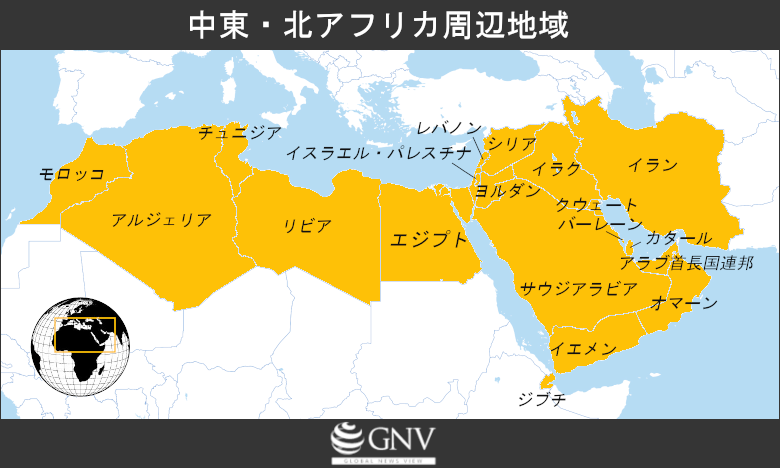
First, we examine country-level enrollment rates for primary education and secondary education separately. The enrollment rate here refers to the share of students of the official age group enrolled in school relative to the population of that age group. The classification of education levels follows UNESCO’s International Standard Classification of Education; roughly speaking, primary corresponds to elementary school, and secondary to middle and high school. In primary education, the enrollment rate ranged from a high of 100% in Iran to a low of 62% in Djibouti. In secondary education, the enrollment rate ranged from 99% in Israel to 38% in Djibouti. Eleven of the 17 countries had primary enrollment rates above 90%, while only six of 15 countries did so at the secondary level. Enrollment thus varies by country, from places where most school-age children attend school to those where not even half do.
We also look at enrollment in tertiary education, which includes vocational schools and universities. Here the enrollment rate refers to the total number of students enrolled in tertiary institutions, regardless of age, as a share of the population of the official tertiary age group. Restricting to countries for which the latest World Bank data are from 2010 or later, countries with particularly low enrollment include Djibouti at 5% and Yemen at 10%. On the other hand, enrollment is particularly high in Saudi Arabia at 71% and Bahrain at 65%. Countries with higher enrollment at the primary and secondary levels also tend to have higher enrollment at the tertiary level. The gap widens as education levels advance.
Next, how many people receive education sufficient to acquire literacy? Beyond being important for participation in society, literacy is essential to continue learning. Here, literacy means the ability to read and write short, simple texts related to daily life. Looking at the literacy rate among the population aged 15 to 24, most countries in the Middle East and North Africa are above the 2020 world average of 92%. However, Egypt stands at 88%, and Algeria remains in the 70% range (※2).
In years of schooling, there is nearly a 10-year gap between countries with longer and shorter durations. In 2021, among adults aged 25 and older, countries with a longer average number of years of schooling (※3) included Israel at about 13 years, the UAE at about 12, and Bahrain, Oman, and Saudi Arabia at about 11. By contrast, Yemen was about 3 years, Djibouti about 4, and Syria about 5.
We then examine enrollment by gender at the primary and secondary levels. In primary education, Yemen is the only country where the boys’ enrollment rate significantly exceeds the girls’ rate (※4), and in several countries girls actually have higher enrollment. The same holds for secondary education. At the tertiary level, many countries see higher enrollment for women than for men. Excluding data from before 2010, in 13 out of 17 countries, women’s enrollment exceeds men’s, and in eight of those the gap is over 20 percentage points. The largest gap is in Qatar, at 50 percentage points. It is also reported that in most subjects in the Middle East, girls outperform boys.
Finally, we look at educational achievement. Two indicators are used here. The Trends in International Mathematics and Science Study (TIMSS), administered by the International Association for the Evaluation of Educational Achievement (IEA), measures students’ achievement in mathematics and science across countries. In the math portion of TIMSS2019, which included 64 countries, all 8 participating countries from the Middle East and North Africa scored below the TIMSS scale centerpoint of 500 points for 4th grade (※5), and for 8th grade, all 11 countries except Israel were below 500. Israel scored 519 points in 8th-grade math.
The Programme for International Student Assessment (PISA), run by the OECD, measures the reading, math, and science knowledge and skills of 15-year-olds. Seventy-nine countries participated in PISA 2018. In reading and math, five of the seven Middle East and North Africa countries that participated ranked in the bottom third, while Israel and the United Arab Emirates (UAE) were in the middle tier. In science, four countries ranked in the bottom third, while Israel, the UAE, and Jordan were in the middle tier. These results indicate that Israel and the UAE tend to have higher educational performance than other countries in the region.
Poverty, inequality, and education
What factors influence the region’s education outcomes? Here we examine how poverty and household economic conditions affect education. First, consider the poverty rate. As of 2022, the World Bank’s international extreme poverty line is US$2.15 per day. However, some researchers argue this benchmark is not realistic for basic human survival and instead propose an “ethical poverty line.” Based on the relationship between life expectancy and income, this was set at US$7.4 per day as of 2015. GNV adopts this ethical poverty line. Due to World Bank data constraints, we use US$7.5 per day as the poverty line; as of 2019, roughly 208 million people in the Middle East and North Africa were in poverty. While the latest data year differs by country, based on the most recent available data, Yemen has the highest poverty rate.
Countries with high poverty rates—especially Djibouti and Yemen—tend to have lower enrollment compared to others. Among poor households at the primary level, the risk of early dropout is a major concern; in 2014, nearly one in four children who entered first grade in Yemen and Djibouti dropped out before completing primary school. Children in poor households may be unable to attend school because parents cannot afford tuition, transportation, or learning materials costs. Some children are also forced into child labor to help secure household income. As of 2020, an estimated 7.2 million children aged 5 to 17—6.5% of the region’s children—were engaged in child labor (※6).
There is also an education gap between urban and rural areas. While many countries in the region, including Kuwait and Qatar, have a high share of urban population overall, in 2021 about 61% of Yemen’s population, about 57% of Egypt’s, and about 43% of Syria’s lived in rural areas. In Egypt, Yemen, Djibouti, and Iraq, the share of 15– to 19-year-olds who have attended school for less than 6 years is almost 10% higher among poor rural households than among poor urban households. Rural areas also face overcrowded schools and inadequate facilities issues. Teacher shortages are a region-wide problem due to growing school-age populations, but they are especially severe in rural areas. Rural schools have higher teacher attrition than urban ones, fewer well-trained teachers, and difficulties offering sufficient pay to retain them.
Even within the same locality, disparities in educational opportunities often arise between native-born and immigrant children. In Gulf Cooperation Council (GCC) countries (※7), a substantial share of students are of immigrant origin, especially in Qatar and the UAE. In 2015, among 15-year-old students in-country, 64% in Qatar and 72% in the UAE were immigrants or of immigrant origin. In most countries, public schools are free for citizens, while immigrants must pay separate foreigner fees. To accommodate the large number of immigrant children, private schools offer a wide range of curricula and price points tailored to various immigrant groups. However, discriminatory treatment toward immigrants is found even in private schools, and the quality of education at low-cost schools—attended by many immigrants from other Middle Eastern countries—differs from that of high-cost schools attended by wealthier citizens. There are also out-of-school children whose parents cannot pay any tuition; for example, in the UAE, an estimated 20,000 Pakistani children were out of school in 2017.
Social issues and education
Here we look at cases where the region’s social characteristics affect education. One such issue is the gender gap. As noted earlier, there is no pronounced gender disparity in primary and secondary enrollment across the region as a whole. However, in Yemen, enrollment rates for boys and girls at the primary and secondary levels differ by nearly 10 percentage points. One factor influencing this is child marriage, particularly prevalent in Yemen and Iraq. Among girls aged 20 to 24, 27% in Iraq (in 2018) and 32% in Yemen (in 2013) were married before age 18. Marriage during school age makes attendance difficult due to household and childcare responsibilities. Beyond child marriage, patriarchal norms prescribing strict gender roles—such as restrictions on girls’ mobility and low societal valuation of girls’ education—are also said to depress girls’ enrollment.
At the same time, as seen earlier, women’s enrollment at the tertiary level is higher than men’s in the region overall. Yet even in higher education, women face barriers to access. Resistance to women entering nontraditional fields of study hinders women’s advancement in higher education. For example, in Kuwait, female students who wish to study traditionally male-dominated disciplines, such as engineering, must attain higher GPAs than men for admission. In Oman, female students are often required to extend their university studies by 1 year. In Yemen, women are discouraged from studying fields deemed “male roles,” such as programming and marketing, and are instead expected to work in “feminine” professions such as secretarial work, teaching, and nursing according to reports.
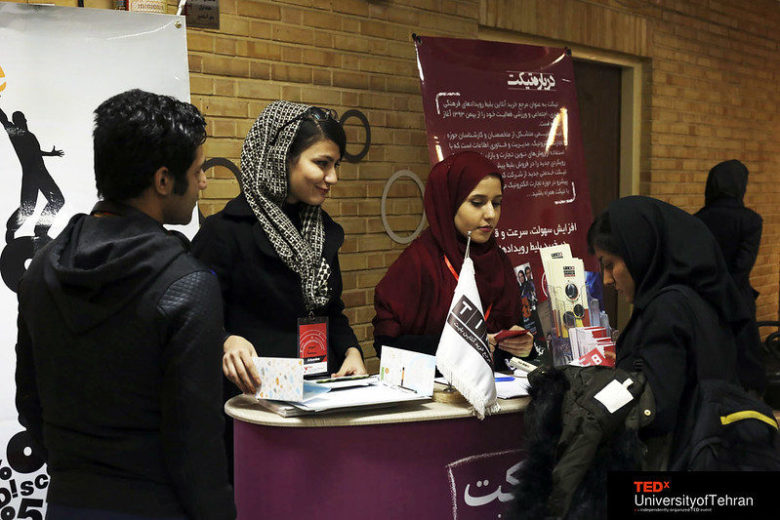
Iran, students attending the University of Tehran ( TEDx University of Tehran / Flickr [CC BY-NC-ND 2.0])
Religion-related issues also intersect with education. Saudi Arabia is a prominent example. The Saudi government is said to reflect Islamic fundamentalist thought in required textbooks for Muslim children from kindergarten through high school reports claim. This fundamentalism descends from Wahhabism, an ideology that champions Wahhabis as “the righteous” and regards other religions—and even other Islamic sects—as enemies; it spread in Saudi Arabia from the 20th to the 21st century. The ideology has been exported beyond Saudi Arabia through funding for education abroad, not confined to domestic settings. It is also reported that the “Islamic State” used these textbooks in schools.
In Israel, there are Haredim, ultra-Orthodox Jews who are extremely conservative, anti-secular, and strictly observant. As of 2023, they make up 13.5% of the population. They tend to shun secular education and prefer to focus on religious study. Often, instruction in mathematics, English, and science ceases in the lower grades of elementary school, and in 2019 about 27% of Haredi students were exempted from core subjects such as English, math, and science.
Problems in the education system
So far we have considered indirect factors such as poverty and social issues; here we focus on problems in the education system itself. The share of government expenditure allocated to education in the region ranges from 9.3% in Qatar to 23.1% in Iran, with most countries exceeding the global average of 12.6%. However, some argue the spending is not allocated appropriately or efficiently. For example, Lebanon’s economic crisis that began in 2019 has weakened the public education sector and plunged it into a critical state. The government has not allocated sufficient budgets to public education, and teachers are working under low pay and inadequate benefits. In January 2023, teachers went on strike over pay and working conditions, shutting down all public schools and leaving an estimated 1 million children out of school.
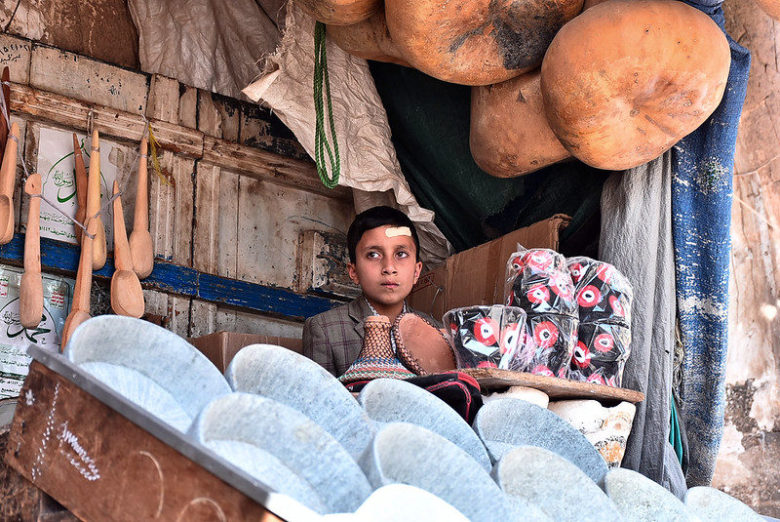
Yemen, child laborers (Kalu Institute / Flickr [CC BY-NC-ND 2.0])
Possibly influenced by authoritarianism, many countries in the region have the state directly involved in writing, publishing, and distributing textbooks. Some in power allegedly use education to serve government interests, such as fostering negative sentiment toward rival countries or discouraging questioning of the government policies. Curricula may include extreme religious interpretations of government-designated enemies, distortions of history, or, in severe cases, outright conspiracy theories, adversely shaping students’ thinking and depriving them of proper educational opportunities.
In many countries in the region, a rote, memorization-heavy learning style that emphasizes recall still prevails. As a result, it is said to be difficult to cultivate creativity and critical thinking skills. Students also often lack soft skills—interpersonal skills needed in the workplace, such as communication and teamwork—affecting not only educational outcomes but also subsequent employment. In addition, hard skills in mathematics, science, and engineering are insufficient, and it is said that 70% of workers lack the skills needed for their jobs. These factors are considered among the causes of the region’s world’s worst youth unemployment rates.
Crises and education
Finally, we consider the impact of region-specific issues and temporary crises in historical perspective on education. One such factor is armed conflict. In 2015, more than 13 million children in the Middle East (※8) were out of school due to the direct or indirect effects of conflict. That same year in Syria, Iraq, Yemen, and Libya, an estimated 8,850 or more schools became unusable due to attacks on educational facilities, their conversion into shelters or military facilities, and other reasons. In Yemen, about 2 million school-age children were out of school in 2021, twice the number in 2015 right after the conflict began. Conflicts also affect teachers. In Yemen, as of 2021, two-thirds of education personnel had not received regular salaries for over 4 years. With fewer teachers, around 4 million children faced the risk of suspension or dropping out. In Syria, by 2014—since the start of the conflict—22% of all teachers had left the profession.
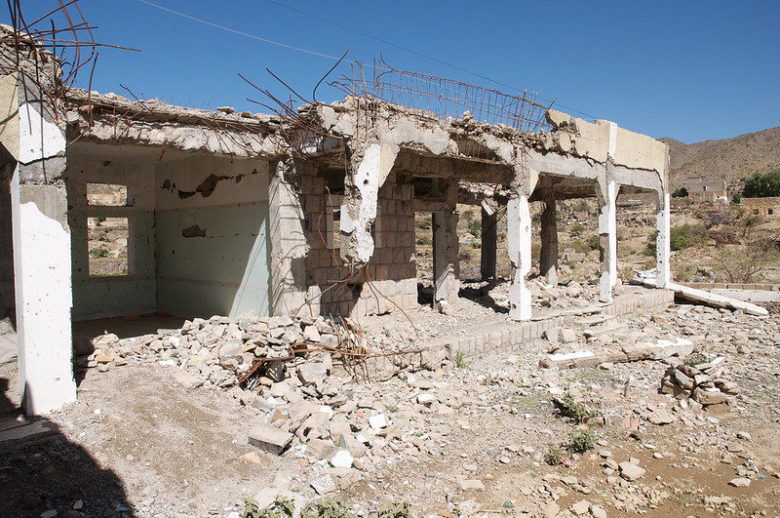
Yemen, a school destroyed by airstrikes ( Julien Harneis / Flickr [CC BY-SA 2.0])
Conflict not only prevents the provision of safe learning environments; it also hampers the development of education systems by increasing conscription into armed groups, poverty and the resulting rise in child labor and child marriage, and discrimination amid greater violence and insecurity. In Yemen, more than 3,600 children were recruited between 2015 and 2021. Refugee children fleeing conflict and poverty often lack adequate access to education in host countries as well, facing multiple barriers such as overcrowding and resource shortages in host schools, distance and unaffordable transportation, discrimination and violence in schools, and difficulties adjusting to local languages and curricula. For example, in 2019, about 35% of school-age Syrian refugee children in neighboring countries were not attending school.
Following the spread of COVID-19 around 2020 and the resulting school closures, the region’s learning poverty rate is projected to rise by 10%. The fiscal burden of COVID-19 placed severe pressure on education budgets in countries that already had limited fiscal space. Some countries adapted effectively to change and provided quality online education, but in rural and conflict-affected areas such as Yemen and in Lebanon—where the economic crisis led to power shortages—effective online learning was difficult due to inadequate internet access. Even within countries, rural areas were hit harder than urban ones. Among school-age children in the region, the share with home internet access differs by nearly 20% between urban and rural areas, creating disparities in access to remote learning. In practice, about 40% of students in the Middle East and North Africa did not benefit from remote education. The number of children in poor households increased by 8 million due to COVID-19, and by the end of 2020 could have reached an estimated 60 million, raising concerns of widening education inequalities due to poverty.
Conclusion
While we have seen multiple challenges affecting education, there are also moves toward improvement. More countries are participating in international assessments such as PISA and TIMSS, and in some countries governments have adopted learning recovery programs and set learning goals with concrete strategies. The COVID-19 pandemic and economic crises that struck amid such efforts, however, dealt blows to education and exposed the fragility of educational systems and infrastructure.
In addition, climate change—a global issue—is likely to become one of the challenges ahead. The Middle East and North Africa is said to be one of the regions most vulnerable to climate change impacts, which could indirectly affect education through concerns such as worsening water shortages and conflicts over resources and scarcity. Poverty, conflict, and climate change are not issues confined to the Middle East and North Africa; they are connected to other regions as well and require global-level responses. To mitigate future impacts on education, fundamental improvements to the region’s education systems and current problems are urgently needed.
※1 Middle East and North Africa: There is no precise definition, and countries included vary by organization. Here, from the countries listed by the World Bank under the Middle East and North Africa, excluding Malta (an EU member), we consider the following 20 countries: United Arab Emirates, Algeria, Yemen, Israel, Iraq, Iran, Egypt, Oman, Qatar, Kuwait, Saudi Arabia, Djibouti, Syria, Tunisia, Palestine, Bahrain, Morocco, Jordan, Libya, and Lebanon.
※2 Although data were unavailable, Djibouti’s low enrollment suggests that youth literacy rates are similarly low.
※3 Among the UN’s indicators of national well-being and progress—based on life expectancy, education, and income—is the Human Development Index. One component is the education index. Here, we present (rounded down) the average years of schooling among adults aged 25 and older used to calculate the education index.
※4 In primary education (Iraq) and in secondary education (Iraq, Tunisia, and Libya), boys’ enrollment exceeded girls’ by 10 percentage points or more. However, because these data are from before 2010, they are not discussed in the main text.
※5 The scale centerpoint of 500 is positioned at the average of the overall achievement distribution and serves as a benchmark for cross-country comparison.
※6 The child labor rate here comprises the total number of children engaged in hazardous industries/occupations designated by the ILO or working 43 or more hours per week. It also includes all children aged 5–11 engaged in any form of work and those aged 12–14 working 14 or more hours per week.
※7 GCC countries are Bahrain, Kuwait, Oman, Qatar, Saudi Arabia, and the UAE.
※8 For data reasons, the Middle East here includes Syria, Iraq, Yemen, Libya, Palestine, Sudan, Jordan, Lebanon, and Turkey.
Writer: Chika Kamikawa
Graphics: Ayane Ishida






支援で解決しそうな問題もあるが、他国が介入できない問題も多く、難しいと思った。
政治・経済的な側面だけでなく、文化的な側面でも教育が阻害されているとのことで、他国が支援したからといって簡単に改善できるわけではないのだろうと感じました。さらに、地域文化を西洋の仕組みに近づけていくのが正解とも限らないので難しそうですね。
中東・北アフリカ地域の就学率、識字率、データとしてみるとイメージしてたのと比べて意外と高かったですね
>20から24歳の少女のうち、イラクでは2018年に27%、イエメンでは2013年に32%が18歳未満で結婚していた。
20から24歳が少女…?
外から支援投げつけまくるだげじゃなくて中が変わってもらう必要もあるんですね(小並感)