
Climate change is one of the greatest challenges humanity faces today. It is closely linked to a range of serious problems, including natural disasters, environmental destruction, and food shortages. Concerned that the media are not covering climate change at a level commensurate with its severity, an international movement called “Covering Climate Now” (Covering Climate Now) is working to improve the situation. This initiative seeks to increase and enhance reporting on climate change. More than 460 news organizations around the world are participating, building a network in which members collaborate by sharing and republishing articles. GNV is also part of this effort and is actively communicating about climate change.
In connection with this movement, GNV is focusing this time on plastic waste. Because plastic is made from petroleum, it releases carbon dioxide during production and when burned as trash, thereby contributing to global warming. Once used, it does not decompose even after tens of thousands of years, lingering in the environment and in living organisms, which leads to ecosystem destruction—making it closely tied to environmental degradation and climate change. Here, we introduce two articles from news sites that also participate in Covering Climate Now. The first, from the news site “Grist” (Grist), is Joseph Winters’ piece, “High-income countries were exporting twice as much plastic waste to low-income countries as previously thought.” It highlights problems related to the export of plastics from high-income to low-income countries. The second, from “Hakai Magazine” (Hakai Magazine), is Janine Peralta’s “The marks plastic bags leave on the seafloor,” which examines how plastic bags sinking to the seafloor are damaging deep-sea ecosystems.
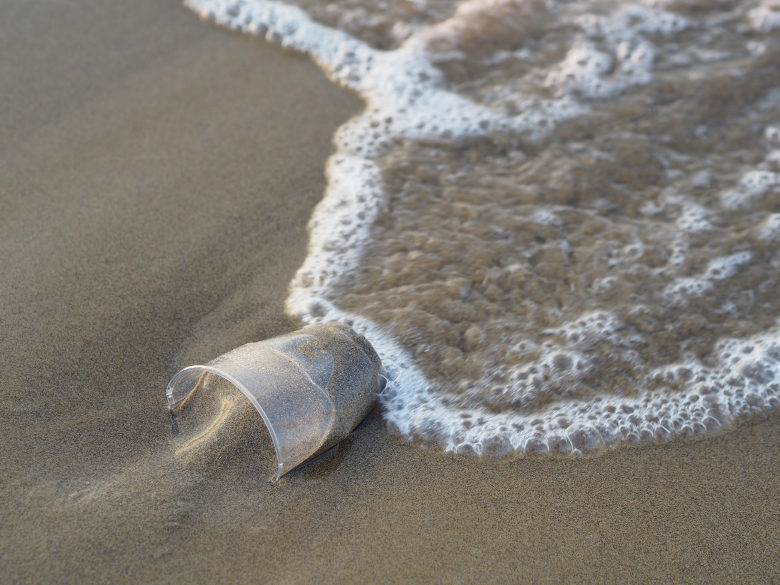
Plastic containers washed up on the shore (Photo: Pxfuel [Terms of use])

目次
High-income countries were exporting twice as much plastic waste to low-income countries as previously thought
《Grist translated article, by Joseph Winters (※1)》
Recent estimates have measured only the tip of the iceberg.
High-income countries have long shipped waste abroad for disposal or recycling. A new analysis by an independent team of experts has found that the amount of plastic sent to low-income countries is far greater than previously assumed.
According to a new report released in March 2023, UN data on global waste trade do not account for “hidden” plastics contained in items such as textiles and contaminated paper bales. As a result, the amount of plastic sent from the European Union (EU), Japan, the United Kingdom, and the United States to low-income countries had been undercounted by as much as 1.8 million tons per year. The report’s authors say that in low-income countries, importers often dump or burn more plastic waste than they can manage, with major consequences for public health and the environment.
“Toxic chemicals are leaking into communities from these plastics,” said Therese Karlsson, science and technical advisor at the nonprofit International Pollutants Elimination Network (IPEN). IPEN conducted the analysis with an international team of researchers from Sweden, Turkey, and the United States.
Many estimates of the scale of plastic waste trade rely on the Harmonized Commodity Description and Coding System, a UN database that tracks various product types by assigning them codes beginning with HS. For example, code HS3915 refers to plastic “waste, parings and scrap,” and is used by researchers and policymakers to indicate the total amount of plastic traded worldwide. However, HS3915 excludes large quantities of plastic that are included under other product categories. The new analysis shows that these statistics capture only a fraction of the true amount—just the tip of the plastic-waste iceberg.
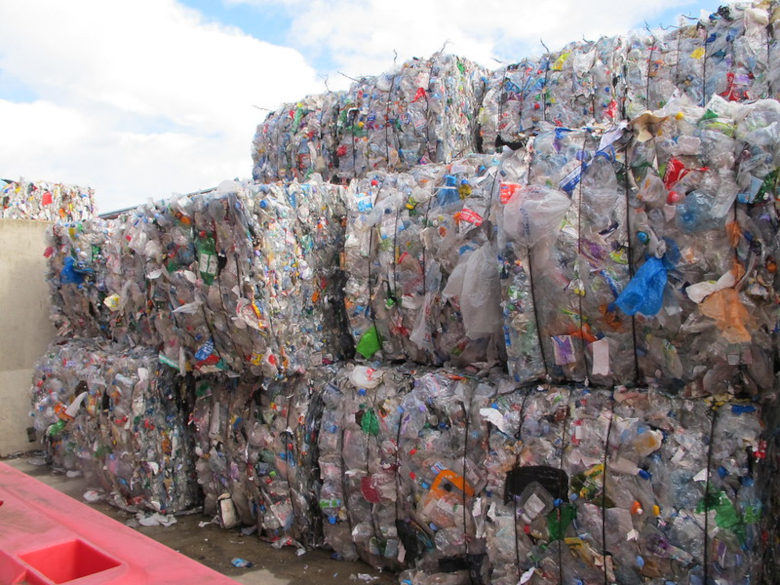
Massive amounts of plastic waste awaiting disposal (Photo: Maggie Jones / Flickr [Public Domain Mark 1.0])
Another code, HS5505, refers to discarded clothing, yet despite the fact that 60–70 percent of all textile products are made of some type of plastic, they are not counted as plastic waste. And HS6309, which refers to used clothing and accessories, is not treated as waste by the UN because reuse or recycling is assumed. In reality, however, about 40 percent of exported clothing is deemed non-recyclable and ends up in landfills as waste.
Furthermore, when unsorted bales of paper are shipped abroad for recycling, they are often contaminated with plastic that is overlooked in international estimates of plastic waste trade. These paper bales contain 5–30 percent plastic, which must be removed and discarded.
When plastics from these two product categories are taken into account, total exports of plastic waste from all regions analyzed amount to 1.8 million tons per year (1.3 million tons from paper bales and 500,000 tons from textiles). This is more than twice the amount found by analyzing only plastic “waste, parings and scrap.”
In addition, product categories such as electronics and rubber are also propelling the growth of global plastic waste trade. Due to insufficient data, it is difficult to estimate precise quantities, Karlsson said, but these plastics strain waste management infrastructure in low-income countries, leading to large volumes of plastic waste being handled in dumps, landfills, and incinerators.
There is also a risk that chemicals such as carcinogenic compounds (PCBs) could leach into soil and water at waste facilities and landfills. More than 10,000 chemicals are used in plastic production, and researchers note that a quarter of them may accumulate in the environment and in people’s bodies, potentially causing adverse effects. The report calls for greater transparency around the chemicals used in the plastics and petrochemical industries and for regulators to ensure the use of fewer, less harmful chemicals.
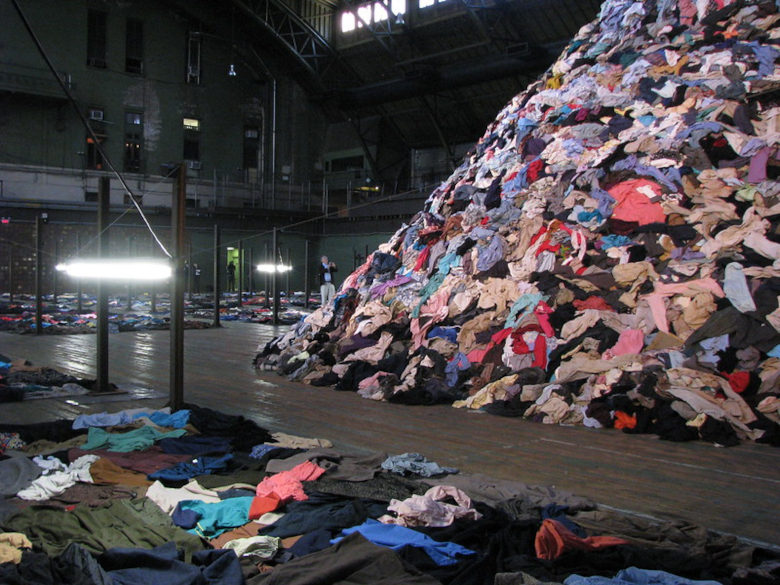
Large amounts of clothing being discarded (Photo: C-Monster / Flickr [CC BY-NC 2.0])
Karlsson is calling for a global ban on plastic waste trade and for limits on the amount of plastic produced worldwide. “Regardless of how we handle plastic waste, we need to reduce the amount of plastic being generated,” she told Grist.
Without ambitious action to phase down plastic production, the world is on track to generate a cumulative 26 billion tons of plastic waste by 2050—most of which will likely be incinerated, dumped, or landfilled.
The marks plastic bags leave on the seafloor
《Hakai Magazine translated article, by Janine Peralta (※2)》
Trash tracks are the latest sign of the plastic apocalypse.
Plastic pollution is everywhere—from the peak of Everest to the bottom of the Mariana Trench. Its effects are varied: it carries pathogens, strangles wildlife, and sometimes even becomes habitat. But at the bottom of the 10,000-meter-deep Philippine Trench, plastic appears to be altering the seafloor ecosystem.
In 2021, marine biologist Alan Jamieson of the University of Western Australia and microbial oceanographer Deo Florence L. Onda of the University of the Philippines, along with their crew, descended into the world’s third-deepest trench. There, they found large accumulations of plastic bags.
As they continued their survey, they saw that deep-sea currents drag the bags across the seafloor, carving parallel lines like tire tracks. Jamieson says he saw the same tracks during the Five Deeps Expedition he previously joined, which investigated places including the Puerto Rico Trench in the Atlantic Ocean, the South Sandwich Trench in the Southern Ocean, the Java Trench in the Indian Ocean, the Challenger Deep in the Pacific, and the Molloy Deep in the Arctic. The same tracks were confirmed there, too, but how they formed was unknown. According to Jamieson, “Nothing moves in straight lines in the deep sea,” meaning the tracks were made by human debris.
Jamieson and Onda named these tracks “müllspuren,” after the German “Lebensspuren,” which refers to traces left by seafloor organisms. The problem is that these müllspuren are displacing the Lebensspuren.
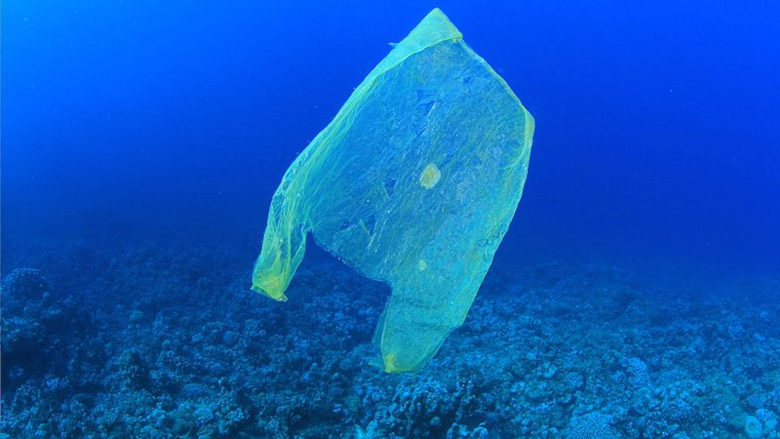
A plastic bag drifting in the sea (Photo: MichaelisScientists / Wikimedia Commons [CC BY-SA 4.0])
Onda says the impact plastic bags have on the seafloor could extend to deep-sea organisms. Many deep-sea creatures rely primarily on organic matter falling from the surface for food. Although he did not participate in the study, Kazumasa Oguri, a biologist at the University of Southern Denmark, notes that when plastic bags are dragged along the seafloor and gouge into sediments, they may bury this scarce food supply.
Jamieson likens it to a bulldozer clear-cutting a forest: “All the wood and leaves are still there, but someone has pushed it over and flattened it, and the environment has changed so much that it’s transformed the lives of the animals.”
These tracks may also disrupt carbon that accumulates in deep-sea sediments. Further research is needed to properly understand how litter tracks affect ocean carbon cycling and other deep-sea ecosystem processes. At the very least, this study shows that plastic is altering the environment on the seafloor 10,000 meters down.
“While this is basic research, it helps us better understand nature and the connections between people and nature,” Onda says. “When I tell others about this research, they’re shocked. I hope that shock prompts reflection, awareness, and action.”
※1 This article is a translation of Joseph Winters’ piece “Rich countries export twice as much plastic waste to the developing world as previously thought,” published by Grist (Grist), a partner organization of Covering Climate Now (Climate Covering Now), in which GNV also participates as a partner. We would like to take this opportunity to thank Grist and Winters for providing the article.
※2 This article is a translation of Janine Peralta’s piece “Plastic Bags Are Leaving Their Mark on the Deep-Sea Floor,” published by Hakai Magazine (Hakai Magazine), also a partner organization of Covering Climate Now (Climate Covering Now), in which GNV participates as a partner. We would like to take this opportunity to thank Hakai Magazine and Peralta for providing the article.
Writers:
Joseph Winters
Janine Peralta
Translation: Takumi Kuriyama





挿入されているごみの写真にとても衝撃を受けました。世界全体がごみ問題を理解し、行動を改善していく必要があると強く感じました。