
In March 2022, it was announced that 4 children of former Gabonese president Omar Bongo had been charged in France. The charges include embezzlement of public funds, corruption, and misuse of corporate assets. They say they received buildings in prime areas of Paris between 1995 and 2004 as gifts from their father, Mr. Bongo, and claim they did not know whether the funds were illicit.
For many years in Gabon, corruption by those in power has been rampant. France, which once colonized Gabon, is closely tied to this history of political corruption. What kind of relationship exists between Gabon and France? And what dark forces lie behind the corruption problem?
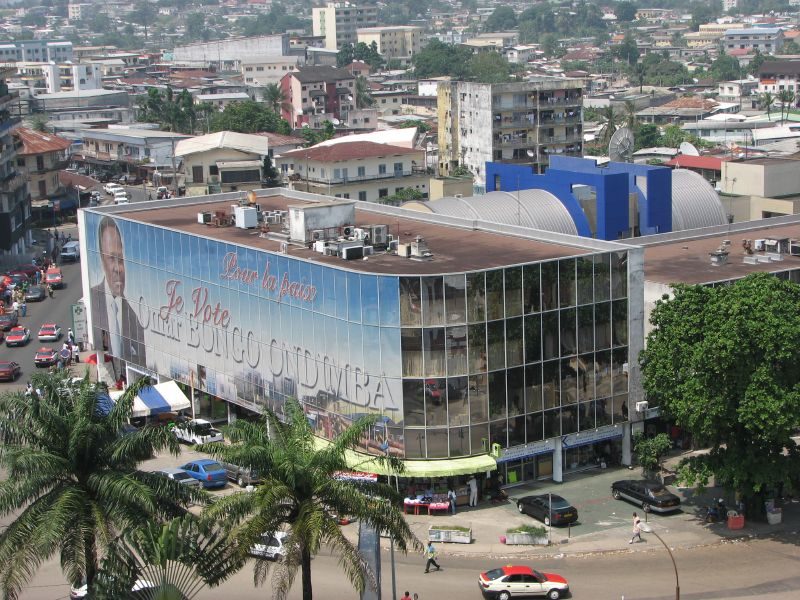
Campaign billboard for Omar Bongo in Libreville, the capital of Gabon (Photo: huguesn / Flickr [CC BY-NC-SA 2.0])
目次
Gabon’s colonial era
To explore the background of the issue, let us first look back at Gabon’s history. In what is now Gabon, the slave trade once took place. France and others exported many enslaved people from Africa to work producing cash crops in their colonies in the Americas. However, after France banned slavery in 1848, it sought in Africa the resources needed by its industrial sector and markets to sell its goods. To secure commercial interests in Africa, France negotiated with two political leaders who ruled what is now Gabon and concluded a treaty in 1839. The treaty agreed to cede sovereignty over the region to France. In addition to administrators, France dispatched teachers and specialists to present-day Gabon. Then, in 1910, present-day Gabon was incorporated as part of French Equatorial Africa together with present-day Chad, Congo, and the Central African Republic. In 1946, France and its colonies, including French Equatorial Africa, were grouped together as the French Union by the constitution of the Fourth Republic. The French Union was reorganized in 1958 into the French Community (Communauté Française d’Afrique : CFA), and present-day Gabon became an autonomous republic within it with extensive self-government and concluded a cooperation agreement with France. In 1960 it achieved independence as the Gabonese Republic. 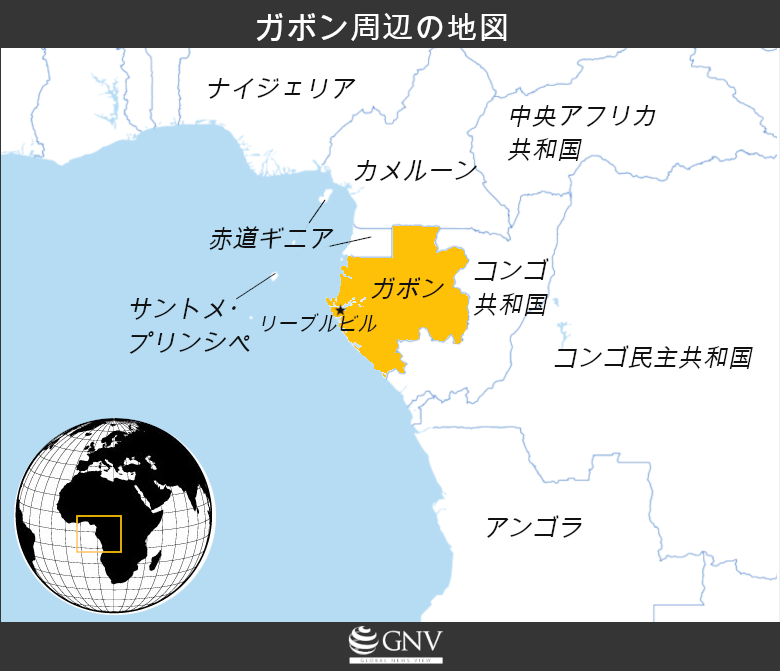
Toward Omar Bongo’s rule
The year after Gabon achieved independence, Léon M’ba was elected the first president. M’ba sought to establish a one-party system, but in 1964 young military officers opposed him and staged a coup. The coup failed when French troops, dispatched on the orders of former French president Charles de Gaulle, intervened. France’s intervention in Gabon’s domestic coup is believed to have had economic and political motives. One reason was that among France’s former colonies, Gabon possessed significant deposits of uranium, a strategic resource. Uranium is a raw material for nuclear weapons, and France had been developing nuclear weapons since 1951. Maintaining influence over Gabon was important for France to secure access to uranium resources. Gabon also had abundant oil resources. Elf Aquitaine, the state-run oil company operated by the French government at the time, had entered Gabon to extract oil. These points suggest that France regarded Gabon’s resources as important and help explain its intervention.
Thus, although Gabon was formally independent from France, France continued to intervene politically, economically, and militarily to maintain its sphere of influence. These neo-colonial dynamics are sometimes referred to as “Françafrique.” This also involved supporting leaders of former colonies who were amenable to France’s interests. For example, France secured Gabon’s resources at low prices and in return provided military and political support to Gabon’s leaders, protecting them from threats such as coups, as in M’ba’s case mentioned above. After independence, while the formal suzerain–colony relationship ended, a mutually beneficial but illicit collaboration between elites in both countries continued.
The introduction of the CFA franc is another example of French intervention in former colonies. The CFA (Note 1) is a monetary community composed of former French colonies in Africa, and the common currency used there is the CFA franc. Introduced in 1945, France held veto power over the board of the central bank that manages this common currency, and 50% of foreign exchange reserves had to be deposited in French banks. This arrangement allowed France to retain economic leverage over its former colonies.
When the first president, M’ba, died in 1967, the then-vice president, Albert-Bernard Bongo, was elevated to the presidency. Thus began the Bongo regime, which would last more than 40 years. France also interfered in the birth of this new regime. Taking advantage of M’ba’s illness, former president de Gaulle backed Bongo—who had once served in the French armed forces—to become president. The year after taking office, Bongo established a one-party system under the Parti Démocratique Gabonais (PDG). In 1973 he converted to Islam and changed his name to Omar Bongo.
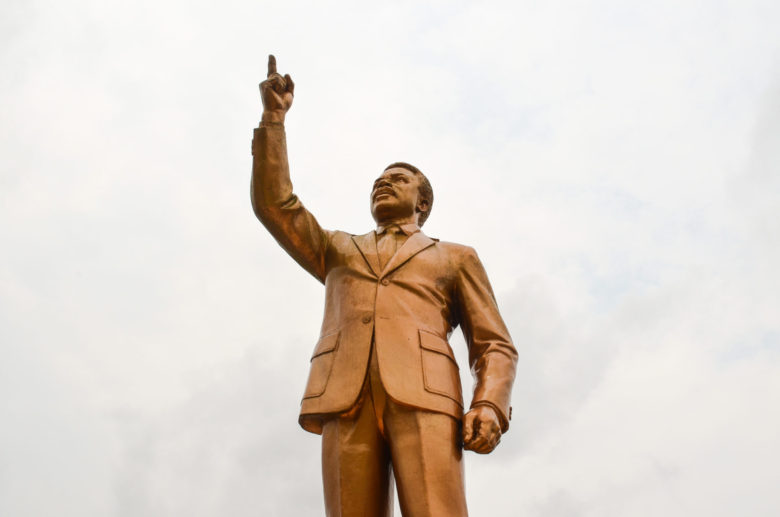
Statue of Omar Bongo (Photo: jbdodane / Flickr [CC BY-NC 2.0])
He went on to win the elections held in 1973 and 1979. It should be noted, however, that because a one-party system was in place, these two elections were held without any candidates other than Bongo. In 1982, a new political group outside the ruling party arose demanding multiparty democracy and an improvement in the corrupt political situation, but it was quickly suppressed. Bongo was re-elected again in 1986.
What triggered the end of the one-party system were popular calls for democratization and the economic crisis of the 1980s. With the end of the long Cold War announced at the Malta Summit in 1989, great-power support for authoritarian regimes that had been driven by Cold War rivalry fell away, and demands for democratization spread worldwide. The same happened in Gabon. In addition, Gabon faced harsh economic conditions in the 1980s. The wave of democratization and the economic crisis made popular discontent uncontainable, and the government was forced to accept the launch of a national conference as a forum for policy debate including the opposition. In 1990 a revised constitution recognizing a multiparty system was adopted, transitioning from a one-party state to multiparty politics.
However, this did not usher in a truly democratic political system. Many politicians who criticized Bongo were bought off, and as a result the opposition could hardly function as it should. Bongo went on to win the 1993 and 1998 elections, but the opposition criticized the government for electoral fraud. Gabon’s electoral system has various problems. For example, results are not released incrementally, making it easier to control the outcome. Unlike in other African countries, results from each constituency are centralized in one place and announced together, making manipulation easier. In addition, the two-term limit for presidents introduced in 1997 was abolished by a 2003 constitutional amendment, eliminating term limits. Key government posts were monopolized by those related by blood to Bongo. Through this political trajectory, Bongo’s grip on power became ever more unshakable.
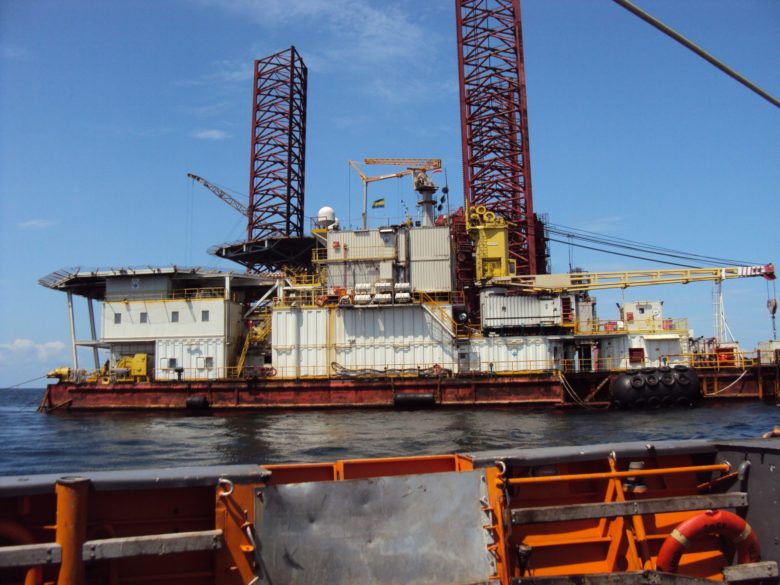
Gabon faces not only political issues. The fiscal fallout from large-scale corruption is also severe. Much of the tax revenue and proceeds from oil sales that should have gone to public works have been embezzled. Mr. Bongo is said to have amassed assets by 2009, the year of his death, including at least 183 cars, 39 luxury properties in France, and 66 bank accounts. Corruption involving France is also serious. For example, in 2001 it came to light that the French oil company Elf had for years paid bribes to Bongo and others to obtain oil at low prices, as part of what was said to be the largest corruption scandal in the post–World War II Western world. Supporting Elf, France used Gabon as a military hub in Central Africa, and in return Bongo received military protection. France’s facilitation of corrupt politics and corrupt practices was not limited to Gabon; it had long taken place across other former French colonies as well.
Moreover, the flow of funds was not only from France to Gabon; money also moved from Bongo to France. In 2009 it emerged that senior Gabonese officials working at the Bank of Central African States (Banque des États de l’Afrique Centrale : BEAC), which issues the CFA franc common to former French colonies, conspired to embezzle millions of U.S. dollars. The embezzled funds are believed to have been provided on Bongo’s instructions as campaign contributions to French presidential candidates, allegedly including Jacques Chirac and Nicolas Sarkozy, the 22nd and 23rd presidents of France. As we have seen, France supported Bongo because he acted in ways favorable to French interests politically and economically. But there was also a reverse arrangement in which Bongo supported French presidential hopefuls likely to pursue policies favorable to him.
Power passed to his son, Ali Bongo
After then-incumbent president Omar Bongo died in 2009, his son Ali Bongo won the election and became president. The opposition, however, disputed the result as manipulated and boycotted Ali Bongo’s inauguration. The results of the 2016 presidential election were also suspected of manipulation. Although the vote difference between Bongo and opposition leader Jean Ping, former chair of the African Union Commission, was narrow, the tallies themselves were suspected of being tampered with. Moreover, the court that certified the result was composed of judges appointed by Bongo, and it declared Bongo the winner. After the election, Gabonese security forces raided Ping’s headquarters. The opposition estimated that about 30 people were killed in the post-election clashes.
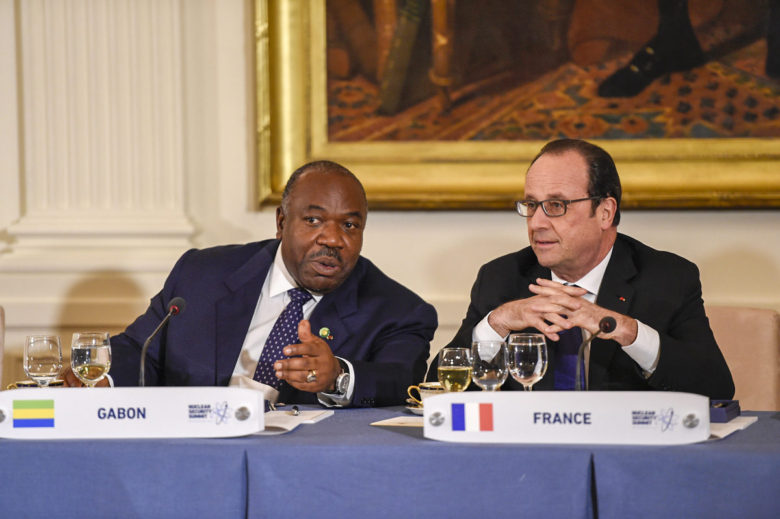
Ali Bongo and François Hollande, the 24th president of France (Photo: GPA Photo Archive / Flickr [Public Domain Mark 1.0])
As in his father’s time, fiscal problems continued to plague Gabon under Ali Bongo’s rule. In 2014 global oil prices plunged, shrinking government revenue. Because Gabon relies on oil for state income, its economy was unstable. In addition, oil fields in Gabon have been depleting, with production declining. Yet there are few industries within Gabon that can replace oil as a new source of revenue. The slump in the oil sector has left people worse off than before. Most oil extraction in Gabon has historically been carried out by foreign companies. Beyond the issue of embezzlement by those in power, foreign firms have long taken much of the profit from Gabon’s oil. Although it has been improving in recent years, it remains a problem that cannot be ignored.
On the UN Human Development Index (HDI), Gabon ranks 119th. The Human Development Index is a measure of a country’s development and prosperity across three dimensions: health, education, and income. A ranking of 119th is a relatively low position for a country enriched by oil. Wealth does not reach the public, and infrastructure remains underdeveloped. In terms of education, there is also a lack of adequate educational opportunities within Gabon. Nevertheless, the Bongo family’s children enroll in schools in the United Kingdom and receive an education to become political elites.
Amid these continuing domestic problems, in 2018 Bongo suffered a stroke while in Saudi Arabia and went to Morocco to recuperate. His treatment abroad left the country without a president for a time. The following year, 2019, Bongo returned from convalescence and formally resumed the presidency.
Looking to Gabon’s future
As we have seen, Gabon today faces numerous political and economic challenges. What developments have there been in recent years? For example, since 2017 Bongo has been pursuing an anti-corruption campaign. Known as Operation Mamba, it has seen senior officials suspected of embezzling funds from the state oil company dismissed and detained. Some also view this as a move to purge Bongo’s opponents.
Gabon also rejoined the Extractive Industries Transparency Initiative (EITI) in 2021. This is a multilateral framework aimed at promoting resource development and preventing corruption and conflict by increasing transparency in the flow of funds from extractive industries to resource-producing countries. Gabon had joined the EITI in 2007 but became non-participating in 2013 for failing to submit a validation report by the agreed deadline. It has now been accepted by the EITI Board and re-admitted.
There are moves beyond anti-corruption as well. Responding to the slump in the oil sector, since 2010 Bongo has worked to promote the timber sector. About half of Gabon’s tropical forests have been allocated to commercial logging, and according to data from the French Ministry of Finance, Gabon’s timber production roughly doubled between 2012 and 2021. However, large-scale logging is causing serious environmental problems, and measures such as bans on logging in some areas are being advanced to address them.
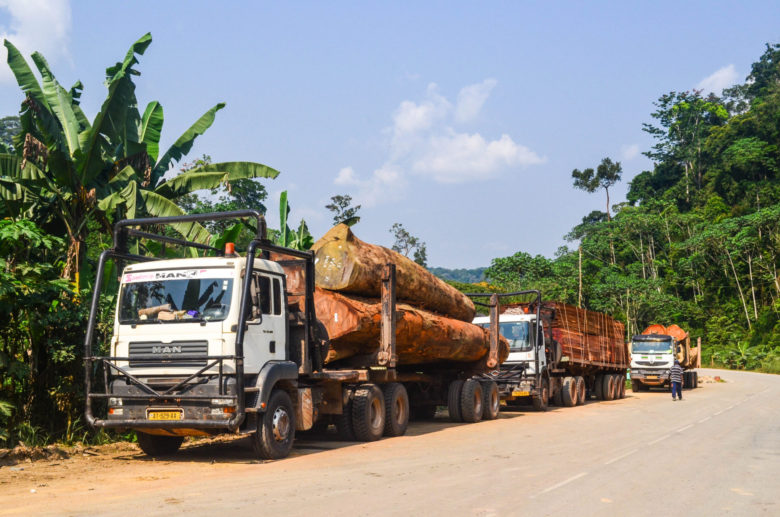
Truck transporting timber in Gabon (Photo: jbdodane / Flickr [CC BY-NC 2.0])
In 2022, Gabon also announced its intention to join the Commonwealth. The Commonwealth is a group of states centered on the United Kingdom and its former colonies, whose members are linked diplomatically and economically. The Gabonese government says the goal of joining is to diversify the economy. Some also view the move as an attempt to escape France’s influence by pivoting away from France and into the Commonwealth.
Thus, in a country long beset by political challenges, economic and political change is inching forward. However, the Bongo family’s grip on power—arguably responsible for creating the harsh conditions to date—has changed little. Changing this will require still greater reforms, such as amending the constitution and overhauling the electoral system. It is also important to overcome the historical negative legacy of illicit cooperation with France that has sustained Bongo rule. To alleviate poverty, development of non-oil industries, including the timber sector, will be essential. Of course, corruption must be policed and prevented much more strictly. We hope to see Gabon change for the better in the years ahead.
Note 1 The formal name of the CFA franc is the Communauté Financière Africaine (for West Africa) franc and the Coopération Financière Africaine (for Central Africa) franc. Although the two CFA francs had the same exchange rate with the French franc, they were separate currencies issued by different central banks.
Writer: Hisahiro Furukawa
Graphics: Haruka Gonno




植民地支配を受けた国々は、現代でも多方面で宗主国の影響を受けているのだと実感しました。
その背景には、CFAフランなど国の中枢機能に関わる部分で、宗主国が介在しているからだと読み取れます。
とはいえ、ガボンがイギリスに接近していることも興味深く、今後の外交関係に注目したいです。