
“If wars can be started by lies, peace can be started by truth.” These are the words of Julian Assange, founder of WikiLeaks, which has exposed numerous inconvenient truths concealed by governments and corporations around the world. At present, Assange is being held in the United Kingdom’s highest-security prison, where many violent offenders are incarcerated, and preparations for his extradition to the United States are steadily advancing. On April 20, 2022, a UK judge issued a ruling allowing extradition, leaving the execution of that decision to the Home Secretary.
Assange has been indicted in the United States on espionage charges and, if convicted, could face up to 175 years in prison. The U.S. government has also considered kidnapping or assassinating him. Yet the charges against Assange stem from publishing information provided by whistleblowers. In other words, conduct that constitutes journalism is being criminalized. Applying this law solely to publication is unprecedented in U.S. history.
Freedom of the press and of expression are under threat across the globe. Strict speech controls in places such as China and North Korea often draw attention and are criticized by countries that emphasize democratic values, including the United States. There are also many other countries—such as Eritrea and Turkmenistan—where repression is extremely harsh, though they receive far less attention, as many rankings show. However, when such freedoms are threatened in countries thought to offer a certain degree of protection, the implications for other nations are all the more significant, and the issue merits special attention. The case of WikiLeaks and Assange makes this problem plain and carries the risk of undermining not only freedom of expression but also the rule of law.
Ordinarily, when press freedom is in crisis, journalists should be the first to stand up. Yet this has not been seen in the West—or in Japan. To explore the problems embedded in Japanese reporting, we will focus on the reality of WikiLeaks and U.S. coverage surrounding it, and consider journalism more broadly.
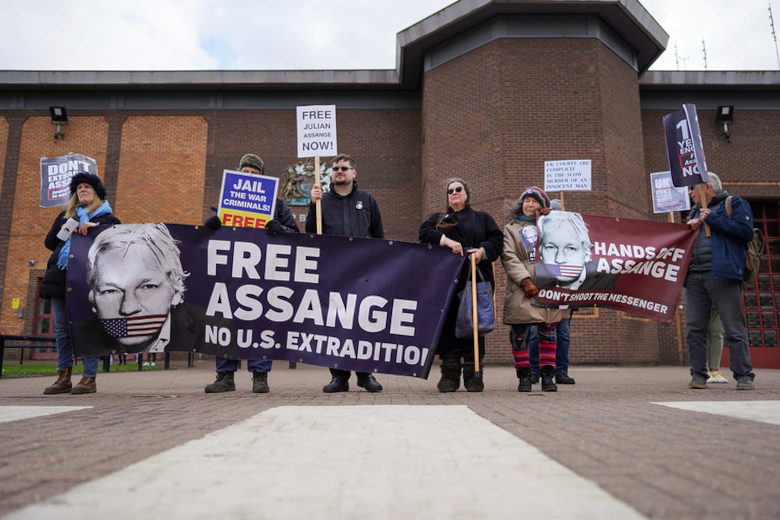
A protest in front of Belmarsh Prison, where Assange is being held (Photo: Alisdare Hickson / Flickr [CC BY-SA 2.0])
目次
From the founding of WikiLeaks to the courtroom
Since it began operating in 2006, WikiLeaks has received and published classified information (leaks) provided by whistleblowers within governments, corporations, and other organizations. While there are many similarities with conventional journalism engaged in similar activities, it also has distinctive features. One is how it receives information: it accepts submissions from whistleblowers online via a proprietary encrypted submission system. This means WikiLeaks itself cannot identify the sender, reducing risk for whistleblowers. WikiLeaks also tends to prioritize publication of primary documents themselves, and provides less commentary than traditional news outlets.
WikiLeaks drew major attention in 2010 when it released video of a U.S. military helicopter in Iraq firing on civilians, including Reuters journalists, killing 12 people. That same year, it published U.S. military classified records concerning the Afghan War (75,000 documents) and the Iraq War (400,000 documents). These revealed elements suggestive of war crimes, including torture by U.S. forces and numerous incidents of civilian killings. These leaks are said to have been provided by former Army intelligence analyst Chelsea (formerly Bradley) Manning.
That same year, an arrest warrant was issued for Assange on suspicion of sexual assault in Sweden while he was in the United Kingdom; he was released on bail during the investigation. Swedish prosecutors sought his extradition from the UK. In response, Assange sought assurances that Sweden would not comply with a subsequent U.S. extradition request, but Swedish prosecutors refused. In 2012, Assange sought political asylum at the Ecuadorian Embassy in London.
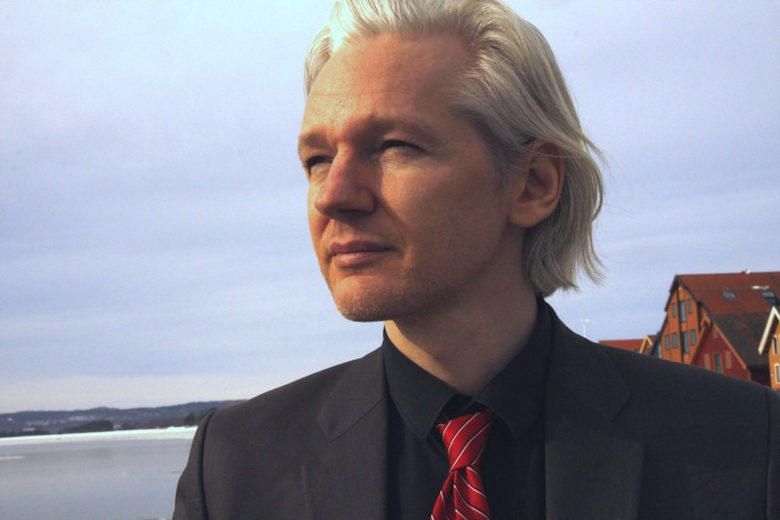
WikiLeaks continued to receive and publish numerous classified documents from many countries and organizations. Among these, the release of classified CIA documents (2017) and emails of then–Secretary of State Hillary Clinton (2017) drew particular attention in the United States. The Trump administration indicted Assange in 2018, and the succeeding Biden administration has also actively sought his extradition.
Assange had been granted Ecuadorian citizenship, but in 2019 the Ecuadorian government revoked it and allowed UK authorities to arrest him. By that time Sweden had dropped its investigation into the sexual assault allegations. The only remaining “offense” was failing to appear in a UK court while on bail, for which he received a 50-week sentence, and he was confined in the UK’s highest-security prison. Although that period has already elapsed, he remains detained at the time of writing while his extradition to the United States is considered. According to the UN Special Rapporteur on Torture, the conditions Assange is currently subjected to in prison amount to torture.
Problems in coverage related to Assange
As noted above, WikiLeaks has released a large volume of classified documents from many countries and corporations. With regard to the United States, at least, it is difficult to see how this act itself violates the law. In a past case concerning press freedom, the U.S. Supreme Court ruled, under the First Amendment, that when information is obtained illegally, publication is lawful if the party simply publishes the information and did not participate in interception or other acquisition activities—see Bartnicki v. Vopper (2001). Moreover, in the case of WikiLeaks, the information was not sold to foreign governments but released to the general public as matters of high public interest—namely, war crimes and misconduct by the U.S. government—making application of the Espionage Act hard to justify.
Under the Obama administration, the Espionage Act was unusually applied not to spies but to individuals who leaked in order to expose government wrongdoing, drawing harsh criticism. The government also attempted to apply the Espionage Act to recipients rather than leakers. From 2011 for about two years, a grand jury investigated Assange but reached the conclusion that it could not indict him. Assange’s actions could not be distinguished from those of mainstream outlets like the New York Times; indicting him would compel indicting those outlets as well. This was dubbed the “New York Times problem.” Nonetheless, despite no new evidence against him, the U.S. government secretly indicted him in 2018, five years later.
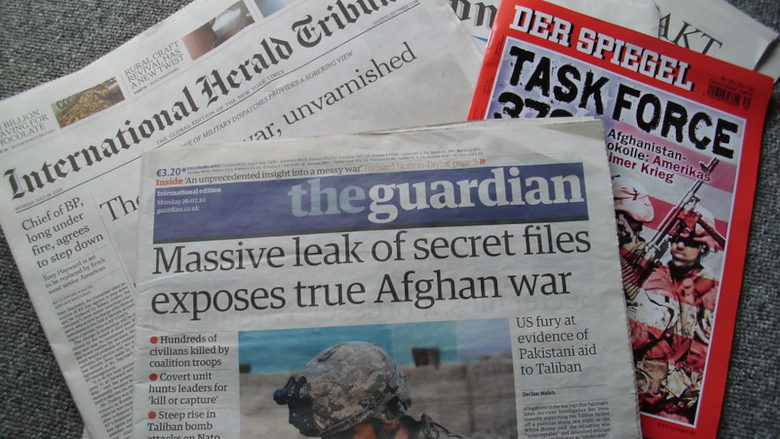
Major newspapers carrying the Afghanistan War leaks (Photo: Adam Beckett / Flickr [CC BY 2.0])
The contents of the indictment became clear upon Assange’s arrest in 2019, but coverage in Japan of the sequence of events leading to the indictment and subsequent developments has been sparse, with almost no scrutiny of its validity. There are few articles even addressing Assange’s case, and most merely list facts provided by the U.S. and UK governments in a matter-of-fact way. Among Asahi Shimbun, Mainichi Shimbun, and Yomiuri Shimbun, the only pieces pointing out problems with the indictment were one editorial in Asahi, and a line in a Mainichi explainer noting, “There is growing concern that the indictment runs counter to the spirit of the U.S. Constitution, which guarantees freedom of the press.”
It can also be seen that news organizations have abetted the spread of disinformation about WikiLeaks’ actions—for example, the claim that Assange helped illegally obtain U.S. government classified documents. The allegation is that Assange not only published the obtained documents but also participated in hacking alongside the whistleblower. Yet no such content appears in the indictment announced by the U.S. Department of Justice. The evidence submitted by the U.S. includes chat logs purportedly between Assange and Manning, in which Assange indicates a willingness to help crack a password. However, it is unclear whether the individuals in the chat can be definitively identified as Assange and Manning, and there is no evidence that Assange actually assisted in cracking the password.
Even if Assange had helped crack the password, that password would only have allowed Manning to log in to the military network under a username different from her own; it would not have enabled acquisition of classified documents and is considered an action to conceal access to the network. In other words, it was cooperation to prevent the whistleblower’s identity from being exposed—i.e., protection of a source. Even when a whistleblower attempts to obtain information in violation of the law, protecting sources is widely regarded as standard, responsible journalistic practice.
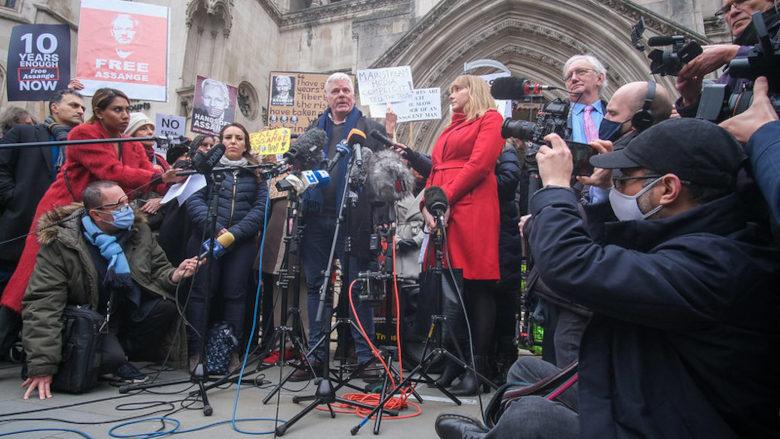
WikiLeaks’ editor-in-chief holds a press conference about Assange’s extradition (Photo: Alisdare Hickson / Flickr [CC BY-SA 2.0])
Nevertheless, like many Western outlets, Japanese news organizations published the falsehood that Assange illegally assisted in obtaining information. A Mainichi Shimbun explainer titled “Questions Naruho-Dori: What did suspect Assange do?” stated that the U.S. Department of Justice had indicted Assange “for helping Manning unlawfully obtain information.” A Yomiuri Shimbun article (※1) reported, “According to the U.S. Department of Justice, suspect Assange conspired with a former U.S. Army soldier and attempted unlawful intrusion into U.S. government computers handling classified information.” Although sourced to the U.S. government’s account, these statements are plainly inconsistent with the facts and amount to uncritically swallowing the U.S. narrative without verifying with other facts.
In an interview conducted by Asahi Shimbun with international political analyst Izuru Sugawara, the following comment was published regarding Assange’s “methods” of obtaining information: “It appears suspect Assange taught Private First Class Manning hacking techniques and had him decipher secret passwords. Perhaps it’s a downside of not having formal schooling, but it’s also true that his lack of respect for the law drew significant criticism.” Even though this was an analyst’s remark, Asahi ran the interview without considering the potential for misunderstanding, including personal attacks on Assange, and did not present alternative interpretations or perspectives.
There are also issues in how the information was disclosed. For example, the U.S. government alleged that lives were endangered. U.S. diplomatic cables included names of local collaborators in conflict zones, and it has been argued that publishing them unredacted could expose them to targeting by hostile forces. Indeed, WikiLeaks eventually began publishing unredacted documents with real names. However, that was not initially the case. Working in collaboration with media outlets, they removed problematic names while releasing the information.
WikiLeaks has asserted that it was forced to release the full, unredacted cables because a book about WikiLeaks published by the Guardian included a password for the database storing the cables, leading to the database being leaked online. The Guardian, however, denied responsibility, saying the database was not online when the book was published. In any case, Assange attempted to warn then–Secretary of State Clinton by phone so the U.S. government could mitigate risks posed by the release, but he was ignored. In fact, no victims have been reported as a result of the cable release.
The WikiLeaks logo on its website (Photo: Almudena Fernández / Flickr [CC BY-SA 2.0])
Japan’s major media, however, did not report WikiLeaks’ account of this issue. For example, when the cables were published unredacted in 2011, Yomiuri Shimbun ran an article titled “Runaway of the mega-leak” (※2), stating only that WikiLeaks “suddenly released 250,000 diplomatic cables unredacted.” A Mainichi Shimbun article (※3) also carried the U.S. government’s claims but not WikiLeaks’ position. While the complexity of the issue makes it difficult to convey, the complete absence of WikiLeaks’ side in the coverage betrays a lack of fairness and results in biased reporting—an issue that cannot be overlooked.
Media that do not question power
The repetition of such biased coverage likely reflects a tendency of Japanese media to align themselves with powerful actors like the U.S. government. Journalism cannot function if it neglects to verify facts. Especially for outlets that aspire to the role of a “watchdog,” there are many aspects of the suspicions and charges aimed at WikiLeaks and Assange that ought to be questioned.
First, the United States and the United Kingdom were the countries that launched the Afghanistan and Iraq wars and have incentives to conceal facts about them and fabricate charges against those who exposed inconvenient truths. The U.S. government would want to stop revelations that could undermine its position and deter any future disclosures. Indeed, it appears that actions far beyond legal measures were contemplated. Under the Obama administration, then–Secretary of State Hillary Clinton reportedly said at a 2010 State Department meeting, “Can’t we just ‘drone’ this guy?” In 2017 under the Trump administration, concrete plans for kidnapping and assassination were also reported to have been considered.
Second, as the content exposed by WikiLeaks shows, these governments have in fact fabricated numerous falsehoods. The U.S. government and the UK government have been proven to have made numerous false statements to justify the war against Iraq. After the war began, the U.S. government repeatedly concealed and disseminated false information about torture by its military and the killing of civilians. For example, since the start of the Iraq War in 2003, the U.S. government claimed it did not maintain data on Iraqis killed, but a 2010 revelation by WikiLeaks showed that it did keep such data.
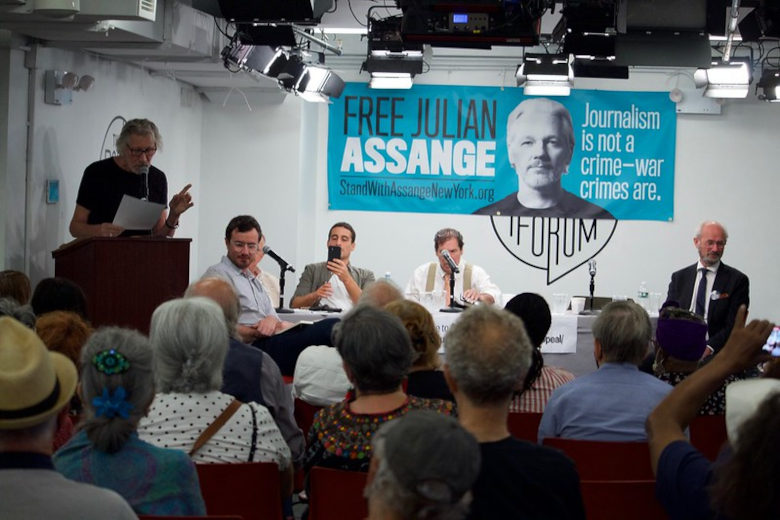
A rally calling for Assange’s release (Photo: Pamela Drew / Flickr [CC BY-NC 2.0])
Third, there are numerous irregularities in the legal measures taken against Assange by various countries. While Assange was suspected of sexual assault in Sweden, there were many questionable aspects to the arrest warrant and subsequent process, drawing criticism. In the end, after years of legal proceedings, Assange was never charged with sexual assault. There are also many irregularities in the UK’s extradition process to the U.S., with indications that the UK government is attempting to push ahead in defiance of laws prohibiting the extradition of political offenders. And, as noted, there has been an outpouring of criticism in the U.S. over the unprecedented application of the Espionage Act to publication.
There are many other suspicious elements in the current legal measures. A key witness who testified that Assange directed him to commit hacking later admitted to giving false testimony in exchange for immunity from prosecution in the United States. At the Ecuadorian Embassy in London where Assange stayed while in asylum, the security firm in charge is said to have conspired with the CIA to plant listening devices and monitor Assange. If conversations between Assange and his lawyers were surveilled and recorded, it raises further doubts about the integrity of the legal process.
Even so, Asahi Shimbun, Mainichi Shimbun, and Yomiuri Shimbun did not address concrete questions about the motives of the U.S. and UK. Nor did they question the reported assassination plans or numerous irregularities in the legal process. Their pages have carried only content that seems to accept the narratives of the countries concerned at face value.
Furthermore, aside from the single Asahi editorial mentioned above, none of these newspapers have reported on the implications of Assange’s case for freedom of expression in Japan since his arrest in 2019. Curiously, an Asahi interview with Izuru Sugawara included the statement, “He proved that anyone on the inside could expose the kind of terrible things the U.S. military did during the Iraq War. But for that very reason, Russia and China have tightened information controls even further than before,” yet it made no mention of Japan. WikiLeaks has directly influenced Japanese law: in the Cabinet Secretariat’s list of key points regarding the Specially Designated Secrets bill, WikiLeaks is cited as a “threat” of information leaks to justify the need for secrecy legislation.
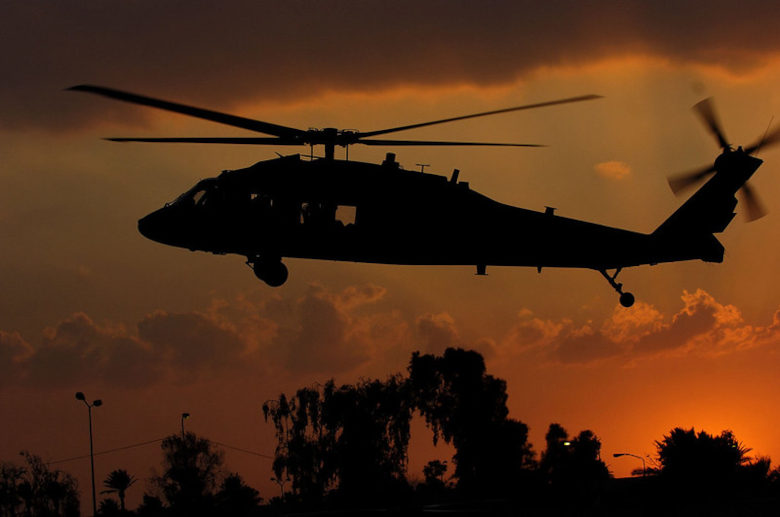
U.S. military helicopter, Iraq (Photo: The US Army / Flickr [CC BY 2.0])
When will the watchdog bark?
Former New York Times reporter Chris Hedges has called the fight over Assange’s extradition to the United States “the most important battle for press freedom in our time.” Why do media charged with the watchdog role remain silent when countries that present themselves as valuing “the rule of law,” “human rights,” and “freedom of expression” ignore the rule of law, violate human rights, and suppress free expression?
Hedges notes that journalists who try to confront powerful governments face various “costs,” such as public backlash or being pushed out of the mainstream media (※4). Others have suggested that the American media’s avoidance of criticism of the Biden administration and professional jealousy toward WikiLeaks—which achieved “journalism” that transcended the role of outlets inclined to align with power—are also factors. While these critiques are aimed mainly at the U.S. media’s silence, Japanese media appear to be following their lead.
Yet revealing the realities of governments where power and wealth are concentrated is precisely a vital role of journalism. As the persecution of WikiLeaks and Assange shows, journalism is under threat—but it should also be journalism that can prevent that threat. Will the day come when news organizations stand up to this issue?
※1 Yomiuri Shimbun, “Sweden: Prosecution to reopen investigation? Suspect Assange,” published April 12, 2019.
※2 Yomiuri Shimbun, “[Cyber Wars] (5) Runaway of the mega-leak (series),” published September 25, 2011.
※3 Mainichi Shimbun, “WikiLeaks: U.S. cables published unredacted—concerns of ‘harm to informants’; criticized by news organizations,” published September 3, 2011.
※4 Hedges himself was forced out of the New York Times after speaking out against the Iraq War.
Writer: Virgil Hawkins


アサンジ氏に関する一連の出来事は、記事にあるように法の支配、人権、言論の自由など民主主義に関わる重大な出来事で、報道に値することは確かです。ただ、そういった番犬の役割以前に、報道に携わる人たちにとっては非常に身近な問題であると思います。それを考慮すると、報道量や報道におけるスタンスがなぜ現状のようになっているのかとても疑問です。
ベトナム戦争はメディアが終わせられたのに。
時代が経つにつれて、ますます政府の締め付けが強くなって、ますますメディアがみじめになっているように感じます。
記事を読むなかで、アメリカ政府がここまでアサンジ氏を捕まえたがるのは「内容の不都合さ」の一点からだと思う。暴露という部分ではココ最近のガーシー氏にも似ているが、アサンジ氏は特段暴露による脅迫などを行っていない。しかも内容は国民に政府の責任を問わせるという公益性の高いものだ。手続きが他のジャーナリズムと同じなら、それは適法ということになる。ならばアメリカ政府は1度暴露内容を認める姿勢を示せばいいだけではないか。アサンジ氏は別に政府を転覆させてようと思っているのではなく、自分たちが信託した政府がここまで非道なこと、私欲にまみれたことをしているからこういった報道をしているのではないか。
そのうち日本でも、政府の問題点を追求した真っ当なジャーナリズムが「スパイ行為」「国益に反する」「反日だ」と謗られるのではないかと不安だ。