
In February 2022, a major whistleblowing incident occurred at Swiss banking giant Credit Suisse, and information was leaked to the German newspaper Süddeutsche Zeitung. The leaked material included a list of more than 18,000 accounts belonging to as many as 30,000 customers, with total deposits exceeding US$100 billion. It also revealed that some customers were involved in torture, drug trafficking, money laundering, corruption, and other serious crimes, including well-known politicians and the wealthy. Legally, banks have a clear obligation to ensure that the funds they handle have a clear and lawful origin. Therefore, if a customer is involved in crime, the bank should not permit any transactions. However, it appears the bank failed to meet that obligation, and suspiciously, some accounts remain open even now.
Credit Suisse has been embroiled in numerous scandals and has been fined multiple times. Nevertheless, it has continued to manage dirty money obtained through crimes and to profit from it. Why has such a situation been tolerated? This article explores the reality of banking in Switzerland by tracing its history.
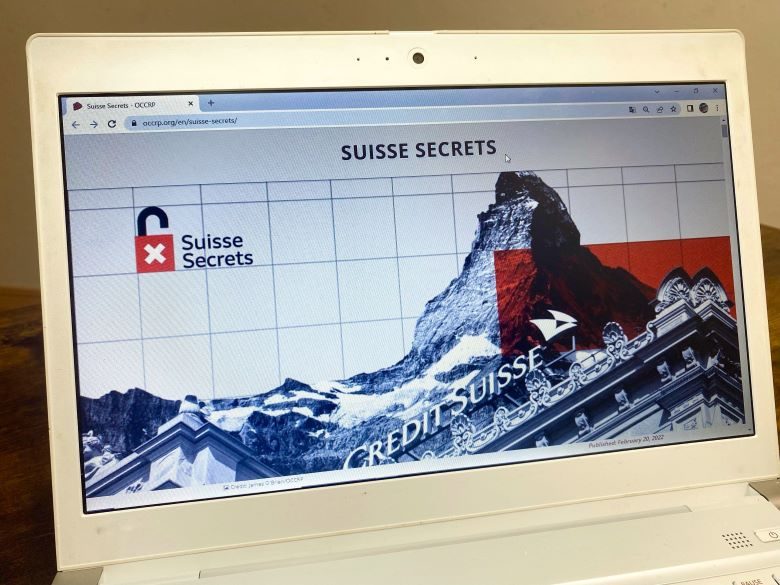
The Organized Crime and Corruption Reporting Project (OCCRP) website (Photo: Hanafusa Mayuko)
目次
A history as a financial center
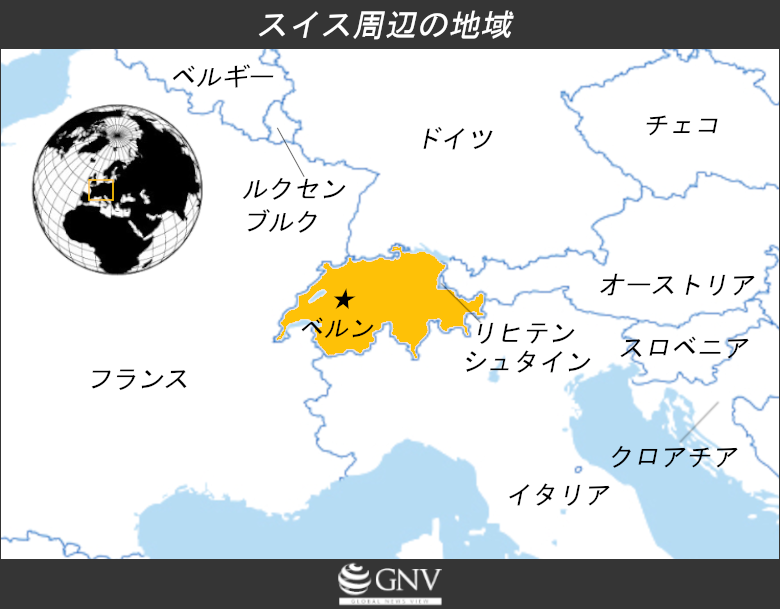
Switzerland is known as one of the world’s financial centers. First, let’s look back at the history of how banking developed to the extent that it is recognized as such.
Back in the 16th century, religious reforms were sweeping across Europe. From France, Huguenots of the Calvinist faith and Protestant refugees fled to Reformed areas of Switzerland seeking relief from religious persecution. Many of the refugees were skilled artisans and merchants who contributed greatly to the development of manufacturing, such as watchmaking. As demand for these products rose and capital flowed in, manufacturing became a driving force of economic growth in Switzerland. Although Switzerland remained neutral during the religious wars, many Swiss were dispatched as mercenaries to foreign armies. When these mercenaries returned, they deposited their pay and valuables with banks for safekeeping, bringing even more capital into the country. As a result of this inflow of capital, banking in Switzerland began to develop.
In 1713, the Great Council of Geneva (※1) enacted a law requiring bankers to keep client registers while prohibiting disclosure of information to anyone but the client without the consent of the city authorities. This was intended to help conceal transactions that French royals conducted with Swiss banks of a different confession. With this law, banks earned trust for their confidentiality. From the late 18th to the early 19th century, as politics and society were roiled by civic revolutions, Europe’s wealthy established banks in Switzerland as a place to store their wealth. Here, “banks” refers to private banks—institutions that provide comprehensive services such as asset management and investment to high-net-worth clients above a certain wealth threshold.
The reason for development was not just the strong trust in confidentiality. Switzerland’s mountainous terrain was well suited to building vaults. In terms of security and conditions such as temperature and humidity, it offered excellent storage environments for assets including works of art. Surrounded by industrial nations such as Germany, it could provide services to various national markets. Furthermore, Switzerland became a permanently neutral state at the Congress of Vienna (※2) in 1815, and the establishment of a federal state was recognized in 1848. In addition to strong confidence in bank secrecy, these geographical conditions and political safety as a neutral state also contributed, spurring major development into a financial center.
Thereafter, Switzerland strengthened its position as a private banking hub. In 1901, inheritance taxes were introduced in France and elsewhere. Swiss banks seized the opportunity to attract foreign capital and draw in French elites. Switzerland gradually came to be known as a tax haven (※3). While it became an ideal hiding place for assets for France’s wealthy, the French government grew increasingly angered at Switzerland for contributing to domestic tax losses and capital flight. In 1932, to crack down on tax evasion, French police conducted a raid on a Swiss bank branch in Paris. From the seized data, it was discovered that hundreds of wealthy French citizens held secret accounts in Switzerland. The Swiss banking sector was outraged and pushed to tighten bank secrecy in retaliation.
Developments in Germany also affected Swiss banks. The Nazi regime led by Adolf Hitler persecuted Jews. Many German Jews, in an attempt to safeguard part of their assets, deposited funds in Swiss accounts and valuables in Swiss safe-deposit boxes. As Germany invaded Central and Eastern Europe, Jews in those regions did the same. Swiss banks, however, also accepted assets from German government officials and the gold and valuables looted from Jews, profiting from both victims and perpetrators. After World War II, Swiss banks, citing bank secrecy, refused to disclose details of dormant accounts owned by Holocaust (※4) victims and did not return the assets to their heirs—an issue that later became a problem.
In response to the perceived need for bank secrecy—and to facilitate remittances by Jews—Switzerland tightened its Banking Act in 1934. It made disclosure of client information by bank personnel to foreign authorities a criminal offense. By making the rules on confidentiality more stringent, Switzerland cemented its status as a private banking center.
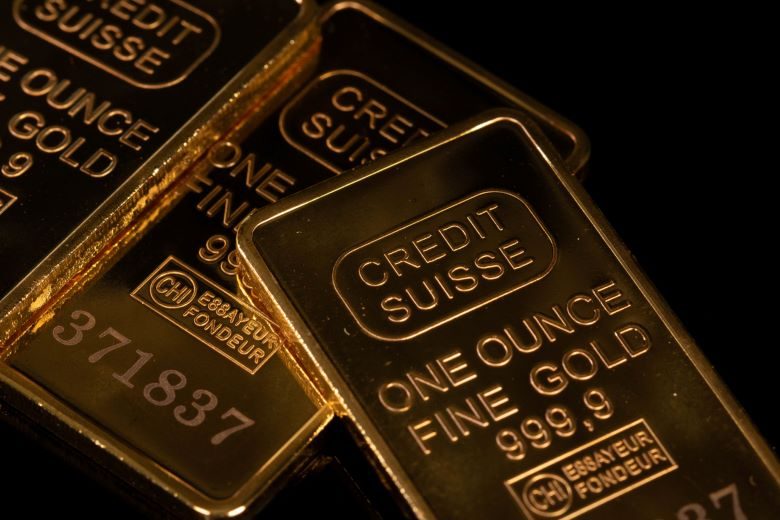
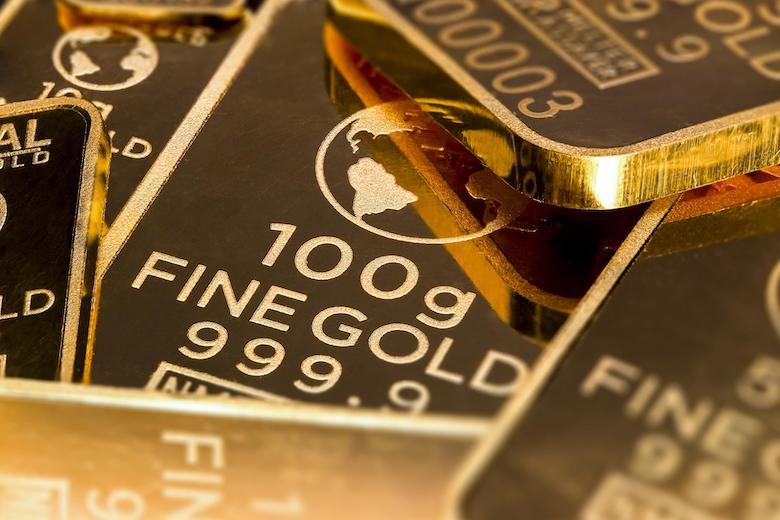
Gold bars stamped “Credit Suisse” (Photo: Marco Verch / CCNULL [CC BY 2.0 DE])
This situation persisted after the war. In the 1980s, Swiss banks came under increasing pressure from other countries seeking to collect taxes from their citizens with assets in Switzerland. However, in a 1984 referendum to relax the Banking Act’s personal data protections, 73% of votes opposed the measure, and it was rejected. Since then, strong secrecy in Swiss banking has remained a deeply rooted tradition, leaving little room for foreign regulators and tax authorities to gain access.
Why it fosters crime
Given its history of rigorously protecting client personal information, why do illicit funds derived from crime gather in Swiss banks? We can consider three major reasons. First, their secrecy is exploited. Take tax evasion, for example. Because of high bank secrecy, account information is not shared with foreign governments. Nor can foreign authorities conduct investigations to obtain such information. People exploit this system by hiding assets in Swiss banks to evade taxes. The same applies to money laundering—the practice of making assets obtained through crime appear as though they were legitimately acquired, also called “cleaning” funds. Because of strong secrecy, the actual flow of transactions is obscured, making it difficult to determine whether funds are legitimate.
In 2020, Credit Suisse was criminally charged in Switzerland over allegations that it helped launder money from cocaine trafficking for the Bulgarian mafia. Credit Suisse is believed to have conducted smurfing in transactions involving Evelin Banev, a former Bulgarian wrestler convicted in connection with cocaine smuggling, and his associates. Smurfing is a method of money laundering in which large amounts of illicit funds are broken into smaller transactions to remain below reporting thresholds, executed multiple times or by multiple individuals. In this way, the high secrecy of Swiss financial institutions, which obscures money flows, makes them susceptible to criminal abuse.
Second, banking culture encourages taking risks in handling criminal assets in violation of the law. To maximize profits, bankers’ pay, and shareholder dividends, the key is to secure big clients and retain them. Bankers are required to follow strict rules, but there are incentives to ignore them. One such rule is due diligence—the detailed investigation and assessment of the risks of taking on a client, including the source of the client’s assets.
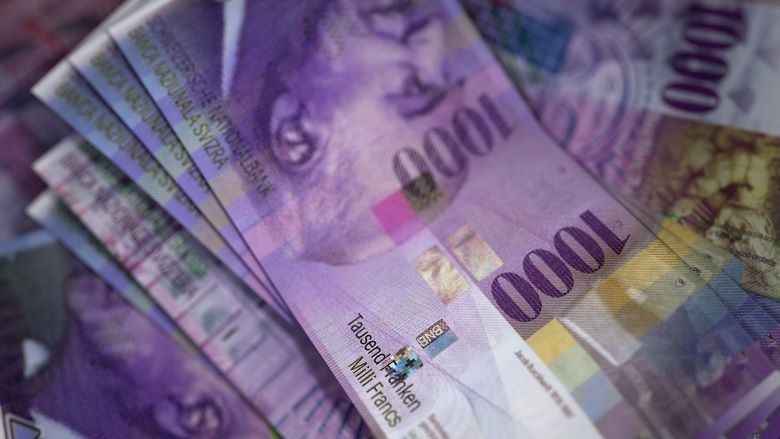
Swiss banknotes (Photo: cosmix / Pixabay)
It is said that due diligence is very strict for clients with assets equivalent to US$1 million. However, observers note that attitudes change when it comes to the accounts of ultra-high-net-worth individuals. Managers, seeking their own promotions, become overbearing and encourage subordinates to turn a blind eye to negative assessments. Because bankers are rarely held personally criminally liable, they may prioritize taking the risk of handling assets derived from crime in violation of the law.
Third, oversight of Swiss banks is inadequate. Switzerland has the Swiss Financial Market Supervisory Authority (FINMA) as a regulator for the financial sector. However, its powers are not particularly strong. When it comes to taking on risky clients, FINMA can do little more than warn banks. Since the final decision to accept a client rests with the bank, banks continue to take risks. By law, sanctions can be imposed on bankers only if they are directly involved in misconduct. As a result, FINMA struggles to gather evidence to pursue individual accountability, and courts find it difficult to attribute criminal responsibility to bankers. Consequently, there are many cases where defendants are acquitted on the grounds that they “didn’t know.”
Moreover, penalties are weak. Even when wrongdoing is uncovered domestically or abroad, the fines imposed are only a fraction of the total assets held by banks. Since the penalties lack a strong deterrent effect, banks continue to take risks. The business model persists whereby banks take risks, pocket a share of others’ illicit gains, and in return provide a safe, secret place to hide wealth and hoard funds—a business model that endures.
The latest leak
What exactly did the latest leak contain? As mentioned at the outset, Credit Suisse suffered a large-scale whistleblower leak of client information to a German newspaper. A project called “Suisse Secrets” was launched—an investigation led by the German newspaper and the Organized Crime and Corruption Reporting Project (OCCRP), in collaboration with more than 40 media outlets worldwide. Swiss media did not participate, however, because Article 47 of Switzerland’s Banking Act states that Swiss journalists face criminal prosecution simply for possessing data held by private banks, and risk indictment for publishing it.
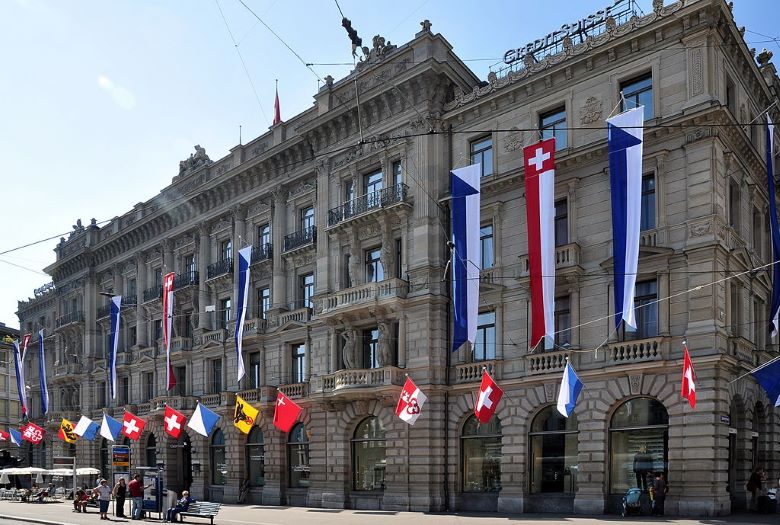
Credit Suisse headquarters in Zurich, Switzerland (Photo: Roland zh / Wikimedia [CC BY-SA 3.0])
The investigation found that while some of the more than 18,000 leaked accounts dated back to the 1940s, over two-thirds were opened after 2000. Many were opened within the last decade, and some are still open today. It also became clear that Credit Suisse clients—including prominent wealthy individuals and politicians—were involved in serious crimes. Accounts that may have held illicit funds derived from crime contained assets totaling more than US$8 billion. Among relatively recent offenders were a Serbian securities fraudster indicted in 2001, an employee of a German company convicted of bribery in 2008, and a Swede sentenced to life imprisonment in the Philippines for human trafficking in 2011—examples cited by the investigation.
The impact of this leak goes beyond damaging Credit Suisse’s credibility. The European People’s Party (EPP), the largest group in the European Parliament, called for a review of the European Union’s (EU) stance toward Switzerland, including whether to designate it as a high-risk country for money laundering. This could negatively affect Switzerland’s banking sector and, by extension, Europe’s financial sector as well, observers warn.
Toward improvement?
As noted, after World War II Swiss banks refused to disclose details of accounts owned by Holocaust victims and did not return assets, citing bank secrecy and a legalistic stance that they could not reveal account information unless legal conditions—such as submission of a death certificate—were met. Even in the extraordinary circumstances of the Holocaust, they adhered strictly to banking law.
In response, the World Jewish Congress (WJC) called on Switzerland to investigate the issue of Holocaust victims’ bank accounts, prompting negotiations among WJC representatives, the Swiss government, and Swiss banks. It became clear how large a role Switzerland had played as a repository for the assets of Jews and of the Nazi regime. In 1995, then Federal President Kaspar Villiger stated regarding Switzerland’s complicity in the Holocaust, “We feel a considerable burden of guilt for how our country treated the Jews.” This provided an opportunity to officially acknowledge and apologize for Switzerland’s responsibility toward Europe’s Jews. The banks then agreed to pay 12 hundred million and 5,000 ten-thousand US dollars to Holocaust victims and their heirs.
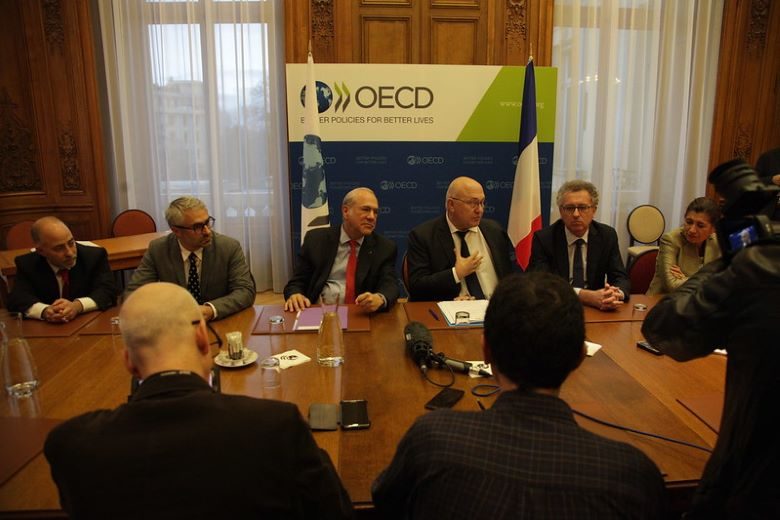
An OECD press conference on efforts to prevent tax evasion and avoidance (Photo: OECD Organisation for Economic Co-operation and Development / Flickr [CC BY-NC2.0])
Since the 2000s, calls for financial transparency have grown. In 2007, Bradley Birkenfeld, a banker at UBS, voluntarily provided U.S. authorities with information that UBS helped thousands of wealthy Americans evade taxes, changing the situation dramatically. In response, the United States pressured Switzerland, and from 2014 began unilaterally compelling disclosure of financial secrets of wealthy account holders. The EU has taken similar actions, and banks face penalties if they fail to disclose information.
To prevent Switzerland from being recognized internationally as a hub for tax evasion, it adopted the Common Reporting Standard (CRS) in 2014. CRS sets reporting standards for account information, taxpayers, reportable financial institutions, and general due diligence procedures to be followed by financial institutions. Further, in 2017, the Organisation for Economic Co-operation and Development (OECD) established the Automatic Exchange of Information (AEOI) system to prevent tax avoidance using accounts held in foreign financial institutions. AEOI requires financial institutions to report account information on non-residents to the tax authorities of their country, which then transmit the information to the partner jurisdiction’s government. Switzerland signed on to AEOI and, under CRS and the Multilateral Competent Authority Agreement (MCAA) on Automatic Exchange of Financial Account Information, exchanges financial information with other countries.
Regarding AEOI, the Swiss government announced that amendments to the Ordinance on the International Automatic Exchange of Information in Tax Matters (AEOIO) and the Federal Act on the International Automatic Exchange of Information in Tax Matters (AEOIA) would take effect from 2021. With these changes, scrutiny will increase on foreigners investing in Swiss real estate. Property owners must share financial information, and Swiss financial institutions will be obligated to retain documents deemed useful for tax purposes. However, some items—such as accounts for digital currencies—fall outside the scope of automatic information exchange requirements, meaning not all transparency recommendations have been accepted by the Swiss government. Moreover, many countries losing tax revenue are poorer states that have yet to agree on information exchange with Switzerland, and the wealthy from more than 90 countries (most of them low-income) still hide funds in Swiss accounts. This inequitable system fosters corruption and deprives low-income countries of needed tax revenue.
Thus, while there appears to be progress toward improvement, many challenges remain in enhancing transparency. The UK-based NGO Tax Justice Network indexes how strongly each country’s laws and financial systems enable wealth concealment and money laundering by the wealthy, publishing the Financial Secrecy Index. Switzerland remained in the top three in 2020, suggesting that Swiss bank secrecy remains high.
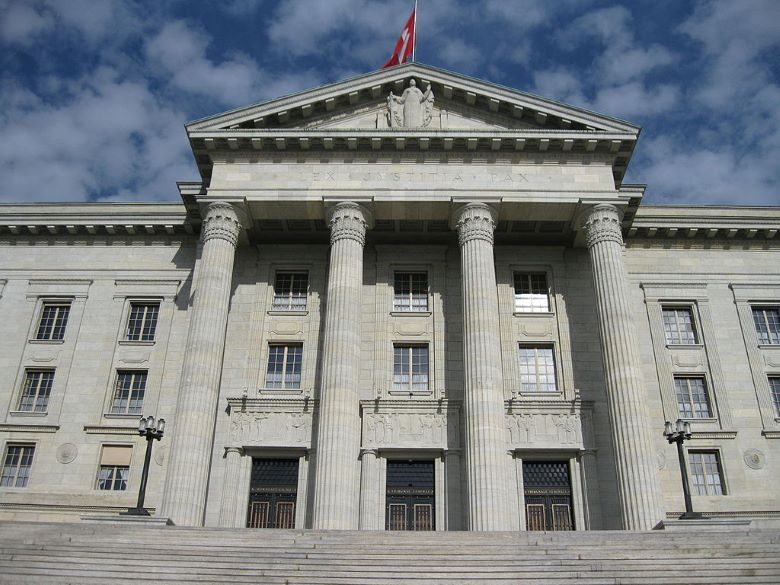
The Federal Supreme Court of Switzerland (Photo: Norbert Aepli / Wikimedia [CC BY 3.0])
Outlook
Unless Switzerland’s banking sector undertakes sweeping reforms, it is likely to keep losing credibility as a legitimate financial industry. However, the whistleblower who disclosed the data in this leak suggested that banks should not be the sole target of criticism, as they are “merely maximizing profits within the legal framework and being good capitalists.” In other words, it is the laws that enable crime that must change. We can only hope the Swiss government will change the laws and shine a light on the darkness within Swiss banking.
※1 Switzerland is a federal republic composed of multiple cantons (currently 20 cantons and 6 half-cantons). This refers to the parliament of the Canton of Geneva, one of them.
※2 An international conference held in Vienna, the capital of Austria. Its goal was to restore order in Europe after the French Revolution and the Napoleonic Wars.
※3 A jurisdiction where taxation is completely exempted or drastically reduced, also called a “tax haven.” Multinational corporations and the wealthy avoid taxes by moving assets to tax havens where corporate and withholding taxes are close to zero.
※4 The mass murder of Jews carried out by Nazi Germany during World War II. Millions of Jews were transported to camps and killed in specially developed gas facilities.
Writer: Mayuko Hanafusa
Graphics: Mayuko Hanafusa















スイス銀行の秘匿性についてはよく知っていましたが、今の形になるまでの歴史や現在の銀行をめぐる現状などは初めて知ったので、とても勉強になりました。記事でも触れられていますが、改善にはやはりスイスの法律の改正が必要ですね。実現するように願っています。良い記事をありがとうございました。
もしハイジが巨万の富を築いても、スイス銀行を利用してほしくないと思いました。また、金融秘密指数を見てみると、日本も7位に入っておる、決して他人事ではないと思いました。
スイス銀行が、歴史的に銀行業において世界で重要な役割を担っていたことを初めて知りました。またスイス銀行の特徴や文化、外部からの監視体制などといった観点から、出来事の背景が詳細に分析されていてわかりやすかったです❢
件名
コロナウイルスを広めてるのは
GPSを作り出した【米国防総省(米国スパイ)】
症状もこいつらが作り出してる
〈本題〉
コロナウイルスだけじゃなく
糖尿病などの病気全般、うつ病などの精神疾患、痛み、かゆみ、争い、自殺、殺人、事故、台風、地震など
この世のほぼ全ての災いを
【米国防総省】がAIを使った軍事技術で
秘密裏に作ってる
やらしてるのはCIA
【CIA】(米国スパイ)こそが
秘密裏に世界を支配してる闇の政府
北朝鮮を操って、ミサイルを打たせたり
雑菌を増やして、耐え難い臭いにしたりする
同じやり方で、コロナウイルスも増やす
AIを用いたレジ不要のコンビニ
このコンビニは
人の動き、棚の重さなどをAIが調べて
お客が商品を持って出ると
スマホで自動精算されるんで、レジが不要
この仕組みからわかる事は
AIは多くの人の言動を見逃さずに、1度に管理出来るってこと
このAIの技術を米国スパイが悪用し
人工衛星を使い
全人類を24時間365日体制で管理して
学会員や悪さした人を病気にしたり
事故らせたりして、災いを与える
こんなに大規模な犯罪なのに、世間に浸透してないのは
AIが遠隔から、各個人の生活を管理して
生活に沿った、病気や痛みを与えてきたから
重い物を持ったら、腕に痛みを与えたり
ツラい事があったら、うつにしたり
スパイの犯行だから、相手に覚られず
私生活に便乗して、違和感を持たせずやる
【創価学会と統一教会は、CIAの下部組織】
創価信者から
お金を奪い取ってるのも、こいつら
創価に入ると
病気が多発するし
ケガやら家庭の揉め事やらが激増する
これらも、米国スパイのAIが作り出してる
創価の務めに精を出すと、それらの災いを弱めて有り難がらせ
莫大なお布施をさせる
10年前の創価の財務が
年間2,500億円(無税)
1日あたり6億8,500万円
資産が10兆円超え
世界1位の企業だった、トヨタ以上の資産額
米国スパイが、軍事技術でイカサマして集めたお金
騒音攻撃に至っては
救急車の音で嫌がらせする為に
AIが遠隔から痛みを与えて、病人を作り出すし
パトカーが付きまといをする、集団ストーカーは
Alが警官を操って
いかにも、警察が嫌がらせしてるように工作
「救急車、ノイズキャンペーン」
「パトカー、集スト」などで、検索すると出る
行く所行く所で
周りの人が、咳払いしたりする集ストは
AIが被害者の周りの人に周波を当てて
咳払いをさせてるだけ
咳をした時の周波数と同じ周波を当てると
人為的に咳を出させる事ができる
TBSラジオ90.5MHz、ニッポン放送93.0MHzに周波数を合わせると
これらのラジオを聴ける
これと同じように、周波数(振動数)を変える事で
意識操作や精神疾患を作り出す
蛍光灯に虫が集まるのは
ある決まった周波数の紫外線に、吸い寄せられてるから
虫ですら周波で操作が可能
27~38Hzで不眠に
48~55Hzで喘息に
88Hzで片頭痛が引き起こされる
それぞれの病気が、それぞれ決まった周波数を持つ
これらの周波数と、同じ周波を当てると
波動が共鳴して
どんな病気でも作り出せる
以上
この犯罪を終わらせる方法は
◆この犯罪のからくりを、多くの人に広める
◆宗教法人への課税
◆公明党(創価)を政権の座から下ろす
https://shinkamigo.wordpress.com