
On October 3, 2021, about 5 years after reporting on the Panama Papers began, the Pandora Papers (※1), which document financial transactions using tax havens, were exposed by the International Consortium of Investigative Journalists (ICIJ). Surpassing the scale of the Panama Papers revealed in 2016, this announcement became the largest leak and the biggest investigative reporting effort to date, exposing wealth secretly held by politicians and tycoons around the world. Leaders of many countries and celebrities in various nations, including Japan, are named in the documents. This incident, which should have provided an opportunity to cast a major challenge to the current economic system that allows the rich to get richer and exacerbates social inequality, raises the question: how was it reported in Japan? In this article, we explain in detail what the Pandora Papers are and, by comparing them with the relatively more extensively covered Panama Papers, explore how the Pandora Papers were reported.

Photo: Anna Netsu
目次
The tax haven problem and past leaks
What is a tax haven in the first place? As explained in detail in a past GNV article, a tax haven, or offshore financial center, generally refers to countries or regions that set corporate taxes for foreign companies and entities extremely low or at zero. One characteristic of tax havens is secrecy: the disclosure of information about companies established in tax havens and their owners is restricted. As a result, individuals and companies from around the world use them for tax avoidance and evasion. Beyond tax matters, tax havens enable hiding assets to avoid tracing, evading regulations and procedures related to finance, and committing crimes such as money laundering. According to one estimate, roughly 10% of the world’s economic activity is shifted to tax havens.
One of the elements required to use tax havens is the use of shell companies, trust companies, and foundations. A shell company refers to a company that is registered as a legal entity but has no substantial business activity. Corporations establish shell companies in tax havens to conceal the identity of the real owners and shift profits. Doing so makes it possible to avoid taxation, evade regulations, engage in crimes such as money laundering, and hide assets. In addition, individuals and companies using these structures may set up foundations in tax havens or use trust companies to store assets. Furthermore, the infrastructure of tax havens is provided by law firms, accounting firms, and major banks.
Why, then, are tax havens a problem? One major issue is that taxes, which should be levied to enrich society as a whole, are no longer collected fairly. By using tax havens, wealthy individuals and corporations evade paying taxes amounting to hundreds of millions of U.S. dollars. Research published in 2016 found that more than $200 billion in tax revenue that should have been collected worldwide went uncollected. Who pays the taxes that the wealthy escape? It is the many other citizens who do not have large assets. The tax-haven-enabled system of tax avoidance is, by design, one only the very wealthy who hold significant assets can utilize.
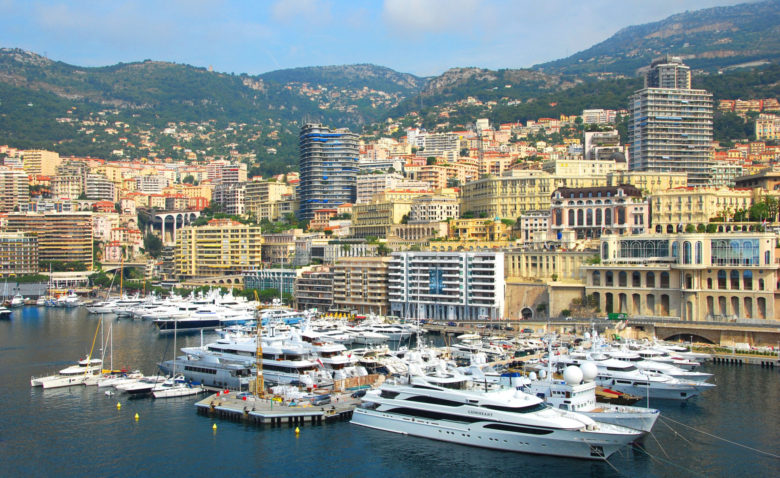
Monaco’s port, famous as one of the tax havens (Photo: Mike McBey / Flickr [CC BY 2.0])
Moreover, because of their secrecy, once assets are hidden through tax havens, it becomes impossible for third parties to even check whether wealthy individuals are paying the appropriate taxes. This secrecy obscures the tax haven problem itself, making it difficult to know whether tax avoidance is occurring. The countries that suffer the most from tax haven abuses are low-income countries. The less stable a country’s economic base, the greater the importance of infrastructure such as roads, schools, and hospitals, and of public employees like teachers and healthcare workers. Nevertheless, the taxes essential to funding public expenditures are no longer collected fairly. Especially in low-income countries, where legal frameworks and oversight functions are relatively weak, foreign companies make heavy use of tax haven mechanisms to facilitate illicit financial outflows.
The problem is not limited to tax collection. By using tax havens, corporations and individuals can also escape regulations that would otherwise apply. For example, cases have been reported in which labor law regulations were circumvented, lowering wages and protections accordingly. Banks may also exploit opacity to avoid regulations and pursue investments that would normally be prohibited due to high risk profiles. In this way, inequality between the rich and the rest is deepening.
Based on data from whistleblowers, exposures of transactions using tax havens have occurred repeatedly in the past, many of them by the ICIJ mentioned above. The major ones are introduced below.
The first investigation was called the Offshore Leaks. This was exposed by the ICIJ on two occasions, in November 2012 and April 2013, based on data leaked from Portcullis TrustNet and Commonwealth Trust Limited. Then, in January 2014, as part of the Offshore Leaks, the names of people in China, Taiwan, and Hong Kong who owned offshore companies were released. The Luxembourg Leaks (LuxLeaks) of December 2014 revealed tax rulings carried out by PricewaterhouseCoopers and Luxembourg’s tax authorities. The Swiss Leaks of February 2015 uncovered that the British banking giant HSBC had facilitated tax avoidance and evasion.
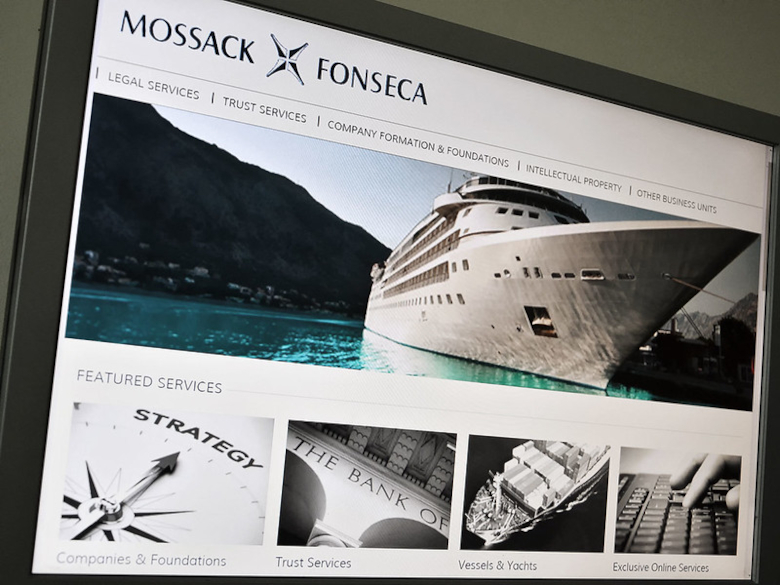
In April 2016, information leaked from the Panamanian law firm Mossack Fonseca, and coverage of the Panama Papers, then the largest leak to date, began. In September 2016, information about corporations in the Bahamas, a Caribbean tax haven, was reported in the Bahamas Leaks. In November 2017, the Paradise Papers revealed transactions leaked from the major law firm Appleby. The latest leak prior to the Pandora Papers was the FinCEN Files of September 2020, which came to light after suspicious activity reports submitted to the U.S. Financial Crimes Enforcement Network (FinCEN) were leaked. It exposed how major global banks had turned a blind eye to money laundering and financial crimes.
What are the Pandora Papers?
Next, we explain the latest leak, the Pandora Papers. The Pandora Papers are the largest leak in history, surpassing the Panama Papers from 5 years earlier, comprising more than 11.9 million records and 2.94 terabytes of data, including documents, images, and emails. The data leaked from intermediary organizations—14 accounting firms, law firms, consulting firms, and others—and were analyzed over 2 years by the ICIJ with the cooperation of over 600 journalists from 150 media outlets. The Pandora Papers revealed transactions using tax havens by 35 current or former national leaders, more than 330 politicians and officials in 91 countries and territories, as well as wealthy individuals, companies, entertainers, and criminals. The number of shell companies listed in the documents exceeds 29,000.
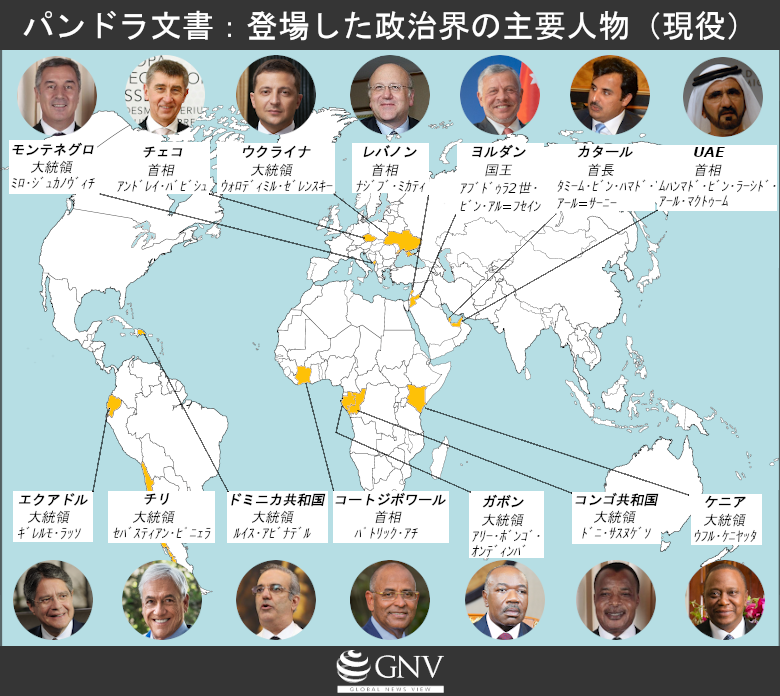
Names of leaders appearing in the Pandora Papers include Abdullah II bin Al-Hussein, the King of Jordan; President Volodymyr Zelensky of Ukraine; President Uhuru Kenyatta of Kenya; President Guillermo Lasso of Ecuador; Czech Prime Minister Andrej Babiš; and Chilean President Sebastián Piñera. Also named were former U.K. Prime Minister Tony Blair, close associates of Russian President Vladimir Putin, and the children of Azerbaijan’s President Ilham Aliyev. Among celebrities, musicians such as Ringo Starr and Elton John and model Claudia Schiffer appear. In Japan, the names of Masayoshi Son (Chairman and CEO of SoftBank Group), Takeo Hirata (former Director-General of the Cabinet Secretariat’s Tokyo 2020 Olympic and Paralympic Promotion Headquarters), Takao Yasuda (founder of Don Quijote), and Joji Hara (Chairman of Mirai Trust) are listed.
Several spin-off incidents affected by the Pandora Papers occurred within less than 1 month. The party led by Czech Prime Minister Babiš lost the lower house election, leading to a change of government as a result. In Chile’s lower house, the impeachment of President Piñera was approved. Although the impeachment was ultimately rejected in the Senate, where the ruling party holds a majority, it can be considered one of the major developments stemming from the Pandora Papers. In Ecuador, it was decided that President Lasso would be investigated on suspicion of tax evasion.
In the United States, prompted by the Pandora Papers, a bill was introduced in Congress to forcibly require intermediaries such as trust companies and law firms to investigate whether they have foreign clients seeking to move assets into the U.S. In addition, the European Parliament adopted a resolution to advance investigations into wrongdoing revealed by the Pandora Papers and a resolution for the European Commission to take legal action against European Union (EU) member states that are not properly implementing existing laws. Outside politics, other developments were observed. After information regarding art dealer Douglas Latchford appeared in the documents, it was revealed that cultural artifacts looted from ancient Cambodian sites had been placed under the control of trusts in tax havens, and it was decided that they would be returned to Cambodia. It is likely that further social incidents influenced by the Pandora Papers will occur.
Coverage comparison and analysis of the Pandora Papers
How were the Pandora Papers—an enormous international issue concerning tax havens that exacerbate global inequality, the largest leak to date, and a trigger for various related events—reported in Japan? Let us compare them to the Panama Papers, which were relatively more covered. This time, we targeted articles published within 30 days (※2) after coverage of each, the Panama Papers and the Pandora Papers, began, across the three newspapers Asahi Shimbun, Mainichi Shimbun, and Yomiuri Shimbun. We searched for articles containing the terms “Pandora Papers,” “Panama Papers,” or “tax haven,” and among those, we extracted items that contained at least 2 sentences referring to the Pandora Papers or Panama Papers (※3). We also included spin-off incidents resulting from each leak in the counts.
The counts showed that while the Panama Papers yielded 49 articles in Asahi Shimbun, 59 in Mainichi Shimbun, and 61 in Yomiuri Shimbun, the Pandora Papers resulted in only 11 in Asahi Shimbun, 4 in Mainichi Shimbun, and 1 in Yomiuri Shimbun—a significant decrease in coverage. Not only coverage itself, but also the number of explanatory articles on the documents and the tax haven issue, as well as editorials, showed differences. For the Panama Papers, there were 1 explanatory article in Asahi, 2 in Mainichi, and 5 in Yomiuri, whereas for the Pandora Papers there were 1 in Asahi, 0 in Mainichi, and 0 in Yomiuri. Regarding editorials, the Panama Papers saw 2 in Asahi, 2 in Mainichi, and 1 in Yomiuri, while the Pandora Papers saw 0 in all three newspapers.
A notable feature of the Panama Papers coverage was reporting related to international reactions. At the G20 Finance Ministers and Central Bank Governors Meeting held on April 14, 2016, 11 days after the Panama Papers were released, tax haven issues were discussed, and a fair number of articles were published: 4 in Asahi, 6 in Mainichi, and 5 in Yomiuri. In response to the Panama Papers, the Organisation for Economic Co-operation and Development (OECD) convened an emergency meeting of national tax authorities on April 13, 2016, and related coverage was also counted: 4 articles in Asahi, 3 in Mainichi, and 6 in Yomiuri.
Although there was no major economic meeting at the time Pandora Papers coverage began, on October 8, 2021, 136 countries reached an agreement at the OECD to set a global minimum corporate tax rate of 15%. However, this agreement, intended to prevent tax avoidance, was rarely linked to the Pandora Papers in reporting. Asahi Shimbun covered the minimum corporate tax rate on its front page but did not mention the Pandora Papers, and only in a society-page article about Japanese individuals and companies named in the Pandora Papers did it refer to the minimum tax agreement. Mainichi Shimbun mentioned the minimum corporate tax on a general news page but did not touch on the Pandora Papers, and Yomiuri Shimbun ran an editorial on the minimum tax, but made no mention of the Pandora Papers.
Reporting on Japanese celebrities named in the Pandora Papers was also quite sparse. Only one article in Asahi Shimbun mentioned Japanese public figures, and it named three: Masayoshi Son, Takeo Hirata, and Joji Hara. It noted that Son had subsidiaries in tax havens and that Hirata and Hara had established entities, and recorded that all three explained they did not set them up for tax avoidance—without deeper examination of their economic activities. Mainichi Shimbun and Yomiuri Shimbun did not mention any Japanese celebrities named in the documents.
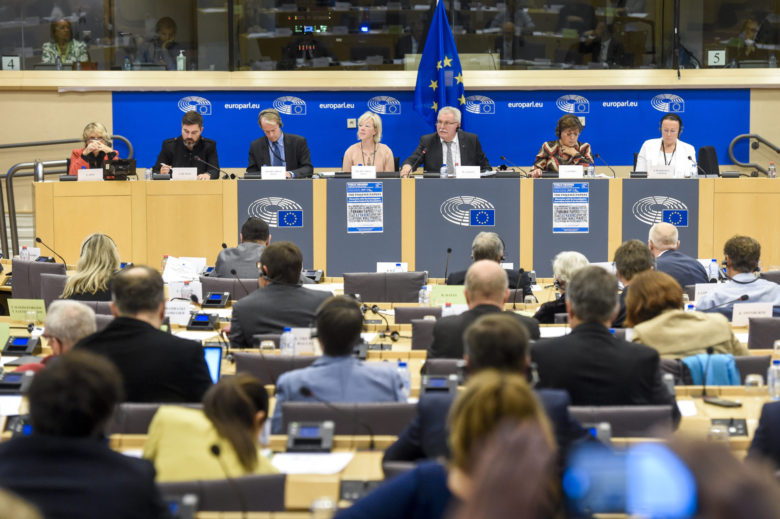
A hearing on the Panama Papers held in the EU, with journalists (Photo: The Left / Flickr [CC BY-NC-ND 2.0])
There were also differences in reporting on spin-off incidents related to each leak. In the case of the Panama Papers, for example, Iceland’s former Prime Minister Sigmundur Davíð Gunnlaugsson resigned as a result of the scandal; this was reported 3 times in Asahi, 1 in Mainichi, and 4 in Yomiuri. Regarding former U.K. Prime Minister David Cameron, parliamentary questioning, declining approval ratings, and other developments stemming from the Panama Papers were reported 1 time in Asahi, 5 in Mainichi, and 7 in Yomiuri. Other reports included investigations into the Argentine president (Asahi 1), UEFA (Asahi 1, Mainichi 1, Yomiuri 1), large banks (Mainichi 2), law firms (Mainichi 1, Yomiuri 2), and financial institutions (Asahi 1). In contrast, in the case of the Pandora Papers, only two items were found: the ruling party’s defeat in the Czech lower house election (1 in Asahi, 1 in Mainichi) and the return of Cambodian cultural properties (1 in Asahi).
This tendency—lack of Pandora Papers coverage—was no different in other media. In television news, during the first 10 days after Pandora Papers coverage began, NHK General’s News Watch 9 (a one-hour program airing Monday through Friday at 9 p.m.) did not cover the Pandora Papers at all (0 items). In LINE NEWS, a news service operated by the chat app LINE that aggregates content from many outlets, the curated LINE NEWS DIGEST (which selects 24 articles per day) also had 0 mentions of the Pandora Papers. Furthermore, searching the online media HuffPost for articles tagged “タックスヘイブン” (tax haven) returned 18 hits, none of which mentioned the Pandora Papers.
Why weren’t the Pandora Papers covered?
Why were the Pandora Papers, which should have had significant social impact, covered so little? Let’s consider a few possible reasons. First, which applies to both the Pandora and Panama Papers, tax haven issues are inherently difficult to report. Topics involving long-standing systems—like tax havens—tend to attract less attention than one-off incidents. The secrecy discussed earlier also makes reporting more difficult. That is precisely why organizations like the ICIJ spend years gathering information, making disclosures like the Panama Papers and Pandora Papers possible.

A reporter taking notes (Photo: Roger H. Goun / Wikimedia Commons [CC BY 2.0])
Next, we outline some reasons why, compared to the Panama Papers, the Pandora Papers received less coverage. On this point, it was not only in Japan but also globally that the Pandora Papers were covered less than the Panama Papers (※4). Why did coverage differ worldwide between the two? Here are some possible reasons.
First, the difference in name recognition of the politicians listed can be noted. The Panama Papers included figures who often attract attention on the international stage, such as the brother-in-law of Chinese President Xi Jinping, a close friend of Russia’s President Putin, and then–U.K. Prime Minister David Cameron. By contrast, while the Pandora Papers named associates of President Putin, many other leaders listed were from countries that are not frequently covered in routine reporting. Whether a country is usually a focus of coverage likely influenced the difference this time.
We also asked ICIJ reporter Scilla Alecci about other possible reasons. She pointed out that in the case of the Panama Papers, many media-friendly spin-off events occurred and public reactions to them were significant. In Iceland, for instance, when former Prime Minister Gunnlaugsson, who was named in the Panama Papers, was interviewed about tax haven issues, a scene in which he abruptly stood up and left mid-interview was widely reported. Including the prime minister’s behavior, Alecci said that in highly democratic countries like Iceland, the public felt deeply betrayed, leading to strong anger. Large-scale demonstrations that filled the area in front of the parliament actually occurred, and those protests were also widely covered by the media. In addition, just a few days after coverage of the Panama Papers began, former U.S. President Barack Obama held a press conference calling for action on tax haven issues, which Alecci noted also drew attention.

A demonstration in Reykjavik, the capital of Iceland (Photo: Art Bicnick / Flickr [CC BY-NC-SA 2.0])
By contrast, she said that such social reactions were less evident with the Pandora Papers. For example, although Czech Prime Minister Babiš, who was named as a government figure in the Pandora Papers, saw his party lose the lower house election as a result, no major demonstrations occurred. In Jordan, a monarchy, the government owns much of the domestic media directly or indirectly, and coverage of the Pandora Papers was shut out. As a result, the public lacked access to information like the Pandora Papers in the first place, and thus reactions within Jordan did not materialize, Alecci noted.
Furthermore, GNV has long pointed out that Japan’s international reporting tends to follow Western media. This pattern was evident in coverage of both the Panama Papers and the Pandora Papers in Japan. As noted above, the Panama Papers, which drew strong reactions in the West, were widely covered domestically, while coverage of the Pandora Papers, which drew less reaction, was limited.
We also asked Asahi Shimbun reporter Toshihiro Okuyama, who has been extensively involved in reporting on tax haven issues, about the suggestion that coverage volume was high for the Panama Papers because many articles focused on reactions rather than the documents themselves. According to him, when coverage of the Panama Papers began, there was not much domestic reaction in Japan at first, but after about 3 or 4 days, Western reactions were effectively imported, and he felt that domestic reactions grew. By “reactions,” he refers to online posts such as tweets by people following foreign news and the number of dispatches sent by overseas correspondents. He also pointed out that actions by the U.S. president, such as Obama’s press conference, influence the scale of reactions. In fact, Okuyama recalls that in Asahi Shimbun, during the first 3 days after coverage started, there was more reporting on the Pandora Papers than on the Panama Papers. However, because public reaction to the Panama Papers was so large, he says that from the 4th day onward the volume reversed.

Czech Prime Minister Andrej Babiš, whose name appeared in the Pandora Papers (Photo: ALDE Party / Flickr [CC BY-NC 2.0])
We also asked about the point that, despite the inclusion of names with major influence in Japanese society—such as Masayoshi Son—the Pandora Papers did not receive extensive coverage. Okuyama said that unless reporters can access information beyond the appearance of a name in the documents, they “cannot overcome the defense by the other side (the person named in the documents) that they did not engage in tax avoidance,” so merely being named is not enough to justify major coverage. He explained that while Japan used to disclose the tax amounts of high-income individuals under its laws, the disclosure system was abolished more than a decade ago, making it impossible to know individuals’ tax payments. Therefore, he pointed out that it is difficult to verify whether taxes are being paid.
However, the Pandora Papers are not only about tax issues in Japan; they also reveal a massive problem at the global level. Given the small amount of coverage from this angle, might there be a tendency among Japanese newspapers to view the Pandora Papers primarily from a domestic perspective rather than as a global issue? Okuyama notes that “as a Japanese news organization, the most important thing is to check whether wrongdoing or tax avoidance that violates Japanese domestic law is occurring domestically,” and that it is important to adopt a local Japanese perspective while also taking a global view. He added that it should not be overlooked that he published an explanatory article calling for Japan to lead in creating international mechanisms to address tax havens because “without pressure from international public opinion, measures against tax havens will not progress.”
As seen in the comparison of the three newspapers’ coverage volumes above, Asahi Shimbun reported relatively more, likely because it has a partnership with the ICIJ and thus easier access to ICIJ-provided content. Therefore, this time Asahi was in a better position than other outlets to report more information earlier. However, Alecci noted a characteristic of Japanese media: there is not much tendency to chase and report on another company’s scoop. For example, Western media sometimes follow and cite scoops first published by other outlets. In contrast, she said, Japanese media rarely cite another company by name and then follow with their own articles. As a result, whereas during past leaks (e.g., the FinCEN Files) some outlets contacted the ICIJ rather than Asahi for information related to the documents, this did not happen with the Pandora Papers, she recalled.

An interview scene (Photo: Kristin Wolff / Flickr [CC BY 2.0])
Conclusion
The Pandora Papers have revealed a vast problem: an unequal world operating in the shadows of the current economic system. This was one of the rare opportunities to see how the wealthy have exploited loopholes for profit. And it was made possible by the efforts of many journalists worldwide. Yet how many people have truly grasped this critical issue?
In the current situation, where the powerful and the ultra-rich hide wealth and evade taxes and regulations using tax havens, we face a major challenge to the rule of law and the principles of democracy. The tax haven problem remains something Japan must also address. Rather than viewing tax havens solely from a domestic perspective, presenting them as a major issue for the entire world—including Japan—is one of the important roles expected of the media.
[Correction (November 26, 2021): To avoid misunderstanding, one sentence related to interviews with contributors was added. In addition, two corrections were made concerning the number of Asahi Shimbun explanatory articles on the Pandora Papers and the description of the ICIJ.]
※1 Comes from “Pandora’s box,” meaning “a metaphor for something that causes various misfortunes (from a dictionary of classical idioms).”
※2 We counted the number of articles published from April 3, 2016 to May 2, 2016 for the Panama Papers, and from October 3, 2021 to November 1, 2021 for the Pandora Papers.
※3 Items that included only a single sentence referring to the Panama Papers, Pandora Papers, or related incidents were not counted, as they do not sufficiently convey information.
※4 Counting articles returned by keyword searches for “Panama Papers” and “Pandora Papers” in the New York Times, there were 55 for the Panama Papers and 22 for the Pandora Papers.
Writer: Anna Netsu
Graphics: Minami Ono
Reporting cooperation: Scilla Alecci (ICIJ), Toshihiro Okuyama (Asahi Shimbun)













日本のマスメディアはパンドラ文書とかの世界的な税制問題を全然報じないので、こういった問題が軽視されてしまう。
よく、課税の累進性を強くすると富裕層が海外に逃げると反対する人がいるけど、現状でも物理的じゃないけど、仕組みを使って逃げている人はたくさんいる。彼らにきちんと課税する仕組みが大事だと思う。
あと、いい文章だ
1つの記事の中で学ぶことが多く、すごく面白かったです。グラフィックもわかりやすいし、いろんな方の視点を取り入れていて濃い内容だと感じました。
実はコレ
株式のインサイダー取引の舞台だということが報じられていません。
実はコレ
株式のインサイダー取引の舞台だということが報じられていません。